Showing posts with label Nels Cline. Show all posts

Monday, December 18, 2023

Gift Ideas of the Digital Variety

Not a very clever headline but both these new recordings are worth sharing with friends and fans of creative music!

Photo: Clara Pereira
Truth be told, I've known trumpeter, composer, and arranger Ron Horton for nearly three decades. I first heard his playing as a member of the Jazz Composer's Collective and absolutely loved his 2002 Fresh Sound New Talent recording "Subtextures" (still do––check it out, the sounds are timeless, exciting, and quite adventurous).  We've chatted a few times, most recently in 2021 upon the release of the Newvelle Records collection "Kimbrough", organized by label co-head Elan Mehler upon the death of his former teacher and friend, the pianist Frank Kimbrough.  Horton and Kimbrough were both charter members of the JCC as well as great friends.  Both musicians were aficionados of the music of Andrew Hill (1931-2007)––in fact, Horton helped the older man put together a sextet and material for "Dusk" which was released by Palmetto Records in 2000 as well as 2002's Big Band recording "A Beautiful Day", also on Palmetto. After Andrew Hill passed, Horton continued to play the composer's music in his various groups, including a Dectet and Sextet.

In 2016, the trumpeter brought the Sextet––pianist Kimbrough, alto saxophonist John O'Gallagher, tenor saxophonist Marc Mommaas, bassist Dean Johnson, and drummer Tim Horner (alto saxophoniust and bass clarinetist Marty Ehrlich replaces O'Gallagher on five of the 13 tracks)––into Systems Two studios in Brooklyn, NY.  Newvelle Records usually only releases albums that they record but after hearing this music, Mehler said 
he most definitely release this music.  "A Prayer for Andrew" is a two Lp-set (also available as a digital download) that features seven Hill pieces and six Horton originals.  If you love music that pushes at borders, that roils from the inside out at times or can gently put you in a positive frame of mind, this recording is for you.  It's so good to hear more music from Kimbrough who died suddenly on December 30, 2020.  Listen to how he rolls his solo on Horton's "Home" or how he sets such a torrid pace on Hill's "15-8".  

Photo: Jimmy Katz
Scroll down and listen to the band drive through "Venture Inward", first recorded in 1968 by Hill for his "Grass Roots" album (Blue Note).  The solos, while short, have such power without losing direction.  Andrew Hill's music often flirted with free tempi yet kept moving forward, looking ahead, seeking. Check out "Dusk", a tune with an irresistible bounce to hear how the composer (in this instance, Mr. Hill), plays with the listener's expectations, blending melody and solos in such a whimsical fashion.  The program closes with "Belleza #1" (off of Hill's  2002 Big Band date, a lovely ballad that opens with a fine bass solo that opens up to Marty Ehrlich's handsome bass clarinet spot followed by a lovely piano solo (much of it unaccompanied).  Mommaas leads the rhythm section back in with a breathy, emotional, tenor solo.  He continues to improvise while the rest of the group play the theme. Such a gentle finish to a splendid album.

"A Prayer For Andrew" is not considered a "tribute album" by Ron Horton or his collaborators. His various groups have not only played this music for many years, they also have lived inside it. The spirit of Andrew Hill can be felt strongly when the band plays these songs––it is music that defies genres whie it sings to all of us.

For more information and to purchase the album, go to https://www.newvelle-records.com/collections/shop-newvelle/products/ron-horton-a-prayer-for-andrew for vinyl and/or to https://newvellerecords.bandcamp.com/album/a-prayer-for-andrew for digital.

Listen to "Venture Inward":


Guitarist and composer Anthony Pirog is an ambitious musician who is one of the more adventurous musicians on the modern scene. He rarely if ever repeats himself and sets a new challenge with each project.  Several years ago, the guitarist reached out to fellow players and asked them to create an "ambient" track that he would then improvise over. Many he asked were friends but he also "reached" for and received music from Andy Summers (The Police) and Brandon Ross.  The results can be heard on "The Nepenthe Series: Volume I" (Otherly Love Records).  Even if you are familiar with the guitarist's earlier recordings, chances are good you'll be surprised by these nine tracks.  Because this is an ambient setting, the music is not concerned with "shredding" or technical proficiency; instead, Pirog and partners have created a soundtrack that stands apart from any you may have encountered.


Webster's Dictionary defines nepenthe as "a potion used by the ancients to induce forgetfulness of pain or sorrow" and "something capable of causing oblivion of grief or suffering"––still, this music challenges both the creators and the listener to pay attention and to get lost in the sounds. The program opens with "Aurora" created by John Frusciante (of The Red Hot Chili Peppers); the music floats atop a low-note drone with tones that swell and shrink and electronic "raindrops" back in the mix.  Summers contributes "Inflorescence". The handsome melody Pirog creates over the shimmering guitars and quiet chords has an emotional pull unlike anything else on the album.  In comparison, "Night Winds" (created by Wendy Eisenberg) has a thunderstorm of white noise and static plus a chilling melody line that never resolves. Pirog adds distorted guitar that maintains the mood.

Listen below "Ripples of Light", the track that closes the album. Nels Cline's drones serve as an antithesis to Ms. Eisenberg's darker music. In fact, this music often floats and you can't really separate what each guitarist brings to the music. Why should you?  Just sit back, close your eyes, be surprised, be calmed, and forget the craziness of the world around you.  Creativity takes many shapes on "The Nepenthe Series: Vol. I" so grab your headphones, dim the lights, and explore the possibilities.

For more information and to purchase the recording, go to https://anthony-pirog.bandcamp.com/album/anthony-pirog-the-nepenthe-series-vol-1.

Hear Anthony Pirog with Nels Cline on "Ripples of Light":


Sunday, March 29, 2015

Poetry, History, and Music

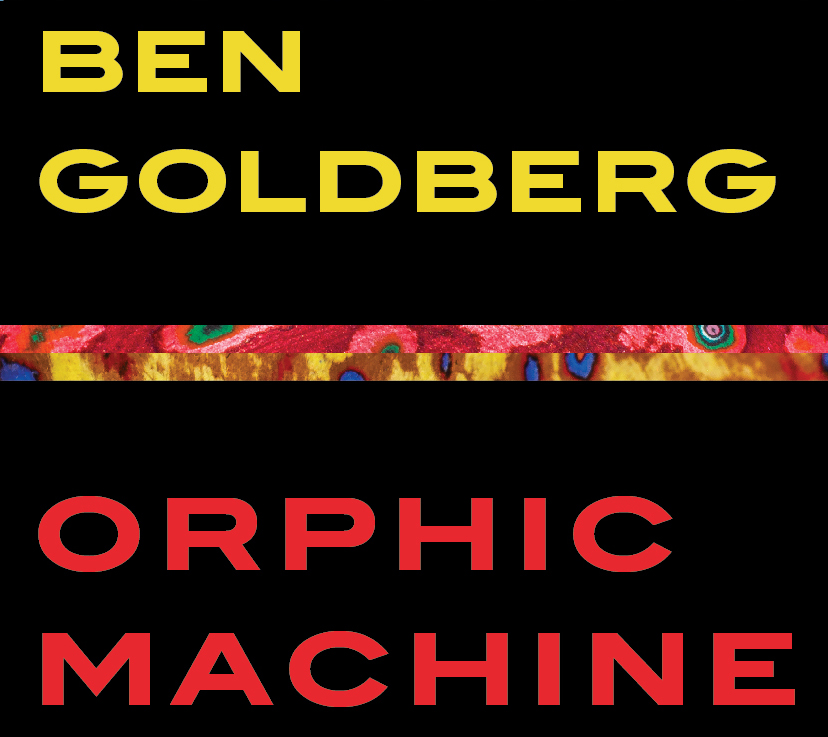
Over his career, now well into its 3rd decade, Ben Goldberg (clarinets) has created music has taken listeners many places, from the experimental side of klezmer to evocations of Steve Lacy. His work with Tin Hat has explored and expanded upon modern chamber music as well as the poetry of e.e. cummings. He has worked with guitarist Nels Cline exploring the music of Andrew Hill and is a member of Myra Melford's Be Bread.

All of his associations and influences are in evidence on "Orphic Machine" (BAG), a multi-layered program of original music built upon the words of the late poet Allen Grossman (1932-2014). The poet's "lyrics" do not come from a poem but from a treatise/reflection on poetry, "Summa Lyrica" from the 1991 book "The Sighted Singer." The project, commissioned by Chamber Music America/New Jazz Works, features a nonet composed of Goldberg's associates past and present  including Ms. Melford (piano), Mr. Cline, Carla Kihlstedt (violin, voice), Ron Miles (trumpet), Rob Sudduth (tenor saxophone), Kenny Wollesen (vibraphone, chimes, drums on "Bongoloid Lens"), Ches Smith (drums, vibraphone on "Bongoloid Lens"), and Greg Cohen (acoustic bass). The music has influences, ranging from The Beatles to Kurt Weill to the blues to swing to several sections that remind this listener of the music that Dick Connette created for his Last Forever projects.

What stands out from this program is how Goldberg utilizes the different voices at his disposal.  This music rarely sounds cluttered (although the final track, the title cut, does "roar" for the final few minutes), each voice stands out.  Ms. Kihlstedt has a soft voice and, rarely, if ever, is she lost in the mix.  Most of the time, the words set the tone of the music for the piece. "Care", for instance, and the repetition of the line "I find myself in the act of care" (an ear worm of the highest order) helps to open the music, leading the nonet to a great guitar solo that really kicks hard.

There are several strictly instrumental pieces including the "cool jazz"-inspired "What Was That", the short and sweet "How To Do Things With Tears" (great muted trumpet interaction with piano, clarinet and bass) and the Kansas City blues of "Bongoloid Lens" (sounds like a Frank Zappa title). These pieces do not act as after-thoughts or interludes but serve to illustrate the poet and the composer's approach to how they create.  Poetry and music can certainly be impressionistic but can also cut to the quick, exposing emotions in a visceral manner (think Allen Ginsberg's "Howl" or John Coltrane's "Birmingham"). Yes, there is a "cool" feel at times in the music found on "Orphic Machine" (check out the vibes solo on "Immortality" and the funky work beneath it by Cline, Cohen and Smith but then listen to how the band kicks into high gear as the clarinet wails and the guitar bellows) but the solos often are the fire that illuminate the heart of the artist's intent.

"Orphic Machine" is a lot to take in one sitting (nearly 76 minutes) yet if you approach it slowly (perhaps 2 or 3 cuts at a time), chances are good you'll fall under its spell. Time will allow for the words to take hold, helping you understand the intent of the poet as well as how the composer illustrates the vocal lines. Ben Goldberg has created a project that ranks among his best work, music that will resonate for years to come.

For more information, go to www.bengoldberg.net. To learn more about this project, click on the following link: youtu.be/WFbFioqojxs.

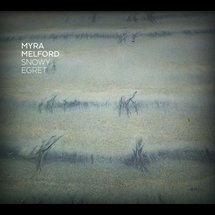
The intelligence of Myra Melford's music is found in the details, such as the way she combines disparate voices into coherent yet far-ranging musical statements.  "Snowy Egret" is both the title of her new ENJA album and the quintet that plays its brilliant program.  Blending the laconic yet piercing tones of Ron Miles (trumpet), the often gentle phrases of Liberty Ellman (guitar), the thick active lines of Stomu Takeishi (bass guitar) and the multi-faceted attack of Tyshawn Sorey  (drums), this music looks forward yet has its antecedents in her earlier work. In the mid-to late 1990s, Ms. Melford recorded 2 albums ("The Same River Twice" and "Almost Twice")  with the quintet of Dave Douglas, Erik Friedlander, Chris Speed and Michael Sarin, music as contemporary now as it was then. The lineup also refers back to Be Bread, an ensemble also with guitar, trumpet, piano, bass and drums with the addition of the clarinet of Ben Goldberg.

In the liner notes, Ms. Melford writes that "the music on this recording composed for the "new" quintet is inspired by Eduardo Galeano's "Memory of Fire" trilogy, his history of the Americas."  Throughout the program, the composer stitches musical phrases from South America with blues and jazz strains of the United States. There are moments that explode with furious abandon and others that are so quiet one has to lean into the speakers. "The Kitchen" open on a fiery drum solo, moving into a short riff, then quick duo or trio interactions until a slinky melody line ignites the band, now powered by Takeishi's percussive bass lines and Sorey's propulsive approach into Ms. Melford's expansive solo. The interplay between the piano, bass and drums reaches a thunderous conclusion. The rhythmic drive of "Promised Land" is built upon a short piano figure that is turned every which way by the quintet then listen to the interplay of bass and guitar as well as the drums and piano beneath Miles's fascinating  solo (there is a very short quote from "The Girl From Ipanema" right near the end).  The blend of Ms.Melford's melodica and Miles's muted trumpet at the onset of "Ching Ching/For Love of Fruit" reminds me of the Gil Evans's arranged interactions between Miles Davis and the orchestra on "Sketches of Spain" but soon moves into a funky rhythm that both Sorey and Takeishi continue to stoke through Ellman's exciting solo. When you go back to listen to this track (and others), notice how much music is packed into under 6 minutes. The longest song (8:34), "The Virgin of Guadalupe", opens with solo trumpet, a deliberate and emotional melody is repeated with the addition of the piano and repeated again when the rest of the musicians enter. Slowly, the piece begins to move out, like a flower opening in summer sunlight, the trumpet darting atop the martial drumming, giving way but not totally disappearing as the guitar solo unfolds.  The rhythm section begin to interact with the guitar, taking their cues from the rippling phrases. When the piano re-enters, the gentle circular melody brings the piece to a soft landing.

Ms. Melford's blues-drenched two-handed solo piano opening to "The Strawberry", the final track, seems to bring the music home to Chicago. However, when the band enters, the rhythm takes on a Brazilian feel during the trumpet solo but soon becomes "second-line"; so, perhaps, this is a reminder how New Orleans was the port-of-entry for slaves from Africa and "free" people from South America, how blues and jazz is a true fusion of all the streams flowing in and out of it and how modernity is often a fresh coat of paint on a classic structure. Therein lies the brilliance of what Myra Melford has created with Snowy Egret, music that can go in so many directions and still make you feel at home.  Like the 2 recordings cited in the opening paragraph, the avid listener can find new sounds each time he or she returns to the program. And, one imagines, the journey is even sweeter heard live in concert.

For more information, go to www.myramelford.com.