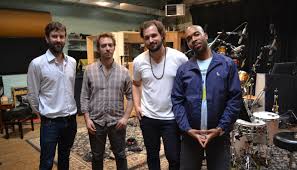
Alto saxophonist Will Vinson, born in London, England, has been a resident of New York City for over two decades. He's worked or still is working with groups led by pianist Gonzalo Rubalcaba, drummer Ari Hoenig, saxophonist Miguel Zenón, and many others. He's a founding member of the cooperative trio OWL (with bassist Orlando Le Fleming and guitarist Lage Lund) plus has issued five albums as a leader on various labels including Criss Cross Records and Smalls Live. For "441", his debut on Whirlwind Recordings, Vinson chose to record with four different pianists – Sullivan Fortner, Tiger Hamasyan, Gerald Clayton, Fred Hersch, and the afore-mentioned Rubalcaba – and five different rhythm sections – bassists Matt Brewer, Matt Penman, Rick Rosato, and Larry Grenadierpaired with (in order) drummers Obed Calvaire, Billy Hart, Jochen Rueckert, Clarence Penn, andEric Harland(Brewer also plays with Penn).
The results are a fascinating blend of styles, ideas, and interactions. 11 tracks, nearly 77 minutes of music, with originals mixed with one standard ("Love Letters" from Edward Heyman and Victor Young) plus songs from Keith Jarrett, Thelonious Monk, Bryn Roberts, and John Lewis. Each pairing opens with a saxophone and piano duet with the following track featuring bass and drums. Fortner is the only pianist with three tracks, the opening two and the delightful duet with Vinson on Lewis's "Milestones" the album closer. The saxophonist's "Boogaloo" opens the album; it's a sweet blues that rolls along on the full piano chords and Vinson's lithe alto lines. Brewer and Calvaire, now partners in the current edition of the SF Jazz Collective, have a delightful time pushing and pulling at the rhythms of "Love Letters" while the saxophonist and pianist chase variations of the melody lines throughout.
Photo: Jimmy Katz
There's nary a weak track in the program. Each pianist brings his style and strengths to the music. Hamasyan is featured on Vinson's "Banal Street" and Jarrett's "Oasis." The former rolls along pleasingly with both musicians enjoying presenting the melody and then Hoth taking sweet solos. The quartet captures the European Quartet characteristics of "Oasis" with Vinson even channeling Jan Garbarek's tart alto tone. Matt Penman and Billy Hart sparkle in support. Clayton and Vinson pair up on two originals, the blues-soaked ballad "I Am James Bond" (powerful solos from both) and another slower original, "Cherry Time." Also a blues, the ballad gets a strong push from Penn and Brewer who really lock in under the solos, paying close attention to shifts in intensity and lightness. No surprise that Hersch brings a Monk tune to the party; he and Vinson dance their way through "Work", the subtle blend of richness and minimalism in the pianist's approach meshes well with the alto's jaunty solo. Vinson turns to soprano sax on Robert's handsome ballad "KW." Composed with Kenny Wheeler in mind, there's plenty of space in the opening sax-piano duo that is enhanced by the addition of bassist Rosato and the splendid brush work of Reuckert. Rubalcaba caresses the melody of Vinson's "The Way To You" which the saxophonist literally sings through his horn. They then share the album's longest track (10:18) with Grenadier and Harland – "That Happened" is quite a happening with the pianist and drummer in sync on the rhythms, fine solos from all four, and a breezy quality that builds to an intensity that keeps you on the edge of your seat.
Lots and lots of music on "441", an album that invites one in and compels you to stay all the way through. Will Vinson must have had a ball mixing and matching the five pianists with the material as well as the rhythm sections. They all inspire his playing and, in turn, are inspired by his adventurousness and desire to have fun while telling these 11 stories. Take your time and let the music soak in – it's well worth the effort.
Here's the opening track featuring pianist Sullivan Fortner:
Slovenian-born and now New York City-based saxophonist (tenor and soprano plus bass clarinet) Jure Pukl is back with his third album for Whirlwind. "Broken Circles" finds Pukl in the company of a quartet of "young lions" including bassist Matt Brewer, guitarist Charles Altura, and especially vibraphonist Joel Ross (who is on a slew of recordings issued in the past four months), plus drummer Kweku Sumbry (The latter two can be heard on the powerful new Whirlwind release from bassist Harish Rhaghavan - read my review here).
Pukl created this program with this group in mind; the vast majority of the 11 tracks (plus the radio edit of "Separation") are originals with the one exception. "Gloomy Sunday" was composed in 1932 bu Hungarian composer Rezső Seress with the original lyrics plus the Englishtranslation linked to multiple suicides. The composer's story is fascinating yet this version is pushed forward by Sumbry's active drums. The melody is shared by the bass clarinet and vibes with guitar counterpoint. As an immigrant to the United States, Pukl composes songs that deal with broken families but also pieces that reflect life in a freer environment. An example of the former is "Separation", a somber ballad in which the tenor sax, guitar, and vibes each have a voice as does Brewer with a fine solo and the drummer taking the piece to its conclusion.
Photo: Aljosa Videtic
The center of the program is ballad-heavy. After the track above, "Compassion" opens with a kalimba melody before dropping into a slow, moody, ballad. Pukl's soprano plays the melody aided by quiet counterpoint from Ross and Brewer. "The afore-mentioned "Gloomy Sunday" is several tracks later followed by "Empty Words." There's a sparse quality to the tracking, at times, the rhythm stops. But, listen to how the musicians respond to the melody and to each other, not allowing excess emotion overtake the music. Near to the end of the program, "Kids" opens with Pukl's child offering a wordless vocal duo with Dad's tenor sax before the band enters with a sweet ballad. Altura's fine solo is a highlight but pay attention to what Brewer and Sumbry are creating beneath the guitar.
There's plenty of high-powered materials as well. The album kicks off with "Sustained Optimism", with the tenor sax and vibes playing the speedy melody while the drummer kicks everyone Ito gear. The title track follows; the song has quite a kick tumbling out of the rhythm section and the front line of tenor, vibes and guitar all take advantage to create strong solos. ""Triumph of Society" is also a very optimistic piece, tumbling forward with a delightful flow. The final track (before the extra radio edit) is the delightful "Sky Is The Limit" – Pukl's soprano sax shares the melody with guitar and then jumps into his solo, his melodic phrases high up in the soprano's range caught up in the powerful rhythmic flow below him.
Listening to "Broken Circles", one hears a quintet of musicians working and playing to create messages that resonate. Jure Pukl has been an impressive player since first coming to critical attention in the early years of the previous decade. His writing keeps on maturing as does his playing. He's recorded and/or worked with musicians such as pianist Vijay Iyer, drummer Damion Reid, the Vienna Sax Quartet, saxophonist Branford Marsalis, and his wife, saxophonist Melissa Aldana. This current quintet deserves to be heard in person as each person brings great musical knowledge to the project. Pay attention!
Been over two decades since saxophonist and NEA Jazz master Dave Liebman began his musical exploration and interpretation of the four Natural Elements. Starting in 1997 with "Water" (featuring Pat Metheny, Billy Hart, and Cecil McBee), then moving on to "Air" (a 2006 duo with computer whiz Walter Quintus), and then 2016's "Fire" (with Kenny Werner, Dave Holland, and Jack DeJohnette. Liebman brings the cycle to a close with "Earth" (Whaling City Sounds), a 14-piece suite that features his touring and recording group Expansions. The leader brings his signature soprano saxophone plus wooden recorder; the group consists of Matt Vashlishan (Wind synth, reeds), Bobby Avey (piano, keyboards), Alex Ritz (drums), and longtime associate Tony Marino (electric bass).
Liebman constructed this band to be an electro-acoustic outfit and no one exemplifies that more than Vashlishan. having seen the group in concert, it's impressive how he blends the wind synth in the more traditional sounds of piano, bass, and drums. One can hear that in all its glory on "Volcano/Avalanche" where his instrument creates the former and Liebman's darting soprano lines the other. Marino's bass and Ritz's drums keep the music from falling apart as well as add to the energy needed to tell the story. "The Sahara" is introduced by the percussion/ wooden flute "Interlude", complete with wind sounds from the synth and bass. The evocative soprano sax lead then blends with the wind synth to push the song into a different mood. Avey's electric piano solo over the powerful drum playing stands out.
Photo: N Hayashi
There are amazing moments throughout. The short "Interludes" not only serve as solo spotlights (in the instances above and below, an augmented duo) but also introduce the following track. Avey's piano spot may remind some of a waterfall or a gentle rain outside the window while Vashlishan's seems other-worldly but not unlike the synth work of the late Joe Zawinul. Ritz's spot is conversational while Marino plays a chordal riff with the drummer keeping time. Liebman's soprano solo "Interlude" is evocative of standing on a ridge and leads into "Grand Canyon/ Mt. Everest", a musical appreciation of these natural wonders with each voice stepping forward and then back into the ensemble in a slow procession that compels the listener to sit and let the music unfold, not to rush to move forward but take in the beauty of creation.
Photo: Attila Kleb
The music moves back from its close examination of the natural wonders of "Earth" to its place in the greater Cosmos. The album closes with "Galaxy", a raucous, funk-driven piece that has the feel of the music Miles Davis created for the "On The Corner". Marino and Ritz really drive this piece with Avey's chattering keys, Vashlishan's squealing wind synth, and Liebman's fiery soprano lines fluttering over the top of it. Midway through the piece, Avey steps out with just Ritz supplying the pulse before Marino reenters and pushes them harder. The ends then come in and help to take the piece into a short restatement of "Earth Theme", bringing the project back to a close but also serving as an invitation to reenter this music's rich atmosphere.
Photo: N. Hayashi
The pictures that Dave Liebman Expansions creates on "Earth" come into clearer focus each time you listen. This is music that connects you to the natural world in unexpected ways, asking one to pay closer attention to the majesty of what is all around you, impelling you to go outside away from the daily hustle if only for a short walk in the woods or by a river or near a pond or up to a mountain top.
Canadian born saxophonist Quinsin Nachoff has a new double album about to be released in February (2/08) and it's a stunning collection of pieces that run the gamut from free jazz to experimental interactions and beyond. "Path of Totality" Whirlwind Recordings) features his group Flux, a quartet-quintet that has the tenor and soprano saxophonist in the company of David Binney (alto saxophone, C-Melody saxophone), Matt Mitchell (piano, Prophet 6, modular synth, Novachord, harpsichord, Estey pump harmonium), Kenny Wollesen (drums, Wollesonic percussion on cuts 1, 3, 4, and 6), and Nate Wood (drums on cuts 1, 2, 5, and 6) and, my goodness, do they create a sound! Of the six tracks, two are over 19 minutes long, one at 14, one at 13, one at 8:10, and one at 6:36. Each track is different, four have added musicians, and the overall effect is surprising as well as fascinating.
There is a part of me that wants to illuminate each track for you while, in reality, you just need to find this album, turn it up loud, and dive in. The project was inspired by a total solar eclipse that took a path from the Northwestern part of the United States across the lower Midwest and into the Southern states. Nachoff, the composer, related the experience to his music, opening his compositions up to different tonalities and ideas that sprang from experiments with melodies, harmonies, and rhythms he had not worked with before. It certainly helps that Flux is such a talented ensemble, that Mitchell can make any keyboard he touches sound unique. The use of electronics is both subtle and powerful, the addition of a five-man reed and brass section on "March Macabre" creates a huge sound (plus there's also a tap dancer), and the brilliant interaction of Nachoff, Mitchell, Binney, Wollensen, and multi-percussionist Mark Duggan (marimba, vibraphone, glockenspiel, crotales, and Tibertan singing bowls) on "Toy Piano Meditation" creates a mini-Gamelan orchestra that obliterates then rearranges your sense of time.
The more I listen, the more I believe this sonic adventure is a form of alchemy, a magical science beyond explanation. Both drummers capture your attention by how they not only color the surroundings but push the music forward. The sound of Binney and Nachoff together will make you listen as they blend their voices as well as stand out individually. Mitchell shines every time he makes a recording, either on his own or in support of someone else's visions. He can disappear into the ensemble to fill the bottom layer of sound, he can stand out as a soloist, and he puts an indelible touch on every track
"Paths of Totality" contains so much music you'll need to listen numerous times before you begin to hear all that is going on. Don't be shy as this music will challenge you from note one until the powerful final track, "Orbital Resonances", fades slowly away on the pounding percussion of both Wollenson and Wood. What a treat - Quinsin Nachoff continues to mature as a composer, musician, and arranger and we are the lucky beneficiaries.
For more information and to watch a series of videos that goes with the music on the album, go to www.quinsin.com.
Here's the exciting title track:
For her third album as a leader, "Wander Wonder" (self-released), alto saxophonist and composer Allison Au opens the program with a delicious curve ball. The sounds of producer Todd Pentney's Prophet Rev2 synthesizer washes over the Quartet not unlike the synthesized sounds that dominated several of Wayne Shorter's CBS albums in the mid-1980s ("Phantom Navigator" and "Atlantis" in particular). The rest of the program uses the synth sparingly but the sense of experimentation heard at the top of the album, which one can hear on the other albums Ms. Au has made, is heard throughout. With the splendid rhythm section of Jon Maharaj (acoustic and electric bass) and Fabio Ragnelli (drums), the music flows forward. Maharaj is a wonderfully melodic bassist whose counterpoint to Pentney's left hand shines on several of the tracks - that counterpoint can be heard during a number of the saxophone solos as well.
Take the time to roll with the music, to follow the dancing alto sax solos that, at times, remind this listener of a bird in flight. Listen to the dancing interactions of "Red Herring" as Ms. Au interacts with Ragnelli while the synth strings color the background. Her alto sax flies easily to the higher registers on "Looking Up" as Maharaj and Ragnelli dance joyously beneath her. Dig Marahaj's thick electric bass lines on "The Rest Is Up To You" and the funk passages the rhythm section falls into under the alto theme. During Ms. Au's delightful solo, the rhythm section kicks with glee (also, notice how Pentney rises out int his solo while Ragnelli gives him a martial beat to move in and around.
Really, what I like most about "Wander Wonder" is how this quartet interacts intuitively, how important melody is to each song, how the themes help set up the solos, and how the rhythm section does not play it safe at all. Sit down, let the music wash over you. Close your eyes, listen to each musician. This is also an album to enter on your own without preconceptions; don't worry about influences or who everybody sounds like, just listen. Then, listen again. This is not music for impatient people. Take your time. The thrills on this album are often sublime but they are there to savor.
The Allison Au Quartet has won numerous awards in its native Canada and deservedly so. "Wander Wonder" illustrates the band's strengths and how Ms. Au continues to mature as a composer. Check this out!
Over the past year, it's been quite tough for anyone not to hear the voices of women around the world rising up to proclaim "Enough." Enough of the sexual harassment and inequality in the work place, whether it be perpetrated by Hollywood Big-wigs, national and local politicians, sports doctors, educators, or someone in your neighborhood.
Saxophonist and composer Roxy Coss participated in the Women's March the week of Donald Trump's inauguration. She carried a sign that read "The Future is Female"; that's the title of her new album, a of 10 original compositions featuring her working ensemble of Alex Wintz (guitar), Miki Yamanaka (piano), Rick Rosato (bass), and Jimmy Macbride (drums) with bass clarinetist Lucas Pino on one track.
Song titles such as "#MeToo", "Nasty Women Grab Back", and "Females Are Strong as Hell", might make you think that music has a strident quality. Many of the songs have great power but Ms. Coss wants to entertain and educate. While you're grooving to the great rhythm section or enjoying Wintz's delightful guitar solos or Ms. Yamanaka's foundational piano, the leader wants you to think, wants you to react to the issues she's presenting that you will begin to take action and demand better behavior throughout the country.
Sitting and listening to the music, one hears the influence of Charles Mingus (whose song titles made you sit up) and the power of Art Blakey and Max Roach. Those artists and others were also fighting for the cause of equality. Sometimes, their music rankled listeners but, more often than not, the sounds excited those who listened and, perhaps, even made them change attitudes for the better. Ms. Coss's lovely ballad "Choices" is filled with emotion while "Mr. President" starts slowly with a somber melody over martial drums. Soon, the rhythm section kicks into high gear and Ms. Coss's tenor sax pushes them forward. "Feminist AF" is a blues - no surprise there - that hints at both John Coltrane and Wayne without imitating either one. The afore-mentioned "Nasty Women..." features the leader on soprano and, while the rhythm section has some "bite", the solos soar, especially Wintz's rippling guitar lines.
Besides her work on the bandstand, Roxy Coss is the founder and director of WIJO (Women in Jazz Organization) - their Mission Statement is quite clear:
"WOMEN IN JAZZ ORGANIZATION INTENDS TO HELP LEVEL THE PLAYING FIELD IN JAZZ, SO THAT WOMEN AND NON-BINARY PEOPLE HAVE AN EQUAL OPPORTUNITY TO PARTICIPATE IN AND CONTRIBUTE TO JAZZ, LEADING TO AN IMPROVED AND MORE RICH, DIVERSE, AND SUCCESSFUL ARTFORM. THE ORGANIZATION IS COMMITTED TO HONORING BLACK AMERICANS AS THE CREATORS OF JAZZ."
Give a listen to "The Future is Female" - it's music that swings and rocks plus has a number of messages you should pay attention to (if you haven't already). For more information, go to www.roxycoss.com and wearewijo.org.
Here's the opening track:
Pianist, composer, and educator David Ake is a native of New Haven, CT, but spent his formative years in Chicago. He did his undergraduate at the University of Miami before heading to the West Coast to do post-grad work at the California Institute of the Arts and UCLA. He has taught at the University of Nevada/Reno and is now on the faculty of the Frost School of Music at the University of Miami.
Ake's fifth album on Posi-Tone is titled "Humanities" and features the powerful musical voices of his fellow CalArts colleague Ralph Alessi (trumpet), Ben Monder (guitars), Drew Gress (bass), and Mark Ferber (drums). If you have heard any of Ake's earlier group albums, you'll know he's a powerful and thoughtful pianist while his music often has a powerful forward motion.
There are moments on the new album where the music leans towards Americana, not surprisingly on the quintet's reading of The Grateful Dead's "Ripple" (the only "cover" tune on the CD) - they don't mess with the gentle bluesy quality of Jerry Garcia's sweet melody. Alessi's muted trumpet brings the sound of Ron Miles to mind and the piece would not be out of place on a Bill Frisell album (but note the alternate chords at various times throughout the piece). The piano introduction to "Drinking Song" has the feel of a Randy Newman ballad but there is a spare quality to the melody. The trumpet and guitar play the melody and counterpoint while the rhythm section tosses and turns beneath them, not disrupting the flow as much as creating dynamic differences.
Photo: Anna Yatskevich
What stands out throughout the program is how distinctive all five voices are. On songs such as "The North", one can hear the power of the guitar, the rich melodic sense of the trumpet, the "heavy" chords from the piano, the counterpoint and melodies from the bass, and the driving force of the drums. Ferber is truly in the driver's seat; listen to his strength on "Rabble Rouser", how Gress helps him push the music forward, and then how the soloists are inspired by the rhythm section. And, they can swing! "Hoofer" starts out with the drummer's brush work creating his own sweet soft-shoe. Ake picks up on that and dances right through his sly Monk-like solo. The bassist leads the group through the beginning of "Stream" - much of the fun of the piece is how the dynamics change on the fly. After the opening, the band moves into a harder-edged melody but drops back for the piano solo. Ake build the tension as the trumpet and guitar play a unison counterpoint to his solo. A similar interaction takes place beneath Alessi's solo, this time the pianist and guitarist playing chordal patterns as Ferber builds the tension with a fiery drum spotlight.
The program closes with "Walter Cronkite": that's the newsman's voice you hear near the beginning saying "...it's the ultimate question that being a democracy we the people are responsible for the actions of our leaders". Alessi's keening, questioning, trumpet moves atop the rumbling piano, droning bass, quiet guitar fill, and active drums, giving the rubato piece the feel of an elegy, at times, a prayer. There is a short section where the trumpet and piano sounds like a telegraph signaling an urgent question across the great divide before the music fades.
To do justice to the music on "Humanities" is truly to tell you to listen and listen deeply. David Ake composes music that asks questions, that plumbs the depth of the human spirit, and looks for the soul within the songs. And the musicians know how to transmit those questions and searches to an eager audience. Give some time to this music; it will make you think and, perhaps, even move you to action in these often tense times.
The young trumpeter Josh Lawrence is making quite a splash on the contemporary scene as a player and composer. "Contrast" is his second Posi-Tone album within 12 months to feature his Color Theory ensemble. What a fine band! The rhythm section includes the Curtis Brothers, Zaccai (keyboards) and Luques (bass) plus Anwar Marshall (drums) while the front line has Lawrence paired with alto saxophonist Caleb Curtis (no relation to the Brothers). Orrin Evans joins the band on piano for several tracks as does trombonist David Gibson.
The album has two distinct sections. The first four tracks have the bop and hard bop feel of Lawrence's 2017 "Color Theory", shorter tunes with melodic heads and fine solos ("Dominant Curve" is a standout cut with its Charlie Parker-type melody and attack). The program changes on track #5, the powerful "In The Black Square." Now, the influence is McCoy Tyner and the music he began to make in the early 1970s. The shifting rhythms (Marshall is on fire here), the pounding piano chords, and the leader's fiery solo.
Photo: Ola Baldych
The next song, "Gray", is a handsome piece fueled by the richly melodic lines of Luques Curtis, the active drums and cymbals, and the adventurous work of Lawrence and Caleb Curtis. It opens in a fiery tone with the front line dancing through the melody and then the alto sax rides atop the rhythm section. Following that, the song slows down, with quiet sax and muted trumpet - Lawrence builds a fascinating solo, rolling his lines around the drums and bass then moving "out" near the end before the sax returns. Drums and bass reintroduce the opening section, the front line repeat the original melody and the piece romps to its close. There's a touch of electronics on the muted trumpet opening of "Brown", with Lawrence and Caleb Curtis exploring a fine melody. The power is kicked up a notch on "Agent Orange", the rubato opening featuring trumpet, saxophone, and trombone. Gibson takes the first pass through the melody pushed forward by Zaccai Curtis's powerful piano chords. Note the slight change as the bass and drums fall in to a driving rhythm for the sax solo. Lawrence has a powerful interaction with the pianist, giving the piece the feel of the classic Miles Davis Quintet music of the mid-1960s. The music fades with the pianist playing "My Country, Tis of Thee" over quiet cymbal touches.
Orrin Evans on acoustic piano and Zaccai Curtis on Rhodes ride a funky beat at the onset of "Blues On The Bridge." The opening is reminiscent of Julius Hemphill's "The Hard Blues" but, when the keyboards kick in, the song moves into Cannonball Adderley style rhythm 'n' blues. The groove opens up for the trumpet solo gets back to its original "greasiness" for Evans's playful solo.
The program closes with a soft version of Prince's "Sometimes It Snows in April", just muted trumpet and piano (Evans again), a lovely tribute to the artist. The version does not stray far from the original ballad, the piano giving the song more weight than Prince's acoustic guitar and trembling voice.
"Contrast" continues Josh Lawrence's fascination with colors and illustrates how the trumpeter is expanding his palette. He is growing as an artist on so many levels, not just as an excellent soloist but as a composer and bandleader. Grab ahold of this album and get into its grooves - the music is very alive and moving!
There are a number of very good reasons that the new album by saxophonist Dayna Stephens is titled "Gratitude". First and foremost, he is finally over the worst of the effects of Focal Segmental Glomerulosclerosis (FSG), a kidney disease that has affected him for the past two decades. Thanks to a donation from his aunt Lauren Annette Bullock (a performing artist based in California), Stephens is back in good health. Also, the album is the first to be issued on his own label, Contagious Music. In many ways, the album is a continuation of 2014's "Peace" (Sunnyside) in that it is produced by Matt Pierson, features the same musicians (pianist Brad Mehldau, bassist Larry Grenadier, guitarist Julian Lage, and drummer Eric Harland), recorded (mostly) in the same studio in Rhineback, NY, and the material leans heavily in the direction of ballads. This time, however, the songs are composed by Stephens contemporaries with the exception of Billy Strayhorn's "Isfahan."
npr.org
The album opens with "Emilie", a lovely piece from Olivier Manchon, with a sweet melody first introduced by piano and tenor saxophone (Stephens also plays baritone sax, EWI Wind synthesizer, and synth bass on the album). The music skitters along on the dance of the rhythm section with the leader rising above them with long, flowing, lines. "In A Garden", from pianist Aaron Parks, is next. This is such a gracious ballad, the quiet guitar chords and spare accompaniment frame a lovely melody that Stephens takes his time to work through. First solo is from Grenadier and is a reminder of how melodic a player he can be.
There are moments throughout the album that are reminiscent of the recent work by Charles Lloyd (the gentleness of the tenor playing) yet Stephens is certainly his own person. On Pat Metheny's Impressionistic ballad "We Had a Sister", he utilizes the EWI for the melody and solo before Mehldaus splendid solo. The Wind Synthesizer often sounds harsh but here paints a lovely and emotional portrait. The use of baritone saxophone on "Isfahan" is inspired. With only guitar and bass as support, Stephens gives the Strayhorn ballad from Ellington's "Far East Suite" a jaunty but not overdone feel. There is a pleasing "Americana" feel to Lage's "Woodside Waltz" (Mehldau plays "tack" piano) and the leader plays a sweet solo. Electronics play an important part on the last track, two different songs titled "Clouds" (the first from Massimo Biolcati, the second from Louis Cole) - the synthesizer dances alongside Harland's excellent drum work as the tenor sax plays the melodies. As the piece moves forward into the section composed by Cole, the tenor pairs with the EWI to play the plaintive melody. It's an effective and gentle way to close out the program.
Piotr Wyleżoł image
Stephens original composition "The Gratitude of Timbre" is a lovely ballad, the only original piece on this album (unlike the previous recording, which had none). Notice how the band (minus Mehldau) pushes the piece forward, pointing ahead to a future with such possibilities and excitement. Dayna Stephens has never shied away from a challenge, performing and teaching even as he constantly needed dialysis. "Gratitude" is a "thank-you note" to all those who supported him mentally and fiscally, to the many musicians who he has worked and played with, and to the power of music and faith. For more information, go to daynastephens.net.
Here's the opening track:
One often feels the need to put labels on music, especially to "understand" the intentions of the composer and performers. If you take a close look at "Nerve Dance" (Clean Feed Records), the new release from the Michaël Attias Quartet, you see an ensemble makeup that has been central to jazz since the days of bebop - the leader on alto saxophone, pianist Aruán Ortiz, bassist John Hébert, and drummer Nasheet Waits - and they make music that hearkens back to the Keith Jarrett groups of the late 1970s and 80s. There is great group interactions, intelligent compositions that blur the lines between melody and improvisations, and an dynamism that has its roots both in the AACM and European "free music" scene.
Putting labels aside for the time-being, what one hears on "Nerve Dance" is delightful and challenging interplay that speaks to the elasticity of forms. Nasheet Waits is amazing throughout, his drumming on several tracks, including the opening "Dark Net", showing the influence of hip hop. His melodic work on "Nerve and Limbo", especially in the first half, captures an intensity that one hears in Andrew Cyrille - he is central in not only moving the piece forward but in illuminating the melody. His rhythm section mate, John Hébert, also has a wonderful melodic side, noticeable on Attias's "Moonmouth" as well as his own "Rodger Lodger" - his counterpoint to the theme stands out and is continued throughout solos. He also is quite a dancer as he displays his impressive moves on "Scribble Job Yin Yang", flying above the deep piano notes of Ortiz. The pianist is a splendid accompanist. His chordal splashes on "La Pèse-Nerfs" (taking its title from the journals of Antonin Artaud) helps the piece move out into "freer" territory, echoing the cymbal splashes of Waits. Aruán Ortiz can be gentle as well. His deliberate pace as he moves through the melody of Hèbert's "Nasheet" allows the piece to grow up and out. Later on, when the music is more forceful, his interaction with the drummer is energetic yet thoughtful.
allaboutjazz.com
Alto saxophonist and composer Attias is a fine improvisor but also an intelligent composer and arranger. The orchestrations on pieces such as "Moonmouth" and "La Part Maudite" gives each member of the ensemble equal weight in the sound, whether it's the piano, bass, and drums playing the melody on the latter track or how the voices move around each other on the former. "Dream In a Mirror", at 9:51, is the longest track. Waits open the piece with a powerful solo that folds back into itself time and again before Hébert take an equally long and majestic solo. With two short taps on the cymbal, the piano enters with the drums and plays the melody alongside the bassist. The intensity picks up with the entrance of the alto sax. The rhythm section creates quite a storm while Attias pushes them forward with an equally power solo.
Yes, "Nerve Dance" by The Michaël Attias Quartet may only appeal to listeners who enjoy contemporary jazz but, to give this music any one label, does it a disservice. Exploratory music is better, played by an ensemble who challenge each other and themselves to avoid cliches, to play honestly and in the moment. The band did a short tour around the release of the CD and, hopefully, you can get to hear them live. In the meantime, this album is mighty impressive.
Bryan and the Aardvarks look to the heavens for "Sounds From the Deep Field", the ensemble's second album and first for Biophilia Records. It's no surprise that band in on Fabian Almazan's new and progressive label as the pianist has been in the band since its inception. Bassist and composer Bryan Copeland leads the group which, besides Almazan (who also plays synths), features Chris Dingman (vibraphone), Jesse Lewis (guitars), and Joe Nero (drums) - on this album, they are joined by vocalist Camila Meza and Dayna Stephens (EWI Wind synthesizer). Like the other 2017 Biophilia releases, the music is only available as a download. There is an option where you can purchase the cover and the download. Click on this link to find out more.
Copeland's influences for this album include the work of Carl Sagan, the explorations of NASA's satellites as they move away fromearth, and, musically, the progressive "rock" of artists such as Hatfield and The North plus progressive jazz of Tony Willams, Bill Bruford's Earthworks, Chick Corea, Jason Moran, and others. This ensemble does not imitate any of those artists mentioned but, to my ears, uses their visions to create their own. Notice how the opening track, "Supernova", moves to power of the chords provided by Lewis and Dingman, with Ms. Meza's wordless vocals as an extra instrument, and Almazan's far-ranging solo. The "openness" of "Eagle Nebula" is created by the swirling sounds of the vibes and piano while Nero and Copeland frame the composition. Lewis and Ms. Meza build the melody throughout the first half of the track before they drop out with the rhythm section. Dingman and Almazan move around each other, as if floating in space, until the rhythm section returns to help the piece to its rousing conclusion. Copeland composed "Soon I'll Be Leaving This World" as an elegiac piano spotlight for Almazan; he has the first 90 seconds to himself before the drums enter, then drop out for the bass to continue to lay the foundation. When the rest of the band enters (reminiscent of Procol Harum's "Salty Dog"), the pianist continues to lead the way with a dazzling array of long. flowing, lines that move way and back into the band. Everyone drops out and Alamazan takes the piece to its close on an ever-softening lilting melody.
Ms. Meza also sings Copeland's lyrics on several tracks. "The Sky Turned To Grey", a song about earthly storms and how they effect us. Lewis creates a power solo over the roiling piano chords and solo rhythms; that "powerful" sounds continues when the solo ends and the voice returns to push the song to its climax. The opening notes of the lovely ballad "Magnetic Fields" suggests Kurt Weill's "September Song" - the lyrics are more hopeful, a search for meaning in such a vast universe. The music opens up for a fine vibes solo over a a rhythm that suggests a waltz.
The music is not all "spacey". Hard-edged funky drums lead the way into "Strange New Planet" (this is a tune where the "prog-rock" influence is most noticeable). Lewis and Dayna Stephens's EWI take the melody lines while Dingman offers counterpoint. The leader's powerful bass lines lock in with the drums to keep the song "rocking". There's an even harder "reprise" of the track, the short "LV 426" several tracks later. Despite the title of the album's final track, "To Gaze Out The Cupola Module", the piece jumps right out of the speakers, powered by Nero's "smashing" drums. Almazan's electronic keyboard shares the solo space with the vibes, trading off phrases as the song rockets forward.
"Sounds From the Deep Field" has many glorious moments for listeners to bathe in. Whether it's Fabian Almazan's powerful piano playing, Chris Dingman's supportive, melodic, trance-like vibraphone, Jesse Lewis's arching guitar lines, Camila Meza's earthy yet dignified vocals, the strong support and drive of drummer Joe Nero, plus the leader's foundational work (listen to how his high notes still manage to underpin "Tiny Skull Sized Kingdom"), this music captures one's imagination. Would it work so well without the beautiful artwork, the views of the heavens taken by NASA's Hubble Telescope team, or the words of Carl Sagan? They certainly help but it's Bryan Copeland's vision for this music that leads the way and it's an entrancing way to follow.
Composer, arranger, and valve trombonist Bob Brookmeyer released his final album late in 2011. Titled "Standards", the recording featured the New Art Orchestra plus guest vocalist Fay Claassen. I had enthusiastically reviewed her 2010 release with the WDR Big Band Cologne ("Sing!"); Mr. Brookmeyer 's album came a year later and was even better (the version of "Love For Sale" is simply stunning).
"Luck Child" (Challenge Records) is her seventh release as a leader and the first time I have heard her sing with a small group (though not the first time she's recorded with one). The recording features pianist Olaf Polziehn, guitarist Peter Tiehuis, and bassist Ingmar Heller plus Ms. Claassen's husband Paul Heller (clarinet, bass clarinet, tenor saxophone on one track).
The repertoire is a smart mixture of standards, songs by contemporary songwriters, and a pair of tunes from her husband. Opening with the title track, a tune from guitarist Leni Stern with lyrics by Catriona O'Daly, it's a handsome melody (influenced by Jimmy Webb) with a stay-strong story. Ms. Claassen has a funky time with Paul Simon's "One Trick Pony" (excellent work from Tiehuis); good choice as it's one of the songwriter's least-covered tunes and is perfect for the vocalist's range. Paul McCartney's "Blackbird" has been covered dozens of times and Ms. Claassen's soulful version is one of the best. The musicians play it fairly straight yet it's the vocal that takes flight throughout.
Other highlights include Kenny Wheeler's "Fay" (written for the vocalist) with her splendid overdubbed vocals taking the parts of an instrumental front line and a deep blues-soaked reading of Duke Ellington's "In a Sentimental Mood" (her high notes are stunning, loud and clear). Her husband contributes "Miniature No. 7", a 60-second piece on which he overdubs a reed section which Ms. Claassen joins while the composer roars along on tenor sax. The other Heller song, "Finding You", is a contemporary love song with another soaring vocal and bright piano solo. Pianist Fred Hersch and vocalist Norma Winstone composed "Song of Life" for a duo album issued in 2003, recording it as a ballad. This version is faster with a rippling guitar solo that gives the piece a Bruce Hornsby feel (one hears that in the lovely choice of chords and releases).
Fay Claassen attempts to blend old and new, hard and soft, happy and sad, doing so in a trip setting that is both comfortable and challenging. There are musical surprises along the way (a sweet version of "Oh Shenandoah" and a good take of Burt Bacharach/ Hal David's melodramatic "A House Is Not a Home"); the vocalist is strong throughout and "Luck Child" succeeds on the strength of her performances, the musicians' interactions, and the variety of the material.
Saxophonist, bass clarinetist, educator, and composer Roxy Coss has a new album, her third as a leader and first for Posi-Tone Records. "Chasing the Unicorn" features six original pieces plus works by Joe Henderson, Wayne Shorter, Lionel Loueke, Lennon & McCartney, and Willie Nelson. With her regular band, composed of Alex Wintz (guitar), Glenn Zaleski (piano), Rick Rosato (bass), and Jimmy Macbride (drums), the sounds explode out of the speakers with great urgency and high spirits.
The title track opens the album with the leader on soprano sax but also overdubbed tenor sax and bass clarinet. That "full" sound plus strong solos from Ms. Coss, Wintz and Zaleski as well as the intelligent arrangement is rewarding for the listener. The tenor sax leads the way on another original "You're There", the music pushed along by Macbride's active drumming. Ms Coss's solo rides the percussive wave. Wintz and Zaleski offer good counterpoint as the solo continues. The melody of "Unwavering Optimism" moves upward throughout yet notice the step down as the band moves into the solo section.
As for the non-original pieces, Loueke's "Benny's Tune" brings back the bass clarinet in a supporting role as the band explores the rhythmic melody line. The interweaving of piano and tenor sax while Wintz joins the rhythm section catches the ear as does the guitarist's high-energy solo. When Ms. Coss re-enters for her tenor solo, she dances atop the bouncy rhythms. "Oh Darling" (from The Beatles "Abbey Road") maintains its bluesy feel but with a sophisticated touch, not unlike a David "Fathead" Newman approach to a "pop" tune. The Quintet darts through Joe Henderson's "A Shade of Jade" with Ms. Coss's tenor leading the way. Strong solos all around from the front line on the hard-bop track. Wayne Shorter's lovely ballad "Virgo" puts the bass clarinet up front, a classy move, and Ms. Coss's solo is quite impressive. But, pay close attention to the work of Zaleski, Rosato, and Macbride as they are quiet yet active in support. The album closes with Willie Nelson's "Crazy" - the tenor solo is reminiscent of both Coleman Hawkins and Ben Webster in tone and attack. Wintz's guitar solo stands out as well.
Photo by Anna Yatskevich
"Chasing The Unicorn" follows Ms. Coss's "Restless Idealism" (Origin Records) release by 15 months yet feels like a giant step in her career. One can hear in the maturity of the compositions, in her development on both the soprano sax and bass clarinet, and her work as a bandleader. This is a group you'll want to see and hear. Each member plays with strength and intelligence, adding to the songs in many different and often subtle ways. The faces of contemporary music are always changing, more young people are getting involved (even now, at a time when the business end of the "business" can be frustrating), and we are hearing news way to approach both tradition and change. Give a close listen to Roxy Coss and this ensemble.
I first met guitarist, composer, and educator Amanda Monaco when she played in my hometown early in the new Millenium as a member of The Lascivious Biddies, a quartet that combined witty lyrics, strong vocals, and sharp musicianship. Turned out that Ms. Monaco has grown up in nearby Wallingford CT and had been schoolmates with tenor saxophonist Wayne Escoffery and pianist Noah Baerman. After leaving the Biddies in the mid-2000s, she has led several ensembles, released four albums as a leader, and built upon her teaching career.
"Glitter" (Posi-Tone Records) is her fifth release and finds her leading an ensemble that features Lauren Sevian (baritone saxophone), Gary Versace (organ), and Matt Wilson (drums). Just looking at the lineup and several of the song titles ("Gremlin From the Kremlin", "Mimosa Blues", "The Mean Reds"), one gets the feeling the listener is in for a good time.
downtownmusic.net
And this truly is a good time. Opening with the swinging "Dry Clean Only", this band digs in and lets loose (yes, that's possible). Keeping the solos short, the song has an urgency that's hard to resist (plus, who swings harder than Matt Wilson?) Ms. Sevian is a versatile player whose solos really dance (as she does on "Mimosa Blues" and Tommy Flanagan's "Freight Trane"). Versace's roller-rink organ introduces "Gremlin..." (check out the martial drums as well) - the Eastern European-style melody and chord changes open up to playful solos sounding like a Lieber & Stoller tune from the late 1950s mixed with Micky Katz. "The Mean Reds" also could have come from the '50s, the organ splashes and "rocking" guitar riffs being pushed along by Wilson's splashy cymbals.
There is a serious side to this fun session. "Theme For Ernie", a Fred Lacey composition recorded by John Coltrane in his Prestige Records, is a lovely ballad (amazing how Wilson can play so softly and still be integral to the music) with lovely solos from baritone, guitar, and organ (although Versace does dance through his chorus).
Best advice about "Glitter" is to enjoy the ride - no doubt that these four musicians are having a blast. This is the best and "loosest" I have heard Amanda Monaco play. That's not a slam against her earlier work. This program works so well because of the temperament and talent of the ensemble as well as how the composer understands how to let her music "breathe." Play it loud and relax. Just maybe the world is not coming to an end.
The Fall 2016 Concert Season at Firehouse 12 begins this Friday (9/16) with an appearance by the Ben Wendel Group. The tenor saxophonist, bassoonist, and composer may be best known for his work with Kneebody; he appeared at the Elm City venue three times including in a duet with pianist Dan Tepfer, as part of Linda Oh's Sun Pictures group, and with his friends in Kneebody. He's a busy musician and producer - I saw him recently subbing for Donny McCaslin in Maria Schneider's Orchestra and he fit in nicely with the ensemble.
Wendell is touring on the strength of his new album (just came out last week) "What We Bring", his debut on Motéma Music after three releases on SunnySide Records. The recording features Gerald Clayton (piano), Joe Sanders (bass), Henry Cole (drums, and, on two tracks, Nate Wood (percussion). Clayton and Sanders will be along for the New Haven gig while Wood will man the drum set.
What a delight the music is on the new album. Six originals and two fascinating covers, one of Miles Davis's "Solar" (which closes the recording) and a lovely reading of "Doubt" by the duo known as Wye Oak. From the opening moments of "Amian", the quartet (and, in this instance, Wood) are firing on all cylinders. Sanders and Cole (who is a member of Miguel Zenon's Quartet) set a throbbing rhythm while Clayton rumbles underneath. During Wendel's solo, the pianist is silent while the tenor flies above the fray. If you play close attention, you can hear the overdubbed reeds as well as the percussive piano. The melody of "Fall" rises over a funky beat. Clayton and Wendel share the melody and, at the end of the verse, they each take a quick solo turn. Clayton takes off into a rollicking, dancing, solo - when the tenor, one hears a section that is reminiscent of Keith Jarrett's European Quartet (Jan Garbarek, Jon Christiansen, and Palle Danielson) from the 1970s. One hears that in the opening of "Spring", in the sprightly melody line and how Clayton jumps into his solo over the active brushes and fundamental bass.
There's a hint of Caribbean rhythm on "Song Song" while the melody dances atop the bells and bouncing bass lines (acoustic bass and Clayton's left hand). "Soli" charges out of the gate thanks to the forceful drumming yet it's quite a pleasure to hear how the four musicians vary the dynamics. "Austin" is a such a pretty piece, the articulated piano lines and the breathy tenor create an atmosphere of gentle contemplation. Clayton is the perfect foil throughout the record, his choice of notes and chords serve the songs so well and his solos are so smart. Because Sanders and Cole are so adept at creating the foundation for ever song, both the pianist and saxophonist are free to explore.
The splendid interpretation of "Solar" brings the album to a close on a rousing rhythm. Just listen to how Cole pushes the piece away from its hard-bop roots and into new territory, one marked by the influence of hip hop. "What We Bring" is modern music, celebrating the tradition as it expands its territory. Ben Wendel has an expansive mind, attracting musicians to his vision who enjoy taking the music in unexpected and often exciting directions. This album is a delight from start to finish.
The Ben Wendel Group plays 2 sets at Firehouse 12 with the first at 8:30 p.m. and the second (separate admission) at 10 p.m. For more information, call 203-785-0468 or go to firehouse12.com.
As luck would have it, alto saxophonist, composer, and the newly appointed Director of Jazz at Princeton University, Rudresh Mahanthappa brings his Bird Calls quintet to The Side Door Jazz Club in Old Lyme on Friday night, performing his first set at the same time as Ben Wendel will be playing in New Haven. Joining him will be three of the four musicians who recorded the 2015 ACT CD that gives the band its name; they include pianist Matt Mitchell, bassist François Moutin, and the impressive young trumpeter Adam O'Farrill. Replacing drummer Rudy Royston will be Dan Weiss so there will be no loss in the powerful drive that propelled the band on the album. The music, based on the leader's study of the music of alto saxophonist Charlie "Yardbird" Parker (the subtitle of the CD is "The Charlie Parker Project"), does not sound like it comes from the 1940s or 50s but has a modern sensibility. Parker always created new songs off the chords of older ones (he loved "I Got Rhythm" for example) and Mahanthappa does the same. It's a smart approach, filled with great melodies and strong solos - this is quite a band.
Doors open at 7:30 p.m. and the first notes should resound at 8:30. For tickets and more information, go to thesidedoorjazz.com or call 860-434-0886. To learn more about Professor Mahanthappa, go to rudreshm.com.
Here's a short look at the album:
On Saturday night, The Side Door welcomes back the Clifton Anderson Sextet with saxophonist Antoine Roney. The trombonist, best known for his work with his uncle, saxophonist Sonny Rollins, has always maintained a career as a leader, moreso over the past several years since his former employer has stopped playing concerts.
The music starts at 8:30 p.m. Check the website for more information.
As the CDs pile up on my desk, one keeps rising to the top. "1954" (Tone Rogue Records) is the second album for guitarist and composer Ricardo Grilli. Grilli, a native of Sao Paulo, Brazil. moved to New York City to study at NYU in its Music and Performing Arts Department (after studying at the Berklee College of Music). He graduated in 2013, the same year he issued his debut album, "If On A Winter's Night A Traveler" (self-issued). He's worked with pianist Jon Cowherd, saxophonists Chris Cheek and Chris Potter, and drummer EJ Strickland. He's a melodic streak a mile wide and it's very evident on both his albums.
The new album features an impressive band including Aaron Parks (piano), Joe Martin (bass) and Eric Harland (drums). The guitarist has supplied with nine originals pieces and, while you may hear a hint of Pat Metheny and Kurt Rosenwinkel every now and then, these compositions are mature, thoughtful, and filled with wonderful melodies. Several of the cuts sound as if there should be a vocalist. Pieces such as "Rings" and the elegant samba "Breathe" are telling a story, one that the listener can get wrapped in. Gentle chords and simple yet effective hand drumming leads in "Rings" - nothing is rushed, the melodic bass lines underpinning the melody played by the leader and Parks, whose phrases rise over the guitar lines and loops. "Cosmonauts" has a classical feel with Martin's sweet solo right at the beginning as the piano plays quiet figures that lead into the melody, one that is effortless and poetic in nature. Harland helps to push the melody forward with his active work while his cymbals splash easily during the piano solo.
There are also moments when the music takes a harder turn. The opening track "Arcturus" (possibly named for the red-giant star in the Boötes constellation) has a strong 4/4 feel in Harland's drums, a pulsating drive that one might hear on a Jeff Beck track (not the guitar sound, though). "Vertigo" features a solid drum attack yet still has a well-turned melody. Harland keeps up the intensity during the piano solo but does not overpower Parks. Grilli feeds off the the drummer's energy and creates a ringing solo, filled with powerful phrases that rise and fall and rise again. There's a "prog-rock" feel to the drums on "Radiance", a tune on which the sustain of the guitar notes give the song a fuller sound. The program closes with "Pulse", a rapid-fire tune that has a hard-bop feel, flying on the scrambling drums and "running" bass lines. Parks digs into his solo, urged on the forceful rhythm section and chunky guitar chords.
Get a copy of "1954" (it's released in early October) and let the sounds and melodies wash over you. Don't look for influences, just listen and you'll hear a confident musician playing with a rhythm section that supports, pushes, and gives its all. Notice the melodies - the majority are truly intelligent, well-drawn, and not flashy guitar riffs that lead to long solos. Ricardo Grilli, remember that name. Judging by his 2 albums, he's a fine composer, a smart player, an excellent arranger, and, chances are good, he'll be making great music for a long time.

 Posts
Posts