Pianist and composer Mary Lou Williams (1910-1981), born in Georgia and raised in Pittsburgh, PA, came of age in the flowering time of Black Music and the development of Jazz. The child prodigy began playing at the age of four and, by the time she was 10, Ms. Williams was playing private parties for wealthy White clientele. In the 1930s (and beyond), her arrangements for artists such as And Kirk and the Clouds of Joy, Louis Armstrong, Jimmy Lunceford, Cab Calloway, and many others thrust her into the spotlight. She moved to New York City at the onset of World War II and began a steady gig at the Cafe Society Downtown in 1943. She mentored artists such as Thelonious Monk, Bud Powell, and Tadd Dameron. She went on to perform her own music, popular as well as sacred music, until her passing in 1981. To find out more, go to ratical.org/MaryLouWilliams/MLWbio.html.
In 1945, Ms. Williams had a weekly radio program on WNEW-AM in New York City. For 12 consecutive weeks, she produced a song based on one of the signs of the Zodiac. Having read a book on astrology, her songs celebrated musicians she knew born under each of the signs. She first recorded the "Zodiac Suite" in 1945 with her trio of Al Lucas (bass) and Jack "The Bear" Parker –– she went on to arrange the piece for an 18-member big band plus arranging three sections for the New York Philharmonic and piano soloist (Ms. Williams). This is the first instance of Jazz meeting the Symphony. Over the years, other artists such as Dave Douglas, John Hicks and Geri Allen, have recorded the "Suite" or specific pieces of it.
Showing posts with label piano-led quintet. Show all posts
Tuesday, March 9, 2021
Composers Updated: Mary Lou Williams and Charles Mingus
For his debut album, pianist and arranger Chris Pattishall has taken the 12 Williams compositions, arranged them for quintet, and with the help of producer and sound designer Rafiq Bhatia, created "Zodiac" (Self-released). Joining the pianist is Riley Mulherkar (trumpet), Ruben Fox (tenor and soprano saxophone), Marty Jaffe (acoustic bass), and Jamison Ross (drums, percussion). If you listen to Ms. Williams recording, you'll hear that many of these pieces are multi-sectioned, often stopping for a few seconds of silence before moving forward in a different direction, sometimes coming back to the original melody. Pattishall's arrangements use that approach plus he creates space for the trumpet and sax. On the opening "Taurus", the pianist quietly introduces the piece with tolling piano chords before Murherkar and Fox take the melody forward ever-so-slowly. The mood changes as the entire band plays the melody up to to the amplified trumpet solo. In the pianist's bio, one discovers Pattishall's love of Surrealism and, with the help fo Bhatia, several of the pieces use modified sounds to tell its stories.
There is a lot of fascinating music on this album. "Scorpio" has such an arresting Latin-esque rhythm that stops at the end of the first verse for an odd bit of electronica. When the piece returns, there's a new boppish rhythm for a fun tenor sax solo. The stops-and-starts introduce new approaches to the song and each one is delightful. A martial drumbeat introduces "Leo", the melody sounds like a fanfare while the rhythm section tries to break the piece open. "Aquarius" has such a fun melody played by the trumpet with piano counterpoint. Fox's soprano sax adds a lighter voice to the mix plus play attention to how Ross and Jaffe play so much melody.
The album closes with "Aries" with its pleasing bebop feel but notice how Pattishall chooses to move the melody forward. Hang in until the end of the piece because it is as jarring musically as it is surprising.
"Zodiac" is an impressive debut. Chris Pattishall and his cohorts take this music of Mary Lou Williams, music composed and recorded over three-quarters of a century ago. The quintet plus producer Rafiq Bhatia make the music and the ideas contained within come alive. If this project makes listeners go back and discover Ms.Williams vast array of recordings and arrangements, that's great. The album also heralds the emergence of a fine young talent!
For more information and to purchase the album, go to chrispattishall.bandcamp.com/album/zodiac.
Here's "Aries":
"I Pledge Allegiance to the Flag––the White Flag" (Sunnyside Records) is an album of solo piano readings of 10 Charles Minus songs plus one by John Coltrane. It's the first time I have heard Stephanie Nilles, a native of Illinois who has issued six other albums since 2008, mostly on her own label. In December of 2019, Ms. Nilles traveled to Bremen, Germany, to record at the same studio where Mingus made his final recording with Eric Dolphy before the latter musician died. The music is as much of an indictment of its time as it is of today, recorded in the months after the murders of Breonna Taylor and Quawan Charles. The album takes its title from comments Mingus made as he was evicted from a New York City loft – check it out by going to www.openculture.com/2012/08/charles_mingus_evicted_in_1966_film.html.
The program closes with Coltrane's "Alabama" –– the song, written in response to the September 15, 1963, bombing of a church in Birmingham that left four young girls dead, has the feel of a funeral procession but not a dirge. The composer, a father of three boys and step-father to his second wife Alice's daughter, was horrified by the event and listened closely to the eulogy delivered by Dr. Martin Luther King. Ms. Nilles treat the piece with great respect, with quiet, tolling, chords and later with rumbling chords, also adding a verse from the Irish folk tune "Black is the Color of My True Love's Hair". It's s stunning finish to a superb album.
"I Pledge Allegiance to the Flag––the White Flag" deserves –– no, demands –– to be listened to in one marathon "sitting". Stephanie Nilles reminds us of the power inherent in the music of Charles Mingus, of the anger transposed into music, of the years fighting oppression, of damning critical response yet surviving with one's hope intact. Go, find this album, and best you let it "get hit in your soul."
To find out more about the pianist, go to www.stephanienilles.com/.
Click on the link below to hear one of the great Mingus tunes:
Friday, May 15, 2020
Moving Forward (Three Quintets)
![]() |
| Photo: Dave Stapleton |
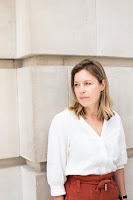
In Frisian and Norse mythology, Freya is the goddess of creation, love, and fertility. The title track has a lively melody pushed forward by the lively work of Weiss and Brewer (electric bass). One fo the hallmarks of the entire program is how "open" the rhythms are; the drummer is free to move around while the bassist often the foundation. Yet there are times, especially on "Aspasia and Pericles", the two respond to the soloists and the music floats. Aspasia was Pericles's partner in all things but marriage as she was not born in Athens. Listen to the interactions on this piece as all five musicians are having a conversation through the second half of the song. "Geri's Print" is dedicated to the late pianist Geri Allen whom Ms. Postma and recorded and performed with. Again the interactions of soprano sax and trumpet are exhilarating while Ms. Davis's piano displays her originality, in fact her biggest tribute to Ms. Allen is just being herself as the late pianist was throughout her career.
![]() |
| Photo: Dave Stapleton |
"Freya" also includes two short "Interludes", a pair of gives-and-takes of trumpet and soprano saxes.The first is comprised of short phrases that lead to longer tones by the end of its 84-second run. "#2" is 10 seconds shorter, a bit more introspective but still a conversation. The piece closes there album on an up note leaving the listener expecting and wanting more.
Tineke Postma makes us pay attention, makes us hear those mysterious spaces where composition and improvisation are blurred as well as what occurs when musicians are allowed to interact freely and respectfully. "Freya" is an album one can listen to two, three, four, times back-to-back and discover something new with each listen.
For more information, go to www.tinekepostma.com. To listen and purchase the album, go to https://tinekepostma.bandcamp.com/album/freya.
Listen to the musical story of "Aspasia and Pericles":
Bassist, composer, and arranger Anne Mette Iversen, now a resident of Berlin, Germany, first organized her "American" Quartet in 2002 when she was a resident of Brooklyn, NY. Tee original members –– John Ellis (tenor and soprano saxophone), Danny Grissett (piano), and Otis Brown III (drums and cymbals) –– are still there. The "+1" that now is appended to the group's monicker is Swedish trombonist Peter Dahlgren who first recorded with the bassist on her 2014 "So Many Roads", an album that featured the Quartet +1 plus a string quartet.
"Racing The Butterfly" (BJU Records) is the ensemble's first album in three years. The album takes its name from an encounter Ms. Iversen had with a curious butterfly as she was running through a field of lavender on a dirt road in the French region of Provence. The butterfly flew alongside for a while then dipped and swirled around her head, racing forward, dropping back. As the composer describes the experience "It was the fun, the enjoyment, the playfulness and lightness that was so beautiful and which nature displayed so naturally, that made me feel that I really ought to celebrate those sides of life more than I have previously done in my music." And, you can hear the effects of her experience throughout the 49-minute program. Listen to the title track below to hear her playful musical take on that run through the fields. As an added experience, Ms. Iversen later discovered a poem from Günter Grass from his 1967 collection "Augesfraght" (Questioned Out) titled "Tour de France" that reads: "When the leading bunch/ were overtaken/ by a brimstone butterfly/ many cyclists gave up the race."
Among the many highlights is the two-part "Parallel Flying" that runs over 11 minutes altogether. "Part 1" is a lovely, introspective, ballad rumination while "Part 2" hits the ground running after the melodic piano opening. Brown III and Ms. Iversen lock into the high-flying groove giving the front line a strong foundation to create three dancing solos. Later in the program is the short (69 seconds) "Butterfly Interlude" that displays the drummer's delightful cymbal and snare work and leads in to the delightful "Dancing Butterflies" – Ellis's soprano sax dips and swirls around the piano lines as the drums acts as the breeze pushing him forward. Grissett's solo is also quite joyous, floating along, flirting with the rhythm section, having the time of his life. The bluesy, hard-driving, "Cluster", kicks hard featuring strong solos from Ellis (tenor sax), Dahlgren, and muscular romp from Brown III.
![]() |
| Photo: Dieter Duvelmeyer |
Fir more information, go to www.annemetteiversen.com. To listen and purchase the album, go to https://annemetteiversen.bandcamp.com/album/racing-a-butterfly.
Listen to the title track:
There is not a lot of biographical information available about pianist and composer Hayoung Lyou, a native of Seoul, Korea, but her musical pedigree is impressive. She attended Berklee College of Music and graduated from the New England Conservatory of Music. Ms. Lyou, who now lives in New York City, has studied with Ran Blake, Hal Crook, Helen Sung, Joanne Brackeen, Jason Moran, and Ethan Iverson. For her debut album, she organized a quintet featuring her piano, bassist Simón Willson, drummer Dayeon Seok, and two reed players, Jasper Dutz (alto saxophone, clarinets) and Jacob Shulman (tenor saxophone). Her original music is not only influenced by the artists she has studied with but also the writing of Hermann Hesse (1877-1962), whose 1919 book "Demian" is extremely popular in her native land, and psychologist Carl Jung (1875-1961), especially hs theory of "animus" (the personification of male tendencies in a woman).
All that and more serves as the foundation of "Metamorphosis" (Endectomorph Music), Ms. Lyou's debut album. The program consists of 11 original pieces by the pianist including four pairs of songs, the first three of which are followed by short works all titled "Animus". These pieces, numbered "I", "II", and "III", do have a harder edge and, in the instance of the longest one, "II", which clocks in at 1:30, and is a roiling alto sax solo over the churning rhythm section. The title track opens with dark and sparse piano chords (reminiscent of Ran Blake) but the alto and tenor saxophones bring a different light to the ballad. Seok's drums are quite dramatic in the opening two minutes before he moves in to keeping the rhythm flowing. The unaccompanied piano solo also is quite dramatic as it rolls forward
"Night Person" opens up with a quick allusion to "Giant Steps" before dropping into a groove that may remind some of Wayne Shorter. There's an airiness in the saxophones' interaction that soon gives way to an intensity as the rhythm section pushes them forward. The majestic piano chords and powerful drumming of "Busan" pay tribute to the arrival of 14,000 North Korean children in South Korea's second-largest city in the midst of the Korean and how they use their wits to survive. The singing quality of the saxophones imbues the music with youthful voices. The song inspired by Hesse's book "Demian" has a gentle melody played by the tenor sax and clarinet over a rhythm that sounds influenced by the music of Burt Bacharach. The piano solo near the close of the piece, featuring fine bass counterpart from Willson, is quite melodic and impressionistic.
The two closing tracks include the lovely and classically inspired solo piano work "Solitude" plus the lilting, joyous, "A Sunny Day at Yankee Stadium". The latter piece, played sans reeds, is a delightful jaunt through the ballpark, the dancing piano phrases interspersed with full chords while the bass and drums keep the music light and delightful. "Metamorphosis" introduces most of the listening world to the music of Hayoung Lyou. Her playing is impressive, the band serves her intentions well, and compositions are filled with delightful turns of phrases and changes in direction. A formidable debut for an artist who looks to have a great future.
For more information, go to www.endectomorph.com/metamorphosis.html. To hear more and/or purchase the album, go to https://hayounglyou.bandcamp.com/releases.
Here's the title track:
Saturday, March 2, 2019
Music That Challenges, Surprises, and Satisfies
Pianist and composer Matt Choboter, originally from Vancouver, British Columbia, Canada, is currently, living, playing, and studying in three European cities (Copenhagen, Berlin, and Paris). he's now signed to Greg Osby's Inner Circle Music label. His second album as a leader, "Spillimacheen" (named for a river in British Columbia), features trumpeter Simon Millerd and guitarist Maxime Rheault-Trembley in the front line plus bassist Cole Birney-Stewart and drummer Andrew Thomson providing the propulsion. Choboter is the driving force, the director, yet one gets the feeling throughout the album that he gives the band plenty of space to help re-shape (but not overthrow) his original vision for his compositions.
Choboter graduated from Capilano University in Vancouver and has gone on to study with pianist Jean-Michel Pilc and drummer Dan Weiss. He also spent a significant amount time in 2015 studying Carnatic rhythm and melody in India. All the influences play into his original music but not overtly. His pieces are often episodic with plenty of ensemble plating as well as lengthy solos, never sounding forced or over-thought.
In the instance of the two pieces in the middle of the program, the title track and "Meaninglessness", the two long tracks (8:42 and 13 minutes respectively) move into each other as if this was a concert presentation. Millerd's breathy solo at the end of "Spillimacheen" pours over into the following track. The trumpeter continues to solo after the theme section (which he shares with the piano). Notice how the song dissolves a third of the way with Thomson taking a short solo that has the feel of a First Nations (Canadian Native Americans) drum chant before Choboter changes the direction of the music once again. Sit back, listen to how all of the musicians can be heard, how what they play, even if is quiet riffs or gentle cymbal splashes, in integral to the music.
In case one thinks all of Choboter's music has an "inward" feel or is introspective, just listen to the power of the band on "Outsider." Thomson really pushes this music forward as does the leader, especially in his exciting solo (notice how the snare is in sync with the piano notes). "Soweto" follows and, while the music tiptoes in on bowed bass and squealing trumpet, once the chiming piano chords enters, the music becomes like a whirling dervish, stopping to allow in the trumpet yet continuing to dance forward.
At 80 minutes, "Spillimacheen", like the river that gives the album its name, twists and turns, bubbles and then becomes calm, changing with every melodic or rhythmic idea. Matt Choboter makes modern music that is every bit as intriguing as his grandfather's painting that graces the cover of the album. Take your time and dive in to this music with an open mind and heart.
For more infraction, go to mattchoboter.com.
Here's the opening track:
I have listened to and talked with guitarist Mike Baggetta since the mid-2000s when I discovered his duo music with trumpeter Kris Tiner in their duo known as TinBag). Over the last 15 years, the guitarist has crafted quite a career with a quartet that recorded for Fresh Sound New Talent (and featured saxophonist Jason Rigby) to solo work to a reunion with Tiner and a trio with drummer Billy Mintz and bassist guitarist Jerome Harris. His latest album, "Wall of Flowers" (Big Ego Records), is a trio disk, this one with bassist Mike Watt (Minutemen) and drummer Jim Keltner (whose credits date back to the 1960s and include legends like Joe Cocker, Leon Russell, George Harrison, Charlie Watts, Ry Cooder, The Traveling Wilburys and many, many more).
What you have here is a delightful potpourri of sounds ranging from quiet ballads to wailing guitar workouts. The album opens with "Hospital Song (intro)", a solo piece featuring several overdubbed guitars that leads into the trio version of "Hospital Song." The rhythm section lays down quiet a beat and Baggetta's overdubbed guitars play a handsome melody that to these ears display a California twang (he's a native of Agawam, Massachusetts - go figure). There are also two versions of "Blue Velvet", one for solo acoustic guitar, and the other a duo for Baggetta's electric guitar and Keltner's quiet shuffle rhythm. Both expose the handsome melody (composed in 1950 by Bernie Wayne and Lee Morris) and leave room for solos built off that recognizable tune. There's a sinister feeling to "I Am Not A Data Point", starting with the circular bass line which leads into Baggetta's howling, argumentative, guitar sounds (quite like Jimi Hendrix's noisy experiments with his tremolo bar/Whammy Bar). Watt holds it all together while Keltner skitters and jiggles across his snare and floor tom. There's a similar feel to "Dirty Smell of Dying" with Baggetta's overdubbed guitars screaming, strumming, and howling in the distance over the rhythm section. The bass and drums take centerstage in the last third of the tune - the mix has Keltner's kit spread across the audio spectrum with Watt's bass right in the middle.
The album closes with the title song, a tune that starts slowly with melodic guitar chords over the solid rhythm section. The piece take sit time to move through the melody but when Baggetta steps into his solo, the music picks up in intensity. No overdubs, just the guitarist working with and interacting with the bassist and drummer from beginning to end.
"Wall of Flowers" is a powerful recording. Yes, it shows off the compositional and guitar skills of Mike Baggetta as well as his mastery of the studio but, first and foremost, it's a trio gig. The guitarist has a strong connection with bassist Mike Watt and drummer Jim Keltner and everyone sounds invested in the project. Since the beginning of 2019, there have been a number of guitar trio albums released (Joe Policastro Trio, David Torn's "Sun of Goldfinger" with Tim Berne and Ches Smith, Typical Sisters, and Lapis Trio, all but the last "electrified") - "Wall of Flowers" is no wallflower in the bunch and is worth your time to explore.
For more information go to mikebaggetta.com.
The digital album is released on 3/15/19 with vinyl following on 4/01 - here's a tune to whet your appetite:
Choboter graduated from Capilano University in Vancouver and has gone on to study with pianist Jean-Michel Pilc and drummer Dan Weiss. He also spent a significant amount time in 2015 studying Carnatic rhythm and melody in India. All the influences play into his original music but not overtly. His pieces are often episodic with plenty of ensemble plating as well as lengthy solos, never sounding forced or over-thought.
In the instance of the two pieces in the middle of the program, the title track and "Meaninglessness", the two long tracks (8:42 and 13 minutes respectively) move into each other as if this was a concert presentation. Millerd's breathy solo at the end of "Spillimacheen" pours over into the following track. The trumpeter continues to solo after the theme section (which he shares with the piano). Notice how the song dissolves a third of the way with Thomson taking a short solo that has the feel of a First Nations (Canadian Native Americans) drum chant before Choboter changes the direction of the music once again. Sit back, listen to how all of the musicians can be heard, how what they play, even if is quiet riffs or gentle cymbal splashes, in integral to the music.![]() |
| Photo: Justin Choboter |
At 80 minutes, "Spillimacheen", like the river that gives the album its name, twists and turns, bubbles and then becomes calm, changing with every melodic or rhythmic idea. Matt Choboter makes modern music that is every bit as intriguing as his grandfather's painting that graces the cover of the album. Take your time and dive in to this music with an open mind and heart.
For more infraction, go to mattchoboter.com.
Here's the opening track:
I have listened to and talked with guitarist Mike Baggetta since the mid-2000s when I discovered his duo music with trumpeter Kris Tiner in their duo known as TinBag). Over the last 15 years, the guitarist has crafted quite a career with a quartet that recorded for Fresh Sound New Talent (and featured saxophonist Jason Rigby) to solo work to a reunion with Tiner and a trio with drummer Billy Mintz and bassist guitarist Jerome Harris. His latest album, "Wall of Flowers" (Big Ego Records), is a trio disk, this one with bassist Mike Watt (Minutemen) and drummer Jim Keltner (whose credits date back to the 1960s and include legends like Joe Cocker, Leon Russell, George Harrison, Charlie Watts, Ry Cooder, The Traveling Wilburys and many, many more).
What you have here is a delightful potpourri of sounds ranging from quiet ballads to wailing guitar workouts. The album opens with "Hospital Song (intro)", a solo piece featuring several overdubbed guitars that leads into the trio version of "Hospital Song." The rhythm section lays down quiet a beat and Baggetta's overdubbed guitars play a handsome melody that to these ears display a California twang (he's a native of Agawam, Massachusetts - go figure). There are also two versions of "Blue Velvet", one for solo acoustic guitar, and the other a duo for Baggetta's electric guitar and Keltner's quiet shuffle rhythm. Both expose the handsome melody (composed in 1950 by Bernie Wayne and Lee Morris) and leave room for solos built off that recognizable tune. There's a sinister feeling to "I Am Not A Data Point", starting with the circular bass line which leads into Baggetta's howling, argumentative, guitar sounds (quite like Jimi Hendrix's noisy experiments with his tremolo bar/Whammy Bar). Watt holds it all together while Keltner skitters and jiggles across his snare and floor tom. There's a similar feel to "Dirty Smell of Dying" with Baggetta's overdubbed guitars screaming, strumming, and howling in the distance over the rhythm section. The bass and drums take centerstage in the last third of the tune - the mix has Keltner's kit spread across the audio spectrum with Watt's bass right in the middle.
The album closes with the title song, a tune that starts slowly with melodic guitar chords over the solid rhythm section. The piece take sit time to move through the melody but when Baggetta steps into his solo, the music picks up in intensity. No overdubs, just the guitarist working with and interacting with the bassist and drummer from beginning to end.
"Wall of Flowers" is a powerful recording. Yes, it shows off the compositional and guitar skills of Mike Baggetta as well as his mastery of the studio but, first and foremost, it's a trio gig. The guitarist has a strong connection with bassist Mike Watt and drummer Jim Keltner and everyone sounds invested in the project. Since the beginning of 2019, there have been a number of guitar trio albums released (Joe Policastro Trio, David Torn's "Sun of Goldfinger" with Tim Berne and Ches Smith, Typical Sisters, and Lapis Trio, all but the last "electrified") - "Wall of Flowers" is no wallflower in the bunch and is worth your time to explore.
For more information go to mikebaggetta.com.
The digital album is released on 3/15/19 with vinyl following on 4/01 - here's a tune to whet your appetite:
Wednesday, March 21, 2018
Music for the 21st Century (Posi-Tone Records Edition)
Over the past year, it's been quite tough for anyone not to hear the voices of women around the world rising up to proclaim "Enough." Enough of the sexual harassment and inequality in the work place, whether it be perpetrated by Hollywood Big-wigs, national and local politicians, sports doctors, educators, or someone in your neighborhood.
Saxophonist and composer Roxy Coss participated in the Women's March the week of Donald Trump's inauguration. She carried a sign that read "The Future is Female"; that's the title of her new album, a of 10 original compositions featuring her working ensemble of Alex Wintz (guitar), Miki Yamanaka (piano), Rick Rosato (bass), and Jimmy Macbride (drums) with bass clarinetist Lucas Pino on one track.
Song titles such as "#MeToo", "Nasty Women Grab Back", and "Females Are Strong as Hell", might make you think that music has a strident quality. Many of the songs have great power but Ms. Coss wants to entertain and educate. While you're grooving to the great rhythm section or enjoying Wintz's delightful guitar solos or Ms. Yamanaka's foundational piano, the leader wants you to think, wants you to react to the issues she's presenting that you will begin to take action and demand better behavior throughout the country.
Sitting and listening to the music, one hears the influence of Charles Mingus (whose song titles made you sit up) and the power of Art Blakey and Max Roach. Those artists and others were also fighting for the cause of equality. Sometimes, their music rankled listeners but, more often than not, the sounds excited those who listened and, perhaps, even made them change attitudes for the better. Ms. Coss's lovely ballad "Choices" is filled with emotion while "Mr. President" starts slowly with a somber melody over martial drums. Soon, the rhythm section kicks into high gear and Ms. Coss's tenor sax pushes them forward. "Feminist AF" is a blues - no surprise there - that hints at both John Coltrane and Wayne without imitating either one. The afore-mentioned "Nasty Women..." features the leader on soprano and, while the rhythm section has some "bite", the solos soar, especially Wintz's rippling guitar lines.
Besides her work on the bandstand, Roxy Coss is the founder and director of WIJO (Women in Jazz Organization) - their Mission Statement is quite clear:
Pianist, composer, and educator David Ake is a native of New Haven, CT, but spent his formative years in Chicago. He did his undergraduate at the University of Miami before heading to the West Coast to do post-grad work at the California Institute of the Arts and UCLA. He has taught at the University of Nevada/Reno and is now on the faculty of the Frost School of Music at the University of Miami.
Ake's fifth album on Posi-Tone is titled "Humanities" and features the powerful musical voices of his fellow CalArts colleague Ralph Alessi (trumpet), Ben Monder (guitars), Drew Gress (bass), and Mark Ferber (drums). If you have heard any of Ake's earlier group albums, you'll know he's a powerful and thoughtful pianist while his music often has a powerful forward motion.
There are moments on the new album where the music leans towards Americana, not surprisingly on the quintet's reading of The Grateful Dead's "Ripple" (the only "cover" tune on the CD) - they don't mess with the gentle bluesy quality of Jerry Garcia's sweet melody. Alessi's muted trumpet brings the sound of Ron Miles to mind and the piece would not be out of place on a Bill Frisell album (but note the alternate chords at various times throughout the piece). The piano introduction to "Drinking Song" has the feel of a Randy Newman ballad but there is a spare quality to the melody. The trumpet and guitar play the melody and counterpoint while the rhythm section tosses and turns beneath them, not disrupting the flow as much as creating dynamic differences.
What stands out throughout the program is how distinctive all five voices are. On songs such as "The North", one can hear the power of the guitar, the rich melodic sense of the trumpet, the "heavy" chords from the piano, the counterpoint and melodies from the bass, and the driving force of the drums. Ferber is truly in the driver's seat; listen to his strength on "Rabble Rouser", how Gress helps him push the music forward, and then how the soloists are inspired by the rhythm section. And, they can swing! "Hoofer" starts out with the drummer's brush work creating his own sweet soft-shoe. Ake picks up on that and dances right through his sly Monk-like solo. The bassist leads the group through the beginning of "Stream" - much of the fun of the piece is how the dynamics change on the fly. After the opening, the band moves into a harder-edged melody but drops back for the piano solo. Ake build the tension as the trumpet and guitar play a unison counterpoint to his solo. A similar interaction takes place beneath Alessi's solo, this time the pianist and guitarist playing chordal patterns as Ferber builds the tension with a fiery drum spotlight.
The program closes with "Walter Cronkite": that's the newsman's voice you hear near the beginning saying "...it's the ultimate question that being a democracy we the people are responsible for the actions of our leaders". Alessi's keening, questioning, trumpet moves atop the rumbling piano, droning bass, quiet guitar fill, and active drums, giving the rubato piece the feel of an elegy, at times, a prayer. There is a short section where the trumpet and piano sounds like a telegraph signaling an urgent question across the great divide before the music fades.
To do justice to the music on "Humanities" is truly to tell you to listen and listen deeply. David Ake composes music that asks questions, that plumbs the depth of the human spirit, and looks for the soul within the songs. And the musicians know how to transmit those questions and searches to an eager audience. Give some time to this music; it will make you think and, perhaps, even move you to action in these often tense times.
For more information, go to www.davidakemusic.com.
Listen, hear:
The young trumpeter Josh Lawrence is making quite a splash on the contemporary scene as a player and composer. "Contrast" is his second Posi-Tone album within 12 months to feature his Color Theory ensemble. What a fine band! The rhythm section includes the Curtis Brothers, Zaccai (keyboards) and Luques (bass) plus Anwar Marshall (drums) while the front line has Lawrence paired with alto saxophonist Caleb Curtis (no relation to the Brothers). Orrin Evans joins the band on piano for several tracks as does trombonist David Gibson.
The album has two distinct sections. The first four tracks have the bop and hard bop feel of Lawrence's 2017 "Color Theory", shorter tunes with melodic heads and fine solos ("Dominant Curve" is a standout cut with its Charlie Parker-type melody and attack). The program changes on track #5, the powerful "In The Black Square." Now, the influence is McCoy Tyner and the music he began to make in the early 1970s. The shifting rhythms (Marshall is on fire here), the pounding piano chords, and the leader's fiery solo.
The next song, "Gray", is a handsome piece fueled by the richly melodic lines of Luques Curtis, the active drums and cymbals, and the adventurous work of Lawrence and Caleb Curtis. It opens in a fiery tone with the front line dancing through the melody and then the alto sax rides atop the rhythm section. Following that, the song slows down, with quiet sax and muted trumpet - Lawrence builds a fascinating solo, rolling his lines around the drums and bass then moving "out" near the end before the sax returns. Drums and bass reintroduce the opening section, the front line repeat the original melody and the piece romps to its close. There's a touch of electronics on the muted trumpet opening of "Brown", with Lawrence and Caleb Curtis exploring a fine melody. The power is kicked up a notch on "Agent Orange", the rubato opening featuring trumpet, saxophone, and trombone. Gibson takes the first pass through the melody pushed forward by Zaccai Curtis's powerful piano chords. Note the slight change as the bass and drums fall in to a driving rhythm for the sax solo. Lawrence has a powerful interaction with the pianist, giving the piece the feel of the classic Miles Davis Quintet music of the mid-1960s. The music fades with the pianist playing "My Country, Tis of Thee" over quiet cymbal touches.
Orrin Evans on acoustic piano and Zaccai Curtis on Rhodes ride a funky beat at the onset of "Blues On The Bridge." The opening is reminiscent of Julius Hemphill's "The Hard Blues" but, when the keyboards kick in, the song moves into Cannonball Adderley style rhythm 'n' blues. The groove opens up for the trumpet solo gets back to its original "greasiness" for Evans's playful solo.
The program closes with a soft version of Prince's "Sometimes It Snows in April", just muted trumpet and piano (Evans again), a lovely tribute to the artist. The version does not stray far from the original ballad, the piano giving the song more weight than Prince's acoustic guitar and trembling voice.
"Contrast" continues Josh Lawrence's fascination with colors and illustrates how the trumpeter is expanding his palette. He is growing as an artist on so many levels, not just as an excellent soloist but as a composer and bandleader. Grab ahold of this album and get into its grooves - the music is very alive and moving!
For more information, go to www.joshlawrencejazz.com.
Here's the core quintet in action with the opening song from "Contrasts":
Saxophonist and composer Roxy Coss participated in the Women's March the week of Donald Trump's inauguration. She carried a sign that read "The Future is Female"; that's the title of her new album, a of 10 original compositions featuring her working ensemble of Alex Wintz (guitar), Miki Yamanaka (piano), Rick Rosato (bass), and Jimmy Macbride (drums) with bass clarinetist Lucas Pino on one track.
Song titles such as "#MeToo", "Nasty Women Grab Back", and "Females Are Strong as Hell", might make you think that music has a strident quality. Many of the songs have great power but Ms. Coss wants to entertain and educate. While you're grooving to the great rhythm section or enjoying Wintz's delightful guitar solos or Ms. Yamanaka's foundational piano, the leader wants you to think, wants you to react to the issues she's presenting that you will begin to take action and demand better behavior throughout the country.
Sitting and listening to the music, one hears the influence of Charles Mingus (whose song titles made you sit up) and the power of Art Blakey and Max Roach. Those artists and others were also fighting for the cause of equality. Sometimes, their music rankled listeners but, more often than not, the sounds excited those who listened and, perhaps, even made them change attitudes for the better. Ms. Coss's lovely ballad "Choices" is filled with emotion while "Mr. President" starts slowly with a somber melody over martial drums. Soon, the rhythm section kicks into high gear and Ms. Coss's tenor sax pushes them forward. "Feminist AF" is a blues - no surprise there - that hints at both John Coltrane and Wayne without imitating either one. The afore-mentioned "Nasty Women..." features the leader on soprano and, while the rhythm section has some "bite", the solos soar, especially Wintz's rippling guitar lines.
Besides her work on the bandstand, Roxy Coss is the founder and director of WIJO (Women in Jazz Organization) - their Mission Statement is quite clear:
"WOMEN IN JAZZ ORGANIZATION INTENDS TO HELP LEVEL THE PLAYING FIELD IN JAZZ, SO THAT WOMEN AND NON-BINARY PEOPLE HAVE AN EQUAL OPPORTUNITY TO PARTICIPATE IN AND CONTRIBUTE TO JAZZ, LEADING TO AN IMPROVED AND MORE RICH, DIVERSE, AND SUCCESSFUL ARTFORM. THE ORGANIZATION IS COMMITTED TO HONORING BLACK AMERICANS AS THE CREATORS OF JAZZ."
Give a listen to "The Future is Female" - it's music that swings and rocks plus has a number of messages you should pay attention to (if you haven't already). For more information, go to www.roxycoss.com and wearewijo.org.
Here's the opening track:
Pianist, composer, and educator David Ake is a native of New Haven, CT, but spent his formative years in Chicago. He did his undergraduate at the University of Miami before heading to the West Coast to do post-grad work at the California Institute of the Arts and UCLA. He has taught at the University of Nevada/Reno and is now on the faculty of the Frost School of Music at the University of Miami.
Ake's fifth album on Posi-Tone is titled "Humanities" and features the powerful musical voices of his fellow CalArts colleague Ralph Alessi (trumpet), Ben Monder (guitars), Drew Gress (bass), and Mark Ferber (drums). If you have heard any of Ake's earlier group albums, you'll know he's a powerful and thoughtful pianist while his music often has a powerful forward motion.
There are moments on the new album where the music leans towards Americana, not surprisingly on the quintet's reading of The Grateful Dead's "Ripple" (the only "cover" tune on the CD) - they don't mess with the gentle bluesy quality of Jerry Garcia's sweet melody. Alessi's muted trumpet brings the sound of Ron Miles to mind and the piece would not be out of place on a Bill Frisell album (but note the alternate chords at various times throughout the piece). The piano introduction to "Drinking Song" has the feel of a Randy Newman ballad but there is a spare quality to the melody. The trumpet and guitar play the melody and counterpoint while the rhythm section tosses and turns beneath them, not disrupting the flow as much as creating dynamic differences.
![]() |
| Photo: Anna Yatskevich |
To do justice to the music on "Humanities" is truly to tell you to listen and listen deeply. David Ake composes music that asks questions, that plumbs the depth of the human spirit, and looks for the soul within the songs. And the musicians know how to transmit those questions and searches to an eager audience. Give some time to this music; it will make you think and, perhaps, even move you to action in these often tense times.
For more information, go to www.davidakemusic.com.
Listen, hear:
The young trumpeter Josh Lawrence is making quite a splash on the contemporary scene as a player and composer. "Contrast" is his second Posi-Tone album within 12 months to feature his Color Theory ensemble. What a fine band! The rhythm section includes the Curtis Brothers, Zaccai (keyboards) and Luques (bass) plus Anwar Marshall (drums) while the front line has Lawrence paired with alto saxophonist Caleb Curtis (no relation to the Brothers). Orrin Evans joins the band on piano for several tracks as does trombonist David Gibson.
The album has two distinct sections. The first four tracks have the bop and hard bop feel of Lawrence's 2017 "Color Theory", shorter tunes with melodic heads and fine solos ("Dominant Curve" is a standout cut with its Charlie Parker-type melody and attack). The program changes on track #5, the powerful "In The Black Square." Now, the influence is McCoy Tyner and the music he began to make in the early 1970s. The shifting rhythms (Marshall is on fire here), the pounding piano chords, and the leader's fiery solo.
![]() |
| Photo: Ola Baldych |
Orrin Evans on acoustic piano and Zaccai Curtis on Rhodes ride a funky beat at the onset of "Blues On The Bridge." The opening is reminiscent of Julius Hemphill's "The Hard Blues" but, when the keyboards kick in, the song moves into Cannonball Adderley style rhythm 'n' blues. The groove opens up for the trumpet solo gets back to its original "greasiness" for Evans's playful solo.
The program closes with a soft version of Prince's "Sometimes It Snows in April", just muted trumpet and piano (Evans again), a lovely tribute to the artist. The version does not stray far from the original ballad, the piano giving the song more weight than Prince's acoustic guitar and trembling voice.
"Contrast" continues Josh Lawrence's fascination with colors and illustrates how the trumpeter is expanding his palette. He is growing as an artist on so many levels, not just as an excellent soloist but as a composer and bandleader. Grab ahold of this album and get into its grooves - the music is very alive and moving!
For more information, go to www.joshlawrencejazz.com.
Here's the core quintet in action with the opening song from "Contrasts":
Subscribe to:
Posts (Atom)