Pianist, composer, and arranger Ryan Cohan has returned to the recording scene seven years since his last recording "The River." Not that the Chicago, IL-born-and-raised (and still lives) Cohan has been idle––he's appeared on a slew of recordings plus has been commissioned to write scores for several films, orchestras, and artists. Cohan, before the pandemic, still played throughout the United States as well as conducting clinics for high school students. And, he's been composing music for a story that has been gestating for a decade.
The music for 2013's "The River" was inspired by a tour that took Cohan to Africa. The new album, "Originations" (his debut on Origin Records), has its inspiration in Cohan's reunion with his long-estranged father who lives in Jordan. Even before meeting the paternal side of his family, the pianist felt comfortable walking the streets of the Middle-Eastern country. One can hear that in the music he's created to tell his story. The melodies and rhythms of the music point to that part of the world; his blend of reeds and string, the strident and piercing trumpet, the hand percussion plus the string quartet illuminate his ideas, bringing the experiences to life.
Even though Cohan does not bill "Originations" as a suite, the six-song, 51-minute, program certainly feels like one. The subtext of the music is the composer's coming terms with his parentage and his background, and how the music bridges the gap between countries in the region, doing so without an overt agenda. As he has worked with and recorded with most of these musicians in the past (save for the KAIA String Quartet plus percussionists Michael Raynor and Omar Musfi), he knows how to write for their "voices"––listening to the ensemble maneuver through the tricky rhythm patterns on "Imaginary Lines", one can hear their familiarity with the material and Cohan's trust in their ability. The "dancing" piano lines that open "Sabra" may remind some of the music of Third World Love, the quartet featuring trumpeter Avishai Cohen and bassist Omer Avital. The sensuous strings and bass lines create a flow that is enhanced by the excellent drumming and the use of Geof Bradfield's bass clarinet to shadow the bass lines. The leader's dazzling solo is framed by the hand percussion and the shimmering strings. One can hear the influence of maqam (Arabic melody modes) on this piece (and other songs). The lovely ballad "Heart" is graced by a lovely flugelhorn solo from Tito Carrillo––listen to how the clarinet and bass clarinet, trumpet, and strings move around behind the piano solo.
The final track on the album, "Essence", is also the longest (12:27). The opening 90 seconds spotlight the individual voices of the string quartet––when the full band enters, the music begins a fascinating journey with melodies springing up out of the rhythmical forward motion. A lengthy solo by John Wojciechowski (flute) leads to a drum break, then a restatement of an earlier theme, this time with a few more textures. There is a quick break then Cohan takes off on an wide-ranging and dizzying solo over the bass, trap drums, and hand percussion. One hears Latin beats mixing with Middle-Eastern; as the intensity increases, more voices come to support the percussion until the music comes to an abrupt climax. Makes you want to go back and listen again.
And you should listen again to "Originations." Climb onto the rhythms, cling to the melodies, savor the arrangements, and, after a while, you fell that the emotional richness of the music stands out. Over his career, one that spans two+ decades, Ryan Cohan has been known for his great technique on piano. Listening to his three previous albums on Motema plus here on his Origin debut, you can really hears how he's grown as a composer and arranger as well as a storyteller.
Guitarist and composer David Gilmore, a native of Cambridge, MA, has been active on the contemporary music scene for over two decades. He's worked with artists such as Robin Eubanks, Mavis Staples, Boz Scaggs, Me'Shell Ndegeocello, Joss Stone, Ronald Shannon Jackson, Wayne Shorter, Don Bryon, and many more. As a leader, he's issued six albums, his latest just out o Criss Cross Jazz. "From Here To There" was recorded in September of 2018 but, due to label head Gerry Teekens illness and subsequent death in late October 2019, its release was in limbo.
Happily, his son and grandchildren have released the album, Glmore's second for the label, as tribute to Teekens. Gilmore assembled a dynamite ensemble––pianist Luis Perdomo, bassist Brad Jones, and drummer E.J. Strickland (the only holdover from his label debut, 2017's "Transitions"––giving them 10 pieces (eight Gilmore originals plus one piece each from Sam Rivers and Bill Evans) and let them loose. There's tremendous energy in this music, songs being propelled by the top-notch rhythm section. Jones, who plays both acoustic and electric basses, joins with Strickland and the two of them really drive the music. You hear it almost immediately on the opening track, "Focus Pocus"––when Perdomo unites with the duo, the results are powerful. They push Gilmore into a thoughtful yet powerful solo. The drummer gets a spotlight in the middle before the pianist heads into a joyous romp.
The quartet kicks up the volume for "Metaverse", with Jones on electric bass while the guitarist and pianist play a melody line that reminds one of John McLaughlin's Mahavishnu Orchestra. The guitar solo rises out of the melody, trading choruses with the piano, pushing the intensity higher throughout as the two joust and parry. "When and Then" has a funky feel (listen to Strickland and Jones create such a mighty groove) and both Perdomo and Gilmore stretch out. "Free Radicals" breaks out of the gate, cymbals splashing, into a well-constructed melody line. The pace is quite fast but never feels rushed, the solos hard-edged but always melodic. The Evans tune, "Interplay", is a fun blues with a hint of classical influences in the melody line. Jones (on acoustic bass) gets the first solo, his graceful, melodic, side balanced with his powerful phrases stand out. Sam Rivers "Cyclic Episode" (from his 1965 Blue Note Lp "Fuchsia Swing Song") really does swing. Pay attention to Strickland as he accents throughout the solos until he gets to "trade 4s" with Gilmore.
The leader take out his acoustic guitar for the handsome ballad "Child of Time", a piece that balances quiet melodic passages with moments of intensity. Gilmore's articulate lines rise above the rhythm section, his solo displaying great emotion as well as technical dexterity.
"From Here To Here" brings joy for several different reasons. The music displays leader David Gilmore's continuing maturity as a composer and a player plus he's got one heck of a band supporting, prodding, pushing, and framing his music. It's great to have Criss Cross Records back and one hopes they'll continue to support the artists and their music!
Tenor saxophonist and composer Noah Preminger is in the midst of a very busy time. Since the beginning of 2018, the Connecticut native has released three albums. What connects them all is the probing mind, warm sound, and intelligence that the saxophonist has displayed since his debut "Dry Bridge Road" was issued almost 10 years ago.
"Genuinity" is Preminger's debut release for Criss Cross Jazz. The recording features his "working band" mates of the past several years, trumpeter Jason Palmer and bassist Kim Cass. The newest member is drummer Dan Weiss and his presence gives the band and music ever more possibilities. This album moves away (but not all the way) from the political commentary of 2017's "Meditations on Freedom" or the blues influenced sounds of 2015's "Pivot: Live at the 55 Bar" and 2016's "Dark Was The Night, Cold Was the Ground."
From the opening flurry of notes from the tenor sax on "Halfway To Hartford" to the jauntiness of the final track "Acknowledgement" (not the John Coltrane song from "A Love Supreme"), the nine original pieces are free from clutter and filled with ideas. Palmer continues to be an excellent musical companion, his crisp tone, his ability to turn on the fire and then move easily back to softer counterpoint stands out on pieces such as "Nashua" and the barn-burning "Ah". One of the standout tracks is "Mad Town" where the tenor and trumpet weave lines in and out of each other, sometimes playing together and other times in a call-and-response. Cass is the foundation on that piece as Weiss interacts with the soloists throughout.
Photo: Jimmy Katz
It's a treat to soak in the Weiss's funky drums on "Ts and Her Spirit"; he keeps up the dancing beat all the way through, especially as Preminger and Cass trade lines back-and-forth in the second half of the song (yet pay attention to the delightful interactions between sax and trumpet before that. In juxtaposition to the funkiness is the only ballad on the recording, "My Blues For You." A song this slow can often be overplayed but Preminger and company never rush, basking in the deep bass notes and quiet drums-and-cymbals. Palmer's solo cuts against that grain, his combination of long tones, bluesy smears, and fast-paced phrases standing out. Preminger, too, mixes up the intensity, "crying" at times, throwing out quick riffs at other times, and "getting down" as well.
There's much to enjoy delving into "Genuinity" and the music sounds great flowing out of the speakers. Such a clean recording (kudos to engineer Michael Marciano): you can hear everyone making it seem as if this was a "live" recording. Definitely alive!
Dig into the opening track:
Mr. Preminger has joined forces with drummer Rob Garcia to create the Dead Composers Club, an ensemble dedicated to paying music by the "great" composers. Their debut recording is "Chopin Project" (Connection Works) and features the saxophonist and drummer joining forces with Preminger's bassist Kim Cass and guitarist Nate Radley on a 10-song program of "Preludes", "Nocturnes", and one "Etude" from the pen of Polish composer Frédéric Chopin (1810-1849). While the name of the quartet might be a touch snarky, the music combines impressive melodies with powerful rhythms and intelligent improvisations. It's true that you can hear may different influences (from progressive rock to John Coltrane and beyond), you cannot miss those Chopin themes.
No matter whether you know the original music or not, it's quite impressive to hear what the quartet does. Listen to how Cass introduces "Prelude Opus 28 No 2 in A-minor", his "bouncing bass" line underneath Preminger's reading of the lovely melody. Garcia's cymbals and floor tom work colors the piece as do the quiet chords from Radley. The guitarist rises out of the saxophone solo to create a fascinating that rolls atop the bass and drums. Preminger plays through the melody on "Nocturne Opus 62, No 2 in E-major" and then Radley takes over with a handsome solo over the fine brush work and melodic bass. The guitar sound lends the song as "Americana" feel: there's also a hint of blues in the sax solo.
Theres a playful nod towards "prog-rock" in the guitar chords and hard-hitting drums at the onset of "Prelude Opus 28 No 6 in B-major" - Preminger digs into the formal sounding melody before Radley steps out for a solo that builds off the melody. Pay attention to the great work of the rhythm section during the solos, to the counterpoint from the bass and subtly driving drums. Listen to how Cass supports and shadows the saxophone melody on "Nocturne Opus 32 No 2 in Aflat-major", his intelligent counterpoint supported by guitar chords that echo the melody and Garcia's sweet brush work.
Instead of taking about every track, my suggestion is you sit down and really listen to "Chopin Project." What Noah Preminger and Rob Garcia, along with Nate Radley and the sublime Kim Cass, have done is make one listen to Chopin's music with new ears. The musicians show respect to the original intent of the music but also illustrate how to make the pieces sound fresh and relevant to new audiences.
Here's one of the quartet's delightful takes:
"Whispers and Cries" (Red Piano Music) pairs Noah Preminger with pianist Frank Carlberg for a program of standards and one traditional from the American Civil War, "Aura Lee." As to be expected, the duo does not play it safe. The impressionist opening to Billy Strayhorn's "Take The A Train" leads to a playful, stop-and-go interpretation of the melody. It's fascinating to hear how they decide to deal with the song. And, it's that way through all 10 songs. Thelonious Monk's "Reflections" does have a reflective quality at the beginning yet the duo has its way while working through the solos (nice bit of stride behind the tenor as well as a piano solo that dances through the changes). Even if you have heard "Tea For Two" more times that you can remember, here the opening tenor solo slowly steadily, brings the familiar melody to the forefront. When Carlberg steps out alone, his playful solo does not stray far from the melody yet sets the pace for Preminger's take on the melody and changes. The same goes for the delightful chestnut, "These Foolish Things", which has a delightful bluesy solo from the pianist (a touch of James P Johnson can be detected in the playful piano stylings) along with fine lyrical work from the saxophonist
For some of us, our introduction to "Try a Little Tenderness" was Otis Redding's demonstrably over-the-top live performances in the mid-1960s. No such histrionics here, just an impressive tenor saxophone introduction that takes up half the piece. When the piano enters, Preminger moves into the melody as Carlberg sets an easy pace. The pianist steps out for a short but sweet solo that moves in and around the melody.
Since he first came to critical notice a decade ago, Noah Preminger has always had a knack playing ballads. From the get-go, his work on slower pieces displayed emotional depth along with lyricism. On "Embraceable You", he imbues the Gershwin melody with a blues sensibility, carrying all the way through. The pianist responds to the emotion of the music with a quiet solo that hews closely to the melody ands sets the tone for the return of the saxophonist and the gentle finish.
Photo: JImmy & Deanna Katz
"Whispers and Cries" may take its name from the 1972 film by Ingmar Bergman (the duo turns the name around) but this is no chilly, metaphysical, paean to the dread and death that often occupied the Swedish director. What Noah Preminger and Frank Carlberg did on the two days in July of 2017 in Boston's Jordan Hall is explore ten songs, listening to each other, reacting, prodding, pushing, interacting, giving each other space, caressing melodies, playing with rhythms, making music that touches the soul as it involves the mind.
One of the joys of listening to the music of saxophonist, composer, conceptualist, and producer David Binney is that you can always "expect the unexpected." You know that he always works with top-notch rhythm sections and pianists plus brings in people to join him on the front line who are leaders in their own right. The "unexpected" parts of this equation are his compositions, arrangements, and improvisations, all of which he does with great intelligence and passion.
His new album, "The Time Verses", is his ninth as a leader or co-leader to appear on the Criss Cross label (based in The Netherlands). This is the sixth Binney release on the label to feature drummer Dan Weiss, fourth to feature bassist Eyvind Opsvik, and third with pianist Jacob Sacks. These musicians, who appear together on Binney's 2010 "Aliso" album) are Binney's "regular" band and, on numerous Tuesdays over the past seven years, the ensemble that has played alongside him at New York City's 55 Bar. Like Duke Ellington, Miles Davis, John Coltrane, and other artists who maintained "working bands", Binney composes to the strengths of his musicians and knows they are up to the challenges he creates for them.
The recording is a suite of long pieces and short interludes that follows the composer through a "day in his life", a day that includes a gig at "Fifty Five" (celebrated in song near the end of the day and the program). The album opens with "Dawn", a short (.26 seconds) synthesizer "sound sculpture" that leads directly into "Walk" which puts into music a person's thoughts while walking through a city. The drums and bass set a good pace but soon the piece takes a turn, still moving forward on the strength of the melody line. A child's voice pops up during Opsvik's arco bass solo and the quartet then moves in a new direction for Binney's lengthy and fascinating solo.
Vocalist Jen Shyu joins the quartet for "Seen"; she sings her lyrics written for an instrumental that Binney composed years ago but had yet to record. It's a lovely ballad with solos from Opsvik (a very melodic bassist) and a powerfully emotional turn from the leader. The gentle vocal helps to calm the emotions as the music comes to rest. Later in the program, alto saxophonist Shai Golan adds his musical voice (for just a moment) to the thematic section of "Where Worlds Collide", a episodic composition with numerous time changes and shifts plus splendid solos from Binney and Sacks. But, make sure to listen to the melodic and powerful drumming of Weiss.
The music that one hears on "The Time Verses" contains many emotions, compositions that invite joyful interactions as well as thoughtful solos, and beautifully constructed melodies. Since his recording debut in 1989, David Binney has matured greatly as a person musician, composer, arranger, producer, and bandmate. Arguably, he is one of the finer contemporary composers in the creative music community. His albums bear repeated listenings , challenging the eager listener on multiples levels.
Speaking of sonic delights, one should partake in a deep drinking in of "Trickster", the new album from guitarist and composer Miles Okazaki and his first for Pi Recordings (although he has participated on numerous recordings for the label). On initial listen, you cannot help but hear the influence of saxophonist Steve Coleman, not only because the guitarist has worked with the MacArthur Fellow for the past eight years alongside the rhythm section of Anthony Tidd (electric bass) and Sean Rickman (drums) but also the majority of these original pieces, like his mentor's compositions, build their melodies off of the powerful rhythms. "Mischief" displays a Brazilian Bossa Nova influence while the fiery "Black Bolt" has the intensity of Ornette Coleman's electric music. The work of pianist Craig Taborn shines throughout, each of his solos goes in unexpected direction, and he also helps to create the foundation for the pieces. Listen to how he and Rickman lock in on the high-powered "The West."
NYTimes.com
Several of the pieces have a palpable tension; whether it's the gun-shot snare drums on "The Calendar" or the prog-rock funk of "Box In a Box", the music has an edge. The guitarist dances atop the bouncy rhythm section (at times, reggae-like) on the latter track. Also, check out how Taborn creates his solo off those serious rhythms. "Eating Earth" take its time to develop, the slow melody unfolding from guitar and piano lines with Tidd's deep bass notes setting an ominous tone. When the drummer enters, the bassist creates a thick yet nervous bass line for Taborn to slowly maneuver the melody, Okazaki's quiet plucking acting as a second percussionist.
The ultra-funky "Caduceus" close the program, dancing in on a bass line that would not sound out of place on a Bootsy Collins records followed by a funky guitar lick - the piano counterpoint opens the door for the drums and the quartet literally hurtle forward. The clarity of Tidd's notes mixed with the crackling work of Rickman gives Okazaki and Taborn a deep cushion to trade choruses.
"The Trickster", like the origami figures that grace the album cover art, has many folds and shapes, the music drawing from many influences. Play it loud, let the low notes of Anthony Tidd's bass rattle your speakers, the drums of Seth Rickman shakes the windows, Craig Taborn's piano notes fly around your head, and the percussive attack of Miles Okazaki dig into your chest. And, you can dance to it!
Bassist, composer, arranger, and educator Alexis Cuadrado creates such fascinating music. On his previous 2 albums, he has explored the fusion of flamenco music with jazz (2011's "Noneto Ibérico") and the poetry of Federico Garcia Lorca, specifically the poetry he wrote during his visit to the United States in 1928-29 (2013's "A Lorca Soundscape"). Now the native of Barcelona turns his attention to the 21st Century writings of Melcion Mateu (also a native of Barcelona) and Rowan Ricardo Phillips (a NYC native fluent in Catalan); both are featured on "Poètica" (Sunnyside Records) alongside Cuadrado, Miles Okazaki (guitars), Andy Milne (piano, keyboards) and Tyshawn Sorey (drums) on a program that challenges, soothes, and provokes many emotions.
allaboutjazz.com
The album contains thirteen tracks with 3 dedicated to the 3-part "Balada de Matt Sweeney" (Mateu) and 4 cuts with multiple poems. Opening with with Phillips "Song of Fulton and Gold" and its evocation of 9/11, the power of the collaboration is immediately evident. The leader leads the band in with his insistent cajón, then the powerful rhythms created by the bass, guitar, and drums push the piece forward through the lyrics to a shattering finish. "Terra Incognita" (Phillips) also contains that powerful forward motion, with Sorey's forceful drums, Okazaki's roaring guitar lines, Milne's hypnotic piano chords and the leader's fundamental bass work.
photo by Jeremy Zilar
Throughout the album, the combination of the melodies and words are often filled with tension, the different stories being told capturing one's attention. "..Matt Sweeney" (Mateu) spreads over nearly 13 minutes with different rhythms, several solos, and the poet's voice, sometimes dripping with sarcasm, sometimes anger, even with genuine wonder, with "Pt III" sung in both Spanish and English. Mateu's gravely intro to "What Rose Is/Pamelia/ Cornelia St Café" sets the tone for the impressionistic images of a man fascinated with an older woman. In the middle of the piece, there's a long and powerful guitar solo.
The hypnotic melodies, the circular poems, the amazing interaction of voice and musicians, the multitude of sounds from the guitars of Miles Okazaki and keyboards of Andy Milne, the percussion barrage of Tyshawn Sorey, the two different narrators with their poems of the ever-shifting New York City, landscapes (physical and emotional), all that plus the arrangements by composer Alexis Cuadrado make this new project spring to life. The more you listen, the more you can hear how the different come together and complement each other. Part recital, part "poetry slam", often exciting, and always involving, "Poètica" shines.
Here's the ensemble in action from 2014, with both Rowan Ricardo Phillips and Melcion Mateu involved:
Since 2009, drummer, composer, and arranger Rob Garcia has led a most interesting quartet based around tenor saxophonist Noah Preminger, pianist Dan Tepfer, and a rotation of bass players (Joe Martin, John Hébert, and Chris Lightcap). For his 4th album for BJU Records, "Finding Love in an Oligarchy on a Dying Planet", Garcia turns his attention to issues that affect our daily lives, doing so with a stellar band including Preminger, bassist Masa Kamaguchi, and pianist Gary Versace plus tenor saxophonist Joe Lovano (3 tracks), vocalist Kate McGarry (2 tracks), and actor Brendan Burke (spoken word on 1 track).
robgarciamusic.com
Garcia's compositions take on such topics as gun control ("Guns Make Killing Easy"), global climate change ("Greenland Is Turning Green"), the current politic climate ("Terror, Fear, and Media"), and wars ("Johnny Has Gone for a Soldier"), doing so in the manner of Charles Mingus and Sonny Rollins; the titles make you think while the music pulls you in. "Greenland.." features both Lovano and Preminger on tenor sax playing the theme in harmony, each going on into strong solos. Ms. McGarry joins the band (minus Preminger but plus Lovano) for "The Journey is The Destination", a swinging reminder of the arc of one's life. She also teaches about the importance of equality on "People Are Everything", this time with Preminger winding his soft tenor lines around the lyrics.
The title track jumps atop the circular piano ones, throbbing bass and forceful drums plus the lyrical tenor sax of Preminger. Since he first came on the scene, the young saxophonist has been an impressive voice and now has a blues sensibility to his phrasing (not unlike Don Byas or Archie Sheep). After a long bass solo, the saxophonist plays the plaintive melody of "Guns..." shadowed by the more colorful piano counterpoint. There is a similar setup on "Johnny...." with a strong bass intro (melody and more) from Kamaguchi before Preminger play the folk-like melody.
Ottawa Jazz Fest
"Finding Love in an Oligarchy on a Dying Planet" (a message of hope on its own) charts the continuation of Rob Garcia as a composer, arranger, bandleader, and human being. Using music and his ensemble to help him make sense of the world as well as give his listeners the opportunity to find where they fit in this program makes this a fascinating program. The music stands out, is forceful yet never strident, and is contemporary with an understanding of its myriad roots. No matter your politics, this music soars, flows, and sings.
One look at the discography of drummer and composer Donald Edwards and you see that the Louisiana native is a busy and versatile musician. He's worked and recorded with guitarist Mark Whitfield, saxophonist Wayne Escoffery, the Mingus Big Band and Orchestra, bassist Ben Wolfe, trombonist Conrad Herwig, trumpeter Alex Sipiagin, pianist Orrin Evans, and others plus he's a charter member of Opus 5.
"Prelude To Real Life" is his 4th album as a leader and 2nd for the Criss Cross label. Three of the musicians who played on 2014's "Evolution of an Influenced Mind" return - Orrin Evans (piano), Walter Smith III (tenor sax), and David Gilmore (guitar) - and are joined by bassist Luques Curtis plus guests Nicholas Payton (keyboards on three tracks), Vivian Sessoms (vocalist on three tracks) and Antoine Drye (trumpet on one track).
allaboutjazz.com
The program includes three short "sound sculptures" including the album opener "Taking Shape." Each features Payton on either Fender Rhodes, organ and/or piano. "Hop Scotch" is a funky ditty with Ms. Sessoms singing the instructions for a children's game. "King" blends keys, drums, and saxophone into a quick, raucous, hit.
The majority of the material utilizes the quintet to excellent advantage. There are 2 standards in the program, the understated but swinging rendition of Benny Golson's "Stablemates", the melody played by Gilmore and Smith III with the rhythm section dancing beneath them. Curtis, a native of Hartford, CT, takes a sweetly melodic solo before Evans, Gilmore, and the tenor saxophonist play succinct spots, all the while the leader moves deftly around his kit. A short group of solos from piano, drums and tenor sax leads the ensemble into a playful take on Thelonious Monk's "Skippy" (which is a good description of Edwards' accompaniment.) Ms. Sessoms adds her whispery yet articulate voice to Alex Sipiagin's "Way To Her", shadowed by the saxophone with counterpoint from Gilmore's vocal-like guitar phrases. She returns for the drummer's "Thought For the Day" with lyrics that touch on the various ills in society, taking a positive approach. The ensemble kicks it up several notches with the rhythm section leading the way during the fine solos (Smith III really pushes with abandon).
The music in the longer cuts all feature start melodies and strong improvisations. Longer tracks, such as "Beautiful Intuition" (8:57) and "Apple Street" (8:09), take their time to establish the melody sections, leaving room for improvisations. What stars out on initial listening is how intelligently Edwards sets up the songs from his role in the rhythm section. His intuitive playing, knowing when to push or hold back, is one of the joys of the recording. Then, listen to the soloists and realize how each has his own style (or sound, if you will); this music is not about ego or technique as much as it is about story-telling and communication.
"Prelude to Real Life" is an album to play over and over, the program never gets tiring. Donald Edwards can be a "power drummer", like Rudy Royston and Eric Harland, but his control and how he plays in different situations really stands out. Highly recommended!
The first Orrin Evans CD I purchased - "Captain Black" - was, actually, his second as a leader for Gerry Teekens' Criss Cross Records. Ed Krech, owner of Integrity 'N' Music in Wethersfield, CT, turned my attention to the label and this artist in particular. Evans was 23 at the time of the release (early 1999) but played with the authority of a seasoned veteran (which, I soon discovered, he was.)
"...It Was Beauty" is Evans's 20th (!) CD as a leader and first for the Criss Cross label since February 2005. Featuring his partner from Tarbaby, bassist Eric Revis, and drummer Donald Edwards, who is featured on Evans' last CD for PosiTone Records, "Flip The Script", Evans opens up the concept for this program by featuring guest bassists on 4 of the 10 tracks. Ben Wolfe, who also is featured on the PosiTone release, joins the trio for 2 tracks ("African Song" and "Commitment") while Hartford, CT. native Luques Curtis and Alex Claffy appear on one each ("Dorm Life" and "My Tribute" respectively.) Anyone who follows Orrin Evans knows he has a far-ranging mind and no fear as well as an eclectic taste in material - that's why his recordings are so interesting. Bill McHenry's "African Song" has the feel of a John Coltrane piece, open-ended with the 2 bassists moving independently of each other. Wolfe also enlivens "Commitment", a song that has several changes in tempo and direction - when both bassists start "walking", the drummer steps right in to keep the pace fluid. Edwards' dancing "second-line" drums sets the funky pace for a Trio joyful "jump blues" reading of Ornette Coleman's "Blues Connotation." This is the 4th time Evans has recorded "Dorm Life" for a Criss Cross release and, of course, the 4th different reading. Curtis's bass locks in with Revis's, allowing Edwards to really drive the piece. The various changes of pace are, on first listen, are as much fun for the listener as they must have been for the musicians. Wolfe composed (but does not appear on) "Hats Off To Rebay", a bluesy meditation dedicated to Revis but featuring splendid brush work from Edwards.
This is one pianist who knows how to do "slow" as one hears on the Trio reading of Hoagy Carmichael's "Rockin' Chair", a tune which Evans as a solo piece in 1998. The deliberate pace of the song allows the melody to emerge easily - Revis plays few notes while Edwards caresses the drum kit with his brushes. The CD closes with Evans in duo with the young Philadelphia bassist Alex Claffy on a slow and heartfelt reading of Andre Crouch's "My Tribute." The ballads rarely stray from the melody yet never sound hackneyed or trite. Make sure to pay attention to the work of the rhythm section - they shy away from convention but neither sound superfluous nor radical.
"...It Was Beauty" is good music from beginning to end; creative, interactive, urgent, un-rushed and highly original, Orrin Evans illustrates how he has matured without surrendering his sense of adventure. For more information, go to www.orrinevansmusic.com.
Add Nasheet Waits (drums) to Orrin Evans and Eric Revis - you've got quite a sound.The trio first recorded together for Evans' 2001 Criss Cross release titled "Blessed Ones" and came together in 2008 to record under their first CD as Tarbaby. Their self-titled debut CD, released on Evans' Imani label, featured saxophonist Stacey Dillard as part of the group plus guests JD Allen (tenor saxophone) and vocalist T.C. III. What was noticeable from the start is that the band had no fear, blurring the lines of modern genres to get at a greater truth. Their second CD, "The End Of Fear" (PosiTone), kept Allen and added the musical voices of Nicolas Payton (trumpet) and Oliver Lake (alto saxophone). The music and presentation had more of a political edge, more "in-your-face" than laid-back and compliant.
The Trio signed with Hipnotic Records and their initial release for the label is "The Ballad of SamLangford." Langford (1883-1956), a Black boxer who hailed from Nova Scotia and settled in Massachusetts, was known as "the Boston Tar Baby" - he fought at a time when few Black boxers were allowed in the ring to fight Caucasian pugilists and was not well known outside of boxing circles. (If you are curious, do go to coxscorner.tripod.com/langford.html for more information.) The CD opens with "Title Bout (Opening Round") and closes with "Title Bout (Final Round"), both group improvisations, the only references to boxing. Oliver Lake is back, appearing on 6 tracks and young trumpet star Ambrose Akinmusire appears on 7 cuts. The blend of saxophone and trumpet spar on the opening track over a rubato background, Waits' rampaging drums pushing the other musicians forward. Lake, now 70 years old, is in fine fettle throughout. His combination of short phrases and long tones on his composition "Aztec" leads the band into a freer interaction (but not chaos.) Evans "When" is a slow ballad in which the melody is introduced by the alto sax and trumpet. As the piece unfolds, the short solos (Evans and Lake) display an emotional gravitas that turns the title into a question that one may feel is resolved in the gentle fade.
3 tracks into the program and you know this is music that respects the traditions of Black American Music, those of experimentation, of social commentary, of gathering disparate voices and giving them their say. The insistent "swing" of Revis and Waits is at the core of Evans' "MBBS", giving Evans, Lake and Akinmusire the foundation to explore and interact. "Rolling Vamp" is a funky piece from Lake built off a repeating bass line and propulsive drums - the melody line hearkens back to the work of the mid-1960s "classic" Miles Davis Quintet. The soloists respond to the drummer's egging them on which only adds to the intensity level. The piece slowly comes back down until it's just the wonderful bass line.
Akinmusire shines on Waits' "Korean Bounce", engaging in a lively give-and-take with the drummer while Evans and Revis provide support and counterpoint. The trumpeter contributes the lovely ballad "Asiam", a piece for trumpet and piano. One is drawn in to his breathy sounds, to the gospel inflections of the piano accompaniment and to how time seems to stand still as you listen.
The pianist's son Matthew joins the trio on finger piano (kalimba) for Revis's atmospheric "August" - Waits plays recorder as he keeps the beat on bass drum, high-hat and occasional cymbal splashes. The bassist quietly yet insistently supplies both the structure and rhythm for the song.
Over the course of 3 CDs, Tarbaby has shown that their music has few, if any, boundaries; one would imagine this music is even more explosive, more interactive and far-ranging in a concert or club setting. Even as the final notes fade, one is drawn back to this inventive and enlightening music. "The Ballad of Sam Langford" makes you think, makes you sweat and, if you love creative Black Music, makes you smile. You can discover more about the Trio by going to any and all of the band-member's individual websites at www.ericrevis.com, www.nasheetwaits.com or www.orrinevansmusic.com. Like minds, indeed!
Soon to follow is the group's "Fanon", a musical tribute to the French-Algerian psychiatrist/revolutionary writer Frantz Fanon, whose best-known work "The Wretched of the Earth" was published the year he passed away (1961). Tarbaby's project features the Trio with Oliver Lake and guitarist Marc Ducret - you can see and hear excerpts by going to www.youtube.com/watch?v=fP3nstudK6E.
Over the course of 2+ decades, alto saxophonist/composer David Binney has issued 18 CDs as a leader or co-leader. 5 of them have been released by the Dutch Criss Cross label. Those of you familiar with label head Gerry Teekens and his methods (basically, "here's the studio, you've got one day" - other than that, hands-off) know that he has eclectic taste. For Binney, who is a most "prepared" musician, the producer's attitude gives him a lot of freedom. Yet, compared to other recordings on the label, Binney rarely, if ever, makes a pure "blowing" session - his Criss Cross CDs sound as smartly constructed as the ones released on his own Mythology label (or, for that fact, any label he has released albums on.)
"Lifted Land", Binney's 19th CD and 6th for Criss Cross as a leader), takes its name from the book "Bury My Heart at Wounded Knee" and several of the song titles refer back to the book. Featuring pianist Craig Taborn, bassist Eivind Opsvik and drummer Tyshawn Sorey (his first "date" with Binney as leader - they recorded together on pianist John Escreet's PosiTone release), the music stretches in many directions, an often stunning combination of composition and improvisation. Sorey brings a different feel to the rhythm section than Dan Weiss, Binney's most "regular" drummer over the past 6 years - he can swing with great intensity yet uses space and silence in very creative ways. On "As Snow Before a Summer Sun" (at 18:34, the longest work Binney has even put on record), Sorey's solo is a minimal masterpiece, built from tolling gongs, quiet cymbal splashes, and hand percussion. The piece moves from short statements of the theme to unaccompanied solos to reveal one of Binney's most moving melodies and on to a striking alto sax improvisation over a slowly rising intensity from the rhythm section.
The other long track (11:54) is "The Blue Whale" - built off an unaccompanied bass solo, the music features a long and luxurious melody section that opens to a long, fiery, alto solo (Binney can really move from flowing phrases to incendiary "blowing" in a heartbeat) with Taborn and Sorey providing the kindling as Opsvik holds the piece together. Taborn's solo has an intensity akin to one of the late Don Pullen's incredible two-fisted piano journeys. Late in the piece, he and Sorey lock into a groove that gives way to the drummer's propulsive solo beneath the alto-piano reiteration of the theme.
It is tempting to write about all 8 pieces but, just as David Binney's vision for the recording was a journey of discovery, it should be the same for the avid listener. The song titles, such as "Curious About Texas" and "Losing The Central Valley", speak to the composer's inquisitive nature about the world (the latter song referring to environmental issues in the state where Florida-native Binney grew up.) Listen to the splendid melodies, to how the musicians interact as the music allows the room to "converse", to the power of the improvisations as well as to the power of the "quiet." Every piece, from the joyous minimalism of "Fanfare For Basu" that opens the program to "Red Cloud", Craig Taborn's unaccompanied solo composition at the close of the CD, has its rewards that reverberate in one's mind for hours. David Binney continues to create music that is mature, riveting, and generous. Simply put, "Lifted Land" is excellent music, worthy of your attention. For more information, go to www.davidbinney.com.
First came across alto saxophonist/composer John O'Gallagher when he released 3 CDs for the CIMP label between 2003-06. He had been featured on several recordings before the first CIMP ("Axiom", featuring Tony Malaby, John Hebert and Jeff William) but this was his initial attempts as a leader. Since then, recordings have appeared on Fresh Sounds New Talent and Red Piano Records. He continues to work with bassist Hebert and drummer Williams in the latter's quartet as well as working with bandleader/composer Asuka Kakitani, pianist Frank Carlberg and drummer Owen Howard.
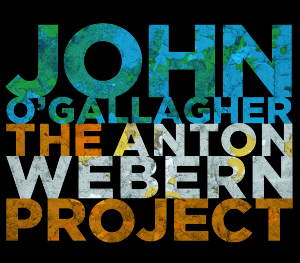
His new CD, "The Anton Webern Project" appears on bassist Michael Janisch's Whirlwind Records. O'Gallagher has been attracted to Webern's music since his undergraduate days at The Berklee School. The Austrian composer (1883-1945) was a student of Arnold Schoenberg in the early years of the 20th Century and is considered the "Father of Serialism." O'Gallagher takes a different view of the music. With his exceptional company of musicians - Matt Moran (vibraphone), Pete McCann (electric guitar), Russ Lossing (Hammond Organ, Fender Rhodes, piano), Johannes Weidenmuller (bass), Tyshawn Sorey (drums) and Margret Grebowicz (voice) - the saxophonist/arranges these 8 pieces as if Webern was composing today and working in the creative music idiom. Pieces such as "Quartet (after Op. 22)" and "Schnell (after Op.27)" are sonically akin to the music Ornette Coleman has created with his "Dancing In Your Head" projects and beyond. Throughout the program, Sorey lays down quite a beat while Weidenmuller creates a thick bottom. A "ragged" swing enlivens "Ways Going Over (after Op. 31)" during Moran's solo (pleasing chunky rhythm guitar and bubbly organ in support) before moving in to a straight-ahead groove for O'Gallagher's romp. The interweaving of saxophone, guitar, vibes, organ and drums create a hypnotic opening to "The Secret Code (After Op.28)" before Weidenmuller brings it all together with his authoritative bass lines. Still, the stop-start rhythms behind the solos give the piece a choppy, funk, feel. The lively interaction of the rhythm guitar and organ behind Moran shines as does McCann's high-volume romp (he can really let loose).
Ms. Grebowicz (who released a CD on Sunnyside in 2010 under her first name only) appears on 2 tracks. Her voice blends neatly into the ensemble on "Three Songs (after Op. 25)", her airy voice supplying the lyrics written by Webern's friend, the German poet Hildegard Jone (1891-1963). She returns for the final track, "All This World (after Op. 31)", adding a wordless vocal to the opening and closing theme.
Kudos to the excellent keyboard work of Lossing; not only is his accompaniment fascinating, but his solos have a fire that feeds the imagination of the other musicians. His overlaying of keyboards also catches one's attention, often doubling lines on Rhodes and organ while often adding acoustic piano to the track.
People unfamiliar with the music of Anton Webern may be curious to hear pieces such as "Opus 22 (for tenor saxophone, violin, clarinet and piano)" or guitarist Bruce Arnold's Spooky Action quartet that blended woodwinds, electric guitar, bass and drums into a sonic exploration of the composer's "5 Canons, op. 16" and 5 Movements for String Quartet, op. 5" (check that out here). John O'Gallagher, like many creative musicians, uses Webern's music as the foundation for music that appeals on many different levels, i.e. group interactions, spiky and funky rhythms, fiery solos and much more. "The Anton Webern Project" will appeal to fans of the Claudia Quintet (yes, Matt Moran is in that group as well) but also to listeners who enjoy creative challenges, music that hits hard with excellent arrangements and feisty musicianship . For more information, go to www.johnogallagher.com.

 Posts
Posts