This coming Saturday (September 8), the Uncertainty Music Series welcomes back guitarist/composer/producer Michael Gregory for an 8 p.m. performance in the compact music space of Never Ending Books, 810 State Street in New Haven. Gregory, who came to critical notice in the 1970s as an avant-garde musician playing with saxophonist Oliver Lake and trumpeter Baikida Carroll, brought a style informed as much by rhythm 'n' blues as by "free jazz." Originally appearing under the name of Michael Gregory Jackson, he dropped his last name (for obvious reasons) and seemed to disappear in the late 80s and 90s. In fact, he was producing music that blended his interests in dance music and electronics, releasing a series of recordings on very small labels with limited distribution.
In the middle part of the last decade, Gregory began working with trumpeter/composer/conceptualist Wadada Leo Smith appearing on several of his recent CDs. When he appeared in New Haven earlier this year, he played a solo set - this time, Gregory is joined by bassist/series curator Carl Testa and drummer Andrew Drury. Opening the evening will be Banjo Assault, a duo featuring Tom Crean and Matt Robidoux. This concert celebrates the 5th anniversary of the Uncertainty Music Series. For more information, go to uncertaintymusic.com.
Speaking of anniversaries, the Many Colors of a W*O*M*A*N Jazz Festival celebrates its 25th this Saturday at 8 p.m. The music begins at 8 p.m. and takes place in the Liberty Christian Center, 23 Vine Street in Hartford. For more information, call 860-231-0663 or go to www.themanycolorsofawomanincorporated.webs.com/ .
Tuesday, September 4, 2012
Sunday, September 2, 2012
Classy, Sassy and Brassy
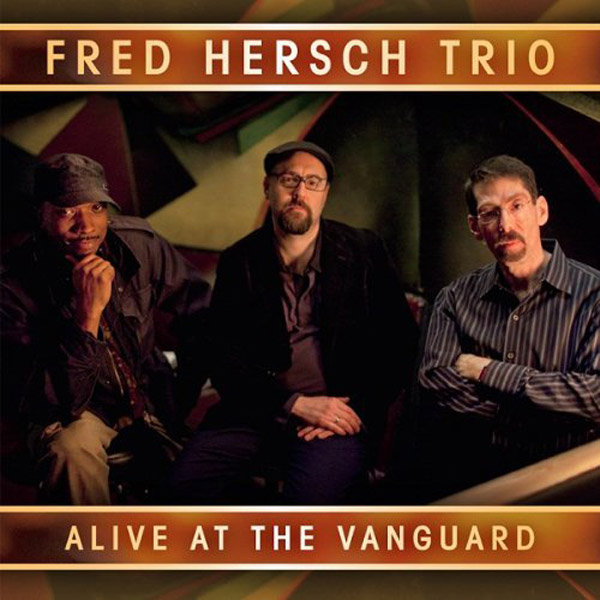
Much of the press that one reads on Fred Hersch concentrates on his recent illness and subsequent recovery (and deservedly so - it's a been a long, harrowing road back.) After 4 weeks of playing selections from his new double CD, "Fred Hersch Trio: Alive at The Vanguard" (Palmetto Records), it's time to put the talk of his travails away and concentrate on what a fine pianist, composer and bandleader he is.
With bassist John Hébert and drummer Eric McPherson as equal partners in this venture, Hersch's music bristles with crisp interplay, is ripe with fine flights of melodic invention and displays the depth as well as the breadth of Hersch's musical mind. Recorded during a week of gigs at The Vanguard in February of this year, the material includes classics like Ornette Coleman's "Lonely Woman" paired with Miles Davis's "Nardis", Charlie Parker's "Segment" and Sonny Rollins' "Doxy" (and that's just on Disc 1!) There are 7 Hersch originals, ranging from the ethereal "Dream of Monk" (from the pianist's new major work "Coma Dreams") to the fanciful "Jackalope" (a mythical beast that roams the Southwest of the United States).
Under headphones, one can really hear how responsive the rhythm section is. McPherson's spare drum work opens the solemn take on Coleman's "Lonely Woman" while his quiet brush work serves as fresh colors on the delicate "Tristesse (for Paul Motian)." On that same track, Hebert's full-sounding bass lines weave a counterpoint to the pianist's flowing phrases. The bassist and drummer get to open up on "Segment", creating a underpinning that is both buoyant and propulsive. "Opener", the first track of the 2nd CD, displays McPherson's excellent ability to push the time without seeming impudent. The dancing rhythms he plays on his cymbals nudge Hersch into a most energetic and entertaining solo (he can most certainly swing!)
The last of 3 tracks that pair tunes, "The Song Is You" is a simple yet beautiful ballad from Jerome Kern and Oscar Hammerstein II (composed in 1932 for the musical "Music In The Air) that segues into Thelonious Monk's faster-paced "Played Twice" - Hersch's unaccompanied opening is a wonderful 2-handed romp that spans all 88 keys. There are moments when his right hand dances to the highest notes while his left dips down to the keys that control the thicker piano strings .
The finest creative music makes the interested listener want to listen to it time and time again. On the first few times through "Alive at The Vanguard". you may catch the fine drumming and bass work without appreciating how much piano Fred Hersch is playing. When the Trio is in high gear, there are moments when it seems each musician playing at his highest level. And there are moments on the ballads when one hears how Hébert is really listening to the chords Hersch is playing and reacting instantaneously with his own melodic invention. This is music that resonates long after the applause has dies down; this is music that is both exciting and soul-satisfying.
The CD hits digitally and physically on September 11. As I write this, the Fred Hersch Trio has just begun a tour that includes residencies at The Village Vanguard (9/11-16) and Chicago's Jazz Showcase (9/20-23). After a solo piano tour of England in early October, the Trio will play at Firehouse 12 in New Haven, CT, on October 26. For more information about these dates and more (including a performance of Hersch's "Leaves of Grass" in Chicago on October 21), go to www.fredhersch.com. To check out the CD, go to www.palmetto-records.com.
Israeli-born, Berklee College-educated and road-tested, Anat Cohen is one of the more vivacious and exciting performers on the music scene. Originally a tenor saxophonist, she has increased her arsenal of reeds to include soprano saxophone and clarinet.
"Claroscuro", her 6th CD as a leader released on her Anzic Records label, features her long-standing quartet of Jason Lindner (piano), Daniel Freedman (drums) and, replacing Omer Avital on bass, Joe Martin. The title of the program refers to the Italian word "chiaroscuro" a painting technique that combines dark and light elements. Ms. Cohen's music often moves effortlessly from darker, intense, music to pieces that swing with joy or ballads that sway gently. This CD, self-produced with the aid of Lindner and Freedman, contains music from a wide spectrum including Lindner's percussive "Anat's Dance" that opens the program to the swirling South African rhythms of Abdullah Ibrahim's "The Wedding" that closes it. In between, guest such as trombonist Wycliffe Gordon and clarinetist Paquito D'Rivera combine their distinctive voices with the quartet to create music that sings, soars, and brings a smile. Gordon's growling 'bone is a fun foil to Ms. Cohen's raucous clarinet on the ever-so-slow "La Vie En Rose" - the trombonist puts more than just a pinch of Louis Armstrong in his sincere vocal (thankfully, he did not try to channel Edith Piaf.) He returns on Dr. Lonnie Smith's "And the World Weeps", his unaccompanied multi-phonics introducing the song that soon falls into a slow, New Orleans, drag. To their credit, the clarinetist (here, it is D'Rivera), tenor saxophonist and trombonist play the melody fairly straight; Gordon's solo sounds like a man fighting the darker forces, blending low guttural utterances with softer, higher-pitched phrases. D'Rivera enters in a classic Johnny Dodds mode before Ms Cohen's tenor adds a chorus of deeply felt blues playing.
The twin clarinets of Ms. Cohen and D'Rivera do a rousing version of Artie Shaw's "Nightmare", prodded by Freedman's pounding drums, Lindner's rumbling piano and Martin's throbbing bass. The manner in which the clarinets intertwine is sensual as well as conversational. Ms. Cohen moves to bass clarinet for her original "Kick Off", a piece for her, D'Rivera and the percussion of Freedman and guest Gilmar Gomes. Gomes' active percussion takes that piece out and then leads the Quartet plus Rivera into a fiery reading of "Um a Zero", a fine choro from the pen of Pixinguinha, a flautist/saxophonist/composer active in Brazil through the middle decades of the 20thy Centur. Gomes also appears on "Tudo Que Você Podia Ser", another Brazilian composition, this one composed by and made famous by Lô Borges. Here, it is Ms. Cohen's expressive soprano saxophone dancing atop and alongside the dancing piano of Lindner.
"Claroscuro" shines brightly with its intelligent variety of rhythms, melodies, and superb interplay. Anat Cohen and these fine musicians play with such exuberance and soul, it's hard not to move your feet on the faster tunes and lean in closer on the ballads. Having seen Ms. Cohen on a number of occasions in various ensembles that she has led or co-led (3 Cohens, with her brothers Yuval and Avishai), she always gives a maximum effort - this CD, scheduled on September 25, is yet another excellent example of her prodigious talents. For more information, go to www.anatcohen.com or anzicstore.com.
The sackbut is the earliest form of that wondrously ungainly instrument known as the trombone (though it's also the name give to a stringed instrument found in the Bible.) Trombonist/composer Joe Fiedler has organized a quartet that features 3 'bones (Fiedler, Ryan Keberle and Josh Roseman) and the rhythm section of Marcus Rojas on tuba. Methinks one might expect the group's debut CD, "Joe Fiedler's Big Sackbut" (Yellow Sound Label), to be a noisy assemblage; actually, the program covers a wide swath of musical territory with pieces that range from the richly melodic tribute "Don Pullen" (soulful music with a touch of gospel) to the bluesy swagger of "Blabber and Smoke" (composed by the le Don Van Vliet - Captain Beefheart to his fans) to the highly rhythmic adventure that is Willie Colon's "Calle Luna, Calle Sol." On the last track, Rojas moves easily from being the rhythm instrument to playing counterpoint. Hard not to enjoy the ensemble's spirited take on Sun Ra's "A Call for All Demons"; the brasses gentle yet forceful (is that possible? listen and decide) performance highlights the melodic side of the composer/space adventurer (the composition dates back to 1960.)
More highlights include the leader's handsome solo on "#11" and Rojas's long, low, tones that lead in "Ging Gong" (his solo in the middle of the track is joyful and quite melodic.) The foursome's interaction on the CD closer "Urban Groovy" sounds as if they are effortlessly gliding across a ballroom dance floor. The muted trombones on the opening section of the leader's "The Crab" feel like heraldic trumpets and move the piece along to a fine melody with hearty as well as heartfelt solos from Fiedler and Roseman.
One might look upon "Joe Fiedler's Big Sackbut" and think that there's not much of a sound palette. You should be quite surprised and pleased at how this music moves gracefully and melodically throughout the 10 tracks; yet the pieces also take many rhythmic paths during the program. No doubt about it, this CD is a "wind-win" situation. For more information, go to www.joefiedler.com.
With bassist John Hébert and drummer Eric McPherson as equal partners in this venture, Hersch's music bristles with crisp interplay, is ripe with fine flights of melodic invention and displays the depth as well as the breadth of Hersch's musical mind. Recorded during a week of gigs at The Vanguard in February of this year, the material includes classics like Ornette Coleman's "Lonely Woman" paired with Miles Davis's "Nardis", Charlie Parker's "Segment" and Sonny Rollins' "Doxy" (and that's just on Disc 1!) There are 7 Hersch originals, ranging from the ethereal "Dream of Monk" (from the pianist's new major work "Coma Dreams") to the fanciful "Jackalope" (a mythical beast that roams the Southwest of the United States).
Under headphones, one can really hear how responsive the rhythm section is. McPherson's spare drum work opens the solemn take on Coleman's "Lonely Woman" while his quiet brush work serves as fresh colors on the delicate "Tristesse (for Paul Motian)." On that same track, Hebert's full-sounding bass lines weave a counterpoint to the pianist's flowing phrases. The bassist and drummer get to open up on "Segment", creating a underpinning that is both buoyant and propulsive. "Opener", the first track of the 2nd CD, displays McPherson's excellent ability to push the time without seeming impudent. The dancing rhythms he plays on his cymbals nudge Hersch into a most energetic and entertaining solo (he can most certainly swing!)
The last of 3 tracks that pair tunes, "The Song Is You" is a simple yet beautiful ballad from Jerome Kern and Oscar Hammerstein II (composed in 1932 for the musical "Music In The Air) that segues into Thelonious Monk's faster-paced "Played Twice" - Hersch's unaccompanied opening is a wonderful 2-handed romp that spans all 88 keys. There are moments when his right hand dances to the highest notes while his left dips down to the keys that control the thicker piano strings .
The finest creative music makes the interested listener want to listen to it time and time again. On the first few times through "Alive at The Vanguard". you may catch the fine drumming and bass work without appreciating how much piano Fred Hersch is playing. When the Trio is in high gear, there are moments when it seems each musician playing at his highest level. And there are moments on the ballads when one hears how Hébert is really listening to the chords Hersch is playing and reacting instantaneously with his own melodic invention. This is music that resonates long after the applause has dies down; this is music that is both exciting and soul-satisfying.
The CD hits digitally and physically on September 11. As I write this, the Fred Hersch Trio has just begun a tour that includes residencies at The Village Vanguard (9/11-16) and Chicago's Jazz Showcase (9/20-23). After a solo piano tour of England in early October, the Trio will play at Firehouse 12 in New Haven, CT, on October 26. For more information about these dates and more (including a performance of Hersch's "Leaves of Grass" in Chicago on October 21), go to www.fredhersch.com. To check out the CD, go to www.palmetto-records.com.
Israeli-born, Berklee College-educated and road-tested, Anat Cohen is one of the more vivacious and exciting performers on the music scene. Originally a tenor saxophonist, she has increased her arsenal of reeds to include soprano saxophone and clarinet.
"Claroscuro", her 6th CD as a leader released on her Anzic Records label, features her long-standing quartet of Jason Lindner (piano), Daniel Freedman (drums) and, replacing Omer Avital on bass, Joe Martin. The title of the program refers to the Italian word "chiaroscuro" a painting technique that combines dark and light elements. Ms. Cohen's music often moves effortlessly from darker, intense, music to pieces that swing with joy or ballads that sway gently. This CD, self-produced with the aid of Lindner and Freedman, contains music from a wide spectrum including Lindner's percussive "Anat's Dance" that opens the program to the swirling South African rhythms of Abdullah Ibrahim's "The Wedding" that closes it. In between, guest such as trombonist Wycliffe Gordon and clarinetist Paquito D'Rivera combine their distinctive voices with the quartet to create music that sings, soars, and brings a smile. Gordon's growling 'bone is a fun foil to Ms. Cohen's raucous clarinet on the ever-so-slow "La Vie En Rose" - the trombonist puts more than just a pinch of Louis Armstrong in his sincere vocal (thankfully, he did not try to channel Edith Piaf.) He returns on Dr. Lonnie Smith's "And the World Weeps", his unaccompanied multi-phonics introducing the song that soon falls into a slow, New Orleans, drag. To their credit, the clarinetist (here, it is D'Rivera), tenor saxophonist and trombonist play the melody fairly straight; Gordon's solo sounds like a man fighting the darker forces, blending low guttural utterances with softer, higher-pitched phrases. D'Rivera enters in a classic Johnny Dodds mode before Ms Cohen's tenor adds a chorus of deeply felt blues playing.
The twin clarinets of Ms. Cohen and D'Rivera do a rousing version of Artie Shaw's "Nightmare", prodded by Freedman's pounding drums, Lindner's rumbling piano and Martin's throbbing bass. The manner in which the clarinets intertwine is sensual as well as conversational. Ms. Cohen moves to bass clarinet for her original "Kick Off", a piece for her, D'Rivera and the percussion of Freedman and guest Gilmar Gomes. Gomes' active percussion takes that piece out and then leads the Quartet plus Rivera into a fiery reading of "Um a Zero", a fine choro from the pen of Pixinguinha, a flautist/saxophonist/composer active in Brazil through the middle decades of the 20thy Centur. Gomes also appears on "Tudo Que Você Podia Ser", another Brazilian composition, this one composed by and made famous by Lô Borges. Here, it is Ms. Cohen's expressive soprano saxophone dancing atop and alongside the dancing piano of Lindner.
"Claroscuro" shines brightly with its intelligent variety of rhythms, melodies, and superb interplay. Anat Cohen and these fine musicians play with such exuberance and soul, it's hard not to move your feet on the faster tunes and lean in closer on the ballads. Having seen Ms. Cohen on a number of occasions in various ensembles that she has led or co-led (3 Cohens, with her brothers Yuval and Avishai), she always gives a maximum effort - this CD, scheduled on September 25, is yet another excellent example of her prodigious talents. For more information, go to www.anatcohen.com or anzicstore.com.
The sackbut is the earliest form of that wondrously ungainly instrument known as the trombone (though it's also the name give to a stringed instrument found in the Bible.) Trombonist/composer Joe Fiedler has organized a quartet that features 3 'bones (Fiedler, Ryan Keberle and Josh Roseman) and the rhythm section of Marcus Rojas on tuba. Methinks one might expect the group's debut CD, "Joe Fiedler's Big Sackbut" (Yellow Sound Label), to be a noisy assemblage; actually, the program covers a wide swath of musical territory with pieces that range from the richly melodic tribute "Don Pullen" (soulful music with a touch of gospel) to the bluesy swagger of "Blabber and Smoke" (composed by the le Don Van Vliet - Captain Beefheart to his fans) to the highly rhythmic adventure that is Willie Colon's "Calle Luna, Calle Sol." On the last track, Rojas moves easily from being the rhythm instrument to playing counterpoint. Hard not to enjoy the ensemble's spirited take on Sun Ra's "A Call for All Demons"; the brasses gentle yet forceful (is that possible? listen and decide) performance highlights the melodic side of the composer/space adventurer (the composition dates back to 1960.)
More highlights include the leader's handsome solo on "#11" and Rojas's long, low, tones that lead in "Ging Gong" (his solo in the middle of the track is joyful and quite melodic.) The foursome's interaction on the CD closer "Urban Groovy" sounds as if they are effortlessly gliding across a ballroom dance floor. The muted trombones on the opening section of the leader's "The Crab" feel like heraldic trumpets and move the piece along to a fine melody with hearty as well as heartfelt solos from Fiedler and Roseman.
One might look upon "Joe Fiedler's Big Sackbut" and think that there's not much of a sound palette. You should be quite surprised and pleased at how this music moves gracefully and melodically throughout the 10 tracks; yet the pieces also take many rhythmic paths during the program. No doubt about it, this CD is a "wind-win" situation. For more information, go to www.joefiedler.com.
Labels:
CD reviews,
Live at the Village Vanguard
Thursday, August 30, 2012
Big Band in New Haven
Just received this announcement via email and jazz fans in CT (and surrounding areas) should take a look:
Mingus Big Band opens concert season at Yale
14-piece big band celebrates the musical legacy of Charles Mingus
NEW HAVEN, CT | The Ellington Jazz Series at the Yale School of Music kicks off its 2012–2013 season on Friday, September 14 with a concert featuring the MINGUS BIG BAND.
The Grammy Award-winning Mingus Big Band celebrates the music of the composer and bassist Charles Mingus, who died in 1979.
Under the artistic direction of Sue Mingus, the widow of Charles Mingus, the 14-piece band tours extensively in the United States and abroad. The ensemble has ten recordings to its credit, six of which have been nominated for Grammy Awards. The 2010 album Mingus Big Band Live at Jazz Standard won a Grammy for Best Large Jazz Ensemble Album.
The members of the Mingus Big Band performing in this concert are: Alex Sipiagin, Greg Gisbert, and Philip Harper (trumpets); Craig Handy, Alex Foster, Abraham Burton, Wayne Escoffery, and Lauren Sevian (saxophones); Ku-umba Frank Lacy, Luis Bonilla, and Dave Taylor (trombones); Donald Edwards (drums); Boris Kozlov( bass); and Helen Sung (piano).
The concert begins at 8 pm in Morse Recital Hall, located in Sprague Memorial Hall (470 College Street, New Haven). Tickets are $20–$30, $10 with student ID. Season tickets to the Ellington Jazz Series begin at $51.
Quite a band, quite a venue and quite a repertoire - this bodes well for music lovers. On the same night, right across town, the Firehouse 12 Fall 2012 series opens with drummer/composer E.J. Strickland. More on both shows shortly. Reviews return over the weekend.
Monday, August 20, 2012
Youthful Movements Live + High-Hats Off To Elvin
I am continually impressed and heartened by the number of younger people who find their way into jazz - many of them are already moving beyond the neophyte stage and launching serious careers.
A newly formed ensemble - 4Core - is in the midst of its inaugural tour that will culminate in an appearance on Friday August 24 at The Buttonwood Tree, 605 Main Street in Middletown (CT). Composed of Steven Feifke (piano), Raviv Markovitz (bass), Chad Lefkowicz-Brown (saxophone) and Jimmy Macbride (drums), they have all worked together in different ensembles but this is their first attempt at playing as a unit. Macbride, a native of Hartford, CT, is well-known around these parts as he has been playing since he was a wee lad. He's been awarded numerous scholarships and currently attends the Juilliard School - he's also a fine composer. Lefkowicz-Brown has recorded with bassist Ron McClure and drummer Clarence Penn (separately) as well as being a member of trombonist Natalie Cressman's band Secret Garden (just reviewed her fine new CD - read it here). He,also, leads a band with trumpeter Ivan Rosenberg that recently released its debut CD (find that here). Markovitz started playing piano at the age of 4 before switching to the bass before he entered middle school. He's a double major (political science and mathematics) beginning his senior year at Columbia University and is a member of pianist Adam Kromelow's Trio (his CD is reviewed here). Feifke (pictured above) is also beginning his senior year of college - he attends NYU where he studies jazz performance and economics. Hes played with Chris Potter, Rich Perry and Lenny Pickett (among others.) Feifke is another member of the group who began playing at the age of 4 (perhaps explaining the origin of the band's name.)
Each member of 4Core brings original compositions and arrangements to the band so one should expect an evening of classy yet sassy riffs, excellent solos and strong interplay. For more information, go to www.buttonwood.org. Each member of the band has his own website; check them out at www.stevenfeifke.com, www.ravivmarkovitzmusic.com, www.chadlefkowicz-brown.com and jimmymacbride.com - then come see and hear them live on Friday (also at the Lilypad in Boston on 8/21 and 22 and The Regatta Bar in Boston on 8/23.)
Michael Feinberg, a native of Atlanta, Georgia, is, like many jazz fans, drawn to the music of the classic John Coltrane Quartet of the early-to-mid 1960s. But, it's the work of drummer Elvin Jones (1927-2004) that most attracted the 25-year old bassist. When he began to conduct a deeper study of Jones's career, Feinberg found the drummer working with bassists such as Gene Perla (still playing at age 72), Richard Davis, George Mraz, and Dave Holland. Feinberg's new recording, his 3rd as a leader, is dubbed "The Elvin Jones Project" (Sunnyside Records) and features the excellent work of Billy Hart (drums), co-producer George Garzone (saxophone), Tim Hagans (trumpet) and Leo Genovese (piano, Fender Rhodes) - guitarist Alex Wintz appears on 2 of the 7 tracks.
The result is a joyous pastiche of styles and sounds that tickle and thrill the listener. Hart (born in 1940), a close friend of Jones, gives this music its thrust and propulsion (and a quiet lilt when called for, as he does with excellent brushwork on "Nancy With the Laughing Face.") When he and Feinberg lock into a groove, as they do repeatedly during this program, the music explodes.The two lead "Taurus People" in on a jagged yet funky rhythm - the piece moves in and out of tempo under the piano solo and hear how they lay back and then lean on under Garzone's sweet solo. Listen to their exciting drive beneath the soloists on "Three Card Molly" and "Mile Mode." On the latter track, Genovese (who has been touring with bassist/vocalist Esperanza Spalding) really digs into the piano, creating a fiery solo that erupts from the speakers. There's a "spacey" early-Weather Report sound to "Earth Jones" with Genovese's Fender Rhodes pinging back and forth between speakers, Hagan's higher-range solo and the throbbing bass line. The one Feinberg original on the CD, "It Is Written", features Wintz's fine guitar work, pleasing muted trumpet, soft electric piano and Hart's quietly expressive drumming. Composed with the sound of Jones' 2001 collaboration with Holland and Bill Frisell in mind, the music glides easily. Wintz delivers a strong solo on the funky take of Frank Foster's "The Unknighted Nations" which also contains a speaker-rattling solo from Hart (who does not "imitate" Jones at any time during the program.)
"The Elvin Jones Project" can best be described as "inspiring music by inspired musicians" - bassist Michael Feinberg allows his musicians to be themselves and the music is better for it. On top of that, Feinberg continues to impress as a musician who knows where he wants his music to go.
The CD will be released on September 11, 2012. For more information, go to www.michaelfeinbergmusic.com.
A newly formed ensemble - 4Core - is in the midst of its inaugural tour that will culminate in an appearance on Friday August 24 at The Buttonwood Tree, 605 Main Street in Middletown (CT). Composed of Steven Feifke (piano), Raviv Markovitz (bass), Chad Lefkowicz-Brown (saxophone) and Jimmy Macbride (drums), they have all worked together in different ensembles but this is their first attempt at playing as a unit. Macbride, a native of Hartford, CT, is well-known around these parts as he has been playing since he was a wee lad. He's been awarded numerous scholarships and currently attends the Juilliard School - he's also a fine composer. Lefkowicz-Brown has recorded with bassist Ron McClure and drummer Clarence Penn (separately) as well as being a member of trombonist Natalie Cressman's band Secret Garden (just reviewed her fine new CD - read it here). He,also, leads a band with trumpeter Ivan Rosenberg that recently released its debut CD (find that here). Markovitz started playing piano at the age of 4 before switching to the bass before he entered middle school. He's a double major (political science and mathematics) beginning his senior year at Columbia University and is a member of pianist Adam Kromelow's Trio (his CD is reviewed here). Feifke (pictured above) is also beginning his senior year of college - he attends NYU where he studies jazz performance and economics. Hes played with Chris Potter, Rich Perry and Lenny Pickett (among others.) Feifke is another member of the group who began playing at the age of 4 (perhaps explaining the origin of the band's name.)
Each member of 4Core brings original compositions and arrangements to the band so one should expect an evening of classy yet sassy riffs, excellent solos and strong interplay. For more information, go to www.buttonwood.org. Each member of the band has his own website; check them out at www.stevenfeifke.com, www.ravivmarkovitzmusic.com, www.chadlefkowicz-brown.com and jimmymacbride.com - then come see and hear them live on Friday (also at the Lilypad in Boston on 8/21 and 22 and The Regatta Bar in Boston on 8/23.)
Michael Feinberg, a native of Atlanta, Georgia, is, like many jazz fans, drawn to the music of the classic John Coltrane Quartet of the early-to-mid 1960s. But, it's the work of drummer Elvin Jones (1927-2004) that most attracted the 25-year old bassist. When he began to conduct a deeper study of Jones's career, Feinberg found the drummer working with bassists such as Gene Perla (still playing at age 72), Richard Davis, George Mraz, and Dave Holland. Feinberg's new recording, his 3rd as a leader, is dubbed "The Elvin Jones Project" (Sunnyside Records) and features the excellent work of Billy Hart (drums), co-producer George Garzone (saxophone), Tim Hagans (trumpet) and Leo Genovese (piano, Fender Rhodes) - guitarist Alex Wintz appears on 2 of the 7 tracks.
The result is a joyous pastiche of styles and sounds that tickle and thrill the listener. Hart (born in 1940), a close friend of Jones, gives this music its thrust and propulsion (and a quiet lilt when called for, as he does with excellent brushwork on "Nancy With the Laughing Face.") When he and Feinberg lock into a groove, as they do repeatedly during this program, the music explodes.The two lead "Taurus People" in on a jagged yet funky rhythm - the piece moves in and out of tempo under the piano solo and hear how they lay back and then lean on under Garzone's sweet solo. Listen to their exciting drive beneath the soloists on "Three Card Molly" and "Mile Mode." On the latter track, Genovese (who has been touring with bassist/vocalist Esperanza Spalding) really digs into the piano, creating a fiery solo that erupts from the speakers. There's a "spacey" early-Weather Report sound to "Earth Jones" with Genovese's Fender Rhodes pinging back and forth between speakers, Hagan's higher-range solo and the throbbing bass line. The one Feinberg original on the CD, "It Is Written", features Wintz's fine guitar work, pleasing muted trumpet, soft electric piano and Hart's quietly expressive drumming. Composed with the sound of Jones' 2001 collaboration with Holland and Bill Frisell in mind, the music glides easily. Wintz delivers a strong solo on the funky take of Frank Foster's "The Unknighted Nations" which also contains a speaker-rattling solo from Hart (who does not "imitate" Jones at any time during the program.)
"The Elvin Jones Project" can best be described as "inspiring music by inspired musicians" - bassist Michael Feinberg allows his musicians to be themselves and the music is better for it. On top of that, Feinberg continues to impress as a musician who knows where he wants his music to go.
The CD will be released on September 11, 2012. For more information, go to www.michaelfeinbergmusic.com.
Saturday, August 18, 2012
Serious Fun (Part 1)
Reviewers can be such a fussy lot. We want to write about serious, earth-shaking, music and, there are times, that that desire is a detriment to paying attention to recordings deserving to be noticed because...well, because the music is relaxing or silly or whose only message is "listen to these musicians have fun working together."
Duduka da Fonseca, a native of Rio de Janiero, is one of the busiest drummers in the world, working in various ensembles including Trio Da Paz, alongside Tom Harrell, Dom Salvador, Nana Vasconcelos, Phil Woods, Milton Nascimento, Joe Locke, and many others. His Quintet has been in existence since 2002 and features his long-time associate Helio Alves (piano), Anat Cohen (clarinet, tenor saxophone), Guilherme Monteiro (acoustic and electric guitar) and Leonardo Cioglia (bass). "Samba Jazz - Jazz Samba" (Anzic Records) is the ensemble's 2nd CD and is a fine accompaniment to a sunny day on the beach, the back porch or driving around with the windows. 8 of the 10 tracks are by Brazilian composers including the leader's own ballad, "Flying Over Rio", featuring the sweetest tenor sax solo from Ms. Cohen and a gentle ramble from the pianist. Da Fonseca, who rarely solos on this session, gets the spotlight at the top of Raul Mascarhenas' flashy "Sabor Cariocas" - the "trading 4s" section at the close is a real treat. The arrangement of Antonio Jobim's "Rancho Das Nuvens" has such an intelligent blend of the 5 instruments, whether it's the piano and clarinet in the lead or the fine support from Monteiro, Cioglia and Da Fonseca. It's a work unfamiliar to me but is one of Jobim's most handsome melodies (yes, he wrote a slew of them) and this reading is excellent. Toninho Horta's "Dona Olimpia" sounds influenced by The Beatles' "Norwegan Wood", an up-tempo ballad with a hearty tenor solo over Cioglia's pulsating bass and the leader's active drums.
One of the other pleasing surprises is the bouncy reading of Ornette Coleman's "Blues Connotation", a joyous romp filled with short, pithy, solos. Montiero's quiet "blue" guitar chords lead Ms. Cohen's sweet clarinet on Jimmy Rowles' "The Peacocks" - the blend of guitar and acoustic piano accompaniment is intelligent and uncluttered. Montiero's subdued solo, with Alves' rich piano chords offering a strong foundation, is quite fine.
"Samba Jazz - Jazz Samba" does have that combination alluded to in the title and much more. Everyone contributes, no one hogs the spotlight and the wide variety of material introduces the casual listener to several fine Brazilian composers. Spend a bit of time with the Duduka Da Fonseca Quintet and chances are very good you'll want to spend more. For more information, go to www.dudukadafonseca.net.
If variety is the spice of life, "Bop! Bang! Boom!" (Futurism Records), guitarist Grant Geissman's 15th recording as a leader, has something for just about every guitar lover (sorry, no "death-metal" or reggae), even a track ("Go To The Window") on which he plays electric sitar. In a career that spans nearly 4 decades, Geissman has worked as a studio musician (that's his solo on Chuck Mangione's mega-hit "Feels So Good") composed or played on soundtracks for television (he co-wrote the theme for "Two and a Half Men" and plays the solo on the theme from "Monk") and can be heard on the scores of numerous motion pictures. He can be heard adding numerous interesting sounds on the fine 2012 CD from composer/vocalist Lorraine Feather, "Tales of the Unusual".
For much of this recording, Geissman uses the rhythm section from Tierney Sutton's band, bassists Kevin Axt and Trey Henry (but not together) plus her drummer Ray Brinker, along with pianist Emilio Palame, percussionist Brian Kilgore and saxophonist Brian Scanlon. Plenty of the guitarist's friends show up including fellow pickers Albert Lee and Larry Carlton on the rip-roaring "Texas Shuffle" as well as Dennis C. Brown and Chuck Lorre on the burning slow blues titled "Take Yer Time." Russell Ferrante, he of Yellowjackets, takes the keyboard chair on a pair of tracks, adding his atmospheric Fender Rhodes on the crafty "Good Morning, Mr. Phelps" (Scanlon's soprano solo really stands out as does Axl's "slippery" bass lines) and acoustic piano to the charming "Un Poco Espanol" (Geissman's acoustic guitar work blends so well with the piano.) The tenor saxophone of Tom Scott is put to good use on the ultra-slinky "Q Tip" (for Quincy Jones), serving as a fine complement to Geissman's funky guitar solo (I detect a touch of Phil Upchurch in his phrases). Scott returns for the final track, the high-energy shuffle "Off The Grid" - he and Geissman,l along with organist Jim Cox, trade "8s" to take the track and CD out of a high level. The legendary Van Dyke Parks, with whom Geissman has worked on a number of projects, joins the fun, on accordion no less, for the Crescent City-inspired romp "$25 Stella" (named for the guitar the leader uses on the track. Henry switches to tuba for this track which also features percussionist Kilgore on washboard, spoons and hubcaps. The leader goes it alone on "Guitarism", well, kind of - he overdubs 2 acoustic guitars, handclaps and percussion on a flamenco-drenched dance dedicated to his guitar professor at Cal State/Northridge, Ron Purcell, who passed away last year.
"Bop! Bang! Boom!" is the third CD in a trilogy, all of which feature a similar cast of musicians plus a number of fascinating guests. Holding each eclectic collection of songs and styles is Grant Geissman's sense of adventure, fun and integrity. He's not afraid to mix it up or to share the spotlight and no piece overstays its welcome. Also, the package is a hoot; the last time I had trading cards in my possession, there was a slab of bubble gum along with them. Give these tunes a listen and your worries just might drop away. For more information, go to www.grantgeissman.com.
Duduka da Fonseca, a native of Rio de Janiero, is one of the busiest drummers in the world, working in various ensembles including Trio Da Paz, alongside Tom Harrell, Dom Salvador, Nana Vasconcelos, Phil Woods, Milton Nascimento, Joe Locke, and many others. His Quintet has been in existence since 2002 and features his long-time associate Helio Alves (piano), Anat Cohen (clarinet, tenor saxophone), Guilherme Monteiro (acoustic and electric guitar) and Leonardo Cioglia (bass). "Samba Jazz - Jazz Samba" (Anzic Records) is the ensemble's 2nd CD and is a fine accompaniment to a sunny day on the beach, the back porch or driving around with the windows. 8 of the 10 tracks are by Brazilian composers including the leader's own ballad, "Flying Over Rio", featuring the sweetest tenor sax solo from Ms. Cohen and a gentle ramble from the pianist. Da Fonseca, who rarely solos on this session, gets the spotlight at the top of Raul Mascarhenas' flashy "Sabor Cariocas" - the "trading 4s" section at the close is a real treat. The arrangement of Antonio Jobim's "Rancho Das Nuvens" has such an intelligent blend of the 5 instruments, whether it's the piano and clarinet in the lead or the fine support from Monteiro, Cioglia and Da Fonseca. It's a work unfamiliar to me but is one of Jobim's most handsome melodies (yes, he wrote a slew of them) and this reading is excellent. Toninho Horta's "Dona Olimpia" sounds influenced by The Beatles' "Norwegan Wood", an up-tempo ballad with a hearty tenor solo over Cioglia's pulsating bass and the leader's active drums.
One of the other pleasing surprises is the bouncy reading of Ornette Coleman's "Blues Connotation", a joyous romp filled with short, pithy, solos. Montiero's quiet "blue" guitar chords lead Ms. Cohen's sweet clarinet on Jimmy Rowles' "The Peacocks" - the blend of guitar and acoustic piano accompaniment is intelligent and uncluttered. Montiero's subdued solo, with Alves' rich piano chords offering a strong foundation, is quite fine.
"Samba Jazz - Jazz Samba" does have that combination alluded to in the title and much more. Everyone contributes, no one hogs the spotlight and the wide variety of material introduces the casual listener to several fine Brazilian composers. Spend a bit of time with the Duduka Da Fonseca Quintet and chances are very good you'll want to spend more. For more information, go to www.dudukadafonseca.net.
If variety is the spice of life, "Bop! Bang! Boom!" (Futurism Records), guitarist Grant Geissman's 15th recording as a leader, has something for just about every guitar lover (sorry, no "death-metal" or reggae), even a track ("Go To The Window") on which he plays electric sitar. In a career that spans nearly 4 decades, Geissman has worked as a studio musician (that's his solo on Chuck Mangione's mega-hit "Feels So Good") composed or played on soundtracks for television (he co-wrote the theme for "Two and a Half Men" and plays the solo on the theme from "Monk") and can be heard on the scores of numerous motion pictures. He can be heard adding numerous interesting sounds on the fine 2012 CD from composer/vocalist Lorraine Feather, "Tales of the Unusual".
For much of this recording, Geissman uses the rhythm section from Tierney Sutton's band, bassists Kevin Axt and Trey Henry (but not together) plus her drummer Ray Brinker, along with pianist Emilio Palame, percussionist Brian Kilgore and saxophonist Brian Scanlon. Plenty of the guitarist's friends show up including fellow pickers Albert Lee and Larry Carlton on the rip-roaring "Texas Shuffle" as well as Dennis C. Brown and Chuck Lorre on the burning slow blues titled "Take Yer Time." Russell Ferrante, he of Yellowjackets, takes the keyboard chair on a pair of tracks, adding his atmospheric Fender Rhodes on the crafty "Good Morning, Mr. Phelps" (Scanlon's soprano solo really stands out as does Axl's "slippery" bass lines) and acoustic piano to the charming "Un Poco Espanol" (Geissman's acoustic guitar work blends so well with the piano.) The tenor saxophone of Tom Scott is put to good use on the ultra-slinky "Q Tip" (for Quincy Jones), serving as a fine complement to Geissman's funky guitar solo (I detect a touch of Phil Upchurch in his phrases). Scott returns for the final track, the high-energy shuffle "Off The Grid" - he and Geissman,l along with organist Jim Cox, trade "8s" to take the track and CD out of a high level. The legendary Van Dyke Parks, with whom Geissman has worked on a number of projects, joins the fun, on accordion no less, for the Crescent City-inspired romp "$25 Stella" (named for the guitar the leader uses on the track. Henry switches to tuba for this track which also features percussionist Kilgore on washboard, spoons and hubcaps. The leader goes it alone on "Guitarism", well, kind of - he overdubs 2 acoustic guitars, handclaps and percussion on a flamenco-drenched dance dedicated to his guitar professor at Cal State/Northridge, Ron Purcell, who passed away last year.
"Bop! Bang! Boom!" is the third CD in a trilogy, all of which feature a similar cast of musicians plus a number of fascinating guests. Holding each eclectic collection of songs and styles is Grant Geissman's sense of adventure, fun and integrity. He's not afraid to mix it up or to share the spotlight and no piece overstays its welcome. Also, the package is a hoot; the last time I had trading cards in my possession, there was a slab of bubble gum along with them. Give these tunes a listen and your worries just might drop away. For more information, go to www.grantgeissman.com.
Wednesday, August 15, 2012
Youthful Movements + Old Pros
At the ripe old age of 20, trombonist-composer-vocalist Natalie Cressman has already had an extremely busy career. Daughter of vocalist Sandy and trombonist/engineer Jeff Cressman, she has played with Peter Apfelbaum, Josh Roseman, Wayne Wallace, Jai Uttal, the GRAMMY Jazz Ensembles, the SFJazz High School All-Stars and toured extensively for nearly 2 years with the Trey Anastasio Band. She's now studying at the Manhattan School of Music and is also enrolled in the Stanford Jazz Mentors program.
She's got the "creds" but, as the cynical ones aming us might ask, can she play? "Unfolding" (Cressman Music) is her debut as a leader and features her band Secret Garden, 5 excellent young musicians who, along with Ms. Cressman, take this music in many fascinating directions. Featuring Ivan Rosenberg (trumpet), Chad Lefkowitz-Brown (tenor saxophone), Pascal La Boeuf (piano, Fender Rhodes), Ruben Samama (bass) and Hartford, CT-area native Jake Goldbas (drums), it is impressive how much of this music transcends the myriad influences. One of the highlights is the exciting, passionate, reading of Charles Mingus's "Goodbye Pork Pie Hat" - from Ms. Cressman's sparkling reading of Joni Mitchell's poetic lyrics to Goldbas's hard-edged drive, the song rises on the artistic interaction of the
brass and reeds, La Boeuf's impressionistic piano and Samama's lyrical bass work. Rosenberg's solo over the high-flying rhythm section goes beyond youthful imitation. As a trombonist, Ms. Cressman has a smooth tone, an easy facility and an innate ability to blend with the other musicians on the front line. Her solos have a lyrical bent, even on pieces (such as the opener "Flip") that really push hard. She also displays a articulate singing voice, words yet another important way to connect with an audience. Her version of "Honeysuckle Rose" (arranged by her and pianist Christian Sands) shows the influence of Esperanza Spaulding in the vocals and the rhythmic drive. Still, her over-dubbed vocals work well alongside the burbling Fender Rhodes and the fine drum work.
Family friend and employer Peter Apfelbaum adds his strong tenor saxophone voice to the final track, the trombonist's original "That Kind." He takes a lengthy solo that leads to Ms. Cressman's spot, a whirling dervish of short phrases and long tones that have a dancing quality. Another one of her originals, "Skylight", is an exciting blend of driving rhythms and impressive solos that start quietly before rising on the fiery percussion of Goldbas. Still, the composer builds in softer sections that give the piece its sharp contrasts.
"Unfolding" has much to recommend its purchase, from the creative interplay to the excellent rhythm section work to the striking solos to the pleasing vocal work. In the crazy musical environment that is 21st Century jazz, Natalie Cressman, while still a student, does not sound as if the conservatory has muted her desire to allow this music to go in multiple directions. There are those of us who enter this music through the rhythm section and Ms. Cressman has wisely chosen 3 musicians who truly shape this music to give the front line a substantial foundation on which to play. This is "play-filled" music, neither stodgy nor reverential. An impressive debut! For more information, go to www.nataliecressman.com.
Here's the Charles Mingus/Joni Mitchell tune, courtesy of Ms. Cressman and Bandcamp:
One might imagine that if you put a 20-year old alto saxophonist in a studio with pianist Kenny Barron and bassist Ron Carter, she or he might be a bit awed. If Erena Terakubo, a native of Sapporo, Japan, was nervous, it's not at all evident on "New York Attitude" (4Q/King Records LTD) - in fact, this is the second time she's recorded with Barron (he appeared on her debut CD, released only in Japan.)With drummer Lee Pearson pushing the band from below, this music will please fans of straight-ahead jazz.
What stands out for this listener is how natural and unforced this session feels. With a blend of recognizable standards ("This Here", "Invitation", "Star Eyes", "Body And Soul"), a pair of pieces from jazz masters ("Oriental Folk Song" by Wayne Shorter and the swinging "Del Sasser" by bassist Sam Jones), 2 originals, a song from fellow countryman Sadao Watanabe, and the title track by Barron, this program shines from the opening note. Dominick Farinacci adds his classy flugelhorn to both the Shorter and Jones tunes as well as his bright trumpet tones to "This Here." Still, the show belongs to Ms. Terakubo. She can be lyrical, as one can clearly hear on her piece, "That's The Truth" and frisky on blazing tracks like the title tune and "Invitation" (note the splendid percussion of Pearson.) She does not over-blow; even on the driving tracks, there's a bluesy sensibility to her phrases and tones. There are moments when one can hear the influence of Cannonball Adderley on her playful riffs and lighter sound.
As to be expected, Kenny Barron's work sparkles throughout this program. Whether he's laying down a cushion of chords for Ms. Terakubo to soar atop or contributing his own short but absolutely "right-on" solo, he treats this music with respect and the saxophonist as an equal. Not deferring to her or overshadowing her contributions but playing as a partner. As for Ron Carter, he is the foundation, his thick tones pairing with the pianist's fine left hand work to offer counterpoint as well as his strong support. The brilliant engineering and mix allows one to hear just how much Lee Pearson brings to this music, whether it's graceful cymbal work or his strong forward motion.
The title on the cover of "New York Attitude" credits the CD to "Erena Terakubo with Legends" - true, but, don't give short shrift to Ms. Terakubo's contributions. She plays with zest and joy; that gives one lots of hope that she is destined for a bright future. For more information, go to www.fourquartersent.com.
Those of us who have paid any attention to rock music over the past 3+ decades know the people who make up The Gaddabouts. Assembled by drummer Steve Gadd (his list of credits would take up way too much space but he has appeared on a slew of Paul Simon recordings), the quartet features bassist Pino Paladino, guitarist Andy Fairweather-Low (founded the British group Amen Corner in the 1960s and has played with George Harrison, Eric Clapton, Bill Wyman and others), and vocalist Edie Brickell (of The New Bohemians and Paul Simon's wife.) "Look Out Now!" (RaceCarLottaRecords) is their 2nd release and it's a blues-drenched 2-CD set filled with smart playing and good songs. Ms. Brickell possesses a softer but supple voice - she can be sly (as she shows on the political scree "Corruption"), sweet ("How I Love You" with the gentle marimba work of Mike Manieri), seductive (on the humorous "Don't Take All Day" or on the swamp groove of "Devil's Story" - sounds like Tony Jow White) and downright soulful (the hypnotic "River Rises"). Palladino's bass lines either rumble beneath the Gadd grooves or shadows the vocal lines but he never overplays. Fairweather-Low supplies most of the guitar work (Ms. Brickell and Palladino add background guitars) and he does not disappoint; whether it's the country-pop/skiffle beat groove of "Can You Feel It", the bluesy "wah-wah" solo on "Younger Woman" (great bass work as well) or the rippling acoustic riffs of "Wicked William", the guitarist hits all the marks. Gadd is so solid throughout the CD; his New Orleans beat enlivens the title track, his subtle high-hat and cymbal splashes on "River Rises" draws one right in and dig the way his snare snaps on "Corruption."
Guests include Ronnie Cuber (baritone saxophone, tenor saxophone, flute,bass clarinet), percussionist Pedrito Martinez, Larry Goldings (piano, electric piano, organ and accordion!) and the afore-mentioned Mike Manieri (vibes, orchestra bells, marimba). Andrea Zonn adds her tasty violin to "Down" and Cuban-born Axle Tosca Laugart can be heard on the occasional acoustic piano part. Cuber is quite impressive with his strong background work and occasional solos.
"Look Out Now!" is perfect music for a hot summer's night -the music goes down as easy as cold iced tea. These folks are "pros" and it shows. They don't try to do too much yet this music has subtle depths that will make come back many times. Of course, the "grooves" will make you smile. For more information, go to thegaddabouts.com.
She's got the "creds" but, as the cynical ones aming us might ask, can she play? "Unfolding" (Cressman Music) is her debut as a leader and features her band Secret Garden, 5 excellent young musicians who, along with Ms. Cressman, take this music in many fascinating directions. Featuring Ivan Rosenberg (trumpet), Chad Lefkowitz-Brown (tenor saxophone), Pascal La Boeuf (piano, Fender Rhodes), Ruben Samama (bass) and Hartford, CT-area native Jake Goldbas (drums), it is impressive how much of this music transcends the myriad influences. One of the highlights is the exciting, passionate, reading of Charles Mingus's "Goodbye Pork Pie Hat" - from Ms. Cressman's sparkling reading of Joni Mitchell's poetic lyrics to Goldbas's hard-edged drive, the song rises on the artistic interaction of the
brass and reeds, La Boeuf's impressionistic piano and Samama's lyrical bass work. Rosenberg's solo over the high-flying rhythm section goes beyond youthful imitation. As a trombonist, Ms. Cressman has a smooth tone, an easy facility and an innate ability to blend with the other musicians on the front line. Her solos have a lyrical bent, even on pieces (such as the opener "Flip") that really push hard. She also displays a articulate singing voice, words yet another important way to connect with an audience. Her version of "Honeysuckle Rose" (arranged by her and pianist Christian Sands) shows the influence of Esperanza Spaulding in the vocals and the rhythmic drive. Still, her over-dubbed vocals work well alongside the burbling Fender Rhodes and the fine drum work.
Family friend and employer Peter Apfelbaum adds his strong tenor saxophone voice to the final track, the trombonist's original "That Kind." He takes a lengthy solo that leads to Ms. Cressman's spot, a whirling dervish of short phrases and long tones that have a dancing quality. Another one of her originals, "Skylight", is an exciting blend of driving rhythms and impressive solos that start quietly before rising on the fiery percussion of Goldbas. Still, the composer builds in softer sections that give the piece its sharp contrasts.
"Unfolding" has much to recommend its purchase, from the creative interplay to the excellent rhythm section work to the striking solos to the pleasing vocal work. In the crazy musical environment that is 21st Century jazz, Natalie Cressman, while still a student, does not sound as if the conservatory has muted her desire to allow this music to go in multiple directions. There are those of us who enter this music through the rhythm section and Ms. Cressman has wisely chosen 3 musicians who truly shape this music to give the front line a substantial foundation on which to play. This is "play-filled" music, neither stodgy nor reverential. An impressive debut! For more information, go to www.nataliecressman.com.
Here's the Charles Mingus/Joni Mitchell tune, courtesy of Ms. Cressman and Bandcamp:
One might imagine that if you put a 20-year old alto saxophonist in a studio with pianist Kenny Barron and bassist Ron Carter, she or he might be a bit awed. If Erena Terakubo, a native of Sapporo, Japan, was nervous, it's not at all evident on "New York Attitude" (4Q/King Records LTD) - in fact, this is the second time she's recorded with Barron (he appeared on her debut CD, released only in Japan.)With drummer Lee Pearson pushing the band from below, this music will please fans of straight-ahead jazz.
What stands out for this listener is how natural and unforced this session feels. With a blend of recognizable standards ("This Here", "Invitation", "Star Eyes", "Body And Soul"), a pair of pieces from jazz masters ("Oriental Folk Song" by Wayne Shorter and the swinging "Del Sasser" by bassist Sam Jones), 2 originals, a song from fellow countryman Sadao Watanabe, and the title track by Barron, this program shines from the opening note. Dominick Farinacci adds his classy flugelhorn to both the Shorter and Jones tunes as well as his bright trumpet tones to "This Here." Still, the show belongs to Ms. Terakubo. She can be lyrical, as one can clearly hear on her piece, "That's The Truth" and frisky on blazing tracks like the title tune and "Invitation" (note the splendid percussion of Pearson.) She does not over-blow; even on the driving tracks, there's a bluesy sensibility to her phrases and tones. There are moments when one can hear the influence of Cannonball Adderley on her playful riffs and lighter sound.
As to be expected, Kenny Barron's work sparkles throughout this program. Whether he's laying down a cushion of chords for Ms. Terakubo to soar atop or contributing his own short but absolutely "right-on" solo, he treats this music with respect and the saxophonist as an equal. Not deferring to her or overshadowing her contributions but playing as a partner. As for Ron Carter, he is the foundation, his thick tones pairing with the pianist's fine left hand work to offer counterpoint as well as his strong support. The brilliant engineering and mix allows one to hear just how much Lee Pearson brings to this music, whether it's graceful cymbal work or his strong forward motion.
The title on the cover of "New York Attitude" credits the CD to "Erena Terakubo with Legends" - true, but, don't give short shrift to Ms. Terakubo's contributions. She plays with zest and joy; that gives one lots of hope that she is destined for a bright future. For more information, go to www.fourquartersent.com.
Those of us who have paid any attention to rock music over the past 3+ decades know the people who make up The Gaddabouts. Assembled by drummer Steve Gadd (his list of credits would take up way too much space but he has appeared on a slew of Paul Simon recordings), the quartet features bassist Pino Paladino, guitarist Andy Fairweather-Low (founded the British group Amen Corner in the 1960s and has played with George Harrison, Eric Clapton, Bill Wyman and others), and vocalist Edie Brickell (of The New Bohemians and Paul Simon's wife.) "Look Out Now!" (RaceCarLottaRecords) is their 2nd release and it's a blues-drenched 2-CD set filled with smart playing and good songs. Ms. Brickell possesses a softer but supple voice - she can be sly (as she shows on the political scree "Corruption"), sweet ("How I Love You" with the gentle marimba work of Mike Manieri), seductive (on the humorous "Don't Take All Day" or on the swamp groove of "Devil's Story" - sounds like Tony Jow White) and downright soulful (the hypnotic "River Rises"). Palladino's bass lines either rumble beneath the Gadd grooves or shadows the vocal lines but he never overplays. Fairweather-Low supplies most of the guitar work (Ms. Brickell and Palladino add background guitars) and he does not disappoint; whether it's the country-pop/skiffle beat groove of "Can You Feel It", the bluesy "wah-wah" solo on "Younger Woman" (great bass work as well) or the rippling acoustic riffs of "Wicked William", the guitarist hits all the marks. Gadd is so solid throughout the CD; his New Orleans beat enlivens the title track, his subtle high-hat and cymbal splashes on "River Rises" draws one right in and dig the way his snare snaps on "Corruption."
Guests include Ronnie Cuber (baritone saxophone, tenor saxophone, flute,bass clarinet), percussionist Pedrito Martinez, Larry Goldings (piano, electric piano, organ and accordion!) and the afore-mentioned Mike Manieri (vibes, orchestra bells, marimba). Andrea Zonn adds her tasty violin to "Down" and Cuban-born Axle Tosca Laugart can be heard on the occasional acoustic piano part. Cuber is quite impressive with his strong background work and occasional solos.
"Look Out Now!" is perfect music for a hot summer's night -the music goes down as easy as cold iced tea. These folks are "pros" and it shows. They don't try to do too much yet this music has subtle depths that will make come back many times. Of course, the "grooves" will make you smile. For more information, go to thegaddabouts.com.
Tuesday, August 14, 2012
Mid-August Roundup (Part 1)
Saxophonist-composer Jasmine Lovell-Smith hails from New Zealand, moved to Indiana when just a lass of 6, went back to her homeland 3 years later and moved to Brooklyn, New York, in 2010. Originally a tenor saxophonist, she switched to soprano several years ago and it's now her main "voice". This fall, she's moving to Middletown, CT (my hometown) to work towards her Master's Degree in Composition at Wesleyan University with teachers such as Anthony Braxton.
Ms. Lovell-Smith comes to town bearing her debut American CD, "Fortune Songs" (Paintbox Records) - she wrote the music for her quintet, "Towering Poppies", a group that features Cat Toren (piano), Russell Moore (trumpet), Patrick Reid (bass) and Kate Pittman (drums). She met Ms Toren while attending the Creative Workshop at Banff and the rest of the band after moving to Brooklyn. The music she and the band makes is often quiet in volume but intense in its emotional content. Ms. Lovell-Smith composes pieces that flow rather than pound forward, building off the solid bass lines and active percussion. "Seven of Swords" blends a feisty rhythm section, deep piano chords and a melody line that suggests Ornette Coleman - her soprano saxophone lines wrap around both the trumpet and piano. The opening track, "Confidence (One)", has a handsome melody line with pleasing harmonies, with a rhythmic drive reminiscent of the village music of South African pianist/composer Abdullah Ibrahim. Later in the program, "Confidence (Two)" moves at a slower pace and the music has a serene, prayer-like, melody. Moore sits out on "Lover's Knot"; the melodic interplay of the soprano sax and piano, Ms. Pittman's inventive drumming, and the bass counterpoint leads the listener into a gentle place.
Jasmine Lovell-Smith's Towering Poppies creates music that goes in various directions but never attempts to impress with towering technique and overblown solos. Instead, this music insinuates itself into one's mind, making the listener pay attention to the melodic and harmonic richness. There are moments that the leader's soprano tone may remind you of Branford Marsalis. "Fortune Songs" announces a new voice and a new band whose future looks bright and exciting.
Here's the opening track from the CD, courtesy of Ms. Lovell-Smith's Bandcamp page:
Here's a link to an interview with the saxophonist:
http://archive.org/details/StepTempestAndNshoma-JasmineLovell-smith
There are numerous bands with the words "Hot Club" in their monicker but few as creative as the Hot Club of Detroit. Based in the Motor City, the Quintet is the brainchild of guitarist Evan Perri who recruited accordionist Julian Labro and rhythm guitarist Paul Brady to form a band that would not only honor the work of Django Rheinhardt but give it a modern twist. Their 3 CDs have included works by the master and added pieces by Antonio Carlos Jobim, Charles Mingus, Miles Davis, Sonny Stitt and even Frederic Chopin.
"Junction" is HCD's 4th release (all on Mack Avenue Records) For the recording, the band is a quintet with Perri, Labro and Brady joined by bassist Shawn Conley (subbing for the group's regular bassist Andrew Kratzat, badly injured and recovering from an automobile accident) and saxophonist Jon Irabagon. In addition, 3 tracks feature vocalist Cyrille Aimee and a different trio of tracks add saxophonist Andrew Bishop. With all these voices (but no drummer), this music is uncluttered, often bright and rhythmically exciting. The blend of Perri's rippling guitar lines with Brady's supportive rhythm work and Labro's burbling accordion is the basis of the band's sound - adding Conley's firm foundation and the expressive reeds gives this music substance. There is a splendid arrangement of Rheinhardt's "Messe Gitane", a piece composed as part of an organ mass, that features Bishop and Irabagon on clarinets (the former on the solo) with strong bass work from Conley. The original songs include the evocative "Song For Gabriel" (Peter, that is) with soaring soprano sax (Irabagon) and a lovely solo from Perri. Labro's "Chutzpah" starts as a tangled mass of notes before moving into a rhythmically charged romp (Brady's rhythm guitar work is key to the success of this piece). Perri and Labro co-composed the title track for a group without adding the reeds; after a slow opening with a folkish melody, the rhythm picks up in intensity with Brady's guitar shaping the song as if it was a melody by Pat Metheny. Irabagon even gets to open the CD with an original, "Goodbye Mr. Anderson", one of several tracks that utilizes the Rheinhardt rhythms while adding a "modernist" melody.
Ms. Aimee joins the group for a driving version of Ornette Coleman's "Lonely Woman", singing the words of Margo Guryan (best known for her song "Sunday Mornin'", recorded by Spanky and Our Gang) - the rapid-fire lines of Irabagon (on alto sax) shadowing as well as supporting her voice. She also gives a Billy Holiday reading to Labro's ballad "Django Mort" (with lyrics from a poem by Jean Cocteau) and dances atop the group on the rapid-paced "La Foule", a piece made famous by Edith Piaf in the 1950s. The blend of accordion and tenor saxophone is a delightful touch.
The program closes with "Rift", a composition guitarist Trey Anastasio wrote for Phish (also the title of that band's 4th CD) - it's a treat from start to finish, with a bluegrass feel to the rhythm and the blazing solo work of Labro ("c&w" accordion riffs, no less), Irbagon's "honky" tenor sax and Perri's fiery guitar picking on the melody lines.
Lots to like as you make your way through "Junction" but, perhaps most impressive is how Hot Club of Detroit blends so many styles of creative music into its overall sound. Like most of the Django Rheinhart -inspired ensembles performances, there's plenty of "hot" playing. What's pleasing about this group is the emphasis on melody, the creative interplay and the joy one hears in the band's in that interplay. To find out more, go to hotclubofdetroit.com.
Here's the title track, courtesy of Mack Avenue Records and IODA Promonet:
Junction (mp3)
Ms. Lovell-Smith comes to town bearing her debut American CD, "Fortune Songs" (Paintbox Records) - she wrote the music for her quintet, "Towering Poppies", a group that features Cat Toren (piano), Russell Moore (trumpet), Patrick Reid (bass) and Kate Pittman (drums). She met Ms Toren while attending the Creative Workshop at Banff and the rest of the band after moving to Brooklyn. The music she and the band makes is often quiet in volume but intense in its emotional content. Ms. Lovell-Smith composes pieces that flow rather than pound forward, building off the solid bass lines and active percussion. "Seven of Swords" blends a feisty rhythm section, deep piano chords and a melody line that suggests Ornette Coleman - her soprano saxophone lines wrap around both the trumpet and piano. The opening track, "Confidence (One)", has a handsome melody line with pleasing harmonies, with a rhythmic drive reminiscent of the village music of South African pianist/composer Abdullah Ibrahim. Later in the program, "Confidence (Two)" moves at a slower pace and the music has a serene, prayer-like, melody. Moore sits out on "Lover's Knot"; the melodic interplay of the soprano sax and piano, Ms. Pittman's inventive drumming, and the bass counterpoint leads the listener into a gentle place.
Jasmine Lovell-Smith's Towering Poppies creates music that goes in various directions but never attempts to impress with towering technique and overblown solos. Instead, this music insinuates itself into one's mind, making the listener pay attention to the melodic and harmonic richness. There are moments that the leader's soprano tone may remind you of Branford Marsalis. "Fortune Songs" announces a new voice and a new band whose future looks bright and exciting.
Here's the opening track from the CD, courtesy of Ms. Lovell-Smith's Bandcamp page:
Here's a link to an interview with the saxophonist:
http://archive.org/details/StepTempestAndNshoma-JasmineLovell-smith
There are numerous bands with the words "Hot Club" in their monicker but few as creative as the Hot Club of Detroit. Based in the Motor City, the Quintet is the brainchild of guitarist Evan Perri who recruited accordionist Julian Labro and rhythm guitarist Paul Brady to form a band that would not only honor the work of Django Rheinhardt but give it a modern twist. Their 3 CDs have included works by the master and added pieces by Antonio Carlos Jobim, Charles Mingus, Miles Davis, Sonny Stitt and even Frederic Chopin.
"Junction" is HCD's 4th release (all on Mack Avenue Records) For the recording, the band is a quintet with Perri, Labro and Brady joined by bassist Shawn Conley (subbing for the group's regular bassist Andrew Kratzat, badly injured and recovering from an automobile accident) and saxophonist Jon Irabagon. In addition, 3 tracks feature vocalist Cyrille Aimee and a different trio of tracks add saxophonist Andrew Bishop. With all these voices (but no drummer), this music is uncluttered, often bright and rhythmically exciting. The blend of Perri's rippling guitar lines with Brady's supportive rhythm work and Labro's burbling accordion is the basis of the band's sound - adding Conley's firm foundation and the expressive reeds gives this music substance. There is a splendid arrangement of Rheinhardt's "Messe Gitane", a piece composed as part of an organ mass, that features Bishop and Irabagon on clarinets (the former on the solo) with strong bass work from Conley. The original songs include the evocative "Song For Gabriel" (Peter, that is) with soaring soprano sax (Irabagon) and a lovely solo from Perri. Labro's "Chutzpah" starts as a tangled mass of notes before moving into a rhythmically charged romp (Brady's rhythm guitar work is key to the success of this piece). Perri and Labro co-composed the title track for a group without adding the reeds; after a slow opening with a folkish melody, the rhythm picks up in intensity with Brady's guitar shaping the song as if it was a melody by Pat Metheny. Irabagon even gets to open the CD with an original, "Goodbye Mr. Anderson", one of several tracks that utilizes the Rheinhardt rhythms while adding a "modernist" melody.
Ms. Aimee joins the group for a driving version of Ornette Coleman's "Lonely Woman", singing the words of Margo Guryan (best known for her song "Sunday Mornin'", recorded by Spanky and Our Gang) - the rapid-fire lines of Irabagon (on alto sax) shadowing as well as supporting her voice. She also gives a Billy Holiday reading to Labro's ballad "Django Mort" (with lyrics from a poem by Jean Cocteau) and dances atop the group on the rapid-paced "La Foule", a piece made famous by Edith Piaf in the 1950s. The blend of accordion and tenor saxophone is a delightful touch.
The program closes with "Rift", a composition guitarist Trey Anastasio wrote for Phish (also the title of that band's 4th CD) - it's a treat from start to finish, with a bluegrass feel to the rhythm and the blazing solo work of Labro ("c&w" accordion riffs, no less), Irbagon's "honky" tenor sax and Perri's fiery guitar picking on the melody lines.
Lots to like as you make your way through "Junction" but, perhaps most impressive is how Hot Club of Detroit blends so many styles of creative music into its overall sound. Like most of the Django Rheinhart -inspired ensembles performances, there's plenty of "hot" playing. What's pleasing about this group is the emphasis on melody, the creative interplay and the joy one hears in the band's in that interplay. To find out more, go to hotclubofdetroit.com.
Here's the title track, courtesy of Mack Avenue Records and IODA Promonet:
Junction (mp3)
Subscribe to:
Posts (Atom)