Showing posts with label live recording. Show all posts

Friday, August 7, 2020

Live Singer, Songwriter, and Large Ensemble

Photo: TEDxNew York
Somi, vocalist, musician, composer, and activist, is a first generation daughter of a couple who came to the United States from Rwanda and Uganda. Over the past decade, she has released four albums, toured the world and is the founder of "Salon Africana", an arts agency that celebrates the arts from the African continent. What audiences have discovered over the years is an artist with a wonderful voice, a fine lyricist who tells stories that touch on current issues as well as issues that touch on Africa and on the role of women in society.

Her new recording (her debut on her own label), "Holy Room: Somi Live at Alte Oper" (Salon Africana/ hr Big Band), pairs the singer with the Frankfurt Radio Big Band for a live concert. John Beasley did all the arrangements for the 15-member ensemble plus two of Somi's touring band, pianist Toru Dodo and guitarist Hervé Samb.  All the compositions come from the vocalist except "Alien" (written by Sting as "Englishman in New York" with new lyrics by Somi) and "Lady Revisited" (written by Fela Kuti as "Lady" with new new lyrics). Eight more songs come from Somi's two most recent albums, while one is a piece from 2007.  Right from the opening, this music is enchanting, rhythmically exciting, with soaring vocals, stunning ballads, and intelligent arrangements for the Big Band.

The 92-minute (two disk) concert program opens with "Kadiatou the Beautiful". Originally recorded for the 2017 "Petite Afrique" album (OKeh Records), the songs starts as a meditation before the African rhythms kick in and guitarist Samb breaks out into a powerful solo. Kudos to the Big Band's rhythm section, bassist Hans Glaswischnig (acoustic and electric basses) and Jean Paul Höchstäder (drums) for creating such deep beats.  Listen to them push the vocalist on "Black Enough" while the band wails in the background. Dodo's electric piano solo roils on top of the band.  "Ankara Sundays" (from 2014's "The Lagos Music Salon", also released on OKeh) features a splendid Beasley arrangement which, at times, has a Maria Schneider feel.  Somi's vocal is stunning as she inhabits the soul of a woman dreaming a way through her present life.  Samb's evocative guitar is the only accompaniment at the onset of "Like Dakar"––the reeds lead the band in and the songs drops into a sensuous rhythm thanks to the bass and drums. Listen to how the vocalist accompanies the guitar solo as if she was a part of the reed section.

Disk 2 opens with "Alien", Christian Jaksjö's amplified trombone leading the song in.  Somi tailors the lyrics that speaks to her experiences in the City ("I'm a legal alien/ I'm an African in New York") singing from the viewpoint of a taxi driver.  Listen to the various voices accompany the trombone solo, blowing like a wind through the caverns of Manhattan.  Dodo's classically inspired solo introduces "Two Dollar Day" (from "The Lagos Music Salon"), an impressive story of a young Nigerian widower trying to bring home enough money to feed her hungry children. We look at her from the outside, not knowing her name but realizing "her days are numbered."  "Look away, look away, if you dare" cries the vocalist before Samb's blues-soaked solo.  The guitarist has a long, unaccompanied, introduction to "Ingele" (from Somi's 2007's "Red Soil in My Eyes") is melodic and percussive as is the song that follows.  The vocalist plays with the title and adds others words but mostly utilizes her voice to interact with the band.  Samb and baritone saxophonist Rainier Huete create fiery solos over the rampaging band before Somi's voice, accompanied only by Hochstäder's fiery drumming brings the song to a close.

Photo: hr Big Band
The album closes the lovely "Holy Room", a prayer that, similar to the Old Testament's "Song of Songs" in the way the words are a love song to her religion, to her God. Yes, there is a sensuality to the song but it's not lurid, sexy, or suggestive––the music is gentle, the vocal is lovely, and the arrangement handsome and supportive. Samb's guitar solo flows like birds dancing on the wind, the rhythm section  pushing but gently with the low reeds in the background.  

"Holy Room", the album, is a treat for tired ears and minds.  It gets noisy at times but this is a joyful noise.  The lyrics are sometimes sad but the vocalist never sounds as if she has given up hope. John Beasley does excellent work here as does the Frankfurt Radio Big Band. While one may view this program as a reassessment of her earlier work, Somi gives her all to her art so this music sounds fresh, relevant, contemporary, and refreshing.   Such an excellent recording is worth your full attention!  

For more information, go to www.somimusic.com.  To listen to more and purchase the album, click on  

Here's an exciting track:

Monday, July 29, 2019

Adventures in Playing (Music)!

The quartet of Peter Erskine (drums), George Garzone (tenor saxophone), Alan Pasqua (piano), and Derek Oles (bass) set up shop at Sam First, a new Jazz club near LAX in Los Angeles, CA, for a three-night gig (January 17-19, 2019).  They played two sets each night, performing material ranging from originals to standards, repeating some of the pieces from set to set (but never repeating themselves), and generally thrilling an audience with high-powered and melodic straight-ahead jazz.  Since all four musicians are veterans of the music scene as well as friends, the resulting music is fresh and fun.

"3 Nights In L.A." (Fuzzy Music) is a document of the quartet's musical adventures.  The album comes in a three-disc set or as one big download. At nearly three-and-a-half hours, the best way to enjoy the music is one set at a time.  Garzone, who first came to critical notice as a member of The Fringe, the Boston, MA-based trio, that was adventurous in its approach to improvised music. He's also teaches at Berklee College and has been on the faculty of the New England Conservatory, Manhattan School of Music, and NYU (among others). It's quite a treat to hear him stretch out on these songs.  Bassist Oles, who was born in Poland and had a busy career from his teenage years on, moved to Los Angeles in 1988 to study with Charles Haden and, over the years, has not only become first call musician but a faculty member at the University of California/Irvine.  Pasqua is also a very busy musician with a list of credits that boggles the mind. For good reason – he can play in may different styles and "sound" like himself.  As for Erskine, he's been playing, teaching, and recording since joining the Stand Kenton Orchestra in 1972. By the end of that decade, he was in the drum chair of Weather Report. Erskine has appeared on over 700 albums and, like Pasqua, is on the faculty of the Thornton School of Music at USC.

About the album, the best review is that you hear four master musicians having fun.  They swing, rock, squall (at times), dance, know how to caress a melody (Garzone's "To My Papa" is a splendid example as is Pasqua's "Agridolce"), and absolutely settle for the cliche.  Dig their version of John Coltrane's "Equinox"; the harp-like showers of notes from the piano, the bluesy beat of Oles and Erskine, and Garzone's powerful solo, all add up to an impressive piece of music.

"3 Nights In L.A." is an album to savor.  The lovely sound, the intelligent chair of material, and the fine musicianship, not at all surprising when you think of George Garzone, Peter Erskine, Alan Pasqua, & Derek Oles and their impressive body fo work.  Dig into this sumptuous recording – you'll enjoy the many directions the band takes and where the music ultimately goes.

For more information and to hear the opening track of Disk #1, go to petererskine.com/featured-album/3-nights-in-la/.

The recording's US release date is August 16 but the digital album was issued in mid-July.

Photo: Rob Blackham
Late last year (11/18), tenor saxophonist and composer Josephine Davies released her third album as a leader.  "In the Corners of Clouds" (Whirlwind Recordings) is the second recording of her trio, a group that features her regular bassist Dave Whitford and newest addition, drummer James Maddren.  Ms. Davies, a native of the Shetland Islands and now a resident of London, England, is a busy musician, working in several large ensemble and leading two other projects besides the Trio, now known as Satori after the group's 2017 Whirlwind album.

Ms. Davies has created a sound that shows off both her melodies as well as her penchant for getting everyone involved.  There are moments when the sound of this trio reminds me of alto saxophonist Bernie McGann's 2000 "Bundeena" – a touch of blues, of folk music, music that is a conversation between the participants and not just soloing over the rhythm section. There's also a touch of the classic John Coltrane Quartet, especially the less frenetic work that that group did in the studio up to "A Love Supreme."  "The Space Between Thoughts" is a soulful ballad with sparse bass work and whisper-soft brush work plus a melody "sung" by the saxophone.  Ms. Davies takes her time moving through the melody, with an easy transition into her solo. Whitford's fine bass solo is short and melodically rich.  The track is one of the two tracks under five minutes on the album but feels complete in its brevity.  The other "shorter" piece is the album closer "Scattered", notable for the saxophone-bass dialogue in the solo section.

The dancing twists-and-turns of "Wabi-Sabi", with its Arabic-sounding curlicues and powerful percussion, opens the album (hear below) and one is immediately caught up in the works this trio creates.  The title track has a tinge of Sonny Rollins's "Way Out West" in the percussion but it's Ms. Davies' melody that stands out.  Her subtle solo blends soft and harder tones, pushed forward by the active rhythm section.  She overdubs a second tenor saxophone to create harmony and counterpoint on "Lazy", a song that lopes along on the dancing bass lines and the "click-clack" of the drumsticks.

This review of "In the Corners of Clouds" may have been percolating in my consciousness for the past nine months mostly because the music does not shout (most of the time) or make bold statements.  Instead, the listener is seduced by the melodies, by the rich solos, by the saxophone tone that can be soft yet hard-edged when the music calls for it, and, finally, for the excellence of the rhythm section.  Josephine Davies – in her guise as the leader of Satori – makes music for the soul, illustrating the many directions the creative mind can go.

I look forward to hearing more music from Ms. Davies, including from her Big Band.  For more information, go to www.josephinedavies.co.uk.

Here's the opening track:


Tenor saxophonist Rich Halley, born, raised, and still living in Portland, Oregon, is in the midst of a long and exciting career.  He attended the University of Chicago in the mid-1960s, coming in contact with various blues artists as well as the AACM.  He moved back home in 1968 and has played many types of music even as he he worked on his Masters Degree in Biology from the University of New Mexico.  Musically, he has played and/or recorded  with multi-reed player Vinny Golia, trumpeter Bobby Bradford, trombonist Michael Vlatkovich, trumpeter Rob Blakeslee, and bassist Michael Bisio (among others).  Over the past decade, he has led and continues to lead bands that feature his son Carson Halley on drums and bassist Clyde Reed (who has worked with the saxophonist since early in the new century). Since 2001, Halley has released his music on his own Pine Eagle Records label.

In August of 2018, the saxophonist was in the New York City area and recorded "Terra Incognita" (Pine Eagle) in Brooklyn with pianist Matthew Shipp, drummer Newman Taylor Baker, and the afore-mentioned Michael Bisio (a long-time friend).  While the quartet has never recorded together before or even had a rehearsal before entering the studio, Halley had performed with the bassist when Bisio lived in Seattle and also played in a trio with him and drummer Baker.  The album is quite apropos in the light of the information above because this music was an "unexplored territory" for the participants.  Yet, their fearless approach to the session results in a delight-filled recording.

Photo: Rob Pyle
Readers of this and many other blogs or magazines know how creative the trio of Shipp, Bisio, and Baker are in the studio and in person.  The drummer, in particular, has added quite a fascinating voice to that Trio and he is in fine "voice" on these six pieces.  Baker adds such fascinating colors and rhythmic patterns to this music – o, he can burn with passion, as he does on "Centripetal" but make sure to listen to his sparse cymbal work on "The Elms."  That track is a handsome ballad with lyrical piano and a falling melody line from the tenor.  "The Opening" (yes, the first track) hits on all cylinders from the get-go with its rumbling, skittish, bass lines, rampaging drums, two-handed piano counterpoint (every once in a while, Shipp resembles McCoy Tyner from the 1970s), and Halley's powerful, impassioned, solo (he rarely records with a pianist these days).  The playful "Forager" illustrates how these musicians listen and respond to each other.  Baker locks in with Halley on his solo, responding to his power and the long melody lines.  The splendid sound quality of the album (kudos to engineer Jim Clouse) makes all the instruments stand out (note the clarity on the bass solo). The final track, "The Journey", is the longest track (17:02) and it's quite a ride – be sure to catch Halley's great, blues-drenched, solo near the close.

"Terra Incognita", with all its twists, turns, and interactions, is worth exploring.  This quartet certainly plays with great fire yet the fire does not always present itself as "noise" or "free" blowing.  Rich Halley, Matthew Shipp, Michael Bisio, and Newman Taylor Baker are on a musical adventure – it's a joy to be part of their collaboration as well as their sonic explorations!  Rich Halley should come East more often!

For more information, go to www.richhalley.com.

Here's the "Opening" track:

Wednesday, February 3, 2016

Birth of an Orchestra

As I write this, the Vanguard Jazz Orchestra is in the midst of an 8-day run at the place where it was born 50 years ago this week.  On February 7, 1966, the Thad Jones/Mel Lewis Orchestra, all 18 of them, marched downstairs to the Village Vanguard in New York City, set up their equipment all across the tiny stage and in front of it.  At approximately 10:20 p.m., Mr. Jones raised his hands, the band hit the first notes and the rest is history. Quite a history indeed!

It's not the TJ/MLJO was under-recorded in the 11 years the duo ran the ensemble (or since) but Resonance Records and its founder George Klabin has given us a most informative look at the beginnings of the phenomenon.   "All My Yesterdays: The Debut 1966 Recordings At The Village Vanguard" is a 2-CD set (with a wonderful 92-page booklet featuring interviews with a number of the original members and others) with the first album coming from the orchestra's first-ever night at the famed NYC nightclub and the second disk from a Monday night 6 weeks later. And these really are the "debut" sets as the aggregation's first trip to the recording studio did not take place until May of 1966 and the official "Live from The Vanguard" did not happen until April of 1967.

As I wrote in my preview of this album several weeks ago (read it here), Klabin was a student at Columbia University and already quite a sound engineer. For recording the band (as Jones & Lewis were shopping for a recording contract), the engineer received permission to play the tapes on his radio show on WKCR-FM.  Due to several technical issues, Klabin was not able to cleanly record the two sets on "opening night" but what he did get illustrates a number of impressive and important aspects of the Jazz Orchestra.  Among them are 1) - Jones' arrangements for the ensemble built and expanded upon the work he had done for Count Basie, 2) - the rhythm section of Richard Davis (bass), brother Hank Jones (piano), Sam Herman (guitar, percussion, and Mr. Lewis (drums) and 3) - this group of instrumentalists brought great joy every time they hit the stage. (Many of the musician in the band played in studio orchestras during the day and on weekends - those were the day when the 3 major networks all had variety shows that needed live music. Those who played in Broadway pit orchestras had Mondays off.)  The program opens with Jerry Dodgion's alto saxophone all by himself playing a sweet blues improvisation and then the band enters to play "Back Bone." The piece swing with abandon, slowing down for a trombone interlude with Bob Brookmeyer and Garnett Brown sparring, dipping and moaning before Lewis shows why he is considered such a great drummer - his solo is short, built off the melody (just listen), and kicks the band back into high gear.  The title track is next, a sweet ballad (composed by Jones), and shows off the brilliant section writing that remains a hallmark of the Orchestra.  There are moments throughout the 2 disks when the reeds move like birds in flight, swooping in and around the powerful brass. (A quick note about Sam Herman - you rarely if ever hears his guitar playing.  Mostly you can hear his percussion work on shakers, etc.  His main contribution to the band was a copyist, copying and cleaning up Jones' sheet music. When he retired from the bandstand, Jones never hired another guitarist.  Herman also worked with the Count Basie Band and with Quincy Jones.)

Disk 2 is chock-full of music (nearly 118 minutes) and you can now hear a band starting to hit its stride.  They still play with abandon, with unabashed glee and execute the hair-pin turns in the music without a glitch. There are a few more ballads in the mix including the samba-influenced "Don't Ever Leave Me" featuring strong solos from pianist Jones, Joe Farrell (on flute) and trumpeter Danny Stiles (who played in place of Snooky Young).  Another change from opening night is that Brookmeyer is replaced by Tom McIntosh whose stunning solo on "Willow Weep For Me" (a Brookmeyer arrangement ) stands out as does Jones' playful opening lines  (he starts out quoting "I've Got Plenty of Nothin'") and subsequent solo.  "Polka Dots and Moonbeams" stands out because the Orchestra mostly sits out as Hank Jones explores the lovely melody (Davis and Lewis join him halfway through and the reeds enter right at the end.)  Farrell steps out on tenor saxophone for a heart-felt reading and emotional solo of/on "Lover Man (Oh Where Can You Be?"He also stands out on "All My Yesterdays" following a lovely short solo from Jimmy Owens (trumpet)  - it's fascinating to hear how Lewis works with the arranger Jones to control the dynamics of the band.

The sound quality is splendid throughout (Klabin worked with his resident audio/video engineer Fran Gala on the sound restoration and Gala did the mastering).  It really does feel as if you are sitting in the midst of the band. You can't help but hear Thad Jones as he exhorts his hand-picked band and he gets a number of solos and it helps remind one what a strong soloist he was. Also, Mel Lewis (his brushes-work is so amazing) and Richard Davis (who most people knew as a small-group participant) are quite clear throughout.

"All My Yesterdays" is a delight from beginning to end. Opening and closing with "Back Bone" (smart programming as the 2 versions - both delightful - shows how quickly the group gelled, the album serves to remind us Thad Jones bent the template for big bands, creating melodies as sophisticated as Duke Ellington atop rhythms as bluesy as Count Basie with section writing beholden to no one.  Best of all, the music that Thad Jones/Mel Lewis Orchestra plays on these 2 Mondays from early 1966 sounds as contemporary as it did when it was created.

For more information, go to www.resonancerecords.org. For more history, go to www.vanguardjazzorchestra.com.

The personnel on the 2-disk set is as follows:
Thad Jones (trumpet, flugelhorn, arranger, conductor)
Mel Lewis (drums)
Hank Jones (piano)
Sam Herman (guitar, percussion)
Richard Davis (bass)
Jerome Richardson (alto saxophone, clarinet, flute)
Jerry Dodgion (alto saxophone, clarinet, flute)
Joe Farrell (tenor saxophone, clarinet, flute)
Eddie Daniels (tenor saxophone, clarinet)
Marv "Doc" Holladay (baritone saxophone on CD 1)
Pepper Adams (baritone saxophone on CD 2)
Jimmy Nottingham (trumpet)
Jimmy Owens (trumpet)
Bill Berry (trumpet)
Snooky Young (trumpet on CD 1)
Danny Stiles (trumpet on CD 2)
Garnett Brown (trombone)
Cliff Heather (trombone)
Jack Rains (trombone)
Bob Brookmeyer (trombone on CD 1)
Tom McIntosh (trombone on CD 2)


Wednesday, May 6, 2015

Recording Live

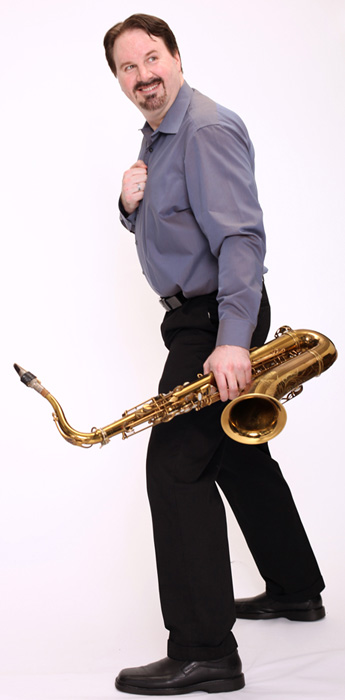
This Friday evening (May 8), saxophonist and composer Russ Nolan (pictured left) returns to Firehouse 12 in New Haven just 51 weeks after his debut appearance.  Since his previous trip to the Elm City performance venue and recording studio, he recorded his 5th CD as a leader.  Titled "Call It What You Want" (Rhinoceruss Music), the disk was issued at the end of March.  However, his trip is not considered a "CD Release Party"; instead, the tenor saxophonist (he also plays soprano) and his regular Quartet - Mike Eckroth (piano), Daniel Foose (bass), and Brian Fishler (drums) - will be recording new material for his next album, "Sanctuary From The Ordinary - Live at Firehouse 12."  

"Call It...." continues Nolan's explorations into Latin rhythm and their usage in the American jazz idiom. To help create the exciting sounds on the CD, he adds percussionists Yasuyo Kimura and Victor Rendon (who plays, among other instruments, the jawbone of an Ass!).  The pieces flow organically, the solos are impressive as are the interactions of all the musicians.  Go to www.russnolan.com to find out more about Mr. Nolan and get a generous taste of his music.

The Russ Nolan Quartet plays 2 sets - 8:30 and 10 p.m. - for ticket information go to firehouse12.com or call 203-785-0468.

Click here to listen to Russ's interview with Chuck Obuchowski on WWUH-FM.