Yes, it's a long list but my belief is that the albums I have chosen are all worth listening to, that they speak to our current world situations, that the music can give us strength to more forward. Will this complete the job for 2021? Lord no, but all of these are albums I received to review and not ones that I purchased. Do check these out if you haven't already! Happy & Healthy New Year!!
Amir El Saffar River of Sound – "The Other Shore" (Outnote Music/ Outhere Records) – Trumpeter, santurist (the santur is a dulcimer), vocalist, composer, and arranger ElSaffar formed River of Sound six years ago to continue his explorations into Maqam, jazz forms, and more. This 17-piece ensemble (plus guests) includes strings, different percussion instruments, guitar, piano, oud, reeds, brass, and the leader's fascinating wordless vocals. This is music to savor, to get lost in, to marvel at the possibilities, and float away.
Miguel Zenón & Luis Perdomo – "El Arte Del Bolero" (Miel Music) – This splendid live duo recording finds the alto saxophonist and his long-time quartet pianist playing six Latin "standards", caressing each melody and imbuing each song with emotional solos. While some might say that this is good "evening" music, these tunes sure sound great early in the morning when the natural world is awakening.
Artifacts – "...and then there's this" (Astral Spirits) – Artifacts (flutist Nicole Mitchell, cellist Tomeka Reid, and drummer Mike Reed), all members of Chicago's AACM, paid tribute to their elders on its 2015 debut from which they took their name. Here, they mostly concentrate on original music. One might be surprised how funky much of this music sounds yet there is depth, interplay, powerful melodies, and a sense of playfulness that transcends genres and generations.
Matthew Shipp – "Codebreaker" (TAO Forms) – 2021 was yet another amazing year for pianist Shipp but this solo piano session ranks among his best ever. While one can still hear the fire that characterizes his earlier album, Mr. Shipp has been exhibiting a delightful melodic streak of late. His ability to create music that eschews genres and cliches remains one of the strongest factors in Matthew Shipp's creative world.
Joe Lovano & Dave Douglas Sound Prints – "Other Worlds" (Greenleaf Music) – The music on "Other Worlds" is a delightful mix of well-developed melodies and sparkling solos with a rhythm section (pianist Lawrence Fields, bassist Linda May Han Oh, and drummer Joey Baron) second to none. Messrs. Lovano and Douglas say their inspiration for the quintet remains the visionary work of Wayne Shorter. No better choice for a blueprint but the music on this release is even more than that. Also, great music to get lost in!
Jared Schonig – "Two Takes Volumes 1 (Big Band) & Volume 2 (Quintet)" (Anzic Records) – Drummer and composer Schonig, one of the busier players on the NYC scene pre-Pandemic, has released a most impressive debut recording; in fact, two recordings. The Big Band session features eight original compositions , each one arranged by a different (and fairly famous) resident of the Big Apple. The Quintet album features trumpeter Marquis Hill, alto saxophonist Godwin Louis, pianist Luis Perdomo, and bassist Matt Clohesy –– with the exception of the three "Drum Interludes" and an electronically processed "Introduction..." intro to the opening track, the repertoire is the same as on the Big Band disk. Both are worth owning with the edge going to the exhilarating Quintet date.
Jihye Lee Orchestra – "Daring Mind" (Motema Music) – Ms. Lee, who had a good career in her native South Korea as a singer-songwriter, came to the United States to study at Berklee College of Music and discovered a new voice as a composer of large ensemble. Her self-funded debut album, "April" was issued in 2017, receiving praise from many fellow musicians and arrangers. "Daring Mind" is a delightful blend of melodies, harmonies, and rhythms that takes musical influences from her native country, mixes that with a healthy dose of Western influences plus Ms. Lee's natural curiosity and creates new and quite fascinating.
Miho Hazama/ Danish Radio Big Band – "Imaginary Visions" (Edition Records) – In 2019, Ms. Hazama took on a new assignment as Chief Conductor of the Danish Radio Big Band and this album bears the first fruits of that new relationship. She s following in the footsteps of such notable composers, arrangers, and conductors as Thad Jones, Bob Brookmeyer, and Jim McNeely and if this first album with the DRB is any indication, her tenure should be quite productive and enjoyable for fans of large ensemble music.
Dave Holland – "Another Land" (Edition Records) – Master bassist Holland is in the midst of a long and amazing career. This album, which features guitarist Kevin Eubanks and drummer Obed Calvaire, roars, whispers, and rushes forward in a glorious blend of sounds. The opening cut, "Grave Walker", is the funkiest music the bassist has created since his days with Miles Davis's "electric" ensemble. And the title track is a lovely reminder that guitarist Eubanks can draw one in on the strength of his melodies and improvisations. I can listen to this music all day and revel in its creativity and joy!
Sam Pilnick's Nonet Project – "The Adler Suite" (OutsideIn Music) – Composer, arranger, saxophonist, educator, and bandleader Pilnick looked to the stars for inspiration as he write the material for his Nonet Project. Based in Chicago, he spent a number of days composing while visiting the Adler Planetarium and the results are an expansive set of compositions for his little Big Band. The repertoire display Pilnick's wonder and curiosity and, hopefully, is the beginning of a long, productive, career creating music that transports the listener beyond the mundane.
Tim Hagans & the NDR Big Band – "A Conversation" (Waiting Moon Records) – Like the Amir ElSaffar album listed above, the music on composer, arranger, and trumpeter Tim Hagan's new recording takes its time to unfold. The liner notes tell the reader that the arranger broke the Big Band into a number of different "chat rooms" (my words, not Hagan's) so that the various instrumentalists in each would react and respond to each other. It's a fascinating concept that takes the listener a while to grasp; meanwhile, the intelligent melodies and smashing arrangements draws one in to the music.
Remy Le Bouef's Assembly of Shadows – "Architecture of Storms" (Soundspore Records) – The second large ensemble album from composer, arranger, and alto saxophonist Remy Le Bouef features nine tracks recorded before the pandemic in 2019 and three recorded in Spring 2021. The composer's splendid ear for melodies and smart harmonies that one heard on 2019's "Assembly of Shadows" album are here as well as is his intelligent arrangements plus sense of rhythmic drive. This time around, the leader solos on five of the nine tracks and it's a distinct to hear his alto soaring about the ensemble.
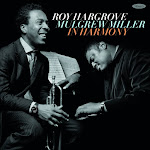
Roy Hargrove & Mulgrew Miller – "In Harmony" (Resonance Records) – Resonance Records is truly the gift that keeps on giving. Producer and coordinator Zev Feldman scouts the world to find live recordings that are either long out-of-print, concerts recorded for radio, and connoisseur recordings committed to tape by zealous fans. This splendid two-CD set reminds us how great both these musicians were, how the music created through their sadly short lives was so vital, and how sorely many of us miss them. As always, the liner notes are thorough and entertaining, the sound quality excellent, and the music a pure delight!
Over the decades of his career, Steve Coleman, alto saxophonist, composer, conceptualist, MacArthur Fellow, has taken his curiosity far afield, creating music that blends rhythm and melody in ways that are hypnotic and highly appealing. The Chicago, IL, native has absorbed the musical lessons of Charlie Parker, the live lessons of fellow alto player Bunky Green, and tenor master Von Freeman, what he learned in the bands of Cecil Taylor, Sam Rivers, and Dave Holland (to name but three) and created music whose home is in the African Diaspora and the streets of American cities. Since signing with Pi Recordings in 2010, Coleman has issued six albums that feature several different-sized ensembles. His main musical vehicle is Five Elements, an ensemble that now features Jonathan Finlayson (trumpet) and the amazing rhythm section of Anthony Tidd (electric bass) and Sean Rickman (drums).
In 2018, Pi released "Live at the Village Vanguard Volume I: the Embedded Sets", and two-CD set recorded in May of 2017. That album featured a fifth Fifth Element, guitarist Miles Okazaki. 12 months later, the band returned to the Vanguard with the spoken word genius Kokayi in the place of the guitar. 11 songs from that three-night stay can now be heard on Coleman's seventh album for the label "Live at the Village Vanguard Volume II (Mdw Ntr)". The combination of the vocals and instrumental voices is, at times, astonishing as Kokayi is right on the rhythm, interacting with Coleman and Finlayson's melody lines, Tidd's thunderous yet melodic bass lines, and Rickman's powerful, conversational, drums. Coleman's alto leads the way but everybody's voice is heard. Finlayson has developed into an excellent front-line partner; whether the piece is totally improvised (such as disc #1's "Unit Fractions" or Bunky Green's "Little Girl I'll Miss You"), the trumpeter builds delightful solos off of the leader's rapid-fire solo phrases. Another highlight of the Green piece is Kokayi's interaction with the leader's alto.
Thanks to the rhythm section, this music is always moving. Not only do Tidd and Rickman act as the foundation but they both, at times, interact with the soloists. Because Coleman builds these pieces around shapes and symbolism (from Egyptian hieroglyphics), the melodies the sax and trumpet create often sound static but the bassist and drummer keep the music interesting. Kokayi is often the spark plug –– his social commentary on "Pad Thai –– Mdw Ntr" locks in with the bass line and the solid drumming and making one leap out of their seat!
Happily, there's no let up on disc 2. In fact, "Rumble Young Man, Rumble" may be the best cut on the entire album. Not only is the rapid-fire groove irresistible but Kokayi's lyrics have moments of sheer hilarity (something to do with "bichon frieses in the jungle with labradoodles") as well as social commentary about how dangerous walking the streets is for young Black men as well as the description of a boxing match. All the while, Rickman is a thundering presence; like rush hour in downtown Manhattan, there's no escaping his presence. (Notice how Coleman uses the repeated 12-note phrase of the song as the opening salvo of "Khet & Kaba" and variations of the same for the melody).
"Steve Coleman and Five Elements: Live at the Village Vanguard Vol. II (Mdw Ntr)" is powerful modern music. Steve Coleman utilizes ancient codes and artwork to create explorations of 21st Century Black Music that is as intelligent as it is funky.
Here's the afore-mentioned "Rumble Young Man, Rumble":
Pianist and composer Matthew Shipp is one of the busiest musicians you'll ever meet. Even though he has cut down his live appearances (as did the pandemic), he records with his own group, co-leads other ensembles, and appears on other people's recordings. When he records a solo piano album, one can hear a dizzying number of musical references, from 20th Century Classical music to avant-garde jazz to blues to, by his own admittance, the influences of Bud Powell and Bill Evans. Critics and reviewers call it jazz but that word is not quite right –– you can call it Black creative music or just music.
His new album, "Codebreaker" comes to us via TAO Form, the label started last year by drummer (and Shipp collaborator) Whit Dickey. 11 songs spread across 45 minutes, all but one under five minutes. The music blends melody, rhythm, hypnotic phrases, introspective moments, and more into a mesmerizing program. Recorded in late July of 2020 in Brooklyn NY's Park West Studios, Shipp creates a world all his own –– this is not background music but a program to explore from beginning to end. There is a science-fiction motif to several of the song titles, e.g "Letter From the Galaxy", Raygun", and "Stomp To the Galaxy". Yet, the pianist has a sly edge in not giving away any real hint through the names. What is enjoyable is how the music can shift in a heartbeat or stop your heart with its gentle quality; the "blues stomp" that shows up in "Green Man" and the lyrical tenderness of "Suspended".
Find a comfortable chair, put on "Codebreaker", and let the sounds wash over you as well as enter your soul. If you are a fan of the recorded music of Matthew Shipp, you know to do that. If you are new to his music, you become the person in the album's title, exploring the piano language he creates on eleven pieces. Don't hurry to crack any codes, just take in these sounds, these luminous creations, and enjoy.
For more information, go to www.akamu.net/shipp.htm. To purchase the album, go to
Pianist and composer Matthew Shipp turns 60 years old in early December and remains one of the busiest, most creative musicians on the Black Music scene. His current Trio––bassist Michael Bisio and Newman Taylor Baker––is, arguably, his finest ensemble while his music continues to expand. The band's new album, "The Unidentifiable" (ESP Disk), captures one's ears and mind from the opening seconds of "Blue Transport System" and refuses to let go until the 10:31 "New Heaven and New Earth" fades to silence. Even then, moments return in snatches of melody, sounds, and beats. Upon first listening, you might think Newman Taylor Baker's splendid drumming is the reason to return. Perhaps it's Michael Bisio's powerful and often melodic bass work or the muscular piano, long flowing phrases, or thoughtful compositions that the leader supplies that turn your head. In fact, it's all three and more.
Photo Mark Lazarski
I've learned to listen to a new Matthew Shipp Trio all the way through each time. This is not music you "cherry-pick" your favorites and ignore the rest. Listen to how the rhythm section goes its own way on "Phantom Journey" or provides a gentle cushion of colors for the exploring piano lines on "Dark Sea Negative Charge". Baker's trance-like drums go alone on the short "Virgin Psych Space 1" serving as an intro to the trio's reading of "...Space 2". Note how each music builds on those drums, Bisio's bass weaving in and around while Shipp's piano travels above.
There is a quiet passion pulsing on the above-mentioned "Dark Sea...."; check out the fascinating hard drumming on "Trance Frame" (another short solo piece) and the powerful piano on "Phantom Journey." The sound of the album, engineered by Jim Clouse in Park West Studios in Brooklyn, NY, is clean and loud. Te lengthy final track will glue you to the chair, the thick bass tine, dancing snare work, and the ever-exploratory piano lines slowly build to a powerful climax–Bisio's bowed bass and overtones atop Shipp's gently piano melody become a contrast in light and darkness dropping out so the music can close on Baker's subtle brushwork.
"The Unidentifiable" is one more high point in the creative career of Matthew Shipp, not just for the music he composed for the Trio but also for his continued dialogue with Michael Bisio and Newman Taylor Baker. There is no compromise, no cliches, just a powerful message of creativity in uncertain times.
Pianist and composer Lafayette Gilchrist has created an amazing amount of music, relevant music, over the past three decades. A resident of Baltimore, MD, since 1987, his music covers a wide swath of territory, from House to Jazz to Hip Hop to Funk to Blues and beyond. His music has been featured on the HBO series "The Wire" "Treme", and "The Deuce", he's played with the David Murray Quartet as well as drummer Louis Moholo-Moholo, and bassist William Parker. The pianist gets compared to many keyboard masters, from McCoy Tyner to Willie :The Lion" Smith––his ability to play so any styles reminds this listener of the late Jaki Byard.
It's been 13 years and myriad experiences since his last Trio album ("3") was issued. "Now" (self-released) has arrived and it's an collection of amazing adventures. Two CDs, 16 songs (all originals), 150 minutes, and the great rhythm section of Herman Burnie (bass) and Eric Kennedy (drums), the music is an incredible journey. Opening with "Assume The Position" (first heard on David Simon's "The Wire"), the listener is bowled over by the thundering chords, the rapid-fire drums, and the pounding bass. Latter on Disk one, "BMore Careful" is a New Orleans-inspired blues that serves a warning and a spotlight for Burnie's handsome arco work. Kennedy's drums and Gilchrist's piano are mixed high and loud making the music jump from the speakers.
Dig into "On Your Belly Like a Snake", another hard-edged romp. Most of the longer pieces (seven of the 16 tracks are 10 minutes or longer) usually have stretches where the band eases off the intensity but here it's a short break before the drums push the leader to play harder. Disk one closes with "The Midnight Step Rag", a delightful dance with a touch of the Crescent City in Kennedy's drumming and a bouncy piano solo. You can just about pick out the deep notes of the bass but also listen to the pianist's active left hand.
Photo: Theresa Keil
Disk two opens with the 13:33 "Tomorrow Is Waiting Now (Sharon's Song)", a handsome medium tempo ballad that builds in intensity on the strength of Gilchrist's splendid piano playing. Burnie creates a fine solo as well and even though Kennedy does not solo, he plays an integral role throughout the piece. The following piece, "The Wonder of Being Here", is a true ballad, a handsome one at that. The bassist shows his melodic side, especially beneath the lovely piano solo. Later on the disk, "Can You Speak My Language" is a poignant ballad, the two-handed piano playing and Gilchrist's melodic runs seem to nod towards Keith Jarrett.
Disk two and the album closes with "Specials Revealed", a rich melody wrapped in a soulful rhythm. Gilchrist's solo is built off the repeating chords in his left hand and he gracefully moves up the keyboard while Burnie hugs the bass line and Kennedy pushes the rhythm forward. I understand the title of the song is also the name the leader has given the Trio–that make sense as this is special music. Yes, "Now" is a lot of music to take in all at once, really three good sets of music on two CDs. But, take your time and do take it all in. One can hear so much in the music that Lafayette Gilchrist, Herman Burnie, and Eric Kennedy have created for this album. Gilchrist's collection of songs plumb his own experiences as well as those of his community, reminding us that music not only tells stories but moves us emotionally. "Now" moves, oh yes it moves!
The trio of Geof Bradfield (tenor and soprano saxophones), Ben Goldberg (clarinet and contra-alto clarinet), and Dana Hall (drums, percussion) first met in 2017 at The Hyde Park Jazz Festival in Chicago, IL. That chance encounter led to "General Semantics" (Delmark Records), recorded a year later. All three musicians have years of experiences behind them as leaders, co-leaders, or group members (Bradfield and Hall have worked together over two decades)––one can tell from the music that recorded how comfortable they are with each other, willing to push and be pushed into many different musical areas.
What a splendid sonic journey this is. Opening with the quiet rush of "Air" (Bradfield on tenor, Goldberg on contra alto, and Hall using brushes), the music dances forward delightfully as the two reed players carry on quite a conversation. Composed by the late pianist Cecil Taylor and recorded in 1961 by Steve Lacy, the "swinging" track has a timeless feel. "Tioga Street Zenith" is a three-way conversation, a bit more frenzied yet Hall sticks with brushes as the reeds spar and parry. "Last Important Heartbreak of the Year" may sound like the title of a Country ballad but is really a rollicking tune with New Orleans drumming goosing the reeds right along. A bit later in the program, "Hit Flip Switch" (from Goldberg's prolific pen) also is a delightful romp, hearkening back to the raucous music of Louis Armstrong and Johnny Dodds. Bradfield's laughing soprano and Goldberg's playful clarinet should tickle one's fancy!
The soprano sax and clarinet combo returns to dance together yet again on Hermeto Pascoal's happy "8 de Agosto"––again, the two reeds weave around each other as Hall kicks and sticks away with glee. Bradfield's tenor sax introduces the title song which soon drops into a funky beat, Goldberg's contra alto clarinet producing the bass line. The tenor solo is built off that bass line while Hall keeps the tune close to the ground. "Half The Fun" opens with a "deep" solo from Goldberg over quiet hand-held percussion. Several minutes later, Hall drops into a modified "jungle" rhythm a la 1920's Duke Ellington, Goldberg plays a slinky bass line, and Bradfield creates a sweet soprano sax melody.
The album comes to a close with "Under and Over" which has a "freer" feel as the tenor sax and drums open the piece in a fiery conversation. After they stop, Hall drops into a slow, bluesy, beat, Goldberg's clarinet gets the melody while Bradfield acts as the bass line. There's a feel of Julius Hemphill's "Hard Blues" in the sound of the music, in the way the sax and clarinet move together. The piece closes with a classically-inspired clarinet and tenor saxophone duet.
The trio of Geof Bradfield, Ben Goldberg, and Dana Hall reminds us that when like-minded musicians get together, magic can happen. Magic does happen on "General Semantics"––this delightful and musical recording is well worth your attention!
Every year in January, a package from pianist Matthew Shipp arrives in my mailbox. 2020 is no exception other than two packages have shown up this year. The first mailing included two new albums (see below) that feature Shipp with longtime associate, saxophonist Ivo Perelman. The two have recorded numerous albums as a duo and in a trio and quartet setting.
Photo: Peter Gannushkin
In 2017, Perelman and Shipp put together a session for Leo Records (the saxophonist's "home" for releases) featuring bassist William Parker and drummer Bobby Kapp. That recording, "Heptagon", included seven spontaneous musical conversations pushed forward by the inclusion of the (then 75-year old) drummer who Perelman first heard on Argentinean-born saxophonist Gato Barbieri's 1967 debut on ESP-Disk "In Search of The Mystery." The Brazilian native Perelman was greatly inspired by Barbieri's fiery tenor sax tone and headlong rushes into "free" music and, for his own recording, wanted to mine the expertise and imagination of the American drummer.
In April of 2018, the quartet came together again in Brooklyn, NY, and the results of their collaboration can be heard on "Ineffable Joy." This time, it's ESP-Disk that has released the album, the label that Perelman first heard Barbieri, the one Kapp had also recorded with saxophonist Noah Howard, the label on which bassist Parker recorded in 1973 with saxophonist Frank Lowe, and where Shiop has releasing albums since 2015. With song titles such as "Ecstasy", "Ebullience", "Bliss", "Elation", and "Exuberance", one can certainly tell the moods that permeate the music. Yes, these pieces are all improvised and that freedom opens the door for the musicians to let the music go in multiple directions.
Photo: Mark Sheldon
My suggestion to the listener is just sit and listen; let the music flow around you, listen to the conversations between the rhythm section and the front line, notice how crisp and articulate Shipp's piano playing is, and how Perelman's sound can go from a. ferocious shout to a sweet, Ben Webster-style crooning. There are moments on each track that stand out. For instance, right after Perelman enters on "Jubilation", the rhythm section picks up in intensity, giving the saxophonist a push into a dynamic interaction – pay attention to how Shipp responds, to how he joins the bass and drums to raise the intensity level. Yet, this music breathes so many times the dynamics change on a dime. The beauty of the opening moments of "Elation", the quiet intro suggesting a 1940s Duke Ellington ballad which Perelman underscores with his melodic work. The delight that jumps out of the speakers when the quartet is dancing through "Rejoicing" is palpable and soul-satisfying (listen below).
One may remember how, in the 1960s, music as free and adventurous as "Ineffable Joy" was just considered "noise", "emotionless", and "alien". But, if life was all one emotion, one energy level, one voice above all, it would be dull. Five+ decades later, the energy, emotion, and melodic strength that Ivo Perelman, Matthew Shipp, William Parker, and Bobby Kapp bring to this project is reason to celebrate.
As I stated above, Matthew Shipp and Ivo Perelman have a recorded a slew of albums especially in duo settings. Listen to any one of them and you hear how the two musicians play off each other, inspire each other, push, pull, and dance together. They first connected in 1996 but it was not until 2011 that the duo began a journey that has produced many recorded conversations – the musicians as well as the audience do not feel as if these musical adventures has reached its zenith. Is it because they are the same age (the saxophonist is five weeks older than the pianist) or that they have often mined similar veins (duos of saxophone and piano)? Whatever the connections, the music they create is exciting, emotionally strong, adventurous, and beyond categorization.
In June of 2019, as the duo were in the midst of a tour celebrating Perelman's thirty-year career, they appeared at "The Art of Improvisation", one of a series of music festivals held throughout Germany. The duo's one-hour June 26 concert can be heard on "Live In Nuremberg" (SMP Records) – it's a delight to sit and listen as the music tumbles out of the speakers, the many changes in direction, the passion of the conversation so handsomely captured by recording engineer Gerhard Grell.
This music moves in many directions throughout its hour on the stage so the best way to "hear" the music is to let it flow. You will find moments that soothe you, that excite, that are furious, that are deeply melodic (almost lullaby-like at times) – it's not music for the faint-hearted but for the adventurous listener, one who will hear something different each time he or she listens, how both musicians follow and lead, how they inspire each other, how they anticipate, and how they sing.
Yes, there are many recordings of the Ivo Perelman/ Matthew Shipp duo and each one has its own magic, mysteries, and rewards. The album only has two tracks; "Part 1" is 55:45 long followed by the four minute "Encore", the delightful epilogue. "Live in Nuremberg" is the latest document of the musicians' conversations and well worth exploring.
Here's the duo in concert the day before (thanks to somethingelsereviews.com for leading me to this concert):
The quartet of Peter Erskine (drums), George Garzone (tenor saxophone), Alan Pasqua (piano), and Derek Oles (bass) set up shop at Sam First, a new Jazz club near LAX in Los Angeles, CA, for a three-night gig (January 17-19, 2019). They played two sets each night, performing material ranging from originals to standards, repeating some of the pieces from set to set (but never repeating themselves), and generally thrilling an audience with high-powered and melodic straight-ahead jazz. Since all four musicians are veterans of the music scene as well as friends, the resulting music is fresh and fun.
"3 Nights In L.A." (Fuzzy Music) is a document of the quartet's musical adventures. The album comes in a three-disc set or as one big download. At nearly three-and-a-half hours, the best way to enjoy the music is one set at a time. Garzone, who first came to critical notice as a member of The Fringe, the Boston, MA-based trio, that was adventurous in its approach to improvised music. He's also teaches at Berklee College and has been on the faculty of the New England Conservatory, Manhattan School of Music, and NYU (among others). It's quite a treat to hear him stretch out on these songs. Bassist Oles, who was born in Poland and had a busy career from his teenage years on, moved to Los Angeles in 1988 to study with Charles Haden and, over the years, has not only become first call musician but a faculty member at the University of California/Irvine. Pasqua is also a very busy musician with a list of credits that boggles the mind. For good reason – he can play in may different styles and "sound" like himself. As for Erskine, he's been playing, teaching, and recording since joining the Stand Kenton Orchestra in 1972. By the end of that decade, he was in the drum chair of Weather Report. Erskine has appeared on over 700 albums and, like Pasqua, is on the faculty of the Thornton School of Music at USC.
About the album, the best review is that you hear four master musicians having fun. They swing, rock, squall (at times), dance, know how to caress a melody (Garzone's "To My Papa" is a splendid example as is Pasqua's "Agridolce"), and absolutely settle for the cliche. Dig their version of John Coltrane's "Equinox"; the harp-like showers of notes from the piano, the bluesy beat of Oles and Erskine, and Garzone's powerful solo, all add up to an impressive piece of music.
"3 Nights In L.A." is an album to savor. The lovely sound, the intelligent chair of material, and the fine musicianship, not at all surprising when you think of George Garzone, Peter Erskine, Alan Pasqua, & Derek Oles and their impressive body fo work. Dig into this sumptuous recording – you'll enjoy the many directions the band takes and where the music ultimately goes.
The recording's US release date is August 16 but the digital album was issued in mid-July.
Photo: Rob Blackham
Late last year (11/18), tenor saxophonist and composer Josephine Davies released her third album as a leader. "In the Corners of Clouds" (Whirlwind Recordings) is the second recording of her trio, a group that features her regular bassist Dave Whitford and newest addition, drummer James Maddren. Ms. Davies, a native of the Shetland Islands and now a resident of London, England, is a busy musician, working in several large ensemble and leading two other projects besides the Trio, now known as Satori after the group's 2017 Whirlwind album.
Ms. Davies has created a sound that shows off both her melodies as well as her penchant for getting everyone involved. There are moments when the sound of this trio reminds me of alto saxophonist Bernie McGann's 2000 "Bundeena" – a touch of blues, of folk music, music that is a conversation between the participants and not just soloing over the rhythm section. There's also a touch of the classic John Coltrane Quartet, especially the less frenetic work that that group did in the studio up to "A Love Supreme." "The Space Between Thoughts" is a soulful ballad with sparse bass work and whisper-soft brush work plus a melody "sung" by the saxophone. Ms. Davies takes her time moving through the melody, with an easy transition into her solo. Whitford's fine bass solo is short and melodically rich. The track is one of the two tracks under five minutes on the album but feels complete in its brevity. The other "shorter" piece is the album closer "Scattered", notable for the saxophone-bass dialogue in the solo section.
The dancing twists-and-turns of "Wabi-Sabi", with its Arabic-sounding curlicues and powerful percussion, opens the album (hear below) and one is immediately caught up in the works this trio creates. The title track has a tinge of Sonny Rollins's "Way Out West" in the percussion but it's Ms. Davies' melody that stands out. Her subtle solo blends soft and harder tones, pushed forward by the active rhythm section. She overdubs a second tenor saxophone to create harmony and counterpoint on "Lazy", a song that lopes along on the dancing bass lines and the "click-clack" of the drumsticks.
This review of "In the Corners of Clouds" may have been percolating in my consciousness for the past nine months mostly because the music does not shout (most of the time) or make bold statements. Instead, the listener is seduced by the melodies, by the rich solos, by the saxophone tone that can be soft yet hard-edged when the music calls for it, and, finally, for the excellence of the rhythm section. Josephine Davies – in her guise as the leader of Satori – makes music for the soul, illustrating the many directions the creative mind can go.
I look forward to hearing more music from Ms. Davies, including from her Big Band. For more information, go to www.josephinedavies.co.uk.
Here's the opening track:
Tenor saxophonist Rich Halley, born, raised, and still living in Portland, Oregon, is in the midst of a long and exciting career. He attended the University of Chicago in the mid-1960s, coming in contact with various blues artists as well as the AACM. He moved back home in 1968 and has played many types of music even as he he worked on his Masters Degree in Biology from the University of New Mexico. Musically, he has played and/or recorded with multi-reed player Vinny Golia, trumpeter Bobby Bradford, trombonist Michael Vlatkovich, trumpeter Rob Blakeslee, and bassist Michael Bisio (among others). Over the past decade, he has led and continues to lead bands that feature his son Carson Halley on drums and bassist Clyde Reed (who has worked with the saxophonist since early in the new century). Since 2001, Halley has released his music on his own Pine Eagle Records label.
In August of 2018, the saxophonist was in the New York City area and recorded "Terra Incognita" (Pine Eagle) in Brooklyn with pianist Matthew Shipp, drummer Newman Taylor Baker, and the afore-mentioned Michael Bisio (a long-time friend). While the quartet has never recorded together before or even had a rehearsal before entering the studio, Halley had performed with the bassist when Bisio lived in Seattle and also played in a trio with him and drummer Baker. The album is quite apropos in the light of the information above because this music was an "unexplored territory" for the participants. Yet, their fearless approach to the session results in a delight-filled recording.
Photo: Rob Pyle
Readers of this and many other blogs or magazines know how creative the trio of Shipp, Bisio, and Baker are in the studio and in person. The drummer, in particular, has added quite a fascinating voice to that Trio and he is in fine "voice" on these six pieces. Baker adds such fascinating colors and rhythmic patterns to this music – o, he can burn with passion, as he does on "Centripetal" but make sure to listen to his sparse cymbal work on "The Elms." That track is a handsome ballad with lyrical piano and a falling melody line from the tenor. "The Opening" (yes, the first track) hits on all cylinders from the get-go with its rumbling, skittish, bass lines, rampaging drums, two-handed piano counterpoint (every once in a while, Shipp resembles McCoy Tyner from the 1970s), and Halley's powerful, impassioned, solo (he rarely records with a pianist these days). The playful "Forager" illustrates how these musicians listen and respond to each other. Baker locks in with Halley on his solo, responding to his power and the long melody lines. The splendid sound quality of the album (kudos to engineer Jim Clouse) makes all the instruments stand out (note the clarity on the bass solo). The final track, "The Journey", is the longest track (17:02) and it's quite a ride – be sure to catch Halley's great, blues-drenched, solo near the close.
"Terra Incognita", with all its twists, turns, and interactions, is worth exploring. This quartet certainly plays with great fire yet the fire does not always present itself as "noise" or "free" blowing. Rich Halley, Matthew Shipp, Michael Bisio, and Newman Taylor Baker are on a musical adventure – it's a joy to be part of their collaboration as well as their sonic explorations! Rich Halley should come East more often!

 Posts
Posts


 Miho Hazama/ Danish Radio Big Band – "Imaginary Visions" (Edition Records) – In 2019, Ms. Hazama took on a new assignment as Chief Conductor of the Danish Radio Big Band and this album bears the first fruits of that new relationship. She s following in the footsteps of such notable composers, arrangers, and conductors as Thad Jones, Bob Brookmeyer, and Jim McNeely and if this first album with the DRB is any indication, her tenure should be quite productive and enjoyable for fans of large ensemble music.
 Dave Holland – "Another Land" (Edition Records) – Master bassist Holland is in the midst of a long and amazing career. This album, which features guitarist Kevin Eubanks and drummer Obed Calvaire, roars, whispers, and rushes forward in a glorious blend of sounds. The opening cut, "Grave Walker", is the funkiest music the bassist has created since his days with Miles Davis's "electric" ensemble. And the title track is a lovely reminder that guitarist Eubanks can draw one in on the strength of his melodies and improvisations. I can listen to this music all day and revel in its creativity and joy!