Showing posts with label Dave Holland. Show all posts

Tuesday, December 28, 2021

The Rest of the Music that Moved, Soothed, Educated, and Inspired in 2021!

Yes, it's a long list but my belief is that the albums I have chosen are all worth listening to, that they speak to our current world situations, that the music can give us strength to more forward.  Will this complete the job for 2021? Lord no, but all of these are albums I received to review and not ones that I purchased.  Do check these out if you haven't already!  Happy & Healthy New Year!!

Amir El Saffar River of Sound – "The Other Shore" (Outnote Music/ Outhere Records) – Trumpeter, santurist (the santur is a dulcimer), vocalist, composer, and arranger ElSaffar formed River of Sound six years ago to continue his explorations into Maqam, jazz forms, and more.  This 17-piece ensemble (plus guests) includes strings, different percussion instruments, guitar, piano, oud, reeds, brass, and the leader's fascinating wordless vocals.  This is music to savor, to get lost in, to marvel at the possibilities, and float away.  


Miguel Zenón & Luis Perdomo – "El Arte Del Bolero" (Miel Music) – This splendid live duo recording finds the alto saxophonist and his long-time quartet pianist playing six Latin "standards", caressing each melody and imbuing each song with emotional solos.  While some might say that this is good "evening" music, these tunes sure sound great early in the morning when the natural world is awakening.  


Artifacts – "...and then there's this" (Astral Spirits) – Artifacts (flutist Nicole Mitchell, cellist Tomeka Reid, and drummer Mike Reed), all members of Chicago's AACM, paid tribute to their elders on its 2015 debut from which they took their name. Here, they mostly concentrate on original music. One might be surprised how funky much of this music sounds yet there is depth, interplay, powerful melodies, and a sense of playfulness that transcends genres and generations.  


Matthew Shipp – "Codebreaker" (TAO Forms) – 2021 was yet another amazing year for pianist Shipp but this solo piano session ranks among his best ever.  While one can still hear the fire that characterizes his earlier album, Mr. Shipp has been exhibiting a delightful melodic streak of late. His ability to create music that eschews genres and cliches remains one of the strongest factors in Matthew Shipp's creative world.


Joe Lovano & Dave Douglas Sound Prints – "Other Worlds" (Greenleaf Music)  – The music on "Other Worlds" is a delightful mix of well-developed melodies and sparkling solos with a rhythm section (pianist Lawrence Fields, bassist Linda May Han Oh, and drummer Joey Baron) second to none.  Messrs. Lovano and Douglas say their inspiration for the quintet remains the visionary work of Wayne Shorter. No better choice for a blueprint but the music on this release is even more than that. Also, great music to get lost in!


Jared Schonig – "Two Takes Volumes 1 (Big Band) & Volume 2 (Quintet)" (Anzic Records) – Drummer and composer Schonig, one of the busier players on the NYC scene pre-Pandemic, has released a most impressive debut recording; in fact, two recordings.  The Big Band session features eight original compositions , each one arranged by a different (and fairly famous) resident of the Big Apple. The Quintet album features trumpeter Marquis Hill, alto saxophonist Godwin Louis, pianist Luis Perdomo, and bassist Matt Clohesy –– with the exception of the three "Drum Interludes" and an electronically processed "Introduction..." intro to the opening track, the repertoire is the same as on the Big Band disk.  Both are worth owning with the edge going to the exhilarating Quintet date.


Jihye Lee Orchestra – "Daring Mind" (Motema Music) – Ms. Lee, who had a good career in her native South Korea as a singer-songwriter, came to the United States to study at Berklee College of Music and discovered a new voice as a composer of large ensemble.  Her self-funded debut album, "April" was issued in 2017, receiving praise from many fellow musicians and arrangers. "Daring Mind" is a delightful blend of melodies, harmonies, and rhythms that takes musical influences from her native country, mixes that with a healthy dose of Western influences plus Ms. Lee's natural curiosity and creates new and quite fascinating.

Go to https://jihyemusic.com/

Miho Hazama/ Danish Radio Big Band – "Imaginary Visions" (Edition Records) – In 2019, Ms. Hazama took on a new assignment as Chief Conductor of the Danish Radio Big Band and this album bears the first fruits of that new relationship.  She s following in the footsteps of such notable composers, arrangers, and conductors as Thad Jones, Bob Brookmeyer, and Jim McNeely and if this first album with the DRB is any indication, her tenure should be quite productive and enjoyable for fans of large ensemble music.


Dave Holland – "Another Land" (Edition Records) – Master bassist Holland is in the midst of a long and amazing career. This album, which features guitarist Kevin Eubanks and drummer Obed Calvaire, roars, whispers, and rushes forward in a glorious blend of sounds. The opening cut, "Grave Walker", is the funkiest music the bassist has created since his days with Miles Davis's "electric" ensemble.  And the title track is a lovely reminder that guitarist Eubanks can draw one in on the strength of his melodies and improvisations.  I can listen to this music all day and revel in its creativity and joy!


Sam Pilnick's Nonet Project – "The Adler Suite" (OutsideIn Music) – Composer, arranger, saxophonist, educator, and bandleader Pilnick looked to the stars for inspiration as he write the material for his Nonet Project.  Based in Chicago, he spent a number of days composing while visiting the Adler Planetarium and the results are an expansive set of compositions for his little Big Band.  The repertoire display Pilnick's wonder and curiosity and, hopefully, is the beginning of a long, productive, career creating music that transports the listener beyond the mundane.


Tim Hagans & the NDR Big Band – "A Conversation" (Waiting Moon Records) – Like the Amir ElSaffar album listed above, the music on composer, arranger, and trumpeter Tim Hagan's new recording takes its time to unfold. The liner notes tell the reader that the arranger broke the Big Band into a number of different "chat rooms" (my words, not Hagan's) so that the various instrumentalists in each would react and respond to each other. It's a fascinating concept that takes the listener a while to grasp; meanwhile, the intelligent melodies and smashing arrangements draws one in to the music.  


Remy Le Bouef's Assembly of Shadows – "Architecture of Storms" (Soundspore Records) – The second large ensemble album from composer, arranger, and alto saxophonist Remy Le Bouef features nine tracks recorded before the pandemic in 2019 and three recorded in Spring 2021. The composer's splendid ear for melodies and smart harmonies that one heard on 2019's "Assembly of Shadows" album are here as well as is his intelligent arrangements plus sense of rhythmic drive.  This time around, the leader solos on five of the nine tracks and it's a distinct to hear his alto soaring about the ensemble.  


Last but not least....

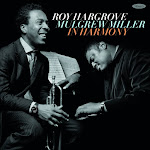
Roy Hargrove & Mulgrew Miller – "In Harmony" (Resonance Records) – Resonance Records is truly the gift that keeps on giving. Producer and coordinator Zev Feldman scouts the world to find live recordings that are either long out-of-print, concerts recorded for radio, and connoisseur recordings committed to tape by zealous fans.  This splendid two-CD set reminds us how great both these musicians were, how the music created through their sadly short lives was so vital, and how sorely many of us miss them. As always, the liner notes are thorough and entertaining, the sound quality excellent, and the music a pure delight!

Thursday, May 20, 2021

Masters At Play May 2021

The decade between 1963-1972 was such a fertile time for Creative Music.  Musicians like John Coltrane, Charles Mingus, Miles Davis, Muhal Richard Abrams, the Art Ensemble of Chicago, and others were stretching, even obliterating the boundaries of music and sound. The artists mentioned below, especially Wadada Leo Smith, Dave Holland, and the late Milford Graves, have never sat still waiting for the world to catch up with them; instead, they have dedicated their creative lives to continually exploring the myriad possibilities open to them and fellow musicians.

Photo: Petri Haussila
Wadada Leo Smith (12/1941, Leland. MS) began playing trumpet when he was 12 years old. After completing high school, Mr. Smith played in various soul rhythm 'n' blues, and blues bands before joining the U.S. Army, studying in the Music Program and playing in Army bands.  After leaving the service, the trumpeter settled in Chicago where he began playing with saxophonist Anthony Braxton and violinist Leroy Jenkins. Like a number of musicians associated with the AACM (the Association for the Advancement of Creative Musicians), Mr. Smith developed his musical philosophy which he called Ankhrasmation Symbol Language which he utilizes to this day.  In 1970, he moved to New Haven, CT,  working with numerous groups (including New Delta Ahkri and The Creative Improviser Orchestra) as well as studying at Wesleyan University in Middletown, CT.

Photo: Petri Haussila
In 1992, Mr. Smith moved to Southern California to teach at the California Institute of the Arts (CalArts) where he remained for two decades.  He organized new ensembles and worked alongside guitarist Henry Kaiser in Yo Miles! while still working with his AACM cadre.  Over the past two decade, Mr. Smith has recorded numerous albums with various ensembles that he has led (and still leads) plus continuing to work on solo material.  His albums have appeared on ECM Records, Tzadik, Moers Music, Cuneiform, Pi Records, Nessa, Clean Feed, his own Kabell label, and, since 2011, on the Finnish TUM Records label.

2021 will see a flurry of new releases from Wadada Leo Smith beginning with two three-CD sets from TUM. "Trumpet" is just that; a solo program recorded over 4 days in July of 2016 inside St. Mary's Church in Pohja, Finland (approximately one hour west of Helsinki).  Officially, it's his eighth "solo" album but only the second that is exclusively trumpet (the other one being "Solo: Reflections and Meditations on Monk" released by TUM in 2017 – 2001's "Red Sulfur Sky" on Tzadik is mostly trumpet and some flugelhorn).  If you are a devotee of Mr. Smith's music, you will be pleased by this 134+ minutes, 14-song program. The first two discs each contain a five-part composition while disk three contains two four-part pieces. Each disk is housed in a cardboard jacket featuring original artwork by the trumpeter.  For neophytes, it's best to just sit down, sit still, and listen.  Don't try to make sense of either the music or the fact that each work is dedicated to someone who has had a powerful influence or relationship with Mr. Smith.  Disk one opens with "Albert Ayler" and is followed by the five-part "Rashomon", named for the movie that so moved the composer.  Elsewhere there are works dedicated to violinist Jenkins, the author James Baldwin, drummer Steve McCall, pianist/ vocalist Amina Claudine Meyers, bassist Reggie Workman, and to Mr. Smith's family. 

Photo: Petri Haussila
There is no mistaking Mr. Smith's sound, his clarion call tone clear inside the church.  His ability to blend sound and silence, to make his muted trumpet cut through the air like a saber and sill be grounded in the blues, to absorb how his long notes resonate, and to sit straight up during his rapid-fire phrases, all this has only grown more powerful over his musical lifetime.  Plus, by dedicating these pieces to various people, curious listeners will discover musicians and thinkers who they may be able to learn from. To understand "Trumpet", you must surrender to the fact that you have entered the multi-cultural world of Wadada Leo Smith: his music, his rules, his ideas and ideals of freedom. 

Here's the album opener "Albert Ayler":


"Sacred Ceremonies" is the second three-CD set to released this month by TUM. Disk one (5/27/2016) is a duet with Wadada Leo Smith in musical conversation with percussionist Milford Graves, disk two a duo with Mr. Smith and bassist Bill Laswell (recorded the day before), and disk three with all three participants (recorded 12/11-12/2016).  While the bassist has worked with both the trumpeter and the percussionist in the past, this looks to be the first time Mr. Smith and Mr. Graves (who passed earlier this year) met in the studio.  The majority of the material on the duo albums is composed by the trumpeter while four of the seven trio tracks are credited to all three musicians.  Clocking in at 174 minutes, the three albums are chock-full of ideas, fascinating interplay, and the joy of three people creating musical conversations

Photo: R.I. Sutherland-Cohen
Unlike "Trumpet", "Sacred Ceremonies" is three distinct recordings yet sharing the same title.  Mr. Smith has always had a special affinity with drummers having recorded duo albums with Ed Blackwell, Jack DeJohnette, Adam Rudolph, Louis Moholo-Moholo, Gunter "Baby" Sommer, and now Milford Graves.  This session with Mr. Graves is a joy from start to finish with the drummer displaying his affinity to African drumming as well as rhythms from the Caribbean and South America.  Among the highlights is "Baby Dodds in Congo Square", a nearly 14-minute opus with drums that rumble and tumble while the trumpet sharp tone sings, shouts, and praises "freedom".  The interaction between the two throughout is a pleasure to hear.  Mr. Graves's high-hat work is fascinating on several tracks but especially on "The Poet: Play Ebody, Play Ivory"; the gentle rhythmic propulsion shimmers beneath the floating trumpet phrases.

Photo: R.I. Sutherland-Cohen
The combination of Mr. Smith and electric bassist Laswell hearkens back somewhat to both musicians love of electric Miles Davis.  The bassist appeared on Mr. Smith's "Najwa" album (TUM 2014), the recording with four guitarists. Recorded in Mr. Laswell's West Orange, NJ, studio, all of the tracks feature synths (presumably the bassist playing them) washing behind the musicians.  The program features performances dedicated to Prince, Donald Ayler, Tony Williams, and the late vocalist Minnie Ripperton.  "Prince –– A Blue Diamond Spirit" is actually quite funky with its dancing bass line, "wah-wah" bass, and overdubbed counterpoint bass while the trumpeter wails above. "Tony Williams" opens with a muted trumpet melody, circular in its intent.  The basses enter and the music bounces forward. Mr. Smith stays close to the original melody until he bursts out momentarily for 15-20 seconds before giving the music over to the synths.  

Photo: R.I. Sutherland-Cohen
The third disk brings the three musicians together for more adventures in creativity.  After Mr. Graves sets the pace on the opening track, "Social Justice –– A Fire for Reimagining the World", Mr. Smith makes a blazing statement atop the powerful rhythm section.  This album also hearkens back to the electric Miles period; you hear it in the rhythms and in the muted trumpet trumpet attack.  Throughout most of this recording, the drummer is the one who sets the pace, builds the foundation of the music while the bassist and trumpeter weave around each other.  Mr. Laswell's thick bass melody opens "Waves of Elevated Horizontal Force", soon joined by the muted trumpet on countermelody –– one hears echoes "In a Silent Way".  The pulsating and pounding drums change the mood and the music rumbles forward.  Mr. Graves leads the way into "The Healer's Direct Energy" (a reference to the work the drummer conducted on the healing properties of music); when Mr. Smith and Mr. Laswell enter, the music takes a slower route forward, one that depends upon the long trumpet tones and the bassist's responses.  

As Wadada Leo Smith moves through his 80th year in this dimension, he continues to create fascinating music in so many different contexts.  These two TUM releases, "Trumpet" and "Sacred Ceremonies", should certainly satisfy long-time listeners; if you have never spent time in his worlds, start with the Milford Graves/ Bill Laswell set as it covers so much territory.  If you love a challenge, go for the trumpet solo albums as the music will teach you and make you think.  

For more information, go to www.tumrecords.com/new-music.  To learn more about the trumpeter's amazing career, go to https://wadadaleosmith.com/home/

Here's the Trio and "Social Justice –– A Fire For Reimagining the World":


Photo: Ralf Dombroski
Bassist and composer Dave Holland (born 1946) began his professional career at the age of 14 playing in dance bands in and around his hometown of Wolverhampton, England.  Four years later, he moved to London and soon began playing in jazz ensembles led by saxophonist Tubby Hayes, pianist Chris MacGregor, and reed master John Surman. The story goes that trumpeter Miles Davis heard young Dave Holland at Ronnie Scott's Jazz Club and invited him to join his new acoustic/ electric ensemble. Over the next few years, Holland played on "Filles de Kilimanjaro", "In a Silent Way", and "Bitches Brew", finding time to work with Chick Corea and the Thad Jones/ Mel Lewis Orchestra. After leaving Davis's employ, he joined pianist Corea, reed master Anthony Braxton, and drummer Barry Altshul to create the free jazz-minded Circle.  The bassist signed to ECM Records where, within a few years, he produced his first masterpiece in 1972, "Conference of the Birds" (with Mr. Braxton, Mr. Altschul, and Sam Rivers), and then co-created Gateway, a trio with guitarist John Abercrombie and drummer Jack DeJohnette.  Holland became an in-demand studio bassist appearing on scores of ECM dates and more.  His original music and powerful as well as melodic bass playing has kept him in the spotlight for five decades.

In 2019, Holland debuted on Edition Records in Fall 2019 in "Good Hope", a trio with saxophonist Chris Potter and tabla master Zakir Hussain.  His debut as a leader for the label is "Another Land", a trio that reunites the bassist with guitarist Kevin Eubanks and is his first recording with drummer Obed Calvaire.  The Trio has actually been together over five years but this is its debut recording.  Holland, who knows how to to create a good groove, pulls out his electric bass for the opening "Grave Walker" –– he immediately locks in with Calvaire and the album is off to a deeply funky start.  Eubanks jumps right in and plays a powerful solo that includes long phrases, choppy r'n'b chords, and a percussive drive of his own.  Later in the program, the deep tones of the electric bass begin a mysterious journey title "The Village" that features a long, languorous, opening that explodes when Eubanks enters. Calvaire's solo is a thunderous treat that inspires a fiery guitar solo. 

Holland's thick acoustic bass lines lead in "Gentle Warrior", a piece that should remind you of pieces that the bassist has written for his sextet.  There's an airy quality to the melody line but Calvaire's drumming, front and center, keeps up the heat.  "20 20" opens with quiet work from the Trio but then Holland's electric bass plays a line that would not be out of place in a "prog-rock" setting. For the bulk of the tune, he shifts between the acoustic and electric basses, the former for solos.  The title track is a handsome blues-tinged piece buoyed by a repetitive bass line, gentle acoustic guitar, and quiet cymbal work as Eubanks (on electric) plays the gentle melody. One expects the piece to explode at any time yet the gentleness continues throughout (Holland's long solo is quite impressive while Calvaire's cymbal work never rises above a whisper). 

Photo: Megan V. Agins/ NY Times
Rockers such as "Mashup" and the rip-roaring "The Village" mesh nicely alongside the lovely ballad "Passing Time" and the elegant solo guitar piece, "Quiet Fire".  The solo piece is reminiscent of John Abercrombie's "Timeless"; not as trancelike, Eubanks moves easily through the melody without trying to dazzle or impress the listener. In fact, this is one of the most impressive recordings that the guitarist has made. He's creative and he does not let his impressive technique get in the way of his soulful, exciting, contributions.

"Another Land" closes with the deep blues of "Bring It Back Home". Featuring a subtle acoustic bass solo and a splendid guitar spotlight, pay attention to how Calvaire does not overplay but takes it nice and gritty.  We listeners are so lucky that Dave Holland continues to move forward, never resting on his imposing laurels.  Turn up the volume and give a listen! 

For more information, go to https://daveholland.com/.  

Here's "Mashup" –– play it loud!


Wednesday, January 29, 2020

The Wide World of Music

When three world-class musicians come together, it can be for a "blowing" session or a serious project – Tabla master Zakir Hussain decided to create an ensemble to perform at SF Jazz, one than included bass master Dave Holland; the drummer also called several other people including saxophonist (soprano, alto, tenor) Chris Potter who has worked with the bassist in various projects for over two decades. Hussain's originally vision was for a septet which did do a pair of tours.  Then, he, Holland, and Potter played a number of dates and Crosscurrents Trio was created.

With a repertoire of original works from each member, the trio went into Sear Studio in New York City in September of 2018 and the results can be heard on "Good Hope" (Edition Records). What a sonic treat!  Hussain provides the fascinating rhythm while both Holland and Potter play melodies that lock into the rhythms and dance atop them.  Holland's "Lucky Seven" finds Potter's soprano saxophone leading the way but pay attention to how the bassist plays both counterpoint and rhythm.  Kudos to recording engineer Chris Allen for the clarity of the sound.  Capturing how the bass and tablas creat the various rhythm tracks makes the listener feel as if he or she is sitting in the middle of the trio.  Potter's "Island Sounds" is so easy-going you might miss the lovely bass tones and the burbling drums as you pay attention to the composer's hardy tenor solo.

"Suvarna", one of the two pieces penned by Hussain, opens with a long, lovely, bass solo.  Holland's touch and melodic sense is on full display. When the tablas and saxophone enter, the bassist joins the drummer in pushing the music forward.  Potter does not rush the melody or his solo, slowly building the intensity, his rich full tone adds an emotional touch to the piece.  The saxophonist penned the title track – it opens with a tenor sax and tablas dialogue before moving into quite a dancing rhythm.  Holland's bass acts, at times, as a rhythm guitar and his muscular solo is a highlight of the album.

Photo: Rungh Magazine
The album closes with Holland's "Mazad", a sweet tune that floats forward on the bassist's rhythm plus the lovely soprano sax melody. Listen to how Hussain holds back in the opening moments but then falls into dialogue with Holland during his solo.  Potter's solo has an intensity and power that energizes his partners yet, near the conclusion, the trio plays with a beauty that is breathtaking.


"Good Hope", an apropos name for music that brings such joy in times of anguish and fear, is an album that will both excite and calm down the avid listener. Crosscurrents TrioDave Holland, Zakir Hussain, and Chris Potter – are recognized as masters on their instruments yet they came together to make music, not to show how technically they can play.  Released in October of last year, the album made a large number of "Best of 2019" lists. Deservedly so, yet this music will still sound great decades from now!

For more information, go to editionrecords.com/releases/crosscurrents-good-hope/.

Here's the final track on the album:


Pianist James Hill is a rising star in his native Canada, playing in the Autobahn Trio and as a member of BABBADNOTGOOD (BBNG).  Drummer Ian Wright is also a member of Autobahn. Bassist Rich Brown not only leads his own groups but is also a producer – he's also played with saxophonists Steve Lehman and Rudresh Mahanthappa plus keyboardist Andy Milne's Dapp Theory.  Several years ago, Hill took a break from his various projects to visit Sáo Paulo, Brazil, to visit his partner's family who live in a section of the city known Higienópolis (translated as "healthy city"). While there, he wrote a lot of music and decided he wanted to record it with Wright and Brown.  All three had played together in the bassist's Abeng group and Hill felt his new music would work with these musicians.

The trio, known as Local Talent, has just issued its debut recording, "Higienópolis" and it appears on the pianist's Project Whatever Recordings label.  Hill plays an array of keyboards (acoustic piano, Fender Rhodes, synths) with Brown sticking to electric bass.  The music blends ideas and sounds influenced by electric Chick Corea, Robert Glasper, Josef Zawinul, as well as British progressive rock of the 1970s and 80s, putting it all in a blender and coming up with music that is melodic, rhythmical, exciting, funky, and forward-thinking.  Listen to the track below; the thick sounds of the Rhodes and Wright's drums are underpinned by Brown's fluid bass lines.  His solo is quite melodic while the drums pound and Hill's various keyboards add color.

The album opens with the title track. There's a lot that goes on from the acoustic piano opening to the fluttering synths to the speedy mart drumming, stops and starts.  That's followed by "....Intro To", a short piano, synth, and drum rubato piece that builds up to a loud synth loop that stops suddenly when "The Silent Cry" begins with a handsome, classically inspired, piano melody begins.  The synth loop that closed the previous returns, the bass and drums enter. Hill moves into a piano solo with layers of synth adding colors.

The closing track, "Blue Rainbox", is a ballad that could have been influenced by Pink Floyd.  Staring with what sounds like a mellotron, Brown has an impressive, richly melodic, solo that takes up a portion of the piece. The piece begins to build up but, instead of reaching a resolution, the sound becomes compressed until the music stops.

Local Talent is a fascinating project, full of promise and concepts to be built upon. These three fine musicians have the ability to "grow" their music by taking the show to an audience, playing with the material, adding new ideas, creating more of a group sound. "Hiegenópolis" is certainly a strong start and worth exploring.

For more information, go to www.projectwhatever.com.

Here's a taste of the trio's sounds:

Sunday, October 16, 2016

Super(b) Groups Live & On Record

The Firehouse 12 Fall 2016 Concert Series rolls along in fine fashion; this week (10/20), the big wooden door opens to welcome the Claudia Quintet. The Quintet, now in its 20th year, has been the main vehicle for the music of drummer John Hollenbeck. The lineup - Chris Speed (reeds), Drew Gress (bass), and Matt Moran (vibraphone) - has had only one change in its existence and that's when Red Wierenga replaced accordionist Ted Reichman six years ago. Chris Tordini has subbed for Gress on several tours and also appeared on four of the 10 tracks on 2013's "September" CD.

The music CQ creates has so much to offer the listener, whether one like melodies or percussion driven music, minimalism or incredible interactions.  All that and more will on display in the Elm City  performance venue. The group is touring in support of its latest Cuneiform CD, "Super Petite", a collection of shorter tunes (only one of the eight tracks is over six minutes.

Claudia Quintet plays two sets - 8:30 and 10 p.m. (separate admission charges) - for more information, go to firehouse12.com or call 203-785-0468.

Here's the band with a tune from the new recording:


***********************************************************
Here's a "super" group if ever there one existed.  Bassist Dave Holland, drummer Eric Harland, guitarist and vocalist Lionel Loueke plus saxophonist (tenor and soprano) Chris Potter first got together in the summer of 2015 and had so much fun on tour that the bassist brought the quartet into Sear Sound in September of that year.  The results of the two-day session can be heard on "Aziza" now released on Holland's Dare2 Records.

During that tour, everyone contributed songs to the playlist and the CD presents eight of them, two by each musician. The program opens with Loueke's "Aziza Dance" (from whence the group got its name - read how here), a funky ditty introduced by the guitarist's percussive riffs, Holland's deep bass notes, and Harland's nasty 4/4 drums (the music hearkens to back to Herbie Hancock's Headhunters "Chameleon.")  The drummer pushes the piece right along, allowing his rhythm section to keep the time while he fits about under the soloists.  Potter's piece "Summer 15" rolls lightly above the "St. Thomas"-like rhythms created by his three partners. His soprano sax phrases dance delightfully over the Island sounds. After Loueke's lilting spot, Potter moves over to tenor and does another type of dance, still swaying but with a bit more muscle.

Aziza balances its more powerful tendencies with a softer side that is equally attractive.  "Walkin' The Walk" feels more like a stroll in the late afternoon sunlight and the bassist, who also composed the piece, takes the opening solo before Potter gives the piece a bit more punch as does Harland on his powerful solo.  His piece "Aquila" opens as a ballad yet picks up speed and intensity as its rolls along.

Potter's other contribution, "Blue Sufi", is the longest work of the 74+ minute program, clocking in at 13:40.  After a wondrous tenor sax "call to prayer" introduction, the rest of the group enters and the piece evolves into an uptempo adventure with melodic and rhythmic links to South Indian music.  Again, it's Holland's powerful foundation that opens up Harland's robust drumming. There are moments in Loueke's chord-laden solo that may remind some of the work of Sandy Bull (1941-2001) and, all of a sudden, the solo (the guitarist employs an organ-like tone throughout the song.  You'll love the interaction of Potter and Harland during the tenor solo as well how Holland's bass spotlight builds off the saxophone melody and the powerful underlying rhythm.

This splendid album closes with Loueke's rip-roaring "Sleepless Night"; from the opening guitar and drum interaction that leads to the guitarist's overdubbed vocal rendition of the melody to his squalling call-and-response with Potter, the song careers forward but never loses its focus.  Harland's rabble-rousing drums take the album out on a raucous yet satisfying series of high notes.

Aziza will be touring through the United States and Europe from mid-October through mid-November in support of the its debut album.  Go to daveholland.com/events to find out more.  If you can't get to any of the dates, get the album, turn it up loud and bask in its musical glory.  This recording is a delightful panacea to the venomous election cycle in the United States and the horrific news from elsewhere.  Great sounds from four players who give their all, having fun while exploding genres.

Here's the opening track:

Sunday, September 9, 2012

Magical Trio Music

The multi-instrumentalist, composer, and educator Sam Rivers would have turned 89 on September 25th of this year.  He passed in 2011 on the day after Christmas, leaving behind a legacy of music that spanned nearly 6 decades.  His Blue Note recordings from the 1960s still sound contemporary;, in fact, none of his music sounds dated. He was active well onto his 80s, leading a big band as well as a trio.

Pi Records is set to issue (on Sam Rivers' birthday no less) "Reunion: Live in New York", a 2-CD concert recording from May of 2007 that was the culmination of week-long festival held in New York City by radio station WKCR.  Rivers, who during the course of the 2 sets (approximately 90 minutes), plays soprano saxophone, tenor saxophone, piano and flute.  He is reunited with the rhythm section of Dave Holland (bass) and Barry Altschul (drums), an aggregation that had not worked together on a regular since the late 1970s.  On this night, Rivers, Holland and Altschul stepped out onto the stage and started to play; there was no sheet music, no planning beforehand, no "greatest hits" package, just 2 sets of improvised music.

When one writes "improvised music", it is often translated as "free music" or, sadly, "noise with no direction." Yes, it is "free" in that the musicians' creativity determines the directions but the sounds this Trio makes is not pure noise; in fact, it's a conversation of the highest order.  River stepped on stage knowing that Holland and Altschul would push him to heights of creativity (and vice versa.)  Holland moves this music in various directions, often riding alongside the flowing (and bouncing) beat of the drummer. His bow work is pristine and the melodic counterpoint he creates through the program is quite impressive. When he locks into the drummer's groove, the music accelerates and leaves the ground.  For his part, Altschul drives this music with abandon but not fury. His cymbal work is smart, his snare has a snap that reverberates and one can hear a "dancing" quality in his solos that is reminiscent, but not a slavish reproduction, of the work of the late Ed Blackwell.

Mr. Rivers opens the first set on tenor sax moving to soprano and flute for the second half of the set.  The mesmerizing beat and booming bass lines on the final piece underscore the soprano and flute, reminding this listener of Holland's classic "Conference of the Birds", his 1972 ECM Lp.

The second set (CD 2) opens with a powerful bass solo, then adds Altschul's fine brush work beneath Mr. Rivers' exciting flute lines.  His dialogue with the drummer gives way to Altschul creating melodic phrases on the floor toms while Holland creates an arco drone at the 7 minute mark.  The flutist returns with a short, unaccompanied, solo, his lovely breathy tones on lines that swing and move in unexpected directions.  After a short bass solo, the flute gives way to tenor saxophone.  The trance-like swing of the rhythm section in the final moments of the second track is mesmerizing.

The fiery interplay of tenor sax with the bass and drums in the middle section of the final track hearkens back to but does not repeat the opening moments of the first set.  One should listen to this music in its entirety; it's easier to follow the flow if you (literally) just go with it.  "Reunion" is joyous music that can't help but remind one just how fine and creative a person Sam Rivers was.  Dave Holland and Barry Altschul carry on in his tradition, one that began with the birth of jazz and shows no signs of disappearing.

For more information, go to pirecordings.com or www.rivbea.com.