It's that time of year when critics and reviewers create their "Best-of" lists. I am no different but I look at this group of recordings as music that informs, changes, and enhances my life and teaching. Here is the group of albums from the past year that helped me through illnesses, sadness, joy, and much change.
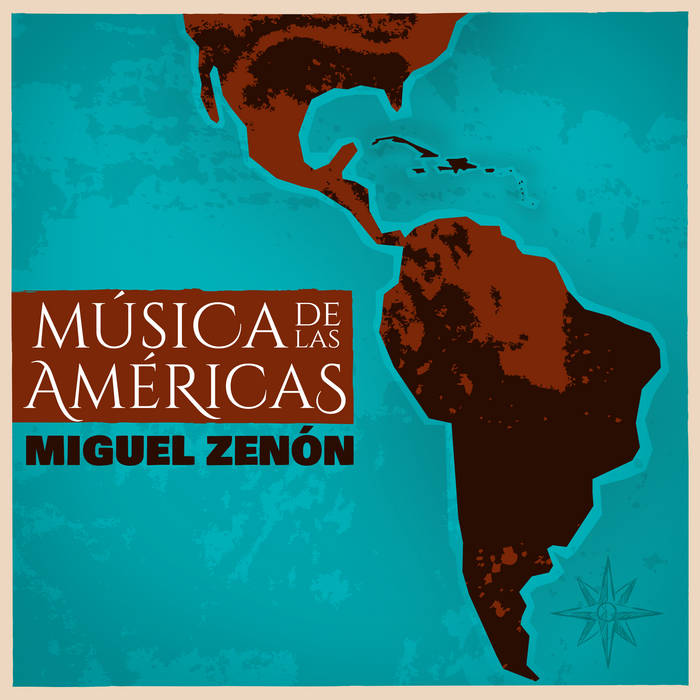
Miguel Zenón - "Musica De las Américas" (Miel Music) – It's no secret how much I admire the music and work of Miguel Zenón. With his long-time ensemble, composed of Luis Perdomo (piano), drummer Henry Cole, and Hans Glawischnig (bass and truly the "glue" of the band). This new album celebrates the music of Central and South America as well as the Caribbean, showing how various elements have entered into the music of the United States (and beyond). Along with the latest album by rapper Bad Bunny ("Un Verano Sin Ti"), whose music celebrates the rhythms that inspire reggaeton, the album has deep grooves, evocative melodies, and the inventive musicianship one has come to expect from Señor Zenón and company. Percussionists Paoli Mejías, Victor Emmanueli, Daniel Díaz, and the five member Los Pleneros de La Cresta each appear on one track during the eight-song program.
Enjoy the fiery "Opresión y Revolución":
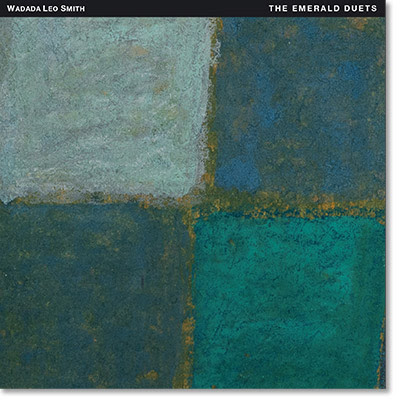
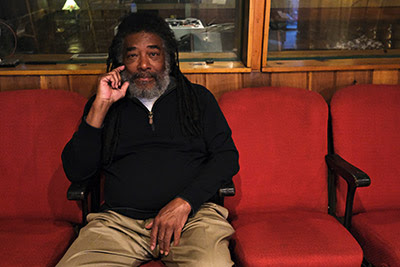
Wadada Leo Smith w/ Pheroan akLaff, Andrew Cyrille, Han Bennink, and Jack DeJohnette - "The Emerald Duets" (TUM Records) – Trumpeter, composer, conceptualist, historian, and philosopher Wadada Leo Smith celebrated his 80th birthday on December 18, 2021 (meaning he just turned 81 yesterday, as I write this). The Finnish-label TUM Records celebrated that momentous occasion by issuing two multi-disc box sets by Mr. Smith, the seven-CD "String Quartets: Nos. 1-12" and the five-CD "The Emerald Duets". Both are amazing but I expect it will take many more months to truly take in the scope of the string music. Whereas five albums with drummers captured me immediately. All the sessions stand out (this is the first time Mr. Smith played with Mr. Bennink) but the two CDs feature Mr. DeJohnette, a long-time musical compatriot. The drummer plays piano as well as percussion; it's not hard to fall under the spell of this music.
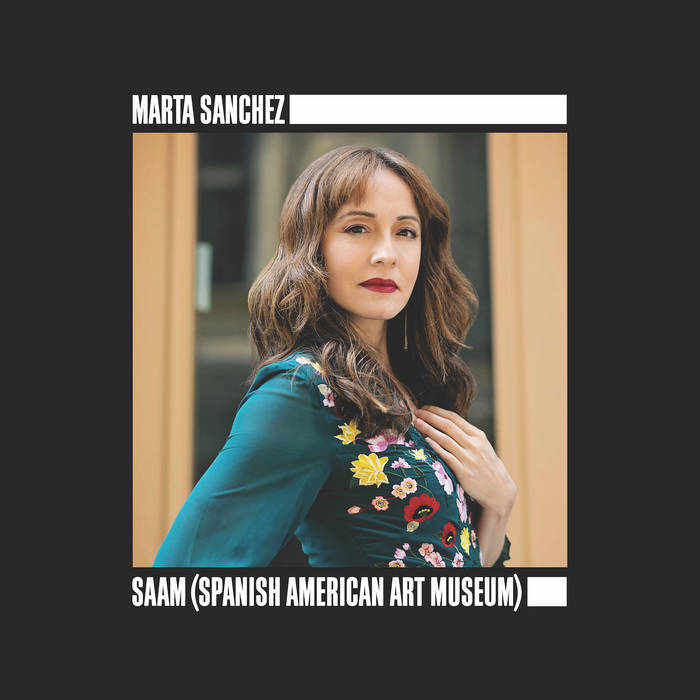
Marta Sanchez - "SAAM (Spanish American Art Museum") (Whirlwind Recordings) – Pianist and composer Sanchez had a tumultuous time during the Pandemic as her mother passed early on. She found time to write new music for her group – saxophonists Roman Filiu and Alex LoRe, bassist Rashaan Carter, and drummer Allen Mednard – and it's her most mature and realized program. The music sings throughout the album plus there are fine solos from all involved. Subtle, emotional, and intelligent, "SAAM" draws from myriad influences, is never imitative, and draws in the listener on the strength of the melodies. One track, "Marivi", features Ms Sanchez, Mr. Carter, and Mr. Mednard with Camilla Meza (vocal, guitar), Ambrose Akinmusire (trumpet), and Charlotte Greve (synths).
Listen to "Dear Worthiness":
Tyshawn Sorey Trio + 1 (with Greg Osby) - "The Off-Off Broadway Guide to Synergism" (Pi Recordings) - Another impressive year for drummer, composer, and educator Sorey, filled with debuts, impressive gigs, and two great albums. This live three-album set of standards, jazz classics, and more, is a splendid exploration of melody, improvisation, and interplay featuring Mr. Sorey with the impressive pianist Aaron Diehl, bassist Dana Hall, and the very welcome alto saxophonist Greg Osby. Three long sets (75 + minutes) yet the music never gets dull or stale because the musicians are free of any expectations other than play the melody, improvise, and follow your creative flow. The week before I wrote about the album, I listened to, at least, one set a day, especially on my daily walk. The addition of Mr. Osby, whose musicianship is impressive throughout, is such a delight!
Hear "Solar":
Noam Lemish – "12" (TPR Records) – This album, from the pianist, composer, and educator Noam Lemish, was one of the more impressive releases of the last six weeks. The Israeli-born, American-educated, and Canadian resident, had recorded several albums with oudist Amos Hoffman, duets with percussionist (and one of his teachers) George Marsh, plus several solo piano explorations. Here, he leads a 12-piece ensemble comprised of many fine Canadian musicians, supplying them with fine, often episodic, pieces with impressive arrangements. There's humor, pathos, wit, and emotion throughout the album (one of the initial releases on Three Pines Records, a new Canadian label led by Amy and Ernesto Cervini). This album gets better each time I listen––give it a whirl!
Here's the delightful "Beethoven's 7th Visit to Romania":
PUBLIQuartet – "What Is American" (Bright Shiny Things) – I don't write about classical music very much but this album (plus the Johnny Gandelsman album in Part 2) truly caught my attention. The PUBLIQs––violinists Curtis Stewart and Janina Norpoth, violist Nick Revel, and cellist Hamilton Berry––often blend European and American classical music but also have a expressive modernist bent. One of the group's ongoing projects, dubbed "Mind| The| Gap|", features arrangements of music by Nina Simone, Ornette Coleman, Tina Turner, Ida Cox, Alice Coltrane, and others into stew that really alters the way you listen to a string quartet. This album features music by Antonin Dvorák, Vijay Iyer, Roscoe Mitchell, Rhiannon Giddens, and others––it certainly does make you think about "what is American"!
Give a listen to "Improvisations on "Law Years" and "Street Woman" (composed by Ornette Coleman):
Trish Clowes – "A View With a Room" (Greenleaf Music) – Composer and saxophonist (tenor and soprano) Trish Clowes signed with Dave Douglas's Greenleaf Music this year and gifted listeners with "A View With a Room". Featuring her long-time band My Iris––guitarist Chris Montague, pianist and organist Ross Stanley, and drummer James Maddren––the music may, at times, remind you a bit of the quieter music of Jimmy Guiffre but, to this listener, Ms. Clowes has really created her own sound. The band interaction is impressive and the music makes you want to return to the album often. They have not toured the US yet––if they do, I would recommend you spend a night in their company.
Here's the delightful "Amber":
Somi – Zenzile: The Reimagination of Miriam Makeba (Salon Africana) – The vocalist and composer Somi has truly blossomed into a world-class artist, celebrating the sound of the African continent even as she updates it. Here, she pays tribute to the great Miriam Makeba (1932-2008), creating one of the most uplifting programs you will ever hear. In fact, Somi also created a play, "Dreaming Zenzile", around Ms. Makeba that debuted off-Broadway earlier in 2022. The album sounds so good, with such delicious rhythms, attractive vocals, and an impressive guest list including Ladysmith Black Mambazo, Angelique Kidjo, amd Gregory Porter (listen below) plus others. World music at its best–give a listen.
Here's the sensuous "Strawberries" featuring Gregory Porter:
Kate Wyatt – "Artifact" (Self-released) – The Montreal, Canada-based pianist Kate Wyatt, a native of British Columbia, has been active on the creative music in her native country for over two decades. "Artifact" is her debut recording as a leader and well worth the wait. Featuring drummer Jim Doxas, bassist Adrian Vedady (her husband), and trumpeter Lex French (on the Music Faculty of McGill University) the quartet explores this music with vigor, sensitivity, and emotional depth. Ms. Wyatt is a fine player but always makes sure you hear the other members of the group. One can hear a nod in the direction of the Kenny Wheeler, as much in the "open" sound and wit in the composition as well as in Dr. French's trumpet work. Impressive debut and one hopes there's more coming soon.
Listen to the lovely "A Flower Is a Lovesome Thing":
Sachal Vasandani with Romain Collin – "Still Life" (Edition Records) - This is the second collaboration for the vocalist with pianist Collin––like its 2021 predecessor "Midnight Shelter" (also on Edition Records), these performances are intimate, often spare, quiet, yet with an emotional intensity that draws in the listener from the beginning and does not let go until the last note fades. In fact, each time I listened, I played the album all the way through. When I spoke to the duo this past summer, they said that Mr. Vasandani stood right next to the piano during the recording session––the intimacy of the recording process translate to the music. Such a smart selection of tunes, from folk music to jazz standards to "pop" tunes to originals. Late night or early morning, this music is a comforting friend..
Listen to the emotional and heartbreaking "(I) Can't Make You Love Me":
Wadada Leo Smith is quite the musical adventurer with a fertile mind and desire to continue to grow as a composer, arranger, and musician even as he moves through his ninth decade in this world.
Photo: Jimmy Katz
Mr. Smith has found a willing partner with the Finnish record company TUM. The label has been in business since 2003; In 2011, the label has released the trumpeter/ composer's "Dark Lady of The Sonnets", the first of 11 recordings on TUM (so far), four of which have been multiple disk sets. Every package has original art on the cover, contains a book of liner notes filled with information about the artists as well as an essay by the composer/ performer about his inspiration for the music. Many of the compositions bear dedications to artists, musicians, statesmen, or the individual work has a question or comment attached. Mr. Smith's makes one think, makes one contemplate issues and events outside the performance of the music. Like his other AACM brethren Henry Threadgill, Anthony Braxton, the late Muhal Richard Abrams, and Roscoe Mitchell (you can throw Oliver Lake and Julius Hemphill into the mix, both graduates of the Black Artists Group (BAG) out of St. Louis, Mo), he is a true original, a champion of Black Creative Music, and a tireless conceptualist.
TUM Records has now issued a seven-CD set titled "Wadada Leo Smith: String Quartets NOs. 1 - 12". The music is performed by the RedKoral Quartet (pictured below) as well as a sprinkling of guests on various movements. The musicians in the Quartet––Shalini Vijayan (first violin, Mona Tian (second violin), Andrew McIntosh (viola), and Ashley Walters (cello)––first met when Mr. Smith was on the faculty of CalArts (all but Ms. Walters) and has been featured on the composer's "Ten Freedom Summers" (Cuneiform Records) as well as TUM's "Rosa Parks: Pure Love, An Oratorio in Seven Songs". The 12 string quartets on the new boxed set includes four composed between 1965-2001, four between 2005-2011, and four between 1987-2019. In his introduction to the recordings, the composer talks of myriad influences ranging from the Delta Blues of his youth (Muddy Waters, John Lee Hooker, etc) to Claude Debussy, Anton Webern, Dmitri Shostakovich, and John Lewis to Scott Joplin, William G. Still, George Walker, Florence Price, Tania Leon, and Alvin Singleton. A number of the Quartets consist of one movement while "No. 11" has nine movements and is spread over two of the disks. The vast majority of the pieces and/or the movements carry dedications while "Quartet No. 2" and "4" have none.
Photo: Kot Nockels
The music is spacious, making great use of close harmonies, silence, and long tones. The first 10 of the "Quartets" were recorded in late September and early October 2015 while the last two were recorded over three days in February 2020. Even when extra "voices" are added––for instance, the leader's trumpet and the baritone vocal of Thomas Buckner on "No. 8 ("Opuntia Humifusa")–the piece takes it time. Yes, there are more intense moments but never at the cost of clarity and melody. "String Quartet No. 6 "Taif: Prayer in the Garden of Hijaz" has the most extra voices with the Quartet (Lorenz Gamma replacing second violinist Mona Thian) plus Mr. Smith's trumpet, Anthony Davis (piano), and Lynn Vartan (percussion including cymbals and marimba). The contrast between the three "extras" and the strings is fascinating as is the subtle call-and-response built into the music. Acoustic guitarist Stuart Fox (Professor Emeritus at CalArts) joins the string ensemble for the beautiful "String Quartet No. 7 "Ten Thousand Ceveus Peruvanus Amemvical (In Remembrance of Dorothy Ann Stone)"––the music is contemplative, impressionistic, and emotionally strong.
Photo: Kot Nockels
Disk seven is somewhat of an anomaly in the collection. The RedKoral Quartet now consists of four violists including Mr. McIntosh, Mr. Gamma, Linea Powell, and Adrianne Pope. The 20:33 album contains both movements of "String Quartet No. 12" with the first movement dedicated to "Billie Holiday (1915-1959)" and the second to "Pacifica". There is a darker quality to the music (the viola is bigger and pitched a 5th down from the violin); when the Quartet plays in unison, there is a trance-like feel to the music. Yet, the high notes are well-articulated, both movements have quite a dramatic quality with the former seemingly touching on the mournful side of the great singer's life and the latter filled with long notes soon interrupted by several glissandi up and down. The piece closes with a high-pitched, sustained, unison note which is striking, solemn yet serves as a moment of unity.
To do these 12 quartets justice, you need the time to sit and listen deeply, to pick out the different voices, the different themes, how they move together and apart, and how the experience changes you. Therefore, you should listen more than once as you have to match your breathing to the movement of the music. Easier to do when there's a steady pulse yet most of this music flows in shorter statements and quick turnabouts. Never is it static. That's asking a lot of the contemporary listener, to devote that much of one's time––however, if you do, these "String Quartets 1 - 12" will open numerous doors of perception.
Next to the work created by Wadada Leo Smith's Golden Quartet/ Quintet and his Great Lakers Quartet, my favorites among his many recordings are his trumpet and drum duets. Because his trumpet sound is so strong and expressive, the conversations with drummers are incredibly absorbing. Mr. Smith has done a slew of these recordings since his first one, "The Blue Mountain's Sun Drummer" (Kabell) with Ed Blackwell in 1986. Since then, he's recorded with Soyo Toyozumi (1992 and 1994), Adam Rudolph (2002), Gunter Baby Sommer (2006), Jack DeJohnette (2008), Louis Moholo-Moholo (2011), and Milford Graves (2016). The intimacy and excitement of these collaborations make for an engrossing listening experience. "The Emerald Duets" (TUM) collects five more duet albums, two with Mr. DeJohnette plus one each with Pheroan akLaff, Han Bennink, and Andrew Cyrille. The recording sessions began with Mr. Bennink in 2014, then Messrs Cyrille and akLaff in 2019, and Mr. DeJohnette in January of 2020. In the booklet that accompanies the set, Mr. Smith writes "My own favorite duet music of all time is Louis Armstrong and Earl Hines performing "Weather Bird," and Parts 1 and 2 of "Mu" by Donald Cherry and Edward Blackwell." The spirit of those duets, the bursts of creativity that went into those recordings, how those individual voices merged to forge "new" music, all that and more is in the DNA of these five albums.
The first CD in the box, "Litanies, Prayers and Meditations", features the trumpeter with Pheroan akLaff. The youngest musician in the set (67), he first played with Mr. Smith in 1976; in fact, one of the drummer's first recordings was 1977's "New Delta Akhri" (Kabell Records). Listening to their latest collaboration, one can hear how Mr. akLaff is an engaging musical conversationalist and his cymbal work throughout the 75 minute, 11-track, is impressive. He doesn't play a groove but is part of the thematic material and responds organically to where Mr. Smith goes during the improvisations. Hard to pick out a favorite track but "A Sonic Litany on Peace" stands out on initial listens.
Photo: Enid Farber
While Andrew Cyrille (82) has not worked a lot with the trumpeter, Mr. Smith was featured along with guitarist Bill Frisell on the drummer's 2018 ECM recording "Lebroba". This duet session, titled "Havana, Cuba", consists of eight pieces including tracks inspired by and dedicated to people such as US. Representative Ilhan Omar (Dem. – Minnesota), vocalist Jeanne Lee, and trumpeters Donald Ayler, Tomasz Stanko, and Mongezi Feza (each one a distinctive voice on the instrument) plus a song dedicated to the drummer's homeland of Haiti. The mixture of the expressive trumpet and steady shuffle on "Jeanne Lee in a Jupiter Mood" stands out for its simplicity, the power of the melody, and the gentle yet powerful drive forward while "Haiti, An Independent Nation in 1804 but Not Recognized by Britain, France, Germany, the United States and Others: A Designed Tragedy!" is a powerful rebuke to the racist attitudes of the early 19th Century and today.
Photo: Ton Mijs
As noted above, Mr. Smith's sessions with Han Bennink (80) in 2014 set the stage for the boxed set. It's quite possible this album, subtitled "Mysterious Sonic Fields", documents the first time the two ever recorded together. Nevertheless, the nine tracks cover much musical territory with moments when the trumpeter really gets into the swinging groove the drummer creates (most notably on "Louis Armstrong in New York City and Accra, Ghana"). On "The Call – A Duet between Joseph "King" Oliver and Jelly Roll Morton", the duo hit the ground running and, save for a short respite halfway through, the listener is pulled along in the musical mischief. Bennink's "tap dancing" beneath the muted trumpet on "Johnny Dyani, the Artist Who Imagined a New South Africa. A Celebration" is yet another treat that makes one sit up and listen closely to how the two musicians inspire each other.
The last two CDs in the box feature Wadada Leo Smith with Jack DeJohnette (80). They met in Chicago in the 1960s at a time when the drummer had already made a name for himself playing with Charles Lloyd and was beginning a three-year tenure with Miles Davis. It wasn't until 2000 when the trumpeter invited Mr. DeJohnette to join his Golden Quartet that the two began working and playing together on a regular basis. In 2009, Tzadik Records released "America", their initial recording of duets. Mr. Smith guested on Mr. DeJohnette's 2015 ECM recording "Made in Chicago", a live album that also featured Henry Threadgill, Roscoe Mitchell, and bassist Larry Gray.
Photo: Enid Farber
Disk four, "Freedom Summer, The Legacy", sounds different than the others as it opens with the drummer playing piano on the impressionistic "Sandalwood and Sage". Mr. Smith is most lyrical while Mr. DeJohnette blends sounds and long sustained notes. On the title track, the trumpeter moves to piano playing a deliberate melody as the drummer dances around his trap set. On the third (of five) tracks, "Meditation: A Sonic Circle of Double Piano Resonances", Mr. Smith stays on piano while Mr. DeJohnette moves to Fender Rhodes, creating a meditative koan. The final cut, "Silence, Quietness and Very Still" is also a keyboard duet–notice how this most gentle of pieces creates a feeling befitting its title. Notice how melodic the interaction is as well.
Photo: Enid Farber
Disk Five is dedicated to the five-part "Paradise: The Gardens and Fountains". Back to just trumpet and drums, the music has a clarity of both sound and vision; how assured and lyrical Mr. Smith sounds while Mr. DeJohnette's feel as if they are reaching out of the speakers and touching one's heart. The intimacy of this music, at times, is breathtaking as if you can hear the two musicians breathing and listening to each other. The final part, subtitled "Pomegranates and Herbal Teas", is a short (2:02) trumpet solo that seemingly ends in the middle of a phrase as if Mr. Smith was assuring the listener his musical journey is not complete.
Photo: Jimmy Katz
Three of the four drummers (all but Bennink) perform "The Patriot Act, Unconstitutional and a Force That Destroys Democracy", a composition whose title sets the stage for the dramatic music. If music is indeed a "healing force", it also can expose the wounds of a people and a nation grappling with understand the meanings of equality and justice, of fairness, of standing together in the face of storms and tragedies. Each of the three versions is different as befits the drummer; two feature the trumpet and drums starting together while Mr. DeJohnette opens the third version with a long and powerful solo–when the trumpeter enters, the two musicians take off at a furious pace that slows on occasion for the trumpet or the drums to suggest a different direction or to play a solo or insert a new melodic phrase. At 20:03, the third version is the longest single track on the set but its fire and message is inescapable.
"The Emerald Duets" is "alive" music at its best, a five-CD collection that will reward the eager listener for years to come. Next to "String Quartets Nos. 1 - 12", these "conversations" are immediately more accessible but no less engrossing. Both projects contain exciting music, challenging one's expectations at nearly every turn. Both projects contain moments of pure beauty, making time stand still, making one wish for more time to enters these sonic worlds in the midst of the daily hustle. Through his music, Wadada Leo Smith offers visions of a master at work and at play––we are the beneficiaries of his creative benefactions.
One of the great joys of listening to creative music is how many of the artists that came of age in the 1960s and 70s are still with us and are still pushing forward. OGJB –– Oliver Lake (alto saxophone), Graham Haynes (cornet, electronics), Joe Fonda (acoustic bass), and Barry Altschul (drums, percussion) –– first came together as a quartet in 2015 to do several tours. They recorded "Bamako" in 2016 and it was issued in 2019 on TUM Records. Right after that debut album was issued, the quartet went back into the studio and the results can be heard on "Ode To O", the group's second recording for the Finnish label.
The 10-song program includes three compositions by Altschul, two apiece from Lake and Haynes, one by Fonda, and two collective improvisations. The drummer's title track is dedicated to Ornette Coleman while "Da Bang" is a tribute to the late violinist Billy Bang. The former piece opens the album in a swinging mode but check out the well-developed melody. Haynes takes the first solo and he dances along with the powerful bass lines and rambunctious drums. The latter track opens with a fine drum soliloquy that dips and swerves, talks and turns, before Fonda drops into a rapid-fire walking bass and the quartet dances forward. Lake's "Justice" includes a deliberate melody line over the rampaging rhythm section. The music feels akin to the "protest" music that Charles Mingus created in his powerful songs. Lake and Haynes solo together with the saxophonist squalling while the cornetist shouts back at him. The saxophonist composed "Bass Bottom", another tune with a deliberate melody line but this time it's Fonda funky bass lines and solo over the simple drum pattern that pushes the song forward.
Photo: Enid Farber
The opening moment of Haynes' "The Other Side" feels inspired by Richard Strauss's "Thus Spake Zaruthustra"; it's slow development of the theme gives way to the composer's solo which also includes his use of electronics to distort the sound of cornet. Fonda's "Me Without Bela" owes its inspiration to the bassist's love of Mr. Bartok's string quartet but when the song moves out into its second half, Fonda drops into a hypnotic and funky rhythm which pushes Altschul and the front line into a fascinating push and pull. The coda of the song is quite engaging and surprising, an abridged version of the opening of the piece.
Check out the two improvisations, especially "OGJB#3" with its playful electronics. Playful is a good word for "Ode To O"; the album is full of playing by four musicians who listen to and inspire each other as well as inspire the listener. Such goos music deserves to be heard both on album and in person.
On the first day of February 2021, three musicians entered Studios Ferber in Paris, France, all three associated at one time in their careers with pianist Cecil Taylor (1929-2018). Drummer Andrew Cyrille spent 11 years (1964-75) with the groundbreaking artist, recording on his two Blue Note albums, his work with and for the Jazz Composers Orchestra, and several other Taylor albums. Bassist William Parker also spent more than a decade as a member of the pianist's ensemble, recording 13 albums from the mid-1980s into the early 1990s. Flugelhornist and trumpeter Enrico Rava performed as a member of Taylor's Orchestra of Two Continents (1984) and his European Orchestra (1988), recording one album with each band.
The 10-song program opens with "Improvisation No. 1", a burst of energy from the opening moments. For those listeners who only know the 82-year young Rava from his ECM recordings, his flugelhorn work is a joy to hear. He rides the rhythmic waves, playfully tossing out lines yet never overplaying. Meanwhile, Parker creates a throbbing bottom from Cyrille to play around with. "Ballerina" is the first of two Rava compositions; the title does not prepare one for the rapid-fire rhythms and blazing flugelhorn riffs. Even the unaccompanied cymbal and drums solo burst out with unbridled energy. Later in the program, Rava's "Overboard" opens with a short flugelhorn spot that resembles the melody of Ornette Coleman's "Lonely Woman". Parker's powerful bass lines atop Cyrille's rolling drums stands out as well.
Photo: Luciano Rossetti
Cyrille's "Top, Bottle, and What's in the Middle" opens with solo flugelhorn, then bass, and then drums, hence the title. Yet, that's how the tune moves forward, each member of the trio getting a short solo in that order. The drummer also contributes "Enrava Melody" –– Rava plays the melody in with Parker offering counterpoint until the composer enters to set the pace for the music to jump forward.
The album also includes two "Blues For Cecil". "No. 1" is a funky urban blues that Rava gleefully moves through while Parker shows his "gutbucket" side. The trio goes "free" for a moment before Cyrille's martial, drumbeat pushes the bassist out front for yet another powerful solo. Listen to Cyrille dancing, bobbing and weaving throughout the second half –– such joy! "No. 2" opens as a ballad with Rava displaying his blues "chops" while the bassist plays such deep low notes.
Photo: Luciano Rossetti
"2 Blues for Cecil" closes with the program's only standard, Rodgers & Hart's "My Funny Valentine". Rava caresses the melody while Cyrille moves gracefully around his cymbals and Parker offers gentle support. The three musicians created this beguiling tribute to Cecil Taylor not by imitating but by playing who they are as musicians and as human being. Mr. Taylor always expected the very best from his ensemble and Andrew Cyrille, William Parker, and Enrico Rava responded during their time working with him. This delight-filled album is their gift to us!
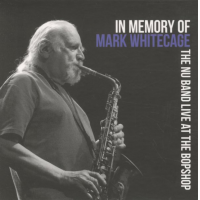
Born in 1937, Mark Whitecage (alto saxophone, clarinet, Díne flute) lived a jazz life. He started playing while still a boy, his father exposing him to the music and sound of Lester Young, Charlie Parker, Ben Webster, and many other "boppers". By the time he arrived in New York City in the early 1970s, his approach to music had changed. Whitecage hooked up with multi-instrumentalist Gunter Hampel and they toured constantly spending a lot of time criss-crossing Europe. He led a number of his own bands through the 1980s and 90s recording a number of albums as a leader and sideman for CIMP Records. He joined The Nu Band in 1999, a quartet organized by drummer Lou Grassi and trumpeter Roy Campbell, Jr. (featuring bassist Joe Fonda) and was a member up until his passing in March of 2021 at the age of 83.
In January of 2018, TheNu Band performed at the Bop Shop in Rochester, NY. "In Memory of Mark Whitecage" (NotTwo Records) captures 63 minutes of that evening's performance. After Roy Campbell passed in 2014, the rest of the group asked trumpeter Thomas Heberer to join them and he's been a member ever since. The exciting seven-song program features songs by each member. The program opens with Whitecage's "Prayer for the Water Protectors"; the composer's Díne flute rolls on unaccompanied for the first two minutes before Grassi's tribal drums and Heberer's growling trumpet move behind him. Fonda's bowed bass lines quietly underpin the music. The saxophonist's "Five O'Clock Follies" opens with a short saxophone intro (opening lines sound a bit like "How are Things in Glocca Morra" from "Finian's Rainbow") and heads right into a rhythm that befits the name of the venue. Everybody takes a solo, the audience and the band have fun.
The next two cuts are both composed by the trumpeter. "One For Roy" pays tribute to the late trumpeter and co-founder of The Nu Band. The music goes in and out of tempo plus features a great conversation between the alto sax and trumpet. "The Closer you Are the Further It Gets" is the album's longest piece and it, too, does not adhere to a strict rhythm. Yet, listen to how Fonda and Grassi converse underneath the soloists. They stay quite busy and finally push a rhythm onto the soloists which Whitecage obliterates with his wild duo with Grassi.
After a pair of Fonda's pieces, the free then rollicking "Christoff and Ornette" and the hard-driving "Minor Madness" (great solos all around), the album closes with Grassi's elegy "Dark Dawn in Aurora". Opening with a long and powerful solo from Fonda, the band enters on a martial beat and then into strong solos from Heberer and Whitecage (again, he duets with the drummer) before returning back to the theme with the added spice of the trumpeter dancing atop the saxophone melody until the close.
In the liner notes to "In Memory of Mark Whitecage", Joe Fonda writes about his 40-year relationship with the saxophonist first as a young musician soaking up all the stories then as an equal on the bandstand. Lou Grassi looks back at the 20 years of Whitecage's membership in The Nu Band while Thomas Heberer first met the man as a 24-year old new to America before joining him on the bandstand 25 years later. The energy, the creativity, the sheer joy of making music even as he entered his 80s, Mark Whitecage made and left his mark on creative music.
TUM Records continues its recorded celebration of Wadada Leo Smith in his 80th year on this plane of existence with two new albums. Earlier this year, the Finnish label issued the solo three-disk set "Trumpet" plus a duo-trio three disk set "Sacred Ceremonies" that featured the trumpeter in musical conversations with maser percussionist Milford Graves and bassist Bill Laswell. Both albums are filled with captivating performances, sonic poems, a multiplicity of ideas, and a musical language that leads to new possibilities in an ever-changing world.
One can say the same about the two recordings TUM is releasing a month before Wadada's birthday (which is December 18). The first, "The Chicago Symphonies", consists of four separate works, "Gold - No. 1", "Diamond – No. 2", "Pearl - No. 3", and "Sapphire - No. 4: The Presidents and Their Visions for America" performed by the Great Lakes Quartet. "Nos. 1 -3" features Wadada with Jack DeJohnette (drums), Henry Threadgill (alto saxophone, flute), and John Lindberg (bass) while "No. 4" has Jonathon Haffner (alto and soprano saxophones) instead of Mr. Threadgill. The first three symphonies are dedicated to particular musicians that the composer met when he moved to Chicago in 1967 after five years in the Army. Wadada joined the AACM where he met Muhal Richard Abrams, Anthony Braxton, Amina Claudine Meyers, Leroy Jenkins, Joseph Jarman, and Mr. Threadgill plus many others –– all these were expanding the possibilities of Black Music; many of them still do.
Photo: Dominick Huber
Of all the myriad albums Wadada has issued in the past decade+, "Chicago Symphonies" bears witness to the influence of the people he came in contact with. It's nearly impossible to hit the highlights as every track stands out but know this –– these are master musicians at play. Mr. Threadgill's tart alto saxophone or the rounds tones of his flutes stand out while Mr. DeJohnette deftly drops into musical conversations with his three compatriots, playing with a freedom that not only displays his creativity but how intelligently he shapes each piece. Mr. Lindberg's thick, often cello-like, bass tones and creative lines not only offer a sense of structure but he also shows he can step forward with his sparkling arco (bowed) bass work. Wadada's trumpet pierces through the pieces while his muted work bears witness to the influences of Lester Bowie and Miles Davis.
Photo: Dominick Huber
"Symphony No. 4: The Presidents..." is dedicated to Presidents Abraham Lincoln and Barack Obama. The text from "The Gettysburg Address" and President Obama's "Speech at the 50th Anniversary of the Selma to Montgomery Marches" are included with the physical albums and can also be found on the TUM website (address below). The six-part piece was recorded in 2018, over three years after the other Symphonies. As with the works dedicated to the many Chicago musicians, there are moments of urgency, joy, darkness, and unity that touch the mind and soul of the listener. The emotion that one feels just reading the texts and the titles of the movements help to prepare the listener for the depth and breadth and, yes, the emotional strength of these musical performances.
The music and stories of "Chicago Symphonies" will keep you captivated throughout the four albums and all 165 minutes of music. Wadada Leo Smith's Great Lakes Quartet is in splendid form with the "Fourth Symphony" serving as this listener's introduction to saxophonist Jonathon Haffner (hope to hear much more) whose first gig with the GLQ was in 2017. Listen closely!
Album # two, "A Love Sonnet for Billie Holiday", has Wadada in a trio setting with Mr. DeJohnette and Vijay Iyer (piano, Fender Rhodes, Hammond B-3, electronics). Mr. Iyer first played with the trumpeter over 20 years ago; the pianist understands how Wadada's music moves, his role in shaping the pieces, and how to "converse" in the composer's unique musical language. An interesting aspect to this program is that all three of the participants contributed compositions: there is even one totally improvised piece. The music is lively, dramatic, at times stunning, and always on the move.
The title track opens the album (do listen below): it's a fascinating journey, from the four minute drum solo that develops over the first four minutes to the rousing three-way conversation in the middle of the nearly 12-minute piece to the emotional "blues" of the final 90 seconds. An atmospheric Rhodes piano is heard at the onset of Mr. Iyer's "Deep Time No. 1". If you listen closely, the voice of Malcolm X's speech "By All Means Necessary" can be heard (at times, electronically altered) while the trio moves around led by Wadada's muted trumpet, the soft piano chords and Mr. DeJohnette's rapid-fire trips around his cymbals. There are moments when the track suggests the influence of Miles Davis circa "Filles de Kilimanjaro" and "In a Silent Way".
Photo: Maurice Robertson
The other three tracks include "The A.D. Opera: A Long Vision with Imagination, Creativity, and Fire, a Dance Opera" (dedicated to pianist, composer, and Wadada collaborator Anthony Davis), Mr. DeJohnette's affecting "Song for World Forgiveness" (wonderful musical interaction), and the trio improvisation "Rocket" that closes the album. That final cut hearkens back to "Yo Miles!", Wadada's electric project with guitarist Henry Kaiser. Here's the Hammond organ leading the raucous trumpet and the frisky beat of the drums. It's quite a finish to quite an album.
The cooperative trio of Wadada Leo Smith, Jack DeJohnette, and Vijay Iyer recorded "A Love Sonnet for Billie Holiday" on November 22, 2016 just three days short of its release date of 11/19/21. Yet, the music sounds contemporary, fresh, and brimming with intelligence, wit, and an animated sense of adventure. One could not ask for more (other than a second recording and a tour from this trio)!
The decade between 1963-1972 was such a fertile time for Creative Music. Musicians like John Coltrane, Charles Mingus, Miles Davis, Muhal Richard Abrams, the Art Ensemble of Chicago, and others were stretching, even obliterating the boundaries of music and sound. The artists mentioned below, especially Wadada Leo Smith, Dave Holland, and the late Milford Graves, have never sat still waiting for the world to catch up with them; instead, they have dedicated their creative lives to continually exploring the myriad possibilities open to them and fellow musicians.
Photo: Petri Haussila
Wadada Leo Smith (12/1941, Leland. MS) began playing trumpet when he was 12 years old. After completing high school, Mr. Smith played in various soul rhythm 'n' blues, and blues bands before joining the U.S. Army, studying in the Music Program and playing in Army bands. After leaving the service, the trumpeter settled in Chicago where he began playing with saxophonist Anthony Braxton and violinist Leroy Jenkins. Like a number of musicians associated with the AACM (the Association for the Advancement of Creative Musicians), Mr. Smith developed his musical philosophy which he called Ankhrasmation Symbol Language which he utilizes to this day. In 1970, he moved to New Haven, CT, working with numerous groups (including New Delta Ahkri and The Creative Improviser Orchestra) as well as studying at Wesleyan University in Middletown, CT.
Photo: Petri Haussila
In 1992, Mr. Smith moved to Southern California to teach at the California Institute of the Arts (CalArts) where he remained for two decades. He organized new ensembles and worked alongside guitarist Henry Kaiser in Yo Miles! while still working with his AACM cadre. Over the past two decade, Mr. Smith has recorded numerous albums with various ensembles that he has led (and still leads) plus continuing to work on solo material. His albums have appeared on ECM Records, Tzadik, Moers Music, Cuneiform, Pi Records, Nessa, Clean Feed, his own Kabell label, and, since 2011, on the Finnish TUM Records label.
2021 will see a flurry of new releases from Wadada Leo Smith beginning with two three-CD sets from TUM. "Trumpet" is just that; a solo program recorded over 4 days in July of 2016 inside St. Mary's Church in Pohja, Finland (approximately one hour west of Helsinki). Officially, it's his eighth "solo" album but only the second that is exclusively trumpet (the other one being "Solo: Reflections and Meditations on Monk" released by TUM in 2017 – 2001's "Red Sulfur Sky" on Tzadik is mostly trumpet and some flugelhorn). If you are a devotee of Mr. Smith's music, you will be pleased by this 134+ minutes, 14-song program. The first two discs each contain a five-part composition while disk three contains two four-part pieces. Each disk is housed in a cardboard jacket featuring original artwork by the trumpeter. For neophytes, it's best to just sit down, sit still, and listen. Don't try to make sense of either the music or the fact that each work is dedicated to someone who has had a powerful influence or relationship with Mr. Smith. Disk one opens with "Albert Ayler" and is followed by the five-part "Rashomon", named for the movie that so moved the composer. Elsewhere there are works dedicated to violinist Jenkins, the author James Baldwin, drummer Steve McCall, pianist/ vocalist Amina Claudine Meyers, bassist Reggie Workman, and to Mr. Smith's family.
Photo: Petri Haussila
There is no mistaking Mr. Smith's sound, his clarion call tone clear inside the church. His ability to blend sound and silence, to make his muted trumpet cut through the air like a saber and sill be grounded in the blues, to absorb how his long notes resonate, and to sit straight up during his rapid-fire phrases, all this has only grown more powerful over his musical lifetime. Plus, by dedicating these pieces to various people, curious listeners will discover musicians and thinkers who they may be able to learn from. To understand "Trumpet", you must surrender to the fact that you have entered the multi-cultural world of Wadada Leo Smith: his music, his rules, his ideas and ideals of freedom.
"Sacred Ceremonies" is the second three-CD set to released this month by TUM. Disk one (5/27/2016) is a duet with Wadada Leo Smith in musical conversation with percussionist Milford Graves, disk two a duo with Mr. Smith and bassist Bill Laswell (recorded the day before), and disk three with all three participants (recorded 12/11-12/2016). While the bassist has worked with both the trumpeter and the percussionist in the past, this looks to be the first time Mr. Smith and Mr. Graves (who passed earlier this year) met in the studio. The majority of the material on the duo albums is composed by the trumpeter while four of the seven trio tracks are credited to all three musicians. Clocking in at 174 minutes, the three albums are chock-full of ideas, fascinating interplay, and the joy of three people creating musical conversations
Photo: R.I. Sutherland-Cohen
Unlike "Trumpet", "Sacred Ceremonies" is three distinct recordings yet sharing the same title. Mr. Smith has always had a special affinity with drummers having recorded duo albums with Ed Blackwell, Jack DeJohnette, Adam Rudolph, Louis Moholo-Moholo, Gunter "Baby" Sommer, and now Milford Graves. This session with Mr. Graves is a joy from start to finish with the drummer displaying his affinity to African drumming as well as rhythms from the Caribbean and South America. Among the highlights is "Baby Dodds in Congo Square", a nearly 14-minute opus with drums that rumble and tumble while the trumpet sharp tone sings, shouts, and praises "freedom". The interaction between the two throughout is a pleasure to hear. Mr. Graves's high-hat work is fascinating on several tracks but especially on "The Poet: Play Ebody, Play Ivory"; the gentle rhythmic propulsion shimmers beneath the floating trumpet phrases.
Photo: R.I. Sutherland-Cohen
The combination of Mr. Smith and electric bassist Laswell hearkens back somewhat to both musicians love of electric Miles Davis. The bassist appeared on Mr. Smith's "Najwa" album (TUM 2014), the recording with four guitarists. Recorded in Mr. Laswell's West Orange, NJ, studio, all of the tracks feature synths (presumably the bassist playing them) washing behind the musicians. The program features performances dedicated to Prince, Donald Ayler, Tony Williams, and the late vocalist Minnie Ripperton. "Prince –– A Blue Diamond Spirit" is actually quite funky with its dancing bass line, "wah-wah" bass, and overdubbed counterpoint bass while the trumpeter wails above. "Tony Williams" opens with a muted trumpet melody, circular in its intent. The basses enter and the music bounces forward. Mr. Smith stays close to the original melody until he bursts out momentarily for 15-20 seconds before giving the music over to the synths.
Photo: R.I. Sutherland-Cohen
The third disk brings the three musicians together for more adventures in creativity. After Mr. Graves sets the pace on the opening track, "Social Justice –– A Fire for Reimagining the World", Mr. Smith makes a blazing statement atop the powerful rhythm section. This album also hearkens back to the electric Miles period; you hear it in the rhythms and in the muted trumpet trumpet attack. Throughout most of this recording, the drummer is the one who sets the pace, builds the foundation of the music while the bassist and trumpeter weave around each other. Mr. Laswell's thick bass melody opens "Waves of Elevated Horizontal Force", soon joined by the muted trumpet on countermelody –– one hears echoes "In a Silent Way". The pulsating and pounding drums change the mood and the music rumbles forward. Mr. Graves leads the way into "The Healer's Direct Energy" (a reference to the work the drummer conducted on the healing properties of music); when Mr. Smith and Mr. Laswell enter, the music takes a slower route forward, one that depends upon the long trumpet tones and the bassist's responses.
As Wadada Leo Smith moves through his 80th year in this dimension, he continues to create fascinating music in so many different contexts. These two TUM releases, "Trumpet" and "Sacred Ceremonies", should certainly satisfy long-time listeners; if you have never spent time in his worlds, start with the Milford Graves/ Bill Laswell set as it covers so much territory. If you love a challenge, go for the trumpet solo albums as the music will teach you and make you think.
Bassist and composer Dave Holland (born 1946) began his professional career at the age of 14 playing in dance bands in and around his hometown of Wolverhampton, England. Four years later, he moved to London and soon began playing in jazz ensembles led by saxophonist Tubby Hayes, pianist Chris MacGregor, and reed master John Surman. The story goes that trumpeter Miles Davis heard young Dave Holland at Ronnie Scott's Jazz Club and invited him to join his new acoustic/ electric ensemble. Over the next few years, Holland played on "Filles de Kilimanjaro", "In a Silent Way", and "Bitches Brew", finding time to work with Chick Corea and the Thad Jones/ Mel Lewis Orchestra. After leaving Davis's employ, he joined pianist Corea, reed master Anthony Braxton, and drummer Barry Altshul to create the free jazz-minded Circle. The bassist signed to ECM Records where, within a few years, he produced his first masterpiece in 1972, "Conference of the Birds" (with Mr. Braxton, Mr. Altschul, and Sam Rivers), and then co-created Gateway, a trio with guitarist John Abercrombie and drummer Jack DeJohnette. Holland became an in-demand studio bassist appearing on scores of ECM dates and more. His original music and powerful as well as melodic bass playing has kept him in the spotlight for five decades.
In 2019, Holland debuted on Edition Records in Fall 2019 in "Good Hope", a trio with saxophonist Chris Potter and tabla master Zakir Hussain. His debut as a leader for the label is "Another Land", a trio that reunites the bassist with guitarist Kevin Eubanks and is his first recording with drummer Obed Calvaire. The Trio has actually been together over five years but this is its debut recording. Holland, who knows how to to create a good groove, pulls out his electric bass for the opening "Grave Walker" –– he immediately locks in with Calvaire and the album is off to a deeply funky start. Eubanks jumps right in and plays a powerful solo that includes long phrases, choppy r'n'b chords, and a percussive drive of his own. Later in the program, the deep tones of the electric bass begin a mysterious journey title "The Village" that features a long, languorous, opening that explodes when Eubanks enters. Calvaire's solo is a thunderous treat that inspires a fiery guitar solo.
Holland's thick acoustic bass lines lead in "Gentle Warrior", a piece that should remind you of pieces that the bassist has written for his sextet. There's an airy quality to the melody line but Calvaire's drumming, front and center, keeps up the heat. "20 20" opens with quiet work from the Trio but then Holland's electric bass plays a line that would not be out of place in a "prog-rock" setting. For the bulk of the tune, he shifts between the acoustic and electric basses, the former for solos. The title track is a handsome blues-tinged piece buoyed by a repetitive bass line, gentle acoustic guitar, and quiet cymbal work as Eubanks (on electric) plays the gentle melody. One expects the piece to explode at any time yet the gentleness continues throughout (Holland's long solo is quite impressive while Calvaire's cymbal work never rises above a whisper).
Photo: Megan V. Agins/ NY Times
Rockers such as "Mashup" and the rip-roaring "The Village" mesh nicely alongside the lovely ballad "Passing Time" and the elegant solo guitar piece, "Quiet Fire". The solo piece is reminiscent of John Abercrombie's "Timeless"; not as trancelike, Eubanks moves easily through the melody without trying to dazzle or impress the listener. In fact, this is one of the most impressive recordings that the guitarist has made. He's creative and he does not let his impressive technique get in the way of his soulful, exciting, contributions.
"Another Land" closes with the deep blues of "Bring It Back Home". Featuring a subtle acoustic bass solo and a splendid guitar spotlight, pay attention to how Calvaire does not overplay but takes it nice and gritty. We listeners are so lucky that Dave Holland continues to move forward, never resting on his imposing laurels. Turn up the volume and give a listen!

 Posts
Posts