Showing posts with label Carmen Staaf. Show all posts

Monday, October 3, 2022

The Recuperation Playlist (Part Three)

The final installment of what could easily called the best new releases of the past three months and among the best of 2022.

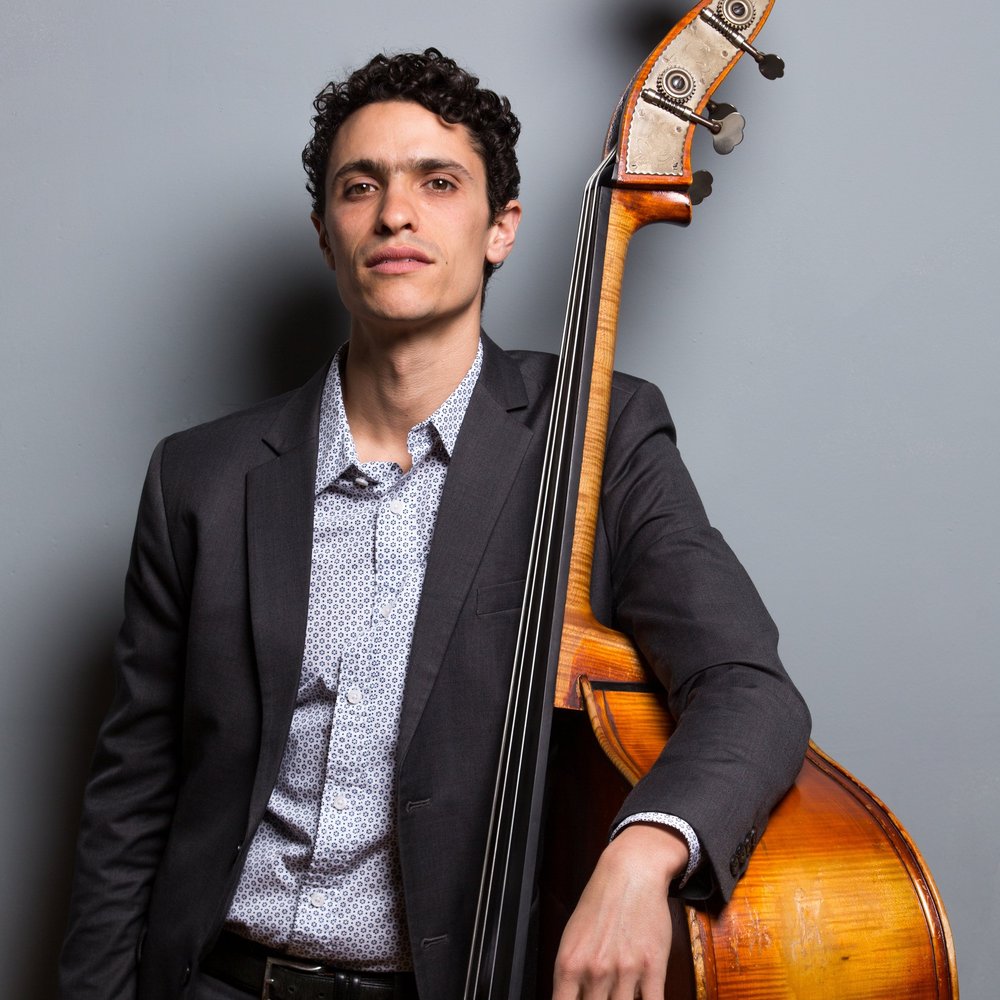
Photo: Stephen Hawk
Bassist and composer Noah Garabedian is not only a well-educated musician (with degrees from UCLA and NYU) but also quite busy. He has worked with saxophonist Ravi Coltrane, pianist Kris Davis, drummer extraordinaire Jeff "Tain" Watts, and guitarist Nir Felder. He co-leads a trio with saxophonist Caleb Wheeler Curtis and drummer Vinnie Sperrazza (they have two recordings) and has released two albums as a leader, 2014's "Big Butter and the Eggmen" (BJU Records) and 2020's "Where Fables Meet" (self-released through Bandcamp).  Since before the Pandemic, Garabedian has been working with the rhythm section of Carmen Staaf (piano) and Jimmy Macbride (drums). They appear on the 2020 album along with bassist's tenor saxophonist brother Raffi.  Both albums are well exploring because the musicianship and the compositions are top-notch.


For his third album "Consider The Stars Beneath Us" (Outside In Music), Ms. Staaf and Mr. Macbride are back along with saxophonist Dayna Stephens (tenor and soprano) plus producer Samuel Adams (effects, programming, Moog Minitaur, and Juno JU-06A).  What stands out for this listener is the strength of the compositions, the great work of the band, and the depth of the sound. Garabedian's bass is front and center in the mix yet everyone else is so clear. Listen to the Weather Report-influenced "Salt Point"––under headphones, the music is so immediate and alive. Through speakers in the room, the music seems to fill every space but is not as intrusive as it is joyous and welcome. 


The blend of playful tunes and softer, more introspective, music pulls the listener. The blend of quiet tenor sax, classically-inspired piano fills, and full-throated bass push the opening "RR" with Macbride's active yet softer drumming pushing the music forward. One might look at the title "Expectation. Regret." and think this piece might be introspective as well.  But there is a quiet fire in the rhythm section that gives Stephens the cushion to build an impressive solo. The combination of the thick-toned bass lines and powerful piano work of Ms. Staaf makes the music jump. The pianist channels her inner McCoy Tyner on the closing track "Alice", producing a stunning solo.  Stephens expressive soprano sax pairs with the percussive piano to dance through the theme of "Petty Thieves" that then opens to a formidable bass solo.  "Shackelton's Cocoa" follows and it's a mischievous blend of blues and tango–the music is not a joke and builds to an impressive conversation between the four musicians.

Producer Adams layers electronics on several tracks; his most impressive work can be heard on "Pendulum for NG", a tune he wrote for the bassist. It's a strong piece especially for the fine tenor sax solo and the melodic strength of the rhythm section.  The synth sounds are, mostly, subtle and hardly intrusive.

"Consider the Stars Beneath Us" is a splendid album, filled with  with excellent compositions and fine playing.  Having listened numerous times over the past several months, this album fills this listener with joy and, like the best music, gives me hope.

For more information, go to www.noahgarabedian.com.  To hear more and to purchase the album, go to https://outsideinmusic.bandcamp.com/album/consider-the-stars-beneath-us-2.

Hear "Salt Point":


Five years ago, tenor saxophonist and composer Chet Doxas released "Rich In Symbols" (Ropeadope Records), a collection of compositions inspired by artworks from New York City artists of the 1980s. The saxophonist spent hours in galleries looking at the pictures, writing down melodic fragments and other thoughts. The resulting album was a powerful statement that mixed different genres of music and sounds, subtly capturing both the energy of the art and the composer's musical interpretations.  You can listen by going to  https://chetdoxas.bandcamp.com/album/rich-in-symbols


"Rich in Symbols II" (Justin Time Records) carries the subtitle "The Group of Seven, Tom Thomson and Emily Carr"; this time, Doxas spent time investigating artists from his native Canada (he's a native of Montreal, Quebec). Because all of the works are outdoor scenes, Doxas also created "field recordings" for the tracks that places the music (and the paintings) outside the galleries.  The rhythm section of Zach Lober (bass) and Eric Doob (drums) return from the first recording and the group is filled out by Jacob Sacks (piano, mellotron) and Joe Grass (pedal steel, guitar, banjo).  Like the earlier album, there are seven tracks but, for the most part, the newer pieces are longer and episodic in composition.  The impressionistic quality of the music and the performances allows for great variety in sounds––the music escapes from any specific genre and offers the listener a fascinating aural experience.

Photo: William Geddes

The first piece that really drew me into the project is "The Jack Pine". The longest piece in the program (13:04), the music also seems to travel the farthest. From the faint bell sounds (processed guitar and piano) plus a scratchy saxophone (as if recorded through a telephone), the music moves slowly like the wind blowing through the lonesome tree as depicted by Tom Thomson's painting (the artist lived from 1877-1917). Once Sacks picks up the melody on piano, the music begins to move forward with Doxas picking up the theme.  Suddenly, the rhythm section, sans piano, falls into a swing rhythm for a far-ranging pedal steel solo (reminds this listener of the playing of Susan Alcorn)–as the intensity picks up, the piece goes rubato and Doxas takes the lead. A quiet resolution to his solo leads to a gentle piano statement that reintroduces the theme and the cut closes on the gentle sounds of the opening seconds. Upon multiple listens, it strikes this listener that the melody hearkens back to music of the artist's time.  And the "airiness" as well as the noise places the subject outdoors in a cold and windy landscape.


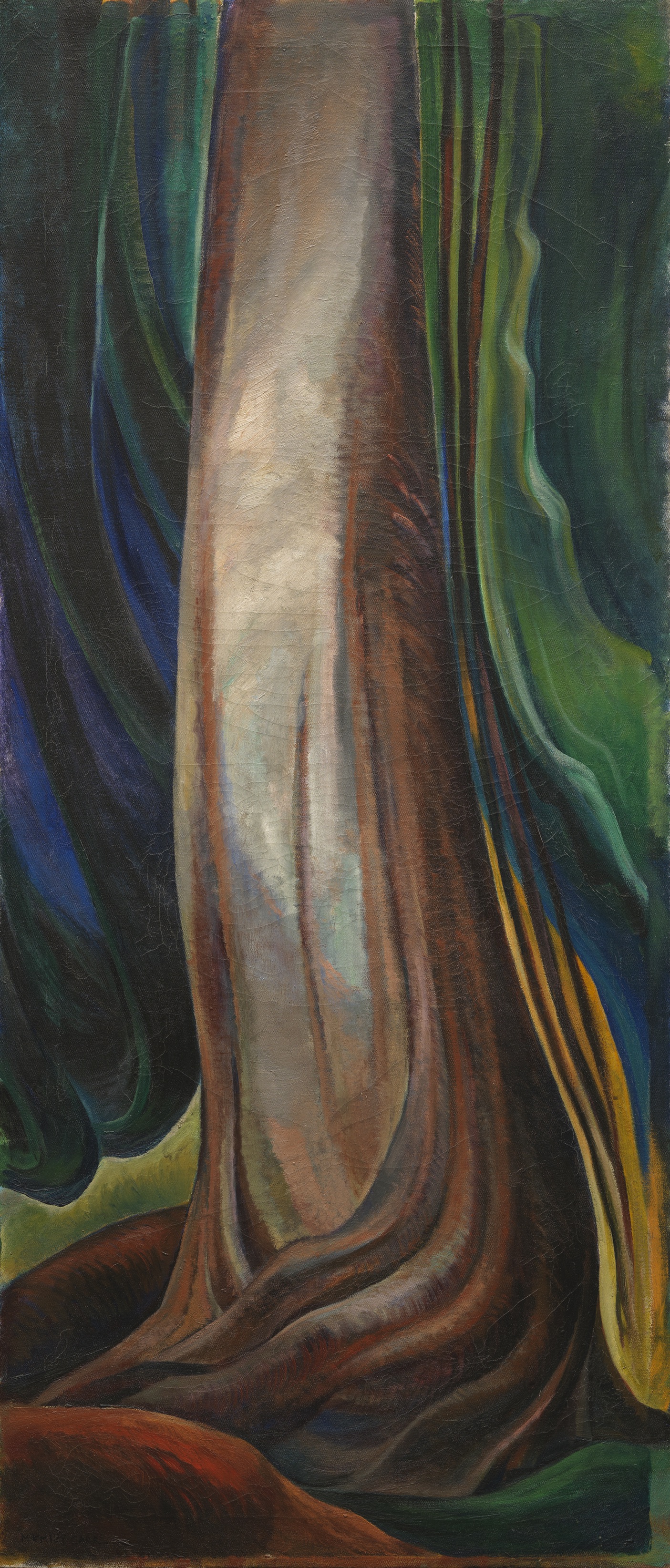
Emily Carr
There is a playful quality that emerges from "Tree Trunk", the song based on the painting by Emily Carr (1871-1945).  The music takes almost three minutes to emerge but when Doob drops into a "thumping" beat and Grass strums the banjo, Doxas (on clarinet) introduces the delightful melody. Shadowed by the bassist, the leader keeps dancing over the rhythm that is influenced by the work of Steve Reich. 

"House of Yprés", based on the painting (one of two on the album) by A.Y. Jackson (1882-1874) that the artist created while in France during World War I. Depicting a bombed-out house, the piece also features poet Sam Roberts reading an original work over the stark musical landscape.  

The final track, "The Front of Winter" which is based on a painting by J.E.H. MacDonald (1873-1932),  is a stunning "tone-poem", a handsome evocation of a snowy landscape on a winter morning. The blend of Doxas's rich tenor sound with the crisp piano lines, floating pedal steel sounds, thick yet melodic bass work, and the active brushes dancing around on the drum kit, is soulful, joyous, and reverential at the same time, a perfect close to a wonder-filled program.

"Rich In Symbols II" is an album you need to live with for a while. Much of the music is deliberate as if you are with Chet Doxas as he "sketches" his idea in the company of the paintings.  This is not a program concerned with technical brilliance but with helping you see and hear how one art form influences another as well as how the musician's interactions with the outside (natural) world can create concepts in the creator's inner world.  A glorious program that deserves your attention!

For more information, go to www.chetdoxas.com/. To hear more of the album and to purchase the music, go to https://chetdoxas.bandcamp.com/album/rich-in-symbols-2-the-group-of-seven-tom-thomson-emily-carr-2
 
Hear "House of Yprés":

Monday, April 26, 2021

History In the Present Tense

 For the first 2/3rds (or so) of the 20th Century, Black Creative Music was concerned with "today"or "looking to tomorrow, to a better day". With the passing of John Coltrane, the music seemed, in the public eye, to stall only to be rejuvenated the following decade by the work of Chicago's AACM but soon retreated again under the onslaught of new, more commercial, developments such as hip-hop and rap, as well as the rise of the Neo-Conservatives.  Still, many artists in the 21st Century have figured out how to keep one foot in the past, the other in the present, and an eye to the future.

Over the past decade+, tenor saxophonist, composer, and poet James Brandon Lewis has been receiving more and more attention for his creative approaches to Black Music.  He's issued six albums as a leader, two co-lead with drummer/ mbira player Chad Taylor, and is one of the co-founders of the poetry/ music/ performance art ensemble Heroes Are Gang Leaders.  His tone on tenor saxophone hearkens back to John Coltrane and Archie Shepp but his music takes its directions form artists such as Henry Threadgill, the Art Ensemble of Chicago, Julius Hemphill, and Oliver Lake.  After graduating from Howard University in 2006, the Buffalo, NY, native spent several years in Colorado playing gospel music. Lewis did his graduate work at CalArts, studying with Charlie Haden and Wadada Leo Smith (and others) before moving to New York City in 2012.  There, he began playing with pianist Marilyn Crispell, vibraphonist Karl Berger, pianist Eri Yamamoto, and fellow tenor saxophonist Charle Gayle.  His debut CD, "Moments", was self-released in 2010; since then, he's released two albums on Okeh Music, one each on BNS Records and Intakt Music, and, in 2019, Relative Pitch released "An Unruly Manifesto". 

His new album, "Jesup Wagon" (Tao Forms), was recorded during the pandemic and tells the story of Dr. George Washington Carver (1864-1943). Born in the South before the end of the Civil War, Dr. Carver went on study at Iowa State Agricultural College and started at Tuskegee University in Alabama in 1896 becoming the Director of the Agricultural Experimentation Station the following year. Most people know of the work he did with peanuts but he also found over 100 uses for sweet potatoes but was also an artist (the album cover is his painting), a musician (he played piano and accordion), and was an early environmentalist.  Dr. Carver believed that science and art worked hand-in-hand to create a fuller human being. When Lewis was a young student, he was very interested in Science and wrote a paper on Dr. Carver. With the release of the new album, Lewis can not only celebrate the life of an amazing person but also give the listener a bigger picture of his accomplishments.

The album takes its name from from the movable science Experiment Station that Dr. Carver designed in 1906 (pictured left) as a mobile school to help poor Black farmers in Alabama.  Because the vehicle was loaded down, the station moved quite slowly. Still, it moved through the countryside helping as many people as possible.  To tell this story and to have resonate with the sounds of the Deep South, Lewis populates his songs with the sounds of the Red Lily Quintet, a group composed of Kirk Knuffke (cornet), Chad Taylor (drums, mbira), William Parker (bass, gimbri - which is a three-string bass lute), and Chris Hoffman (cello).  This music may remind one of Julius Hemphill's "Dogon A.D." or some of the pieces Henry Threadgill composed for Air and his Sextett.  

The title song opens the album – in fact, Lewis opens the album unaccompanied playing a blues melody, blatting out low notes, squealing now and then. The band enters and we are dancing forward on the hard blues of Knuffke's cornet. Pay attention to the rhythm section, to the plucked cello and thumping bass and, especially to the raucous, hard dancing drums. Parker's gimbri plays a 4-note figure that leads in the drums, cowbell, and hand percussion plus Hoffman's cello for "Lowlands of Sorrow". The song, named for the conditions Dr. Carver found when he arrived at the fields that the sharecroppers used to grow what they could under adverse conditions. Lewis's tumultuous tenor spars with the crisp sounds of the cornet –– their "conversation" over the roiling rhythm section drive the piece to its quiet conclusion. 

This powerful music rarely lets up. From the fugue-like opening of "Arachis" which leads to a rumbling free-blowing mid-section to the dancing rhythms of "Fallen Flowers" (Hoffman's bowed then plucked solo over just drums and bass stands out) to the relentless drive of "Experiment Station", Taylor pushes the band from his drum seat while Lewis's tenor sax roars, Knuffke's cornet crackles, Hoffman's cello shines in counterpoint, and Parker's bass holds the proceedings together.  

Put simply, "Jesup Wagon" is a great album, certainly one of the best releases in the past 18 months. Not only does James Brandon Lewis weave a compelling narrative about the genius that was Dr George Washington Carver but also subtly reminds the listener of the hardships Black people had in the United States through the first half of the 20th Century (and beyond).  Another highlight of the album package is the excellent and comprehensive essay from author Robin D. G. Kelley. This music of the Red Lily Quintet will certainly challenge you but the rewards are great.

For more information, go to www.jblewis.com/.  To listen to and purchase "Jesup Wagon", go to  https://jamesbrandonlewis.bandcamp.com/album/jesup-wagon.


Photo: Irina Rozovsky
Dan Blake (tenor and soprano saxophones), like many of his contemporaries, is a multi-faceted composer. He has recorded and released three albums is the jazz genre plus has composed for the contemporary classical Mivos Quartet as well as a Chamber Orchestra and done several soundtracks for short films.  He studied at the New England Conservatory of Music and Tufts University (working n two degrees simultaneously.  Among the people he studied music with was Steve Lacy, Danilo Perez, Robert Dick, and composer Tania Leon.  He has played and recorded with percussionist Rogerio Boccato, Anthony Braxton, Esperanza Spalding, and keyboard artist Leo Genovese.

His fourth album (second for Sunnyside Records), "Da Fé", features Carmen Staaf (piano, Fender Rhodes), Dmitri Ishenko (acoustic and electric basses), and Jeff Williams (drums) plus Leo Genovese (synths, electric keyboards, Fender Rhodes, acoustic piano).  While Blake's 2016 Sunnyside release "The Digging", was basically a trio album (bassist Ishenko and drummer Eric Harland) that had a "freer" sound, "Da Fé" covers a wider swath of musical territory owing to the work of John Coltrane in the 60s and Wayne Shorter in the 80s through the present day.  Pieces such as "Fish in Puddles" and "Cry In The East" feature strong piano work from Ms. Staaf and the impressive, open-ended, drumming of Williams.  The solid rhythm section gives the Blake's soprano plenty of support to express its feeling of freedom, of soaring through cloudless skies. The addition of Genovese's slippery synth work on "...Puddles" and Blake's overdubbed sopranos during the last 90 seconds adds more heft.

The opening of "Dr. Armchair" explodes with shards of sound from the piano and soprano before Blake and Ms. Staff play the melody.  While the rhythm section keeps a steady beat, the front line go on wild ride.  They move back to and away from melody led by the crashing phrases of the pianist.  Then the song just stops.  There's an urgency to the tenor saxophone on "The Grifter"; as Ms. Staff moves into her solo, the bassist and drummer settle down but the pianist soon pushes to intense interactions.  The tenor solo stays fairly straight-ahead and delightfully melodic until the end when Genovese's synths swoop and the overdubbed tenor .  Blake's overdubbed tenors introduce "The Cliff (Waat)" playing a repetitive figure while the rhythm section push against him and finally join in the fragmented melody.  Soon, several tenors saxes are soloing as is Ms. Staaf while the bass and drums thunder below.  Ishenko's short bass solo quiets the piece down but not for long.

Photo: Christopher Drukker
The title track ("Da Fé" translate to "of faith") rolls in on a steady pulse with Genovese's synths burbling out of the right and left speakers while Blake's soprano chase them in and out of the mix.  Slowly but steadily the piece takes shape especially on the entry of the acoustic piano.  The Shorter influence is quite evident here not so much in the sounds of the soprano sax but with the chattering synthesizers and the long, angular, melody that is played throughout the first half of the 6:30 piece until when Blake takes off on a rambunctious solo shadowed by his recorded loops.  

The "Epilogue – It Heals Itself" is more than an afterthought but a full-throated (Blake on several sopranos and tenors) prayer for a better world.  While the quartet recorded before the Pandemic, both Leo Genovese and Dan Blake spent a day each in the studio adding and overdubbing, filling out the sound changing the density of the music but not the intentions. "Da Fé" illustrates how the saxophonist and composer has matured, how his writing has developed, and how his ideas/ beliefs are clearer to the listener.  Give a listen, give more –– enjoy!

For more information, go to danielblake.net/.  To hear more and to purchase the album, go to https://theaquariansuite.bandcamp.com/album/da-f

Listen to the title track: