Showing posts with label Buster Williams. Show all posts

Tuesday, August 10, 2021

Father's Date


Julius Gubenko (pictured left) was born in Brooklyn, NY, on October 13, 1924 and grew up to be Terry Gibbs, vibraphonist, composer, and bandleader.  Doing gigs into his early 90s, he had played with Sarah Vaughan, was Steve Allen's musical director on television and in clubs for 17, and had played, as a young drummer, with the great Klezmer clarinetist Naftule Brandwein. The young Gubenko came by his career naturally as his father was a bandleader in the Catskills. Perhaps his biggest thrill was playing with Benny Goodman.  In the mid-1950s. he moved to Los Angeles, CA, where another world of opportunities opened for him (such as studio work) but his pride and joy was his Dream Band (a big band) and the dozens of small groups he worked with over the decades.


Terry begat Gerry.  The younger Gibbs, a drummer and composer, was born in 1964 and has been a professional musician since the early 1980s, working with a plethora of artists from Alice Coltrane, Harold Land, Billy Childs, and Parliament Funkadelic (among many others).  As a leader, Gerry Gibbs has lead the Thrasher Trio, a sextet, a big band, and an orchestra.  As a leader or co-leader he's issued 13 albums but, up until now, he's never dedicated an album to his father.  "Songs From My Father" (Whaling City Sound) is just that –– it's a 19-song, two-CD set, that features drummer Gibbs with four sets of partners (his Thrasher Dream Trios) plus his percussionist wife Kyeshie Gibbs. 18 of the songs are Terry Gibbs originals with the final track, "Tango for Terry", composed and performed by Chick Corea in what probably was his final time in the studio before his untimely passing in February of this year. 

The program opens with "Kick Those Feet" featuring pianist Kenny Barron and bassist Buster Williams.  Those two great musicians also appear on "Take It From Me", "T & S", "Lonely Dreams" and on "Hey Chick" (more about that track below).  The album also features Gibbs with pianist Patrice Rushen and organist Larry Goldings on the funky "Smoke 'Em Up", the Latin-flavored and fiery "Townhouse 3", the bluesy romp "Hippie Twist" and on the lovely ballads "Lonely Days" and "Pretty Blue Eyes".  Pianist Geoff Keezer and bassist Christian McBride join the drummer for the rollicking "Nutty Notes", the bluesy "The Fat Man" (not the song by Fats Domino), the bouncy "For Keeps", and the witty "Gibberish". 

Piano Master Corea not only plays with Gibbs and bassist Ron Carter on his afore-mentioned "Tango for Terry" but also on the charming "Bopstacle Course",  the sensual "Sweet Young Song of Love", and the handsome "Waltz for My Children".  It's really fun to hear the bassist's intelligent choice of phrases and counterpoint complementing the pianist.  Meanwhile, the drummer dances, colors, and swings in support.

The most fascinating track, "Hey Chick", closes CD One, and is a wonder of technology.  Recorded after Mr. Corea's death, Gibbs took his Dad's tune, "Hey Jim", changed the title with his Father's permission, and all the musicians on the album (except Corea) appear. The opening solo is actually Father Gibbs' vibes solo from the original 1961 recording over the quartet of Goldings, Geoff Keezer, Ron Carter, and the drummer son! The transitions are seamless and the music is amazing!

"Songs From My Father", featuring Gerry Gibbs with the Thrasher Dream Trios, is not just a love letter to his Dad but also a recognition of his fine compositions, many of them with well-designed melodies.  Terry Gibbs may have retired his vibraphone but he remains in good health – this fine tribute is well worth investing in!!

Here's a video that gives you a look at the participants and the person they are celebrating:


Sunday, June 14, 2020

Many Stories of the Past & Present

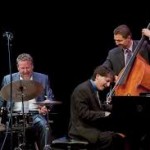
Pianist and composer Denny Zeitlin has been playing music all his life and professionally for the better part of six decades.  The 82-year old native of Chicago, IL, has lived on the West Coast since 1964 when he moved to study at University of California/ San Francisco and do his internship – yes, Dr. Zeitlin is also a clinical Professor of Psychiatry and also has a private practice. He's scored movies (the 1978 remake of "Invasion of the Body Snatchers"), developed an interest in synthesizers and electronic music, and, while he does not tour much these days, he's maintained his current trio of Buster Williams (bass) and Matt Wilson (drums) since 2001. When you listen to them play, it's easy to hear why the association has lasted over the years – Dr. Zeitlin is a pianist with great facility, loves melody, and creates long, flowing, solos that are poetic and powerful whereas the rhythm section is just as musical and exploratory as its leader. One just knows they never play a song the same way twice.

"Denny Zeitlin: Live at Mezzrow" (Sunnyside Records) was recorded in May 2019 when the good Doctor was back East, a rare occurrence these days.  The nine-song program stretches out over 72 minutes, a collection of seven standards and two originals, and there's not a dull moment throughout. By this time of his career, one knows what to expect from a Denny Zeitlin performance and album; impeccable musicianship, intelligent choice of repertoire, and the delight of interacting with his fellow musicians.  Even his "electronic" duos with drummer/ percussionist George Marsh have those same qualities.  Mr. Williams and Mr. Wilson both come to these performances armed with their love of melody, joy of improvising, and in creating musical conversations with Dr. Zeitlin that are emotionally rich and musically powerful.

As I wrote above, one knows what to expect from this Trio yet we always listen because these albums are creative music at its best. Denny Zeitlin never cheats the listener, never relies on cliches or drastic rearrangements or deconstructions. His career-long adherence to playing the melody then taking those notes and chords so the audience can hear them grow as he (and, in many cases, his cohorts) explores all facets of the song is what the true fan revels in.  The finest pianists do that. People such as Fred Hersch, Geri Allen, Vijay Iyer, Keith Jarrett on back to Thelonious Monk, Bud Powell, Art Tatum, Fats Waller, and Earl Hines always keep or kept digging throughout each song and each performance.  Sit back, listen, and luxuriate in the splendid "Live at Mezzrow".

For more information, go to www.dennyzeitlin.com. To purchase the album, go to https://dennyzeitlin.bandcamp.com/album/live-at-mezzrow.

Here's a piece from the pen of Billy Strayhorn:


Photo: Heather Sten
Vocalist and composer Sara Serpa creates music that is intimate, personal, and exploratory, reaching into the listener's heart and mind to create a connection.  Her partnership with pianist Ran Blake has been an ongoing investigation of standards (with a mix of improvisatory magic) while her work with husband André Matos (guitar) has been a splendid mix of folk material and often gentle sonic explorations.  Ms. Serpa often uses her voice as another instrument in the mix, her wordless vocals evoking emotions that words cannot explain.  One of her more intriguing collaborations is her work with the vocalist quartet Mycale who perform music created by John Zora. She's part of the four-person a capella ensemble (along with Ayelet Rose Gottlieb, Sofia Rei, and Malika Zarra) for its second Tzadik release "Gomory: The Book of Angels Vol. 25" (2015).

For her debut on Biophilia Records, "Recognition", Ms. Serpa created a multi-media presentation based around the family movies her father took when he worked in the Portuguese territory of Angola. The music not only serves as her soundtrack to the silent films – when you purchase the album (see below) you receive a link to the presentation – but also tells the story of European colonialism  in its dying days. Images of planes dropping bombs (open practice runs, one believes), armies marching down the Main thoroughfare with the jarring juxtaposition of Caucasian Generals and Majors leading their troops (nearly all dark-skinned Africans and their cartoon-like white gloves) are manipulated by Ms. Serpa to create a dream-like atmosphere.

Photo: Carlos Ramos
Performing the music is a formidable trio; Zeena Parkins (harp, tuning forks), Mark Turner (tenor saxophone), and David Virelles (piano).  With Ms. Serpa's often over-dubbed wordless vocals, the music holds a mystery all its own. The composition are not in the head-solo-head mode; instead, the quartet creates a mood for each piece. For instance, insistent repeated melodic fragments roil beneath and besides the voices on "Free Labour" giving the piece the feel of a Steve Reich piece. "Beautiful Gardens" uses the words of José Luandino Vieira, an Angolan novelist, from his 1961 novel "A Vida Verdadeira de Domingos Xavier (The Real Life of Domingos Xavier)", with a story line that speaks to the cruelty of the police towards the Black Angolans.  The section that one hears tells about the difference between conditions of the native laborers, the White workers, and the management.  It's not a pretty and the music does not pretend to make it sound better.

"Queen Nzinga" tells quite another story.  The piece, adapted from an excerpt of "Njinga of Angola – Africa's Warrior Queen" (2017), a book by Linda Heywood, celebrates the life of the 17th Century Queen, leader of the Mbundu people, who defied Portuguese rule by opposing slavery throughout her 37-year reign, even leading her people into battle.  After you listen to the story, go back and listen to the brilliant music the trio creates (it's a group improvisation as the other track discussed above), an important role in helping to tell the story.

Add caption
The mixture of the voices on "Absolute Confidence" blends with the crashing piano chords and plucked harp notes while Turner serves as a counterpoint to the singer. There's a classical feel to the intertwine lines from piano, sax, and voice on "Propaganda" and, as the piece moved forward, Virelles steps away and into a solo filled with rippling phrases. The album closes with "Unity and Struggle" with words from from Amílcar Cabral, an agricultural engineer, poet, essayist, and an anti-colonial leader who was assassinated in 1973.  The accompanying music is fascinating as Ms.Serpa creates the melody from reciting Cabral's forceful words. Turner shadows the voice here as well while Ms. Parkins has her own melody line and a short solo.  Turner and Virelles then trade with harpist as the piece and album fade don.

If you are someone who enjoys the voice and music of Sara Serpa, "Recognition" might seem a bit stark and shocking first time through.  Go back, listen to how the voice, the words, the music, all these elements together tell a story of slavery, subjugation, tradition, transition, and more.  Disturbing story and music? Yes. Do artists still need to tell these stories?  Yes.  Do you need to listen? Now more than ever.

For more information, go to www.saraserpa.com.  To purchase the album, go to https://saraserpa.bandcamp.com/album/recognition-2.

Here's one of the fascinating tracks:


Photo: David Crow
Rudresh Mahanthappa, alto saxophonist, composer, and educator, not only possesses great technique but also quite a curious mind. Over the course of his career (now spanning nearly a quarter of a century), he has worked with artists such as Vijay Iyer, Jack DeJohnette, Bunky Green, Steve Lehman, Danilo Pérez,and many others. He's led or co-led numerous sized-ensembles with forays in Carnatic Music, fusion, and through-composed music. He also has a sweet tone, can easily and rapidly move through into his instrument's higher ranges; there are times on his recordings when his saxophone sounds straddle the worlds of jazz and South Indian music.

His latest musical adventure, "Hero Trio" (Whirlwind Recordings), is a loving and often hard-driving tribute to his musical inspirations. With the high-energy rhythm section of bassist François Moutin (bass) and Rudy Royston (drums), Mahanthappa dances, dips, dives, roars, and purrs through a program that differs from anything he's done before – he did not compose any of the music.  Nevertheless, the trio tackle music by Charlie Parker, John Coltrane, Ornette Coleman, Stevie Wonder, Keith Jarrett, Ira Gershwin-Vernon Duke ("I Can't Get Started"), Gene de Paul ("I'll Remember April"), and Johnny Cash.  Yes, Johnny Cash! The Trio dances through "Ring of Fire" (a tune that June Carter Cash and Merle Kilgore and was first recorded by June's sister Anita in 1962 and was a big hit for June's husband Johnny the following year), paying tribute to the original tempo in the beginning and continually toy with it throughout.  Moutin never loses the groove and Mahanthappa dances atop it with glee.

Photo: David Crow
There is plenty of joy in this music. From the rumbling volcano of Parker's "Red Cross" (listen below) to the trio's dancing take of Bird's "Barbados" which is paired with Coltrane's "26-2" to Jarrett's romping "The Windup" (notice that Moutin takes the role of the composer's left hand), one can just imagine the energy in the stdio as the band played. "...April" is initially deconstructed then the alto and bass dive into the melody as Royston creates a percussive storm beneath them. They move back-and-forth to the melody until Mahanthappa uncorks a dazzling solo building off the energy of the drummer.

Photo: David Crow
The music slows down for a pair of tracks,  the down-tempo version of "I Can't Get Started" and Coleman's "Sadness."  Moutin's excellent bow work is displayed on the latter as he and the leader share the melody and improvisation. The piece is performed rubato therefore Royston's role is to dramatically "color" around his colleagues.  On the former, the saxophonist introduces the handsome Vernon Duke melody but note how the tempo is parsed, a martial beat that evokes a darker quality to the piece.  The album closes with a rousing take of Parker's "Dewey Square" with Mahanthappa playing around, through, and in and out of the melody. The rhythm section feeds off of the leader's energy, pulling the music forward in a spirited rush of sound.

2015's "Bird Calls" (ACT Music) was Rudresh Mahanthappa's tribute to one of his musical mentors, using the same rhythm section and adding the musical voices of Matt Mitchell (piano) and Adam O'Farrill (trumpet). "Hero Trio", in its way, "flips the script", taking the original music the saxophonist exposed in his younger days and making it feel new, fresh, invigorated by the sheer joy of playing.  The avid listener will marvel at the delightful sounds created by Messrs. Mahanthappa, Moutin, and Royston – play this music loud and often!

For more information, go to www.rudreshm.com. Go to https://rudreshmahanthappa1.bandcamp.com/album/hero-trio to hear more and purchase the album.

Here's the opening track (one of the three tunes composed by Charlie Parker):

Wednesday, May 9, 2018

Listening to Trios (Part 3)

I have had the opportunity to interview Dr. Denny Zeitlin several times over the past decade. He's had a long career - his first recording was issued in 1963 - not just in acoustic music but also as an experimenter in electronic pieces. The pianist, composer, clinical professor of psychiatry, turned 80 in April of this year and just this past week (5/02-5/05), he, bassist Buster Williams, and drummer Matt Wilson performed at Mezzrow in New York City.  That trio has been together since the early 2000s, recording three albums and doing the occasional tour.  Like the best trios, it's a group of equals: yes, the rhythm section takes its cues from the leader/pianist but their familiarity allows to give as good as they get.  Because of that trust, musicality, and willingness to go were inspiration takes them, the music they create is such a joy to listen to.

The trio's latest sonic adventure, "Wishing On The Moon: Live at Dizzy's Club Coca Cola in New York City" (Sunnyside Records), was recorded in March of 2009 yet sounds fresh and is quite delicious.  The 11-song program is a mix of standards and originals plus a fascinating take on "Put Your Little Foot Right Out", a child's nursery rhyme/traditional folk dance tune that inspired "The Hokey Pokey."  This performance is neither hokey or pokey but a wonderful adventure in melody and improvisation.  Even when the music is up-tempo, the trio makes sure to introduce melody, listening to each other, and pushing (sometimes gently, other times with forcefully) each other to move the music forward.  On pieces such as the title track (a Zeitlin original), listening to Williams's fine counterpoint and Wilson's sparkling brush work under the articulate piano solo is a real treat.

The centerpiece of the recording is the four-part "Slickrock" (the title of this trio's first album on the MaxJazz label) - inspired by composer Zeitlin's mountain-biking trips to Moab, Utah, the music opens with "Dawn; Gathering", a rubato piece features noisy percussion, bowed bass, and "serious" piano chords before the pianist introduces a shimmering melody (even strumming the piano strings) before exploding into "On The Trial" (not the Ferde Grofe piece), an exciting romp powered by the flying bass lines and snappy drumming.  "Recovery" sounds as if the bicyclist has slid off the path, with fiery drumming, throbbing bass, and skittish piano lines. Wilson's martial snare drum gives Zeitlin the opportunity to create a wide-ranging piano solo. The music calms down before before the final section, "On The Trail Again", when the trio moves back into high gear, powered by a thunderous drum solo that leads to a rousing climax.

If you are a fan of these musicians, you will devour this music.  Classy, melodic, rhythmical, often stunning, and great fun, "Wishing On The Moon" will make you wish you were in the audience as well as go back ands listen to the other albums by Denny Zeitlin, Buster Williams, and Matt Wilson - I know I did!

For more information, go to www.dennyzeitlin.com.

(I'll post a track as soon as one is available).

Speaking of great fun, you should take a listen to "Live From San Pedro", the newest CD from the Jeff Hamilton Trio and their first live recording for Capri Records.  The Trio - Hamilton (drums), Christoph Luty (bass), and Tamir Hendleman (piano) - has been together since the turn of the 21st Century, recording a slew of albums by themselves and backing artists such as saxophonists Cory Weeds and Scott Hamilton plus vocalist Wilford Brimley (!) For this album, recorded in January of 2017, the program includes two pieces by one of the drummer's long-time musical partners, bassist John Clayton, one original each from the drummer and the pianist, two from Broadway musicals, Thelonious Monk's "In Walked Bud", a splendid version of "Poinciana", and a  piece each from Hamilton's friends, the late pianist George Robert (1960-2016) and drummer Joe LaBarbera

Again, familiarity breeds excellent results. Hamilton's "Sybille's Day" opens the album on quite the swinging note. It's a bluesy shuffle powered by the thick bass lines and dancing drums. That cushion allows the pianist to really dig in and produce quite the exciting solo.  There are no surprises in the Trio's take of Ahmad Jamal's classic "Poinciana" - yet the loping beat, the circular bass line, and the recognizable piano melody is pleasantly comforting. Luty's elastic bass lines and Hamilton's drums do conjure up Jamal's classy rhythm section of Israel Crosby (b) and Vernel Fournier (d).  It's so easy to get lost in the rhythm section that you miss the splendid playing of Hendelman.  The temptation to press "repeat" is hard to resist.

Photo: Bill King
Several pieces emphasize Hamilton's fine work with brushes.  Robert's "Hammer Tones" and Clayton's "Brush This", with the former being a jaunty showcase for how the ensemble can play a joyful blues and the latter a a sweet re-arrangement of a classy tune from the Clayton-Hamilton Jazz Orchestra repertoire.  The other Clayton contribution is also an uptempo blues shuffle.  Hendelman really digs in for a funky solo while his partners really provide the propulsion (dig the great cymbal work).
Hamilton's dancing brushes lead the trio into a samba-soaked performance of "Gary, Indiana" (from "The Music Man") while the brushes create a softer environment on the lovely "I Have Dreamed" (from "The King and I"), the one ballad on the program.  Pay close attention on the slow song to the melodic counterpoint Luty creates as well as the soulful musings of the pianist.

"Live From San Pedro" is a flat-out treat from beginning to end.  Three talented musicians who absolutely do not rest on their laurels create a program that is filled with swinging rhythms, splendid solos, and a joie de vivre that is impossible to resist. The Jeff Hamilton Trio shines brightly: like the Denny Zeitlin album above, one imagines it would have been great to have a front-row seat for this playful and play-filled set.

For more information, go to hamiltonjazz.com/artist-category/jeff-hamilton-trio/.

Here's that joyous opening track:


Acoustic guitarist and composer Adam Tully first studied tango music in 1995 Buenos Aires, Argentina, with tango guitarist master Anibal Arias.  Since then, he performed as a soloist on stages throughout the United States.  He has also worked alongside \numerous artists and groups in the U. S. and Latin America, playing with The Zvi Midgal (a group that takes its name from famous Polish prostitution ring that also sent women to Argentina) and Importango (a piano, guitar, and violin trio that was based in Brooklyn). Tully can play Baroque guitar, Latin American music,  and flamenco but has found a home playing and composing tangos.

His debut album as a leader, "La Llegda" ("The Arrival") has just been issued by the Argentinean label Epsa Music: The 11-song program features Tully's guitar alongside the articulate bass work of Pedro Giraudo and the emotionally rich piano of Emilio Teubal. There are several moments when this music is reminiscent of the work of Astor Piazzolla as well as Ralph Towner.  Tully's "Vals Mio" opens the album. The lovely melody is complemented by the subtle bass work (note Giraudo's counterpoint) and stately piano lines. The delicate piano and guitar interactions on Teubal's "Cumbio de Rumbo" are dramatic to be sure but also quite melodic. The grandeur of "Don Andrés" also has a playful side. Again, the brilliant bass counterpoint stands out alongside both the guitar and piano. When the guitarist leads the bass ands piano into the delightful "Andanzas", it's hard not to get up and dance. Yet, the piece can be as delicate as a spring breeze and powerful as a clap of thunder.


Tully goes it alone on "Doce", a lovely tune from contemporary Argentinean composer Fernando Otero.  The blend of various melody and chords move like lines of poetry and Tully's use of silence gives such gravitas to the music. For the final track, "Lluvosia", Felipe Traine adds the voice of his guitarrón (an deep-bodied six-string acoustic bass) to Tully's guitar.  They create quite a mysterious sound; it is fascinating to hear how they wrap their guitar lines around each other and how the lower guitar creates such a fine counterpoint to the higher sound.  

"La Llegada" is quite an attractive album with music that reaches into your mind and soul.  At times joyous, other times melancholy, Adam Tully has created music that reflects and respects the past while illustrating how a trio can also be forward-looking.  The interplay of Tully with Emilio Teubal and Pedro Giraudo (his bowed bass throughout is quite attractive) is so impressive.  Sit down with this album and enjoy the journey.

For more information, go to www.adamtully.com.

Here's the delightful opening track: