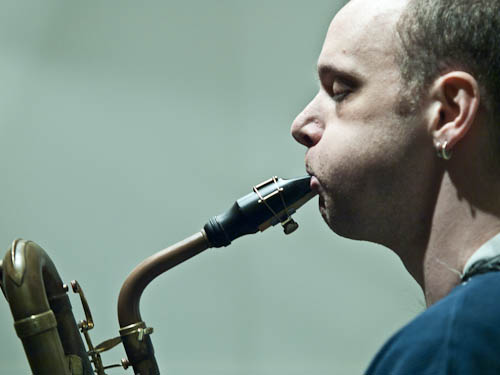
The Uncertainty Music Series rolls right along with a triple bill this Wednesday (7/18) at 9 p.m. in the Elm Bar, 372 Elm Street in New Haven. Headlining the show is baritone saxophonist Jonah Parzen-Johnson - he's on tour to promote "Michiana" (Primary Records), 11 solo tracks that cover much aural territory for an instrument most people think is often relegated to the bolstering the bottom of a big band. But, Parzen-Johnson is another innovator for the instrument, a group that stretches back to Harry Carney (in the Ellington Orchestra) to Gerry Mulligan to Hamiet Bluiett (of the World Saxophone Quartet) to Colin Stetson. The saxophonist grew up in Chicago and, during his high school years, studied with Mwata Bowden and Matana Roberts, both associated with the AACM (Association for the Advancement of Creative Musicians.) Since moving to Brooklyn, he has worked in numerous ensembles such as Zongo Junction, Reed's Bass Drum, the Steve Newcomb Orchestra and others.
Opening the show at the Elm Bar will be solo sets by Valerie Keuhne (cello, voice) and Joey Molinaro (solo grindcore violin). For ticket information and links to the artists' websites, go to uncertaintymusic.com.
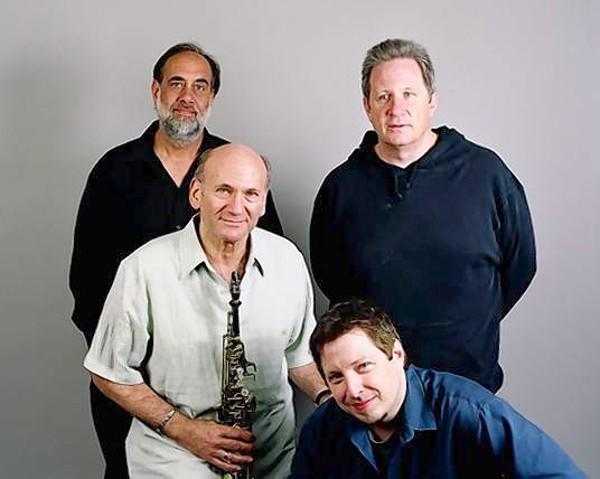
Saxophonist-composer-educator Dave Liebman brings his Quartet to Middletown and Crowell Concert Hall on Thursday July 19 for an 8 p.m. show. Liebman, a native of Brooklyn, New York, first came to critical notice as a member of the jazz-rock aggregation 10 Wheel Drive but it was his work in the late 1960s with drummer Elvin Jones group that caught the ear of Miles Davis. Liebman worked with Miles for 4 years, recording and touring, before starting the Open Sky Trio and then Lookout Farm. Since the late 1970s, Dave Liebman has worked steadily on both sides of the Atlantic Ocean as well being involved in music education, most recently on the faculty of the Manhattan School of Music. Liebman was also named an NEA Jazz Master in 2011, a richly deserved award.
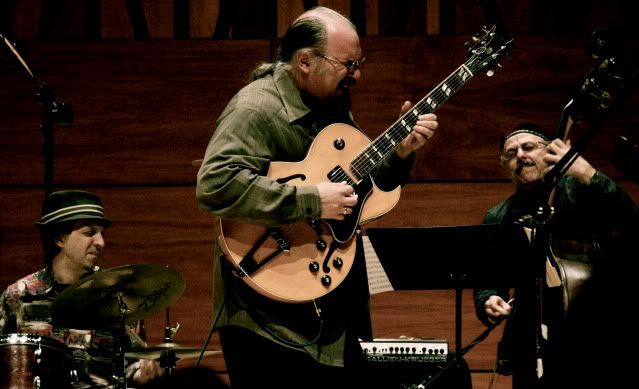
In 1991, Liebman formed his Quartet featuring Vic Juris (guitar), Tony Marino (bass) and Marko Marcinko (drums - he joined in 2002). In their 2+ decades together, they have recorded a dozen CDs with material ranging from all originals to the music of Ornetter Coleman to Puccini arias. One never knows what to expect except the playing will be strong (Liebman plays both tenor and soprano saxophones) and the material stimulating. To learn more about the fascinating career and work of Dave Liebman, go to www.daveliebman.com. Crowell Hall is located on Wyllys Avenue in the heart of the Wesleyan University campus. For tickets, go to www.wesleyan.edu/cfa or call 860-685-3355.
Guitarist Vic Juris will be back in Middletown on Saturday night July 21 to play a duo concert at The Buttonwood Tree with fellow guitarist Sheryl Bailey - more about that gig in my next posting.
Sunday, July 15, 2012
Tuesday, July 10, 2012
Midsummer Roundup 2012 (Day 1)
Plenty of good listening piled up on the desk (no, it doesn't really look like the picture on the left although my wife might disagree) and I'm the kind who dislikes giving any artist or groups the short shrift but.... but the Fall semester beckons, much reading to do to prepare so here's a quick survey of recent releases that have caught my ears (outer and inner) and that you should examine.
Far and away, my favorite recording of the past month is this devilish solo CD from multi-instrumentalist/composer Jacob Garchik. "The Heavens", subtitled "The Atheist Gospel Trombone Album" (Yestereve Recordings), features Garchik as a one-man brass band; through the course of the 9 tracks, he can heard on trombone, sousaphone, baritone horn, slide trumpet and alto horn. Songs include "Dialogue With My Great-Grandfather" with its brash melody line based on Jewish prayers and "Digression on the History of Jews and Black Music" with a James Brown rhythm feel and a melody based on call-and-response (dig those dancing sousaphone riffs!) The title track opens with a melody similar to "I Can't Stop Loving You" (the country hit covered by Ray Charles in 1962) and builds from there. The soulful trombone and baritone horns lines rise sweetly over the sousaphone's solid foundation.
Though "The Heavens" is short on time (28:13), the music is long on invention and elegant execution. It's also quite funky and a whole lot of fun. For more information, go to jacobgarchik.com.
Here's a slice of "Digression..." courtesy of Mr. Garchik and Bandcamp:
Here's another fascinating project that's been sitting around for a while (in this instance, on my harddrive.) "The Wishbone Suite" (Table & Chairs) is the creation of trombonist/composer Andy Clausen. The young man, 19 at the time of this recording, is a native of Seattle, Washington, who is now attending the Juilliard School in New York City. Besides the leader, the 19-track "Suite" features Ivan Arteaga (clarinet), Gus Carns (piano), Aaron Otheim (accordion, piano) and Chris Icasiano (drums, glockenspiel) playing music informed by the work of Charles Ives, Aaron Copland, Steve Reich and Henry Threadgill. The pieces are through-composed yet do not sound staid or static. Only 3 of the tracks are over 4 minutes with most in the 2-3 minute range. This music does not feel fragmented but more like a series of short stories, each instrument a character. There are several themes repeated throughout the "Suite", the Copland-esque "Who Goes There" that opens the CD and its close (melodic) counterpoint, "Affinity." Each time one of the themes is played, it's played by different musicians and, sometimes, at a different pace. "Badlands" really swings while "Trouble (Again)" displays an experimental side similar to the music Bill Frissell created for his "This Land" and "Have a Little Faith" recordings.
Andy Clausen gives the listener much to ponder with this music; everyone plays well while both the melodies and harmonic ideas have surprising depth for someone so young. "The Wishbone Suite", although not Clausen's debut recording, can serve as a fine introduction to a composer/arranger and performer worth paying attention to, hopefully for many years to come.
Here's your opportunity to download "Who Goes There (Dance)", courtesy of Table & Chairs, Andy Clausen and Bandcamp:
I really enjoyed pianist-composer Jeremy Siskind's 2010 debut for Brooklyn Jazz Underground Records, the supremely lyrical "Simple Songs (For When The World Seems Strange"). His new BJU release, "Finger-Songwriter", is just as lyrical but adds the dimension of lyrics to each track. With the exception of the Billy Joel-penned bonus track "All You Wanna Do Is Dance" (from the "Turnstiles" recording), Siskind composed both the lyrics and music, arranging the songs for a chamber ensemble of piano, the voice of Nancy Harms and the excellent woodwind playing of Lucas Pino. Influenced by the often brilliant work of vocalist Norma Winstone, these songs blend rich melodies with Ms. Harms' understated (but not imitative) vocals. Alongside them, Pino creates colors throughout, weaving his woody clarinet around the words and melodies. Each song is dedicated to a poet or writer with the handsome ballad "A Single Moment" composed for singer-songwriter Lisa Hannigan. Besides that fine track, other highlights include the slyly playful "Swift-Winged Darkness" (for Vladimir Nabokov) - the interplay of Siskind's high-tone barroom piano with Pino's bass clarinet ducking in and out of the mix is a treat. The softly played and finely drawn melody of "Aubade" (for Paul Auster) pulls one in for not only the story but also the intricate interplay of piano and bass clarinet. There's a 1930-40 blues tone to "What Is That Feeling?" (for Jack Kerouac), akin to Yip Harburg-Jay Gorney's Depression-era "Brother, Can You Spare a Dime?" replete with atmospheric tenor saxophone work from Pino. Yet, listen to Siskind's abstract figures, Thelonious Monk-line chords bouncing behind the solo. Ms. Harms has fine enunciation (one can understand each and every word), a clear tone to her alto voice, with no overtly theatrical vocal mannerisms (i.e. melisma, scat singing).
There is an underlying sadness to "Finger-Songwriter" (with the exception of the ebullient Billy Joel song and the uplifting mood of "Theme For a Sunrise" (for H.W. Longfellow) that precedes it) but one can deny the wonderful music Jeremy Siskind has created for this project. You will need to spend time with these songs to plumb the emotional and poetic depth of the words. His richly-hewn piano work, the well-drawn melodies and the arrangements that allow each participant to stand out, all adds up to a recording that remains in the ear and mind of the listener long after the notes have faded away.
For more information, go to the pianist/composer's playful website at www.jeremysiskind.com. Click on the link below to download a track, courtesy of BJU Records and IODA Promonet:
Theme for a Sunrise (mp3)
Far and away, my favorite recording of the past month is this devilish solo CD from multi-instrumentalist/composer Jacob Garchik. "The Heavens", subtitled "The Atheist Gospel Trombone Album" (Yestereve Recordings), features Garchik as a one-man brass band; through the course of the 9 tracks, he can heard on trombone, sousaphone, baritone horn, slide trumpet and alto horn. Songs include "Dialogue With My Great-Grandfather" with its brash melody line based on Jewish prayers and "Digression on the History of Jews and Black Music" with a James Brown rhythm feel and a melody based on call-and-response (dig those dancing sousaphone riffs!) The title track opens with a melody similar to "I Can't Stop Loving You" (the country hit covered by Ray Charles in 1962) and builds from there. The soulful trombone and baritone horns lines rise sweetly over the sousaphone's solid foundation.
Though "The Heavens" is short on time (28:13), the music is long on invention and elegant execution. It's also quite funky and a whole lot of fun. For more information, go to jacobgarchik.com.
Here's a slice of "Digression..." courtesy of Mr. Garchik and Bandcamp:
Here's another fascinating project that's been sitting around for a while (in this instance, on my harddrive.) "The Wishbone Suite" (Table & Chairs) is the creation of trombonist/composer Andy Clausen. The young man, 19 at the time of this recording, is a native of Seattle, Washington, who is now attending the Juilliard School in New York City. Besides the leader, the 19-track "Suite" features Ivan Arteaga (clarinet), Gus Carns (piano), Aaron Otheim (accordion, piano) and Chris Icasiano (drums, glockenspiel) playing music informed by the work of Charles Ives, Aaron Copland, Steve Reich and Henry Threadgill. The pieces are through-composed yet do not sound staid or static. Only 3 of the tracks are over 4 minutes with most in the 2-3 minute range. This music does not feel fragmented but more like a series of short stories, each instrument a character. There are several themes repeated throughout the "Suite", the Copland-esque "Who Goes There" that opens the CD and its close (melodic) counterpoint, "Affinity." Each time one of the themes is played, it's played by different musicians and, sometimes, at a different pace. "Badlands" really swings while "Trouble (Again)" displays an experimental side similar to the music Bill Frissell created for his "This Land" and "Have a Little Faith" recordings.
Andy Clausen gives the listener much to ponder with this music; everyone plays well while both the melodies and harmonic ideas have surprising depth for someone so young. "The Wishbone Suite", although not Clausen's debut recording, can serve as a fine introduction to a composer/arranger and performer worth paying attention to, hopefully for many years to come.
Here's your opportunity to download "Who Goes There (Dance)", courtesy of Table & Chairs, Andy Clausen and Bandcamp:
I really enjoyed pianist-composer Jeremy Siskind's 2010 debut for Brooklyn Jazz Underground Records, the supremely lyrical "Simple Songs (For When The World Seems Strange"). His new BJU release, "Finger-Songwriter", is just as lyrical but adds the dimension of lyrics to each track. With the exception of the Billy Joel-penned bonus track "All You Wanna Do Is Dance" (from the "Turnstiles" recording), Siskind composed both the lyrics and music, arranging the songs for a chamber ensemble of piano, the voice of Nancy Harms and the excellent woodwind playing of Lucas Pino. Influenced by the often brilliant work of vocalist Norma Winstone, these songs blend rich melodies with Ms. Harms' understated (but not imitative) vocals. Alongside them, Pino creates colors throughout, weaving his woody clarinet around the words and melodies. Each song is dedicated to a poet or writer with the handsome ballad "A Single Moment" composed for singer-songwriter Lisa Hannigan. Besides that fine track, other highlights include the slyly playful "Swift-Winged Darkness" (for Vladimir Nabokov) - the interplay of Siskind's high-tone barroom piano with Pino's bass clarinet ducking in and out of the mix is a treat. The softly played and finely drawn melody of "Aubade" (for Paul Auster) pulls one in for not only the story but also the intricate interplay of piano and bass clarinet. There's a 1930-40 blues tone to "What Is That Feeling?" (for Jack Kerouac), akin to Yip Harburg-Jay Gorney's Depression-era "Brother, Can You Spare a Dime?" replete with atmospheric tenor saxophone work from Pino. Yet, listen to Siskind's abstract figures, Thelonious Monk-line chords bouncing behind the solo. Ms. Harms has fine enunciation (one can understand each and every word), a clear tone to her alto voice, with no overtly theatrical vocal mannerisms (i.e. melisma, scat singing).
There is an underlying sadness to "Finger-Songwriter" (with the exception of the ebullient Billy Joel song and the uplifting mood of "Theme For a Sunrise" (for H.W. Longfellow) that precedes it) but one can deny the wonderful music Jeremy Siskind has created for this project. You will need to spend time with these songs to plumb the emotional and poetic depth of the words. His richly-hewn piano work, the well-drawn melodies and the arrangements that allow each participant to stand out, all adds up to a recording that remains in the ear and mind of the listener long after the notes have faded away.
For more information, go to the pianist/composer's playful website at www.jeremysiskind.com. Click on the link below to download a track, courtesy of BJU Records and IODA Promonet:
Theme for a Sunrise (mp3)
Sunday, July 8, 2012
Two Lively Crews + CD Pick + more
Summer is a good time for road trips, even if gas prices are high (you just don't go as far.) If you're willing to head to the (Litchfield) hills on Tuesday July 10, you can catch a free concert at The Hotchkiss School's Katherine M. Elfers Hall featuring the Michael Musillami Trio. The guitarist/composer, who teaches at the school during its normal schedule, brings his good friends Joe Fonda (bass) and George Schuller (drums, hat) and they'll play music that spans the decade the Trio has been together. The compositions are filled with intelligent melodies, strong harmonies and plenty of room for the musical give-and-take that is a trademark of the MM3. Over the 10 years, the Trio has released 6 CDs (all on the guitarist's Playscape Recordings label), 3 with expanded lineups.
The concert starts at 7:30 p.m. For directions, go to hotchkiss.org.
Clogs, the musical ensemble that began its existence in New Haven nearly 13 years ago, comes home to play at Firehouse 12, 45 Crown Street. The group - consisting of original members Padma Newsome (piano, ukulele, violin, voice), Rachael Elliott (bassoon), Thomas Kozumplik (percussion) plus guests Ben Cassorla (guitar) and Lorne Watson (percussion) - will be playing music from its latest project, "Shady Gully", music inspired by the area around composer Newsome's hometown of Mallacoota, Victoria, Australia. Normally a quartet (guitarist Bryce Dressner, the other original member, is away for this tour), the band came together at the Yale School of Music, creating original music that had roots in classical, folk traditions, indie rock and more. The earlier recordings contained mostly instrumentals but they added vocals for "The Creatures in the Garden of Lady Walton" project in 2010 (they also produced a recording of instrumentals, "Veil Waltz", as a prologue for the project.) You can hear all of their recordings by going to clogs.bandcamp.com. To purchase tickets for the Firehouse 12 date, go to firehouse12.com or call 203-785-0468.
Trombonist-composer-educator Steve Davis teaches at Hartt School of Music's Jackie McLean Institute and The Artist Collective. Mentored by saxophonist McLean, Davis (born in Binghampton, NY and raised in Worcester, MA) stayed in Hartford but has traveled around the world. He was in the final edition of Art Blakey's Jazz Messengers, toured and recorded with Chick Corea's Origins band and is an original member of One For All. "Gettin' It Done" is his 3rd CD for PosiTone and does not stray far from the hard-bop swing that animates much of the trombonist's recordings. It marks the 9th time Davis has led or co-led a session with alto saxophonist Mike DiRubbo. Also featured on the recording is several other long-time associates, pianist Larry Willis and bassist Nat Reeves. Rounding out the crew is 24-year old drummer Billy Williams and recent Hartt School alum Josh Bruneau on trumpet and flugelhorn.
The title tell its all - the band "hits" from the first note and never loses its focus. Opening with John Coltrane's "Village Blues" (from the 1960 "Coltrane Jazz" Lp), the music is blessed by the leader's warm tones and willingness to share the spotlight. Willis's rich chords lead the piece in, Reeves and Williams lock into the grooves and the front line presents the sweet melody (which would have sounded out of place on "Kind of Blue.") The leader takes the first solo; his winning combination of his sweet tone and smart improvisations lead to DiRubbo's mellow-with-an-edge alto solo. But the surprise here is the dynamic work of young Mr. Bruneau. Throughout this program, his clear, clean, sound and feisty attack is a treat. His funky approach on Davis's "The Beacon" shows the influence of Freddie Hubbard while the "groove" should remind listeners of The Crusaders. Williams does not settle into the groove; instead, he pushes the piece forward while Reeves' strong bass support along with Willis's bright chords gives the piece its shape.
Other highlights include the sprightly "Sunny" (yes, the tune by Bobby Hebb) with its joyful interplay of trombone and trumpet as well as the lovely and lyrical "Wishes" that closes the program. The latter opens with the leader and DiRubbo playing the handsome theme leading into a long piano excursion from Willis. The pianist is a masterful accompanist while every one of his solos seems to dance atop the beat with glee (he puts the dance steps into "Steppin' Easy" and the fire into "Longview.")
Steve Davis is one of the people who makes music that reflects his true being; to wit, the music on "Gettin' It Done" is bright, highly rhythmical and melodic, never pushy or condescending. The band is sharp and attentive, the solos almost always impressive and one feels quite satisfied after spending tine with this music. For more information, go to www.stevedavis.info.
Here's the title track for you to download, courtesy of PosiTone Records and IODA Promonet:
Gettin' It Done (mp3)
I trust you are keeping up with The Jazz Session, the fine music interview podcast produced by Jason Crane (the 3 most recent posts are on the top right of this column.) Then, you are quite aware of his "Jazz Or Bust" tour that has finally reached New Orleans, the ultimate destination of the initial leg of the venture. My recommendation is that you go to jasoncrane.org to read his posts about the sights, sounds, and emotions of a journalistic hiker in search of the people who create the music we know and love as jazz. But there's more to his writing than music - Mr. Crane is a poet, a musician with words as his instrument. In other ways, this journey is one of self-discovery, not often easy or satisfying but educational for the soul. Give him an ear and an eye; there's much to hear and see.
The concert starts at 7:30 p.m. For directions, go to hotchkiss.org.
Clogs, the musical ensemble that began its existence in New Haven nearly 13 years ago, comes home to play at Firehouse 12, 45 Crown Street. The group - consisting of original members Padma Newsome (piano, ukulele, violin, voice), Rachael Elliott (bassoon), Thomas Kozumplik (percussion) plus guests Ben Cassorla (guitar) and Lorne Watson (percussion) - will be playing music from its latest project, "Shady Gully", music inspired by the area around composer Newsome's hometown of Mallacoota, Victoria, Australia. Normally a quartet (guitarist Bryce Dressner, the other original member, is away for this tour), the band came together at the Yale School of Music, creating original music that had roots in classical, folk traditions, indie rock and more. The earlier recordings contained mostly instrumentals but they added vocals for "The Creatures in the Garden of Lady Walton" project in 2010 (they also produced a recording of instrumentals, "Veil Waltz", as a prologue for the project.) You can hear all of their recordings by going to clogs.bandcamp.com. To purchase tickets for the Firehouse 12 date, go to firehouse12.com or call 203-785-0468.
Trombonist-composer-educator Steve Davis teaches at Hartt School of Music's Jackie McLean Institute and The Artist Collective. Mentored by saxophonist McLean, Davis (born in Binghampton, NY and raised in Worcester, MA) stayed in Hartford but has traveled around the world. He was in the final edition of Art Blakey's Jazz Messengers, toured and recorded with Chick Corea's Origins band and is an original member of One For All. "Gettin' It Done" is his 3rd CD for PosiTone and does not stray far from the hard-bop swing that animates much of the trombonist's recordings. It marks the 9th time Davis has led or co-led a session with alto saxophonist Mike DiRubbo. Also featured on the recording is several other long-time associates, pianist Larry Willis and bassist Nat Reeves. Rounding out the crew is 24-year old drummer Billy Williams and recent Hartt School alum Josh Bruneau on trumpet and flugelhorn.
The title tell its all - the band "hits" from the first note and never loses its focus. Opening with John Coltrane's "Village Blues" (from the 1960 "Coltrane Jazz" Lp), the music is blessed by the leader's warm tones and willingness to share the spotlight. Willis's rich chords lead the piece in, Reeves and Williams lock into the grooves and the front line presents the sweet melody (which would have sounded out of place on "Kind of Blue.") The leader takes the first solo; his winning combination of his sweet tone and smart improvisations lead to DiRubbo's mellow-with-an-edge alto solo. But the surprise here is the dynamic work of young Mr. Bruneau. Throughout this program, his clear, clean, sound and feisty attack is a treat. His funky approach on Davis's "The Beacon" shows the influence of Freddie Hubbard while the "groove" should remind listeners of The Crusaders. Williams does not settle into the groove; instead, he pushes the piece forward while Reeves' strong bass support along with Willis's bright chords gives the piece its shape.
Other highlights include the sprightly "Sunny" (yes, the tune by Bobby Hebb) with its joyful interplay of trombone and trumpet as well as the lovely and lyrical "Wishes" that closes the program. The latter opens with the leader and DiRubbo playing the handsome theme leading into a long piano excursion from Willis. The pianist is a masterful accompanist while every one of his solos seems to dance atop the beat with glee (he puts the dance steps into "Steppin' Easy" and the fire into "Longview.")
Steve Davis is one of the people who makes music that reflects his true being; to wit, the music on "Gettin' It Done" is bright, highly rhythmical and melodic, never pushy or condescending. The band is sharp and attentive, the solos almost always impressive and one feels quite satisfied after spending tine with this music. For more information, go to www.stevedavis.info.
Here's the title track for you to download, courtesy of PosiTone Records and IODA Promonet:
Gettin' It Done (mp3)
I trust you are keeping up with The Jazz Session, the fine music interview podcast produced by Jason Crane (the 3 most recent posts are on the top right of this column.) Then, you are quite aware of his "Jazz Or Bust" tour that has finally reached New Orleans, the ultimate destination of the initial leg of the venture. My recommendation is that you go to jasoncrane.org to read his posts about the sights, sounds, and emotions of a journalistic hiker in search of the people who create the music we know and love as jazz. But there's more to his writing than music - Mr. Crane is a poet, a musician with words as his instrument. In other ways, this journey is one of self-discovery, not often easy or satisfying but educational for the soul. Give him an ear and an eye; there's much to hear and see.
Labels:
CD pick,
Firehouse 12,
Jason Crane,
Live Music
Thursday, July 5, 2012
Piano Solo X 3
For the past 2 decades, Sumi Tonooka has built a busy career as a bandleader, composer, collaborator (with saxophonist Erica Lindsay), band member (most notably with violinist John Blake) and as an educator. "Now", a 2-CD set released on the ARC label (of which she is a partner), is her first solo recording (and first to be funded as a Kickstarter project.) Ms. Tonooka calls the disk as "sonic snapshot" as the CDs feature the entirety of a concert she gave in the Howland Cultural Center in Beacon NY (the CD cover lists 2 dates, March 22, 2010 and March 22, 2011).
12 tracks spread over 81 minutes and the pianist covers a lot of musical territory (1st CD is standards, the 2nd is all originals, save the closing track.) She pays tribute to her mentors and influences on pieces such as the "Mary Lou Williams Medley" (Ms. Tonooka displays a wicked left hand during the "Waltz Boogie" section of the performance), Thelonious Monk's "Evidence" (quite a playful take, with several tempo changes) and her original "Mingus Mood" (a dark ballad with a strong blues feel.) On my first several times through the CD, I could hear the influence of Charles Mingus in Ms. Tonooka's take on Duke Ellington's "Heaven" (from "The Sacred Concerts") but, for the most part, she transcends her influences. The pianist is supremely melodic yet does not shy away from darker colors in her harmonic choices. "Phantom Carousel", an original that opens the second set, displays storm clouds in the chords but has a melody line that often rises high above the dusky foundation. There's a bit of Abdullah Ibrahim (one of her acknowledged influences) in the dancing left hand work of "Moroccan Daze"; one is also struck by the insistent rhythmic drive of the original work. The program closes with a delightful jaunt through Eubie Blake's "I'm Confessin'" and, if this playful performance doesn't tickle your fancy, don't know what will.
Playful, melodic, intelligent, emotionally rich (all of the above), "Now" sounds great with the windows open, the sounds of the birds in the morning competing for your attention. Perhaps, later in the evening, sitting on the porch watching the fireflies illumine the back yard. Sumi Tonooka picked a very good night for her first solo endeavor - methinks she has many "very good nights." For more information, go to sumitonooka.com.
Over the course of his career (which now spans nearly 5 decades), Dr. Denny Zeitlin (a clinical professor of psychiatry at the University of California/San Fransisco as well as a practicing psychiatrist) has released a number of solo piano Lps and CDs - in fact, "Wherever You Are: Midnight Moods for Solo Piano", is his 3rd unaccompanied recording in less than 2 years for the Sunnyside label. Before you start accusing the pianist of overkill, the CDs are different in many respects (material, pacing, recording venues) - what they have in common is the excellent musicianship and fertle mind of an artist who never compromises his ideals.
What is different with the new recording is that the program consists entirely of ballads. The good doctor also produced and engineered the sessions plus worked on the mixing and mastering. The material consists of a medley of 2 pieces by Antonio Carlos Jobim, 2 originals and 7 standards. Zeitlin is masterful as he handles oft-recorded pieces such as Bobby Troup's "The Meaning of the Blues" and "Body and Soul", songs some of us have probably heard live and recorded dozens of times. Yet, nothing is what you'd expect other than the pianist will explore avenues others have never thought to use. He never abandons the melody but his harmonies are often surprising while he will slip into (and out of) a rhythmic pattern so naturally it make take you a moment to notice. There is a majesty and wistfulness to Gordon Jenkins' "Last Night When We Were Young" that is breathtaking. Zeitlin first recorded his original "Time Remembers One Time Once" with bassist Charlie Haden in 1983; it's a tender piece with a single-note lines that often resolve in chords, pulling the listener in as the music moves forward. The title track, first recorded in 1984 as a quartet setting with guitarist John Abercrombie, is a gentle work with more glorious harmonies.
"Wherever You Are" is indeed an album of "Midnight Moods" yet this is not dark nor foreboding music. Instead, Denny Zeitlin aims for the heart of the listener by finding the emotional center of each song and creating his own world. Sit with someone you love or by yourself and allow this music to take you away from the humdrum, from the apparent darkness of the everyday world and into a much quieter place. For more information, go to www.dennyzeitlin.com.
Pianist Russ Lossing entered the studio in March of 2011 and recorded the 10 tracks on his new CD, "Drum Music: Music of Paul Motian" (Sunnyside Records). The pianist had worked and recorded with the drummer (who passed in November of 2011) on numerous occasions over the past 15 years, playing all of the material that makes up this program. Those listeners familiar with Motian's work, especially his music with Joe Lovano and Bill Frissell, know that the drummer/composer had no use for clutter or filigree, going straight to the heart of his music. To his credit, Lossing plays pieces from throughout Motian's long career, opening the program with "Conception Vessel", the title track of the drummer's 1972 ECM debut. One canj hear the influence of Motian's employer at the time, Keith Jarrett, in the song's long-flowing lines and rolling rhythms. "It Should Have Happened a Long Time Ago", a composition that dates from 1985, juxtaposes sound and silence in such a way that the melody line as well as the tension is heightened throughout the 8+ minutes. "Gang of Five" starts inside the piano, the dampened strings and sustained notes slowly giving way to the exquisite melody that moves like a person lost in thought walking unaware through crowded streets.
"Mumbo Jumbo" moves forward with purpose on a rolling left hand while "Dance" sounds like a work for a modern choreographer, the rapid right hand melody darting about the strident and striding left hand. The title track is much more melodic than percussive; although the version Motian recorded with Jason Moran and Chris Potter for 2010's "Lost In A Dream" opens with a drum solo, Lossing moves right into the melody line and builds the piece from there, building the intensity and speed as the song flies forward.
Throughout "Drum Music", one is acutely aware of how Paul Motian, the composer, communicated his ideas in his originals. Many of these pieces move in unexpected directions yet never seem foreign or forced. What one might think of as simplicity in Motian's drumming or melodic ideas or, for that fact, in his approach towards the standards he played so often is anything but. The drummer/composer enjoyed melody and eschewed "showing off his chops" - Russ Lossing, an excellent technician, plays with purpose and not "for show". He pays homage to Paul Motian by making these pieces his own, making the melodies and rhythmic ideas stand out. As with Denny Zeitlin's "Wherever You Are", "Drum Music" should be listened to at night, in a dimly lit room, with no distractions. There is beauty in the softer passages, power in the more intense moments and heightened sense of creativity at all times. For more information, go to www.russlossing.com.
Russ Lossing celebrates the 7/17/12 release of this CD with a performance Friday July 13 at Cornelia Street Cafe in New York City. Joining him will be bassist Drew Gress and drummer Eric McPherson. For more information, go to corneliastreetcafe.com.
12 tracks spread over 81 minutes and the pianist covers a lot of musical territory (1st CD is standards, the 2nd is all originals, save the closing track.) She pays tribute to her mentors and influences on pieces such as the "Mary Lou Williams Medley" (Ms. Tonooka displays a wicked left hand during the "Waltz Boogie" section of the performance), Thelonious Monk's "Evidence" (quite a playful take, with several tempo changes) and her original "Mingus Mood" (a dark ballad with a strong blues feel.) On my first several times through the CD, I could hear the influence of Charles Mingus in Ms. Tonooka's take on Duke Ellington's "Heaven" (from "The Sacred Concerts") but, for the most part, she transcends her influences. The pianist is supremely melodic yet does not shy away from darker colors in her harmonic choices. "Phantom Carousel", an original that opens the second set, displays storm clouds in the chords but has a melody line that often rises high above the dusky foundation. There's a bit of Abdullah Ibrahim (one of her acknowledged influences) in the dancing left hand work of "Moroccan Daze"; one is also struck by the insistent rhythmic drive of the original work. The program closes with a delightful jaunt through Eubie Blake's "I'm Confessin'" and, if this playful performance doesn't tickle your fancy, don't know what will.
Playful, melodic, intelligent, emotionally rich (all of the above), "Now" sounds great with the windows open, the sounds of the birds in the morning competing for your attention. Perhaps, later in the evening, sitting on the porch watching the fireflies illumine the back yard. Sumi Tonooka picked a very good night for her first solo endeavor - methinks she has many "very good nights." For more information, go to sumitonooka.com.
Over the course of his career (which now spans nearly 5 decades), Dr. Denny Zeitlin (a clinical professor of psychiatry at the University of California/San Fransisco as well as a practicing psychiatrist) has released a number of solo piano Lps and CDs - in fact, "Wherever You Are: Midnight Moods for Solo Piano", is his 3rd unaccompanied recording in less than 2 years for the Sunnyside label. Before you start accusing the pianist of overkill, the CDs are different in many respects (material, pacing, recording venues) - what they have in common is the excellent musicianship and fertle mind of an artist who never compromises his ideals.
What is different with the new recording is that the program consists entirely of ballads. The good doctor also produced and engineered the sessions plus worked on the mixing and mastering. The material consists of a medley of 2 pieces by Antonio Carlos Jobim, 2 originals and 7 standards. Zeitlin is masterful as he handles oft-recorded pieces such as Bobby Troup's "The Meaning of the Blues" and "Body and Soul", songs some of us have probably heard live and recorded dozens of times. Yet, nothing is what you'd expect other than the pianist will explore avenues others have never thought to use. He never abandons the melody but his harmonies are often surprising while he will slip into (and out of) a rhythmic pattern so naturally it make take you a moment to notice. There is a majesty and wistfulness to Gordon Jenkins' "Last Night When We Were Young" that is breathtaking. Zeitlin first recorded his original "Time Remembers One Time Once" with bassist Charlie Haden in 1983; it's a tender piece with a single-note lines that often resolve in chords, pulling the listener in as the music moves forward. The title track, first recorded in 1984 as a quartet setting with guitarist John Abercrombie, is a gentle work with more glorious harmonies.
"Wherever You Are" is indeed an album of "Midnight Moods" yet this is not dark nor foreboding music. Instead, Denny Zeitlin aims for the heart of the listener by finding the emotional center of each song and creating his own world. Sit with someone you love or by yourself and allow this music to take you away from the humdrum, from the apparent darkness of the everyday world and into a much quieter place. For more information, go to www.dennyzeitlin.com.
Pianist Russ Lossing entered the studio in March of 2011 and recorded the 10 tracks on his new CD, "Drum Music: Music of Paul Motian" (Sunnyside Records). The pianist had worked and recorded with the drummer (who passed in November of 2011) on numerous occasions over the past 15 years, playing all of the material that makes up this program. Those listeners familiar with Motian's work, especially his music with Joe Lovano and Bill Frissell, know that the drummer/composer had no use for clutter or filigree, going straight to the heart of his music. To his credit, Lossing plays pieces from throughout Motian's long career, opening the program with "Conception Vessel", the title track of the drummer's 1972 ECM debut. One canj hear the influence of Motian's employer at the time, Keith Jarrett, in the song's long-flowing lines and rolling rhythms. "It Should Have Happened a Long Time Ago", a composition that dates from 1985, juxtaposes sound and silence in such a way that the melody line as well as the tension is heightened throughout the 8+ minutes. "Gang of Five" starts inside the piano, the dampened strings and sustained notes slowly giving way to the exquisite melody that moves like a person lost in thought walking unaware through crowded streets.
"Mumbo Jumbo" moves forward with purpose on a rolling left hand while "Dance" sounds like a work for a modern choreographer, the rapid right hand melody darting about the strident and striding left hand. The title track is much more melodic than percussive; although the version Motian recorded with Jason Moran and Chris Potter for 2010's "Lost In A Dream" opens with a drum solo, Lossing moves right into the melody line and builds the piece from there, building the intensity and speed as the song flies forward.
Throughout "Drum Music", one is acutely aware of how Paul Motian, the composer, communicated his ideas in his originals. Many of these pieces move in unexpected directions yet never seem foreign or forced. What one might think of as simplicity in Motian's drumming or melodic ideas or, for that fact, in his approach towards the standards he played so often is anything but. The drummer/composer enjoyed melody and eschewed "showing off his chops" - Russ Lossing, an excellent technician, plays with purpose and not "for show". He pays homage to Paul Motian by making these pieces his own, making the melodies and rhythmic ideas stand out. As with Denny Zeitlin's "Wherever You Are", "Drum Music" should be listened to at night, in a dimly lit room, with no distractions. There is beauty in the softer passages, power in the more intense moments and heightened sense of creativity at all times. For more information, go to www.russlossing.com.
Russ Lossing celebrates the 7/17/12 release of this CD with a performance Friday July 13 at Cornelia Street Cafe in New York City. Joining him will be bassist Drew Gress and drummer Eric McPherson. For more information, go to corneliastreetcafe.com.
Wednesday, July 4, 2012
Don Cherry and Remembering Abram Wilson
Like many jazz fans, I first encountered the music and sound of Don Cherry (1936-1995) through his work with Ornette Coleman. After he left the Coleman Quartet, he recorded 3 fascinating Lps for Blue Note ("Complete Communion", "Symphony for Improvisers" and "Where is Brooklyn?"). In 1969, he joined his friend from Coleman's group, the drummer Ed Blackwell, to record the classic "Mu" duets.
As a creative music neophyte in the early 1970s, I devoured the Ornette Coleman Atlantic recordings and was puzzled by the more avant-garde work Cherry did for Blue Note. Still, I liked Don Cherry's sound and trumpet work so I purchased "Organic Music Society" (Caprice Records) in 1973 without having heard a note. Recorded with an international lineup, including percussionist Nana Vasconcelos, percussionist Bengt Berger and drummer Okay Temiz and a host of others (including a Swedish Youth Orchestra), "OMS" is a collection of chants, field recordings, meditations, and much more - it was so different than his "American" work that this listener was taken aback. Putting it on the back shelf, it wasn't until Don Cherry's death in 1995 that I remembered its existence.
In 2012, "Organic Music Society", originally a 2-Lp set, has been issued by Caprice Records as a single 80-minute CD. The handsome booklet includes the original liner notes by Swedish jazz writer Jan Bruér and a new essay from John Corbett. As for the music, it's still the incredible mish-mash I encountered all those years ago but my ears are now more attuned to (and my mind more accepting of) sounds such as these. Long pieces such as "Relativity Suite Parts 1 and 2" flow with Cherry's vocal/chants and recitations floating above the percussion. With log drums and mridangam creating a swirling undertow, Cherry sings and preaches. "The Creator Has A Master Plan" builds off the leader's piano work into a driving mantra, not unlike the original Pharoah Sanders version. Admittedly, the 12:25 "North Brazilian Ceremonial Hymn" that opens the recording still goes on way too long and the sound of the "location" recordings leaves a lot to be desired, there are many other moments where the gentle voice, piano, lively percussion, and joyful grooves fill the room. There are also several flashes of the wonderful trumpet sound that Cherry was known for.
"Organic Music Society" is very much a product of its time, a snapshot of the gypsy musician that Don Cherry had become after leaving the United States. Approach the recording with open ears as well as an open mind, you can react with glee. (Writer's note - I can not find a working website for Caprice Records so, when and if you look for more information about this CD, you may only find on-line retailers.)
Abram Wilson, born in the United States, moved to London, England, in 2002 and, over the next decade, made quite a name for himself. Raised in New Orleans, he attended NOCAA (the New Orleans Center for Creative Arts) as a teenager and earned a music scholarship to Ohio Wesleyan University. Wilson went on to study at the Eastman School of Music in Rochester, New York; after graduation, he moved to New York City, formed his own band and worked with numerous ensembles. Yet, he came into his own once he crossed the Atlantic Ocean, issuing 3 CDs as a leader as well as working with saxophonist/composer Soweto Kinch. Wilson was interested in education, making sure to work with younger musicians and school children wherever he toured.
In early June of this year, Abram Wilson was diagnosed with cancer and died just 3 days later (June 9) at the age of 38. Prior to his passing, he was working on several projects including "Running With the Flame" (scheduled to debut at the London Olympics this summer) and "Philippa", the musical biography of Philippa Schuyler (1931-1967), a composer/pianist whose musical career suffered due to racial prejudice and she turned to journalism.
Wilson's widow Jennie has established the Abram Wilson Foundation and a Kickstarter campaign to not only continue his educational work but also to fund a full production of "Philippa." You can find out more by going to abramwilson.com. I also recommend that you find his CDs on the Dune label, especially "Ride! Ferris Wheel to the Modern-day Delta" (2006) and "Life Paintings" (2009). One can hear the Crescent City influence in his sound; at times, his smooth tones resemble those of Wynton Marsalis. Yet, his best work displays touches of Clifford Brown and Booker Little in his crisp lines and clear tones. Taken way too young, Abram Wilson did much to make this world a better place and will be sorely missed.
Monday, July 2, 2012
This is Josh's Music!
Received an email the other day from publicist Scott Menhinick (of Improvised Communications and JazzDIY) about an upcoming project from baritone saxophonist Josh Sinton (that's him on the left.) The text follows below:
Brooklyn-based baritone saxophonist/composer Josh Sinton is trying something new to get his latest recording noticed and heard. He will make its 11 tracks available online in serialized form via five weekly blog posts (July 16th through August 13th), accompanied by detailed personal essays and corresponding artwork he commissioned from Brooklyn artist Elizabeth Daggar. These digital-only elements will be available to preview online at both Sinton's own site and the site of the label releasing the complete project, Prom Night Records, which will sell the tracks as downloads.
The record in question is called "Pine Barren", the second and final release from his now-defunct quintet, holus-bolus, featuring saxophonist Jon Irabagon, guitarist Jonathan Goldberger, bassist Peter Bitenc and drummer Mike Pride. Sinton disbanded the group last year in response to the kind of industry-related obstacles he's challenging with this alternative approach, many of which he details in his essays, resulting in this insightful multimedia document of his own motivations and the realities facing an independent bandleader in today's jazz industry.
"For the first time," Sinton explains, "I made something without any regard for my musical training. I made something with no thought about how it might fit into the current musical landscape. I wrote it in the hope that something positive could be created from something negative. When I finished this record (about a year in the making), I went through the normal channels for capturing ears and interest—label owners, colleagues, 'star' musicians, critics, publicists, etc., anyone I remotely thought could help me get the record out to an audience of listeners. At a time when it is so much easier to record, to publish, to document, it has become so much harder to get anyone to pay attention."
"A few individuals responded with encouragement, and about the same small number replied with disinterest," he continues. "But, for the most part I was met by a large, stony wall of silent indifference. I'd like to think this is mostly because people are either a.) too busy to listen to the record, or b.) they're confused by it. Confused because, I will admit, Pine Barren doesn't really sound like any record I've heard or own. So in the interest of attracting more listeners, I'm going to do what I'm terrified of doing: I'm going to explain Pine Barren. I hope all these words and images make the sounds of Pine Barren a little bit less opaque. But mainly I hope people will give the project just a little bit of their time and listen."
Active in projects ranging from his own solo performances to trumpeter Nate Wooley's quintet to such large ensembles as the Andrew D'Angelo Big Band and Darcy James Argue's Secret Society, Sinton has been one of New York's premier low-end reed specialists since 2004. A former member of the Chicago and Boston creative music scenes, he was raised in the Pine Barrens of New Jersey, an area that has provided inspiration for many of his compositions and ensembles. In addition to holus-bolus, his other projects include Ideal Bread, which celebrates the legacy of his former teacher, Steve Lacy, and multiple small-group collaborations with other musicians around New York.
Learn more about Josh Sinton and his various projects at joshsinton.com.
Brooklyn-based baritone saxophonist/composer Josh Sinton is trying something new to get his latest recording noticed and heard. He will make its 11 tracks available online in serialized form via five weekly blog posts (July 16th through August 13th), accompanied by detailed personal essays and corresponding artwork he commissioned from Brooklyn artist Elizabeth Daggar. These digital-only elements will be available to preview online at both Sinton's own site and the site of the label releasing the complete project, Prom Night Records, which will sell the tracks as downloads.
The record in question is called "Pine Barren", the second and final release from his now-defunct quintet, holus-bolus, featuring saxophonist Jon Irabagon, guitarist Jonathan Goldberger, bassist Peter Bitenc and drummer Mike Pride. Sinton disbanded the group last year in response to the kind of industry-related obstacles he's challenging with this alternative approach, many of which he details in his essays, resulting in this insightful multimedia document of his own motivations and the realities facing an independent bandleader in today's jazz industry.
"For the first time," Sinton explains, "I made something without any regard for my musical training. I made something with no thought about how it might fit into the current musical landscape. I wrote it in the hope that something positive could be created from something negative. When I finished this record (about a year in the making), I went through the normal channels for capturing ears and interest—label owners, colleagues, 'star' musicians, critics, publicists, etc., anyone I remotely thought could help me get the record out to an audience of listeners. At a time when it is so much easier to record, to publish, to document, it has become so much harder to get anyone to pay attention."
"A few individuals responded with encouragement, and about the same small number replied with disinterest," he continues. "But, for the most part I was met by a large, stony wall of silent indifference. I'd like to think this is mostly because people are either a.) too busy to listen to the record, or b.) they're confused by it. Confused because, I will admit, Pine Barren doesn't really sound like any record I've heard or own. So in the interest of attracting more listeners, I'm going to do what I'm terrified of doing: I'm going to explain Pine Barren. I hope all these words and images make the sounds of Pine Barren a little bit less opaque. But mainly I hope people will give the project just a little bit of their time and listen."
Active in projects ranging from his own solo performances to trumpeter Nate Wooley's quintet to such large ensembles as the Andrew D'Angelo Big Band and Darcy James Argue's Secret Society, Sinton has been one of New York's premier low-end reed specialists since 2004. A former member of the Chicago and Boston creative music scenes, he was raised in the Pine Barrens of New Jersey, an area that has provided inspiration for many of his compositions and ensembles. In addition to holus-bolus, his other projects include Ideal Bread, which celebrates the legacy of his former teacher, Steve Lacy, and multiple small-group collaborations with other musicians around New York.
Learn more about Josh Sinton and his various projects at joshsinton.com.
Sunday, July 1, 2012
Interplay + Energy = More Good Music (Part 1)
Seattle, Washington-based trumpeter/composer/blogger Jason Parker highly recommended that I listen to "Dialogue" (Origin Records), the new CD from the trio of trumpeter Thomas Marriott, Mark Taylor (alto saxophone) and drummer Matt Jorgensen. It's actually the ensemble's 2nd CD which was released in 2010 in Marriott's name as "Human Spirit." That's now the name of the group. The 8 tracks here were recorded in October of 2011 at Seattle's Earshot Jazz Festival. For the live performances, pianist Orrin Evans and bassist Essiet Essiet joined the trio. This music crackles with energy, the songs (4 by Marriott, 2 each by Taylor and Jorgensen) have strong rhythmic foundation and good melodic structure. Don't know if Essiet and Jorgensen have worked much together but they click from the opening moment of the drummer's (aptly-titled) piece, "In Unity." With an opening melody reminiscent of The Jazz Crusaders, the song opens up into a solo section that allows the players to fly over the propulsive rhythm section. The soloists have a limited amount of time and each one shines. Marriott's crisp tone and fervid imagination is evident every time he lifts the horn to his lips. On "Song for Samuel" (a Marriott composition that would fit right in the repertoire of Art Blakey's Jazz Messengers or the contemporary septet, The Cookers), he, Taylor and Evans burst out with hearty solos. After you listen to their fine work, play the track again and pay attention to the splendid rhythm section. The trumpeter also contributes the handsome ballad, "148 Lexington" - here the drums are somewhat spare while Essiet offers strong counterpoint to the soloists although, when Taylor picks up the intensity during his solo, Jorgensen responds (also pay attention to Evans evocative backing work and sweet solo.) The drummer lights yet another fire under the band on his piece, "Ridgecrest"; the intensity rarely lets up although everybody lays back for the forceful and melodic bass solo.
Like just about all "live" CDs, "Dialogue" makes the listener wish he or she had been in the audience on the nights this music was created. Human Spirit, indeed! Thanks again, Jason Parker, for your excellent recommendation (check out his work by clicking on his name in the opening sentence - his 2011 recording of the music of the late Nick Drake deserves a space in your collection.) For more about Human Spirit, go to thomasmarriott.net/projects/human-spirit/.
Although Eric Erhardt (tenor saxophone, clarinet, flute) is a new name to me, his career spans 2 decades and ranges from playing in the pit bands of touring Broadway shows to the Artie Shaw Orchestra to the Eastman Wind Ensemble. "A Better Fate" (Tapestry Records) is his debut as a leader; he's assembled a top-notch band which includes Russ Johnson (trumpet, flugelhorn), Sebastian Noelle (electric guitar), Linda Oh (acoustic bass), Mike Davis (drums), Nick Paul (piano) and James Shipp (percussion) plus Dan Willis (soprano saxophone, oboe) on 2 of the 8 tracks.
Looking at the lineup, one realizes this music has a fighting chance of being quite good. And, it certainly is. Erhardt wrote and arranged all the pieces, creating pieces that seem to move outward from the opening notes. Davis truly can drive a band, works well with Shipp's percussion arsenal and still leaves plenty of sonic space for Ms. Oh's fundamentally strong bass work. Listen to them firing on all cylinders as the band flies through "Ten Years", rising out over Noelle's hard-edged guitar work. And, the rhythm section can also be subtle - on "Not Like Before", Shipp's insistent triangle alongside Davis's strong brushwork leads the piece in. Erhardt's forceful yet musical clarinet solo is impressive giving way to the rich flugelhorn spot (Paul, who is a member of vocalist Nicky Schrire's fine band, shines in his chordal support.) Noelle enters over a modified reggae beat, his intense lines pushing against the softer piano chords. "Powwow Now", based on a melody from a Navajo corn-grinding songs, commences with insistently repeated piano chord behind Ms. Oh's melodic solo. The blend of oboe, soprano sax, tenor, piano and guitar creates a swirling melody out of which the fine solos arise. After a rubato opening with tenor and trumpet dancing around each other over snappy percussion, the title track features a Latin rhythm with a melody for trumpet, tenor and Noelle's rippling guitar. The arrangement behind the melody and solos offers pleasing counterpoint. Listen to how the Paul's lines complement the active bass lines as well as the percussionist's exciting stew.
In his liner notes, Eric Erhardt gives credit fellow saxophonists Dave Liebman, Felipe Salles and Dan Willis for helping to make these compositions and arrangements "stronger." Their input certainly pushed Erhardt in the right direction because this music is intelligent, exciting and richly melodic. For more information, go to ericerhardtmusic.com.
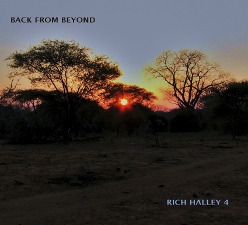
Speaking of energy, "Back From Beyond" (Pine Eagle Records), the new release from the Rich Halley 4, opens with a fiery tenor/drum duo. Tenor saxophonist/composer Halley's musical conversation with his son Carson (the drummer) recalls similar dialogues by John Coltrane and Elvin Jones as well as work by Max Roach with Odean Pope in the late 1970s. After their short intro, trombonist Michael Vlatkovich joins the discussion followed shortly by the muscular bass lines of Clyde Reed. The South African funk beat that opens "Section Three" is fun; the rhythm is modified for the Halley and Vlatkovich solos. It's also fascinating how the front line play a "call-and-response" which leads the rhythm section back to the funky beat.
3 of the 10 tracks are credited to the entire group but none feel scattered or overlong. In fact, "Reorbiting - for Sun Ra" a strong melodic thrust from the opening dialogue featuring Vlatkovich and Reed. When the trombonist falls into a short percussive phrase, the Halleys both join and there is some fine interplay. Another group piece, "Continental Drift", starts off quite "free" and it's the forceful melodic presence of Reed that pushes the others to a more melodic (while still forceful) approach.
Michael Vlatkovich is a fine partner for Rich Halley in that he matches the power of the tenor (his funky solo on "Broken Ground" brings to mind Fred Wesley); the trombonist can bring the fire when needed but he can also can go "gut-bucket" or highly melodic when called upon. The bluesy ballad "Opacity" is a fine example of how Vlatkovich fits his sound and personality into a piece without overwhelming it. The manner in which the saxophonist and he move in and around each other speaks to their long-time friendship as well as the numerous gigs they have worked together.
The title and Michael Coyle's liner notes make reference to the fact that the music on "Back From Beyond" is a "return to form" (in this instance, to songs that have theme-solo-theme" format) but this is not "retro" music. Listeners familiar with Rich Halley's music will not be surprised by either the power of this band or the leader's melodic approach. He's been his "own man" for 3 decades, creating a repertoire that challenges and moves the engaged listener. Kudos also go to the splendid work of the rhythm section; they not only propel this music but also creatively interact with the front line. For more information, go to www.richhalley.com.
Like just about all "live" CDs, "Dialogue" makes the listener wish he or she had been in the audience on the nights this music was created. Human Spirit, indeed! Thanks again, Jason Parker, for your excellent recommendation (check out his work by clicking on his name in the opening sentence - his 2011 recording of the music of the late Nick Drake deserves a space in your collection.) For more about Human Spirit, go to thomasmarriott.net/projects/human-spirit/.
Although Eric Erhardt (tenor saxophone, clarinet, flute) is a new name to me, his career spans 2 decades and ranges from playing in the pit bands of touring Broadway shows to the Artie Shaw Orchestra to the Eastman Wind Ensemble. "A Better Fate" (Tapestry Records) is his debut as a leader; he's assembled a top-notch band which includes Russ Johnson (trumpet, flugelhorn), Sebastian Noelle (electric guitar), Linda Oh (acoustic bass), Mike Davis (drums), Nick Paul (piano) and James Shipp (percussion) plus Dan Willis (soprano saxophone, oboe) on 2 of the 8 tracks.
Looking at the lineup, one realizes this music has a fighting chance of being quite good. And, it certainly is. Erhardt wrote and arranged all the pieces, creating pieces that seem to move outward from the opening notes. Davis truly can drive a band, works well with Shipp's percussion arsenal and still leaves plenty of sonic space for Ms. Oh's fundamentally strong bass work. Listen to them firing on all cylinders as the band flies through "Ten Years", rising out over Noelle's hard-edged guitar work. And, the rhythm section can also be subtle - on "Not Like Before", Shipp's insistent triangle alongside Davis's strong brushwork leads the piece in. Erhardt's forceful yet musical clarinet solo is impressive giving way to the rich flugelhorn spot (Paul, who is a member of vocalist Nicky Schrire's fine band, shines in his chordal support.) Noelle enters over a modified reggae beat, his intense lines pushing against the softer piano chords. "Powwow Now", based on a melody from a Navajo corn-grinding songs, commences with insistently repeated piano chord behind Ms. Oh's melodic solo. The blend of oboe, soprano sax, tenor, piano and guitar creates a swirling melody out of which the fine solos arise. After a rubato opening with tenor and trumpet dancing around each other over snappy percussion, the title track features a Latin rhythm with a melody for trumpet, tenor and Noelle's rippling guitar. The arrangement behind the melody and solos offers pleasing counterpoint. Listen to how the Paul's lines complement the active bass lines as well as the percussionist's exciting stew.
In his liner notes, Eric Erhardt gives credit fellow saxophonists Dave Liebman, Felipe Salles and Dan Willis for helping to make these compositions and arrangements "stronger." Their input certainly pushed Erhardt in the right direction because this music is intelligent, exciting and richly melodic. For more information, go to ericerhardtmusic.com.
Speaking of energy, "Back From Beyond" (Pine Eagle Records), the new release from the Rich Halley 4, opens with a fiery tenor/drum duo. Tenor saxophonist/composer Halley's musical conversation with his son Carson (the drummer) recalls similar dialogues by John Coltrane and Elvin Jones as well as work by Max Roach with Odean Pope in the late 1970s. After their short intro, trombonist Michael Vlatkovich joins the discussion followed shortly by the muscular bass lines of Clyde Reed. The South African funk beat that opens "Section Three" is fun; the rhythm is modified for the Halley and Vlatkovich solos. It's also fascinating how the front line play a "call-and-response" which leads the rhythm section back to the funky beat.
3 of the 10 tracks are credited to the entire group but none feel scattered or overlong. In fact, "Reorbiting - for Sun Ra" a strong melodic thrust from the opening dialogue featuring Vlatkovich and Reed. When the trombonist falls into a short percussive phrase, the Halleys both join and there is some fine interplay. Another group piece, "Continental Drift", starts off quite "free" and it's the forceful melodic presence of Reed that pushes the others to a more melodic (while still forceful) approach.
Michael Vlatkovich is a fine partner for Rich Halley in that he matches the power of the tenor (his funky solo on "Broken Ground" brings to mind Fred Wesley); the trombonist can bring the fire when needed but he can also can go "gut-bucket" or highly melodic when called upon. The bluesy ballad "Opacity" is a fine example of how Vlatkovich fits his sound and personality into a piece without overwhelming it. The manner in which the saxophonist and he move in and around each other speaks to their long-time friendship as well as the numerous gigs they have worked together.
The title and Michael Coyle's liner notes make reference to the fact that the music on "Back From Beyond" is a "return to form" (in this instance, to songs that have theme-solo-theme" format) but this is not "retro" music. Listeners familiar with Rich Halley's music will not be surprised by either the power of this band or the leader's melodic approach. He's been his "own man" for 3 decades, creating a repertoire that challenges and moves the engaged listener. Kudos also go to the splendid work of the rhythm section; they not only propel this music but also creatively interact with the front line. For more information, go to www.richhalley.com.
Subscribe to:
Posts (Atom)