Showing posts with label drummer-led quintet. Show all posts

Monday, September 27, 2021

Quintet & Big Band with Jared Schonig Leading!


Drummer and composer Jared Schonig is the exemplar of the 21st Century musician. Not only does he write music but he also plays in Broadway pit bands ("Color Purple", "Moulin Rouge: The Musical"). Schonig has worked or recorded with artists ranging from Fred Hersch to the 8-Bit Big Band, from Amy Cervini to Darcy James Argue & The Secret Society, and others plus is a Private Lessons Instructor  The drummer has toured with Kristen Chenowith, Kurt Elling, the New York Voices, Cynthia Erivo, Duchess and Laila Biali.  He is one of the co-leaders of The Wee Trio with bassist Dan Loomis and vibraphonist James Westfall.   

Earlier in 2021, Schonig self-released the three-song EP, "112 Project", featuring three different trios recorded remotely during the Pandemic.  Now, Anzic Records has released the exciting and ambitious "Two Takes, Volumes 1 & 2".  "Volume 1: The Quintet" features eight original compositions by the drummer plus a short "Intro to White Out" and three "Drum Interludes" played by the dynamic quintet of Schonig, bassist Matt Clohesy, pianist Luis Perdomo, alto saxophonist Godwin Lewis, and trumpeter Marquis Hill. Perhaps the best words to describe the program is "smoking hot" with the occasional foray into ballad territory.  The musicians play with great emotional fire throughout and Schonig's compositions are well-shaped, thoughtful, and often fiery. "Intro to White Out" opens the album with...well...a drum soliloquy leading directly into the first full track.  "White Out" leaps from the speakers moving forward on the "hot" drums and the rapid-fire melody line played by the sax and trumpet.  Louis takes the opening solo, laying down an energetic gauntlet for Hill to follow.  Perdomo quietly 'comps" until his solo that races along atop the twin engines of Clohesy and Schonig. 

Photo: Amy Schonig
Highlights abound throughout the program.  The sly, funky, "Climb" builds off the "tick-tock" clicking from the leader's drums with dynamic work from the bassist plus a splendid piano solo from Perdomo, a smoky interlude from Hill that erupts into flames creating a jumping off point from Louis's sweet solo. "Eight Twenty" also contains a slinky, soulful, rhythm as well as a handsome, singable, melody that offers the musicians the opportunity to weave in and around each other as well as the space for Louis, Hill, and Perdomo to create melodic solos. The pianst, Schonig, and Clohesy lay down quite a sneaky yet funky pace on "Sabotage" then drop into a hard-bop 4/4 for the solos.  

Photo: Leonardo Mascaro
The program also includes two fine ballads.  "Tig Mack" opens  with just bass and trumpet before Clohesy lays down a lovely circular line that the heartfelt melody rides upon. Perdomo emerges from the theme with a sweet solo that slowly picks up in intensity without boiling over.  The album closes with "Gibbs St." with its whirlwind melody line played by sax and trumpet over a simple but blues-influenced rhythm section. Louis and Hill "converse" through the middle of the song before leading the band back to the opening two-part theme.  There are traces of Dave Holland's fine ballad "Conference of the Birds" in the chordal accompaniment –– whether it's intentional or not, it's a lovely sound. 

"Two Takes, Volume 1" is rich in melodic material, ripe with strong solos, and excellent accompaniment.   Jared Schonig set a sumptuous table for his musical partners and the listener gets to partake in the feast!

Enjoy the energy of "White Out"

:


"Volume 2: Big Band" takes Schonig's Quintet material, distributes each piece (not the "Intro" or "Drum Preludes") to a different arranger (see the list below), and reimagines the songs in a big band setting.  Recorded in several different sessions (with varying personnel), the music often crackles with excitement led by the powerful drumming of the leader/ composer.  Ms. Hazama's arrangement of "Sabotage" leads off the program; it's a "speaker-shaker" with delightful solos from Quinson Nachoff (tenor sax) and Brian Pareschi (trumpet), as well as Schonig's thundering attack on his kit.  Jim McNeely does the honors of arranging "White Out" giving the skittish melody line to the muted brass and a unnamed flutist.  What follows is an exciting dialogue between the reeds and the brass before the opening theme is repeated, this time with the trumpets unmuted and adding the trombone.  Powerful solos from Troy Roberts (tenor sax) and trumpeter Scott Wendholt. Yes, there is a drum solo: this time, the brass and reeds begin by sparring with Schonig then framing his fills.  

Photo: Amy Schonig
Co-producer Mike Holober's contribution is his arrangement of "Climb": built off the simple "tick-tick" of the drums, here the reeds and brass shine on the thematic material. Charles Pillow
creates a quiet alto sax solo over the shimmering rhythm guitar (Nil Felder) and atop the pulsating Fender Rhodes work of Adam Birnbaum. Jason Rigby starts his tenor sax solo over Felder's clicking rhythm guitar and Schonig's "conversational" drums.  "Tig Mack" stands out for the adventurous nature of Darcy James Argue's smashing arrangement: how he uses the high reeds and brass in the background to swell up over the other horns a la Steve Reich.  The rhythm section behind Felder's excellent solo reminds this listener of Talking Heads circa 1980-85.  

Like "Volume 1: Quintet",  the program ends with "Gibbs St."  Brian Krock created the arrangement, maintaining the "Conference of the Birds"-feel in the rhythm section but not as pronounced as the Quintet take.  Felder creates another fine solo as does electric bassist Ike Sturm.  There's also an exciting tenor sax solo from McCaslin that invigorates the track –– listen to how subtly Krock adds the reeds and brass until they are roaring and then falling back.up until the final minute during which the music slowly fades on Sturm's bass melody.   

"Two Takes, Volume 2: Big Band" is as compelling and intriguing as the Quintet volume.  All eight arrangers put their unique spin on the music Jared Schonig composed for this project without sacrificing the intent and integrity of the drummer's works.  Both albums are worth investigating and owning. Great sounds that will brighten your attitude and your day!

For information about the leader, go to www.jaredschonig.com.  To hear more and to purchase the recording, go to https://jaredschonig.bandcamp.com/album/two-takes-vol-2-big-band. 

Here's the intriguing "Tig Mack":


aboutArrangers:  Alan Ferber, Jim McNeely, Mike Holober, Miho Hazama, Darcy James Argue, Laurence Hobgood, Brian Krock, and John Daversa.

credits

Personnel:
Reeds: Jon Gordon, Charles Pillow, Dave Pietro, Ben Kono, Donny McCaslin, Donny McCaslin, Troy Roberts, Quinson Nachoff, Carl Maraghi

Trumpets: Tony Kadleck, Jon Owens, Brian Pareschi, Jonathan Powell, Scott Wendholt

Trombones: Michael Davis, Marshall Gilkes, Keith O’Quinn, Alan Ferber, Jeff Nelson

Bass (acoustic and electric): Ike Sturm, Matt Clohesy, and Dan Loomis
Piano: Adam Birnbaum, David Cook
Guitar: Nir Felder
Drums: Jared Schonig
Conducted by Matt Holman

Thursday, June 18, 2020

Drums Out Front (June 2020)

Drummer and composer Rudy Royston, a native of Texas who grew up in Denver, CO, is one of the busiest musicians in contemporary music. Or, he was one of the busiest musicians until the pandemic. In an phone conversation just the other day, he told me his "gig book went from all into no ink" in a matter of hours.  He received several grants that helped to pay bills and it gave him the time to think about those musicians who were not being funded and how he could help. Royston had recorded a series of drums solos in 2013 just after releasing his debut album ("303") as a leader.  He sat back, listened, and talked with Greenleaf Records head Dave Douglas about releasing the solos as an album and using the proceeds to support MusiCare Foundation's "Covid-19 Musicians Relief Fund."

The album, "PaNOptic", comes out on June 19, "Juneteenth", and is well worth exploring.  Most people would argue that the drums are not a melodic instrument but, in the hands of someone as talented and dedicated as Rudy Royston, one can hear he's telling  stories throughout the 23-track program.  Whether it's the speaker-shaking "bLUes", the subtly etched "defeRRed" (complete with excerpts from Langston Hughes' "A Dream Deferred" and wordless vocal), or the gospel thump of "MOTHER KELLY and the preacher part 1", the attentive listener understands much of what is going on. He pays tribute to his drum mentors Elvin Jones, Max Roach, and Jack DeJohnette as well as the inspirations of fellow Texan Ornette Coleman and Thelonious Monk.  Royston also pays musical tribute to Bill Frisell with whom he has played and toured with for two+ decades.

If you have ever seen and heard Rudy Royston in person, you know just how fine a musician he is.  "PaNOptic" offers the listener the opportunity to spend a hour in the room with this fine person and to help him help other musicians make their way through these uncertain times.

To read more, go to https://greenleafmusic.com/rudy-royston-on-musicares-and-panoptic/.

Here is a teaser:


Drummer and composer Jerry Granelli, a native of San Francisco, CA, who has lived in Halifax, Nova Scotia, Canada since the early 1990s, is quite an interesting musician. He's played alongside bassist Charlie Haden, Sly Stone, Sonny Stitt, and Ornette Coleman.  Two of his earliest "high-profile gigs" in the 1960s were with pianists Denny Zeitlin and Vince Guaraldi – in fact, he played on the former's first three albums and on the latter's "Charlie Brown's Christmas" album.  In the 1970s, he worked with pianist Mose Allison. Granelli went out oh his own in the 1980s and has recorded a number of impressive albums that blur the lines between blues, jazz, and "free" music.  He's a prolific composer, is interested in electronic sounds, and has recorded with such great players as vocalist Jay Clayton, guitarists Dave Tronzo, Ralph Towner, Bill Frisell, Robben Ford, and many musicians.

For his new album, Granelli recruited pianist Jamie Saft and bassist Bradley Christopher Jones to investigate the music of two of his early employers. "The Jerry Granelli Trio Plays the Music of Vince Guaraldi & Mose Allison" (Rare Noise Records) finds the trio exploring five pieces associated with Allison, three with Guaraldi plus two improvisations for bass and drums.  The album opens Guaraldi's "Cast Your Fate To The Wind"; the pianist composed the song after the seeing the 1959 Brazilian movie "Black Orpheus" and the 45 rpm version of the song was a surprise top 40 hit in 1962. Granelli and the trio capture the mysterious beauty of the opening section which introduces the lovely melody. Unlike the original, the Trio does not go into a conventional "jazz stroll" but keep the sonic sense of mystery going through until the fade.

Photo: Scott Irvine
The five Allison pieces are standards in the late Mississippian's repertoire. "Parchman Farm", named for the infamous Mississippi maximum security prison, allows the musicians to stretch out. Saft refers to the melody throughout his solo as Jones thick tones and Granelli's solid pulse drive him forward. "Everybody's Cryin' Mercy" captures the lowdown feeling of the original while the band lets loose on "Your Mind Is On Vacation" where the minimalist/ pointillistic approach of Saft's piano is countered by the powerful drums and throbbing bass. Hard not to move your body while listening to the three musicians dance through "Baby Please Don't Go" (credited as a "traditional" in the liner notes); the groove is there from the opening gun and it's fun to hear Saft bounce atop the rhythm section.
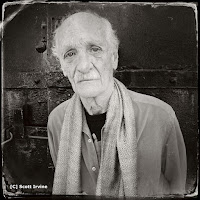
Photo: Scott Irvine
Besides the opening track, the other two Guaraldi pieces are "Star Song" and the album closer "Christmas Time Is Here".  The former is a gentle samba tha really shows off the virtuality of the bassist especially during his sweet solo.  The latter is, of course, from the "Charlie Brown Christmas"; for many young people, the music Guaraldi composed for the cartoon was the first jazz they ever heard.  The trio plays it straight with fine solos from Jones and Saft above the sympathetic and gentle drums and cymbals from the leader.

The  pair of drums-bass improvisations, "Mind Prelude 1" and "2", illustrate the fine conversational interplay of Messrs. Granelli and Jones. "1" takes place over a rapid-fire drum rhythm while the bassist flies over the delightful brushes work (note the booming bass drum). "2" has a similar feel to its partner with a more pronounced (and bluesy) melody from Jones.  The delightful sparring of the bass with the drums is a highlight of the album.

One should and could emphasize the word "Plays" in the album's title, "The Jerry Granelli Trio Plays Vince Guaraldi & Mose Allison".   The trio of Jerry Granelli, Bradley Christopher Jones, and Jamie Saft approaches this music with respect for the artists who created it and the joy of playing together, making fun music that has substance.  Feels good, sounds good – enjoy!

For more information, go to jerrygranelli.com.

Here's one of the Mose Allison tunes:


Drummer, composer, and educator Steve Fidyk began playing in front of audiences when his father, saxophonist John Fidyk, brought him onstage at the age of eight.  At the same age, the younger Fidyk discovered drummer Buddy Rich and one can hear some of that drummer's tremendous drive in the way Fidyk propels a band forward.  He later studied with Joe Morello (best known for his work with the Dave Brubeck Quartet) and spent 21 years playing with the Army Blues Big Band, an experience that took the drummer around the world playing for dignitaries as well as for troops stationed in the Mid East. While Fidyk has appeared on a number of recordings with the Army Band and others, his debut as a leader, "Heads Up!", was issued in 2014 on Post-Tone Records.  He released another album on the label in 2016 plus appeared on disks led by saxophonists Doug Webb and Walt Weiskopf plus organist Brian Charette.

His third album, "Battle Lines", is Fidyk's first self-released recording (Blue Canteen Music) and finds him at the helm of a swinging quintet: Joe Magnarelli (trumpet, flugelhorn), Xavier Perez (tenor saxophone), Peter Zak (piano), and Michael Karn (bass).  The 11-song program features seven pieces by the drummer plus one each by Eddie Harris, Dave Brubeck, Blue Mitchell, and Charlie Parker. Harris's "Ignominy" leads off the album in an Art Blakey/Jazz Messengers mode with the drums front-and-center but not distracting from the fine solos by Perez, Magnarelli, and Zak. The handsome  waltz "Thank You (Dziekuje)" was composed by Dave Brubeck on a 1958 tour of Poland, has a lovely melody, and is infused with a blues feel.

Photo: Lea Alexandrine
Fidyk's "Bebop Operations" tells you much of what you need to know about the song and the inspired romp fills out the rest.  His "Battle Lines" is a high-speed romp whose melody is split between the saxophone and piano before Zak takes off on a dizzying solo propelled by the leader's driving drums and Karn's speedy bass lines.  Perez (also a member of the Army Blues Big Band) creates a delightful solo before ceding the spotlight to a short but impressive drummer break. The loveliest piece on the recording, "Lullaby For Lori and John", is a sweet ballad Fidyk wrote in memory of his parents, both of whom died in the last two years. Magnarelli's soft-edged flugelhorn frames the piece nicely (he also takes a fine solo) and there are short but eloquent solos from Zak and Karn.

Photo: Lea Alexandrine
After the ballad comes the aptly-titled "Churn" with its rolling bass lines, turbulent percussion, and a roiling tenor sax solo. Perez does a great job building his solo; with Zak's powerful chords pushing him ahead, the saxophonist sings and frolics.  The pianist takes a fine solo as does the leader whose drums fill the sound spectrum delightfully. That's followed by the joyous quartet (Magnarelli sits this and several other tracks out) take on Yardbird's classic "Steeplechase."  The musicians capture the spirit of the 1948 original, kicking the tempo up a notch or two. The album closes with Blue Mitchell's "Sir John", a medium tempo blues that, like the opening track, has that Jazz Messenger "sound".

Despite its militaristic title, "Battle Lines" is more of a party than a skirmish.  Steve Fidyk and company sound as if they were deep into the second set of a gig at an underground club.  It's always fun to hear music that is hard-driving yet relaxed at the same time. Everyone, including the listener, is having fun.  "Make grooves, not war" just might be this drummer's philosophy – give a listen and see if you agree.

For more information, go to stevefidyk.com.

Thursday, October 4, 2018

Creative Explorations by Groups of Equals

Rudy Royston is one those drummers who makes an impact on the musicians he works with from the first note of a song. He plays with such fire, often pushing his fellow musicians to greater heights and, to my mind, more powerful solos.  Royston, a Texas native who came of age in Denver, CO, studied music in college but really learned about his craft (not just playing but composing, arranging, and listening) while working with trumpeter Ron Miles.  He's gone on to play with a great number of musicians including Bill Frisell, Dave Douglas. J.D. Allen, Ravi Coltrane, and Rudresh Mahanthappa.  In person, he's a joy to watch, mostly because he always looks like he's having the time of his life.

"Flatbed Buggy" is Rudy Royston's third album as a leader as well as the third to released by Greenleaf Music.  For this effort, which reaches back to the drummer and composer's childhood memories, he's gathered a topnotch group of collaborators including Gary Versace (accordion), John Ellis (bass clarinet, saxophones), Hank Roberts (cello), and Joe Martin (bass).  Those of you expecting a collection of hard-blowing "jams" will be pleasantly surprised by the delicate nature of much of this material and how melodic the material.  That does not mean it's "wimpy" or "smooth jazz" - tracks such as "Hourglass", "the opening "Soul Train" (sorry, no Don Cornelius), and the effervescent "Bobblehead" dance out of the speakers.  Yet, it's the blend of accordion and cello, the way Ellis weaves his bass clarinet in and out the music or adds his soprano to the exciting performance of "Bobblehead" that stand out.  Yes, this music has power and it comes from the interactions, from the irrepressible rhythms, the solid foundation that Martin's excellent bass work provides.  On occasion, you may hear the influence of Mr. Frisell's "Americana" music or the way the late Jimmy Giuffre weave folk melodies into his music but this is Rudy Royston telling his own tales.

Each song has a storyline.  "boy...MAN" opens with a lovely cello melody and then wraps that around there accordion and cello.  Here, Royston guides the ensemble forward, opening the piece up to a strong bass solo that builds intensity to a powerful close.  Later on in the program, "girl...Woman" starts as a lovely ballad again with Roberts in the lead and Versace playing counterpoint and in unison.  The track includes a stunning accordion solo, introspective and gentle, ref;active of a day spent in the country.  Ellis, Versace, and Martin weave their individual sounds each other over the quiet colors of cello and the leader's cymbals.  But, even with all these quiet interactions, the quintet drops into a lively, "pop music" groove to take the piece out.

"Flatbed Buggy" is one of those albums to listen to all the way through.  There's so much to "hear", so many stories and histories embedded in this music that it's impossible to appreciate what Rudy Royston has so majestically created on one pass through.  At times stunning, at others times, joyful yet always melodic and rhythmically rich, this album deserves your full attention!

For more information, go to www.rudyroyston.com.

Put on your dancing shoes and listen to this:


Trumpeter and composer Jonathan Finlayson, long-time collaborator of saxophonist Steve Coleman, continues to spread his creative wings on "3 Times Around" his third album for Pi Recordings.  The new album features pianist Matt Mitchell, bassist John Hébert, and drummer Craig Weinrib, all of whom appeared on Finlayson's 2017 Pi release, "Moving Still", and replaces guitarist Miles Okazaki with tenor saxophonist/flutist Brian Settles and alto saxophonist Steve Lehman.  While the influence of Mr. Coleman is evident on the opening two tracks and the impressive 14-minute opus "The Moon Is New", this music is no cookie-cutter impression of Finlayson's mentor's music.

"Feints" and "Grass" open the program, their exciting rhythms and percussive melodies (and counterpoint) making for intense listening. The first extended solo one hears on cut one is by Mitchell - he does not disappoint as his solo hurtles ahead as he interacts with with Weinrib's powerful drumming spurring him on.  Then, the interplay of Settles, Lehman, and Finlayson soars atop the dynamic rhythm section.

The pace changes when you enter the rubato world of "A Stone, A Pond, A Thought" - here, the trumpet leads the saxes in atop rumbling piano, thrumming bass, and various "colors" from the drummer.  Hébert's impressive bow-work is featured in the middle of the nine-minute "sound sculpture" before the sextet returns to push the intensity higher but never falling into a rhythm.  That intensity carries over to the episodic "The Moon Is New" - after the powerful opening, the piece moves in several directions and puts the spotlight squarely on The leader, Lehman, Settles, and Mitchell, all the while the rhythm section scurrying around under those soloists.  The shorter yet no-less-powerful "Refined Strut" follows and the music is as advertised.  Concentrate on how the rhythm section creates the irresistible "strut" and the on how the reeds and trumpet decorate the melody.

Photo: Paul de Lucena
"3 Times Round" is dedicated to the late Muhal Richard Abrams (1930-2017) and the conceptualist/composer's sense of adventure is a large influence on how Jonathan Finlayson approaches his original music.  The sound of this ensemble is so full yet never cluttered nor cliched.  The sextet is emotionally and musically attached to this project all the way through - I really enjoy listening to and am deeply impressed by the playfulness of Craig Weinrib as he dances along with the ensemble.

For more information, go to jonathanfinlayson.com.

Here's the album's opening track:


Although you do not see it anywhere on the album cover, this is the second album from the quartet known as Dirigo Rataplan. The ensemble, organized by drummer and composer Devin Gray, features trumpeter David Ballou, tenor saxophonist Ellery Eskelin, and bassist Michael Formanek.  In 2004, Gray assemble a trio owht the trumpeter and bassist, adding the tenor sax to the mix after moving to New York City several years later.  Their 2012 debut album, originally released on SKIRL Records, sets the soundstage for the quartet's new release.  Gray's music takes its influences from myriad sources, from folk melodies, funk rhythms, and blues changes, from "free" explorations and the classic interactions of Ornette Coleman's Quartet from the Atlantic Records years (1959-61) to create its contemporary sounds.

Chamber Music America
It's a real joy to hear how these musicians play together, how they explore the various routes that Gray's compositions offer them. When you have four such individual voices, the music can either be an exercise in technical virtuosity or a four-way street with everyone listening to each other, conversing as equals, giving the music their full attention.  That's what you get with "Dirigo Rataplan II". One supposes you could listen just for Eskelin's melodic saxophone or Ballou's articulated melodies and exploratory solos or Formanek's fascinating bass work (who has a more melodic approach to the bass than him?) or how Gray leads the band without commanding the spotlight.

DowntownMusic.net
Listen to "Quantum Cryptology" to hear how the band navigates the melody line and how each gets a solo while the rhythm section creates a different yet interactive foundation/counterpoint.  Note how "Trends of Trending" opens in the pocket then moves inward, the trumpet and saxophone conversing across the bass and drums. Hear how Formanek's bass lines up high on the neck of his instrument dances over the scuttling drums on "What We Learn from Cities." The softness of the opening of "Intrepid Travelers" hints at blues for the first half then moves subtly away.

Dirigo Rataplan II" contains music that asks you to listen, does not beseech the listener, but seduces with its melodies and interplay/interactions as well as the intelligence of the music.  Is this strictly intellectual music? A kind of "highbrow jazz"?  What Devin Gray has created with Ellery Eskelin, David Ballou, and Michael Formanek is a delight from start to finish.

For more information, go to devingraymusic.com.  The quartet appears tomorrow in CT at Firehouse 12 - go to firehouse12.org for more information. They'll travel down to Baltimore, MD, on the next day and back to Philadelphia, PA, to close their short tour.  For more information, go to devingraymusic.com.

Here's the opening track: