Monday, March 12, 2012

New Releases on Parade (Part 1)

Bassist Steve Horowitz is a busy musician and composer, working on television shows for Nickelodeon, movies ("Super Size Me") and performs in numerous groups.  For "New Monsters" (Posi-Tone Records), he's assembled a quintet from the San Francisco Bay Area to play music composed by tenor saxophonist Dan Plonsey.  The other lead voice is Steve Adams (alto and soprano saxophones, flute) from ROVA Saxophone Quartet. Rounding out the group is Jim Bove (drums) and Scott Looney (piano).  The latter is a veteran of the "New Music" scene in San Francisco, having worked with saxophonist Jon Raskin (also from ROVA), Oliver Lake, and guitarist Henry Kaiser. 

This is certainly one of the more sonically challenging Posi-Tone releases.  There's the sweet blend of the reeds on just about every track while Looney plucks inside his piano to create a percussive change-of-pace on thbe bouncy "Vision Pyramid Collapse".  He goes right back inside on the next track, "Miracle Melancholy", a fascinating work that's shows the influence of Japanese folk music.  Horowitz's expressive electric bass work meshes well with Bove's creative percussion.  The one non-Plonsey composition is a clever mash-up of John Coltrane's "India" with Eric Dolphy's "The Red Planet"  - both Adams and Plonsey take exciting solos, egged on by the active rhythm section, while Looney stays outside the piano for his solo.

There are plenty of creative twists-and-turns in this program.  The circular melody line of "New Boots For Bigfoot" opens up for strong solo statements from Looney and Horowitz (a very thoughtful meditation) and the interwoven lines of Plonsey and Adams (on flute). The sprightly played piano and drum dialogue, "Brains for Breakfast", leads right into the crazy-bop of "Herald of Zombies", with quasi-march opening that gives way to a hellacious alto saxophone solo followed by an equally crazy tenor solo over Looney's "Charles Ives meets Barrelhouse" piano spotlight.  The playfulness continues on the final track, "Cylinder", with its '60s "pop" music beat and dueling saxophones.

"New Monsters" is playful yet edgy music that ought to bring a smile to listeners who like to be challenged. The proceedings often has the feeling of the Willem Breuker Kollektief sparring with The Mothers of Invention while Fred Ho throws in his 2 cents worth; this is music that pokes one in the eye while making his feet tap. What a treat!  For more information, go to www.posi-tone.com.  

Here's the opening track, courtesy of Posi-Tone Records and IODA Promonet:

Imperfect Life (mp3)


Saxophonist Doug Webb calls his new CD "Swing Shift" - it's his 3rd for Posi-Tone Records, all recorded with the same rhythm section (bassist Stanley Clarke and drummer Gerry Gibbs) and 3 separate pianists (Larry Goldings, Joe Bagg or Mahesh Balasooriya.) Chances are quite good that these songs were recorded in the same marathon session that produced his previous Posi-Tone releases. 

Webb plays soprano sax on 2 tracks, alto sax on 1 and tenor on the remaining 3.  The 22-minute + "Patagonia Suite" is a fiery work, with Webb's soprano soaring over Clarke's muscular acoustic bass lines, Gibbs' hearty drumming, and Balasooriya's pounding and hypnotic piano chords.  After a furious exchange with the rhythm section, Webb switches to tenor for a long, hard-edged, solo. Balasooriya; who's in his early 20s, also offers strong support on the lovely version of Frank Foster's "Simone", the track that features Webb's best work on soprano (it's the best realized piece on the disk). The leader switches to alto sax for "Where Or When", a duet with Joe Bagg, who shows an inventive touch on the piano with a touch of stride in his approach. "Rizone" is also a duo piece, this time a blazing tenor solo over Gibbs' driving drums. Goldings appears on the fairly straight-ahead reading of Mal Waldron's "Soul Eyes", his fleet fingers producing a fine solo. 

"Swing Shift" has its good moments but suffers from uneven sound.  Several tracks feature too much echo on the saxophone or the bass is too prominent in the mix.  There are also times when Webb, who is a solid musician, overplays or runs out of ideas. He'd be better served taking a quartet into a club for a week and recording live.  For more information, go to www.dougwebb.us.  


It feels as if 2012 will be a vintage year for CDs created by piano trios and female vocalists.  For her 4th recording as a leader, Kathy Kosins, a native of Detroit, Michigan, turns to the music of Chris Connor, Julie London, Anita O'Day and June Christy, mining their respective repertoires to assemble a 10-song program that she titles "To The Ladies of Cool" (Resonance Records). Ms. Kosins does not attempt to mimic any of the singers she is celebrating. With the help of pianist/arranger Tmir Hendelman, this music has a pleasing shine and swing.  The rhythm section, consisting of veteran Los Angeles session drummer Bob Leatherbarrow and bassists Kevin Axt or Paul Keller (they appear on 5 tracks each), offer able support while Graham Dechter adds his expressive guitar work to several selections.   Gilbert Castellanos' trumpet is a welcome addition to "Kissing Bug" and "Don't Wait Up For Me" (this track puts the spotlight on his pleasing muted sounds).  He pairs with tenor saxophonist on the rollicking version of Johnny Mandel's "Hershey's Kisses" (Ms. Kozins' original lyrics replaces Ms. O'Day's wordless work on the original version of "Hershey Bar.")

The moody ballad "November Twilight" (originally recorded by Ms. London in 1956) is quite pretty with fine bass work from Axt (who works with Tierney Sutton) and handsome piano work from Hendelman.  Dechter's bluesy licks enliven Henry Mancini's aptly-titled "Free and Easy" while his gentle chording adds a bossa-nova lilt to "Where Are You".

"To The Ladies of Cool" simmers and shimmers, swings and soothes - like the 4 women she celebrates, Kathy Kosins is not a demonstrative vocalist. Her delivery is even-keeled, her voice emotional but not overly so, nor she exhibit the desire to fill out the songs with unnecessary vocal sounds.  Instead, she's the singer in front of an impressive ensemble performing a fine program of good songs.  Give this a serious listen - to find out more, go to ladiesofcool.com.

Tuesday, March 6, 2012

This. That and the Other (Part 1)

More jazz in Middletown (CT, that is, my home base) is on the way. Titanium Lounge & Restaurant, 412 Main Street, began life as a dance club (complete with a disco ball and bouncers - on Friday March 16, the owners are inaugurating a jazz series and, for fans of mainstream sounds, the band is perfect.  One For All, the collective Quintet that is celebrating 15 years of swinging, will play from 8 - 11 p.m. OFA features Hartt School of Music Professor Steve Davis (trombone), fellow instructor Nat Reeves (bass), David Hazeltine (piano), Joe Farnsworth (drums) and Mike DiRubbo (alto saxophone).  Over the years, the group (which usually includes tenor saxophonist Eric Alexander) has recorded CDs for Sharp 9 Records, Criss Cross and the Japanese Venus label. For more information, call 860-788-2419.

But, before OFA comes to town, the John Funkhouser Trio returns to The Buttonwood Tree, 605 Main Street, on Saturday, March 10, for an evening of high-energy creative explorations (many with "wicked" rhythms.) Funkhouser, a member of the faculty at The Berklee School of Music in Boston (as is pianist Laszlo Gardony, whose Trio excited a full house on March 3), brings his usual cohorts - bassist Greg Loughman and drummer Mike Connors - to The Buttonwood where they have attracted a number of new fans.  For more information, call 860-347-4957.

The Uncertainty Music Series, curated by bassist/composer Carl Testa, has 3 concerts scheduled for March.  On Saturday March 10 at 8 p.m. in Never-Ending Books, 810 State Street in New Haven, the Series presents "The Music of Dean Rosenthal."  Composer-guitarist Rosenthal, a native of Concord, Massachusetts, has studied with Morton Subotnick, Wadada Leo Smith and Tom Johnson, also utilizes electronics and voice in his pieces, many of which use silence to create fascinating sonic sculptures.  There's also a "pop" sensibility and humor to certain pieces - that levity makes Rosenthal's music all the more interesting.
For the 3/10 concert, Rosenthal has assembled a group that features Anne Rhodes (vocals), Jeremy Starpoli (trombone), Karin Rosenthal (glockenspiel) and K.C.M. Walker (harmonium). For more information, go to uncertaintymusic.com.

Future concerts in the series include "Unearthish" on Wednesday March 14 at 9 p.m. in the Elm Bar, 372 Elm Street in the Elm City. "Unearthish" is the name of the new CD by the duo of Sarah Bernstein (songs, violin, voice) and Satoshi Takeishi (percussion), a strong collection of sound and word experiments.  Give a listen by going to sarahbernstein.bandcamp.com/album/unearthish.

Finally, on Wednesday March 28 at 9 p.m. in the Elm Bar, it's the triple bill of Keith Restaurant + Meat Foam (Cretella and Parmelee) + Brian Parks.  Again, go to uncertaintymusic.com for more information.

CD Pick of the Week:
Amidst the flurry of piano trio CDs that have issued since the first of the year, it might be easy to overlook "Sparkle" (Capri Records), the latest offering from the Jeff Hamilton Trio. Don't pass over this little gem.  Drummer/composer Hamilton has worked with bassist Christoph Luty and pianist Tamir Hendelman for over a decade - they know each other so well that this program does not sound like work but play.  There are a zillion covers of Thelonious Monk material but the Trio's reading of "Bye-Ya" sounds fresh thanks to the leader's New Orleans-style drumming (and brushes, no less!) Yes, there have probably been as many recordings of the beautiful David Raskin/Johnny Mercer ballad "Laura" - here, Hendelman caresses the melody, utilizing a chordal approach that continually moves the piece forward. Luty's "singing" bass lines move easily in counterpoint while Hamilton's percussion whispers below. 

Each member of the Trio contributes, at least, one original piece to the program.  Luty's "In An Ellingtone" is a slyly constructed blues with a slinky melody line and more than just "Kinda Dukish." Hendelman's "Hat Dance" is a breezy and bluesy melody that bops right along with a playful piano solo and plenty of fine interplay.  Hamilton, being the leader, has 2 contributions, the swinging "Ain't That A Peach" that opens the show and the title track (named for Hamilton's first drum set) jumps right out of the gate with a spunky melody over the driving hard-bop rhythm. 

"Red Sparkle" should make the listener feel good (there's even a creative take on Stephen Bishop's pop smash "On and On") and, when one really pays attention to how the Trio interacts, you'll enjoy it even more.  As the esteemed Mr. Ellington said (probably more than once), "There are two kinds of music. Good music, and the other kind" - The Jeff Hamilton Trio makes good music!  For more information and sound samples, go to caprirecords.com/artists/jeff-hamilton-trio.

Wednesday, February 29, 2012

Piano; Rhythm, Melody and Message

Ahmad Jamal, a native of Pittsburgh, Pennsylvania, turns 82 in July of this year.  After settling in Chicago in the late 1940s, he recorded his first Lp in 1951 with guitarist Ray Crawford and bassist Eddie Calhoun (the group was known as The Three Strings).  In 1955, he switched to the piano-bass-drums format; Jamal signed to Argo Records (part of the Chess Records family) and, with bassist Israel Crosby plus drummer Vernel Fournier, made a slew of albums in the late 50s through the mid-60s. Since then, he's led a number of Trios, recorded with orchestras as well as vocalists, toured continuously throughout the world and inspired or influenced several generations of pianists and jazz musicians.

"Blue Moon" (Jazz Village) features his current group with its New Orleans rhythm section of Herlin Riley (drums) and Reginald Veal (bass) plus percussionist Manolo Badrena.  The music they create on this session is wonderfully seductive, rhythmically exciting, extremely melodic and, at many turns, pure fun.  The title track, composed by Rodgers & Hart in 1934, pulls the listener on the strength of Riley and Badrena's percussive interaction, Veal's bass line (a variation of the bass line in the "Acknowledgment" section of John Coltrane's "A Love Supreme") and the pianist alternating 2-handed phrases and percussive chordal work.  If you have heard the mesmerizing work of the Australian piano trio The Necks, there are moments here where the band "riffs" hypnotically yet always come back to the melody.

Bronislaw Kaper's "Invitation", a piece that's been recorded by countless jazz musicians for many decades (Jamal first put it on record in 1965), gets a similar treatment as "Blue Moon" but with even more influence of the percussion.  Riley and Badrena lock into the beat, pushing the pianist to exciting heights and dance-like figures.  Veal's solo bounces atop the beat sweetly before Jamal returns to the theme.   Dig the hip-hop influence in the drums on "This Is the Life" (from the musical "Golden Boy") and how Jamal works on the beat as well as playing around it with his fine melodic flourishes.

Right in the middle of the program are 2 fascinating ballads.  "I Remember Italy" (a Jamal original) is a lengthy excursion with minimal yet intriguing work from the band (implied rhythms, swirling percussion and a soft but supportive bass line).  The oft-recorded standard "Laura" is a showcase for Jamal's wonder-filled "stream-of-consciousness", fragments of the melody intertwined with flights of single-note lines and chordal fills, all with Veal tracing a rhythm with his solid bass work.

The CD closes with a playful reading of Dizzy Gillespie's "Woody'n You", a be-bop classic Jamal first recorded in 1958. The ensemble moves away from the original tempo yet suggests it throughout the performance, varying the tempo and the attack.

"Blue Moon" clocks in at over 75 minutes yet is so attractive I find myself not only playing the CD all the way through but playing certain tracks over again.  Herlin Riley is both supportive and creative while Manolo Badrena adds just the right spice whenever he's called on.  Because Ahmad Jamal's left hand work is so strong, one might suspect Reginald Veal's bass work to be superfluous;  instead, he 
 plays both timekeeper and counterpoint (when you pay attention to him, you'll notice his worth to the group.)  As for the leader, he's a master musician, combining melody and rhythm seamlessly, an "impressionist painter" at the keyboard. Ahmad Jamal might be 81 years old but, at the keyboard, his exuberance is ageless.  For more information, go to www.ahmadjamal.net.   

In 2009, the Vijay Iyer Trio (pianist Iyer, bassist Stephan Crump and drummer Marcus Gilmore) released "Historicity" (ACT Music) to great critical and public acclaim.  The exciting blend of contemporary rhythms, melodic adventures, creative re-imagining of standards and "pop" tunes, and Iyer's exploratory nature at the keyboard made for exhilarating listening.  On the surface, the Trio's new ACT CD, "Accelerando", looks like a similar adventure with several fascinating "cover" tunes, works by jazz legends (in this case, Herbie Nichols and Duke Ellington), a reinvention of a work by a modern master (Henry Threadgill) and strong original compositions.

However, the Trio has played numerous dates since its first CD and that time together has greatly enhanced the music.  Crump has been with Iyer for over a decade and Gilmore joined in 2005 (at the age of 18!) - this familiarity breeds trust and creativity.  Listening to the 11 tracks, one hears a cooperative and not a pianist plus rhythm section. Pieces like the Iyer original "Actions Speak" and the Trio's arrangement of Threadgill's "Little Pocket Size Demons" unfold organically, each musician's part matched to the other's. In the latter piece, listen how Crump's bowed bass weaves in and around the piano melody and how Gilmore's percussion converses with the bass.  In Iyer's liner notes, he states "music is action" going on to describe how the listener acts and reacts emotionally and physically.  The Trio takes "Human Nature" (the Michael Jackson hit composed by Steve Porcaro and John Bettis), pushing the bass and drums up front while Iyer interprets and reshapes the original melody.  In the middle, the piano vamp, built off the main theme, allows the bassist to move out front while Gilmore's polyrhythmic approach creates tension and release.

Scotty Hard's mix has the rhythm section, especially Crump's bass, at the volume level of the piano.  One hears how he both supports and plays in counterpoint to Iyer - "Lude" shows his versatility and also his deep feel for rhythm.  In the last third of the track, he locks in with Gilmore's solid beat, creating space for the piano to navigate around the funky rhythm.  The volatile "Action Speaks", at times, has all three players moving independently yet coming together - the drum solo creates a foundation that allows the piece to resolve in a peaceful manner.

Duke Ellington's "The Village of the Virgins" (from "The River Suite") closes the program on a gospel feel, Iyer's fine chordal work supported by Crump's wide-ranging bass lines and Gilmore's solid groove.  A reverential, soulful, piece that is a peaceful finish to a powerful recording.

What one encounters listening to the Vijay Iyer Trio is creative music at its finest.  "Accelerando" is music for the modern "dance" of life, searching for the soul that will allow us to communicate in these often maddening times.  For more information, go to www.vijay-iyer.com.

Tuesday, February 28, 2012

Radio, Jazz Radio

Jazzhaus, the label based in Berlin, Germany, is beginning a new series of releases culled from "audio and video jazz programs taken from live radio and television recordings from the archives of Südwestrundfunk Stuttgart, Baden-Baden and Mainz in south west Germany." If you go to the website - www.jazzhaus-label.com - you'll get the entire story. The exciting news for jazz fans is that there is going to an incredible amount of live music hitting the streets in the next decade and beyond.

The first releases are here and include (for this review) music from the Benny Goodman Orchestra (pictured), the Cannonball Adderley Quintet and the Gerry Mulligan Sextet.  The Goodman CD is from the label's "Big Bands Live" series and finds the great clarinetist recorded in October of 1959 with a 10-piece band plus vocalist Anita O'Day. It's quite a band featuring Red Norvo (vibraphone), Russ Freeman (piano), Jack Sheldon (trumpet), Flip Phillips (tenor sax), Bill Harris (trombone), Jerry Dodgion (flute), Jimmy Wyble (electric guitar) and the relatively unheralded yet solid rhythm section of Red Wooton (bass) and John Markham (drums). Goodman sounds quite lively, with a handsome tone, on his solos, especially on the faster tracks such as "Air Mail Special" where he, Norvo, Phillips, Harris, and Sheldon take good solos (but no guitar - odd considering the piece was co-written by Charlie Christian.)  Same soloists on the ensemble's romp through "Breakfast Feud" which also features plenty of punch from the bass and drums.

Ms. O'Day adds her smooth and sassy vocals to several tracks, including a pleasing romp through "Honeysuckle Rose" which opens with just voice and "walking" bass from Wooton.   When the band enters, the tune features nice give-and-take with the reeds and brass. A bluesy take on "Come Rain or Shine" follows - O'Day shows off her jazz chops especially on the first half of the track where it's just her and pianist Freeman.  Even better is the Earl Bostic blues "Let Me Off Uptown" where she has a sweet call-and-response with trombonist Harris and then shares the vocal with Sheldon (who's already in the "bopster" persona he was well-known for.) Her best moments come on the medley of "Not For Me", Jimmy Guiffre's "Four Brothers" (where she trades lines with Phillips) and improvises a "Blues" (in B-flat). 

Goodman displays his sweeter side on "Memories of You" and then lets Norvo and Wyble have the spotlight on "Don't Get Around Much Anymore." Harris and Phillips get in some serious "blowing" on "Ten Bone", sparked by the fine drumming of Markham.  The 6-song "Medley" that closes the program brings out the entire ensemble (save for the vocalist) for a piece that starts off swinging gently on "Stompin' At The Savoy" but 5 minutes in, switches over to a "jump" blues beat a la "Sing Sing Sing" with melodic references to "Bei Mir Bist Du Schoen" and other pieces.  Goodman's woody tones dance above Markham's pounding floor toms before ceding the spotlight to the drummer. It's a splendid finish to a joyous 76-minute program.

There are some sonic issues (solos starting off microphone, buried vocal lines) but this is a spirited set of songs.  If you like melodic swing, this one is for you.

The Cannonball Adderley Quintet "Live in Liederhalle Stuttgart March 20, 1969" is one of the last tours that pianist Joe Zawinul made with the band.  He has already recorded with Miles Davis for the "Bitches Brew" sessions and would soon hook up with saxophonist Wayne Shorter to form Weather Report.  Yet, he is having a great time pushing the fine rhythm section of Victor Gaskin (bass) and Roy McCurdy (drums) to create a funky yet free wheeling cushion for the brothers, Cannonball (alto sax) and Nat (trumpet).  The Quintet bursts onstage with the pianist's fiery "Rumpelstiltskin" and then goes right "down home" for Nat's "Sister Emma" - Zawinul's piano has a New Orleans-feel, especially in his fills behind the solos and his very funky solo.  Cannonball has the spotlight for the sweet take on Leonard Bernstein's "Somewhere" and then leads the band back to the "funk" for "Pops" Staples' variation on "Watermelon Man" titled "Why Am I Treated So Bad."  Zawinul is on electric piano, displaying the style that he would bring to the synthesizer in the coming decades.

If you've ever heard any of Cannonball's live recordings, you know that the programs his band performs are an eclectic mixture of jazz, blues, funk and humor (Nat's vocal on "Oh Babe" is a bit "over the top"). The sound quality is uneven (voices get buried) but one should be impressed by the work of the fine rhythm section.  By the time the Quintet breaks into Nat's "Work Song", you'll be hard-pressed to wipe the smile off your face. 
                                                   
At the time that Gerry Mulligan brought his Sextet to Germany where SWR recorded them live at "Liederhalle Stuttgart November 22, 1977", he had been a professional musician for over 30 years.  In the late 1940s, the baritone saxophonist with the smooth tone had worked with Gene Krupa's Band, the Claude Thornhill Orchestra, and worked with Miles Davis on "The Birth of the Cool."  Several years later, he toured and recorded with trumpeter Chet Baker (in a piano-less quartet, a rarity in those days), a relationship that ended (on a regular basis) when Mulligan got busted in 1953.  After he was released from prison, he began a working relationship with trombonist Bob Brookmeyer that would culminate in the Mulligan Concert Jazz Band.  He remained a busy sideman (he had a long and fruitful relationship with pianist Dave Brubeck) and leader the rest of his life (he passed in 1996), studying classical chamber music, recording more big-band music ("The Age of Steam", released in 1971, remains required listening) and touring with smaller ensembles.  His discography features Lps with Ben Webster, Thelonious Monk, Lee Konitz and Johnny Hodges.

For this tour and recording (issued under the rubric of "Legends Live" as is the Adderley Quintet CD), Mulligan is flanked by vibraphonist Dave Samuels (fresh off his experience with Spyro Gyra), Thomas Fay (piano), Mike Santiago (guitar) and the veteran rhythm section of George Duvivier (bass) and Bobby Rosengarden (drums). The same group recorded the Lp, "Idol Gossip", for the Chiaroscuro in 1976 and 3 of the pieces from that recording are performed here.  

Mulligan was a composer and performer who rarely, if ever, rested on his laurels.  The set opens with "For An Unfinished Woman", a piece he first recorded with Brubeck and Paul Desmond in 1971. The tune has a mesmerizing bass line and rhythm with solos from all.  "Line for Lyons" is a composition from 1952 Mulligan composed for his ensemble with Chet Baker.  A fairly straight-forward blues, Samuels sits this one out but everyone else gets a solo.  The leader's emotionally rich solo on "My Funny Valentine" is one of the highlights of the concert and recording.  Another lovely piece is Mulligan's "Song For Strayhorn";  the intricate mix of piano, vibes and baritone allows room for all to interact.  The program closes with a rousing reading of the leader's "K-4 Pacific", named for the train he rode out in California.  The music speeds up, slows down, speeds up again, throughout the musical journey. Everyone solos before all is played and done.  Kudos to the excellent rhythm section who never lose their way, giving the necessary support and the occasional push. 

Gerry Mulligan had a long, productive, career. His baritone work brings to mind the fluidity of Harry Carney (of the Ellington Orchestra) and points the way for the expressive work of Hamiett Bluiett, Gary Smulyan and others.  His ability to adapt his works to different ensembles (from quartets to big band to symphony orchestras) illustrates his creativity and forward thinking.  This live set is well worth your time.

I can't wait to hear what else Jazzhaus has in the vaults but, for now, these are 3 satisfying recordings.


Friday, February 24, 2012

Miscellaneous Reading and Listening

Jason Crane of thejazzsession.com and JazzDIY.com have just issued their 2nd "joint" interview and it's a chat with the gentleman to the left.  Composer/arranger Darcy James Argue, whose main musical outlet is the large ensemble known as the Secret Society, speaks with Crane about a number of subjects including his relationship to the late Bob Brookmeyer and Argue's new multi-media project, "Brooklyn Babylon."  Then,he sits with Crane for the video interview and speaks about his entry into the world of jazz as well as the business of running a modern band. Both discussions are fascinating (to me) and will give you further insights about the contemporary music scene.  Clink on the links above (or, for The Jazz Session interview, there's a link on the right of this post) and enjoy.

Bassist Ratzo Harris (Betty Carter, Mose Allison and Kenny Werner, to name but 3 of the people he has graced with his musical presence) also blogs for the New Music Box web magazine.  Recent posts include his comments on the NEA Jazz Masters ceremony, the GRAMMYs, Stan Kenton, a tribute to the life and work of drummer Paul Motian and the joy of playing "live music."  Always thoughtful and thought-provoking, Harris's words are worth your time.  Go to www.newmusicbox.org/articles/author/RatzoBHarris/ and check him out.

Those of you who follow professional basketball are probably already quite tired of "Lin-sanity", the media madness surrounding New York Knicks (and Harvard graduate) point guard Jeremy Lin. Jazz fans know New York Times and JazzTimes writer Nate Chinen - I heartily recommend you go to thegig.typepad.com and check out Chinen's post titled "Race Is The Place", a personal take on racism, color, nationality and minority status.  Click here to read the entry.

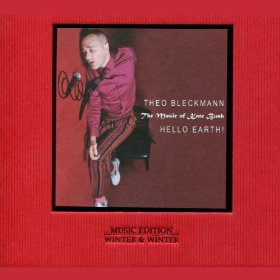
Just last week, I saw and heard vocalist Theo Bleckmann in concert with the John Hollenbeck Large Ensemble.  Bleckmann's new CD, "Hello Earth - The Music of Kate Bush" (Winter & Winter), is due for U.S. release on April 14.  Bleckmann, who not only sings but also plays toy piano and percussion, has been working on this project for several years with an ensemble that features Hollenbeck (drums, percussion, voice), Skúli Sverrisson (electric bass, voice), Henry Hey (piano, Fender Rhodes, electric harpsichord, voice) and Caleb Burhans (electric violin, electric guitar, voice). Ms. Bush first came to fame in her native Great Britain in 1978 and her eclectic style of songwriting, production and vocalizing soon drew comparisons to Peter Gabriel.  Like Gabriel, she is a sonic explorer and many of her songs tell stories (some of them quite strange.)  She does not tour and has only released 2 CDs since the beginning of the 21st Century.  Bleckmann's take on Ms. Bush is quite wondrous, his voice covering large swathes of aural and emotional territory ( a full review is coming).

In the meantime, Bleckmann and band appeared on WNYC-FM's "New Sounds" in April of 2010, performing 5 songs live (with snippets of the original pieces) and talking with host John Schaefer about why the vocalist took on the project.  Click on the link below to listen to the entire show, courtesy of WNYC.

Thursday, February 23, 2012

Firehouse 12 Spring Series + Buttonwood Jazz

The Firehouse 12 Spring 2012 Series has been announced and, as to be expected, the concerts are an eclectic bunch covering much territory in the world of creative music. Starting March 23 and running for 13 consecutive Fridays, the performance space, located at 45 Crown Street in New Haven, will present very interesting shows. Each concert has 2 sets, 8:30 and 10 p.m., each with a separate admission fee.


Up first is saxophonist Larry Ochs and his new project, Kihnoua. Ochs, the "O" in the ROVA Saxophone Quartet, will present music influenced and informed by Korean musical traditions.  Joining Ochs will be vocalist Dohee Lee (also a fine dancer and composer) plus the rhythm section of Trevor Dunn (bass) and Scott Amendola (drums, electronics). The group has 1 CD, "Unauthorized Caprices", released in 2009 on Not Two Records - the recording does not feature Dunn. The music is, as to be expected given Ochs' career in the avant-garde, experimental, challenging, and fascinating.

Week 2 (3/30)brings the Michael Musillami Trio + 4, a septet whose new Playscape Recording, "Mettle", is arguably the best CD the guitarist has ever released.    Joined by his rhythm section of past decade (bassist Joe Fonda and drummer George Schuller), Musillami adds the unique voices of Matt Moran (vibraphone), Russ Johnson (trumpet), Ned Rothenberg (alto sax, clarinet) and the always exciting Jeff Lederer (tenor sax, clarinet). The music he has created for this ensemble is exciting with a great breadth of melodies, harmonies and rhythmic variety.

On April 6 (Good Friday and the first night of Passover...sigh), Trio M will fill the performance space with the inspired interplay of Myra Melford (piano), Mark Dresser (bass) and the irrepressible Matt Wilson (drums).  Their debut recording, 2007's "Big Picture" (Cryptogrammophone), was a delightful collection of improvisations and compositions - they're "on the road" celebrating the release of "The Guest House" (ENJA) recorded at the Firehouse.  With 3 such fine musicians, this music will be wondrous.

Friday the 13th of April brings the Steve Lehman Trio to New Haven.  Lehman, a graduate of the fine music program of Wesleyan University, is a fine alto saxophonist and adventurous composer.  His new recording, "Dialect Fluorescent" (Pi Recordings), hits the streets on March 27 and features Matt Brewer (bass) and Damion Reid (drums).  For this concert, Chris Tordini will replace Brewer, no big problem because Tordini has worked with Lehman and Reid in the past.  Lehman's music is filled with melodic twists and great rhythmic drive while his solos often go in unexpected directions.

The rest of the schedule includes the duo of Mike DiRubbo (alto sax) and Larry Willis (piano) on April 20 followed the next week by the Noah Kaplan Quartet featuring guitarist Joe Morris.  Bassist Trevor Dunn (week #1) returns to New Haven as a member of saxophonist Darius Jones' Quartet on May 4 while trumpeter Russ Johnson (week #2) returns as a member of bassist Michael Bates's Acrobat, a  quintet that celebrates the music of Russian composer Dmitri Shostakovich. Guitarist/composer Mary Halvorson (pictured above left) celebrates the release of her new Firehouse 12 CD, "Bending Bridges" on May 18 (Ches Smith, week #1, is a member of the Wesleyan grad's Quintet.) Vibraphonist Tyler Blanton makes his Elm City debut on May 25 with a quartet that features former West Hartford resident Joel Frahm (saxophones) and the rhythm section of The Wee Trio, bassist Dan Loomis and drummer Jarid Schonig. Drummer Allison Miller, whose initial of her last name qualifies her to be a member of Trio M, brings her Boom Tic Boom to the room on June 1 - the ensemble includes pianist Myra Melford (week #3).

2 weeks after appearing with Tyler Blanton, Messrs. Frahm and Loomis return to the Firehouse on June 8 with the Ernesto Cervini Quartet.  Drummer/composer Cervini's 2011 release, "There" (Anzic Records), was one of my "Best-of-2011" and you'll hear why - this group, also including the fine pianist Adrean Farrugia, has so much fun playing together; their music is full of fine melodies and splendid interplay.

The final show of the series takes place on June 15 and features Ellery Eskelin - Trio New York.  The formidable tenor saxophonist, flanked by organist Gary Versace and drummer Gerald Cleaver, has created a fanciful and funky tribute to the classic organ trios so prevalent in jazz of the 1950s and 60s. 

Tickets for the entire series or specific shows can be purchased by going to firehouse12.com (they'll also answer any questions you might have). You can also call 203-785-0468. 

 Pianist/composer Laszlo Gardony returns to The Buttonwood Tree, 605 Main Street in Middletown, on Saturday March 3 for an 8 p.m. show.  He appeared at the intimate performance space last year in a duo setting with saxophonist Stan Strickland - this time, he brings his working Trio of drummer Yoron Israel (left) and bassist John Lockwood (right).  The 3 have been together for over a decade and have recorded 4 Cds, the latest 2011's "Signature Time", issued on Sunnyside Records (my review can be read here.) Gardony, born in Hungary and now a resident of the Boston, Massachusetts, area (he teaches on the faculty of his alma mater, Berklee School of Music) is a fine pianist whose prodigious technical facility is leavened by his fine sense of melody and love of rhythms.  To reserve your seats, call 860-347-4957 or go to www.buttonwood.org.  To find out more about Laszlo Gardony, go to www.lgjazz.com. 

Another great ensemble appears at The Buttonwood on March 10 with the return of the John Funkhouser Trio, another fun and funky group from the Boston area. 

Monday, February 20, 2012

3 Piano Trios

One of the joys of listening to pianist/composer Matthew Shipp is that one really does not know what to expect.  "Elastic Aspects" (Thirsty Ear) is the 4th recording by his Trio that features the fine bassist Michael Bisio and creative percussionist Whit Dickey.  Opening with bowed bass and what sounds like percussion and electronics, the piece, titled "Alternative Aspects", sounds like the overture - however, it is followed by "Aspects", a 27 second long piano statement.  The first actual Trio piece, "Psychic Counterpoint", has the feel of a Herbie Nichols composition with its jagged melody, tempo changes, and boppish bass line.  That is followed by "Frame Focus", a piano solo that is contemplative yet exploratory.  Furiously bowed bass and fiery percussion is dubbed "Flow Chart" while the aptly-titled "Mute Voice" is a rambling piano solo over the barely-heard rhythm section. Shipp moves inside the piano and manipulates the pedals for "Stage 10" while Dickey plays a modified shuffle beat and Bisio plays a nimble "walking" bass line.

"Elastic Aspects" is a good description of Matthew Shipp's approach to creating music.  First and second time through the program, there is a continuous sense of discovery (the duo tracks, the piano solos, the dynamic variations.)  As one returns again, it's easier to hear the musicians "conversing", easier to concentrate on Shipp's fascinating melodic and rhythmic playing, and it makes one wish he was in the audience watching this creative Trio makes this music come "alive."  For more information, go to www.thirstyear.com. 


The Venezuelan-born pianist Luis Perdomo spent a good part of the first decade of the 21st Century as an integral member of the bands led by tenor saxophonist Ravi Coltrane and alto saxophonist Miguel Zenon.  His work on the latter composer's 6 CDs has been exemplary, making the music sound fresh and exciting.  Perdomo has also issued 3 CDs as a leader, his most recent being 2008's "Focus Point" released on CrissCross.  This new recording, "Universal Mind" (RKM), came about at the suggestion of label head and bandleader Coltrane.  In the liner notes, Perdomo writes "A few years ago, Ravi Coltrane mentioned the idea of me playing with Jack (DeJohnette) and I said 'Hell yeah'".  It took a while for the pianist to work up the courage to write to the great drummer and 2012 Jazz Master but once they got together, DeJohnette was happy to be part of the project.  Drew Gress is the bassist and the results, recorded in August of 2009, are quite a treat. 

The program opens with a rousing reading of Joe Henderson's "Tetragon" - for those who think Perdomo only has Latin "chops", one can hear the influence of his mentor Sir Roland Hanna in the blues-soaked hard bop approach.  The rhythm section dances below as the pianist goes on joyful romp.  "Langnau" is an medium-tempo original with a handsome melody line that features fine solos by Gress and Perdomo while DeJohnette provides fine work beneath them.

Perdomo and DeJohnette create 2 spontaneous pieces, "Unified Path I and II", separated by another Trio romp.   The duo pieces allow the musicians the opportunity to explore different sounds, taking their time to allow the music to evolve.  "..Path I" has the feel of John Coltrane's "A Love Supreme" with the pianist creating a hypnotic feel with the full piano chords and repetitive lines while "..Path II" is "freer" and faster, both musicians pushing each other.

Among the other highlights is the joyful journey through DeJohnette's "Tin Can Alley", with its various twists-and-turns.  The composer really dances on this piece, his ecstatic "drum-dance" providing propulsion and also engaging in a fanciful 3-way conversation that brings the piece to an energetic close.  "Dance of the Elephants" is a lovely ballad from the pen of bassist Miriam Sullivan (also Perdomo's wife), a song that the Trio allows to emerge slowly. Again, the interaction of the 3 musicians alows the emotion of the song to be fully realized. The program comes to a close with the exciting Perdomo original, "Doppio", which flies forward on the thunderous drums and flying fingers of Gress.

"Universal Mind" is a bit long (73:25) but filled with great playing, several strong melodies and wonderful interplay.  This is music that feels so "alive" and deserves to be heard live.  As I write, Perdomo is about to perform a "CD Release" tour with bassist Hans Glawischnig and drummer Jhonathan Blake starting at New York City's Jazz Standard (2/23) before heading to Europe for a week.  For more information, go to www.luisperdomojazz.com.

 Adam Kromelow, a graduate of the Manhattan School of Music, studies with Jason Moran and Vijay Iyer.  His debut CD, rightly titled "Youngblood" (ZOHO), features his Trio of Jason Burger (drums) and Raviv Markovitz (bass) and is produced by Arturo O'Farrill (someone who knows a thing or two about the piano.) Kromelow is a powerful pianist, with impressive facility, and he likes to push hard on the faster pieces.  The CD opens with the first of 6 originals, "Black Mamba", and it's a "burner" from the get-go, save for the 2 short classical interludes and a quick bass solo.  The rhythmic attack abates a bit on "Mojo", with its quirky, Thelonious Monk-like, intro, that opens up into an impressionistic piano foray closing on a jaunty piano figure. The funky, playful, "Mr. Pokey" shows that they can do "dynamics" in an intelligent manner and Kromelow's playful piano work sets the mood for the slip-and-slide rhythms that Markovitz and Burger create.

The prettiest track is the straight-forward take of John Lennon's "Across The Universe";  Kromelow presents the melody without much embellishment while the shuffle-like rhythm reminds me of Fleetwood Mac instrumental "Albatross" from 1969.  The Trio brings up the intensity for the final pass through the chorus but fades out quietly.

They have fun with Monk's "Brilliant Corners", with a out-of-time introduction that finally breaks into a gallop and the pianist plays fragments of the melody line. Right before the end, they drop into the familiar in a medium-blues tempo then double-time the piece out.  Another inspired cover is Peter Gabriel's "Mercy Street" - the song starts slowly and quietly but, as the Trio moves through the verses, the intensity picks up until it reaches a fever pitch.  The bass and drums drop out as the piano plays a short coda.  The approach works so well, the Trio repeats it on, at least, half the cuts. For instance, they go in and out of "intense" mode on "Bushido", really ratcheting it up for the closing 90 seconds.  They really slam their way through the last 2 minutes of the final track,  "Upgrade." Chalk it up to youthful enthusiasm.

What does stand out is the lyrical quality of Adam Kromelow on the slower pieces as well as his rhythmic left hand work on most of the pieces.  As a composer, his tendency is to change tempos several times during the songs.  With the forceful work of the rhythm section, there are several instances where one hears the influence of The Bad Plus.  The 9 tracks come in at just under 44 minutes so there's no excess in this program.  Markovitz and Burger rarely solo; instead, the rhythm section concentrates on its interplay and supporting the pianist.

As a debut, "Youngblood" is full of enthusiasm and promise. There's much to enjoy as one digs into the program.  Casual jazz listeners will like the hard-rock drive of the bass and drums while piano trio fans will enjoy Adam Kromelow's way around the keyboard. Find out more by going to www.adamkromelow.com.