Thursday, June 2, 2011

The Drummer's Debut + The Father of the Drummer + The Pianist as Blogger

Drummer Adam Cruz, who has worked with many of the finest contemporary jazz artists (from Tom Harrell to Chris Potter to Charlie Hunter to his long stint with pianist Danilo Perez), is now 40 years old and just got around to issuing his first CD as a leader.  "Milestone" (Sunnyside Records) has been worth waiting for. With an all-star cast, including the afore-mentioned Potter (tenor sax), Edward Simon (piano, Fender Rhodes), Ben Street (bass), Steve Cardenas (electric guitar) as well as occasional appearances from Miguel Zenon ((alto saxophone on 4 tracks) and Steve Wilson (soprano saxophone), Cruz created 8 pieces that reflect his influences yet actually display his maturity as a player, arranger and composer.  It's a long program (just under 76 minutes) with 3 tracks over 10 minutes long and none under 6:55.  That writ, there is so much to enjoy in this music. The blend of Simon's keyboards with Cardenas' guitar, the active drumming which, at times, takes on a melodic feel, the fire of Chris Potter juxtaposed with the playfulness of Miguel Zenon (however, on the ballad "Resonance", both saxophonists are subdued and supportive), the solid support of Street and the classy contributions of Wilson (the way he winds his sound around Potter's on "Crepuscular" is mighty attractive), all adds up to great listening. Steve Cardenas takes several solos, flying high on "Outer Reaches" with Wilson's soprano adding handsome colors - then, Wilson's soaring solo over the active stick and snare drum work of Cruz takes the piece in a new direction. Cruz, like Eric Harland
 and Brian Blade, rarely play how you expect them to - that does not mean they are showing off but illustrating the music, pushing the music forward in exciting and, often, unique ways.
Highlights include the rhythmically exciting "Emjé" with fine solos from Simon (such great articulated lines) and Potter as well as the funky "The Gadfly" with long, exciting, solos from Cardenas and Wilson with Potter (very Wayne Shorter-like attack from the former).

"Milestone" is definitely worth your time, awash with intelligent melodies and fine solos.  The arrangements allow for longer solos so there are tracks where not everyone has his turn yet still contributes harmonies.  The work of the rhythm section is exemplary (you'd expect that from a drummer-led session) and very entertaining.  However, it's the creativity of the musicians and the confidence of Adam Cruz that shines throughout this program.  For more information, go to www.facebook.com/people/Adam-Cruz/100000201142156.


Every time I play "Free For All" (Tapestry Records), the new CD by saxophonist Jim Stranahan, a smile breaks out across my face.  Not because the Colorado resident and father of drummer Colin (my review of his new CD is here) is doing anything particularly "new" - no, it's because the music created by the little "big" band  exudes so much joy.  Besides the father and son, one hears the contributions of Pete Olstad (lead trumpet on 7 tracks, jazz trumpet on 1), Brian Chaley (jazz trumpet), Lucas Pino (tenor saxophone), Wade Sander (trombone), Glenn Zaleski (piano, electric piano) and Chris Smith (bass) with Mike Abbott (electric guitar on 2 tracks.)  The cuts range from thr Latin-flavored "Loco" that opens the CD to the be-bop fire of "I've Got No Rhythm in My Feet" to the smooth jazz/funk of "Habib's Groove." Then, there's the Crescent City jump blues of "Big Easy Bump"; Colin's drums make one want to get up and "strut" while Dad's soprano saxophone gaily dances atop the rhythm.  Zaleski's piano solo starts way down on the low notes than dances its way up leading to the funky trumpet spot.

While the playing is top-notch, a sameness creeps into the melody lines.  "Leaves Must Fall", a boppish tune based on "Autumn Leaves", has a similar melodic approach as  "I've Got No Rhythm.." and "Upside Down and All Around." The arrangements, uncredited, are smart and it certainly sounds like the band is having a great time.  Melodic issues aside, "Free For All" sounds really nice blasting out of the sound system.  For more information, go to www.caprirecords.com. 

Try out a cut from the CD by clicking on the link below (courtesy of Tapestry Records/Capri and IODA Promonet):
Loco (mp3)

 Pianist/composer George Colligan (pictured left) recently began to blog (August 2010) and, like fellow keyboard man Ethan Iverson (dothemath.typepad.com, has illustrated his talent as an in-depth interviewer. His most recent interview is with bassist Dwayne Burno and should be required reading for anyone wanting to be a jazz musician.  He also does a fine job at parsing solos and explaining how they work.  Colligan recently finished a European tour with Jack DeJohnette and he wrote several posts talking about what it means to be a touring creative musician (he also posted some fine photos.) Check out his writing at jazztruth.blogspot.com. 

Sunday, May 29, 2011

The Divine Ms. P + A Bone to Pick for the CD of the Week

With the release of her 3rd CD, "The Lost and Found" (ObliqSound), Gretchen Parlato has solidified her position as one of the most exciting new vocalists of the 21st Century.  Her whisper-quiet vocals not only emphasize the lyrics but also her ability to create emotion-filled and exciting wordless solos.  Listening to her interact with saxophonist Dayna Stephens on Wayne Shorter's "Juju" is exhilarating.  Also, she flexes her compositional muscles, writing or co-writing 10 of the 15 tracks on the new CD.  Once again, she displays her fluency with Portuguese on the lovely "Alo Alo" and her lovely duet with bassist/guitarist Alan Hampton on "Still" has bounce and sweetness.

Gretchen Parlato returns to New Haven and Firehouse 12 this Friday (June 3) to perform 2 shows, 8:30 and 10 p.m.  Both sets are sold out (no surprise) so call 203-785-0468 or email to info@firehouse12.com to get on the waiting list.  You might consider purchasing tickets for the final show of the season, the June 10th show with the Scott Colley Trio.  For more information, go to www.firehouse12.com. 

Download "Circling" courtesy of IODA Promonet and ObliqSound.
Circling (mp3)

 "End of the Tunnel" is the second Posi-Tone release for composer/trombonist David Gibson. It's also th second to feature his quartet of Julius Tolentino (alto saxophone), Jared Gold (organ, bass pedals), and Quincy Davis (drums).  The 9 tracks move from the "soul-funk" of Herbie Hancock's "Blind Man, Blind Man" to the Crusader's influenced "Wasabi."  Davis's drums snap and crackle on the latter, providing plenty of push for the soloists.  Tolentino stays away from cliche on his solos (no David Sanborn clone, he), rarely, if ever, overplaying - his solo on Gold's "Splat" is filled with creative twists-and-turns while the fire he displays on "The In-Whim" inspires Gold and David to really dig in.  On the same track, Gibson dials down the heat for the first few choruses before he, too, kicks it in. 

But the emphasis is on the soulful side on the majority of the tracks.  Gibson steps up on Gold's "Preachin'", a tune drenched in a gospel feel, with a wonderfully understated solo while the composer grooves beneath him and Davis hits hard. One can imagine the "amen corner" shouting "hallelujah" during the excellent organ solo, egged on by the Davis's righteous drumming.  "Sunday Morning", too, has that gospel but filtered through the Crusaders and Joe Zawinul's "Mercy, Mercy, Mercy."  The quartet plays off the "in-the-pocket" drumming and full organ chords, especially in sweet trombone solo. The CD closes with a driving take of Jackie McLean's "Blue Rondo" with its cleanly executed boppish theme. Gibson and Tolentino trade choruses for the first 75% of the tune before Davis rocks and socks it to the reiteration of theme and a quick out.

"End of the Tunnel" won't challenge the listener with multi-sectioned compositions or "free" playing but seduce one with the crisp drum work, the rolling organ lines, and the fine interplay and solo work of all involved.  For more information, go to www.jazzbone.org. 

Stay tuned for a download from the CD.

Saturday, May 28, 2011

Hey Ms. or Mr. Bass Person

Milo Songs - Anne Mette Iversen Quartet (Brooklyn Jazz Underground Records) - The first impression of this music is that it reminds me of Andrew Hill.  Ms. Iversen, a native of Denmark, based this music on a melody her son Milo sang over and over again.  The composer/bassist mother heard something special in the son's song and built a musical narrative from it for Quartet.  Joining the bassist is John Ellis (tenor saxophone, clarinet), Otis Brown III (drums, cymbals) and Danny Grissett (piano). This is the 4th recording for this ensemble and one can hear that, happily, familiarity fosters creativity.

Where do I hear Mr. Hill in this music?  It's in the way the bassist is the "rhythm" while the drummer "solos" beneath the tenor sax and in the way the songs seem to move out from the melody but (nearly) always stay true to the harmonies.  Listen to the wonderfully episodic "Drum Dreams" where, in the opening moments, all 4 have melodic roles. The bass line moves alongside the clarinet as the piano accentuates the theme played by the drum. Grissett takes the first solo, an easily unfolding series of short phrases punctuated by longer runs. Brown and Ms Iversen create a slow yet steady pace and then the drum solo building off the final phrases of piano. The pace picks up for "Milo's Brother" yet the rambunctious rhythm is paired with a strong melody. Ellis's tenor solo moves quickly over the poly-rhythmic work of Brown but pay attention to Grissett's lines. He refers to the opening melody, reacts to the drummer's action and does not so much fill out the sound as create alternate colors.

There is little clutter in this music, it does not shout; instead, it has a playful quality (for instance, "The Storm" opens with the tenor sax and piano conversing, not arguing, leading the bass and drums
into the rest of the song) that allows the musicians to be themselves inside Ms. Iversen's "musical house."  Andrew Hill often created "thorny" music that challenged both musician and listener but,throughout his life, his music seemed to both expand and contract, to reflect his experiences yet always be searching for something beyond the physical borders of the composition.  Anne Mette Iversen's also has that quality, with structures that expand and contract, melodies that do not imitate the style of Hill but continually move forward.  The musicians "talk" to each other and us through the music, making "Milo Songs" a truly fine experience. To find out more, go to www.annemetteiversen.com.
Click on the link below and you'll hear an example of this excellent music (courtesy of BJU Records and IODA Promonet.)
The Storm (mp3)


Hues of a Different Blue - Rufus Reid & Out Front (Motema Music) - Bassist/composer Reid's "blues" are definitely of a "different" hue that one might expect.  The smile on the cover gives it all away - this is joyful music, not gospel, but jazz that swings and sings, at times makes one wiggle in his chair.  While the Trio - pianist Steve Allee and drummer Duduka Da Fonseca - are dubbed "Out Front", there in no doubt that this is Reid's band.  Unless you have the tinniest speakers, you cannot help but hear the bass parts.  The low notes "boom", the overtones stand out, and his majestic solos can be heard on many of the 14 tracks. There are fine guest appearances by tenor saxophonist JD Allen (3 tracks), trumpeter and flugelhorn player Freddie Hendrix (3 tracks), guitarist/vocalist Toninho Horta (3 tracks) and alto saxophonist Bobby Watson (2 tracks).

Highlights include Reid's "When She Smiles Upon Your Face", a sweet samba on which all the participants appear.  Allen and Watson take consecutive solos; both acquit themselves well.  Horta's acoustic guitar stands out on this cut and on the following track, his own piece, "Francisca".  It's just Horta and Reid working together, the full-toned bass dancing around the nylon-string guitar and Horta's soft vocals.  Da Fonseca snappy drum work ushers in the quaintly-titled "Lower Burellian Bicycle Loop", composed by saxophonist Don Aliquo.  Allen shines here, riding the waves of percussion and the handsome piano accompaniment.  Reid's "walking" lines truly propel the piece forward.  The bassist and Watson play "These Foolish Things", the second duo track on the program; they complement each other well, the alto sax taking the melody up as the bass fills out the bottom.  "Memories of You" is a tour-de-force for Reid, his finely-articulated lines setting the sonic table for Allee's sympathetic piano work.  The long bass solo holds one's attention because Reid thinks melody before technical prowess.

There's more to discover, from Hendrix's richly woven flugelhorn on "The Eloquent One" (a Reid composition dedicated to the late Hank Jones) to the hard driving title track that close the disk.  Hendrix really shines on his forceful solo while Allen pushes against the beat and Watson rolls with the punchy rhythms.  And, Allee is so good every time he touches the keyboard one might overlook his work, but don't - pay attention.

As compared to the Anne Mette Iversen Cd above, "Hues..." does not have the thematic presence or the gravitas (the "weight" does not mean it's too serious.)  Still, the interaction of the musicians, the excellence of the soloists and Reid's personality shines through.  To find out more, go to rufusreid.com. 

Wednesday, May 25, 2011

Interviews, Musicians and Writers

May I recommend for your edification over the Holiday weekend an Internet journey to several websites.

If you have never perused the offerings at dothemath.typepad.com, the home of pianist/journalist Ethan Iverson (pictured left), do so now. There's a 4-part interview and discussion with and about Henry Threadgill that is worth spending the time to read. No one composes and orchestrates like Threadgill and he's been at it over 4 decades. The conversation between he and Iverson has lots of insights into the music, into the history of American music (you might call it jazz but Threadgill would not) and into the influences that shaped Threadgill.  Just follow this link and get cracking - dothemath.typepad.com/dtm/interview-with-henry-threadgill-1-.html.

And, for a taste of The Bad Plus (the trio with Iverson, bassist Reid Anderson and drummer Dave King) in concert with the HR Big Band, with arrangements by Jim McNeely, go to www.hr-online.de/website/rubriken/kultur/index.jsp?rubrik=2023.  The music is quite impressive, sound and picture quality very good, and well worth another chunk of your time.

The jovial drummer/composer/arranger John Hollenbeck is the subject of the cover interview at NewMusicBox, the web magazine of The American Music Center. He chats about the Claudia Quintet (with videos), about his Large Ensemble and about how he approaches composing and playing.  It's not as long as the Threadgill piece but very informative.  Here's the link - www.newmusicbox.org/article.nmbx?id=6906. 

If you want investigate more about creative music, go to - A Blog Supreme at www.npr.org/blogs/ablogsupreme/ - now that "The Treme" is into season 2, ABS author Patrick Jarenwattananon and Josh Jackson (he of The Checkout on WBGO-FM) are breaking down each episode. 


Also, for a viewpoint across the Northern border, Peter Hum of The Ottawa Citizen continues to be one of the more readable writers about the contemporary music scene.  Not only does write about jazzers from the United States but he also does a wonderful job of giving exposure to many Canadian artists.  For example, his column about pianist/composer David Braid led me to download his 2 CDs from emusic.com - click on the name to find out more.  To check out Mr. Hum, go to communities.canada.com/ottawacitizen/blogs/jazzblog/default.aspx and dig in. 

"World" Music

For a fairly young man, drummer-composer Brian Adler has had a busy life.  He's studied with such modern "masters" as Billy Hart, John Hollenbeck, Billy Higgins, Bob Moses, Joe Morris and Cecil McBee as well as sharing the stage with Pablo Aslan, Ran Blake, Frank Carlberg, Marilyn Crispell, Mark Helias, Erik Lawrence, Kate McGarry, Ben Monder, and Ray Vega.  He's the leader of The Prana Trio, is a member of bassist Aslan's Trio and several other working ensembles performing on stages throughout the world.  Adler has his own  company, Circavison Productions, through which he has released a half dozen CDs (including 3 by The Prana Trio) and he teaches.

This week (May 24) sees the release of the "Phase 1" of the Helium Music Project.  Essentially what Adler is doing is creating a coterie of collaborators throughout the world, musicians and vocalists he can work with when he is "on the road."  You may have read of musicians who travel sans rhythm section and hire a local band/rhythm section for each gig. Through the "magic" of modern technology, Adler can compose, record, and edit a piece of music with anyone, anywhere, and any time.  You may be thinking "what's the difference between hiring a local rhythm section and creating a song  in this piecemeal fashion?"  Through the Helium Music Project, Brian Adler has turned the world into his playground in that he already has a working relationship with his collaborators.

The "proof", as they have said, "of the pudding is in the eating." "Phase 1" is 2 songs, the first titled "Lazy River" and featuring Kate McGarry (pictured left,vocals), Peter Ehwald (tenor saxophone), Benedikt Jahnel (piano), Dave Eggar (cello) and Adler on drums.  A poem by Federico Garcia Lorca set to music by Adler and singer/songwriter Evan McCullough, recording took place in Berlin, Germany (Ehwald and Jahnel), North Carolina and New York City.  Building out from the vocal and Egger's singing cello lines, the sound is seamless, the emotions real and the results rewarding.  Listening to Ehwald solo over the spare piano chords and shimmering cymbal work, one cannot tell the musicians are separated by thousands of miles.  For me, this speaks to the power of friendship, of maturity (both personal and musical) and trust.  Adler has worked with each of his cohorts on many occasions and the "proof" is this exquisite 7 minutes of music.

Track 2 is an attractive reading of Hermeto Pascoal's "Andie" (pronounced "ahn-day) performed by Adler (on trap set, midi drums and tablas), Nicky Schrire (vocals, pictured left), Nick Kadjaski (alto saxophone), Sean Moran (nylon-string guitar) and Mark Lau (bass, effects, production).  Ms. Schrire is a South African (by way of London, England) now living in New York City while Lau is an Australian now based in the city (where the piece was recorded.)   Built upon the bouncing bass line and the percussive acoustic guitar, the alluring rhythm draws the listener in and, like the best Brazilian music, does so making one want to move, to dance.  The way the vocalist interacts with the saxophonist and guitarist, the active bass lines, the tabla bubbling near the surface, all have a mesmerizing effect on the listener.

Brian Adler says future "phases" will feature guitarist Ben Monder, pianist Marilyn Crispell, fellow percussionist Daniel "Pipi" Piazzolla, vocalist Heather Masse, pianist Kenny Werner, trumpeter Matt Holman and many others. In fact, considering all the connections Adler has already made in the music "world" (and the ones he will make in the future), the Helium Project promises many years of fine music.

To find out more, hear the music (and to find out how you can be part of the "Project"), go to www.heliummusicproject.

Monday, May 23, 2011

Firehouse 12 Brings on the Bass + CD Picks

Firehouse 12, 45 Crown Street in New Haven, moves into its final 3 Fridays (deep sigh...) and 2 of the concerts feature groups led by bassists.  This Friday (May 27), Ben Wolfe returns to the performance space as a leader for the first time since 2008 (the bassist has been a sideman 5 times) with a quartet that features Joe Saylor (drums), the fine young saxophonist Marcus Strickland and Hartford native Josh Evans on trumpet. Wolfe has worked with the Lincoln Center Jazz Orchestra, Branford Marsalis, Diana Krall, Harry Connick, Jr. and scores more. He's issued 6 CDs as a leader, the latest being "Live at Smalls", issued earlier this year (my review is here.)

The only holdover from that CD is Strickland but, knowing Wolfe's creativity, this band should have many challenging and exciting pieces in its repertoire.  For ticket information, call 203-785-0468 or go to www.firehouse12.com. 

Here's a taste of Ben Wolfe's music, this track from his 2008 MaxJazz release, "No Strangers Here."  The track features Marcus Strickland, Terell Stafford (trumpet), Luis Perdomo (piano) and Gregory Hutchinson (drums).
The Minnick Rule (mp3)

For those of us who grew up in the late 1950s and early 60s and listened to AM radio, we probably heard the somewhat strange music of Martin Denny.  In the midst of "doo-wop", the rise of Motown and Elvis, Denny's music, much of it influenced by his move to Hawaii in 1955, was based around the marimba, percussion and the instruments he collected from places around the world.  Denny had several Top 20 singles, including "Quiet Village", "A Taste of Honey" and "Ebb Tide."

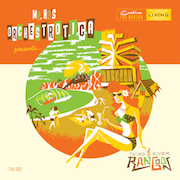
Here in 2011, we have Mr. Ho's Orchestrotica, a quartet based in the Boston, Massachusetts area.  The brainchild of percussionist Brian O'Neill (who plays many different instruments including vibraphone, bohdran, pandiero and bird calls plus others), the band's debut 2010 CD, "The Unforgettable Sounds of Esquivel", featured a 22-piece band dedicated to the music of composer/arranger Juan Garcia Esquivel (who created a fascinating body of work in Hollywood in the late 1950s.)

For Mr Ho's second CD, O'Neill returns to his quartet formation for "Third River Rangoon" (Tiki Records).  Despite the "retro" cover, the music takes many interesting paths in its 44 minute journey.  Featuring Geni Skendo (bass flute, c-flute), Noriko Terada (percussion, marimba, vibraphone) and Jason Davis (acoustic bass) as well as guest Tev Stevig (oud on 2 tracks), the 11 instrumentals have a calming effect on one's system.  Stevig's oud enlivens the band's version of Tchaikovsky's "Arab Dance" and the O'Neill original "Autumn Digging Dance" - the two play together in soprano Julia Madeson's Aljashu, a band dedicated the music of the Sephardic Jews from Spain and the influence of that music can be clearly heard on the tracks that feature the oud.  There are also tracks composed by Cal Tjader ("Colorado Waltz") and another king of "exotica", Milt Raskin ("Maika") while the rest of the program is original material.  O'Neill and his band do not treat this music as an oddity or "museum piece", no tongue-in-cheek performances; really, this is a pleasing collection that has fine melodies, short yet good solos, and fills the room with its expansive sound. Skendo's flute flutters and soars above the full-toned bass lines and soft percussion on "Thor's Arrival" and displays a Brazilian influence on the Tjader piece.  The rhythm section does yeoman's work, whether it's Davis's bowed bass beneath the oud on "Arab Dance" or Ms. Terada's shakers and cymbal work on "Terre Exotique." The rich bass counterpoint on "Moai Thief" and the hushed yet propulsive percussion on the title track captures the ear without taking away from the O'Neill or Shendo's solos.

Mr. Ho's Orchestrotica, unlike Sex Mob's hard-edged take on Martin Denny titled "Sexotica" (released in 2006), takes its "exotica" seriously but not to the point of  humorless reenactments or straight satire. The music is "cool" but not cliched, fragrant with the aural perfume of the South Seas and Hawaii.  And, it's fun to listen to.
For more information, go to orchestrotica.com. 

Below is a link to the upcoming CD release, "Mulberry Street" from trombonist/composer Jeff Fairbanks' Project Hansori to be issued in June on BJU Records.   When I first played the CD, the music, a heady blend of Korean and Chinese folk music with big band jazz, played by a 22-piece ensemble just knocked me out.  Produced by Darcy James Argue (who  knows a thing or 2 about large ensembles) and featuring several members of his Secret Society as well as the fine young bassist Linda Oh and guest baritone saxophonist Fred Ho, this wonderful coalescence of traditions and imaginative arrangements is worth your attention. Thanks to BJU and IODA Promonet for the generous taste below - a full review will be posted in several weeks.  In the meantime, go to www.fairbanksmusic.com and follow the links to Project Hansori. 

Mulberry StreetJeff Fairbanks' Project Hansori
"San Ma Da" (mp3)
from "Mulberry Street"
(Brooklyn Jazz Underground Records)

More On This Album

Sunday, May 22, 2011

Intimate, Creative and, often, Calming

Composer-pianist Steve Hudson is a new name to me but, once I espied the lineup on "Galactic Diamonds", I became even more intrigued.  Cellist/vocalist Jody Redhage, violinist Zach Brock and percussionist Martin Urbach make up Hudson's Chamber Ensemble who join himfor a program that blends numerous styles of music into an hour of sweet melodies, subtle harmonies, understated yet powerful rhythms and impressive interactions. Hudson, who has worked with improvisor/composers such as Steven Bernstein, James Zollar, Clare Daly and Marcus Rojas, also co-leads the Outer Bridge Ensemble with bassist Mark Dejeong. 

Much of this program is on the quieter side but packs quite an emotional punch. There's the bluesy "Tune With Tango" that opens the CD on a sly yet stylish way ( I hear a touch of Jelly Roll Morton in some of the piano lines while Brock shines on his dramatic solo. "Speak Out" rides in on a pizzicato cello line while Hudson's left hand lays down a solid and spunky rhythm. The piano solo builds off Ms. Redhage's rocking lines, twisting, turning and dancing over Urbach's active hand percussion. For the lovely cello solo, Hudson takes over the the cellist's bass lines.  There's a sense of wistful longing on "Song for John Lennon" with its lengthy piano solo - Brock adds his voice 4 minutes into the 7 minute piece and the others join 30 seconds later.  The longing is replaced for a moment by celebration before the piano finishes the piece alone again.  The title track really bounces, from Urbach's hard-edged drumming to Ms Redhage's furious bowing to the full-voiced melody line (and there are several quieter moments, one with a lovely wordless vocal line from the cellist. Hudson trots out an electric piano for Headhunters-inspired "Funky Hobbit."  Half the fun is hearing Urbach laying down the wonderfully funky beat, Brock's driving solo and Ms Redhage's Jimi Hendrix/Thurston Moore spot that closes with a duel between the quiet pizzicato and more furious bowing. A bit more tango enters into the closing track, "Mingus Moon", a piece with much dynamic variation and tension. There is also a very quiet piano solo, soaked in blues that slowly rises in volume as the band hits a bit harder and Hudson takes in their energy, pushing the piece back up in intensity.

"Galactic Diamonds" sparkles with wit and musicality, music for mature listeners yet with quite a bit of humor and happiness in the mix.  Hard to avoid calling this release a "gem" but it is really an excellent offering from Steve Hudson and associates.  To find out more, go to stevehudsonmusic.com.

Ms. Redhage's cello and voice also show up on "Streetcar Journey" (Married Fox Records), the latest recording from pianist Chie Sato Roden & Fire in July.  The project began when Ms Roden discovered composer Alex North's suite from his score for the 1951 film version of Tennessee Williams' "A Streetcar Named Desire."The suite only lasts 30 minutes so, to fill out the program, Ms Roden enlisted Ms Redhage and her husband Alan Ferber (trombonist) to create new pieces inspired by "Streetcar."  The results are mighty impressive, songs replete with rich melody lines and instrumental work that mine classical, popular and jazz musics.   Joining the creative triumvirate (and comprising the Fire in July ensemble) are Ken Thomson (clarinet, bass clarinet), Tim Collins (vibraphone), Fred Kennedy (drums, percussion) and Dan Tepfer (piano on Ms Redhage's "Sister, My Sister.") Ms. Redhage's vocals may remind some of the style of singing one hears in a Stephen Sondheim musical, not quite opera or jazz or, even, "popular" but bordering on poetic or, perhaps, "art music." However you wish to describe it, they add weight to the program allowing a glimpse into the lives of Williams' characters.

Thomson's reeds work well alongside the full tones of the trombone and the rich cello.  Kennedy is a sympathetic player whose colors are essential to the music as is the work of Collins.  Roden is a full-voiced pianist whose knowledge of the play and movie imbue the music with gravitas but not to the point of dullness. The solo pieces, all arranged by North, displays the influence of New Orleans music (the play and movie are set in the Crescent City) with a feel of Louis Moreau Gottschalk. One can hear the dramatic influence in the "raggy" bass lines of "Mania" as well as in the formal melody and harmony of "Soliloquoy - Redemption."  Ferber's "North Rampart" closes the CD, a lovely ensemble piece (no piano or drums) that highlights the lovely sounds of Thomson's clarinet (very little vibrato), the darker yet no less handsome trombone (especially on the warm melody), the soft, pulsating vibes (sweet blues lick that takes the tune out) and the smart cello counterpoint.

Chie Sato Roden & Fire in July are bringing the work of Alex North to a 21st-Century audience in a way that not only pays great respect but, along with the original works of Jody Redhage and Alan Ferber, also give Tennessee Williams' "A Streetcar Named Desire" a new set of viable musical interpretations. For more information, go to www.chiesatoroden.com.

"The Stream of Pearls Project: Inspired by Water" is the work of Massachusetts-based composer/pianist Claire Ritter and her 10th to be issued on Zoning Recordings. The pieces are inspired by and dedicated to different bodies of water, from the Charles River in Boston to the waterways of the 1000 Islands in both New York state and Canada to the Outer Banks/Ocracoke Island of North Carolina.  Charming, often beautiful,  sometimes lively, other times hushed, honest music that conveys the peace one can feel in the presence of nature.  True, we all know that water can be damaging, harsh and unyielding but, in Ms. Ritter's music, water is spirit, creativity and ever-changing. Here, the music reflects the composer's influences of jazz, Latin music, 20th Century classical music, and more. This is a CD for a cool summer's evening or late winter night (to remind one of the warmth of spring) and not for analyzing for its jazz pedigree or who influenced which soloist. 
Joining the pianist on various tracks are Ashima Scripp (cello), Toni Naples and Rick Hansen (accordions), Richie Stearns (banjo), Jon Metzger (vibraphone) and Takaaki Masuko (drums, percussion).  18 tracks in under 48 minutes and there are moments one wishes the song was longer  (because the groove is sweet or the melody attractive) but listeners who like to get lost in reveries will find much to like in these "streams." To find out more about Claire Ritter (and her work with Dave Holland, Ran Blake, Steve Swallow and others), go to www.claireritter.com.