Friday, March 25, 2022

Spring Brings Joyous Music


Trombonist, composer, band(s)leader, and educator Ryan Keberle is the very model of a 21st Century musician.  His trombone playing feels at home in Latin music ensembles, alongside contemporary songwriters such as Sufjan Stevens, leading his quintet Catharsis, or in ensembles led by Dave Douglas.  It's no surprise that on a trip to Brazil in late 2017 that he would hook up with a fine trio of local musicians; even better, he returned six months later and recorded with these musicians. 

The results can be heard on the exciting and expansive "Sonhos Da Esquina" (Alternate Side Records).  Credited to Ryan Keberle's Collectiv do Brasil, the trombonist and the trio––Felipe Silviera (piano), Thiago Alves (bass), and Paulinho Vicente (drums)––examine three compositions from Milton Nascimento, two from Toninho Horta (a contemporary of Nascimento), and three by Keberle.  One can hear the influences of Brazilian MPB, of Wayne Shorter's 1975 recording "Native Dancer", and hints of Pat Metheny's explorations into World Music, especially in the movement of the rhythm section.  Even so, pieces such as "Clube Da Esquina 2" and "Aqui, Oh!" move in ways that you can hear their origins. The latter tune, originally composed by Horta for Nascimento (1969), takes off from the beautifully expressed original melody (in rubato) into a lovely samba rhythm. Both Keberle and Silviera take fine solos that handsomely swing over the activity of the rhythm section. 

Several of the pieces come from Nascimento's self-titled second album such as the afore-mentioned "Aqui, Oh!" as well as the lovely ballad "Tarde" (words by Nascimento, music by Márcio Borges). The latter song sounds to this listener like it could have been composed by Duke Ellington or Billy Strayhorn––the trombonist and pianist create emotionally strong solos.  "Clube Da Esquina 2" is the title track of a 1972 double album Nascimento made with singer-songwriter-guitarist Lô Borges that many consider a landmark MPB recording for its variety and myriad styles.  The softer ballad opens with a bass solo that introduces the main melody with Alves plays in unison with Keberle.  The piece gains in power as it moves forward but never loses its melodic aim.

The album closes with Horta's "Francisca" which Nascimento recorded for his 1976 album "Milton". It, too, is a ballad (at least, for the first 2/3rds of the tune), also quite emotional; this version features excellent melodic and contrapuntal playing from bassist Alves plus he creates a splendid solo. That's followed by an appropriately mellow piano.  Note how the tempo picks up as Silviera is playing so that when Keberle takes off on his solo, the rhythm is quite powerful.

"Sonhos Da Esquina" ("Corner Songs") is a delightful journey into Brazil with Ryan Keberle's Collectiv Do Brasil.  Thoughtful, passionate, and melodic music that reaches deep into your soul. Listen closely.

For more information, go to http://ryankeberle.com.  To hear more and to purchase the album, go to  https://ryankeberle.bandcamp.com/album/sonhos-da-esquina.

Hear the Milton Nascimento-penned opening track:


Two decades into his professional career, pianist, composer, arranger, and bandleader Manuel Valera is hitting his stride. His 2020 release "Jose Marti En Nuevo York", was his first big band album as well as his debut on Greenleaf Music.  That album combined poetry, politics, folklore, and a splendid original score.  As you can see from the personnel listed below, the 20-member plus vocalist ensemble dubbed the New Cuban Express Big Band is filled with A-list musicians from New York City–the blend of Jimmy Macbride and Samuel Torres on drums and percussion is nothing short of magnificent.

"Distancia" is the big band's second album. Although there is no "theme" that unites the program, the eight Valera compositions all stand out. Whether it's strong construction of the compositions, the fiery rhythms, the excellent section writing, or the fine solos, this music should grab your attention from the get-go and not let go.  The opening track, "Expectativas", is the title track of the New Cuban Express's 2013 release (its second)––here, like there, the band jumps out with the melody shared by the brass and reeds (the lead bounces back and forth. The leader's piano keeps the music on an even keel and kudos to bassist Hamish Smith for his free-flowing lines built off the piano chords. The lush melody and harmony lines of "Gemini" really sing yet the rhythms remain exciting.  There are several splendid solos including one from trumpeter Stuart Mack plus the baritone sax spot for Andrew Gutauskas and the leader's jaunt over the drums, percussion, and bass.

Camilla Meza joins the band for "From Afar", her wordless vocal supported by the reeds and guitar with the many colors of the brass. Valera layers the reeds and the brass behind the voice then steps away for a long and excellent solo from trumpeter Michael Rodriguez.  When she returns, her voice is joined by the saxophones while the trumpets respond. Ms. Meza joins the the alto sax of Remy LeBouef and Valera's roller-coaster piano figures to lead the band into the medium-tempo "Pathways".  Moments later, it's the flutes with the voice, then the muted trumpets, then the sections push the entire ensemble to the solo section with contributions from Jeremy Powell (tenor saxophone), bassist Stuart, and drummer Macbride.  

In the long run, it's the melodies and performances that will bring you back to "Distancia". The title track (listen below) has a lovely and emotional melodies that touches the heart. The stunning soprano sax solo (Charles Pillow), the powerful trombone work (Mike Fahie), the lovely wordless vocal from soprano Bogna Kicińska, and the gentle rolling rhythms lull one into a peaceful space. 

The album closes with "Remembered" but instead of the song being an elegy, the piece leaps in on the guitar of Alex Goodman plus the snap and crackle of the percussion. The middle of the piece opens for strong solos from trombonist Andy Clausen and trumpeter David Smith before the entire band dances towards the finish line.  Run don't walk to grab "Distancias", easily one of the finest large ensemble albums you'll hear this year. The New Cuban Express Big Band shines throughout thanks to the great music and arrangements of its leader Manuel Valera––kudos all around!!

To hear more and to purchase the album, go to https://manuel-valera.bandcamp.com/album/distancia

Hear the title track:


Tracks:

1) - Expectativas
2) - Gemini
3) - From Afar
4) - Pathways
5) - From the Ashes
6) - Impressionistic Romance
7) - Distancia
8) - Remembered

Personnel:

VOICE
Camila Meza, voice (3, 4)
Bogna Kicińska, voice (7)

TRUMPETS
Brian Pareschi (lead)
Michael Rodriguez (3, 5, 6, 8)
Stuart Mack (on all except 5 & 8)
David Smith
Alex Norris (on all except 3 & 6)

SAXES
Michael Thomas, alto sax, soprano sax & flute
Roman Filiu, alto sax & flute (3, 5, 6, 8)
Remy Le Boeuf, alto sax & flute (1, 2, 4, 7)
Joel Frahm, tenor saxophone (3, 5, 6, 8)
Jeremy Powell, tenor saxophone, clarinet (1, 2, 4, 7)
Andrew Gutauskas, baritone saxophone & bass clarinet

TROMBONES
Matt Macdonald (lead)
John Yao (3, 5, 6, 8)
Mike Fahie (1, 2, 4, 7)
Andy Clausen (3, 5, 6, 8)
Sam Blakeslee (1, 2, 4, 7)
Jeff Nelson, bass trombone

RHYTHM SECTION
Manuel Valera, piano
Alex Goodman, guitar
Ricky Rodriguez, bass (3, 5, 6, 8)
Hamish Smith, bass (1, 2, 4, 7)
Jimmy Macbride, drums
Samuel Torres, percussion

Saturday, March 19, 2022

Editions for Spring 2022 (Part One)

Keyboard player, composer, and photographer Dave Stapleton originally started Edition Records in 2008 to release his albums (leader of the ensemble Slowly Rolling Camera) and recordings by friends––since 2008, the label has issued albums by Dave Holland, Chris Potter, Lionel Loueke, Gretchen Parlato and Jeff Ballard (among others) while nurturing younger artists such as Fergus McCreadie (see below), Daniel Herskedal, and Laura Jurd.  Since Stapleton is a artist, he does not demand that his roster conform to any particular style and sound; therefore, the label is filled with many different approaches to Creative Music.  

Todd Rosenberg Photography
Trumpeter and composer Marquis Hill is a native of Chicago, IL. Born on the city's South Side in 1987, he started his musical education at a young age playing drums but switched to trumpet in the sixth grade. During college and graduate school, Hill played in jam sessions along Chicago jazz greats Ernest Dawkins, Von Freeman, and Fred Anderson going on to play with the Chicago Jazz Orchestra. He won the Thelonious Monk Trumpet Competition in 2010 which led to a contract with Concord Jazz and the release of "New Gospel" in 2011.

Since then, he's released four more albums and a series of fusion albums on his Black Unlimited Music Group label.  His latest album, "New Gospel Revisited", is his debut in Edition Records and looks back on his debut album, re-recording the record's tunes with a different lineup.  Recorded in December of 2019 at Constellation, a fascinating music venue in his hometown, the 13-track program features Hill along with Walter Smith III (tenor saxophone), James Francies (piano), Joel Ross (vibraphone), Harish Raghavan (acoustic bass), and Kendrick Scott (drums).  Within the first five minutes, one can tell that this band is "on".  Although Hill is the leader and these are his compositions, he is very generous with the solo space. Four of the pieces "stretch out" to over nine minutes yet the cohesiveness of this band, the exciting solos, and the expressive work of the rhythm section keeps one glued to the speakers.

Photo: Orel Chollette
There are moments that the music will remind the listener of classic Blue Note Recordings of the 1960s. There is the feel of Herbie Hancock and Joe Henderson on the title track. Notice the interaction of piano, vibes, bass, and drums on the opening of "Law and Order" and then into the melody––when Hill launches his intense solo, one hears a tinge of Freddie Hubbard. What makes this music timeless is that each musician gives his all, digging deeply into the music, filling a song such as "Autumn" with great emotion.  Francies' piano flashes behind Hill's muted trumpet solo or how both the bassist and drummer create a bouncy rhythm without it being annoying.  Rhagavan's funky bass line leads the band in on "Thump", a delightful slice of jazz blended with soul music.  The soloists build their personal statements off that bass line, especially Ross followed by Francies who gets a bit frisky pushing the rhythm section to play with the tempo.  

Photo: Shervin Lainez
Francies (pictured left) gets the last track, "Farewell", to himself, one of five shorter tracks that spotlights each member of Hill's Blacktet (the leader does not have one). Unlike the other pieces, the wide-ranging piano solo does not lead into another but feels like a summing-up of an album that looks back and looks forward at the same time.  It's a piano take on "Goodbye Fred" from the original album; Francies plays with the melody and his responses result in a rush of notes, double-time, and a playful if a bit unfinished finish.

"New Gospel Revisited" is a sweet recording. Much of the music is clear and articulate, the musicians play with excitement making the music jump out at the listener. This is good music, a second starting point from which Marquis Hill move forward with creativity.

For more information, go to www.marquishill.com.  To hear more and to purchase the album, go to https://marquishill.bandcamp.com/album/new-gospel-revisited

Hear "The Thump:


Photo: Dave Stapleton
The Glasgow, Scotland-based pianist and composer
Fergus McCreadie is 24 years old and has been a force on the the United Kingdom jazz scene since he was in his mid-teens.  He played in the Tommy Smith Jazz Orchestra, the National Youth Jazz Orchestra, has toured and/or recorded with drummer Graham Costello's Strata, singer-songwriter Luca Manning, saxophonist Matt Carmichael's Quartet, and the 11-member Corto.Alto. While studying at the Royal Conservatoire of Scotland, the pianist formed a trio in 2016 with bassist David Bowden and drummer Stephen Henderson: they recorded and self-released their first album, "Turas", in 2018. The album received much critical acclaim and a number of awards in Scotland. Besides introducing the rest of the world to an amazing pianist and composer, the Trio was soon signed to Edition Records.   

The Trio's Edition debut, "Cairn", was issued in late January 2021. Perhaps it was because of the ongoing pandemic or that the "vibe"of the music was so positive, the recording garnered scores of positive reviews and, like its predecessor, earned its share of awards.  The influence of the band members' native home, in particular, the woods, mountains, and valleys seeped into the music.  14 months after its release comes "Forest Floor": the trio is intact, the Scottish folk melodies shine through nearly every song, and the emotional content is even deeper and more impressive. That written, the opening "Law Hill" bursts out of the gate like a race horse.  McCreadie's fingers fly over the piano and, as the music moves forward, Henderson is right there with him while Bowden keeps the center throbbing and the foundation solid.  There are moments that are reminiscent of Keith Jarrett's "The Windup"––one hear it the stop-and-start rhythm patterns as well as the powerful forward motion. "Landslide" roils forward on the rollicking left-hand piano figure and the locomotive rhythm created by the drummer. Considering how quickly McCreadie plays, you can hear every note even in the midst of the rhythmic storm.  It's not unlike the clarity that Bruce Hornsby creates on many of his uptempo works.  

What truly stands out are the ballads. Songs such as the title track, the whisper-soft "Morning Moon", or the heartwarming "Glade", are all different yet the music and the performances points to a deep understanding of how three musicians move together as well as in and around each other.  Also, one can feel the love they have for their country's natural beauty, for the waterfalls, the lakes, the mountains, and what it does to a human being who dwells there.  

"Forest Floor" is a delight from start to finish. Fergus McCreadie continues to grow as a composer and the interplay he has created with Stephen Henderson and David Bowden equals that of Jason Moran with Tarus Mateen and Nashheet Waits (the Bandwagon trio). Don;'t believe that the thje Scottish three have appeared in the United States yet but when they do, go check them––they make "living music".  

For more information, go to www.fergusmccreadie.co.uk/.  "Forest Floor" will issued on April 8, 2022. To pre-order the album, go to https://fergusmccreadie.bandcamp.com/album/forest-floor.  While you're there, check out the Trio's first two discs.  

Watch and hear "Law Hill":

Monday, March 14, 2022

The Voices of the Composer, His Wife, & His Ensemble

 Many albums are released in the final three months of every year and 2021 was no exception.  Among the recordings this reviewer had anticipated and yet failed to review was the latest from a composer whose work never fails to catch my ear, make me laugh and think, music that crosses numerous barriers, is "Galeanthropology" (JCA Recordings).   

Composer, arranger, guitarist, and educator Darrell Katz organized the Jazz Composers Alliance in Boston, MA, in 1985, creating a place for New England-based composers and musicians to make music, present concerts, and to work with musicians from throughout the country. The JCA Orchestra commissioned works from artists such as Marty Ehrlich and Muhal Richard Abrams and played concerts that featured their large ensemble (as many as 21 musicians and singers) with guest artists that included Sam Rivers, Julius Hemphill, Henry Threadgill, Tim Berne, and others.  Over the decades, Katz has emerged as the primary composer, producing 10 albums with the Orchestra as well as a Saxophone Quartet and another drummer-less ensemble known as OddSong. For that group's first album, "Jailhouse Doc With Holes in Her Socks", Katz created music for poetry composed by his wife Paula Tatarunis (1952-2015) as one piece with text by Sherwood Anderson by the album's titular septet plus a sextet known as JCA Winds and Strings as the 19-member JCA Orchestra, all ensembles featuring the lead voice of Rebecca Shrimpton

The new album belongs to OddSong (personnel below). Nine of the 14 songs are Katz compositions and there are pieces by Jimi Hendrix, The Standells, James Taylor, Charles Mingus, Duke Ellington, and one traditional piece ("I am a Poor Wayfaring Stranger").  That last piece is a highlight of an album filled with fascinating music.  Katz's arrangement for the saxophones plus the fascinating work of Vessela Stoyanova on marimba and Helen Sherrah-Davies on five-string violin. Ms. Shrimpton's vocals are stunning, her range (and her clarity) are impressive as is her depth of conviction. Other pieces such as the title track (in case you wondered galeanthropology is defined as a condition when a person believes he or she is a cat) and "Outta Horn", a Tatarunis poem that takes its inspiration from a story about John Coltrane and one night how he removed the saxophone from his mouth and sang into the mouth because he had already played all the notes he knew. Paired with a poet who has writer's block, the piece has a little bit of loud sax, dancing violin, inside-outside music, playful, loud, and, at times, profane.  

Rebecca Shrimpton
Later in the program, there's a lovely take on Taylor's "Sweet Baby James"; listen to how Katz frames Ms. Shrimpton's voice and how pure her tones are. Hendrix's "Belly Button Window" shows off the vocalist's blues chops with the four saxophones as her accompaniment. Each of the musicians––Rick Stone, Lihi Haruvi, Phil Scarff, and Melanie Howell Brooks––gets to solo in the big improv in the middle but it's their work behind the vocal that is most impressive.  Ms. Shrimpton goes it alone on Mingus's "Duke Ellington's Sound of Love"; it's a tour-de-force for the singer whose impressive range and clarity stands out.

Ms. Tatarunis's poetry for her husband's piece "Microtonal" sets a film noir mood for a funky take of The Standell's "Dirty Water"...yes, that "Dirty Water"! The great arrangement for the four saxophones––dig Ms. Brook's delightful baritone work–– is as playful as Ms. Shrimpton's vocal.  "Galeanthropology" closes with the short "New Prayer", a piece for wordless vocal and the entire ensemble.  In 1:35, each saxophone, the marimba, and the high-pitched violin frame the vocal without detracting from her quiet intensity.

While the music Darrell Katz creates for most of his ensembles can be labeled "jazz", what OddSong does is mess around with the idea of music needing a label. Should that lack of a definitive genre push prospective listeners away?  It just might but curious listeners will find a lot to like on "Galeanthropology", not the least of which is the wondrous sounds of Rebecca Shrimpton.  Take a chance––it's worth your time!

For more information about the composer, go to www.darrellkatz.com/ (although this site needs to be updated, you'll find a lot of information about his groups). 

Hear "Guiding Narrative": 


Personnel:

Rebecca Shrimpton –– voice
Rick Stone –– alto and tenor saxophones
Lihi Haruvi –– alto and soprano saxophones
Phil Scarff –– tenor, soprano, and sopranino saxophones
Melanie Howell Brooks –– baritone saxophone and bass clarinet, background vocal on "Guiding Nar-
rative" + spoken word on "Women Talking" 
Helen Sherrah-Davies –– five-string violin on seven tracks, backing vocal on "Guiding Narrative" + 
spoken word on "Women Talking
Vessela Stoyanova –– marimba and vibraphone on eight tracks + spoken word on "Women Talking"
+
Mimi Rabson –– five-string violin on "I am a Poor Wayfaring Stranger"
Darrell Katz –– narration on "Outta Horn"

Thursday, March 10, 2022

Ron Miles 1963-2022

When you listen to Black American Music for over 50 years, over that time one discover musicians whose music you automatically gravitate to. Sometimes it's the sound of their instrument or how their music immediately draws you in or the company they keep or the messages in their music.

Photo: Thomas J. Krebs
For this writer, Ron Miles was one such person. Since first hearing him alongside guitarist Bill Frisell in the mid-1990s, I have been attracted by how his sound and melodic approach fits into the ensembles he plays with and how that translates into the music he creates with for his own recordings.  Plus, he was a great mentor for his students––Miles has been on the Music Faculty of the Metropolitan State University of Denver since the late 1990s.  He and his family had moved to Denver, CO, from Indianapolis when he was 11. Unlike many jazz musicians who go to New York City or Los Angeles, Miles, as his family grew, stayed close to home.   

Still, his association with Bill Frisell lasted throughout the last quarter century-plus. Miles appeared on six of the guitarist's album while Frisell shows up on five of his.  It's a delightful musical relationship; they push and pull against each other at times but most of the time they engage in a musical dialogue that belies influences and embraces melody.  Miles also worked alongside Matt Wilson, Denver-based saxophonist Fred Hess, clarinetist Ben Goldberg, Joshua Redman, and drummer Ginger Baker among many others––he always managed to sound like himself in every situation.

Photo: Alan Nahigan?WSJ
His two most recent albums as a leader, "I Am a Man" (Yellowbird/Enja) and "Rainbow Sign" (Blue Note) feature the quintet of Miles, Frisell, Jason Moran, Brian Blade, and Thomas Morgan combine so many different elements such as folk music, spirituals, blues, social commentary, and more.  The group created music one could get lost inside, feel challenged yet come out of the experience satisfied.  

It was this quintet that reopened the Village Vanguard in October of 2021.  Now, less than five months, Ron Miles has succumbed to a rare heart ailment (Polycythemia Vera). His music, his mentorship, his family, all live on. He set such a great example of how to be a human being, illustrating how a musician can be part of the local community and the global community without giving up his identity.  Still, he died much too young.

 Here is music to keep you company:


Here's a fascinating trio of Otis Taylor, Jason Moran, and Ron Miles:


Here's Ron Miles with Joshua Redman, Brian Blade, and Scott Colley paying tribute to Dewey Redman and the group Old & New Dreams:


Monday, March 7, 2022

Celebrating a Debut & The Music and Story of Miriam Makeba

Photo: Anna Yatskevich
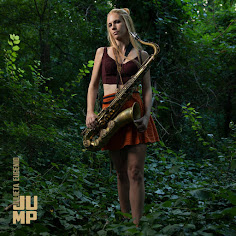
Tenor saxophonist and composer Julieta Eugenio was born, raised, and educated in Argentina.  After graduating from the Manuel de Falla Conservatory, Ms. Eugenio came to the United States in 2013 to study at the Aaron Copland Conservatory at Queens College in New York City where she earned her Master's degree. She's gone on to play with pianists David Kikoski and Johnny O'Neal, drummer Leon Parker, with the SIJ Trio, and the Eyal Viner Big Band.  Along the way, the saxophonist met bassist Matt Dwonszyk who introduced her to drummer Jonathan Barber––the rhythm section are both from Hartford, CT.  In the beginning of the pandemic, the bassist invited Ms. Eugenio to come to the Hartford to get away from the big city. They hiked the hills and parks around Connecticut's capitol city and, in the evenings, jammed with the drummer, giving birth to her Trio and her debut album. 

"JUMP" (Greenleaf Music) is the album. The hour-long program features eight originals from the leader plus two standards "Flamingo" (composed by Ted Grouya and Edmund Aderson, first recorded by Herb Jeffries and the Duke Ellington Orchestra in December of 1940) and "Crazy He Calls Me" (penned by Carl Sigman and Bob Russell in 1949, recored by numerous people including Billie Holiday and Dinah Washington).  Ms. Eugenio is well-served by her rhythm section––both Dwonszyk and Barber are totally involved in the music, pushing, prodding, being both melodic and propulsive. It's notable from the opening seconds of the first track as both the well-constructed melody and the percussive attack stand out. The bassist's counterpoint is on-point while the drummer dances with glee as Ms. Eugenio's solo unfolds.  


There are moments when this Trio will remind the listener of the work that Sonny Rollins did in the 1950s with bassist Wilbur Ware and drummers Elvin Jones or Pete LaRoca ("A Night at The Village Vanguard")––check out the ballad "For You" or the fun take of the classic "Flamingo" (the rhythm section is a true treat!)  Pieces such as the high-powered "La Jungla" sound more modern (pay attention to the depth of Ms. Eugenio's tone) or the slinky drive of "Another Bliss" (Barber's drum work stands out for his inventive support while Dwonszyk's bass work sings under the sax solo.) The bassist's "fat" tone and buoyant lines lead Ms. Eugenio in on "Crazy..." and the two stroll through the piece together without Barber. The bass solo is a particular treat, especially for its musicality.  

"JUMP" is a splendid debut for Julieta Eugenio laying the groundwork for a career that one hopes is filled with delightful music and interactions.  She's absorbed her lessons and now needs to hit the road which should make her music stronger and help her make her musical voice more singular. Yet, what a great start!

For more information, go to www.julieta-eugenio.com. To hear more of "JUMP" and to purchase the album, go to https://julietaeugenio.bandcamp.com/

Hear "La Jungla": 


A new album from vocalist Somi is always a welcome audio adventure.  Born in Illinois to parents who emigrated to the US from Rwanda and Uganda, Somi first came to critical notice with her 2007 debut "Red Soil In My Eyes", an album which featured her fascinating voice with Afro-Beat, Afro-Pop, and more, reminding some reviewers of the music of Kate Bush and Peter Gabriel.  Somi spend 18 months in Nigeria which led to 2014's "The Lagos Music Salon", an album that still sounds fresh with its blend of jazz, r'n'b, African rhythms, and spoken-word intervals. Social commentary, Hip Hop, funk, and American pop music entered her music with the 2017 release of "Petite Afrique" while 2020's "Holy Room: Live at Alte Oper with the Frankfurt Radio Big Band" stands out for her ability to adapt all her musical influences with a large ensemble. 

March 4, 2022, was the 90th birth anniversary of the international star Miriam Makeba and also the day that Somi  released "Zenzile" (Salon Africana), her tribute to the great singer. The recording takes its name from Ms. Makeba's first name (pronounced "Zen-zee-lay") and its material is taken from the varied segments of her career.  Pieces such as "Pata Pata" were huge hits yet Somi's version uses the song as a vehicle for a recorded interview with Ms. Makeba with only a string quartet for support.  The vocal portion features four singers plus Somi and is filled with sounds and silence. Ms. Makeba first recorded "Mbombela (Train Song)" with Harry Belafonte in 1965 in New York City––Somi's danceable take features the voice choir plus a funky band (check out the delightful organ work of Cobhams Asuquo and guitar of Herve Samb).  Angelique Kidjo joins the leader on "JIKELE MAWENI (The Retreat Song)" as do more voices, a horn section, and a lively rhythm section.

There are so many highlights (and no weak moments) in the 17-song program. Click below to hear Somi with Ladysmith Black Mambazo in a faithful recreation of "Nonqonqo", also from the 1965 album Ms. Makeba made with Belafonte. Gregory Porter joins the vocalist on "Strawberries", a song from Ms. Makeba's 1962 album "The Many Voices of Miriam Makeba"––on the modern version, the voices ride atop a piano-bass-drums-percussion quartet plus the the occasional female chorus. The music is so sensual, the lyrics evocative of a warm summer night.  Somi's magnificent, emotionally-rich, vocal on "Khuluma" is stunning. She's joined by South African vocalist Msaki; their voices wind around each other plus there is a power in their that makes one sit up and pay attention.

"Zenzile" closes with "Mabhongo", a song from Ms. Makeba's 1988 album "Sangoma" (a return to recording for the singer). With choruses of male and female voices for support plus the plaintive piano of Ndudozo Mahkathnini, the song opens like a prayer and, as Somi and the pianist step to the fore, the music displays a gentle beauty that touches the heart and the soul.

"Zenzile" is a stunning accomplishment as it brings the music of and the person who was Miriam Makeba to life once again. The messages in her songs are timeless and Somi makes sure you hear the rhythms and word––you need to hear both, you need to take the messages inside and don't let it go. In this time of forced migrations and totalitarian attacks, there is hope, sadness, love, joy, and positivity in this music.  Pay attention!

For more information, go to www.somimusic.com.  

Up in the right-hand corner of this (and all) columns is a link to "The Jazz Session"––in Episode #589, host Nicky Schrire converses with Somi and you will learn a lot about the album as well as the production of "Dreaming Zenzile" that Somi created and premiered before the pandemic (2019) that is scheduled to open Off-Broadway later this year.

Here's Somi with Ladysmith Black Mambazo on "Nonqonqo":


Personnel:

Special guests include Ladysmith Black Mambazo, Angelique Kidjo, Gregory Porter, Seun Kuti, Thandsiwa Maswai, Msaki, Nduduzo Mhakathini

Herve Samb (guitars)

Nate Smith (drums)

Michael Olatuja (bass)

Keith Witty (bass, percussion)

Toru Dodo (piano)

Mino Cinelu (percussion)

Cobhams Asuquo (organ, upright piano, percussion)

Phindi Wilson (vocal chorus)

Bongi Duma (vocal chorus)

Nhalanhla Ngobeni (vocal chorus)

Vuyo Sotashe (vocal chorus)

Lakecia Benjamin (alto saxophone)

Jeremy Pelt (trumpet)

Myron Walden (soprano saxophone & tenor saxophone)

Mazz Swift (violin 1)

Juliette Jones (violin 2)

Jessica Troy (viola)

Marika Hughes (cello)


Friday, February 25, 2022

Telling Her Stories In the Time of Pandemic


Photo: Kimberley M. Wang
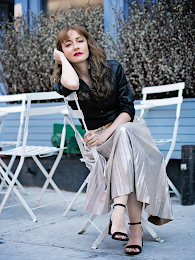
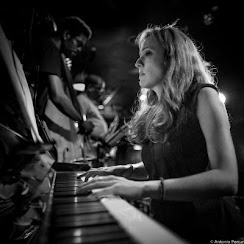
It's been over a decade since pianist and composer Marta Sánchez came to the United States from her native Spain. In her hometown of Madrid, Ms. Sánchez had not only studied classical piano but also filmmaking.   She received a Fulbright Scholarship in 2011 to study at New York University, earning a Master's Degree in jazz piano performance.  Around the same time, she organized a quintet featuring two saxophonists (one being Cuban-born tenor saxophonist Román Filiú whom she had met when he was studying in Madrid––in fact, they moved to the US around the same time), bass, and drums.  Over the course of four years (2015-2019), her quintet recorded three albums for the Spanish-based Fresh Sound New Talent label, garnering a slew of excellent reviews and performances through the Americas and overseas.  Then the pandemic hit. In the midst of the international emergency, Ms. Sánchez's mother passed away.  Then in 2021, the pianist received a second grant from the MacDowell Colony (her first came in 2017) and was able to spend time to compose and begin to workshop new material.  

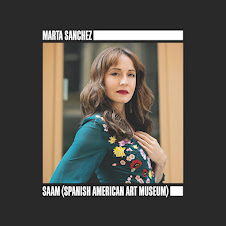
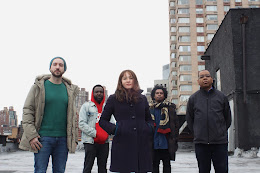
The results of her productive use of the "down" time can be heard on "SAAM (Spanish American Art Museum)", the fourth album by Ms. Sánchez's Quintet and her first for Whirlwind Recordings.  With the exception of Filiú (who is heard on this recording on tenor saxophone, unlike the previous three where he played alto sax), this is a new group. The rhythm section includes bassist Rahsaan Carter and drummer Allen Mednard while the alto seat is filled by Alex LoRe. Mednard replaces Daniel Dor and one can hear the difference from the get-go. Dor is really a painter on the drum kit, with a artistic touch on the cymbals while Mednard pushes more, responding to soloists with more power.  Carter is not only a fine foundational player but he also has an excellent ear for counterpoint. The composer has consistently showed a fondness for writing melody lines for two saxophonists that are melodic with counterpoint, the two instrumentalists conversing in song.

Photo: YouTube
The music shines throughout the nine-song (all originals) program.  The shifting rhythms, with influences from Spain and Black American Music, set up a dynamic tension with the melodies that show aspects of 19th and 20th Century classical music (especially, to this listener's ears, Albéniz and Rodrigo) with tinges of flamenco and other contemporary influences. Yet, pieces such as the title track and "The Eternal Stillness" stand out for their inventiveness (Mednard's "hip hop" drums really shines on the latter tune). "December 11th" (the date that Ms. Sánchez's mother died) has a theme that is probing and a piano solo that that blends emotion and introspection with the desire to move beyond tragedy.  

The one exception to the Quintet tracks is "Marivi", a lovely ballad dedicated to the pianist's mother.  LoRe and Filiú sit out and we hear the the piano, bass, and drums plus the voice and guitar of Camila Meza, trumpeter Ambrose Akinmusire, and the subtle synth work of Charlotte Greve.  The blend of the clear tones and articulation of Ms. Meza with Akinmusire's cool, subtle, sound plus the foundational piano chords  and gentle support of Carter and Mednard paints a picture with shades of love, longing, and regret for the physical separation.

"SAAM (Spanish American Art Museum)" is alive with singable melodies and active rhythms.  Filiú's move to tenor continues his saxophone mastery; he takes many melodic chances in his solos and it's exciting to hear where he goes (case in point, "If You Could Create It"). LoRe's alto playing continues to impress. One can hear the influence of classical saxophone when he plays in the higher ranges of the alto. noticeable on "The Hard Balance" and the afore-mentioned "The Eternal Stillness".  Carter's solo on that track stands out for his power, his melodic ear, and for his interactions with Mednard.

Photo: Antonio Porcar
Ms. Sánchez plays with purpose throughout. Her work beneath the soloists gives them a strong foundation plus it frees Carter and Mednard to push, to pull, to prod, and, at times, to dance.  There are moments this writer hears Andrew Hill in her supportive playing, in her chordal choices.  Her solos throughout sparkle even in introspection––"If You Could Create It" has both a dancing feel and an introspective side and the pianists moves easily over the bass and drums.  Listen to how she sets up the opening track "The Unconquered Vulnerable Areas", moving from the rippling figures into a bass line that she shares with Carter and then into her chordal support of the soloists.  She never intrudes but she does guide.  

Considering she started out quite strong with her first Quintet album in 2015, Marta Sánchez has continued to grow as a composer, arranger, and pianist.  Her music and the excellent muisicians who help create it make you sit up and pay attention.  Spend time with "SAAM (Spanish American Art Museum)" and, chances are very good, you will return time and again to savor its rich colors, vibrant and emotional melodies, and its rhythmic delights.  

For more information, go to www.martasanchezmusic.com. To hear some of the selections and to purchase the album, go to https://martasanchez-whirlwind.bandcamp.com/album/saam-spanish-american-art-museum.

Here's the opening track:

Tuesday, February 22, 2022

From Outside to Inside


Pianist, composer, and musical lightning rod Cecil Taylor left New York City in 1970 to spend several years in academia.  Taylor was in the forefront of new Black Creative music breaking borders as he integrated numerous musical genres in his bubbling cauldron of creativity. But, for various reasons, he had played in concert in several years.  John Coltrane had died in 1967, Miles Davis soon turned towards fusion, and rock music had eroded any popularity jazz had attained in the early part of the tumultuous decade. Taylor went off to teach at the University of Wisconsin and to Antioch College (in Ohio), a job that gave him to compose everyday.  He returned to New York City in November 1973 and presented a concert at Town Hall –– the evening featured two performances by his quartet –– Jimmy Lyons (alto saxophone), Sirone (formerly Norris Jones, on bass), and Andrew Cyrille (drums) –– plus a tour-de-force solo piano piece.

In 1974, Taylor's Unit Core Records released "Spring of Two Blue-Js", an Lp with the two versions of the title piece (one solo, one with the quartet).  Both pieces are available again on the digital-only "Cecil Taylor: The Complete, Legendary, Live Return Concert at The Town Hall, NYC, November 4 1973" (Oblivion Records) –– however, now one gets to hear the opening set never before released, the 88-minute "Autumn/Parade".  The extensive (and fascinating) liner notes will tell you much about the people who captured the concert in its entirety, about Taylor's career, and reprints the original program.  However, it's the discovery of the unreleased material that is the revelation. Taylor devotees will not be surprised by the ferocity of the music or the relentless attack of saxophonist Lyons; if one thinks only of this music assaults your ears and mind, pay attention to the quieter moments, to how the music develops from melodic statements, how the rhythm section not only supports but remains in dialogue throughout.  

Photo: Fred McDarrah/Getty Images
If you listen closely to the pianist, you will hear how his propulsive lines have logic and rhythm built in that serve as the foundation for Lyons to rise above.  Under headphones, one can also hear how integral Cyrille is to the music––he's not cowed by nor trying to catch up to Taylor or Lyons but is right there with them. Yes, it is overwhelming to sit through "Autumn/Parade". While there are several respites in the sonic attack, curious first-time listeners should start with "Spring of Two Blue-Js" (solo piano) moving on the Quartet version before diving into nearly relentless tsunami that is the newly discovered material.

"Cecil Taylor: The Complete, Legendary, Live Return Concert at The Town Hall, NYC, November 4 1973" is a truly amazing document. Think of the context. Late 1973, the Watergate Scandal is about to break into the news, the Vietnam War was 16 months away from its conclusion, and jazz had disappeared from "commercial" airwaves.  Does this music reflect its time?  The splintered melodies, the headlong rushes forward, the rhythmic push/pull, and the furious shouting in the center of the audio maelstrom, all add up to answer the question. 

For more information, go to https://fredseibert.com/post/676228069939429376/cecil-taylor-the-complete-legendary-live – Fred Seibert is the owner of Oblivion Records.

Here are the first 10 minutes of "Autumn Parade":


Photo: Shaban Athuman
Since 2013, saxophonist and composer Javon Jackson has been the Director of the Jackie McLean Jazz Studies Division of the Hartt School at the University of Hartford (CT) as well as a Professor of Jazz saxophone.  Since he started, Jackson has brought numerous Black thinkers, writers, and artists to campus including Dr. Cornel West, Dr. Angela Davis, Sonia Sanchez, and Nikki Giovanni (pictured with Professor Jackson).  After the poet received an Honorary Degree at a campus event, they heard music playing in the auditorium by Hank Jones and Charlie Haden (a gospel piece from their 1994 collaboration "Steal Away"). The poet went home and two days later wrote to Ms. Giovanni asking of she would pick out 10 gospel tunes for his next album.

The poet complied and the results can be heard on "The Gospel According to Nikki Giovanni" (Solid Jackson Records).  Jackson gathered his "touring" quartet –– bassist David Williams, pianist Jeremy Manasia, and drummer McClenty Hunter –– and they recorded the repertoire suggested by Ms. Giovanni. Recognizable tunes such as "Sometimes I Fell Like a Motherless Child", "Swing Low Sweet Chariot", "Mary Had a Baby, Yes Lord", and "Wade In The Water" share space with less often recorded spirituals such as "I Opened My Mouth to the Lord" , "Lord, I Want to Be a Christian", and the deeply soulful "I've Been Buked".  "Wade In The Water" features Ms, Giovanni's poem "A Very Simple Wish" (see below) spoken by Christina Green.  Many of these pieces remind this listener of the ballad work of the classic John Coltrane Quartet, especially when Jackson rises above Manasia'a powerful piano chords, Williams solid, functional, bass lines, and Hunter's thoughtful yet powerful drum kit play. The Quartet does not force the music into strange places; instead, they play it fairly straight with a few delightful exceptions. "Swing Low..." takes its rhythms from Sonny Rollins classic "St. Thomas" while the album opener "Didn't My Lord Deliver Daniel" is a sprightly blues shuffle replete with a drum solo.  The ensemble does a wonderful delivering the spirit on the ballad "I've Been Buked" while the saxophonist and pianist sans rhythm section shine on "Lord, I Want to Be a Christian". 

Photo: Shaban Athuman
The one non-gospel is "Night Song"––composed by Charles Strouse and Lee Adams for the 1964 Broadway musical "Golden Boy". Sammy Davis Jr. performed the piece in the play and it was almost immediately recorded by Sara Vaughan, Andy Bey & The Bey Sisters, and by Nina Simone. Ms. Giovanni was good friends with Ms. Simone and she suggested the song for this album.  Halfway through the band's performance, the poet becomes the lead singer (her recorded debut) and the song takes on even more gravitas. 

During the nearly two years of the pandemic, more and more people have turned to religion and spirituality. Many people also turned to music to stave off their fears and soothe their soul.  With "The Gospel According to Nikki Giovanni", Javon Jackson has turned inward and interprets these songs through his love and understanding of where jazz has taken its influences. He and his fellow musicians play with soul and joy; with Nikki Giovanni's help, this album is a subtle yet swinging delight!

For more information, go to www.javonjackson.com.  

Here's "Wade in the Water":


Nikki Giovanni

"A Very Simple Wish"

i want to write an image
like a log-cabin quilt pattern
and stretch it across all the lonely
people who just don’t fit in
we might make a world
if i do that

i want to boil a stew
with all the leftover folk
whose bodies are full
of empty lives
we might feed a world
if i do that

twice in our lives
we need direction
when we are young and innocent
when we are old and cynical
but since the old refused
to discipline us
we now refuse
to discipline them
which is a contemptuous way
for us to respond
to each other

i’m always surprised
that it’s easier to stick
a gun in someone’s face
or a knife in someone’s back
than to touch skin to skin
anyone whom we like

i should imagine if nature holds true
one day we will lose our hands
since we do no work nor make
any love
if nature is true
we shall lose our eyes
since we cannot even now distinguish
the good from the evil

i should imagine we shall lose our souls
since we have so blatantly put them up
for sale and glutted the marketplace
thereby depressing the price

i wonder why we don’t love
not some people way on
the other side of the world with strange
customs and habits
not some folk from whom we were sold
hundreds of years ago
but people who look like us
who think like us
who want to love us why
don’t we love them

i want to make a quilt
of all the patches and find
one long strong pole
to lift it up

i’ve a mind to build
a new world

want to play

(printed in "The Collected Poetry of Nikki Giovanni 1968-1998" published 2007 Willam Morrow.)