Showing posts with label The Doxas Brothers. Show all posts

Saturday, October 24, 2020

Three Exploratory Quartets

This review introduces you to three albums featuring quartets, two with tenor saxophone, piano, bass, and drums plus one with tenor and alto saxophones, bass, and drums. The share the language of of modern Black American Music but come at their music from different directions.

Saxophonist Rich Halley has been making music on the West Coast for over five decades working with small groups that often included trombonist Michael Vlatkovich and Halley's son, drummer Carson. In August of 2018, he flew east to Brooklyn, NY where he recorded "Terra Incognita" with the Matthew Shipp Trio (the pianist, bassist Michael Bisio, and drummer Newman Taylor Baker). Halley's "live wire"compositions and fiery playing fit right in with the experimental bent of the Trio anf their first album together was a smash. 

He returned to Brooklyn one year later and, on August 16, went back into the studio with the Trio; the result, "The Shape of Things" (Pine Eagle Music), moves as passionately as the first album. And, just the like the previous release, the four musicians improvised the entire program.  Halley may be the leader but everyone stands out. Whether it's Newman Taylor Baker's powerful drums goosing the saxophonist to powerful shouts on the opening "Tetrahedon" or Shipp's lyrical piano opening to "Spaces Between" or Bisio's rapid-fire bass lines on "Oblique Lines" (note the way Halley dances out of his solo while Shipp dances in), this music does not sit still or make compromises.  Halley and Baker have another one-on-one conversation to open "Lower Strata"––it starts fairly quietly, does not boil over.  In fact, it is Shipp's majestic cascading chords and Bisio's rumbling bass work that raise the intensity. There's even more energy on "The Curved Horizon", the albums longest track at 13:35, especially as Halley and Shipp continually collide in the opening two minutes.  Baker and Bisio stoke their fire until the saxophone drops out and Shipp dances forward. After the Trio tamps down the fire but not the intensity, Halley returns and the music explodes

"The Shape of Things" (not to be confused with The Yardbirds' 1966 hit of the same name) is excellent, reminding one of how great improvised music can be a transcending experience. Rich Halley does not compromise, has no need to, his interactions with the Matthew Shipp Trio shows us music still has the power to makes us sit up and take notice!

For more information, go to www.richhalley.com. 


For his sixth release on Whirlwind Recordings, drummer and composer Jeff Williams has issued his second "live" album and third fronting a quartet. Since moving to England over a decade ago (he splits his time between NYC and UK) and signing with Michael Janisch's label, he has produced music that displays power, wit, musicality, and great "swing".  He writes to the strength of his band and they make sure the music sounds vital.  

"Road Tales: Live at London Jazz Festival", recorded in November 2018 at London's famed Pizza Express, features the drummer in the company of long-time associate John O'Gallagher (alto saxophone) and two young members of the British Jazz scene Josh Arcoleo (tenor saxophone) and Sam Lasserson (acoustic bass), both members of Williams group since 2015. Sit down, put the music on the stereo, and enjoy the 63-minute, nine song, program of the drummer's original pieces. A mix of old and new compositions, the quartet dances, swings, sways, roars, and makes you listen.  Whether it's the bluesy dance of "New and Old", the chatty and boisterous "Borderline" or the quiet ruminations of "Under the Radar" (which features a splendid Arcoleo solo), this music is always moving.  "Scrunge" is a funky, hard-hitting, dance tune that nods towards Ornette Coleman and the bluesier side of Julius Hemphill.  Williams playful "She Can't Be a Spy" stretches out so both saxophonists can dance atop the drummer's powerful beat.  The album closes with "Double Life"––the leader opens the piece by scurrying around his drum set before Lasserson enters to set the pace. The saxophonists introduce the lengthy and twisting melody then both (Arcoleo first) deliver delightful solos egged on by the conversational. drums and powerful bass lines.

"Road Tales" is a delight from start to finish. Take your time to listen to all four musicians but especially the rhythm section and how they interact with each other and how they do not just play "support" beneath the saxophonists. Jeff Williams musically came of age working with Stan Getz and Dave Liebman, at a time when creative music was still absorbing the lessons of Thelonious Monk, Max Roach, John Coltrane, and innovators of the 1950s and 60s.  Jeff Williams and company not only honor the tradition but also push it forward. Enjoy!

For more information, go to www.willfulmusic.com.

Follow the link to hear a track:  https://jeff-williams.bandcamp.com/track/the-interloper-3. 

Over the past decade, Jim (drums) and Chet (tenor saxophone), the Doxas Brothers, have been very busy musicians in their native Canada. Jim has been the drummer in pianist Oliver Jones Trio while Chet has worked with Maria Schneider, Rufus Wainwright, and the late John Abercrombie plus is part of the Brooklyn, NY-based quartet LandLine and has recorded with electronics artist/ sound designer Micah Frank.  Together, with Dave Douglas and bassist Steve Swallow, they have released two albums as Riverside for the trumpeter's Greenleaf Music. 

Now, the duo has issued its first album, "The Circle", on Justin Time Records. Joining them are bassist Adrien Vedady and pianist Marc Copland both of whom have been playing with Jim for the past several years in a trio setting. When you first listen through the program, you'll hear finely-constructed compositions, excellent musicianship, smart interplay, and a love for both swing and melody. What you will realize second and third time through is the "flow" in each piece. At times, it's the rhythm section (as they do on tunes such as the album opener "Una a la Vez" and several tracks later on "Old Sport".  When Copland locks in Vedady and Jim Doxas, they create a foundation that Chet's tenor can move through with ease.  Dig the bluesy "A Word From the Wise" where the impressionistic piano support dances around the Coleman Hawkins-inspired tenor sax. 

A poetic unaccompanied piano opens "Objets NĂ©cessaires" leading into a melody that sounds like an interpolation of the spiritual "Go Down Moses."  Copland's crystalline lines build the piece up to the entrance of the tenor saxophone; the piece seems to explode with the power coming from the two brothers with both the piano and bassist roiling below them. The wistful tenor saxophone melody of the next track, "Joan's Song", also has a folkish feel (and a touch of Sonny Rollins) yet listen to how the pianist colors the piece with his fascinating chordal choices.

The album closes with the blues-soaked Gordon Jenkins composition "Goodbye"––originally composed in 1935 for the Benny Goodman Orchestra, this version features splendid brushes work, breathy tenor sax, fine counterpoint from Vedady, and a fascinating exploration from the pianist.  Like the eight tracks before it, "Goodbye" is exemplary of just how deeply these four musicians care about the music, the material, and each other. 
"The Circle" is delightful music, played with passion, intelligence, and the desire to connect on a human level.  The Doxas Brothers, along with Adrien Vedady and Marc Copland, create a listening experience that combines the "tradition" with creative thinking (and playing)––so sit and listen, waiting for the day when this band can make their magic in a club or small convert venue.   

For more information, go to www.doxasbrothers.com.  To hear samples and to purchase the album, go to https://doxasbrothers.bandcamp.com/album/the-circle. 

Watch and listen below to the opening track:

Tuesday, December 19, 2017

2017, What a Year! (Part 2 - Trumpets & Louis Smiles Down)

If you're a fan of creative trumpet, 2017 has been a banner year.  It's  not at all surprising that Wadada Leo Smith is on the list of best albums - TUM Records issued two at the same time with "Solo: Reflections and Meditations on Monk" standing out for me. With four Thelonious Monk classicsjuxtaposed with Smith originals, the music draws in the listener with its organic of sound, reverberation, and silence.  There are no dull moments and one can just luxuriate in how this master musician, 76 years on December 18, plays with such power, intelligence, rhythm, and melody.  I was able to attend one night of his "Create Festival" this year (the East Coast version) and can tell you he continues to grow as a musician, composer, and, above all, a human being.


Trumpeter and composer Kenny Warren was a new name to me when "Thank You For Coming to LIFE", his debut recording for Whirlwind Recordings crossed my desk. As I did my research, his previous recordings quickly came to light (his Americana-flavored pair of "Laila & Smitty" disks are stand-outs) plus his recent work with Slavic Soul Party; all those albums and more illustrate the work oof a original thinker and player. This Quartet date - JP Schlegelmilch (piano), Noah Garabedian (bass), and Satoshi Takeishi (drums - has but six songs yet each shines with its own brightness and invention.  Strains of funk, hard bop, classical music, blues, and more, enlivened by the delightful interplay, did bring to mind Wynton Marsalis's "Black Codes" group, especially the urgency, emotion, and the sheer joy of playing music with friends.  


Just as a list such as this has to include Wadada, it's a rare year that Dave Douglas does not give the listener multiple treats. 2017 brought us "Little Giant Still Life" (Greenleaf Music), an album made in collaboration with The Westerlies (trumpeters Riley Mulkerhar and Zubin Hensler plus trombonists Andy Clausen and Willem de Koch) and the delightful drumming of Anwar Marshall. Inspired by the art and artistry of Stuart Davis (1892-1964, composer Douglas creates a aural gallery show that uses the rhythms of the paintings. Note the sly humor in several tracks, the delightful "basso profundo" of the trombones, the use of harmony and counterpoint, and how Marshall makes so much of these pieces dance.  One continues to be impressed at how hard Dave Douglas works and how he takes guidance and direction from his influences and creates timeless music.


Then there's the second album from Douglas's Riverside, a quartet featuring the continually amazing bassist Steve Swallow plus Chet Doxas (tenor sax, bass clarinet) and his brother Jim (drums).  While their debut Greenleaf album nodded in the direction of Jimmy Giuffre, this second effort, "The New National Anthem" finds its inspiration coming from Mr. Swallow's wife, Carla Bley (they even toured Europe with the composer-pianist).  Playful, melodic, genre-busting, highly interactive, this music has such a bright quality, even the ballads take the listener in such fascinating directions.  Long-time fans of Mr. Swallow and Mr. Douglas know they are in for a quality experience from every album but one cannot help but be impressed by the work of the Canadian brothers (Chet's clarinet stands out while Jim locks right in with the bassist, making it sound like they have been a rhythm section for two decades, not just two recordings).


The second album by trumpeter-composer Rebecca Hennessy's FOG Brass Band (self-released) upends one's conception of a traditional Brass ensemble. Yes, it's a sextet but there are three horns (trumpet, trombone, tuba) plus a rhythm section of electric guitar, piano, and drums (no marching band, this).  The composer gives the band such a fascinating collection of tunes in many different styles, such well-formed melodies, smart harmonies, intelligent interplay, a heck of a rhythm section, and don't miss how strong the solos are.  FOG is part of a growing eclectic music scene in Toronto, Ontario, Canada. Yes, Ms. Hennessy often take her inspiration from musicians and composers (especially the afore-mentioned Carla Bley and a touch of Duke Ellington) from the country just south of hers but she is quickly developing her "voice" and arranging style.


Trumpeter and composer Sam Boshnack puts to music the story of pioneering journalist Nelly Bly (1864-1922), successfully and not-so-subtly reminding the world of both the power of a single-minded woman but also how the press can tell important stories.  Her Quintet, which features the sublime clarinet playing of Beth Fleenor, understands that the story comes first yet the music offers them music freedom.  The "Nellie Bly Project" may only be 34 minutes long but packs quite a punch, especially in the two long, episodic pieces.  Sam Boshnack, with both her Quintet and the B'shnorkestra, is becoming an important voice in the Pacific Northwest and, hopefully, soon around the world.


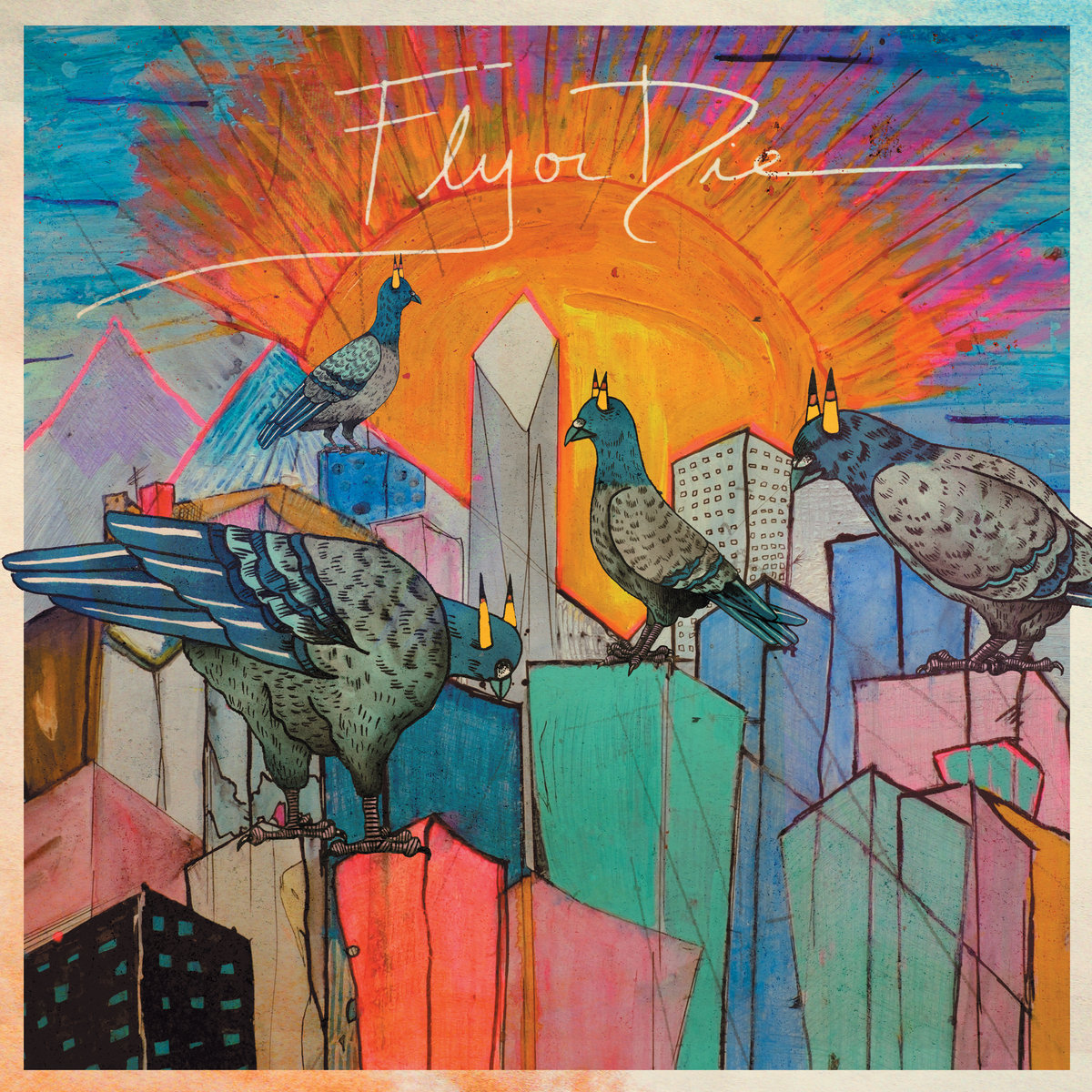
The debut album from trumpeter and composer Jaimie Branch, "Fly or Die" (International Anthem), is chock full of ideas, with "hard" beats, brash tones, and features the great playing of Tomeka Reid (cello), Jason Ajemian (bass), and Chad Taylor (drums). Pieces such as "Theme 001" bristle with the energy of Julius Hemphill's "Hard Blues" whereas "Theme 002" reminds this listener of saxophonist Matana Roberts's work with Taylor and bassist Joshua Abrams for their Sticks & Stones trio.  "Theme Nothing" also blends African rhythms, this time with a hint of blues-rock. There are also pieces with multiple overdubs (the muted opening of "Leaves of Glass" is among the quieter sections of the album and employs the cornets of Ben Lamar Gay and Josh Berman, a short, buzzing, solo, and a pair of tracks with acoustic guitarist Matt Schneider.  Plenty of variety packed into 36 minutes and it makes one impatient for more of Jaimie Branch's fascinating music.


Drummer and composer Tomas Fujiwara created quite a project for his new album "Triple Double" (Firehouse 12 Records). This sextet features two guitarists (Mary Halvorson and Brandon Seabrook), two brass (trumpeter Ralph Alessi and the cornet of Taylor Ho Bynum), and two drummers (the leader plus Gerald Cleaver).  There is a "progressive rock" and a blues-rock feel to a number of the pieces and, like Ms. Branch's music, often bristles and erupts. With two such powerful drummers, the band occasionally leaves subtlety behind in favor of a mighty roar but notice how easily they can pull back (especially on "Blueberry Eyes").  Each musician has her or his own "voice" and it's such a aural pleasure to hear Ms. Halvorson articulate lines interacting with Seabrook's "noisier" elements or Alessi's flowing lines in counterpoint with Bynum's splintered, raucous, interjections.  There are a trio of duo pieces - the first, "Hurry Home B/G"", is an unhurried interaction between Seabrook and Cleaver while the second, "Hurry Home M/T" uses similar elements for the duo of Ms. Halvorson and Fujiwara.  Right in the middle of the program, the leader opens "For Alan" with a recording of a lesson he had (as a 10-year old) with the great drummer-educator Alan Dawson (1929-1996) - once the voices drop out, Fujiwara and Cleaver take off on an exciting percussive journey. They are not "one-upping" or "cutting" each other; instead, they get carried away on the power of multi-rhythms and making each other dance.  Mr. Dawson comes back in near the close to teach about syncopation.

Amidst the tumult of sounds, what stands out is the friendship, the musicality, and the willingness to expand the spend as far as these six musicians can.  Give in, let your mind open, and you'll hear many fascinating sounds and exhilarating interactions!

***************************
I am halfway through this year's list - next time out, it's large ensemble music and more.