Showing posts with label music inspired by poetry. Show all posts

Wednesday, September 2, 2020

Large Ensembles, Classical Music & Classic Cuban Poetry

Mike Fahie is a multi-faceted artist: he plays trombone, composes, arranges, plays in several large ensembles as well as having played Broadway shows, and teaches at both the New England Conservatory of Music in Boston, MA. but also is on the faculty of United Nations International School. He's recorded with Darcy James Argue, Pedro Giraudo, Andrew Rathbun, and others. He's recorded two albums with all-star Quintets and now has his initial large ensemble album.

"Urban(e)" (Greenleaf Music) brings together the worlds of classical music and jazz, filters pieces by Chopin, Puccini, Stravinsky, Debussy, Bartók, Tchaikovsky, and JS Bach through Fahie's creative mind and is translated by an 18-piece Jazz Orchestra.  While many listeners may familiar with pieces such as "Nessum Dorma" (recorded by the likes of Jeff Back, Aretha Franklin, and Deep Purple with Luciano Pavarotti) and "The Firebird", it's fun to hear how those songs sound played in these settings. In fact, the Stravinsky piece mentioned just above is one of the highlights of the recording not only for its brilliant writing but for the fine solos by pianist Randy Ingram, tenor saxophonist Quinsin Nachoff, and a lovely conversation between Fahie (euphonium) and Jennifer Wharton (tuba).

Other fascinating turns include the hard rocking center of Bartók's "String Quartet No. 1, III. Allegro vivace".  Jeff Miles' slide guitar leads the ensemble into that––when the barrage of sounds conclude, the band into a Brechtian tango before rocking out once more.  A gentle entry into the sound world of Tchaikovsky's "Symphony No. 6, II. Allegro con grazia" leads to a playful waltz. Cinematic in scope, the music flows up and out of the speakers leading to delightful solos by Aaron Irwin (alto saxophone) and Nick Grinder (trombone).

The album concludes with Bach's "Seufzer, Tränen, Kummer, Not" (sighs, tears, grief, need) from "Cantata, BWV 21" that Fahie first heard on a recording by the great soprano Kathleen Battle and Wynton Marsalis.  The ensemble pays respect to the original then breaks into a long conversation between the leader (on trombone) and David Smith (trumpet).  Near the close of the piece is a terrific give-and-take between the sections led by the trumpets.

"Urban(e)" is truly an aural treat. Whether you know the original pieces or not, the creative arrangements of Mike Fahie posits you in the midst of the Jazz Orchestra.  This music is emotionally moving and, at times, a real romp.  Just let the sounds flow over you and your day will be better for it.

For more information, go to www.mikefahie.com. To listen to more and to purchase the recording, go to https://mikefahie.bandcamp.com/album/urban-e.

Music by Claude Debussy for your ears––check out the video on the Bandcamp page):


Personnel: 
Winds 
Aaron Irwin, Anton Denner, Chet Doxas, Quinsin Nachoff, Carl Maraghi 

Trumpets 
Brian Pareschi, David Smith, Sam Hoyt, Brad Mason 

Trombones 
Matthew McDonald, Nick Grinder, Daniel Linden, Jennifer Wharton 

Guitar 
Jeff Miles 

Piano 
Randy Ingram 

Bass 
Pedro Giraudo 

Drums 
Jeff Davis 

Arrangements, Orchestrations, Trombone, Euphonium 
Mike Fahie 


Photo: Mariana Maraz
Pianist, composer, and arranger Manuel Valera, a native of Havana, Cuba, has been in the United States for over two decades. Over that time, he's worked with Paquito D'Rivera, Daphnis Prieto, Arturo Sandoval, Brian Lynch, and many others.  The pianist leads several ensembles including a trio and his sextet the New Cuban Express plus a quintet Groove Square. Valera has issued albums on CrissCross Jazz, MaxxJazz/ Mack Avenue, and his own label Mavo Records. For his latest project, the artist has expanded his sextet to 19 members plus vocalists Camilla Meza (three tracks) and Sofia Rei (four tracks) , thereby creating the New Cuban Express Big Band.

"José Marti en Neuvo York" (Greenleaf Music) contains seven Valera originals based on nine poems from "Versos Sencillos" (simple verses), the collection that the great Cuban writer (1853-95) wrote during his time in the New York City area (he spent nearly 15 years in the US) and published after his death.  The combination of bubbling percussion, melodies built on traditional Cuban pieces, the colorful section arrangements, and the splendid vocals, this music comforts, excites, holds your interest from beginning to end, and features excellent musicianship.  Valera, who can burn on the keys like few others, reins in his formidable chops to allow the ensemble the space to develop strong solos.

The album opens quietly with "Odio La Mascara Y El Vicio" (I Hate the Mask and Vice)––after Ms. Meza completes the verses, the tempo picks up, pushed by the powerful rhythms by drummer Jimmy Macbride and veteran percussionist Samuel Torres.  When the vocalist returns, now over the faster tempos, the music takes a powerful turn.  Ms. Rei steps out on the next track, "Es Rubia, El Cabello Suelto" (She is Blonde: loose hair); her voice seems to rise out of the ensemble especially as she sings a wordless vocal along with the brass and reeds.  A melodic electric bass solo by Pedro Giraudo opens "El Enemigo Brutal" (The Brutal Enemy) supported only by the hand percussion of Mauricio Herrera and the synthesized strings of the leader before Ms. Rei steps into the tale of an ugly war, her husky voice a fascinating contrast to the sharp brass and bright reeds. The gentle flow of the medley "Yo Quiero Salir Del Mundo / Yo Pienso Cuando Me Alegro" (I Want to Leave the World/ I Think, When I'm Glad) grows slowly but surely in intensity as more instruments are added. Ms. Meza enters after a short alto saxophone statement and glides through the vocal. Valera employs the same melody as the first section for the second poem in the melody. Here, the vocal is doubled by guitarist Alex Goodman giving the piece a shimmering feel. 

The album closes with the rhythmically exciting "Si Quiere Que De Este Mundo" (If You Want From this World) that features Ms. Rei taking the lead and also joining the ensemble with her wordless vocals.  Valera takes a fine, playful, solo over the rest of the rhythm section followed by an exciting trumpet solo (no credit) and the a rousing spot for baritone saxophonist Andrew Gutauskas.  Macbride and Torres's percussion interchange leads the ensemble back in for an intense finish.

"Jose Marti en Neuvo York" is an intelligent and exciting musical experience fueled by the experiences of the Cuban poet early in the final decade of the 19th Century.  Marti, a vocal advocate and fund-raiser for the independence of his homeland, created these works in exile and the writings speak to the human condition.  Manuel Valera spent many months working on these pieces during the time his wife was battling (and subsequently succumbing to) cancer. The music celebrates his ties to his native country where he first studied piano, composition, and arranging.  Truly a delightful listening experience, this debut recording by the New Cuban Express Big Band is a treat.

For more information, go to www.manuelvalera.com. To listen to more music and purchase the recording, go to https://manuelvaleranewcubanexpressbigband.bandcamp.com.

Here's the opening track (with vocals by Camila Meza):


Personnel: 
VOICE 
Camila Meza (on three tracks 
Sofia Rei (on four tracks) 

TRUMPETS 
John Walsh (Lead on two tracks
Brian Pareschi (Lead on five tracks
Michael Rodriguez 
David Smith 
Alex Norris 

REEDS 
Michael Thomas (Lead Alto and Soprano Saxophones, C and Piccolo Flutes) 
Roman Filiu (Alto and Soprano Saxophones, Flute and Alto Flute) 
Joel Frahm (Tenor and Soprano Saxophones) 
Charles Pillow (Tenor and Soprano Saxophones, Clarinet) 
Andrew Gutauskas (Baritone Saxophone and Bass Clarinet) 

TROMBONES 
Matt McDonald (Lead) 
John Yao 
Andy Clausen 
Jeff Nelson (Bass) 

RHYTHM SECTION 
Manuel Valera (Piano, Celeste and Keyboards) 
Alex Goodman (Guitar) 
Ricky Rodriguez (Bass) 
Jimmy Macbride (Drums) 
Samuel Torres (Percussion on five tracks
Mauricio Herrera (Percussion on two tracks)

Friday, December 14, 2018

These are a Lot of My Favorite Recordings of 2018

Like many critics/reviewers (I'm in the latter camp), I make a year-end list of my favorite recordings of the past 12 months.  Since I rarely, if ever, review an album I truly dislike (or even are lukewarm about), it's hard to keep that list at 10 or 20.  In June of this year, I remarked to a good friend that I could probably create a 2018 "Best of" list with all Big Band or large ensemble albums alone. Nonetheless, this year, I present you the entire list with spare comments. This list, unlike the one I created for the NPS Jazz Critics Poll (which was truly a Top 10 and will be published soon) is in no particular order.

Top Albums 2018

Felipe Salles Interconnections Ensemble – “The Lullaby Project (and Other Works for Large Ensemble)” (Tapestry Records) - Such brilliant section writing as well as memorable melodies
Jim McNeely & The Frankfurt Radio (HR) Big Band – “Barefoot Dances and Other Visions” (Planet Arts) - Same as above but with the Ellingtonian legacy of "knowing" who you re writing for
Kate McGarry, Keith Ganz, & Gary Versace – “The Subject Tonight is Love” (Binxtown Records) - The joy of intimate collaboration and emotionally strong material makes this collection something to listen over and over
Dafnis Prieto Big Band – “Back To The Sunset” (Dafnison Music) - Power and precision, melodies fired by rhythms led by an amazing drummer
Ambrose Akinmusire – “Origami Harvest” (Blue Note Records) - Mr. Akinmusire is really in a class by himself, moving in multiple directions without diluting his vision
Rudy Royston – “Flatbed Buggy” (Greenleaf Music) - Mr. Royston, known for his fiery and exuberant drumming, is maturing into a fine composer blending a variety of influences with a splendid ensemble of musical colleagues 
Kind Folk – “Why Not” – (Fresh Sound New Talent) - The spirit of the late Kenny Wheeler is celebrated here by four young musicians who gelled long before entering the studio
Andrew Rathbun Large Ensemble – “Atwood Suites” (Origin Records) - Mr. Rathbun takes a number of chances never missing his mark to bring Margaret Atwood's writing to a listing audience
Miguel Zenon & The Spektral Quartet – “Yo Soy La Tradicion”  (Miel Music) - Mr. Zenon with a string quartet playing traditional religious music and ore from his native land of Puerto Rico is chock-full of brilliant writing and playing
Edward Simon (w/ Afinidad and Imani Winds) – “Sorrows and Triumphs” (Sunnyside Records) - A subtly beautiful recording which sounds better with each listen
Thumbscrew -Ours” + “Theirs” – (Cuneiform Records) - Amazing musicality and interplay between three masterful musicians who often think as one
Mary Halvorson - "Code Girl" (Firehouse 12 Records) - A new quintet that utilizes her Thumbscrew mates plus the expressive trumpet of Ambrose Akinmusire and amazing voice of Amirtha Kidambi. Prog-rock roots (I hear the influence of Robert Fripp in the opening guitar sounds) plus much more
Miles Okazaki – “Work: The Complete Works of Thelonious Monk”  (self-released/Bandcamp) - Wow!  So much thought and vision in this project, giving the listener an even better understanding how Thelonious Monk continues inspire generations of musicians and music
Frank Kimbrough - "Monk's Dreams: The Complete Compositions of Thelonious Sphere Monk” (Sunnyside Records - See above - Mr. Kimbrough shares the spotlight with three colleagues including the amazing multi-instrumentalist Scott Robinson
Noah Preminger – “Genuinity” – (CrissCross Records) - Moving back to Boston has energized young Mr. Preminger as both a composer and saxophonist. The addition of Dan Weiss has lit a fire under his quartet (which already boasts the great bassist Kim Cass and trumpeter supreme Jason Palmer)
Cecile McLorin Salvant – “The Window” (Mack Avenue) - What a voice! What an actress, a composer, an interpreter, and judos as well to the versatile Sullivan Fortner
Benjamin Boone/Philip Levine – “The Poetry of Jazz”  (Origin Records) - The late Philip Levine is one of my favorite poets yet it took me nine months to dig into this amazing blend of the poet's voice and the intelligent compositions and arrangements of Mr. Boone
Jeff Baker – “Phrases”  (Oa2 Records) - Another album that took its way to burrow under my skin and in my ears. Baker's emotional delivery and a great band featuring pianist Darrell Grant and drummer Brian Blade
Lorraine Feather – “Math Camp” (Relarion Records) - Ms. Feather is such a delightfully intelligent and humorous lyricist, not to forget she sings nicely as well. With science at its core, this album sparkles
Tessa Souter – “Pictures In Black and White” – (self-released) - Heartfelt, honest, adventurous, smartly arranged set of songs that allows the listener into Ms. Souter's complicated life story and her triumphs
Darrell Katz and the JCA Orchestra – “Rats Live On No Evil Star” (JCA Records) - Mr. Katz utilizes his orchestra to tell stories that range from political satire to treatises on friendship. A good number of these musicians have appeared on previous Katz/JCA recordings and he writes knowing their voices. Also, the voice of Katz's late wife, poet Paula Tatarunis, is heard in the impressive vocal work of Rebecca Shrimpton
Henry Conerway III.  "With Pride For Dignity" (self-released) – Best Debut Recording! Such joy, gospel, blues, and jazz with life experience makes for a splendid album.  
Carn Davidson 9 – “Murphy” (self-released) - I love how this ensemble blends all its voices int such a delightful stew - special shout-out to drummer Ernesto Cervini for his powerhouse yet subtle drumming
Ingrid Jensen & Steve Treseler - “Invisible Sounds: For Kenny Wheeler” (Whirlwind Recordings) - A fine quintet of musicians including the four members of saxophonist Steve Treseler's quartet plus trumpeter Ingrid Jensen pay tribute to the late Kenny Wheeler with an excellent selection of his songs
NYSQ – "Seven Steps to Heaven” (Whirlwind Recordings) - Nothing standard about this "standards" and the New York Standard Quintet - they make this material fresh and new.
Owen Broder – “Heritage: The American Roots Project” (ArtistShare) - Intelligent arrangements! Great musicianship!  Music that speaks of today by going back and examining material that mines the American spirit
Benje Danneman’s SearchParty – “Light In The Darkness”  (Self-released) - Heartfelt & thoughtful project played an amazing quintet of musicians
Anne Mette Iversen & the Norrbotten Big Band – “Everything In Between” (Prophone) -Brilliant section writing and arranging - this band loves to play!
Marshall Gilkes & the WDR Big Band – “Always Forward” (Alternate Sides Records/WDR - see comment just above
Judy Niemack & the Danish Radio Big Band – “New York Stories” (Sunnyside Records) - More great work from Jim McNeely plus great lyrics to T Monk tunes from Ms. Niemack
John Hollenbeck Large Ensemble – “All Can Work” (New Amsterdam) - Certainly one of the most intriguing group of arrangements
Joe Lovano & Dave Douglas: Sound Prints – Scandal” (Greenleaf Music) - Two masters and great young band plus such passionate material
Jon Irabagon Quartet (with Tim Hagans) – “Dr. Quixotic’s Traveling Exotics”  (Irabbagast Records) - Perhaps the most powerful performances on record this year
Henry Threadgill Ensemble Double Up – “Double Up, Plays Double Up Plus”  (Pi Recordings)
Henry Threadgill 14 or 15 Kestra: Egg – "Dirt….And More Dirt" (Pi Recordings) - Mr. Threadgill continues to grow, expanding his interests as well as his sonic palette.
Steve Coleman & Five Elements – “ Live at The Village Vanguard (The Embedded Sets)"  (Pi Recordings) - Intense music from start to finish, a great front line paired with an equally great rhythm section
Jonathan Finlayson – “3 Times Round” (Pi Recordings) - Mr. Finlayson continues to grow as a composer and performer
Walter Smith III – “Twio” (Whirlwind Recordings) - Music that is so filled with the joy of playing together
Michael Musilami Trio + 2 - "Life Anthem" (Playscape Recordings) - Guitarist and composer Musillami bounces back after a life-threatening brain tumor - the album features his long-time trio plus cornetist Kirk Knuffke and multi-reed player Jason Robinson. Like the composer/musician, the music is so filled with life!
Jamie Baum Septet + - “Bridges”  (Sunnyside Records) - Ms. Baum's music continues to expand as she challenges her musicians and the audiences
Andy Biskin - "16 Tons: Songs from the Alan Lomax Collection" (AnDorfin Music) - Modern American music has so many influences and Mr. Biskin on reeds with a four-trumpet choir manages to mash a whole bunch together!
Geoff Bradfield – “Yes, and...Music for Nine Improvisers”  (Delmark Records) - Mr. Bradfield is a true student of jazz eras, writers and soloists. His latest mines the various strains that have developed in Chicago
Art Hirahara – “Sunward Bound”  (Posi-Tone Records) - Great band, great pianist, great material!
Tom Tallitsch – "Self-titled" (Posi-Tone) - Another artist who continues to mature with every album
Adam O'Farrill - "El Maquech" (Biophilia Records) - Great young band led by a trumpeter who already has an identifiable sound

Reissues and Historical
John Coltrane – “Both Directions At Once – The Lost Album” (Impulse) - Coltrane was always in transition and this is a fascinating example of a band in its prime
Wes Montgomery - "Wes Montgomery In Paris: The Definitive ORTF Recording” (Resonance Records) - What a treat to hear Wes let loose!
Fred Hersch Trio - “Heartsongs” (Sunnyside Records) - His first trio record, a unspoken tribute to several of his major influences as well as a reminder that Mr. Hersch's trios have been collaborative from the beginning
Sonny Rollins – “Way Out West (Deluxe Edition)” (Craft Recordings) - A favorite since forever, a one-shot trio that made history. 

Beyond Category
Yo-Yo Ma – “Six Evolutions – Bach: Cello Suites” (Sony Music) - Third time is a charm for Yo-Yo Ma in his life-long quest to plumb the depths of these amazing dance pieces - one could argue that one and second times through the music are also pretty great.
Tyshawn Sorey - "Pillars" (Firehouse 12 Records) - 21st Century Creative music with subtle influences from around the world doesn't do justice to the sounds that Mr. Sorey (drums, trombone, dungchen - low Tibetan horn, percussion, conductor) and his seven collaborators create on this trio of 75-minute + pieces

Label of the Year

Hard to choose - let's congratulate Pi Recordings, Sunnyside Records (a perennial favorite), Greenleaf Music, Whirlwind Recordings, and Resonance Records for their continuing excellence!

Best News of the Year!

Jason Crane and The Jazz Session has returned - it's still a joy to listen to.  I am so jealous of his interviewing skills and his continuing good taste (and not just because he chose to interview me.....no, really, I've written that before).


Tuesday, October 16, 2018

Impressive Music from Earlier this Year (Pt 1)

The joy of teaching (for me, it is quite a joy) always gets in the way of reviewing. With the weekly influx of albums, worthwhile music gets pushed to the back of the shelf.  Such is the case with these two albums. As the great Charlie Parker so nicely stated on his 1945 Savoy recording, "Now's the Time"!

Photo: The Fresno Bee
As someone who has been a fan of poet Philip Levine (1928-2015) for over three decades, when the album "The Poetry of Jazz" (Origin Records) arrived in the mail in early March of this year, I was thrilled. This collaboration with alto saxophonist and composer Benjamin Boone began in 2010 when Boone met the poet on the campus of Fresno State University in California.  Levine was a "jazz poet" throughout his career, his collections peppered with poems about Erroll Garner, Charlie Parker, John Coltrane, and others.  I once saw and heard Levine read at Wesleyan University in a duo setting with a vibraphonist, a fascinating combination of melody, words, and rhythm.

For their collaboration, Boone composed music to fit Levine's words and his voice. He surrounds that voice on most tracks with the fine rhythm section of David Aus or Craig Von Berg (piano), Spee Kosloff or Nye Morton (acoustic bass), and Brian Hamada or Gary Newmark (drums) plus a slew of guests.  Many listeners will be attracted by the appearance of tenor saxophonist Chris Potter on "The Unknowable (Homage to Sonny Rollins)", trumpeter Tom Harrell on "I Remember Clifford (Homage to Clifford Brown)", alto saxophonist Greg Osby on "Call It Music (Homage to Charlie Parker)", and tenor saxophonist Branford Marsalis on "Soloing (Homage to John Coltrane)" - those songs are fascinating with great playing from all involved supporting poems that speak to the joy of the musicians they pay tribute to.

Yet, there are many other treasures on this 14-song program.  The sweet homage to "Yakov", an immigrant whom the poet met as a young man working in an automobile factory in Detroit. Boone contributes a wonderful soprano saxophone solo, keening high above the band withy support from the trumpet of Max Hembo.  One of Levine's most famous poems (a poem he wrote in 1968, a year after the riots in Detroit), "They Feed They Lion", arrives in a frenzy of soprano saxophone, trumpet, and French horn (the brass played by Boone's sons Atticus and Asher) - it's a riot of sound and fury.

Nat'l Endowment for the Arts
The album closes with "What Work Is" (another of Levine's most famous works as well as the title of one of collections), a lovely recollection of the poet's older brother who worked on the third shift at the Cadillac factory while studying opera during the day.  It's a stunning piece, especially with Boone's alto saxophone wrapping around Levine's voice, a handsome way to end a powerful program.

If you have never encountered the poetry and essays of Philip Levine, please check him out. Benjamin Boone is a new name to me.  A native of North Carolina, he studied at the University of Tennessee and did graduate work at Boston University and University of South Carolina. He has performed in many countries around the world and did work as a Fulbright Scholar in both the former Soviet Republic of Moldova and in Ghana.  This album was recorded at four different sessions over the course of two years (2012-2014), then took a while to find a home and was finally released in late March of this year.  Find the album, dig into the program, go back to the music and to the poetry, and celebrate this brilliant collaboration.

For more information, go to www.benjaminboone.net.  To learn more about Philip Levine, go to www.poetryfoundation.org/poets/philip-levine.

Here's a listen:


"New York Stories" (Sunnyside Records) is a delicious collaboration featuring the words and voice of Judy Niemack, the arrangements of Jim McNeely, and the powerful playing of the Danish Radio Big Band. The nine-song program was actually recorded/broadcast in November of 2013 but not released until August of this year (Ms. Niemack's second CD for Sunnyside).  Her supple voice, fine scat singing, and intelligent lyrics pay homage to how the blues influenced jazz, telling stories splendidly framed by McNeely.

The title track is an episodic journey to the vocalist's current residence. Note how the beat changes from the bluesy, even sultry opening section, getting "funky" in the middle as the brass and reeds play phrases from the oeuvre of Thelonius Monk and Charlie Parker. Five of the nine come from Monk. First, the ensemble digs into "In Walked Bud" which carries the name "Suddenly" and spotlights the lyrics of the late Jon Hendricks. It's one of the first arrangements McNeely wrote for Ms. Niemack (1993) and one can understand why the vocalist loves it.  It allows her to be sassy and for her voice to move in and out of the sections before and after the solos.  Elsewhere, Ms. Niemack and Mr. McNeely turn "Misterioso" into "A Crazy Song to Sing"; the opening would fit one of Alfred Hitchcock's movies but once the vocalist enters, the piece turns brighter. Slowly but surely, the music becomes a journey into the blues and then into big band euphoria.

The album also includes the vocalist's take on Clifford Brown's "Daahoud", here titled "I Should Have Told You Goodbye" - she most certainly captures the joy in Brown's music and joins in on the soloing with her vocal flight of fancy. The ensemble inhabits the reading of Sting's "Fragile", a plea for peace in the war-torn areas of Central America.  Accompanying Ms. Niemack's articulate vocal is an arrangement that lifts off from the rhythm section to places where the brass and reeds dance together that is both emotionally and melodically rich.

The album closes with the appropriately placed "It's Over Now", a delight-filled journey through Monk's "Well You Needn't".  Everybody jumps from the get-go with the rhythm section kicking along as the sections respond and retort to the soloists.  It's so much fun that it makes this listener want to go back to the beginning of the disc and start the 75-minute merry-go-round one more time.

"New York Stories" is an aural treat, a celebration of music that puts the spotlight on the voice and words of Judy Niemack and the delightful arrangements of Jim McNeely.  Kudos to the Danish Radio Big Band (musicians listed below) whose involvement helps to make this journey such an excellent one!

For more information, go to www.judyniemack.com.

Here's the closing track:


Personnel:

Jim McNeely - arranger, conductor 
Judy Niemack - vocals 
Anders Gustafsson - 1st trumpet 
Christer Gustafsson - 2nd trumpet 
Thomas Kjaergaard - 3rd trumpet 
Mads La Cour - 4th trumpet 
Lars Vissing - 5th trumpet 
Vincent Nilsson - 1st trombone 
Steen Nikolaj Hansen - 2nd trombone 
Peter Jensen - 3rd trombone 
Annette Saxe - 4th trombone 
Jakob Munck Mortensen - 5th trombone 
Nicolai Schultz - 1st alto sax 
Peter Fuglsand - 2nd alto sax 
Hans Ulrik - 1st tenor sax 
Frederick Menzies - 2nd tenor sax 
Anders Gaardmand - baritone sax 
Per Gade - guitar 
Nikolaj Bentzon - piano 
Kaspar Vadsholt - bass 
Søren Frost - drums

Monday, April 16, 2018

Ensemble Music With Messages

Photo: Nick Iwanyshyn
Canadian-born poet, essayist, and novelist Margaret Atwood (born Ottawa, Ontario, Canada) 1939) is currently enjoying renewed popularity these days thanks to HULU's production of "The Handmaid's Tale" and NETFLIX's production of "Alias Grace."  Her depictions of dystopian societies hits home in this time of Boko Haram and ISIS. Before her novels became popular, she wrote numerous volumes of poetry and that's where composer and saxophonist Andrew Rathbun (a native of Toronto, Ontario, Canada) has concentrated his attention.  He has taken several poems written 40+ years and created a pair of suites that are part of an ambitious project that takes Ms. Atwood's poetry and his music on a fantastic voyage.

"Atwood Suites", featuring the 16-member Andrew Rathbun Large Ensemble and released by Origin Records, is a fascinating two-CD sonic adventure. Joining the ensemble for the first CD is vocalist Luciana Souza and soloist Tim Hagans (flugelhorn): one can hear the influence of Kenny Wheeler especially on "Power Politics I-III" , a piece the late trumpeter/flugelhornist performed with Rathbun after their 2002 Fresh Sound New Talent collaboration "Sculptures."  One can hear tinges of Wheeler in Hagan's impressive solos and his the horns and brass interact with him plus the fine rhythm section - Nate Radley (guitar), Jeremy Siskind (piano, Fender Rhodes), Dave Ambrosio (bass), and Bill Stewart (drums) - that pushes the music forward.  The sectional work throughout is impressive (a full list of the personnel is below).  While Hagans is the principal soloist on disk one, there is also sterling performances from saxophonists Quinsin Nachoff (tenor), Dan Pratt (tenor), John O'Gallagher (alto) plus trombonist Mike Fahie and guitarist Radley.

The "Suites" succeed on many levels but pay special attention to the tremendous vocal work of Ms. Souza (pictured left).  Oftentimes, this combination of large ensemble, poetry, and vocals can sound pretentious or stodgy but, the singer inhabits the poetic fragments that tell of the interaction of men and women, of love and being subsumed in relationships There are also moments when Ms. Souza sings wordless lines alongside one of the sections. Her voice glides, the words flow, sometimes, there is fire, other times, subtle interactions with the musicians.  After a lovely reed introduction, "Two Islands" opens with just voice and piano: the melody is lovely (Siskind is a fine accompanist) perfectly suited for Rathbun's long and supple melody line. Hagan's burnished tone and lyrical solos stand out in fine contrast to the vocal, the sectional work, and Stewart's powerful push.

Photo: Dominic Gladstone
Disk two opens with "Fractured", a perfect title for the jagged melody that introduces the piece.  Aubrey Johnson wordless vocals support the melody, serve as counterpoint on the Fender Rhodes solo, and float effortlessly along with the sectional work. Owen Howard takes over for this track and the first one of there suite below and his solid, swinging, style gives the tracks an excellent boost.  The final three tracks are also part of suite Rathbun composed in 2012 (they were first performed that year). Presented out of order, - "V", "I", and "II" features sumptuous melodies, two separate compositions that open with "chorales" ("V" with just reeds, "II" with reeds and brass), and all three take time to introduce thematic material before heading into solos.  This is music that, at times, seems to float (the influence of Kenny Wheeler's "airy" sound permeates "I") and the use of the  different sections (notably the range of the various reeds, including flutes) of the band alongside the voice is creative and satisfying.

"Atwood Suites" is serious music yet such a joy to sit and listen.  Andrew Rathbun has taken his time to create a program that takes several of his older pieces and the use of a larger ensemble gives him more possibilities.  With the help of his co-producer George Schuller, he's made music that will stick to your mind even as it takes you out of the everyday.

For more information, go to andrewrathbun.com.

Andrew Rathbun - composer, director 

REEDS: 
John O'Gallagher - Soprano, Alto Saxophones 
Ben Kono - Alto Saxophone, Flute, Clarinet 
Quinsin Nachoff - Tenor Saxophone, Clarinet 
Dan Pratt - Tenor Saxophone, Flute, Clarinet 
Carl Maraghi - Baritone Saxophone, Bass Clarinet 

TRUMPETS: 
Seneca Black - Trumpet 
Matt Holman - Trumpet, Flugelhorn 
Dave Smith - Trumpet, Flugelhorn 
Russ Johnson - Trumpet, Flugelhorn 
Tim Hagans - Flugelhorn (1-6, soloist) 

TROMBONES: 
Alan Ferber - Trombone 
Mike Fahie - Trombone 
JC Sanford - Trombone 
Chris Olness - Bass Trombone 

RHYTHM/VOICE 
Luciana Souza - Voice (Disc 1) 
Aubrey Johnson - Voice (Disc 2) 
Nate Radley - Guitar 
Jeremy Siskind - Piano, Rhodes 
David Ambrosio - Bass 
Bill Stewart - Drums 
Owen Howard - Drums (1,2 Disc 2)


Here's a look at how the album came together:


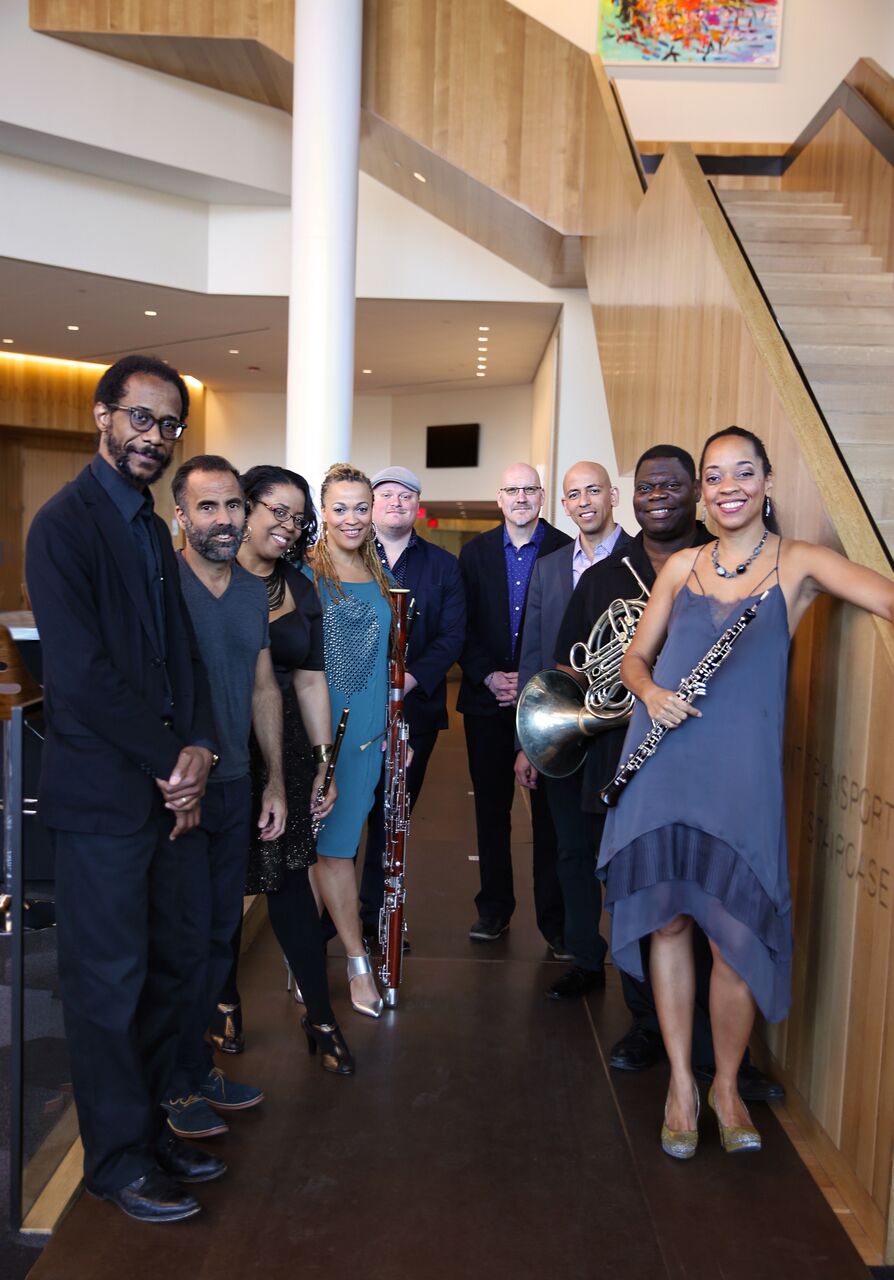
Pianist, composer, and arranger Edward Simon came to the United States from his native Venezuela to study music at the Philadelphia Performing Arts School when he was 12 years old!  After his graduation (at the age of 15), he went on the University of the Arts (also in Philadelphia, PA) to study classical music before heading to the Manhattan School of Music to study with jazz pianist Harold Danko.  By the age of 21, he was already working with musicians such as saxophonist Bobby Watson before going on to spend eight years in the Terence Blanchard Group. Simon has also created several groups, most notably Afinidad with co-leader alto saxophonist David Binney.  In 2010, he took over the piano chair in the SF Jazz Ensemble (from founding member Renee Rosnes) and in 2012 became a member of Ninety Miles, a cooperative featuring vibraphonist Stefon Harris, trumpeter Nicolas Payton, and saxophonist David Sanchez.

"Sorrows & Triumphs" (Sunnyside) is his 13th release as a leader. The program consists of two suites, one that bears the album's title and another titled "House of Numbers"  - there is also one track, "Incessant Desires", that was written for the SFJazz Collective.  Musicians include Afinidad (Binney, bassist Scott Colley, and drummer Brian Blade) plus guests Gretchen Parlato (vocals, lyrics), guitarist Adam Rogers, plus percussionists Rogerio Boccato (two tracks) and Luis Quintero (three tracks).  In an inspired move, instead of typical reed and brass sections, Simon invited the Imani Winds chamber ensemble and wrote a number of smashing arrangements.  Imani Winds, whose music covers a wide swath of musical territory (from  includes Valerie Coleman (flute), Toyin Spellman-Diaz (oboe), Monica Ellis (bassoon), Mark Dover (clarinet), and Jeff Scott (French horn).

There is quite a flow to this music, one that seems to run through every tune. Even ballads such as "Chant", the music flows gently from Ms. Parlato's whispery vocals to Binney's alto sax to Imani Winds. The restraint that Blade and Colley show as the music moves forward, not forcing the movement but allowing the piece to open up slowly. It's such a joy to hear the rhythm section take pieces such as "Equanimity" and the album opener "Incessant Desires" and guide the musicians forward (dig the bassoon echoing the bass lines on parts of the second track).  Also, note how Simon supports the alto sax solo before the voice and the winds return.  On the former track, Rogers moves out of the ensemble to create a splendid solo, melodic and quite rhythmic - Blade shines as he reacts to the solo and pushes him forward.  "Triangle" is a funky piece not just because of the great percussion work of Blade and Boccato but also because the horn arrangement and Simon's dancing piano have such a delightful joie de vivre.  "Venezuela Unida" opens with a short wind intro before the bass, drums, and congas/shakers drop into a sensuous rhythm. The melody dances along atop the bubbling bottom (reminiscent of Weather Report circa 1976).  Compare this version with Simon's arrangement for the new SFJazz Collective "Live: SFJazz Center" (released 4/13/2018) - the arrangement is quite similar but Blade and Quintero push the piece a bit differently than Obed Calvaire and Warren Wolf do: both versions are delightful.

The album closes with the enchanting "Triumphs" with Ms. Parlato delivering a lovely vocal after Colley's opening bass solo.  The hypnotic rhythms, the breathy saxophone, the quick, circular, figures played by the piano, all combine to draw the listener in.  If you listen closely, you hear Rogers's clicking guitar in unison with piano. Also, there's exciting synth work from the leader.  Ms. Parlato contributes the lyrics to the final cut, "Rebirth" - her quiet voice opens the song with just keyboard and bass accompaniment.  She enunciates every word before the bassist delivers a heartfelt solo over piano and brushes. When Simon steps out for his solo, Imani Winds enter with its individual voices adding emotional depth to the proceedings.

"Sorrow & Triumphs" really is quite triumphant. It is music that frees the spirit, music that is, at times, dreamlike and at other times, rooted to the rhythms Edward Simon heard growing up in Venezuela.  The impressive melodies, the intelligent arrangements, and the delightful musicianship are all good reasons why you should dig into this sublime recording.

For more information, go to www.edwardsimon.com.

Take a taste of the delightful sounds of "Triangle":

Sunday, August 20, 2017

American Voices: Poetry & Music

In the pantheon of great American poets, Carl Sandburg (1878-1967) has often gone in and out of favor (there are many folks who consider him a mere disciple of Walt Whitman) but there is little doubt that the Galesburg, Ohio native was an original. The son of Swedish immigrants, he had a number of jobs after college yet also published a three books of poetry before 1908. He married Lilian Steichen that year and began a career as a journalist.  At the same time, Sandburg became a Socialist and the influence of that political movement can be seen in a number of his poems.  In 1914, Poetry Magazine published a group of his poems which brought him to a wider audience which expanded greatly two years later with the publication of the "Chicago Poems."  Before the end of the decade, he had published another collection of poems and a prose essay on the Chicago race riots. He became financially independent in 1926 when the first   volume of his five-volume of Abraham Lincoln was published. His collections of American folk songs was also a big hit with the public and helped to bring more attention to indigenous music.  Sandburg won several Pulitzer Prizes during his lifetime, also played guitar accompanying himself at readings. He was truly a man of and for the "people."  (Check out a group of his poems and read his full biography by going to carl-sandburg.com.

Drummer and composer Matt Wilson has had a life-long interest in the work of Carl Sandburg. Born and raised in Knoxville, Ohio (the town to the west of Galesburg, the drummer's great-great aunt was married to the poet's first cousin - there is a picture in the album's booklet of Matt's father Tom with that cousin (Uncle Charlie).  For those who have followed Matt Wilson's career know that his first album as a leader, "As Wave Follows Wave" (1996 on Palmetto Records) is named for a Sandburg poem.  In 2001, he received a grant from Chamber Music America to create a program of original songs that featured selected works of Sandburg.  He put together a quartet with saxophonist and clarinetist Jeff Lederer, guitarist and vocalist Dawn Thomson, and  acoustic bass guitarist Martin Wind.  Cornetist Ron Miles joined the group along the way and in October of 2016, the ensemble, now dubbed Honey And Salt (yes, named for a 1962 collection of the poet's works), gathered at engineer Matt Balitsaris's studios on Maggie's Farm, and the results "Matt Wilson's Honey and Salt: Music Inspired by the Poetry of Carl Sandburg" is the drummer's ninth album for Palmetto.

photo by John Abbott
There is so much to like about this project.  Purists may be put off by the fact that the music encompasses many different styles, from rockabilly to swing to folk to avant-garde to "cool jazz" and more.  Before this project, I had not heard much of the work of Dawn Thomson so her presence is a revelation: she has a fine vocal style, displaying a fine range as well as great emotion plus her guitar  is a wonderful voice in the mix, especially her rhythm work and background playing. Jeff Lederer and Ron Miles are a formidable team, the former for his ability to both enliven the proceedings as well as be soothing in the background while the latter has such a warm sound, even his "wilder" excursions have a sense of comfort in them.  Martin Wind plays exclusively acoustic bass guitar; it's the first time he's recorded using just that style of bass but the depth of his notes and his active foundational lines plus his counterpoint lines often stand out.

jchriss.com
Then there's the leader.  It's so obvious that this project is a labor of love; these compositions are among the best Matt Wilson has composed in his career, illuminating his senses of melody, harmony, interaction, and, of course, fun.  He creates a duet with the poet on "Fog" - the poet's voice is heard first, then the drums joins playing the voice patterns of Sandburg.  The drummer plays a call-and-response pattern, first, the melody then the interpretation in a wonderful give-and-take. There are several other tracks on which the drummer plays the melody lines.

photo by VH Guidini
The album is broken into three "Chapters" and an "Epilogue" with 18 tracks. Besides Ms. Thomson's vocals and the poet's recorded voice, nine of the tracks feature recitations from the drummer, Jeff Lederer, Christian McBride, John Scofield, Jack Black, Bill Frisell, Rufus Reid, Joe Lovano, and Carla Bley.  Frisell reads "Paper 2" which opens the poem read over a light guitar accompaniment before breaking into a raucous, bopping track, with solos from Lederer (a raucous tenor spotlight), Ms. Thomson (a "cool" jazz romp, and Miles (an easy jaunt over the "groovin'" rhythm section.  In fact, do listen to how Wind and Wilson push the piece. The poem is repeated this time with the entire quintet offering counterpoint. Two tracks later, Lovano reads "Paper 1" over the same light guitar accompaniment but the piece fades on the recitation.  In between, Rufus Reid's sonorous bass voice reads "Trafficker", one of the darker poems in the program (about a worn-out prostitute) - the track opens with Wilson's quiet brushes work, then adds Miles's muted cornet, Wind's bass, and the "midnight blue" tenor sax.

Your initial surprise to the different sounds this quintet makes (Lederer also plays clarinet, bass clarinet, piccolo, and harmonium) should turn into admiration and, finally, to joy.  The beauty of pieces such as "To Know Silence Perfectly" (read by Ms. Bley), "Stars, Songs, and Faces", and "I Sang" (both sung by Ms. Thomson) may create quite a positive emotional response. Check out the fiery funk of "Anywhere and Everywhere People" read by McBride as the quintet "rocks out" and the power march of "Choose" (Lederer's piccolo takes a starring role) with its Charles Ives-like leanings will make you smile.

"Matt Wilson's Honey and Salt: Music Inspired by the Poetry of Carl Sandburg" is a smashing achievement. Wonderfully musical, deeply emotional, and so much fun - what more could one want from an artist?  Take it on the road and expose more people to the "populist" poetry, the fascinating melodies, and great band that Matt Wilson has put together in this heartfelt project.  Listen, listen deeply!

For more information about the project and the upcoming September 2017 tour dates, go to www.mattwilsonjazz.com.

Here's a tune with a "country" twang:


photo by John Dolan
Soprano saxophonist and composer Jane Ira Bloom released "Early Americans" in 2016, a trio date with bassist Mark Helias and drummer Bobby Previte, both of whom she had recorded with extensively.  Her new project, "Wild Lines: Improvising Emily Dickinson" (Outline), brings back pianist Dawn Clements who recorded with this ensemble on 2011's "Wingwalker" (the pianist is also featured on Ms. Bloom's 2008 album "Mental Weather" with Helias and drummer Matt Wilson!) Ms. Bloom's latest adventure came about when she discovered that Emily Dickinson (1830-1886) was a pianist and an improviser, a quality the composer could see in the poetry.  After receiving a commission from Chamber Music America/Doris Duke New Jazz Works, Ms. Bloom put together the program that one hears on these two CDs.  There are 14 original compositions plus a solo soprano saxophone reading of the Rodgers & Hart classic, "It's Easy To Remember."


One might be tempted to start with CD 2 because you hear the lines of Ms. Dickinson's that prompted the compositions. Read by actress  Deborah Rush (Broadway and television), most of the pieces are read before the pieces (there are several exceptions).  But you really can hear how pieces like "Emily & Her Atoms" and "One Note from One Bird" (excerpt from "The Gorgeous Nothings") are built from the poems and poem fragments.  The latter tune does open with one note from the piano before Ms. Rush intones "One note from/ One Bird/ is better than/ a million words/...A scabbard/ Needs/ has - holds/ but one/ sword"  - listen to how the quartet expands that one note and those words outward away from its simple center into a musical meadowland with a sweeping melody and roiling drums.

Deborah Rush
Then there's "Singing The Triangle" during which a letter that the poet wrote that tells of her excitement that "G.F. Bailey's & Co. Great Triple Combination/ will exhibit in Amherst!/ On Friday, May 4th, 1866" - the music is a rollicking illustration of excitement, derring-do, and exuberance (one can almost hear the crowd "oohing and aahing" at the high-wire acts.  The listener may have expected the music to be fairly somber as befits certain opinions of Ms. Dickinson's poems.  Yet, throughout the album, the music bubbles over with glee.  "Cornets of Paradise" opens with powerful drums behind Ms. Rush (pictured left) reciting "Over and over, like a Tune/ The Recollection Plays/ Drums off the Phantom Battlements/ Cornets of Paradise/" - the drums drop out and there soprano sax enters wailing high - Ms. Rush continues with "Snatches, from Baptized Generations/ Cadences too grand/ But for the Justified Processions/ At the Lord's Right Hand."  There 's a quick snippet of gospel and then the quartet goes into an inspired improvisation before moving back right before the close to a modified barrelhouse blues.

CD 1 features the same instrumental tracks in a different order (save for the final two track on both discs being the exuberant "Big Bill" and the Rodgers & Hart tune).  The music is just as exciting without the poetry but this listener really enjoys how Ms. Bloom integrates the lyricism of the poetry with the often flowing lines of the quartet.  "Say More", on disc 1, opens with a lovely soprano melodic fragment with Previte's quiet percussion, the occasional bass melody, and Ms. Clement's lyrical piano. The piece moves slowly forward and up away from the opening line. Add Ms. Rush's vocal performance and the lyrics to the music, the piece opens up to new interpretations.

photo: Lucy Gram
"Wild Lines" is a magnificent recording, filled with intelligent and open melodies, inspired interactions, and a collective love of exploration. One should not discount how well the Quartet works together, the powerful and graceful contributions of Mark  Helias and Bobby Previte, the excellent piano playing of Dawn Clement, and, of course, the wonder-filled work of Jane Ira Bloom. The artist could have chosen to release either one of these discs as her new album, they're both delightful on their own.  Together, "Wild Lines" gives the listener an intimate description of the creative process, how the sounds and meanings of words can be translated to the sounds of music, that the creative process can truly be an infinity of riches.  This is a joyful experience for the musicians and for the audience.

For more information, go to www.janeirabloom.com.  Release date for the album is September 8, 2017 and is available for pre-order at amazon.com.