My original plan was not to isolate the recordings made by women into a separate post but these albums are so good that I could not resist.
Jo Lawry – "Acrobats" (Whirlwind Recordings) – What a real treat is this most delightful of Trio albums. Here, Ms. Lawry's voice is supported, pushed, prodded, cushioned by the excellent playing of bassist Linda May Han Oh and drummer Allison Miller. The title track, composed by fellow Australian Gian Slater, perfectly describes not only the lives of musicians in the 21st Century but also the exploratory nature of this program. The majority of the program is made of "standards" but there is absolutely nothing standard about this album. This listener found himself exclusively listening to the album over the course of a full week. Never too late to take the leap into this album!!
Nicole Zuraitis – "How Love Begins" (OutsideIn Music) – The genesis of singer, songwriter, and pianist Zuratis's fifth album as a leader was a meeting with bassist Christian McBride in 2018 who heard her playing in a New York City piano bar and said "we should do something together". The results of the duo working out the details amidst the Pandemic slowdown are a pure delight. Ms. Zuraitis's vocal work is the most assured of her career and co-Producer McBride makes sure we also hear what a fine pianist she is. With her husband Dan Pugach on drums, the sound is filled out by guitarist Gilad Hekselman, Maya Kronfeld on keys, and Mr. McBride's bass pushing the proceedings forward, this program is quite strong and quite listenable.
Magos Herrera – "Aire" (Sunnyside Records) – 2023 was the year this listener truly discovered the brilliant and adventurous Mexican-born vocalist Magos Herrera. I had heard of her before but this year, a deeper dive was called for. What a supple, emotional, and often stunning voice –– when she inhabits the song, you may not understand the words but, pay attention, you'll get the message. Surrounded by her "working" trio of guitarist Vinicius Gomes, bassist Sam Minaie, and drummer Alex Kautz plus a slew of guests (including an "orchestra" conducted by Eric and Colin Jacobsen), this music sounds alive, full of possibility, aware of the sufferings of the heart but open to hope. The 12-song program includes classic songs, originals, brilliant arrangements, and that marvelous voice.
Edward Simon, Featuring Magos Herrera – "Femeninas" (ArtistShare) – Right around the same date "Aire" was issued came the new ArtistShare project from pianist Edward Simon. Subtitled "Songs of Latin American Women", the program is that and more. Ms. Herrera joins Simon, bassist Reuben Rogers, drummer Adam Cruz, and percussionist Luis Quintero (plus guest Romero Lubambo playing guitar on several tracks) performing a 11-song program of works associated withJoyce Moreno (Brazil), Elizabeth (Chile), Chabuca Granda (Perú), Violetta Parra (Chile), Marta Valdés (Cuba), Rosa Passos (Brazil), and Georgina Hassan (Argentina). The excellent arrangements, the splendid musicianship, and the wonderful vocals makes this a "project for the ages".
Watch Mr. Simon and Ms. Herrera perform two pieces from the "Femeninas" project:
Gretchen Parlato & Lionel Loueke – "Lean In" (Edition Records) – This is an intimate collection of songs from two fine musicians who have known each other several decades. Basically a duo album (there are several guest contributors) but the focus of the music is on the interplay of the voice and guitar. Both leaders brought music to the sessions yet the program feels and sounds organic. Mr. Loueke's guitar work is superlative throughout as are Ms. Parlato's vocals –– it's amazing how rhythmical this music is, how percussive the guitar work can be, and how sweet the results are. Let's hope this is just the first Editions Recording of this splendid duo.
Over the past month, I have listened to four different albums featuring vocalist, composer, and activist Magos Herrera. 2018 saw the release of "Dreamers" (Sony Music/Mexico), her brilliant collaboration with Brooklyn Rider while December 2020 was the release date for "Con Alma: An Operatic Tableau on Isolation" (National Sawdust Tracks), Ms. Herrera's album with Italian-born composer Paola Prestini. The newer albums are reviewed below.
For those who don't know Magos Herrera, she's a native of Mexico City who came to the United States in 1992 to study at The Musicians Institute in Los Angeles. She continued her studies in Boston, MA, before returning to Mexico. Her first four albums as a solo artist were recorded in her home city. In 2008, Ms. Herrera moved to New York City and, one year later, released "Distancia" on Sunnyside Records––two years later, she followed up with "México Azul" for the same label. Since then, she was 1/2 of the duo Magos & Limón (Spanish guitarist Javier Limón) that recorded two albums for Sony Music. What stands out for this listener includes her persuasive contralto voice, how she inhabits each song whether she's singing in Spanish, Portuguese, or English, and how she obliterates "borders" in her music (is she a jazz singer, a classical chanteuse, or a folk artist? Yes, all that and more.
"Aire" is her 11th album as a leader, her third for Sunnyside, the first release for that label in 12 years. With her regular working trio of Vinicius Gomes (acoustic guitar), Sam Minaie (bass), and Alex Kautz (drums and percussion) plus guest Ingrid Jensen (trumpet and flugelhorn on two tracks), Dori Caymmi (voice on "Samba em Preludio"), and Gonzalo Grau (percussion on three tracks). The Knights, the 21-member chamber orchestra (see personnel below) also appear on 10 of the 12 tracks playing arrangements by Mr. Grau, by Argentinean pianist Diego Schissi, and the great Brazilian composer and arranger Jaques Morelenbaum ("Samba em Preludio"). The material includes five originals by Ms. Herrera as well as compositions by Chilean folklorist Violetta Parra (1917-1967), by Ariel Ramírez & Félix Luna, by Guinga & César Pinheiro, by Danilo Moraes & Paulo Cesar de Carvahlo, and by Vinicius de Moraes & Baden Powell.
Photo: Shervin Lainez
There's so many reasons to listen to "Aire", not the least of which is how strong these songs are and how the vocalist works with both the trio and the orchestra. Whether it's the dancing rhythms of the title track that opens the album (Grau's arrangement is both lavish and supportive) or the gentle swaying of "Samba em Preludio" (the blend of 79-year old Caymmi's handsome voice with the supple quality of Ms. Herreras voice is charming and touching), the music touches the heart. Quiet guitar introduces Violetta Parra's "Gracias a la Vida" but note how Schissi's arrangement first introduces the reeds and then the strings move around under the voice. Add Ingrid Jensen's occasional trumpet responses to the vocal rises above the orchestra and the piece has a "magical-realism". Guinga's "Passarinhadeira" (finch) is just voice and guitar––Ms. Herrera sings so gently over Gomes's finger-picked acoustic guitar that one must lean into the song. Schissi's handsome string writing behind the wordless vocal on the short "Papalote Intro" leads the listener into Ms. Herrera's original piece. Gomes's delightful guitar solo follows the theme with The Knights' caressing sounds swimming around beneath him. They do the same for Ms. Herrera's wordless vocal improvisation.
The album closes with "Healer", a piece dedicated to and featuring the voice Maria Sabina(1894-1985), the Mexican shaman, in the opening moment. Ms. Sabina not only used herbs, peyote, and mushrooms but also the voice to heal people. Ms. Herrera uses her voice to deliver the message of healing through music and the celebration of life. The blend of percussion, voices, guitars, and The Knights brings "Aire" to a magical and delightful close.
Magos Herrera has created a panacea to the fear and worries of the past few years, music to escape the myriad voices of argument and disagreement of people who use words to hurt and stress their superiority. Can music heal our souls? Ms. Herrera believes so and this magnificent album serves as her proof!
Colin Jacobsen, Christina Courtin, Abi Fayette, Alex Fortes, Kristi Hellberg, Nannte Iwata, Yaira Matyakubova - violin
Mario Goto, Celia Hatton - viola
Gabriel Cabezas, Jia Kim - cello
Grey Fulmer - bass
Alex Sopp - flute
Michelle Farah - oboe
Agnes Marchione - clarinet
Edward Burns - bassoon
Karl Kramer-Johansen - horn
Micah Killian - trumpet
Dave Nelson - trombone
Megan Conley - harp
Blair McMillen - piano
license
Listen to "Choro de Lua":
Venezuelan-born pianist and composer Edward Simon first met Magos Herrera in 2017 when he, his trio members (bassist Joe Martin anddrummer Adam Cruz) and the vocalist performed together in a 2017 tribute concert honoring the great Argentine vocalist Mercedes Sosa (1935-2009). That planted the seed in the pianist's mind to create a follow-up to his 2016 Sunnyside Records album "Latin American Songbook". This time, Simon with Herrera and the Trio, would focus on Latin American women composers and performers. In addition, the ensemble (with bassist Reuben Rogers replacing Martin and now including and guest percussionist Luis Quintero) worked on a commission that Simon received from the Chamber Music's New Jazz Works––"Latino Soy" is a three-movement piece, two movements featuring lyrics sung and spoken by Ms. Herrera.
"Femeninas: Songs of Latin American Women" (artistShare) is an 11-song, 63-minute, program that pays tribute to artists such as Joyce Moreno (Brazil), Elizabeth (Chile), Chabuca Granda (Perú), Violetta Parra (Chile), Marta Valdés (Cuba), Rosa Passos (Brazil), and Georgina Hassan (Argentina). Opening with Ms. Moreno's "Feminina", the music jumps out of the speakers on the lively rhythms created by the trio plus the crisp acoustic guitar of Romero Lubambo (one of his two appearances on the album). After Ms. Herrera delivers the lyrics, composed as a question to a Mother as to what "female" means, Rogers takes a delightful, melodic, solo and Quintero adds a short solo. That leads into Ms. Morris's lovely ballad "Décimas"–Simon's arrangement does not stray too far from the original until he pushes the tempo in the second half of the piece. Again, Roger's melodic bass lines stand out not only as foundational but in counterpoint to the vocal.
Simon's suite, "Latino Soy", takes up 1/3rd of the album's running time. "Naked Sky" features original English lyrics by Ms. Herrera. The music slowly builds up behind the vocal into a fast bolero––Cruz's drumming and brush work stand out as do the richly melodic solo Simon creates. "Buleria" is even quicker, with the feel of flamenco (Simon's piano captures the feel of a guitarist). The break in the middle for drums, handclaps, and percussion sets up a powerful with Ms. Herrera's wordless vocal soaring above the ensemble. Here, the overdubbing creates a responsive chorus that is hypnotic, mesmerizing. The final section, "Mujer Remolino", takes its title from one of the nicknames of the shaman Maria Sabina (see above)––the words translate to "Whirlwind Woman". The medium-tempo piece opens up to a long, twisting, rhythmical, piano solo. After a break where Ms. Herrera joins in on wordless vocal, she then begins to read the words of one of the Mexican shaman's healing ceremonies.
Other highlights include the stunning "Gracias de la Vida" ("Here's to Life") from the pen of Ms. Parra. After the voice and piano move through the verses, Cruz enters to "converse" with Simon during his solo. Rogers joins them for the final verse of the song. The song then breaks into double-time, a dramatic close to quite a dramatic piece. Lubambo returns for Ms. Passos "Dunas" (lyrics by Fernando de Oliviera), a delicious Bossa Nova with a pleasing solo from Simon.
The program closes with "Hacia Donde" ("where" or "wherever"), a lovely ballad composed by Ms. Valdés (born 1928) for voice and piano. One may not understand Spanish but you cannot miss the pensive mood of the singer and the gentle, "formal", piano in the background that carries that introspective and emotional mood throughout the performance.
When you sit and listen through "Femeninas" several times, you can really hear how the pairing of Magos Herrera and Edward Simon is magic. One feels, actually intuits, that they have worked together for many years. Yet, that's just part of the magic of this project. The rhythm section is powerful, able to "groove" and support in equal measure. Simon's piano work is clear, his phrases articulate, and his arrangements intelligent and respectful. Ms. Herrera's voice is so wondrous, her ability to express emotions and transport listeners beyond the mundane explains why every project she is involved with is worth investigating.
Canadian-born poet, essayist, and novelist Margaret Atwood (born Ottawa, Ontario, Canada) 1939) is currently enjoying renewed popularity these days thanks to HULU's production of "The Handmaid's Tale" and NETFLIX's production of "Alias Grace." Her depictions of dystopian societies hits home in this time of Boko Haram and ISIS. Before her novels became popular, she wrote numerous volumes of poetry and that's where composer and saxophonist Andrew Rathbun (a native of Toronto, Ontario, Canada) has concentrated his attention. He has taken several poems written 40+ years and created a pair of suites that are part of an ambitious project that takes Ms. Atwood's poetry and his music on a fantastic voyage.
"Atwood Suites", featuring the 16-member Andrew Rathbun Large Ensemble and released by Origin Records, is a fascinating two-CD sonic adventure. Joining the ensemble for the first CD is vocalist Luciana Souza and soloist Tim Hagans (flugelhorn): one can hear the influence of Kenny Wheeler especially on "Power Politics I-III" , a piece the late trumpeter/flugelhornist performed with Rathbun after their 2002 Fresh Sound New Talent collaboration "Sculptures." One can hear tinges of Wheeler in Hagan's impressive solos and his the horns and brass interact with him plus the fine rhythm section - Nate Radley (guitar), Jeremy Siskind (piano, Fender Rhodes), Dave Ambrosio (bass), and Bill Stewart (drums) - that pushes the music forward. The sectional work throughout is impressive (a full list of the personnel is below). While Hagans is the principal soloist on disk one, there is also sterling performances from saxophonists Quinsin Nachoff (tenor), Dan Pratt (tenor), John O'Gallagher (alto) plus trombonist Mike Fahie and guitarist Radley.
The "Suites" succeed on many levels but pay special attention to the tremendous vocal work of Ms. Souza (pictured left). Oftentimes, this combination of large ensemble, poetry, and vocals can sound pretentious or stodgy but, the singer inhabits the poetic fragments that tell of the interaction of men and women, of love and being subsumed in relationships There are also moments when Ms. Souza sings wordless lines alongside one of the sections. Her voice glides, the words flow, sometimes, there is fire, other times, subtle interactions with the musicians. After a lovely reed introduction, "Two Islands" opens with just voice and piano: the melody is lovely (Siskind is a fine accompanist) perfectly suited for Rathbun's long and supple melody line. Hagan's burnished tone and lyrical solos stand out in fine contrast to the vocal, the sectional work, and Stewart's powerful push.
Photo: Dominic Gladstone
Disk two opens with "Fractured", a perfect title for the jagged melody that introduces the piece. Aubrey Johnson wordless vocals support the melody, serve as counterpoint on the Fender Rhodes solo, and float effortlessly along with the sectional work. Owen Howard takes over for this track and the first one of there suite below and his solid, swinging, style gives the tracks an excellent boost. The final three tracks are also part of suite Rathbun composed in 2012 (they were first performed that year). Presented out of order, - "V", "I", and "II" features sumptuous melodies, two separate compositions that open with "chorales" ("V" with just reeds, "II" with reeds and brass), and all three take time to introduce thematic material before heading into solos. This is music that, at times, seems to float (the influence of Kenny Wheeler's "airy" sound permeates "I") and the use of the different sections (notably the range of the various reeds, including flutes) of the band alongside the voice is creative and satisfying.
"Atwood Suites" is serious music yet such a joy to sit and listen. Andrew Rathbun has taken his time to create a program that takes several of his older pieces and the use of a larger ensemble gives him more possibilities. With the help of his co-producer George Schuller, he's made music that will stick to your mind even as it takes you out of the everyday.
REEDS: John O'Gallagher - Soprano, Alto Saxophones Ben Kono - Alto Saxophone, Flute, Clarinet Quinsin Nachoff - Tenor Saxophone, Clarinet Dan Pratt - Tenor Saxophone, Flute, Clarinet Carl Maraghi - Baritone Saxophone, Bass Clarinet
TRUMPETS: Seneca Black - Trumpet Matt Holman - Trumpet, Flugelhorn Dave Smith - Trumpet, Flugelhorn Russ Johnson - Trumpet, Flugelhorn Tim Hagans - Flugelhorn (1-6, soloist)
TROMBONES: Alan Ferber - Trombone Mike Fahie - Trombone JC Sanford - Trombone Chris Olness - Bass Trombone
RHYTHM/VOICE Luciana Souza - Voice (Disc 1) Aubrey Johnson - Voice (Disc 2) Nate Radley - Guitar Jeremy Siskind - Piano, Rhodes David Ambrosio - Bass Bill Stewart - Drums Owen Howard - Drums (1,2 Disc 2) Here's a look at how the album came together:
Pianist, composer, and arranger Edward Simon came to the United States from his native Venezuela to study music at the Philadelphia Performing Arts School when he was 12 years old! After his graduation (at the age of 15), he went on the University of the Arts (also in Philadelphia, PA) to study classical music before heading to the Manhattan School of Music to study with jazz pianist Harold Danko. By the age of 21, he was already working with musicians such as saxophonist Bobby Watson before going on to spend eight years in the Terence Blanchard Group. Simon has also created several groups, most notably Afinidad with co-leader alto saxophonist David Binney. In 2010, he took over the piano chair in the SF Jazz Ensemble (from founding member Renee Rosnes) and in 2012 became a member of Ninety Miles, a cooperative featuring vibraphonist Stefon Harris, trumpeter Nicolas Payton, and saxophonist David Sanchez.
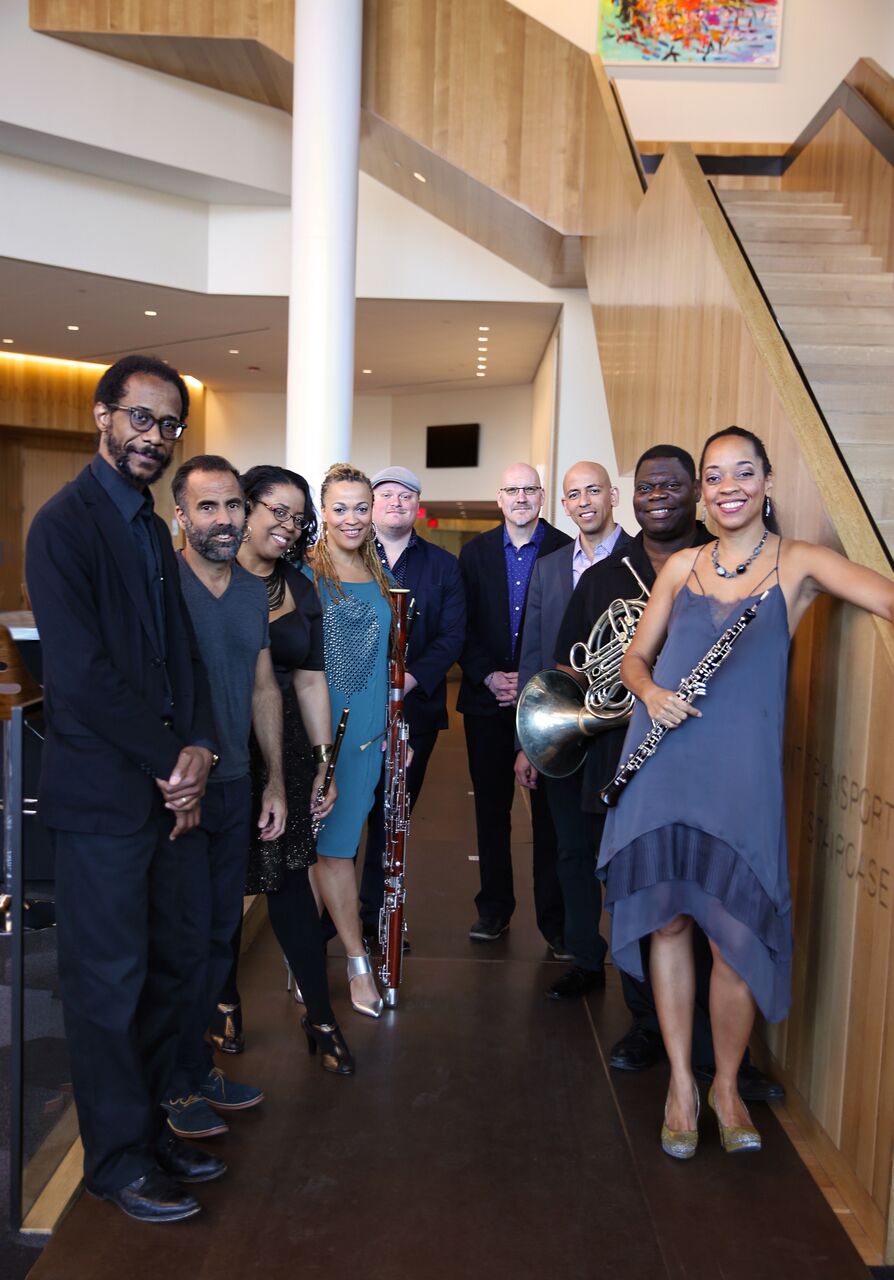
"Sorrows & Triumphs" (Sunnyside) is his 13th release as a leader. The program consists of two suites, one that bears the album's title and another titled "House of Numbers" - there is also one track, "Incessant Desires", that was written for the SFJazz Collective. Musicians include Afinidad (Binney, bassist Scott Colley, and drummer Brian Blade) plus guests Gretchen Parlato (vocals, lyrics), guitarist Adam Rogers, plus percussionists Rogerio Boccato (two tracks) and Luis Quintero (three tracks). In an inspired move, instead of typical reed and brass sections, Simon invited the Imani Winds chamber ensemble and wrote a number of smashing arrangements. Imani Winds, whose music covers a wide swath of musical territory (from includes Valerie Coleman (flute), Toyin Spellman-Diaz (oboe), Monica Ellis (bassoon), Mark Dover (clarinet), and Jeff Scott (French horn).
There is quite a flow to this music, one that seems to run through every tune. Even ballads such as "Chant", the music flows gently from Ms. Parlato's whispery vocals to Binney's alto sax to Imani Winds. The restraint that Blade and Colley show as the music moves forward, not forcing the movement but allowing the piece to open up slowly. It's such a joy to hear the rhythm section take pieces such as "Equanimity" and the album opener "Incessant Desires" and guide the musicians forward (dig the bassoon echoing the bass lines on parts of the second track). Also, note how Simon supports the alto sax solo before the voice and the winds return. On the former track, Rogers moves out of the ensemble to create a splendid solo, melodic and quite rhythmic - Blade shines as he reacts to the solo and pushes him forward. "Triangle" is a funky piece not just because of the great percussion work of Blade and Boccato but also because the horn arrangement and Simon's dancing piano have such a delightful joie de vivre. "Venezuela Unida" opens with a short wind intro before the bass, drums, and congas/shakers drop into a sensuous rhythm. The melody dances along atop the bubbling bottom (reminiscent of Weather Report circa 1976). Compare this version with Simon's arrangement for the new SFJazz Collective "Live: SFJazz Center" (released 4/13/2018) - the arrangement is quite similar but Blade and Quintero push the piece a bit differently than Obed Calvaire and Warren Wolf do: both versions are delightful.
The album closes with the enchanting "Triumphs" with Ms. Parlato delivering a lovely vocal after Colley's opening bass solo. The hypnotic rhythms, the breathy saxophone, the quick, circular, figures played by the piano, all combine to draw the listener in. If you listen closely, you hear Rogers's clicking guitar in unison with piano. Also, there's exciting synth work from the leader. Ms. Parlato contributes the lyrics to the final cut, "Rebirth" - her quiet voice opens the song with just keyboard and bass accompaniment. She enunciates every word before the bassist delivers a heartfelt solo over piano and brushes. When Simon steps out for his solo, Imani Winds enter with its individual voices adding emotional depth to the proceedings.
"Sorrow & Triumphs" really is quite triumphant. It is music that frees the spirit, music that is, at times, dreamlike and at other times, rooted to the rhythms Edward Simon heard growing up in Venezuela. The impressive melodies, the intelligent arrangements, and the delightful musicianship are all good reasons why you should dig into this sublime recording.

 Posts
Posts


.jpg)