Showing posts with label Live at the Village Vanguard. Show all posts

Friday, January 6, 2023

Intimate yet Playful, Big Band Brazilian

Two years ago, in the initial months of the COVID-19 pandemic, esperanza spalding and Fred Hersch issued a live recording with five songs they recorded in 2018 at the Village Vanguard. The digital-only album was posted on a special Bandcamp page with all proceeds from sales to the Jazz Foundation of America, an organization raising money to assist musicians affected by the international work stoppage. The album was posted for six weeks only (my review is here) and, unless you own it, disappeared from sight (and sound).

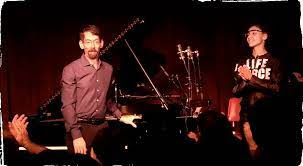
Until now, that is. "Fred Hersch & esperanza spalding: Alive at the Village Vanguard" (Palmetto Records) is available again and, great news, the program has been expanded to eight songs: the "original" five plus "My Little Suede Shoes" from Charlie Parker (first recorded in 1951), Thelonious Monk's "Evidence", and Mr. Hersch's lovely "A Wish" (that he first recorded with Norma Winstone in 2003).  The new "additions" make the album even better (and the earlier version was quite delightful).  Ms. spalding sticks to vocals and she's a great front-person.  Her introduction to Bobby Troup's "Girl Talk" and patter throughout is hilarious but make sure to pay attention the delightful piano that plays along.  "But Not for Me" opens the album and really sets the pace–listen below and just how playful both the lady and gent can be (one can just see lyricist Ira Gershwin laughing along with ms. spalding's joyous interpretation).  Egberto Gismonti would be thrilled to hear the duo dance through "Loro" (the vocalist even stops her wordless jaunt to to say "bless you" to a patron who sneezed).  

Photo: Facebook
O, how imaginative and expansive are the duo's performances of the two pieces from Monk.  Actually "Dream of Monk" is Mr. Hersch's reimagining of "Monk's Dream" with original lyrics by the pianist––the vocal is so good especially when ms. spalding is scatting but dig the piano solo. "Evidence" captures the duo in full flight, playfully deconstructing Monk's original theme before the pianist creates a series of inventions around the theme and the rhythm.  

How much one wishes to be in an audience when these fine people are playing.  In fact, the duo is celebrating the release with 20 dates starting January 8th and running through February 5th (more information can be found by going to https://fredhersch.com/tour/.). For those of us who can't get to any of the gigs, "Fred Hersch & esperanza spalding: Alive at the Village Vanguard" is an absolute gem!

Listen to how the opening track, "But Not For Me" sets the pace for the entire set:


Photo: Leo Aversa
Brazilian-born saxophonist, composer, arranger, and conductor Gaia Wilmer was already a busy musician in her homeland before coming to the United States to study at Berklee Collee of Music and New England Conservatory (both located in Boston, MA).  One of her teachers, Frank Carlberg, released Ms. Wilmer's US debut "Migrations" on his Red Piano Records label and serves as co-Producer on her new Sunnyside Records album "Folia: the Music of Egberto Gismonti". 

The two-CD set (released on 1/13/23) features her 19-member Large Ensemble plus special guests Gabriel Grossi (harmonica on one cut) cellist Jaques Morelenbaum (on one track), and the honoree Mr. Gismonti (piano on two tracks). One of those tracks with the composer, "7 Aneis", features thunderous piano which during the unaccompanied solo section sounds like Art Tatum interpreting the song of birds but notice how the reed section is so melodic in contrast to the piano.  There's a touch of birdsong in the opening of "Bianca", dedicated to the composer's daughter, but it opens up to a Near Eastern rhythm with a handsome melody atop it. Mr. Morelenbaum, who has recorded a duo album of the music of Caetano Veloso with Ms. Wilmer, joins the ensemble for the lovely "Infancia"––the cellist steps out unaccompanied for a moment in the middle of the song before the rhythm section enters pushing up the tempo. The rest of the piece features various members of the ensemble in a call-and-response with the piano, bass, and drums before they dive into the lively melody!  The last several minutes features pianist Rafael Martini playing a classically-inspired coda that brings the Ensemble back for a short reprise of the original melody. 

CD two opens with "Lôro", one of Mr. Gismonti's most recorded melodies. The arrangements opens with flutists Maiara Moraes and Aline Gonçalves wrapping their sweet lines around each other before the Ensemble plays an introduction to Mr. Grossi–his lively harmonica solo, reminiscent of the sound of the late Toots Thielemans, is accented by staccato blasts from the reeds and brass. Then, the ensemble breaks into the frolicking melody line.  Later on, Mr. Grossi returns for an exciting romp of a solo.  The composer returns to lead the musicians into "Karatê", yet another romp. Listen to how he and Mr. Martini (on accordion) dance their way through the melody line. The accordion solo jumps off the brass interjections before that section leads the group back into the melody. That song plus "Cego Aderaldo" both come from Mr. Gismonti's 1980 "Circense" album. The latter track opens somberly before the Ensemble breaks into the exciting rhythmic and melodic variations created by the arranger. Different voices step out throughout the performance (there is a splendid flute and clarinets interaction that is joined a minute on by the soprano sax). Guitarist Luciano Camara has a short, handsome, unaccompanied solo before the rest of the rhythm section enters (there's also a momentary vocal exchange between the women and men of the Ensemble right before a spirited exchange between the drums, muted trumpet, and clarinet).  


"Folia" closes with "Baiâo Malandro", a piece that opens at a blistering tempo before introducing the amazing melody line that rises high before sliding back down.  After a series of pinpoint twists-and-turns, there's a series of short solos including flute and flugelhorn (Diego Garbin) that grow into a rollicking call-and-response over the rampaging rhythm section.  Drummer Lourenço Vasconcellos (son of pianist Renato Vasconcellos) steps out for just a moment before the Ensemble returns with an exciting close to a delight-filled album.

Gaia Wilmer has crafted quite a wonderful tribute to Egberto Gismonti. She's credited as having "arranged, recomposed, and conducted" the music and the Large Ensemble. While she does not play a note, her arrangements are colorful, imaginative, thoughtful, witty, and most impressive. Chances are very good you've never heard of many or all of the 19 members who comprise her group but a deep dive will show that each one is a busy musician and educator in Brazil and beyond.  Start the New Year with "Folia: The Music of Egberto Gismonti"––the music and performances will make one feel like the sun shining even on the darkest days!

Learn more about Ms. Wilmer by going to www.gaiawilmer.com.  To purchase "Folia", go to  https://sunnysiderecords.bandcamp.com/album/folia-the-music-of-egberto-gismonti.

Hear "7 Anéis" featuring Mr. Gismonti:


Personell:

Gaia Wilmer - arranger, conductor

Special Guests:
Gabriel Gross - harmonica
Jaques Morelenbaum - cello
Egberto Gismonti - piano


Orchestra:
Maiara Moraes - reeds
Aline Gonçalves - reeds
Fernando Trocado - reeds
Rui Alvim - reeds
Gustavo D'Amico - reeds
Joana Queiroz - reeds
Henrique Band - reeds
Bruno Soares - trumpet
Diego Garbin - trumpet
Gilson Santos - trumpet
Pedro Paulo Junior - trumpet
Rafael Rocha - trombone
Everson Moraes - trombone
Jonas Hocherman - trombone
Leandro Dantas - bass trombone
Luciano Camara - guitar
Rafael Martini - piano & accordion
Mayo Pamplona - bass
Lourenço Vasconcellos - drums

Saturday, May 23, 2020

Esperanza & Fred: Great Music for a Good Cause!

Over his career, pianist and composer Fred Hersch has performed and recorded in the duo setting many times with partners such as Jay Clayton, Norma Winstone, Bill Frisell, Anat Cohen, Jane Ira Bloom, and more.  Up until this year, he's been holding an annual Duo Invitation Series in New York City (at The Jazz Standard with select dates at The Village Vanguard and Jazz at Lincoln Center).  Since the pandemic struck the United States, Mr. Hersch and his fellow musicians have been "sheltering" at home but that has not stopped from beginning a video series of daily (for a while) and weekly "living room" shows (which started daily on Facebook and is now weekly on Patreon – to subscribe, go to www.patreon.com/fredhersch).

This week and through the end of June, you can hear and purchase "Esperanza Spalding & Fred Hersch: Live at The Village Vanguard".  Recorded in October of 2018, this five-song program carries the subtitle "Rough Mix EP" and is being made available exclusively on Bandcamp (link below).  On the site, the artists tell you that "all proceeds benefiting the Jazz Foundation of America and the organization’s efforts to assist members of the jazz community impacted by the COVID-19 pandemic." 

It's a delightful program –– the material includes one Fred Hersch original ("Dream of Monk"), "Loro" (Egberto Gismonti), "But Not For Me" (George & Ira Gershwin), "Some Other Time" (Sammy Cahn and Jules Styne), and the album's centerpiece, a hilarious take on "Girl Talk" (composed by Neal Hefti and Bobby Troup, made famous by Julie London –– watch Troup's video on YouTube for a comparison ). Ms. Spalding is in excellent voice and her sense of humor is evident throughout right through the dancing version of Gismonti's tune. As for Mr. Hersch, he proved years ago that he's a wonderful accompanist and he, too, is in "excellent voice."  

Music for a good cause?  Absolutely!  Good music??  No! No? Great music! Fun music! If you're not in a good mood after listening to "Esperanza Spalding & Fred Hersch: Live at The Village Vanguard", our prayers go out to you!

Go to https://esperanzaspaldingfredhersch.bandcamp.com and help these two artists help support the jazz community in this time of real need.

Thursday, January 17, 2019

An Unexpected Sabbatical, A Treasure of Nichols, & A Splendid Historical Issue

Life is filled with twists and turns with unexpected events happening throughout. Sometimes we are prepared, other times we are taken totally off guard.  In the second week of December 2018, I came down with a virus that came and went throughout the Holiday Season but never let its hold of me.  Right after New Year's Day, it was obvious this virus was much more serious and, after a series of tests that told me was I did not have (other than I was anemic) I was admitted to the hospital and spent a week getting poked, prodded, MRI'd, more blood was taken and it was discovered that I had an infection in my blood and it was attacking me in numerous ways. Thanks to several hard-working physicians associated with Middlesex Hospital here in Middletown, CT, the infection is being handled by a six-week daily treatment of antibiotics.  My great thanks go to the wonderful nurses and PCTs who helped me through the darkest hours and the long, ugly, hours of worry.  It's good to be home, great to be digging back into music, and exposing some fine new music for the readers.  Thanks  for your patience!
********************************************

In the midst of the illness, I received a note from drummer-arranger Lucas Gillan who, judging by the name of my blog, thought I might have more than a passing interest in the music of pianist and composer Herbie Nichols.  Gillan, based in Chicago, IL, leads a quartet known as Many Blessings and, on the 100th anniversary of Mr. Nichols's birth (1/03/19), released "Chit-Chatting With Herbie: Lucas Gillan's Many Blessings Plays Herbie Nichols Trio" (JeruJazz). It's a track-by-track rearrangement of Mr. Nichols's 1956 Blue Note album that featured bassists Al McKibbon or Teddy Kotick pus drummer Max Roach.  Gillan arranged the music for his quartet that is composed of Quentin Coaxum (trumpet), Jim Schram (tenor saxophone), and Daniel Thatcher (bass). This is not the first time that an ensemble with reeds and brass have approached Mr. Nichols's music (The New York Jazz Composers Collective created an offshoot called The Herbie Nichols Project in the mid-1990s and released three albums - the band included pianist Frank Kimbrough) but the first I can recall without a pianist.

Photo: lucasgillan.com
If you are a Herbie Nichols fan (and he's become a cult figure in the last four decades well after his passing in 1963), then you will love "Chit-Chatting...". The sax and trumpet share the melodies while the rhythm section create a delightful cushion while prodding, poking, and supporting the front line.  Coaxum's trumpet is especially lively throughout while Schram's has a bluesier side. They complement each other well throughout.  Just listen to the opening "The Gig" - Gillan sets the dancing beat and gets a boost from the bass and then the trumpet and sax glide through the melody. There's a hard-bop feel akin to Clifford Brown and you can hear the joy in the musicians the way you could when Brown played.  There's a handsome reading of "The Lady Sings the Blues", a melody that Mr. Nichols wrote for Billie Holiday. One can't miss the blues feel and the sense of melancholy but there are also moments of joy.  The subtle humor and thick beat of "The Spinning Song" moves forward in a sly manner (Gillan's drums are so melodic on the theme) while "Hangover Triangle" stumbles forward on thick bowed bass lines and sharp drumming while the trumpet and saxophone deliver the theme in less than 75 seconds.

The album closes with George Gershwin's "Mine" (from the musical "Of Thee I Sing"). Gershwin was Herbie Nichols's favorite composer and here the quartet sing out the melody line supported by the powerful drums and solid bass lines.  "Chit-Chatting With Herbie" is a splendid tribute, one that goes beyond mere copying the original arrangements and being faithful to the sound.  The music sounds fresh, contemporary, and joyous!  Kudos to Lucas Gillan's Many Blessings as their performances and music will raise your spirits on the dark nights of winter and year-round.

For more information, go to lucasgillan.com.

Here's the opening track:

***************************************
I actually wrote this review early in December but never got to publish it.  So, I'm playing "catch-up."

Over the past several decades, pianist and composer Fred Hersch has recorded and released numerous live albums with his various ensembles as well as a solo.  His latest Palmetto Records release "Fred Hersch Trio '97: @ The Village Vanguard" was recorded in July 1997 during the first time the pianist had a week as a headliner at the famed New York City club.  While he had no intention of releasing the tapes, Hersch was quite pleased as he listened to the three sets recorded on the Friday night gig.  He had been working with bassist Drew Gress and drummer Tom Rainey since 1991, recording several albums for Chesky Records.  Like every trio that the pianist has worked over this career, this one is an interactive ensemble, each player an integral part of the proceedings.

Photo: Vincent Soyez
The eight-song program is a collection of five standards and three originals (two by Hersch, one by Gress). If you listen to a lot of his recordings, what's surprising is that there are no Thelonious Monk songs, usually a staple of his sets. Nevertheless, there's plenty of splendid playing throughout the 58+ minutes. It's always fun to hear the trio build up a head of steam and push each other forward.  The opening three "standards", "Easy To Love", "My Funny Valentine", and "Three Little Words", are so filled with fire that the listener can barely sit still.  Hersch stretches out during his solo yet leaves room for his partners to "strut their stuff".  Even the next track, Hersch's "Evanessense", has an urgency that fills the players with great energy (note the brilliant, melodic, bass work of Gress).

There's is really only one ballad on the album and that's Gress's lovely "Andrew John."  It's hard not to be impressed by the musicianship that makes this piece stand out, from the lyrical piano solo that opens the tune to Gress's fundamental bass lines to Rainey's brilliant work on the cymbals. Yet, there's also the slinky, funky, "Swamp Thang", a Hersch original that glides in on deep bass notes, stop-start drums, and a piano line that slithers around the rhythm section. The pianist helps to ratchet up the intensity with a splendid solo that blends blues, jazz, and a touch of gospel, sounding not unlike Allen Toussaint.

I do not need convince Fred Hersch fans of how enjoyable "@ The Village Vanguard" is or how good his Trio '97 was. From start to finish, this album is a blast, sounding fresh as it did when recorded 21 years ago.  2018 has seen the reissue of Hersch's 1989 "Heartsongs" (Sunnyside Records) as well as his latest Trio's "Live In Europe" (Palmetto Records) - all three are worth your attention!

For more information, go to fredhersch.com.

Here's a taste from Trio '97:


May I recommend the excellent interview with Fred Hersch conducted by multi-instrumentalist and producer Leo Sidran for his "Third Story Podcast." I have always wanted to interview the pianist but I doubt I could do justice to his story, music, and life the way Sidran does. It's worth your time. Go to www.third-story.com/listen/fredhersch and give a listen.

Friday, December 14, 2018

These are a Lot of My Favorite Recordings of 2018

Like many critics/reviewers (I'm in the latter camp), I make a year-end list of my favorite recordings of the past 12 months.  Since I rarely, if ever, review an album I truly dislike (or even are lukewarm about), it's hard to keep that list at 10 or 20.  In June of this year, I remarked to a good friend that I could probably create a 2018 "Best of" list with all Big Band or large ensemble albums alone. Nonetheless, this year, I present you the entire list with spare comments. This list, unlike the one I created for the NPS Jazz Critics Poll (which was truly a Top 10 and will be published soon) is in no particular order.

Top Albums 2018

Felipe Salles Interconnections Ensemble – “The Lullaby Project (and Other Works for Large Ensemble)” (Tapestry Records) - Such brilliant section writing as well as memorable melodies
Jim McNeely & The Frankfurt Radio (HR) Big Band – “Barefoot Dances and Other Visions” (Planet Arts) - Same as above but with the Ellingtonian legacy of "knowing" who you re writing for
Kate McGarry, Keith Ganz, & Gary Versace – “The Subject Tonight is Love” (Binxtown Records) - The joy of intimate collaboration and emotionally strong material makes this collection something to listen over and over
Dafnis Prieto Big Band – “Back To The Sunset” (Dafnison Music) - Power and precision, melodies fired by rhythms led by an amazing drummer
Ambrose Akinmusire – “Origami Harvest” (Blue Note Records) - Mr. Akinmusire is really in a class by himself, moving in multiple directions without diluting his vision
Rudy Royston – “Flatbed Buggy” (Greenleaf Music) - Mr. Royston, known for his fiery and exuberant drumming, is maturing into a fine composer blending a variety of influences with a splendid ensemble of musical colleagues 
Kind Folk – “Why Not” – (Fresh Sound New Talent) - The spirit of the late Kenny Wheeler is celebrated here by four young musicians who gelled long before entering the studio
Andrew Rathbun Large Ensemble – “Atwood Suites” (Origin Records) - Mr. Rathbun takes a number of chances never missing his mark to bring Margaret Atwood's writing to a listing audience
Miguel Zenon & The Spektral Quartet – “Yo Soy La Tradicion”  (Miel Music) - Mr. Zenon with a string quartet playing traditional religious music and ore from his native land of Puerto Rico is chock-full of brilliant writing and playing
Edward Simon (w/ Afinidad and Imani Winds) – “Sorrows and Triumphs” (Sunnyside Records) - A subtly beautiful recording which sounds better with each listen
Thumbscrew -Ours” + “Theirs” – (Cuneiform Records) - Amazing musicality and interplay between three masterful musicians who often think as one
Mary Halvorson - "Code Girl" (Firehouse 12 Records) - A new quintet that utilizes her Thumbscrew mates plus the expressive trumpet of Ambrose Akinmusire and amazing voice of Amirtha Kidambi. Prog-rock roots (I hear the influence of Robert Fripp in the opening guitar sounds) plus much more
Miles Okazaki – “Work: The Complete Works of Thelonious Monk”  (self-released/Bandcamp) - Wow!  So much thought and vision in this project, giving the listener an even better understanding how Thelonious Monk continues inspire generations of musicians and music
Frank Kimbrough - "Monk's Dreams: The Complete Compositions of Thelonious Sphere Monk” (Sunnyside Records - See above - Mr. Kimbrough shares the spotlight with three colleagues including the amazing multi-instrumentalist Scott Robinson
Noah Preminger – “Genuinity” – (CrissCross Records) - Moving back to Boston has energized young Mr. Preminger as both a composer and saxophonist. The addition of Dan Weiss has lit a fire under his quartet (which already boasts the great bassist Kim Cass and trumpeter supreme Jason Palmer)
Cecile McLorin Salvant – “The Window” (Mack Avenue) - What a voice! What an actress, a composer, an interpreter, and judos as well to the versatile Sullivan Fortner
Benjamin Boone/Philip Levine – “The Poetry of Jazz”  (Origin Records) - The late Philip Levine is one of my favorite poets yet it took me nine months to dig into this amazing blend of the poet's voice and the intelligent compositions and arrangements of Mr. Boone
Jeff Baker – “Phrases”  (Oa2 Records) - Another album that took its way to burrow under my skin and in my ears. Baker's emotional delivery and a great band featuring pianist Darrell Grant and drummer Brian Blade
Lorraine Feather – “Math Camp” (Relarion Records) - Ms. Feather is such a delightfully intelligent and humorous lyricist, not to forget she sings nicely as well. With science at its core, this album sparkles
Tessa Souter – “Pictures In Black and White” – (self-released) - Heartfelt, honest, adventurous, smartly arranged set of songs that allows the listener into Ms. Souter's complicated life story and her triumphs
Darrell Katz and the JCA Orchestra – “Rats Live On No Evil Star” (JCA Records) - Mr. Katz utilizes his orchestra to tell stories that range from political satire to treatises on friendship. A good number of these musicians have appeared on previous Katz/JCA recordings and he writes knowing their voices. Also, the voice of Katz's late wife, poet Paula Tatarunis, is heard in the impressive vocal work of Rebecca Shrimpton
Henry Conerway III.  "With Pride For Dignity" (self-released) – Best Debut Recording! Such joy, gospel, blues, and jazz with life experience makes for a splendid album.  
Carn Davidson 9 – “Murphy” (self-released) - I love how this ensemble blends all its voices int such a delightful stew - special shout-out to drummer Ernesto Cervini for his powerhouse yet subtle drumming
Ingrid Jensen & Steve Treseler - “Invisible Sounds: For Kenny Wheeler” (Whirlwind Recordings) - A fine quintet of musicians including the four members of saxophonist Steve Treseler's quartet plus trumpeter Ingrid Jensen pay tribute to the late Kenny Wheeler with an excellent selection of his songs
NYSQ – "Seven Steps to Heaven” (Whirlwind Recordings) - Nothing standard about this "standards" and the New York Standard Quintet - they make this material fresh and new.
Owen Broder – “Heritage: The American Roots Project” (ArtistShare) - Intelligent arrangements! Great musicianship!  Music that speaks of today by going back and examining material that mines the American spirit
Benje Danneman’s SearchParty – “Light In The Darkness”  (Self-released) - Heartfelt & thoughtful project played an amazing quintet of musicians
Anne Mette Iversen & the Norrbotten Big Band – “Everything In Between” (Prophone) -Brilliant section writing and arranging - this band loves to play!
Marshall Gilkes & the WDR Big Band – “Always Forward” (Alternate Sides Records/WDR - see comment just above
Judy Niemack & the Danish Radio Big Band – “New York Stories” (Sunnyside Records) - More great work from Jim McNeely plus great lyrics to T Monk tunes from Ms. Niemack
John Hollenbeck Large Ensemble – “All Can Work” (New Amsterdam) - Certainly one of the most intriguing group of arrangements
Joe Lovano & Dave Douglas: Sound Prints – Scandal” (Greenleaf Music) - Two masters and great young band plus such passionate material
Jon Irabagon Quartet (with Tim Hagans) – “Dr. Quixotic’s Traveling Exotics”  (Irabbagast Records) - Perhaps the most powerful performances on record this year
Henry Threadgill Ensemble Double Up – “Double Up, Plays Double Up Plus”  (Pi Recordings)
Henry Threadgill 14 or 15 Kestra: Egg – "Dirt….And More Dirt" (Pi Recordings) - Mr. Threadgill continues to grow, expanding his interests as well as his sonic palette.
Steve Coleman & Five Elements – “ Live at The Village Vanguard (The Embedded Sets)"  (Pi Recordings) - Intense music from start to finish, a great front line paired with an equally great rhythm section
Jonathan Finlayson – “3 Times Round” (Pi Recordings) - Mr. Finlayson continues to grow as a composer and performer
Walter Smith III – “Twio” (Whirlwind Recordings) - Music that is so filled with the joy of playing together
Michael Musilami Trio + 2 - "Life Anthem" (Playscape Recordings) - Guitarist and composer Musillami bounces back after a life-threatening brain tumor - the album features his long-time trio plus cornetist Kirk Knuffke and multi-reed player Jason Robinson. Like the composer/musician, the music is so filled with life!
Jamie Baum Septet + - “Bridges”  (Sunnyside Records) - Ms. Baum's music continues to expand as she challenges her musicians and the audiences
Andy Biskin - "16 Tons: Songs from the Alan Lomax Collection" (AnDorfin Music) - Modern American music has so many influences and Mr. Biskin on reeds with a four-trumpet choir manages to mash a whole bunch together!
Geoff Bradfield – “Yes, and...Music for Nine Improvisers”  (Delmark Records) - Mr. Bradfield is a true student of jazz eras, writers and soloists. His latest mines the various strains that have developed in Chicago
Art Hirahara – “Sunward Bound”  (Posi-Tone Records) - Great band, great pianist, great material!
Tom Tallitsch – "Self-titled" (Posi-Tone) - Another artist who continues to mature with every album
Adam O'Farrill - "El Maquech" (Biophilia Records) - Great young band led by a trumpeter who already has an identifiable sound

Reissues and Historical
John Coltrane – “Both Directions At Once – The Lost Album” (Impulse) - Coltrane was always in transition and this is a fascinating example of a band in its prime
Wes Montgomery - "Wes Montgomery In Paris: The Definitive ORTF Recording” (Resonance Records) - What a treat to hear Wes let loose!
Fred Hersch Trio - “Heartsongs” (Sunnyside Records) - His first trio record, a unspoken tribute to several of his major influences as well as a reminder that Mr. Hersch's trios have been collaborative from the beginning
Sonny Rollins – “Way Out West (Deluxe Edition)” (Craft Recordings) - A favorite since forever, a one-shot trio that made history. 

Beyond Category
Yo-Yo Ma – “Six Evolutions – Bach: Cello Suites” (Sony Music) - Third time is a charm for Yo-Yo Ma in his life-long quest to plumb the depths of these amazing dance pieces - one could argue that one and second times through the music are also pretty great.
Tyshawn Sorey - "Pillars" (Firehouse 12 Records) - 21st Century Creative music with subtle influences from around the world doesn't do justice to the sounds that Mr. Sorey (drums, trombone, dungchen - low Tibetan horn, percussion, conductor) and his seven collaborators create on this trio of 75-minute + pieces

Label of the Year

Hard to choose - let's congratulate Pi Recordings, Sunnyside Records (a perennial favorite), Greenleaf Music, Whirlwind Recordings, and Resonance Records for their continuing excellence!

Best News of the Year!

Jason Crane and The Jazz Session has returned - it's still a joy to listen to.  I am so jealous of his interviewing skills and his continuing good taste (and not just because he chose to interview me.....no, really, I've written that before).


Thursday, August 2, 2018

Steve Coleman's Elemental Music (And You Should Dance To It!)

Photo: Montreal Jazz Fest
The best person to describe the music of Steve Coleman is the man himself. The alto saxophonist, composer, conceptualist, and community educator/activist, he has spent over three decades creating his own musical language. The M-Base Collective, an organization that Coleman founded around 1984, takes its cues from the AACM from Chicago, the composer's hometown.  If you click on the link above, you can see how musicians have collaborated together as members of the various bands that Coleman leads or have worked with him in other ways.

Over the decades, Coleman has led and continues to lead numerous ensembles but, most consistently, has worked with The Five Elements.  The current quintet, featuring Jonathan Finlayson (trumpet), Miles Okazaki (electric guitar), Anthony Tidd (electric bass), and Sean Rickman (drums), has been together for over five years.  That lineup's debut was the powerful 2013 "Functional Arrhythmias" (Pi Recordings). Both Rickman and Tidd had worked with Coleman in earlier versions of the group while Finlayson has been part of the the ensemble since 2000. Okazaki joined in 2009 while building his own solo career.  Over the past four years, the group has been involved in a series of weeks-long residencies in cities such as Chicago, Los Angeles, Detroit and others, that go beyond just concerts and into outreach to underserved communities and more.

The ensemble's latest musical adventure is "Steve Coleman and The Five Elements: Live at The Village Vanguard, Vol. 1 (The Embedded Sets)" (Pi Recordings).  The two-disc, 150 minute, program was recorded during the Quintet's residency in May 2017 (Volume 2 was recorded at this year's residency).  Coleman fans do not need a review; they know to expect an amazing blend of rhythms, spontaneous melodies, intelligent interactions, and one tremendous rhythm section.  Coleman has stated that his musical style was greatly influenced by Charlie Parker - one can hear that in his tart tone, the rapid-fire riffs that often serve as melodies, and his energetic approach to solos.  What bassist Tidd and drummer Rickman do is make this music dance.  There are numerous examples throughout the two sets of rhythmic abandon.  Think of Clyde Stubblefield (drummer for James Brown in his most popular era, 1965-1974) and bassists Bernard Odums and Bootsy Collins (both who worked for Brown in that era) jamming backstage with Sun Ra or Albert Ayler.  Tidd and Rickman don't just drive this band, they help the music take alternate routes.


The music is, at turns, exhilarating, demanding, forceful, hurtling forward on the power of group interactions - whether the band is playing older material or working through brand-new compositions, the spirit of spontaneous improvisation can be felt from note one.  Even Coleman favorites, like his reading of fellow alto saxophonist Bunky Greene's "Little Girl I'll Miss You" has a spontaneous arrangement - you can hear it twice on Disk 1 and it's fascinating to hear the difference between the two. The unaccompanied alto intro remains (though Coleman changes his approach on each rendition) but how the band comes in is different and, of course, so are the solos.  

Just pay attention.  If you do, you can bask in how Finlayson and the leader interact throughout, hear how Okizaki adds his distinctive voice to the songs, and, of course, the splendid rhythm section. Tidd's electric bass work is delightfully articulate while Rickman's polyrhythmic funk-swing-groove conjures up Sam Woodyard with the Duke Ellington Orchestra (check out "rmt/Figit Time" that opens the second set), Max Roach, Billy Cobham, and Dafnis Prieto without sounding like anyone in particular.

So, dig into "Live at The Village Vanguard, Vol. 1 (The Embedded Sets)", listen closely, and then go see Steve Coleman and Five Elements in person for yourself.  Try and stay in your seat.

Release date is August 10, 2018.

For more information, go to pirecordings.com/artists/steve-coleman/ and/or m-base.com.  

Give a listen:

Wednesday, February 3, 2016

Birth of an Orchestra

As I write this, the Vanguard Jazz Orchestra is in the midst of an 8-day run at the place where it was born 50 years ago this week.  On February 7, 1966, the Thad Jones/Mel Lewis Orchestra, all 18 of them, marched downstairs to the Village Vanguard in New York City, set up their equipment all across the tiny stage and in front of it.  At approximately 10:20 p.m., Mr. Jones raised his hands, the band hit the first notes and the rest is history. Quite a history indeed!

It's not the TJ/MLJO was under-recorded in the 11 years the duo ran the ensemble (or since) but Resonance Records and its founder George Klabin has given us a most informative look at the beginnings of the phenomenon.   "All My Yesterdays: The Debut 1966 Recordings At The Village Vanguard" is a 2-CD set (with a wonderful 92-page booklet featuring interviews with a number of the original members and others) with the first album coming from the orchestra's first-ever night at the famed NYC nightclub and the second disk from a Monday night 6 weeks later. And these really are the "debut" sets as the aggregation's first trip to the recording studio did not take place until May of 1966 and the official "Live from The Vanguard" did not happen until April of 1967.

As I wrote in my preview of this album several weeks ago (read it here), Klabin was a student at Columbia University and already quite a sound engineer. For recording the band (as Jones & Lewis were shopping for a recording contract), the engineer received permission to play the tapes on his radio show on WKCR-FM.  Due to several technical issues, Klabin was not able to cleanly record the two sets on "opening night" but what he did get illustrates a number of impressive and important aspects of the Jazz Orchestra.  Among them are 1) - Jones' arrangements for the ensemble built and expanded upon the work he had done for Count Basie, 2) - the rhythm section of Richard Davis (bass), brother Hank Jones (piano), Sam Herman (guitar, percussion, and Mr. Lewis (drums) and 3) - this group of instrumentalists brought great joy every time they hit the stage. (Many of the musician in the band played in studio orchestras during the day and on weekends - those were the day when the 3 major networks all had variety shows that needed live music. Those who played in Broadway pit orchestras had Mondays off.)  The program opens with Jerry Dodgion's alto saxophone all by himself playing a sweet blues improvisation and then the band enters to play "Back Bone." The piece swing with abandon, slowing down for a trombone interlude with Bob Brookmeyer and Garnett Brown sparring, dipping and moaning before Lewis shows why he is considered such a great drummer - his solo is short, built off the melody (just listen), and kicks the band back into high gear.  The title track is next, a sweet ballad (composed by Jones), and shows off the brilliant section writing that remains a hallmark of the Orchestra.  There are moments throughout the 2 disks when the reeds move like birds in flight, swooping in and around the powerful brass. (A quick note about Sam Herman - you rarely if ever hears his guitar playing.  Mostly you can hear his percussion work on shakers, etc.  His main contribution to the band was a copyist, copying and cleaning up Jones' sheet music. When he retired from the bandstand, Jones never hired another guitarist.  Herman also worked with the Count Basie Band and with Quincy Jones.)

Disk 2 is chock-full of music (nearly 118 minutes) and you can now hear a band starting to hit its stride.  They still play with abandon, with unabashed glee and execute the hair-pin turns in the music without a glitch. There are a few more ballads in the mix including the samba-influenced "Don't Ever Leave Me" featuring strong solos from pianist Jones, Joe Farrell (on flute) and trumpeter Danny Stiles (who played in place of Snooky Young).  Another change from opening night is that Brookmeyer is replaced by Tom McIntosh whose stunning solo on "Willow Weep For Me" (a Brookmeyer arrangement ) stands out as does Jones' playful opening lines  (he starts out quoting "I've Got Plenty of Nothin'") and subsequent solo.  "Polka Dots and Moonbeams" stands out because the Orchestra mostly sits out as Hank Jones explores the lovely melody (Davis and Lewis join him halfway through and the reeds enter right at the end.)  Farrell steps out on tenor saxophone for a heart-felt reading and emotional solo of/on "Lover Man (Oh Where Can You Be?"He also stands out on "All My Yesterdays" following a lovely short solo from Jimmy Owens (trumpet)  - it's fascinating to hear how Lewis works with the arranger Jones to control the dynamics of the band.

The sound quality is splendid throughout (Klabin worked with his resident audio/video engineer Fran Gala on the sound restoration and Gala did the mastering).  It really does feel as if you are sitting in the midst of the band. You can't help but hear Thad Jones as he exhorts his hand-picked band and he gets a number of solos and it helps remind one what a strong soloist he was. Also, Mel Lewis (his brushes-work is so amazing) and Richard Davis (who most people knew as a small-group participant) are quite clear throughout.

"All My Yesterdays" is a delight from beginning to end. Opening and closing with "Back Bone" (smart programming as the 2 versions - both delightful - shows how quickly the group gelled, the album serves to remind us Thad Jones bent the template for big bands, creating melodies as sophisticated as Duke Ellington atop rhythms as bluesy as Count Basie with section writing beholden to no one.  Best of all, the music that Thad Jones/Mel Lewis Orchestra plays on these 2 Mondays from early 1966 sounds as contemporary as it did when it was created.

For more information, go to www.resonancerecords.org. For more history, go to www.vanguardjazzorchestra.com.

The personnel on the 2-disk set is as follows:
Thad Jones (trumpet, flugelhorn, arranger, conductor)
Mel Lewis (drums)
Hank Jones (piano)
Sam Herman (guitar, percussion)
Richard Davis (bass)
Jerome Richardson (alto saxophone, clarinet, flute)
Jerry Dodgion (alto saxophone, clarinet, flute)
Joe Farrell (tenor saxophone, clarinet, flute)
Eddie Daniels (tenor saxophone, clarinet)
Marv "Doc" Holladay (baritone saxophone on CD 1)
Pepper Adams (baritone saxophone on CD 2)
Jimmy Nottingham (trumpet)
Jimmy Owens (trumpet)
Bill Berry (trumpet)
Snooky Young (trumpet on CD 1)
Danny Stiles (trumpet on CD 2)
Garnett Brown (trombone)
Cliff Heather (trombone)
Jack Rains (trombone)
Bob Brookmeyer (trombone on CD 1)
Tom McIntosh (trombone on CD 2)


Friday, January 22, 2016

Happy 50th Anniversary Vanguard Jazz Orchestra

It was 50 years ago, on Monday night February 7, 2016, that the Thad Jones/Mel Lewis Jazz Orchestra played its first notes in the famed Village Vanguard in New York City.  College student, jazz aficionado, and recording engineer George Klabin was seated at a smalltime near the stage with a 2-track tape machine and a 4-channel mixing board capturing every sound with 6 microphones place strategically around the various sections of the band.  Messrs. Jones & Lewis used the tapes to get a recording contract while Klabin was allowed to play the music on his radio show on WKCR-FM at Columbia University.

When Thad Jones (pictured left) left the Count Basie Orchestra in 1963 (where he had been a featured soloist on trumpet and flugelhorn as well as an arranger and composer), he had a number of pieces that he had never used. Just a few months before the end of 1965, Jones got in touch with long-time friend and drummer Mel Lewis (who had earned his stripes in the large bands of Stan Kenton and Bill Holman as well as dozens of small-group recordings) to create a rehearsal band to play these pieces.  By February of 1966, they were ready to face an audience and both the Thad Jones/Mel Lewis Jazz Orchestra and a long-standing gig were born.

Klabin's tapes have long been "bootlegged" and never available to the listening public but all that changes on February 19 of this year. That's when Resonance Records, owned and operated as a non-profit by Mr. Klabin, releases "All My Yesterdays: The Debut 1966 Recordings at the Village Vanguard", a 2-CD set that includes not only the best of the cuts from the February 7th gig (several that never appeared on any bootleg) but also music from a Monday night 6 weeks later (March 21).  If you have any of the previous Resonance releases, you'll know that the packages always include several essays, great photos, and stories from participants.  This new CD will have a package that includes a 92-page booklet with numerous essays and never-before-seen photographs.

And, check this out from the press release for the album: "....on Monday, February 8, 2016, the Village Vanguard along with Resonance Records, will commemorate this golden anniversary with a CD release celebration. On this evening, the Vanguard Jazz Orchestra will perform compositions from "All My Yesterdays" to celebrate opening night back in 1966. Although they normally play this material weekly, this evening will serve as a special tribute. Orchestra leaders John Mosca, Douglas Purviance and the Village Vanguard's Lorraine Gordon have joined together with Resonance to celebrate this milestone in American jazz history."  In fact, the VJO will be in residence at the Vanguard from February 1 - 8 so this should quite a week of great music old and new (not that Thad Jones' music ever sounds old.)  

To find out more about performance, go to www.villagevanguard.com/#!schedule/c1enr.  To find out about the upcoming CD, go to www.resonancerecords.org/release.php?cat=HCD-2023.
*****************************************
Take a look in the top right-hand corner of the blog and you'll see that The Jazz Session is...well, it's back in session. Its proprietor, Jason Crane, is now living in State College, PA, where he is the program director and show host on 98.7TheFREQ-FM.  For those of us who have listened over the past 8 years, this is great news. Mr. Crane is an enthusiastic and well-informed interviewer who has helped to bring artists to the attention of an avid audience. Now, go to thejazzsession.com and take joy in his return and the music!

Sunday, September 2, 2012

Classy, Sassy and Brassy

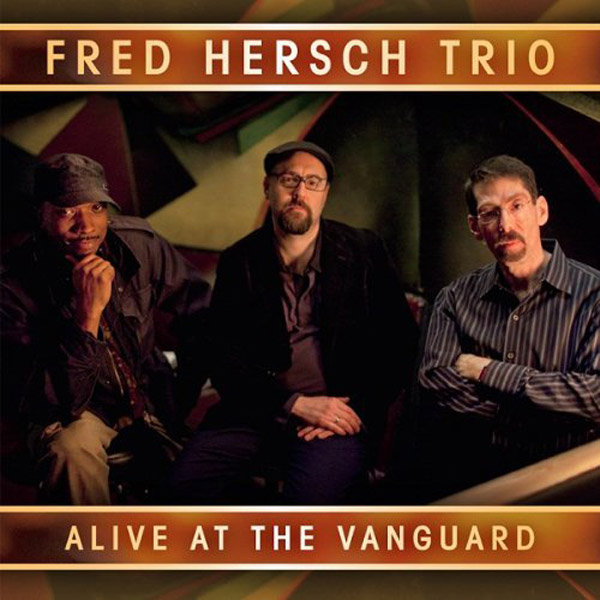
Much of the press that one reads on Fred Hersch concentrates on his recent illness and subsequent recovery (and deservedly so - it's a been a long, harrowing road back.)  After 4 weeks of playing selections from his new double CD, "Fred Hersch Trio: Alive at The Vanguard" (Palmetto Records), it's time to put the talk of his travails away and concentrate on what a fine pianist, composer and bandleader he is.

With bassist John Hébert and drummer Eric McPherson as equal partners in this venture, Hersch's music bristles with crisp interplay, is ripe with fine flights of melodic invention and displays the depth as well as the breadth of Hersch's musical mind.  Recorded during a week of gigs at The Vanguard in February of this year, the material includes classics like Ornette Coleman's "Lonely Woman" paired with Miles Davis's "Nardis", Charlie Parker's "Segment" and Sonny Rollins' "Doxy" (and that's just on Disc 1!) There are 7 Hersch originals, ranging from the ethereal "Dream of Monk" (from the pianist's new major work "Coma Dreams") to the fanciful "Jackalope" (a mythical beast that roams the Southwest of the United States). 

Under headphones, one can really hear how responsive the rhythm section is.  McPherson's spare drum work opens the solemn take on Coleman's "Lonely Woman" while his quiet brush work serves as fresh colors on the delicate "Tristesse (for Paul Motian)."  On that same track, Hebert's full-sounding bass lines weave a counterpoint to the pianist's flowing phrases.  The bassist and drummer get to open up on "Segment", creating a underpinning that is both buoyant and propulsive.  "Opener", the first track of the 2nd CD, displays McPherson's excellent ability to push the time without seeming impudent. The dancing rhythms he plays on his cymbals nudge Hersch into a most energetic and entertaining solo (he can most certainly swing!) 

The last of 3 tracks that pair tunes, "The Song Is You" is a simple yet beautiful ballad from Jerome Kern and Oscar Hammerstein II (composed in 1932 for the musical "Music In The Air) that segues into Thelonious Monk's faster-paced  "Played Twice" - Hersch's unaccompanied opening is a wonderful 2-handed romp that spans all 88 keys. There are moments when his right hand dances to the highest notes while his left dips down to the keys that control the thicker piano strings .

The finest creative music makes the interested listener want to listen to it time and time again.  On the first few times through "Alive at The Vanguard". you may catch the fine drumming and bass work without appreciating how much piano Fred Hersch is playing.  When the Trio is in high gear, there are moments when it seems each musician playing at his highest level. And there are moments on the ballads when one hears how Hébert is really listening to the chords Hersch is playing and reacting instantaneously with his own melodic invention.  This is music that resonates long after the applause has dies down; this is music that is both exciting and soul-satisfying.  

The CD hits digitally and physically on September 11. As I write this, the Fred Hersch Trio has just begun a tour that includes residencies at The Village Vanguard (9/11-16) and Chicago's Jazz Showcase (9/20-23).  After a solo piano tour of England in early October, the Trio will play at Firehouse 12 in New Haven, CT, on October 26.  For more information about these dates and more (including a performance of Hersch's "Leaves of Grass" in Chicago on October 21), go to www.fredhersch.com. To check out the CD, go to www.palmetto-records.com.


Israeli-born, Berklee College-educated and road-tested, Anat Cohen is one of the more vivacious and exciting performers on the music scene. Originally a tenor saxophonist, she has increased her arsenal of reeds to include soprano saxophone and clarinet.

"Claroscuro", her 6th CD as a leader released on her Anzic Records label, features her long-standing quartet of Jason Lindner (piano), Daniel Freedman (drums) and, replacing Omer Avital on bass, Joe Martin. The title of the program refers to the Italian word "chiaroscuro" a painting technique that combines dark and light elements.  Ms. Cohen's music often moves effortlessly from darker, intense, music to pieces that swing with joy or ballads that sway gently.  This CD, self-produced with the aid of Lindner and Freedman, contains music from a wide spectrum including Lindner's percussive "Anat's Dance" that opens the program to the swirling South African rhythms of Abdullah Ibrahim's "The Wedding" that closes it.  In between, guest such as trombonist Wycliffe Gordon and clarinetist Paquito D'Rivera combine their distinctive voices with the quartet to create music that sings, soars, and brings a smile.  Gordon's growling 'bone is a fun foil to Ms. Cohen's raucous clarinet on the ever-so-slow "La Vie En Rose" - the trombonist puts more than just a pinch of Louis Armstrong in his sincere vocal (thankfully, he did not try to channel Edith Piaf.)  He returns on Dr. Lonnie Smith's "And the World Weeps", his unaccompanied multi-phonics introducing the song that soon falls into a slow, New Orleans, drag.  To their credit, the clarinetist (here, it is D'Rivera), tenor saxophonist and trombonist play the melody fairly straight; Gordon's solo sounds like a man fighting the darker forces, blending low guttural utterances with softer, higher-pitched phrases.  D'Rivera enters in a classic Johnny Dodds mode before Ms Cohen's tenor adds a chorus of deeply felt blues playing.

The twin clarinets of Ms. Cohen and D'Rivera do a rousing version of Artie Shaw's "Nightmare", prodded by Freedman's pounding drums, Lindner's rumbling piano and Martin's throbbing bass.  The manner in which the clarinets intertwine is sensual as well as conversational.  Ms. Cohen moves to bass clarinet for her original "Kick Off", a piece for her, D'Rivera and the percussion of Freedman and guest Gilmar Gomes.  Gomes' active percussion takes that piece out and then leads the Quartet plus Rivera into a fiery reading of "Um a Zero", a fine choro from the pen of Pixinguinha, a flautist/saxophonist/composer active in Brazil through the middle decades of the 20thy Centur. Gomes also appears on "Tudo Que Você Podia Ser", another Brazilian composition, this one composed by and made famous by Lô  Borges. Here, it is Ms. Cohen's expressive soprano saxophone dancing atop and alongside the dancing piano of Lindner.

"Claroscuro" shines brightly with its intelligent variety of rhythms, melodies, and superb interplay.  Anat Cohen and these fine musicians play with such exuberance and soul, it's hard not to move your feet on the faster tunes and lean in closer on the ballads. Having seen Ms. Cohen on a number of occasions in various ensembles that she has led or co-led (3 Cohens, with her brothers Yuval and Avishai), she always gives a maximum effort - this CD, scheduled on September 25, is yet another excellent example of her prodigious talents.  For more information, go to www.anatcohen.com or anzicstore.com.

The sackbut is the earliest form of that wondrously ungainly instrument known as the trombone (though it's also the name give to a stringed instrument found in the Bible.)  Trombonist/composer Joe Fiedler has organized a quartet that features 3 'bones (Fiedler, Ryan Keberle and Josh Roseman) and the rhythm section of Marcus Rojas on tuba.  Methinks one might expect the group's debut CD, "Joe Fiedler's Big Sackbut" (Yellow Sound Label), to be a noisy assemblage; actually, the program covers a wide swath of musical territory with pieces that range from the richly melodic tribute "Don Pullen" (soulful music with a touch of gospel) to the bluesy swagger of "Blabber and Smoke" (composed by the le Don Van Vliet - Captain Beefheart to his fans) to the highly rhythmic adventure that is Willie Colon's "Calle Luna, Calle Sol."  On the last track, Rojas moves easily from being the rhythm instrument to playing counterpoint.  Hard not to enjoy the ensemble's spirited take on Sun Ra's "A Call for All Demons"; the brasses gentle yet forceful (is that possible? listen and decide) performance highlights the melodic side of the composer/space adventurer (the composition dates back to 1960.)

More highlights include the leader's handsome solo on "#11" and Rojas's long, low, tones that lead in "Ging Gong" (his solo in the middle of the track is joyful and quite melodic.)  The foursome's interaction on the CD closer "Urban Groovy" sounds as if they are effortlessly gliding across a ballroom dance floor.  The muted trombones on the opening section of the leader's "The Crab" feel like heraldic trumpets and move the piece along to a fine melody with hearty as well as heartfelt solos from Fiedler and Roseman.

One might look upon "Joe Fiedler's Big Sackbut" and think that there's not much of a sound palette. You should be quite surprised and pleased at how this music moves gracefully and melodically throughout the 10 tracks; yet the pieces also take many rhythmic paths during the program. No doubt about it, this CD is a "wind-win" situation.  For more information, go to www.joefiedler.com.