Honestly, I have been returning to listen to the latest album from singer and songwriter Jeff Baker since it arrived at the beginning of 2018. "Phrases" (Oa2 Records) is a 76-minute program that, on initial listens, struck me as a series of vignettes on love and loss as if Baker was working his way through a dark time. On a personal note, throughout the year, the writer has dealt with deaths and/or illnesses of friends and relatives as well as health issues that affected the closest of compatriots. The solace received from certain recordings and live performances was great but how does one write about the unspeakable. I am not such a fool as to drown my sorrows in drink or drugs but crave the nearness of people. Heaven forbid, I read about contemporary politics - much of the good happening in the world, in this country, and the state is covered by screaming headlines of divisions and inequalities (proving that not much has changed over the years only that we hear about faster and from all corners of the globe. Easier to curl up with a book with music welling and cooing in the background.
Back to "Phrases." From Baker's adaptation of Pablo Neruda's poem "Tonight I can write the saddest lines" to the singer's quiet take of "Don't Worry 'Bout Me" (from the pens of Rube Bloom and Fred Koehler), the songs deal with issues of the heart. He's got quite a sparkling band, one that includes Darrell Grant (piano), Clark Sommers (bass), and Brian Blade (drums) as well as the smart reeds of Steve Wilson (alto saxophone) and Geof Bradfield (tenor saxophone) and the powerfully rich trumpet of Marquis Hill. One also hears the electric guitar of Gregory Uhlmann plus contributions from the Avalon String Quartet (Blaise Magniere and Marie Wang on violin, Anthony Devrove on viola, and Cheng-Hou Lee on cello).
Listen to how Baker folds his tenor voice around the horns on "Lost" with Blade really driving the ensemble, Uhlmann's ringing guitar phrases (good solo as well) and Grant's flowing lines in support. This is one of the songs that pulled me back into the album, lyrics that spoke of possibilities, mostly positive. Note how Wilson's expressive soprano sax dances with the guitarist in the solo section of "Salinger" - based on a short story by the late J.D. Salinger as well as novel by Stephen Chbosky, this song also shows the influence of the music of Sting. The slow ballad "Harbor" (composed by bassist Sommers and Baker) is a true love song, no premonitions of breaking hearts.
Still, it's hard to stay away from the heartbreak. Baker's sweet take of Bonnie Raitt's "Not 'Cause I Wanted To" (which opens with a fine bass solo) is emotionally rich without being saccharine. "People of Paper", based on the 2005 debut novel of Mexican-born author Salvador Plascencia, is a story of love unrequited and lost. The horns float above the vocals until Hill steps out with a most reserved yet heartfelt solo - don't miss the short but stunning soprano sax phrase as the piece fades away. .
Several of the reviews have said that the songs on "Phrases" go on too long and no one song stands out. I beg to differ; to my ears, each piece is part of a longer story, a tale in which love and loss are at the center. Pay attention to the musicians Jeff Baker surrounds himself with, how they serve the music, how the arrangements have a strong sense of drama, and how Sommers and Blade offer such great support. And, I can't through "A Hundred Less One" without tearing up knowing it speaks for the many people I know who have been married for decades. Some music blazes trails, some music makes you dance, and some music takes so far inside yourself you feel as if your life is exposed to the world. "That's "Phrases" in a sentence!
For more information, go to jeffbakerjazz.com.
Twenty-two years ago, New York Voices shared the bill on an album alongside the Count Basie Orchestra. Five years ago, the quartet - founded in 1998 by original members Kim Nazarian, Darmon Marer, and Peter Eldridge plus Lauren Kinhan (who joined in 1992) - recorded with the WDR Big Band. 2018 finds them joining the Bob Mintzer Big Band for "Meeting of Minds" (MCG Jazz). It's a treat from track one, a bluesy take on "Autumn Leaves" to the hard-driving samba of "I'll Remember April."
The album title certainly refers to the splendid band arrangements written by Mintzer as well as the wonderful vocal arrangements by Marder. Yet, it's Eldridge and Marder who arranged both the band and vocal arrangements on Hoagy Carmichael's "I Get Along Without You Very Well" and Meader who does the dual honors on the Big Band (without NY Voices) on "I Want To Be Happy." The former has a more "modern" sound with an arrangement perhaps influenced by Maria Schneider (especially how the high reeds frame the voice). The latter tune bounces along on the powerful drum work of John Riley and solid bass of Jay Anderson. Arranger Marder shines the spotlight on Scott Wendholdt's trumpet and the delightful piano of Phil Markowitz (both in support and when he takes his solo.)
The 17-member Mintzer Big Band has been in existence over 35 years, recording 21 Lps and CDs for labels such as DMP and MCG. Since 2004, the BMBB has issued seven CDs for the Pittsburgh, PA-based label. Composed of musicians who are busy in large ensembles action both coasts, they can play just about everything. Listen to the funky take of "Old Devil Moon" - with its raucous vocal from Ms. Kinhan and "down-and-dirty" drums, one feels the need to dance. Check out the way Mintzer supports the voices of Ms. Nazarian and Mr. Eldridge on "The Way You Look Tonight" plus the smashing center section of wordless vocals and section voices. The long tenor sax solo from Mintzer is also a treat.
Even though the vast majority of the music on "Meeting of Minds" comes from the 1930s-40s Golden Era of the Great American Songbook (save for Mintzer's original "Weird Blues" yet that would sound out of place played by the Count Basie Orchestra in the late 1950s), this album is no throwback. Kudos to the Bob Mintzer Big and and New York Voices and all involved bringing this project to light! This album will brighten your day and do so perceptibly.
For more information, go to newyorkvoices.com or to www.bobmintzer.com.
Here are the groups in action:
Personnel of Bob Mintzer Big Band:
Bob Mintzer – Tenor Saxophone, Flute
Bob Sheppard – Alto Saxophone, Flute
Lawrence Feldman – Alto Saxophone, Flute
Bob Malach – Tenor Saxophone
Roger Rosenberg – Baritone Saxophone, Clarinet
Bob – Millikan – Trumpet
Frank Greene – Trumpet
Scott Wendholt – Trumpet
James Moore – Trumpet
Keith O’Quinn – Trombone
Jeff Bush – Trombone
Jay Ashby – Trombone, Percussion
David Taylor – Bass Trombone
Phil Markowitz – Piano
Marty Ashby – Guitar
Jay Anderson – Bass
John Riley – Drums
Showing posts with label CD reviews. Show all posts
Wednesday, August 1, 2018
Tuesday, July 24, 2018
American Music of Many Hues
Clarinetist, composer, and arranger Andy Biskin (born 1955 in San Antonio, Texas) is a true musical adventurer. A student of music and anthropology at Yale University, one of his first jobs out of college was as assistant to folklorist Alan Lomax whose work cataloging and recording American "folk" music, an endeavor started by his father John, led to better understanding how American music became American. As a youngster, Biskin heard all types of music in Texas, from Mexican conjuntos to German Polkas to Dixieland Bands to symphonies. Over the past four decades, Biskin has worked as a video editor, documentary maker, and, starting in 2001, has released five recordings as a leader or co-leader.
Album number six is now here and its roots are in the music Andy Biskin must have heard working alongside the famed ethnomusicologist. "16 Tons: Songs from the Alan Lomax Collection" (AnDorfin Music) has songs one will easily recognize, others that are rearranged although the melodies are intact, and one Biskin original steeped in the traditions he has studied. Even more interesting is the ensemble gathered to play this repertoire. Three trumpets - played by John Carlson, Dave Smith, and Kenny Warren - plus Biskin's clarinet and bass clarinet and drummer Rob Garcia come together for a spirited journey through these songs. Reminiscent of his 2006 (recorded in 2000) release "Early American: The Songs of Stephen Foster", Biskin arranges this music in such a way that everything sounds fresh and often surprising on one's first listen,
You'll hear echoes of Charles Ives, Aaron Copland, Louis Armstrong, Duke Ellington, blues, jazz, swing, marching band tunes, and so much more. Biskin must have had so much fun with his arrangements. The album opener, "Sweet Betsy From Pike", opens with each trumpeter taking his turn to play the melody and only near the end does the bass clarinet add his voice to the short section in which the three trumpets play together. "Grey Goose" hits hard with the drummer leading the charge. Rob Garcia is an inspired choice for this ensemble. Having played numerous styes of music (from big band to early jazz to his own modern quintet and more), he always makes the right moves either leading the quintet forward or in support. Garcia pushes the group through a funky, spirited, take of "Knock John Booker" (Biskin's bass clarinet part has echoes of David Murray's work with the World Saxophone Quartet, especially on "Steppin'").
So many highlights throughout the album. The 1817 gospel tune "Am I Born To Die" has a haunting melody, lovely harmonies, and a martial beat that links it to the early days of the American republic. The plaintive melody of "House Carpenter" starts slowly but the middle section "rocks out" for a few moments around solo clarinet melodic fills. "Down in the Valley" has moments that sound like Copland's "Appalachian Spring"; the splay and trills of the muted trumpets, Biskin's mournful clarinet, and Garcia's strong brushes and bass drum work stand out. "Tom Dooley" is a bouncy piece considering the sadness of the story. Here the song moves with great spirit.
"16 Tons" closes with a solo clarinet reprise of "Sweet Betsy From Bike", a gentle send-off to an album that is full of splendid performances, humor, emotion, melodies, harmonies, and fascinating rhythms. Actually, the one thing the album does not have is the title song (possibly because the song we know as "16 Tons" was composed in 1950 by Merle Travis - there are people who say the song comes from the 1930s). That's no problem, really. Andy Biskin continues to create music that, even as it embraces its roots, pushes against convention and cliche.
For more information, go to www.andybiskin.com.
Here's the sweet "House Carpenter":
The 20th Century has been called the "American Century" because of all the trials, tribulations, innovations, the Depression, World Wars, the Vietnam War, the end of Communism in Eastern Europe, and so on. American music absorbed the sounds and poetry of the country's inhabitants, whether it was the Broadway Dreams of the Gershwin Brothers, Irving Berlin, and Rodgers & Hammerstein or the songs and sound of Louis Armstrong, Duke Ellington, Woody Guthrie, Hank Williams, Elvis Presley, Allen Touissaint, Motown, Michael Jackson, and others. Classical music innovators include George Gershwin, Aaron Copland, Steve Reich, Phillip Glass, John Harbison, and Leonard Bernstein. Bernstein (1918-1990) drew from so many influences and broke down so many walls that people continue to study and perform his music, watch his lectures, and buy his recordings.
Bernstein composed the music for six Broadway musicals, from 1944's boisterous "On The Town", 1956's comic satire "Candide", and his one giant mistake, 1976's "1600 Pennsylvania Avenue" (with lyrics by Alan J. Lerner). His most famous work is, arguably, 1957's "West Side Story" (lyrics by Stephen Sondheim), an adaptation of William Shakespeare's "Romeo & Juliet" set in New York City in the wave of Puerto Rican immigration. The story aside, the music is extremely adventurous with rhythms coming at the listener/audience from all sides.
Jazz musicians have taken up the challenge of playing this music with artists such as pianists Bill Charlap, Tommy Flanagan, and Oscar Peterson recording all or some of the material from the production. Stan Kenton's Orchestra released a memorable version on the early 1960s as did saxophonist Bill Barron (1963). To celebrate Maestro Bernstein's 100th Birthday, drummer Bobby Sanabria decided to record the score with his Multiverse Big Band. The results, recorded in December of 2017 at Dizzy's Club Coca Cola for Jazz at Lincoln Center, can be heard on the dynamic new "West Side Story: Reimagined" (Jazzheads Records).
Sanabria's faculty mate at the Manhattan School of Music, Jeremy Fletcher, contributed five of the arrangements along with arrangers that former MSM students, band members, and friends such as baritone saxophonist Danny Rivera, Niko Siebold, Jeff Lederer, Matt Wong, Nate Sparks, Eugene Marlow, Andrew Neesley, and percussionist Takao Heisho. Over the two hours of music, the 21-member Multiverse Big Band (personnel below) handles the material with aplomb. Not surprising that the rhythm sections almost always leads the way through the songs. The first of the two CDs bursts right out of the starting gate with "Prologue" (an overture), "Jet Song", "America", and "Gee, Officer Krupke" only slowing down for the lovely "Tonight." The first side closes with two "Gym Scenes" both utilizing the melody of "Maria" played as a blues and a mambo on the first cut and as a Cha Cha Cha on the second.
Side two opens with a full version of "Maria" arranged by Sanabria's musical associate Eugene Marlow. It's a fascinating version. Opening with an Yoruban chant featuring drums and voices that lead into the memorable melody (brilliantly played by the trumpets), the piece soon moves into another percussion & voice interaction that reaches a frenzied climax before returning to the melody. "Cool" and "The Rumble" raises the temperature back to a boiling point - it's easy to lose one's breath keeping up with these frenetic performances. The arrangements of "One Hand, One Heart" and "Somewhere", both dramatic ballads, also are built on rhythms that may surprise lovers of the originals. The former features a lovely samba rhythm with trombonist Armando Vergara and alto saxophonist David Dejesus representing the star-crossed lovers Tony and Maria. The piece breaks out into a joyous strut for the fine flute solo by Gabrielle Garo. The latter tune is taken at more of break-neck speed, slowing down for the delightful melody. The lovely tune almost gets lost in the fiery rhythms. The "Epilogue/Finale", coming after an emotional speech by Sanabria, also uses the melody of "Somewhere" , taken slower here but with a rubato "free" section to use sounds to illustrate Maria's sense of loss.
I have to admit it took me a while to really see the brilliance of "West Side Story: Reimagined" as I missed the sassy lyrics of "America" and "Gee, Officer Krupke" as well as the lovely sentiments of "Somewhere" and "One Hand, One Heart." Yet, play this music good and loud, let the trumpets and trombones bore a hole in your soul, the reeds rise above the fray, and the percussion guide your feet, you'll soon be seduced by these delightful performances. You know that Leonard Bernstein, such a champion of all kinds of music, a man with empathy for all people, would be charmed and thrilled! Bravo Señor Bobby Sanabria!
To find out more, go to www.bobbysanabria.com.
Here's "America" in all its glory:
The Personnel:
Bobby Sanabria Multiverse Big Band –
Trumpets: Kevin Bryan (lead, opening whistle), Shareef Clayton, Max Darché, Andrew Neesley.
Saxophones: David Dejesus: lead alto and soprano, flute; Andrew Gould: alto and flute; Peter Brainin: tenor and flute; Yaacov Mayman: tenor, flute and clarinet; Danny Rivera: baritone.
Trombones: David Miller (lead), Tim Sessions, Armando Vergara, Chris Washburne (bass trombone);
Flute and Piccolo: Gabrielle Garo;
Electric Violin: Ben Sutin;
Rhythm Section: Bobby Sanabria: musical director, drumset, cowbells, police whistle, samba whistle and lead vocals;
Darwin Noguera: piano;
Leo Traversa: electric bass;
Oreste Abrantes: congas, itotele batá drum and second voice (Disc Two. "Maria");
Matthew González: bongó/cencerro, primo bomba drum, Iyá batá, requinto pandereta, ganza and Dominican güira;
Takeo Heisho: claves, Cuban güiro macho, cencerro, Puerto Rican guicharo, okonkolo batá drum, maracas (Cuban and Venezuelan), shekere, tamborine, cuica, pandeiro, triangle, gong and police siren.
Background vocals: all the members of the Multiverse Big Band
Album number six is now here and its roots are in the music Andy Biskin must have heard working alongside the famed ethnomusicologist. "16 Tons: Songs from the Alan Lomax Collection" (AnDorfin Music) has songs one will easily recognize, others that are rearranged although the melodies are intact, and one Biskin original steeped in the traditions he has studied. Even more interesting is the ensemble gathered to play this repertoire. Three trumpets - played by John Carlson, Dave Smith, and Kenny Warren - plus Biskin's clarinet and bass clarinet and drummer Rob Garcia come together for a spirited journey through these songs. Reminiscent of his 2006 (recorded in 2000) release "Early American: The Songs of Stephen Foster", Biskin arranges this music in such a way that everything sounds fresh and often surprising on one's first listen, You'll hear echoes of Charles Ives, Aaron Copland, Louis Armstrong, Duke Ellington, blues, jazz, swing, marching band tunes, and so much more. Biskin must have had so much fun with his arrangements. The album opener, "Sweet Betsy From Pike", opens with each trumpeter taking his turn to play the melody and only near the end does the bass clarinet add his voice to the short section in which the three trumpets play together. "Grey Goose" hits hard with the drummer leading the charge. Rob Garcia is an inspired choice for this ensemble. Having played numerous styes of music (from big band to early jazz to his own modern quintet and more), he always makes the right moves either leading the quintet forward or in support. Garcia pushes the group through a funky, spirited, take of "Knock John Booker" (Biskin's bass clarinet part has echoes of David Murray's work with the World Saxophone Quartet, especially on "Steppin'").
![]() |
| Photo: Rebecca Greenfield |
"16 Tons" closes with a solo clarinet reprise of "Sweet Betsy From Bike", a gentle send-off to an album that is full of splendid performances, humor, emotion, melodies, harmonies, and fascinating rhythms. Actually, the one thing the album does not have is the title song (possibly because the song we know as "16 Tons" was composed in 1950 by Merle Travis - there are people who say the song comes from the 1930s). That's no problem, really. Andy Biskin continues to create music that, even as it embraces its roots, pushes against convention and cliche.
For more information, go to www.andybiskin.com.
Here's the sweet "House Carpenter":
The 20th Century has been called the "American Century" because of all the trials, tribulations, innovations, the Depression, World Wars, the Vietnam War, the end of Communism in Eastern Europe, and so on. American music absorbed the sounds and poetry of the country's inhabitants, whether it was the Broadway Dreams of the Gershwin Brothers, Irving Berlin, and Rodgers & Hammerstein or the songs and sound of Louis Armstrong, Duke Ellington, Woody Guthrie, Hank Williams, Elvis Presley, Allen Touissaint, Motown, Michael Jackson, and others. Classical music innovators include George Gershwin, Aaron Copland, Steve Reich, Phillip Glass, John Harbison, and Leonard Bernstein. Bernstein (1918-1990) drew from so many influences and broke down so many walls that people continue to study and perform his music, watch his lectures, and buy his recordings.
Bernstein composed the music for six Broadway musicals, from 1944's boisterous "On The Town", 1956's comic satire "Candide", and his one giant mistake, 1976's "1600 Pennsylvania Avenue" (with lyrics by Alan J. Lerner). His most famous work is, arguably, 1957's "West Side Story" (lyrics by Stephen Sondheim), an adaptation of William Shakespeare's "Romeo & Juliet" set in New York City in the wave of Puerto Rican immigration. The story aside, the music is extremely adventurous with rhythms coming at the listener/audience from all sides.Jazz musicians have taken up the challenge of playing this music with artists such as pianists Bill Charlap, Tommy Flanagan, and Oscar Peterson recording all or some of the material from the production. Stan Kenton's Orchestra released a memorable version on the early 1960s as did saxophonist Bill Barron (1963). To celebrate Maestro Bernstein's 100th Birthday, drummer Bobby Sanabria decided to record the score with his Multiverse Big Band. The results, recorded in December of 2017 at Dizzy's Club Coca Cola for Jazz at Lincoln Center, can be heard on the dynamic new "West Side Story: Reimagined" (Jazzheads Records).
Sanabria's faculty mate at the Manhattan School of Music, Jeremy Fletcher, contributed five of the arrangements along with arrangers that former MSM students, band members, and friends such as baritone saxophonist Danny Rivera, Niko Siebold, Jeff Lederer, Matt Wong, Nate Sparks, Eugene Marlow, Andrew Neesley, and percussionist Takao Heisho. Over the two hours of music, the 21-member Multiverse Big Band (personnel below) handles the material with aplomb. Not surprising that the rhythm sections almost always leads the way through the songs. The first of the two CDs bursts right out of the starting gate with "Prologue" (an overture), "Jet Song", "America", and "Gee, Officer Krupke" only slowing down for the lovely "Tonight." The first side closes with two "Gym Scenes" both utilizing the melody of "Maria" played as a blues and a mambo on the first cut and as a Cha Cha Cha on the second.
Side two opens with a full version of "Maria" arranged by Sanabria's musical associate Eugene Marlow. It's a fascinating version. Opening with an Yoruban chant featuring drums and voices that lead into the memorable melody (brilliantly played by the trumpets), the piece soon moves into another percussion & voice interaction that reaches a frenzied climax before returning to the melody. "Cool" and "The Rumble" raises the temperature back to a boiling point - it's easy to lose one's breath keeping up with these frenetic performances. The arrangements of "One Hand, One Heart" and "Somewhere", both dramatic ballads, also are built on rhythms that may surprise lovers of the originals. The former features a lovely samba rhythm with trombonist Armando Vergara and alto saxophonist David Dejesus representing the star-crossed lovers Tony and Maria. The piece breaks out into a joyous strut for the fine flute solo by Gabrielle Garo. The latter tune is taken at more of break-neck speed, slowing down for the delightful melody. The lovely tune almost gets lost in the fiery rhythms. The "Epilogue/Finale", coming after an emotional speech by Sanabria, also uses the melody of "Somewhere" , taken slower here but with a rubato "free" section to use sounds to illustrate Maria's sense of loss.
I have to admit it took me a while to really see the brilliance of "West Side Story: Reimagined" as I missed the sassy lyrics of "America" and "Gee, Officer Krupke" as well as the lovely sentiments of "Somewhere" and "One Hand, One Heart." Yet, play this music good and loud, let the trumpets and trombones bore a hole in your soul, the reeds rise above the fray, and the percussion guide your feet, you'll soon be seduced by these delightful performances. You know that Leonard Bernstein, such a champion of all kinds of music, a man with empathy for all people, would be charmed and thrilled! Bravo Señor Bobby Sanabria!
To find out more, go to www.bobbysanabria.com.
Here's "America" in all its glory:
The Personnel:
Bobby Sanabria Multiverse Big Band –
Trumpets: Kevin Bryan (lead, opening whistle), Shareef Clayton, Max Darché, Andrew Neesley.
Saxophones: David Dejesus: lead alto and soprano, flute; Andrew Gould: alto and flute; Peter Brainin: tenor and flute; Yaacov Mayman: tenor, flute and clarinet; Danny Rivera: baritone.
Trombones: David Miller (lead), Tim Sessions, Armando Vergara, Chris Washburne (bass trombone);
Flute and Piccolo: Gabrielle Garo;
Electric Violin: Ben Sutin;
Rhythm Section: Bobby Sanabria: musical director, drumset, cowbells, police whistle, samba whistle and lead vocals;
Darwin Noguera: piano;
Leo Traversa: electric bass;
Oreste Abrantes: congas, itotele batá drum and second voice (Disc Two. "Maria");
Matthew González: bongó/cencerro, primo bomba drum, Iyá batá, requinto pandereta, ganza and Dominican güira;
Takeo Heisho: claves, Cuban güiro macho, cencerro, Puerto Rican guicharo, okonkolo batá drum, maracas (Cuban and Venezuelan), shekere, tamborine, cuica, pandeiro, triangle, gong and police siren.
Background vocals: all the members of the Multiverse Big Band
Thursday, June 21, 2018
Power & Subtlety From The Rhythm Section Up
Percussionist and educator Rogério Boccato, a native of Brazil, has worked on many fine recordings including Maria Schneider's "The Thompson Fields", Billy Child's "Rebirth", and Alan Ferber's "Jigsaw", to name but three. It's easy to understand his popularity in rhythm sections: his style is often understated, spare, creating colors with his hand percussion, his delightful way with brushes, and how he can play so powerfully without overwhelming the rest of the musicians. Currently, Boccato is on the faculty of the Manhattan School of Music as well as the Hartt School of Music/The University of Hartford. He also performs with pianist Fred Hersch (Pocket Orchestra), saxophonist Jimmy Greene, and with the Maria Schneider Orchestra.
His debut album as a leader is "No Old Rain" (Red Piano Music) and it features the Rogério Boccato Quarteto with Dan Blake (tenor and soprano saxophones), Jay Anderson (bass), and Nando Michelin (Fender Rhodes). The two-day session (June 1-2, 2016), recorded in bassist Anderson's home studio, is a 10-song program featuring music composed by Milton Nascimento, Egberto Gismonti, Toninho Horta, and Edu Lobo. The use of Fender Rhodes may remind some listeners of Chick Corea's work with the acoustic version of Return to Forever (the group that first recorded for ECM) and Herbie Hancock's work on Wayne Shorter's interpretations of Nascimento's music on "Native Dancer" (1974).
Blake's soprano playing is quite impressive (and, happily, not just a clone of Shorter's iconic playing) - when he and Anderson make their way through Lobo's "Canto Triste", they do so with warmth and emotional tenderness. If you have never paid attention to Anderson's bass work, he is one of the modern masters of ensemble playing, with a rich tone and an intuitive ear for counterpoint. In the opening minutes of Horta's "Bicycle Ride", he and Blake, on tenor, introduce the melody, work through it playing melodic phrases with and apart from each other, before the Rhodes and drums enter. The addition of Michelin and Boccato changes the tone of the piece, moving the music away from the melody into more rhythmic areas.
"No Old Rain" is a delightful exploration of Brazilian music that not only shows the influence the four featured composers had on percussionist Rogério Boccato but how he was influences by the North American musicians who explored the music of his native Brazil. It's so easy to listen to this recording from beginning to end, 56 minutes of pure joy in playing music that speaks to the heart, the soul, and the feet.
For more information, go to rogerioboccato.com.
Here's a live version of the opening track (note Michelin on acoustic piano):
Bassist and composer Noam Wiesenberg, a native of Tel Aviv, Israel, first studied cello before switching to acoustic bass (at the age of 20). In his native country, he played with the Jerusalem Symphony Orchestra, the Haifa Symphony Orchestra, and the Israeli Defense Force Education Unit Orchestra. He studied composition and arranging at the Jerusalem Academy of Music and Dance as well as jazz performance at the Rimon School of Jazz and Contemporary Music in Ramat HaSharon, Israel. Wiesenberg then moved to the United States to study at Berklee College in Boston. After graduation, the bassist moved to New York City where he has worked with saxophonist Dave Liebman, drummers Antonio Sanchez and Billy Hart, guitarists Lage Lund and Jonathan Kreisberg, pianist Aaron Goldberg, and vocalist Camilla Meza. He also arranged music for vocalist Lalah Hathaway that she performed with the Metropole Orkest (conducted by Vince Mendoza) as well as serving as arranger/music director of drummer Ari Hoenig's Nonet.
All those experiences has led Noam Wiesenberg to his debut recording as a leader. "Roads Diverge" (BJU Records) finds the bassist in the company of Philip Dizack (trumpet), Immanuel Wilkins (alto saxophone, clarinet), Shai Maestro (piano, Fender Rhodes), and Kush Abadey (drums) with tenor saxophonist Dayna Stephens on the title track. Abadey is one of those drummers, like Rudy Royston and Eric Harland, who not only makes the music seem brighter but also creates colors with his fine cymbal work. Listen how he pushes the band forward on the title track. He and Wiesenberg lock in the groove but also move in and out, prodding the soloists to move in different directions. The drummer's work is so subtle throughout the first 2/3rds of "Shir Le'Shir" but notice how he, Maestro, and the bassist push below saxophonist Wilkins during his excellent solo.
The joy of this record comes from the excellent compositions, songs that have smartly constructed melodies and intelligent arrangements plus solos that are usually built off those melodies. Philip Dizack's trumpet tone is bright and clear, his notes well-articulated while solos are often exciting. He and Wilkins trade zones on "Resfeber", winding in and around each other as the rhythm section pours on the fire. Listen also tho the fine piano work of Maestro whose playing is a delight all the way through the program. Dizack shines on the ballad "Melody For Ido", his combination of phrases, some rising high in the trumpet's range, bringing a sense of controlled fire. When that is meshed with Wilkins's warm alto tones, the results are impressive.
As for the bassist, he rarely solos, preferring to build the foundations of the majority of the nine tracks. The two exceptions are the opening "Prelude", in which Wiesenberg plays the melody over the piano and keyboard effects of Maestro, and the album's final track, Radiohead's "The Tourist." Wiesenberg overdubs himself on pizzicato and arco bass, not only playing the melody but also harmony and counterpoint on arco placed across the sound spectrum. He also plays a short pizzicato solo. Technically, it's brilliant without being flashy or showy.
"Roads Diverge" is an impressive debut album. All of Noam Wiesenberg's talents are on display, illustrating an artist with great promise and a fine ear for melodies and harmonies. The quintet he writes for gives him a very large palette of sounds and the bandleader takes full advantage. Give Noam Wiesenberg and his music a close listen.
For more information, go to www.noamwiesenberg.com.
Here's the band in concert (February 2018):
His debut album as a leader is "No Old Rain" (Red Piano Music) and it features the Rogério Boccato Quarteto with Dan Blake (tenor and soprano saxophones), Jay Anderson (bass), and Nando Michelin (Fender Rhodes). The two-day session (June 1-2, 2016), recorded in bassist Anderson's home studio, is a 10-song program featuring music composed by Milton Nascimento, Egberto Gismonti, Toninho Horta, and Edu Lobo. The use of Fender Rhodes may remind some listeners of Chick Corea's work with the acoustic version of Return to Forever (the group that first recorded for ECM) and Herbie Hancock's work on Wayne Shorter's interpretations of Nascimento's music on "Native Dancer" (1974). Blake's soprano playing is quite impressive (and, happily, not just a clone of Shorter's iconic playing) - when he and Anderson make their way through Lobo's "Canto Triste", they do so with warmth and emotional tenderness. If you have never paid attention to Anderson's bass work, he is one of the modern masters of ensemble playing, with a rich tone and an intuitive ear for counterpoint. In the opening minutes of Horta's "Bicycle Ride", he and Blake, on tenor, introduce the melody, work through it playing melodic phrases with and apart from each other, before the Rhodes and drums enter. The addition of Michelin and Boccato changes the tone of the piece, moving the music away from the melody into more rhythmic areas.
The program is also intelligently programmed. The first three tracks - Nascimento's "Cais" and "Clube da Esquina no. 2" plus Gismonti's "Tango" - flow easily into each other. The next three tracks do the same - the afore-mentioned "Bicycle Ride", Gismonto's "Bianca" and Nascimento's "Cravo e Canela" - and it gives the listener the feeling of being a spectator, watching the four musicians feed off each other and the material, making logical musical decisions as well as surprising connections. Later on the album, the Quarteto pairs Horta's "Pedro da Lua" and "Viver de Amor." On the latter track, Michelin creates a delightful solo as he rides the waves created by Boccato and Anderson, interacting with them as well as raising the intensity leading into Blake's powerful tenor solo.
For more information, go to rogerioboccato.com.
Here's a live version of the opening track (note Michelin on acoustic piano):
Bassist and composer Noam Wiesenberg, a native of Tel Aviv, Israel, first studied cello before switching to acoustic bass (at the age of 20). In his native country, he played with the Jerusalem Symphony Orchestra, the Haifa Symphony Orchestra, and the Israeli Defense Force Education Unit Orchestra. He studied composition and arranging at the Jerusalem Academy of Music and Dance as well as jazz performance at the Rimon School of Jazz and Contemporary Music in Ramat HaSharon, Israel. Wiesenberg then moved to the United States to study at Berklee College in Boston. After graduation, the bassist moved to New York City where he has worked with saxophonist Dave Liebman, drummers Antonio Sanchez and Billy Hart, guitarists Lage Lund and Jonathan Kreisberg, pianist Aaron Goldberg, and vocalist Camilla Meza. He also arranged music for vocalist Lalah Hathaway that she performed with the Metropole Orkest (conducted by Vince Mendoza) as well as serving as arranger/music director of drummer Ari Hoenig's Nonet.
All those experiences has led Noam Wiesenberg to his debut recording as a leader. "Roads Diverge" (BJU Records) finds the bassist in the company of Philip Dizack (trumpet), Immanuel Wilkins (alto saxophone, clarinet), Shai Maestro (piano, Fender Rhodes), and Kush Abadey (drums) with tenor saxophonist Dayna Stephens on the title track. Abadey is one of those drummers, like Rudy Royston and Eric Harland, who not only makes the music seem brighter but also creates colors with his fine cymbal work. Listen how he pushes the band forward on the title track. He and Wiesenberg lock in the groove but also move in and out, prodding the soloists to move in different directions. The drummer's work is so subtle throughout the first 2/3rds of "Shir Le'Shir" but notice how he, Maestro, and the bassist push below saxophonist Wilkins during his excellent solo.
![]() |
| Photo: BJU Records |
As for the bassist, he rarely solos, preferring to build the foundations of the majority of the nine tracks. The two exceptions are the opening "Prelude", in which Wiesenberg plays the melody over the piano and keyboard effects of Maestro, and the album's final track, Radiohead's "The Tourist." Wiesenberg overdubs himself on pizzicato and arco bass, not only playing the melody but also harmony and counterpoint on arco placed across the sound spectrum. He also plays a short pizzicato solo. Technically, it's brilliant without being flashy or showy.
"Roads Diverge" is an impressive debut album. All of Noam Wiesenberg's talents are on display, illustrating an artist with great promise and a fine ear for melodies and harmonies. The quintet he writes for gives him a very large palette of sounds and the bandleader takes full advantage. Give Noam Wiesenberg and his music a close listen.
For more information, go to www.noamwiesenberg.com.
Here's the band in concert (February 2018):
Friday, June 8, 2018
The Lady Sings the Blues, The Drummer Creates Many Hues, & Great Music Made by Two!
Amy Cervini is a busy and very modern women. The Canadian-native has a family with producer Oded Lev-Ari (with two young children), she owns (or co-owns) a publicity firm, and is one-third of Duchess trio (along with Melissa Stylianou and Hilary Gardner). With Duchess, she is co-host of the group's very enjoyable podcast "Harmony and Hijinks."
For her fifth solo recording, "No One Ever Tells You" (Anzic Records), Ms. Cervini has dug deeper into the blues than in the past, producing a powerful album whose emotions run deep. Her crackerjack band - Jesse Lewis (guitars), Michael Cabe (piano), Matt Aronoff (bass), and Jared Schonig (drums) plus Gary Versace (Hammond B-3 organ on four tracks) - helped to develop the arrangements over the past few years during the ensemble's weekly residency at NYC's 55 Bar.
The album opens with the only original on the program. "I Don't Know" stretches the leader's voice in ways one hasn't heard before. That fascinating blend of soul and blues continues with Lyle Lovett's "God Does", adding a touch of country to the mix. The soul dripping work of the band frames the voice and allows for Versace's burbling organ to interact throughout (as well as solo). The title track, composed by Hub Atwood and Carroll Coates, was first recorded in 1956 by Frank Sinatra but it was Seth MacFarlane's 2016 version that Ms. Cervini first heard. She replaces the big band groove with sturdy guitar work but pay attention to Cabe's excellent piano accompaniment.
There are surprises throughout the album starting with the dream-like reading of "The Surrey With The Fringe On Top." Performed at the pace of a snail, the Rodgers & Hammerstein frolic is transformed into a lullaby. It works! Ms. Cervini and the band dance dreamily through Bertha Hope's "You Know Who" - Ms. Hope was married to jazz pianist Elmo Hope and has a very impressive career, not only as a performer and composer but also as an educator (her husband passed in 1967: she the married bassist Walter Booker). Jesse Lewis's hard blues-rock guitar licks introduce "Bye Bye Country Boy", a Blossom Dearie tune that Ms. Cervini first recorded on 2009's "Lovefool." Here, the song has a slower pace befitting the bluesy approach the band takes. Following that is a smashing duet with Versace on the Arlen-Mercer "One More For My Baby (and One More for the Road)" - first recorded in 1943 by Fred Astaire for the movie "The Sky's The Limit", the duo here have great fun recreating the feeling of the last song of the last set, perhaps 3 p.m. in a New York City bar.
The album closes with the Percy Mayfield classic "Hit The Road Jack" - Ray Charles had a huge hit with the song in 1961 (the song lasted less than two minutes yet stuck in one's brain all day) and it's fascinating to hear the original demo - click here). But Ms. Cervini replaces the "bounce" of the original with a sultry take that does not have the humor or anger of the original yet there is no missing the singer's intention, that being "get out and stay out". The band takes the place of The Raelettes, Mr. Lewis lays down some fine blues riffs, and the leader caresses the lyrics with just a hint of resignation.
I will tell you that "No One Ever Tells You" is a treat from the opening notes to the soft landing that closes the program. Amy Cervini is a singer, a story-teller, and has a good ear for finding songs that not only fit her voice but also entertain and entrance the listeners. And, the band shines throughout.
For more information, go to www.amycervini.com.
Here's the opening track:
Drummer, percussionist, and composer Chad Taylor has an impressive track record. He's a founding member, along with trumpeter Rob Mazurek, of the Chicago Underground Duo (and its many offshoots), has recorded and toured with Marc Ribot. Cooper Moore, Matana Roberts, Eric Revis, the late Fred Anderson, and many others. He's quite knowledgable about the history of his instrument and of the music.
His third album as a leader, "Myths and Morals" (earandeyesrecords), is a solo album of the first order. One can hear the influence of the AACM, especially the work of Famadou Don Moye (Art Ensemble of Chicago) yet Taylor sounds nothing like that famed drummer. There is something so appealing about "Gum Tree", a mbira solo that has a dancing rhythm, the "thumb piano" displaying its percussive side. Other pieces, such as "Abtu and Ahnet" and "Simcha", have a dance feel as well. That latter track, the shortest on the album at 1:44, has an irresistible forward motion. Elliot Bergman joins Taylor, playing a somewhat distorted electric kalimba - one imagines dancing to that beat all night long.
There are many moments when one marvels at how these pieces are constructed. Taylor is not showing off any fancy technique but using his percussion instruments to tell stories. Listen to he builds "The Fall of Babel", the intensity moving from the cymbals as the beginning to the floor toms near the end. Note the electricity, the drone created by looping, and the lovely African melody on "Island Of the Blessed", a piece where the sounds, natural and electronic, collide yet still dance.
I love the snap of the snare, the thump of the floor tom, the whooshing cymbals, the warp of the high-hat, all of it, and how Chad Taylor is as much an architect as a composer. "Morals and Myths" is fascinating music, well worth investigating.
For more information, go to www.chadtaylordrums.net.
Listen to "Phoenix":
Joel Frahm (tenor and soprano saxophones) is a very talented musician equally at home in a quartet setting and a big band, as a leader or a sideman. He has worked, most notably, with pianist Brad Mehldau, drummer Matt Wilson, and is currently working with drummer Dafnis Prieto's Big Band as well as numerous groups in New York City. Pianist Adrean Farrugia has been an integral participant in the Canadian music since the later 1990s and his brilliant play has taken him around he world with the likes of guitarist Larry Carlton, saxophonist Chris Potter, trumpeter Kenny Wheeler, and bandleader Darcy James Argue. The pianist first met the saxophonist 10 years ago when both began working with drummer Ernesto Cervini's Quartet and his sextet Turboprop. The two musicians have similar attitudes to music. Melody is king and what we do is play in every sense of the word. They talked for several years about playing in a duo setting and, now, listeners can finally hear the fruits of their interactions.
"Blued Dharma" (self-released) finds the duo through eight spirited performances, including two delightfully different takess of Ray Noble's venerable "Cherokee." It's as if the the first time one hears the song (actually marked as "Cherokee II"), it's in the first set and the musicians excitedly move through the piece. "Cherokee I" sounds like we're now in the third set: the duo's interactions are a bit more contemplative and released but no less enjoyable. Frahm's soprano shines brightly on the title track. After a poetic piano intro, the soprano introduces the handsome melody. If you have never heard Farrugia play, he may remind you of Chick Corea or Keith Jarrett. I hear Bruce Hornsby, especially in the bounce created by his left hand and his impressive facility.
Their ballad work is filled with space and emotion. "For Murray Gold" opens with Frahm's breathy tenor with Farrugia doubling the melody but also providing soft chords and rippling responses. The pianist feeds off the rhythmic and melodic choices that Frahm makes during his solo - it feels at times as if the two were gliding together, letting the wind take them wherever it will. The short piano solo is heartfelt and exquisite. The other slow(er) tune, Jerome Kern's sweet "Nobody Else But Me", has more pizazz - the duo is in no hurry, making you sure you hear the breezy melody before Frahm ventures out on a delightful solo. When the pianist steps out, there was a moment I heard a hint of Dick Hyman in Farrugia's sprightly phrases and rhythmic approach.
The album closes with the pianist's "Half Moon (for Sophia)", a lovely uptempo tribute to Farrugia's wife and another musical partner Sophia Perlman (they have a duo album of their own, "Live at The Musideum", released in 2012). The powerful groove that the pianist creates is a springboard for Frahm's splendid soprano saxophone flight.
Sit in the back porch (if you have one) or in a shady park on a lovely day and just listen to delight-filled music that makes up "Blued Dharma". Adrean Farrugia and Joel Frahm must have had great fun making this album as the music has a professional (not business-like) yet carefree feel. Trust, melody, and wide-open ears, the duo makes magical music certain to excite the mind and soothe the soul.
For more information, go to adreanfarrugia.com.
Here's the final track:
For her fifth solo recording, "No One Ever Tells You" (Anzic Records), Ms. Cervini has dug deeper into the blues than in the past, producing a powerful album whose emotions run deep. Her crackerjack band - Jesse Lewis (guitars), Michael Cabe (piano), Matt Aronoff (bass), and Jared Schonig (drums) plus Gary Versace (Hammond B-3 organ on four tracks) - helped to develop the arrangements over the past few years during the ensemble's weekly residency at NYC's 55 Bar.
![]() |
| Photo: Shervin Lainez |
| Photo: Shervin Lainez |
The album closes with the Percy Mayfield classic "Hit The Road Jack" - Ray Charles had a huge hit with the song in 1961 (the song lasted less than two minutes yet stuck in one's brain all day) and it's fascinating to hear the original demo - click here). But Ms. Cervini replaces the "bounce" of the original with a sultry take that does not have the humor or anger of the original yet there is no missing the singer's intention, that being "get out and stay out". The band takes the place of The Raelettes, Mr. Lewis lays down some fine blues riffs, and the leader caresses the lyrics with just a hint of resignation.
I will tell you that "No One Ever Tells You" is a treat from the opening notes to the soft landing that closes the program. Amy Cervini is a singer, a story-teller, and has a good ear for finding songs that not only fit her voice but also entertain and entrance the listeners. And, the band shines throughout.
For more information, go to www.amycervini.com.
Here's the opening track:
Drummer, percussionist, and composer Chad Taylor has an impressive track record. He's a founding member, along with trumpeter Rob Mazurek, of the Chicago Underground Duo (and its many offshoots), has recorded and toured with Marc Ribot. Cooper Moore, Matana Roberts, Eric Revis, the late Fred Anderson, and many others. He's quite knowledgable about the history of his instrument and of the music.
His third album as a leader, "Myths and Morals" (earandeyesrecords), is a solo album of the first order. One can hear the influence of the AACM, especially the work of Famadou Don Moye (Art Ensemble of Chicago) yet Taylor sounds nothing like that famed drummer. There is something so appealing about "Gum Tree", a mbira solo that has a dancing rhythm, the "thumb piano" displaying its percussive side. Other pieces, such as "Abtu and Ahnet" and "Simcha", have a dance feel as well. That latter track, the shortest on the album at 1:44, has an irresistible forward motion. Elliot Bergman joins Taylor, playing a somewhat distorted electric kalimba - one imagines dancing to that beat all night long.
There are many moments when one marvels at how these pieces are constructed. Taylor is not showing off any fancy technique but using his percussion instruments to tell stories. Listen to he builds "The Fall of Babel", the intensity moving from the cymbals as the beginning to the floor toms near the end. Note the electricity, the drone created by looping, and the lovely African melody on "Island Of the Blessed", a piece where the sounds, natural and electronic, collide yet still dance.
I love the snap of the snare, the thump of the floor tom, the whooshing cymbals, the warp of the high-hat, all of it, and how Chad Taylor is as much an architect as a composer. "Morals and Myths" is fascinating music, well worth investigating.
For more information, go to www.chadtaylordrums.net.
Listen to "Phoenix":
![]() |
| Photo: Ottawa Citizen |
"Blued Dharma" (self-released) finds the duo through eight spirited performances, including two delightfully different takess of Ray Noble's venerable "Cherokee." It's as if the the first time one hears the song (actually marked as "Cherokee II"), it's in the first set and the musicians excitedly move through the piece. "Cherokee I" sounds like we're now in the third set: the duo's interactions are a bit more contemplative and released but no less enjoyable. Frahm's soprano shines brightly on the title track. After a poetic piano intro, the soprano introduces the handsome melody. If you have never heard Farrugia play, he may remind you of Chick Corea or Keith Jarrett. I hear Bruce Hornsby, especially in the bounce created by his left hand and his impressive facility.Their ballad work is filled with space and emotion. "For Murray Gold" opens with Frahm's breathy tenor with Farrugia doubling the melody but also providing soft chords and rippling responses. The pianist feeds off the rhythmic and melodic choices that Frahm makes during his solo - it feels at times as if the two were gliding together, letting the wind take them wherever it will. The short piano solo is heartfelt and exquisite. The other slow(er) tune, Jerome Kern's sweet "Nobody Else But Me", has more pizazz - the duo is in no hurry, making you sure you hear the breezy melody before Frahm ventures out on a delightful solo. When the pianist steps out, there was a moment I heard a hint of Dick Hyman in Farrugia's sprightly phrases and rhythmic approach.
The album closes with the pianist's "Half Moon (for Sophia)", a lovely uptempo tribute to Farrugia's wife and another musical partner Sophia Perlman (they have a duo album of their own, "Live at The Musideum", released in 2012). The powerful groove that the pianist creates is a springboard for Frahm's splendid soprano saxophone flight.
Sit in the back porch (if you have one) or in a shady park on a lovely day and just listen to delight-filled music that makes up "Blued Dharma". Adrean Farrugia and Joel Frahm must have had great fun making this album as the music has a professional (not business-like) yet carefree feel. Trust, melody, and wide-open ears, the duo makes magical music certain to excite the mind and soothe the soul.
For more information, go to adreanfarrugia.com.
Here's the final track:
Monday, May 21, 2018
The Healing Power of Making Music
Jon Irabagon is a very busy creative musician. He was an original member of bassist Moppa Elliott's Mostly Other People Do The Killing, has worked/recorded with guitarist Mary Halvorson and trumpeter Dave Douglas, plays in the Maria Schneider Orchestra as well as with drummer Barry Altschul and bassist Joe Fonda in the 3Dom Factor. His ever-expanding discography now has entries with pianist Matt Mitchell and drummer Andrew Bain. Several years ago, Irabagon started his own label, Irabbagast Records, which not only issues his recordings but also has released CDs by trumpeter Brandon Lee and the Uptown Jazz Tentet. Just in the past six months, Irabagon has toured/performed with the John Yao Quintet, the Uri Caine Gershwin Project, the Mike Pride Trio, and the Donald Vega Quintet (and a many others).

Several years ago, the saxophonist (he plays tenor, soprano, and sopranino ) formed a quartet with Luis Perdomo (piano), Yasushi Nakamura (bass), and Rudy Royston (drums). Their 2015 Irabbagast recording, "Behind The Sky", featured Tom Harrell (trumpet, flugelhorn) with much of the material composed while Irabagon was mourning the loss of several family members. In the Fall of 2016, the group reassembled to tour South America with trumpeter Tim Hagans in tow. They played in Buenos Aires, Argentina, and then entered Estudio Doctor F and recorded the group's second album, "Dr. Quixotic's Traveling Exotics", a six-song program of Irabagon originals that finds the ensemble often in high gear and always in high spirits. One can certainly hear how much fun the quintet is having as five of the pieces last more than 10 minutes. Yet, there is no fat in this music: what you get are well-drawn compositions, powerful solos, great interactions, and a splendid rhythm section.
The opening track, the devilishly-titled "The Demon Barber of Fleet Street" (not from the Stephen Sondheim musical "Sweeney Todd"), opens with a circular melody played solo by Irabagon (he plats exclusively tenor sax on this album) - when the band comes in (Hagans sits this one out), the melody leads up to a muscular bass solo and then into a drum solo during which the music speeds up. We are then treated to rabble-rousing piano solo before the leader calms down the band for a moment with the original melody. Royston lays down a powerful hard-rock beat underneath the tenor sax solo while Perdomo and Nakamura keep the foundation. Hagans joins the band on the second track, "Emotional Physics/The Things". The elemental melody, played by tenor sax, keeps the pace while the trumpeter flies above the band. The most amazing part takes place around 80 seconds ito the piece when the quintet breaks into a fascinating rhythm for a short while before breaking for a short bass solo. Then into a section where the bluesy, introspective, tenor sax leads the group in a different direction. Royston creates a storm underneath as Perdomo creates musical waterfalls. A quick tenor sax transition and the band swings back into high gear that leads to a delightful piano solo. The forward motion in the last several minutes is, at times, dizzying: even when the group "calms" down, there is such power in this music.
"Pretty Like North Dakota" is the ballad on the album. Moving forward atop on the strength of Perdomo's piano lines, the blend of muted trumpet and tenor sax along with the sensitive cymbal work and the bass counterpoint gets its emotional depth from the melody and its suspended rhythm (rubato). The rhythm section drops into a slow tempo for the powerful trumpet solo. When the band stops, Perdomo reintroduces the original piano figures and Irabagon steps out for his smartly built solo.
The closing track, "Taipei Personality", opens with a very funky drumbeat, a rhythm Royston keeps up mostly all the way through (his bass drum "hits shake the speakers). On most of the songs (on this tune as well), there are sections where Hagans and Irabagon engage in conversations or play short melodic figures while one member of the rhythm section solos.
More like Monty Python's Flying Circus than Sgt. Pepper's Lonely Hearts Club Band, "Dr. Quixotic's Traveling Exotics" has musical twists-and-turns that take the eager listener out of the ordinary into a variety of special places. Yes, there is power in this music, the power of being an ensemble, with traveling together, with working onstage and in the studio, the power of music to bring joy to its creators as much as it does to the audience. Jon Irabagon hits new personal heights with this music, creatively and artistically.
For more information, go to jonirabagon.com.
Here's the opening track:
In June of 2016, guitarist, composer, and owner of Playscape Recordings Michael Musillami suffered a brain hemorrhage. As the doctors did tests, a brain tumor was discovered. The subsequent surgery was successful and the musician was sent home to begin his recovery. He used the rehabilitation time to compose the music that makes up "Life Anthem", the new album from the Michael Musillami Trio + 2. The Trio - Joe Fonda (bass) and George Schuller (drums) - started its life in 2002. For this recording, the band's ninth and sixth with guests, Musillami added the musical voices of Kirk Knuffke (cornet) and Jason Robinson (tenor and soprano saxophones, alto flute).
The album is a musical diary of the composer's physical trials, opening and closing with two versions of the title track. The first is played by Knuffke: with his crystal clear tone, the music sounds like a call to prayer, a plea for attention. That leads into "I Hear Sirens In the Distance", a tension-filled quintet piece filled with long tones, moaning brass and reeds, and Musillami's slippery, short, even fragmented guitar lines that equate to the mysterious trouble he was going through waiting for the ambulance.
Along the way, there is more musical tension on "MRI Countdown" and the troubling "Slow Bleed." The composer's attitude begins to turn on "Dr. Mohammed Khaled, Neurosurgeon", a driving piece highlighted by the pounding drums, a powerful interaction between Knuffke and Fonda, and a long guitar statement - now, the leader's guitar work is more assured, not frenetic, but bending towards hope. Fonda's solo bass spotlight, "I'm Beginning To Feel Life's Pulse Again", is a 2:00 delight that leads to the medium-tempo quintet meditation "June Recovery." The road is not always smooth as one hears in "ICU Blues" and one imagines that "Visions" is the composer's response to having little to do but be still and recuperate. The latter tune, the longest on the 15-song album at 12:48, may have inspired by Musillami's dreams about being back on the bandstand. His playing now has increased fire and the guitarist is enjoying the push he feels from the rampaging rhythm section. But, the pace slows for Knuffke's solo over the bass and drums followed by Robinson's blowsy tenor sax spotlight. During the saxophonist's solo, the beat returns to an exciting level, going for an explosive climax.
The album features a trio short improvisations ( "I Hear Sirens..." is, mostly, improvised but contains composed cues), the afore-mentioned "Slow Bleed", the hesitant "Night Walker", and the handsome "Family" (which is guitar, alto flute, and, late in the piece, bowed bass).
The final two tracks are short but ever so positive. "Think Of Something Beautiful" is an up-tempo romp one expects to break into a series of solos but, instead, leads into the group rendition on the title track. Here. the music has restored power amidst the feeling of thankfulness and joy for the leader's return to playing and being with his musical friends.
Michael Musillami's story has a happy (and healthy) ending. "Life Anthem" takes the listener on quite a journey with compositions that are, arguably, the finest of the guitarist's (nearly) three-decade career. With his long-time rhythm section as well as two new companions, Trio +2 is a formidable ensemble worthy of your attention.
For more information, go to www.michaelmusillami.com.
Here's a live Trio version of "MRI Countdown" from April of this year:

Several years ago, the saxophonist (he plays tenor, soprano, and sopranino ) formed a quartet with Luis Perdomo (piano), Yasushi Nakamura (bass), and Rudy Royston (drums). Their 2015 Irabbagast recording, "Behind The Sky", featured Tom Harrell (trumpet, flugelhorn) with much of the material composed while Irabagon was mourning the loss of several family members. In the Fall of 2016, the group reassembled to tour South America with trumpeter Tim Hagans in tow. They played in Buenos Aires, Argentina, and then entered Estudio Doctor F and recorded the group's second album, "Dr. Quixotic's Traveling Exotics", a six-song program of Irabagon originals that finds the ensemble often in high gear and always in high spirits. One can certainly hear how much fun the quintet is having as five of the pieces last more than 10 minutes. Yet, there is no fat in this music: what you get are well-drawn compositions, powerful solos, great interactions, and a splendid rhythm section.
The opening track, the devilishly-titled "The Demon Barber of Fleet Street" (not from the Stephen Sondheim musical "Sweeney Todd"), opens with a circular melody played solo by Irabagon (he plats exclusively tenor sax on this album) - when the band comes in (Hagans sits this one out), the melody leads up to a muscular bass solo and then into a drum solo during which the music speeds up. We are then treated to rabble-rousing piano solo before the leader calms down the band for a moment with the original melody. Royston lays down a powerful hard-rock beat underneath the tenor sax solo while Perdomo and Nakamura keep the foundation. Hagans joins the band on the second track, "Emotional Physics/The Things". The elemental melody, played by tenor sax, keeps the pace while the trumpeter flies above the band. The most amazing part takes place around 80 seconds ito the piece when the quintet breaks into a fascinating rhythm for a short while before breaking for a short bass solo. Then into a section where the bluesy, introspective, tenor sax leads the group in a different direction. Royston creates a storm underneath as Perdomo creates musical waterfalls. A quick tenor sax transition and the band swings back into high gear that leads to a delightful piano solo. The forward motion in the last several minutes is, at times, dizzying: even when the group "calms" down, there is such power in this music.
"Pretty Like North Dakota" is the ballad on the album. Moving forward atop on the strength of Perdomo's piano lines, the blend of muted trumpet and tenor sax along with the sensitive cymbal work and the bass counterpoint gets its emotional depth from the melody and its suspended rhythm (rubato). The rhythm section drops into a slow tempo for the powerful trumpet solo. When the band stops, Perdomo reintroduces the original piano figures and Irabagon steps out for his smartly built solo.
The closing track, "Taipei Personality", opens with a very funky drumbeat, a rhythm Royston keeps up mostly all the way through (his bass drum "hits shake the speakers). On most of the songs (on this tune as well), there are sections where Hagans and Irabagon engage in conversations or play short melodic figures while one member of the rhythm section solos.
More like Monty Python's Flying Circus than Sgt. Pepper's Lonely Hearts Club Band, "Dr. Quixotic's Traveling Exotics" has musical twists-and-turns that take the eager listener out of the ordinary into a variety of special places. Yes, there is power in this music, the power of being an ensemble, with traveling together, with working onstage and in the studio, the power of music to bring joy to its creators as much as it does to the audience. Jon Irabagon hits new personal heights with this music, creatively and artistically.
For more information, go to jonirabagon.com.
Here's the opening track:
In June of 2016, guitarist, composer, and owner of Playscape Recordings Michael Musillami suffered a brain hemorrhage. As the doctors did tests, a brain tumor was discovered. The subsequent surgery was successful and the musician was sent home to begin his recovery. He used the rehabilitation time to compose the music that makes up "Life Anthem", the new album from the Michael Musillami Trio + 2. The Trio - Joe Fonda (bass) and George Schuller (drums) - started its life in 2002. For this recording, the band's ninth and sixth with guests, Musillami added the musical voices of Kirk Knuffke (cornet) and Jason Robinson (tenor and soprano saxophones, alto flute).
The album is a musical diary of the composer's physical trials, opening and closing with two versions of the title track. The first is played by Knuffke: with his crystal clear tone, the music sounds like a call to prayer, a plea for attention. That leads into "I Hear Sirens In the Distance", a tension-filled quintet piece filled with long tones, moaning brass and reeds, and Musillami's slippery, short, even fragmented guitar lines that equate to the mysterious trouble he was going through waiting for the ambulance.
Along the way, there is more musical tension on "MRI Countdown" and the troubling "Slow Bleed." The composer's attitude begins to turn on "Dr. Mohammed Khaled, Neurosurgeon", a driving piece highlighted by the pounding drums, a powerful interaction between Knuffke and Fonda, and a long guitar statement - now, the leader's guitar work is more assured, not frenetic, but bending towards hope. Fonda's solo bass spotlight, "I'm Beginning To Feel Life's Pulse Again", is a 2:00 delight that leads to the medium-tempo quintet meditation "June Recovery." The road is not always smooth as one hears in "ICU Blues" and one imagines that "Visions" is the composer's response to having little to do but be still and recuperate. The latter tune, the longest on the 15-song album at 12:48, may have inspired by Musillami's dreams about being back on the bandstand. His playing now has increased fire and the guitarist is enjoying the push he feels from the rampaging rhythm section. But, the pace slows for Knuffke's solo over the bass and drums followed by Robinson's blowsy tenor sax spotlight. During the saxophonist's solo, the beat returns to an exciting level, going for an explosive climax.
![]() |
| Photo: Yixiao Guo |
The final two tracks are short but ever so positive. "Think Of Something Beautiful" is an up-tempo romp one expects to break into a series of solos but, instead, leads into the group rendition on the title track. Here. the music has restored power amidst the feeling of thankfulness and joy for the leader's return to playing and being with his musical friends.
Michael Musillami's story has a happy (and healthy) ending. "Life Anthem" takes the listener on quite a journey with compositions that are, arguably, the finest of the guitarist's (nearly) three-decade career. With his long-time rhythm section as well as two new companions, Trio +2 is a formidable ensemble worthy of your attention.
For more information, go to www.michaelmusillami.com.
Here's a live Trio version of "MRI Countdown" from April of this year:
Wednesday, May 16, 2018
Music With Deep Roots & Feelings
| Photo: Ssirus Pakzad |
"Quarteria" (Sunnyside Records) literally translates to "house of residence" and "small housing units" - the title also refers to the place where Filiú grew up. Joining him on this musical adventure is Ralph Alessi (trumpet), Dayna Stephens (tenor sax), David Virelles (piano), Matt Brewer (bass), Craig Weinrib (drums), and Yusnier Sanchez (percussion) plus Maria Grand (tenor sax on two tracks). The musicianship is superb throughout as Filiú creates an extended suite that show the diversity of his influences (Cuban dance music, classical studies, Afro-Caribean music). Note the clean tones of the front line, the articulate piano lines, the powerful bass, drums, and percussion but also pay attention to the extended melody lines, the harmonies, and the solos that grow organically from the composer's settings.![]() |
| Photo: Antonio Porcar Cano |
Filiú composed three "Danzas" for the album. "#5" comes first and is a short (1 minute) yet thoughtful piano solo that leads into "#1" , a piece that jumps out of the speakers led by the excellent percussion and drums. The dancing rhythms rumble beneath the soloists, reacting to the dynamics of the players while spurring them forward. Alessi builds his potent solo not only on the melody line but on the rhythms below him. Separating "#1" from "#3" is the short but succinct "Glass", an uncomplicated melody line but a powerful piano spotlight. The final "Danza" begins with a fine bass solo before the tolling piano chords lead the rest of the group in. Here, the trumpet solo darts forward ahead of the beat before Stephens comes in, echoing the percussion. Virelles takes a fiery solo, weaving atonal chords with rushing single-note runs in a stunning fashion.
![]() |
| Photo: Larisa Lopez |
"Quarteria" attracts the listener with its intelligent melodies, intricate harmonies, and captivating rhythms. The sound of this music is so clear, never cluttered, with inventive solos and interactions. Román Filiú, along with his excellent ensemble, has created an exciting program, music that resonates with one's feet, heart, and soul.
For more information, go to www.romanfiliumusic.com.
Take a listen to the opening track:
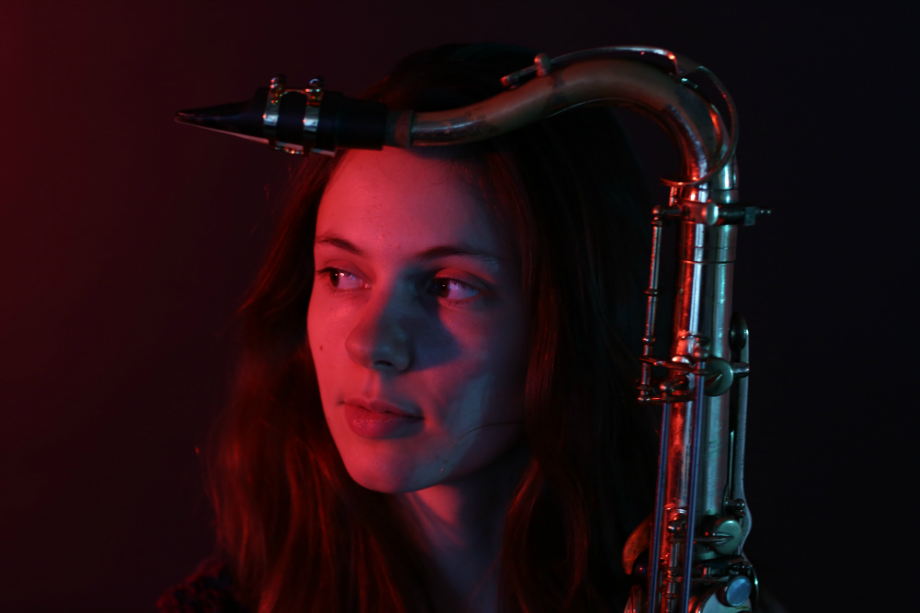
Maria Grand creates a unique program on her full-length debut recording. "Magdalena" (Biophilia Records) contains story-songs, instrumental excursions that feature the excellent rhythm section of Rashaan Carter (acoustic and electric bass) and Jeremy Dutton (drums), a pair of duets with guitarist Mary Halvorson, a duet with pianist (and label head) Fabian Almazan, and powerful contributions from pianist David Bryant. The tenor saxophonist wrote all the pieces (including the lyrics) on the album and contributes most of the vocals,
Ms. Grand, a native of Switzerland. moved to New York City in 2011 (at the age of 19) to study and work with Billy Harper, Doug Hammond, the late Von Freeman, and Steve Coleman. She has recorded with Coleman on his most recent Pi recordings, "Synovial Joints" and "Morphogenesis."
The album opens with "La Immortal", a rubato work that features spoken-word artist Jasmine Wilson (a vocalist and poet) - the words celebrate the feminine aspect of creation while the saxophone, piano (Bryant), and rhythm section skitter beneath the voice. Almazan's piano rumbles, flows, and thunders below Ms. Grand's voice on "Imani/Walk On By", a tribute to vocalist Imani Uzuri. The two tracks with Ms. Halvorson, "Last Year" and "Sing Unborn", both deal with personal relations, although the latter tune is written to Ms. Grand's unborn children. The blend of guitar and voice has a mysterious quality heightened by the tension in the melody line as well as the sustain and studio echo.
![]() |
| Photo: Gilmatic |
Bryant's roiling piano work stands out five tracks on which he joins the band but especially on the trio of pieces that are back-to-back-to-back. "Pyramid Sphere" opens in a funky mood and the pianist immediately launches into a solo. Built off the melodic phrases that open the track, Bryant engages in a a lively give-and-take with the bass and drums. Ms. Grand picks up on that energy, entering into her solo in a playful mood. A strident piano chord introduces the next track, "Where Is E", and one expects by the saxophone-piano duo, the piece will be a ballad. The pace is slow, with a blues feel, yet moves in unexpected directions (note the excellent bass work). The final song of the three, "Demonium", has a funky feel, a cross of The Meters with Steve Coleman. Dutton is the focal point here, creating a tension-filled skittish rhythm that influences how Ms. Grand and Bryant respond.
The album closes with the other spoken-word piece, "Ejes y Deseos", which features rapper Amani Fela. With an airy background, a powerful bass line, and several melodic interchanges between the saxophone and piano, the song is a positive close to a program. Among the lines are the opening couplet "May all the creation the children of love/feel the burn of happiness" and the closing couplet "Infinite connection through the hearts/Real life energy shared in the minds of thousands." There are moments when Ms. Grand's lyrics sound precious but the music beneath the voice has power and a strength that gives the words more depth.
"Magdalena" is a fascinating recording, very different from one might expect of someone so young. Her teachers and mentors obviously heard elements in the music created by Maria Grand to allow her to take flight. Her voices, singing and saxophone, are already beginning to move away from her mentors: it should be fascinating to hear and see how this artist changes as she grows.
For more information, go to www.mariakimgrand.com.
Here is one of the Trio tracks:
Subscribe to:
Posts (Atom)