String quartets are usually not the bailiwick of this blog but there have been a slew of new (and, to be fair) older recordings that have caught my fancy in recent months. In June, it was the massive seven-CD box set of the collected string quartets of Wadada Leo Smith (still working my way through that) as well as the brilliant three-CD solo violin set from Johnny Gandelsman's "This is America" which led me back to listen to his work with the Brooklyn Rider string quartet.
Around the same time, I became aware of PUBLIQuartet, a string ensemble founded in 2010 and based in New York City. Composed of Curtis Stewart (violin), son of tuba master Bob Stewart, Jannina Norpoth (violin), daughter of Detroit-based music master A. Spencer Barefield, Nick Revel (viola), and Hamilton Berry (cello), the string quartet pushes at the boundaries and prejudices about 21st-Century classical music inspired by the work of Kronos Quartet, Roscoe Mitchell, Caroline Shaw, and many others. Among their projects is "Mind| The| Gap|" which brings diverse musical material from folk, blues, pop, and elsewhere and presents them in a new musical light.
"What Is American" (Bright Shiny Things) is the PUBLIQ's third album and follows in the structure of 2019's "Freedom & Faith" in there are suites, adaptations, new music, and improvisations. Among the 20 tracks are four short pieces, all sharing the main title "Fifth Verse", that connect the words poet Oliver Wendell Holmes wrote in 1861 that added a verse to "The Star Spangled Banner" to support the Union Cause in the Civil War. The ensemble opens the program with their take on Antonin Dvořák's "String Quartet No. 12, Op. 96 "American", one of the pieces the Czech composer wrote while in the United States (1892-1895) as the head of the National Conservatory of Music in NewYork City. One can easily hear the influence of Negro Spirituals on the composer while the PUBLIQs use of percussion and voice throughout the four movements underscore that influence.
It's a fascinating program. The quartet play the four-movement "Dig The Say", a piece pianist Vijay Iyer composed for Brooklyn Rider based on the music of the "Godfather of Soul" James Brown. Part of the fun of the piece is just how funky it is but also the introspection built into the second movement. Instrument are used for percussion, there are quick stops, foot stomping, pizzicato, and an overall sense of joy. There are pieces by Rhiannon Giddens (the powerful blues "At The Purchaser's Option"), Roscoe Mitchell (the enigmatic "CARDS 11.11.20"), and improvisations on works by Fats Waller ("Honeysuckle Rose"), Ornette Coleman ("Law Years" and "Street Woman"), plus the four improvisations that close the album under the title "Wild Women"––they include hand-clapping funk of "Black Coffee" by Tina Turner, the high-powered in-your-face soul of "They Say I'm Different" by the late Betty Davis, Alice Coltrane's ecstatic "Er Ra", and closing with Ida Cox's feisty anthem "Wild Women Don't Get The Blues".
Some might say that "What Is American" is way too ambitious a project––of course it is. It has to be. For as much as the media makes the US look as if it is either right wing or left wing, overall it is way too complex to neatly drop into two sides. By taking their influences from a plethora of genres, by adding improvisation, voices, and more, this program shows just how diverse this country is. And that's good. That is something we need to remember! PUBLIQuartet has much on its mind but foremost, they want to use music to educate, entertain, and energize a pandemic-numbed world.
Here are two bands, each peopled by musicians who all have their own ensembles and whose sonic palette is influenced by that of the Ornette Coleman quartet of the late 1950s-early 1960s that recorded for Atlantic Records. The group featured Ornette (alto saxophone), Don Cherry (pocket trumpet), Charlie Haden (acoustic bass), and either Billy Higgins or Ed Blackwell on drums.
Kind Folk features (from left to right) Colin Stranahan (drums), John Raymond (trumpet, flugelhorn), Noam Weisenberg (bass), and Alex LoRe (alto saxophone). The quartet takes its name from a Kenny Wheeler piece and his spirit certainly can heard throughout their 2018 debut "Why Not" (Fresh Sound New Talent). In June of 2021, the group reconvened, each member bringing in new material. Stranahan, having worked with guitarist/pianist Kurt Rosenwinkel, suggested to his compatriots one of his tunes ("Mr. Hope") as well as bringing in an arrangement of Elliot Smith's "Between the Bars". Perhaps it was the time in lockdown and all the lost gigs (plus the worries of surviving the pandemic) but there is an extra urgency to this music.
"Head Towards The Center" (FSNT Records) is the album's name and also the final track. The nine-song program opens with a group improvisation, "Where Am I", a veritable sonic and physical centering piece that introduces listeners to the quartet's leanings towards melody. The bassist strums the band in on Raymond's 'Power Fall", a piece that reminds this listener of the music of Booker Little (1938-1961). LoRe's solo rises out of the unison theme and he partakes in an exciting push/pull with the bass drums. Raymond hovers in the background until he steps into his spirited, crisp-toned, exploration of ideas. He switches to flugelhorn for his other tune "Sweet Spot". The bassist introduces the melody while the brass and alto murmur in the background. One hears a tinge of Lee Konitz in the clear-tones of the alto sax lines. There's a hint of melancholy in the flugelhorn solo that picks up intensity as it rolls forward.
LoRe, Weisenberg, and Stranahan dance "Mr. Hope" in with Raymond joining on the last part of the theme. The song really swings with the fast-paced waking bass line and the drummer's hearty swing. More strummed bass chords followed by a slow bass melody opens the Smith track, a deliberate, sweet, blues-soaked ballad. The combination of soft alto sax lines with Raymond's emotional flugelhorn phrases in the solo section is a highlight of the program, especially when Stranahan responds to their growing urgency.
As I wrote above, the title track closes the album. The throbbing floor drums beneath the intertwined reed and brass opens the song in a somber fashion. As the music moves forward, the contrapuntal lines pick up intensity, freeing up the drummer while the bass holds down the bottom. LoRe and Raymond continue to feed off each other until a drum solo over strummed bass chords brings the music to a close.
"Head Towards the Center" is an album built around the love of music and melody, the excitement of exploration and interaction, and the need to push away the darkness of daily life. Kind Folk does listeners a kindness by playing with integrity and passion, not settling for easy solutions. Give them a good listen!
Here's the quartet's version of Elliot Smith's "Between the Bars":
Way North, the collaboration of three Canadians––tenor saxophonist Petr Cancura, trumpeter Rebecca Hennessey, and bassist Michael Herring––with American drummer/percussionist Richie Barshay came together in 2014 (same year as Kind Folk above) through their love of music. There's a New Orleans-inspired looseness to their music but don't get the idea they are lazy. They like melody, harmony, danceable rhythms, mixing it all together in a delightful gumbo.
"New Dreams, Old Stories" (Roots 2Boots Recordings) is the quartet's third album and continues their adventures into jazz, blues, funk, and more. The title of the album is a nod to Old & New Dreams, the quartet that featured saxophonist Dewey Redman, Don Cherry, Ed Blackwell, and Charlie Haden (all alumni of Ornette Coleman's ensembles). Bassist Herring, in fact, penned the ballad "If Charlie Haden Couldn't Write a Song to Bring World Peace , What Hope is There for Me?", the lovely ballad right in the middle of the 12-song program. Outside of that, much of this music will keep you tapping your feet. The album opens with Ms. Hennessey's "Play"––listeners can ravel in the playful melody, in the delightful dance of the rhythm section, and in the sweet solos. The tempo seems to be doubled on Cancuras's "I'm Here To Stay" with Barshay's thundering drums pushing Herring into a "running" bass line.
Several tracks include group vocals including the bluesy ballad "Come Over to Our House". Composed by Herring, there are short vocal refrains wrapped around the soulful tenor sax solo, the sweet trumpet spot, and a sparkling bass solo. Ms. Hennessey's "Dr. Good" has a raucous New Orleans feel, a snappy vocal chorus, a growling tenor sax spot, a clarion call from the trumpet, stomping drums, and a thick bass line.
Drummer Barshay, who now teaches in Boston and also performs with The Klezmatics, offers up the sprightly Venezuelan traditional "Pajarillo Verde", replete with delightful rhythm changes, splendid bass work, and short but pithy solos all around. Barshay also arranged Jackie McLean's "Dig" for the quartet––it's a playful romp that features powerful solos and on-the-dime tempo changes.
"New Dreams, Old Stories" closes with the lilting ballad/lullaby "When You Say Goodnight to Me"––composed by Ms. Hennessy and Herring, the music feels likes a hymn and, at the same time, a love song. Sweet and satisfying, it's just the right song to finish a program that is so inviting, so much fun, and so well-played. Way North is not about technique, it's about how one can have a good time in the midst of a crazy world creating music from the heart and soul. Enjoy!!
At first, listeners may be put off by the sounds of "Facets" (Pi Recordings), the new album from the fertile imagination of tenor saxophonist and composer Hafez Modirzadeh. Those of us who live in the United States, Canada, Great Britain, basically north of the Equator, are used to the 12-tone scale whereas elsewhere in the world, you will hear alternative scales, microtones, and more. Often, those sounds puzzle us, sound dissonant (they are, to our ears), and just plain wrong. Yet, stay with what Modirzadeh is doing, listen all the way through, and then go back again.
Chances are good your curiosity will lead you to consult the liner notes by the time you reach the second or third piece. For the 18 songs on "Facets", Modirzadeh has retuned eight specific pitches on the piano. Those changes alter the resonances of the piano but allows the composer and performers (pianists Craig Taborn, Kris Davis, and Tyshawn Sorey play on six tracks each) to create music that grabs our attention and never lets go. There are two songs from Thelonious Monk ("Pannonica" and "Ask Me Now" - listen above) and "Facet 34 Defracted" deconstructs both songs in one piece. "Facet 32 Pearl" is based on "Variation No. 25" from J.S. Bach's"Goldberg Variations". Both Taborn and Sorey play an improvisation and both tracks fit into the scope of Modirzadeh's visions.
Do take the time to bathe in these sounds. Pieces such as "Facet 31 Wake" (Ms. Davis playing solo) is emotionally as it mesmerizing while "Flow Facet" (Ms. Davis solo again) feels like hypnotic Southeast Asian marimba, Chinese folk music, and a touch of boogie-woogie in the left hand. The keening tenor sax creates creates a wordless prayer with the piano (Ms. Davis) on "Facet 28 Nora" while the following track,"Facet 29 Night" is a duo for tenor sax and Sorey's sparse piano chords. The latter track also has a dream-like quality, creating a slow-moving set of mental pictures. Taborn and Modirzadeh create a stop-and-start feel from the outset of "Facet 35 Ode B'kongofon" –– after a moment, the fluttering tenor sax solo flows over the stumbling rhythm. Quiet piano chords (Taborn) usher in the saxophonist on "Facet 39 Mato Paha", a slow-moving tribute to a geological formation in South Dakota (the mountain's name comes from the Lakota tribe and translates to "Bear Butte"). Neither musician hurries, both the trance-like melody to resonate, to sink in.
The music on "Facets" is slow, at times meditative and trance-like, yet the deliberate tempi allow you time to digest and get accustomed to the sounds. Hafez Modirzadeh had previously used retunings on his 2112 Pi album "Post-Chromodal Out!", tying it closer to the Persian melodies of his ancestors than he does here by employing different instrumentation. Both albums are fascinating and both are unique!
Speaking of creating one's own language, saxophonist, trumpeter, composer, and conceptualist Ornette Coleman (1930-2015) hit the ground running in the late 1950s and did not stop once in his long career. Not only did the Texas-born Coleman change saxophone language but also how different rhythms can be utilized in acoustic and electric music. Saxophonist and composer Miguel Zenón was first introduced to Coleman's music as a teenage student in his native Puerto Rico. Later, as a member of the SF Jazz Collective, the ensemble created its inaugural program and tour (in 2004!) around the music of Coleman (arranged by Gil Goldstein). Yet, Zenón remains curious about the music and how it relates to the music he creates as well as the sound of his saxophone.
In May of 2019, Zenón assembled a quartet of musicians that he knew but who had never recorded together for a Coleman 91st Birthday Celebration in Basel, Switzerland. Joining the alto saxophonist was tenor saxophonist Ariel Bringuez (Cuba), bassist Demian Cabaud (Argentina), and Jordi Rossy (Catalan). Without much rehearsal, the band took the stage and the results can be heard of "Law Years: The Music of Ornette Coleman" (Miel Music). Instead of picking really familiar tunes, such as the oft-recorded "Lonely Woman" and "Una Muy Bonita", the quartet explores "Giggin'" (from 1959's "Tomorrow Is The Question", Coleman's second Lp), "Dee Dee" (from 1966's "At The Golden Circle Stockholm"), "Free" (from 1960's "Change of the Century"), "Street Woman" and the title track (from 1972's "Science Fiction"), "Tribes of New York" (from a 2016 release of unissued tracks from the 1960s Atlantic sessions), and "Toy Dance" (from 1968's "New York Is Now").
Photo: Chris Sweda 2016
The quartet have a ball with this music, getting in to the joy of playing Coleman's playful melodies while creating solos that rise out of the pieces organically. Check out "Free" –– I've not heard Bringuez before but he brings the fire as he and Zenón literally fly over the frantic rhythm section. "Giggin'" blends the joy of bebop with the blues; Zenón sounds like he's having a blast as he dances his way through a four-minute solo. Bringuez, who has worked with pianist Chuco Valdes and guitarist Hugo Fernandez, also solos with abandon. The title track opens with a short but powerful bass solo before the quartet lays down the melody. Their approach is reminiscent to that of the Atlantic Records Coleman Lps of the early 1960s. Cabaud, who has worked with the Lee Konitz-Ohad Talmor Big Band and vocalist Sara Serpa (among others) gets a longer spotlight right after the initial verse. Both the alto and tenor solos have tinges of flamenco music as well as moments of "free blowing".
Photo: Nuccio DiNuzzo 2015
The only ballad on the album, "Broken Shadows", shines from the opening moment. The interaction of the saxophonists (Zenón's keening tone and Bringuez's deep "blue" notes), the splendid bowed bass, and Rossy's intelligent cymbal coloring, all blend into a splendid performance.
"Law Years" closes with the medley of "Toy Dance/ Street Woman". The opening chorus and the subsequent solos swing with delight. After a short drum break, the saxophonists return to the opening melody go right into "Street Woman". This song has a darker feel and the rhythms more forceful. Bringuez's solo has a great sense of urgency and provides the power for Rossy's thumping drum solo. The waves of energy that come at you from the speakers as the pieces powers to is close makes you at to go right back to the beginning. Even as the various vaccines bring relief to millions of people all around the world, it might be number of years before musicians get to have a gig as loose and freewheeling as Miguel Zenón did on this May night in 2019. Pour a drink, turn down the lights, turn up the volume, and enjoy!
Any new album from saxophonist and composer Steve Lehman is a major event. His latest effort is titled "Steve Lehman & Sélébéyone" (Pi Recordings) and is credited to the saxophonist as well as to rappers Gaston Bandimic (Wolof), HPrizm (English) and soprano saxophonist Maciek Lasserre. The nine tracks feature rapping in English and Wolof, the official language of Senegal, The Gambia, and Mauritania, all part of sub-Saharan Africa. As sung/rapped by Bandimic, the words have a tremendous percussive feel. HPrizm, a founding member of the Anti-Pop Consortium, is also a strong rapper. Powered by the rhythm section of Drew Gress (acoustic bass) and the brilliant drummer Damión Reid plus the keyboard and piano work of Carlos Homs who has worked with drummers Bernard "Pretty" Purdie and Jim Black and saxophonist/clarinetist Michael Moore, the music fires on all cylinders.
Five of the tracks are composed, sequenced, and produced by Lehman while Lasserre does the same for four others. Because I like to know what the words are, I recommend you go to www.stevelehman.com/selebeyone and check them out (the Wolof verses are translated into English). But, do pay attention to the music, to the burbling keyboards, to the solid bass lines, to powerful streams of phrases from Lehman's alto sax (at times sounding like Henry Threadgill) and, especially to the fascinating work of drummer Reid. Pieces such as Lehman's "Are You In Peace" where he pushes the music forward at a torrid pace while Gress holds down the bottom and plays counterpoint as well are filled with stunning tension that reflects the lyrics. Then, there is "Cognition" where his bass drum and snare reflect the bubbling keyboard. Lehman soars over the rhythm section, his acid-seared sound going way to Bandimic - his rap is punctuated by impressive bass work and snapping drums. Lasserre's pieces have more of a "space" edge; on "Dualism", his soprano sax is set against Lehman's alto, the synth washes, and HPrizm and Bandimic's vocals. "Hybrid" plays with various sound samples while the rappers push the pace. The blend of soprano and alto saxophone shadowing the lyrics, giving the words about oppression and freedom a framework, buzzes, chatters and soars.
Sounds floating in and out of the sound spectrum, the trance-like repetition of melodic fragments, jittery rhythms, powerful raps, all make "Steve Lehman & Sélébéyone" attractive. Jazz purists just might turn up their nose but adventurous listeners, especially younger ones, will find the album will bring them closer to the intersection of jazz and rap. The music of Steve Lehman is a giant mixmaster, many influences thrown in the musical stewpot, boiling over at times but never less than fascinating.
From the opening bass figure of "NoD For Nelson", the music contained on "Stephan Crump's Rhombal" (Papillon Sounds) s steeped in the blues. There are moments when the music glides over to bebop (the handsome swing of "Skippaningam") or becomes wonderfully unclassifiable (the propulsive push of "Birdwhistle" - right near the end, the tune breaks into a rhythm similar to Lou Reed's "Walk on The Wild Side" while ) but you will listen to this album for the impressive interactions of Crump (bass and compositions), Tyshawn Sorey (drums), Ellery Eskelin (tenor saxophone), and Adam O'Farrill (trumpet). Pay attention to how the solos grow out of the melodies, how the quartet mix their distinctive styles to the composer's vision of the music, and the clarity of the sound. There's a soul music edge to "Grovi" in it's laid-back beat yet listen to the melodic bass lines under the solo phrases that move from foundational to counterpoint. Also notice how Eskelin steps in behind O'Farrill's solo several bars before his own solo yet does not seem to butting in, just adding to the sound.
Sometimes, it seems as if we're stepping into a private conversation, as if the band was reflecting on previous events. The deep blues of "Loose Bay" is a good example; moving at a very slow pace atop the splashing cymbals, tom-tom beats, and long bass tones, the youthful trumpeter takes a fascinating solo that often changes in volume, rising from a near-whisper to a heartfelt cry. The saxophonist follows, drifting over the beat, slowly but surely working around the bass lines but never in an agitated state.
You'll like the funky drive of "Esquima Dream" (Sorey in a "Pretty" Purdie state of mind) and the steady shuffle of "Tschi" (with its fun switch-arounds). Really, let the music of "Rhombal" wash over you. Play it loud, let the rhythm section fill your ears, notice the Ornette Coleman connection in the blues feel of several tracks (and the instrumentation) and also the folky melodies of pieces such as "Pulling Pillars" (the solo bass piece before the final track, "Outro for Patty"). Take it all in, then go back and let the sounds resonate inside your mind and body. Sometimes, the best music sounds old and new at the same time. "Stephan Crump's Rhombal", dedicated to the bassist's late brother Patrick, is contemporary blues, "blues with a feeling."
"Calma" is the opening track of "All The Dreams", the new album from Sara Serpa (vocals, piano, Fender Rhodes) and André Matos (guitars, electric bass, percussion) to be released on Sunnyside Records in mid-September. Meaning "calm", that's a good initial reaction to the 14 tracks on the recording. Ms. Serpa's gentle and emotionally true voice, either solo or multi-tracked (as it is on several tracks), blends so nicely with Matos's electric guitar, whether it is a folky track such as "Estado De Graça" or the mysterious "Night" (two guitars in the right speaker vying for attention).
Three cuts set poems to music, with the afore-mentioned "Night" based on a William Blake poem from "The Song Of Innocence" while the minimalist "Programa" features words from Portuguese poet Luis Amaro. "Nada" is from the pen of Ālvaro de Campos (a heteronym of poet Fernando Pessoa; the duo bathes this poem about a person who has settled for a world with nothing with shimmering guitars and a straightforward vocal. One other cut, "Os Outros", employs words from a 1964 essay by Brazilian writer Clarice Lispector (1920-1977).
photo by José Sarmento Matos
While most of the album is composed of duo performances, mix engineer Pete Rende adds synthesizer to three tracks while Billy Mintz can be heard on drums and percussion on four cuts. The latter musician's excellent hand drumming can be heard on haunting "Água", bubbling beneath the vocal and guitars, and quietly accenting the voice, piano, and guitars on "Lisboa". Both he and Rende add their talents to the opening track, Mintz with the simple yet effective brushes work.
Wordless vocals are used to great effect throughout the album, from the classically-influenced "A La Montagne" to the Beatles-esque "Postlude" (kind of like "Sun King" from "Abbey Road") with its waterfall-like descending vocal lines. Listen to Ms. Serpa's voice rise out of Rende's synth on the final track, "amlaC", not exactly a backwards version of the first cut - the track serves to bring the recording full circle and brings the dreams to a close.
Because André Matos does not take many solos but uses his guitar to paint the various backgrounds, one might overlook his contributions. He wrote or co-wrote 11 of the 14 tracks, his guitar is the foundation and other voice in the conversations of the songs, and his lines flow as effortlessly as the vocals. Sara Serpa understands the duo setting having recorded with pianist Ran Blake and the various vocal choirs on the recording may remind some of the work she does with the vocal quartet Mycale. The music on "All the Dreams" is in no hurry, at times as comforting as cool summer breeze or a warm blanket on a winter night. Warm, like calm, should be how one feels after spending time with this album - warm, calm, and, ultimately, hopeful.
As I was writing the paragraph at the bottom of this post, Twitter and Facebook (and other forms of media) began spreading the news of the passing of Ornette Coleman. The Texas native was one of several musicians who changed the face of Black American music in the mid-to-late 1950s, among them Sonny Rollins, Max Roach, Miles Davis and Thelonious Monk. Like Mr. Rollins (his junior by 6 months) did on "Way Out West" (1957) and "Freedom Suite"(1958), Coleman dispensed with chordal instruments for his groundbreaking Atlantic recordings ("The Shape of Jazz to Come" and "Change of the Century" in 1959 and beyond). His work with trumpeter Don Cherry, bassist Charlie Haden (and later with Scott LaFaro), and drummers Billy Higgins ("..Shape of Jazz..") and Ed Blackwell ("Change..." and into the 1960s) continues to resonate n the world of improvised music.
Mr. Coleman went on the record for Blue Note Records (1965-68), Flying Dutchman, Impulse, Columbia Records (including the large ensemble work "Skies of America" in 1972) and then created his Prime Time "electric" band for Artists House in 1975 (although "Dancing In My Head" was not released until 1977). In 1986, Pat Metheny, Jack DeJohnette and Charlie Haden joined Mr. Coleman for "Song X" (credited to the guitarist and saxophonist), a critical and commercial success. In the 1990s, Verve Records gave the saxophonist his own Harmolodic imprint and released 4 CDs in 3 years but it would be nearly a decade before Mr. Coleman released another album under his name. "Sound Grammar", a live recording from 2005 but released in 2006, featured his son Denardo (drums) plus bassists Tony Falanga and Greg Cohen. It was to be the last recording to be released, although it's not hard to imagine that there are not more sessions in the "vaults."
Ft Worth/Star Telegram
Through it all, Ornette Coleman never wavered in his forward motion. His tone on alto saxophone was influenced by the Texas Tenor tradition of the 1940s and 50s, meaning he was steeped in blues. In the 1960s, he took up trumpet and violin, teaching himself to play in his own "primitive" fashion. He hired his son Denardo to be his drummer when the the younger Coleman was 10 years old - Denardo went on to play on many of his father's recordings and became his producer.
On Saturday June 13, the Uncertainty Music Series presents Trevor Saint and Jonathan Zorn for 2 solo sets at 8 p.m. in the cozy environs of Never Ending Books, 810 State Street in New Haven. Saint, who plays many different mallet instruments but especially the glockenspiel, will play pieces by Matt Sergeant, Amanda Schoofs, Christopher Burns and Jeff Herriott. Zorn, who attended Wesleyan University, studying with Alvin Lucier and Anthony Braxton, will create a work for speech and electronics.
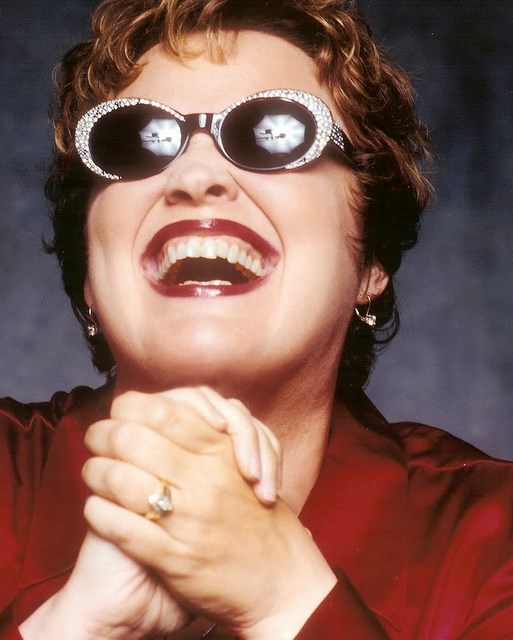
The Side Door Jazz Club in Old Lyme brings vocalist Diane Schuur to the lively night spot for an 8:30 p.m. show. Ms. Schuur is on the road to promote her new CD, "I Remember You: Stan and Frank" (Concord Jazz), released to celebrate her "discovery" 35 years ago at The 1979 Monterey Jazz Festival by Stan Getz (although the bio on her website says her discovery was in 1975). The saxophonist invited to take part in a concert at the website and her career began to take off in earnest. The recording features songs made famous by both Mr. Getz and Frank Sinatra.
As for The Side Door gig, it's sold out. There may be a "wait list" so call 860-434-0886 to find out.
The Buttonwood Tree in Middletown presents the Jessica Fichot Quartet at 7:30 p.m. Ms. Fichot, a native of upstate New York, was raised in France and creates music in the French "chanson" style. Her mother was born in Shanghai and her daughter has become quite interested in the "jazz/popular music" created in that city in the late 1930s and after World War II leading up to the Communist takeover. The chanteuse plays accordion and toy piano while her band includes Matthas Alvear (acoustic bass), Alex Miller (guitar), and Sylvain Carton (clarinet, saxophone). Her most recent CD, "Le Secret", (self-released) came out in 2012 and features original compositions save for a Mandarin Chinese reading of Cher's "Bang Bang." To make reservations, call 860-347-4957 or go to www.buttonwood.org. To find out more about Ms. Fichot and her music, go to www.jessicasongs.com.
Thursday June 12:
Cellist/composer Erik Friedlander will be in New Haven twice this week. On Thursday, he's bringing his Broken Arm Trio plus One to the Yale University Art Gallery, 1111 Chapel Street, to perform the "Oscar Pettiford Project" at 5:30 p.m. The concert, free and open to the public, will celebrate not only the music and tragically short life of the bassist/cellist (1922-1960) but also one of the exhibitions currently "up" in the gallery. "Jazz Lives: The Photographs of Lee Friedlander and Milt Hinton" (on display through September 4, 2014). Lee Friedlander is the cellist's father and has been photographing musicians (and more) for nearly 6
decades. Hinton (1910-2000) was a famous bassist, one of the first African American musicians to break the color barrier in the studios of New York City (playing on thousands of jazz and pop songs as well as advertising jingles). He carried his camera everywhere he played and shot images of many of the jazz artists of the 20th Century.
This Saturday (6/14) is the opening day of the 17th Annual International Festival of Arts & Ideas, 15 days of music, theater, art, performance art, talks, symposia, dance and more, with almost all events taking place on the New Haven Green and venues on the campus of Yale University.
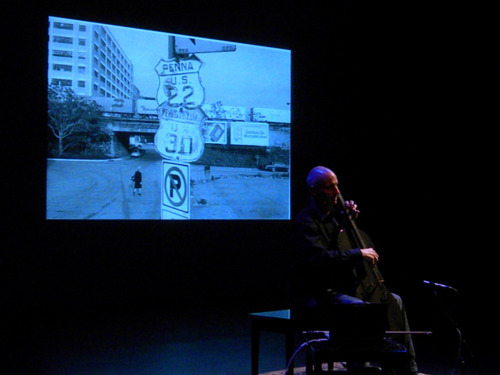
On that first day, Erik Friedlander will present "Block Ice and Propane", a program of solo cello music accompanied by photographs by the elder Friedlander and short films by Bill Morrison. When the cellist was a young boy, his father would pack the family into the camper and drive around the United States. In 2007, Erik Friedlander released a CD (the same name as the program) made up of solo cello pieces that evoked the places where the family traveled and the many sights they took in. The recording is filled with wonderfully vivid melodies and the cellist built the multi-media performance from his memories of those summer sojourns. The concert takes place at 1 p.m. in the Iseman Theater, 1156 Chapel Street - for ticket information, go to artidea.org/erikfriedlander.
Here's Friedlander's "Airstream Envy" to entice you:
Spectrum in Motion is a dance company that started in 1982 as vehicle for artists in the Pioneer Valley of Massachusetts to work together and continue developing their craft. In 2003, the artistic director, Olivia Sabualo Ilano-Davis began a program at the Charter Oak Cultural Center in Hartford to work with young people not only to teach the art and the craft of dance but also to learn to work as a team, to come together in creativity.
The company is holding a fund-raising concert on Thursday - "Solos & Duets 2014" - at 7 p.m. in the Asylum Hill Congregational Church, 814 Asylum Avenue in Hartford. Saxophonist Charles Neville (pictured above left) is the headliner - Mr. Neville, who is the only member of The Neville Brothers to live outside of their hometown of New Orleans, will perform with, at various times, vocalist Samirah Evans, cornetist Stephen Haynes, pianist Dan Campolieta, and vocalist Steve Mitchell. For ticket information and more, go to www.brownpapertickets.com/event/609508EVENTPAGE.
Father's day is just around the corner (6/15) and drummer/producer Denardo Coleman has organized a concert to take place at 7 p.m. at the Prospect Park Bandshell in Brooklyn. The concert is "Celebrate Ornette: The Music of Ornette Coleman featuring Denardo Coleman Vibe." Denardo's dad, Ornette (pictured left), first put his son to work at the age of 10 (for which numerous critics took him to task) and they have worked together many times since then. Music will be provided by the drummer with bassists Tony Falanga and Al McDowell plus Charles Ellerbe (guitar) and Antoine Roney (saxophone). Among the guest musicians will be Laurie Anderson, Bill Laswell, Bruce Hornsby, Flea, Patti Smith, Joe Lovano, David Murray, Henry Threadgill, Ravi Coltrane, Geri Allen, Thurston Moore, and Bachir Attar & The Master Musicians of Jajouka plus more to be announced. The concert, free and open to the public, is part of the summer-long Celebrate Brooklyn festivities and in honor of Blue Note Record's 75 Anniversary month. For more information, go to www.prospectpark.org/calendar/event/celebrate-brooklyn-2014 or bricartsmedia.org/events/performing-arts/celebrate-ornette-the-music-of-ornette-coleman-featuring-denardo-coleman-vibe.
Friday June 13:
The Firehouse 12 Spring 2014 Concert Series comes to its ultimate performance this week with the first New Haven performance of the Satoko Fujii Trio + 1. Ms. Fujii, a native of Tokyo, Japan, came to the US in 1985 to study at the Berklee School of Music. She then returned home in 1987 but came to Boston to get her Master's Degree at the New England Conservatory of Music. She studied with George Russell, Cecil McBee and Paul Bley. It was Mr. Bley who appeared on her 1996 debut album. Since then, Ms. Fujii has released over 70 recordings with numerous ensembles including 4 different big bands, several groups with her trumpeter/husband Natsuki Tamura, trios with drummer Jim Black and bassist Mark Dresser, and a memorable duo disk with pianist Myra Melford.
This new Trio features bassist Todd Nicholson and drummer Yoshi Shutto, adding the trumpet of Kappa Maki. Her music is often fluid blend of long melodic lines, frantic improvisations, soft passages leading to striking climaxes and more. Adventurous music that goes in many and, often, surprising directions, the 4 musicians will play 2 sets - 8:30 and 10 p.m. - for more information, go to firehouse12.com or call 203-785-0468.
Trumpeter Pharez Whitted, who has worked with artists such as Elvin Jones, George Duke, Branford & Wynton Marsalis, and John Mellencamp (among many others), returns to The Side Door Jazz Club for an 8:30 p.m. performance. Whitted, currently Director of Jazz Studies at Chicago State University, was one of the first artists to play the Old Lyme performance space upon its opening in Spring 2013. His music blends hard-bop jazz of the 1960s with rhythm 'n' blues influences and can swing with great gusto. For this gig, Whitted is bringing a Quartet. Doors open at 7:30 - for more information, go to thesidedoorjazz.com.
Saturday June 14:
Guitarist and Hartford native Sean Clapis is performing a free concert at 2 p.m. in the cozy confines of Integrity 'n' Music, 506 Silas Deane Highway (rear) in Wethersfield. Featured in his Trio are Jocelyn Pleasant (drums) and Ben Thomas (bass). Integrity owner Ed Krech presents, on average, 3 concerts a month in the space and is a great supporter of local musicians as well as a huge fan of traditional New Orleans music (which is usually what's playing when you walk into the store). For more information, call 860-563-4005.
The Side Door Jazz Club presents vocalist/composer Sarah Elizabeth Charles and her Quartet at 8:30 p.m. Ms. Charles, a native of Springfield, Massachusetts, was first exposed
to jazz at the Community Music School in her home city. She studied in
New York City, earning degrees at the New School and Eugene Lang College.
She's performed alongside Jimmy Owens, Sheila Jordan, Dr. Billy Taylor, Geri Allen and many others. Her 2012 debut, "Red" (Truth Revolution Records), featured standards, originals, and pieces built from Haitian folkloric tunes.
The Quartet features Jesse Elder (piano), Rahsaan Carter (bass) and, as of this moment, there's no listing of who's playing drums. For more information about Ms. Charles and her music, go to sarahelizabethcharles.com. For tickets, call 860-434-0886 or go to thesidedoorjazz.com.
Here's a tune from that debut disc:
*************************************************
4 years ago, I reviewed the debut EP from saxophonist/composer Johnny Butler and really liked it, not only for its musicality but also for the risks the musician took with his music (read the review here.) Well, he's back and raised the bar a bit higher. His new EP, "Raise It Up," (self-released) finds Butler on tenor and baritone saxophones plus clarinet and a drummer (Kassa Overall) on all 7 tracks and bassist Aidan Carroll on 3 tracks. Alto saxophonist JJ Byars appears on one track.
Each track has samples galore, all contain vocals (certainly sampled), there are some serious grooves you can dance to, and it sounds darned good really loud. There's a splendid hip hop take on "Jive Talking" (yes, the Bee Gees tune) with a strong (uncredited) rap and a solid dose of "Philly Soul" on "I Believe in You (Do You Believe in Me)."
"Raise It Up" is a glorious mash of styles, sounds and soul music, not so much a display of technical prowess as it shows what a strong producer/arranger Johnny Butler is becoming. Go to www,johnnybutler.com and check out his music as well as his videos.

 Posts
Posts