Showing posts with label Craig Taborn. Show all posts

Monday, February 20, 2023

Musical Treats for February

 What a joy to be surrounded with such great music––here are two of the more delightful releases of 2023! 

Photo: Erika Kapin
Australian-born vocalist Jo Lawry may be best known for working with Sting, Paul Simon, Fred Hersch, and Peter Gabriel but she's been recording her own albums for the past 15 years.  She spent nearly two decades living, working, and teaching in New York City (her teaching appointments were at the Manhattan School of Music and at the Boston-based New England Conservatory).  Ms. Lawry, who is married to saxophonist Will Vinson, moved back to Australia  in 2021 to lead the Equity in Jazz program at Sydney Conservatorium of Music, a program designed to encourage and support women and gender diverse musicians into a career in jazz through dedicated leadership, music development and mentorship.   She's released three albums as a leader with the most recent being 2018's "The Bathtub and The Sea." 


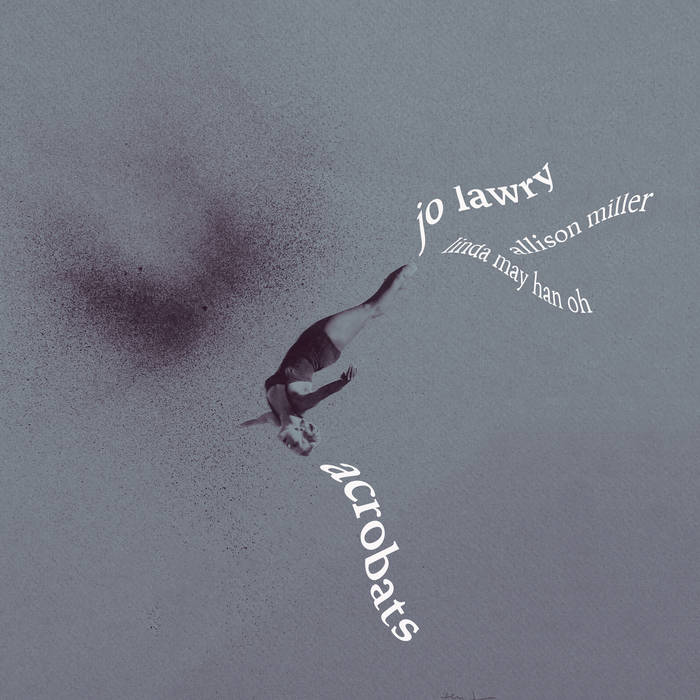
For her latest venture, "Acrobats" (Whirlwind Recordings), Ms. Lawry joins forces with bassist Linda May Han Oh and drummer Allison Miller to create a fascinating program that ranges from standards to two special pieces either written by an Australian composer (the title track comes from the pen of Gian Slater) or made a big hit on the Aussie scene (John Farnham's anthemic "You're the Voice").  Don't be put off by the spare instrumentation as the music is so intimate, delightful, emotional and adventurous that the 43-minute goes by way too quickly.  When you listen to this music, you'll hear how melodic all three artists.  Both Ms. Han Oh and Ms. Miller certainly know how to swing; right from the voice/bass opening moments of the opening track, Frank Loesser's "Traveling Light" (from "Guys and Dolls", one hears the delightful give-and-take of Ms. Lawry with the rhythm section.

Photo: Erika Kapin
The title track (listen below) illustrates Ms. Miller's splendid hand drumming as well as why Ms. Han Oh is a first-call bassist as she supplies both counterpoint and rhythmic support.  Dig the delightful the voice/drums duo on Cole Porter's "You're The Top"; taken at a breakneck pace, the vocalist dances atop the rapid-fire brush work.  Later in the program, Ms. Han Oh and Ms. Lawry take a delightful stroll through Al Hoffman and Dick Manning's "Takes Two to Tango" (first made famous in 1952 in separate versions by Pearl Bailey and Louis Armstrong).  This version is slower and slinkier than the two versions from seven decades ago yet retains the humor and sassiness that the lyrics embody.

There is nary a weak track on "Acrobats".  While her previous album tilted towards folk and pop, it's really great to hear Jo Lawry as a jazz singer (her scat feature on Lennie Tristano's "317 East 32nd Street" is a treat as is the sparkling bass solo).  Adding Linda May Han Oh and Allison Miller to this project is a stroke of genius––you'll not hear a better trio album this year!!


Let's hear the album's title track:


For his third album on Edition Records, tenor saxophonist Chris Potter recorded several nights of his February 2022 gig at the legendary Village Vanguard.  Six songs from the multi-night engagement make up the program for "Got The Keys to the Kingdom: Live at The Village Vanguard." For the gig, Potter put together an ensemble featuring Craig Taborn (piano), Scott Colley (bass), and Marcus Gilmore (drums).  The set is bookended by two long blues/gospel tunes with the first being Mississippi Fred McDowell's "You Gotta Move."  The leader goes it along for the first 30 seconds then introduces the blues groove that the rest of the ensemble picks up on.  They run the first three verses with Potter adding more energy each time until they break into a short bridge and the saxophone solo commences.  It's a tour-de-force, filled with ideas and turns-of-phrases, reminiscent of a Sonny Rollins-like playfulness. Taborn is next and he digs into the song's blues groove.  After a quick return to the theme, Gilmore gets the spotlight and, with the help of Colley's short background figure, kicks the heck out of his drums.

Besides the blues, there are two tracks with Brazilian roots, the handsome folk tune "Nazani Na" (transcribed by Heitor Villa-Lobos and Edgar Roquette-Pinto from an Amazonian Indian folk tune) and "Olha Maria", composed by Antonio Carlos Jobim, Chico Buarque, and Vinicius De Moraes).  The latter piece opens as a nearly-three minute conversation for Potter and Colley before the pianist and drummer enter.  There is also a lovely take on Billy Strayhorn's "Blood Count", a piece he composed in the hospital awaiting treatment for esophageal cancer that would claim his life several months later. When recorded by the Ellington Orchestra, the solo on the piece was poignantly played by Johnny Hodges. Here, the quartet not only interprets the distress of the composer's condition but his fight as well.  It's quite a beautiful piece.  That's followed by Charlie Parker's "Klactoveedsestene", a jaunty dance for all involved.  

The album closes with the title track, a gospel tune first recorded by Washington Phillips in 1929.  Again, I hear the influence of Sonny Rollins in the rollicking rhythms, the playful interactions of the group, and Potter's powerful solo.  Gilmore and Colley push him hard while Taborn feeds him aggressive chords.  The pianist gets the next solo, dancing, strutting, bouncing, feeding off the lively bass and drums. A return to the opening theme then Gilmore begins his magnificent 3:30 solo that reaches its climax with the audience roaring its approval. The entire quartet takes the piece out on that high-energy level.  

"Got The Keys to the Kingdom" is a delight from start to finish. If you love high-energy creative, the album has numerous examples. If you need a heartfelt ballad that explores many emotions, that's here as well. Rhythmic adventures? Yes! Great solos? Yes!  Chris Potter and his excellent ensemble shine throughout–don't miss this splendid live album! 


Here's Chris and the band on Charlie Parker's "Klactoveedsedstene":


Friday, March 12, 2021

Speaking In Other Languages


At first, listeners may be put off by the sounds of "Facets" (Pi Recordings), the new album from the fertile imagination of tenor saxophonist and composer Hafez Modirzadeh. Those of us who live in the United States, Canada, Great Britain, basically north of the Equator, are used to the 12-tone scale whereas elsewhere in the world, you will hear alternative scales, microtones, and more.  Often, those sounds puzzle us, sound dissonant (they are, to our ears), and just plain wrong. Yet, stay with what Modirzadeh is doing, listen all the way through, and then go back again.

Take a moment to go to https://hafezmodirzadeh.bandcamp.com/track/ask-me-now and listen to a track. 

Chances are good your curiosity will lead you to consult the liner notes by the time you reach the second or third piece.  For the 18 songs on "Facets", Modirzadeh has retuned eight specific pitches on the piano. Those changes alter the resonances of the piano but allows the composer and  performers (pianists Craig Taborn, Kris Davis, and Tyshawn Sorey play on six tracks each) to create music that grabs our attention and never lets go.  There are two songs from Thelonious Monk ("Pannonica" and "Ask Me Now" -  listen above) and "Facet 34 Defracted" deconstructs both songs in one piece.  "Facet 32 Pearl" is based on "Variation No. 25" from J.S. Bach's"Goldberg Variations".  Both Taborn and Sorey play an improvisation and both tracks fit into the scope of Modirzadeh's visions.  

Do take the time to bathe in these sounds.  Pieces such as "Facet 31 Wake" (Ms. Davis playing solo) is emotionally as it mesmerizing while "Flow Facet" (Ms. Davis solo again) feels like hypnotic Southeast Asian marimba, Chinese folk music, and a touch of boogie-woogie in the left hand. The keening tenor sax creates creates a wordless prayer with the piano (Ms. Davis) on "Facet 28 Nora" while the following track,"Facet 29 Night" is a duo for tenor sax and Sorey's sparse piano chords.  The latter track also has a dream-like quality, creating a slow-moving set of mental pictures.  Taborn and Modirzadeh create a stop-and-start feel from the outset of "Facet 35 Ode B'kongofon" –– after a moment, the fluttering tenor sax solo flows over the stumbling rhythm.  Quiet piano chords (Taborn) usher in the saxophonist on "Facet 39 Mato Paha", a slow-moving tribute to a geological formation in South Dakota (the mountain's name comes from the Lakota tribe and translates to "Bear Butte"). Neither musician hurries, both the trance-like melody to resonate, to sink in.

The music on "Facets" is slow, at times meditative and trance-like, yet the deliberate tempi allow you time to digest and get accustomed to the sounds. Hafez Modirzadeh had previously used retunings on his 2112 Pi album "Post-Chromodal Out!", tying it closer to the Persian melodies of his ancestors than he does here by employing different instrumentation.  Both albums are fascinating and both are unique!

For more information, go to https://pirecordings.com/artists/hafez-modirzadeh/. 


Speaking of creating one's own language, saxophonist, trumpeter, composer, and conceptualist Ornette Coleman (1930-2015) hit the ground running in the late 1950s and did not stop once in his long career.  Not only did the Texas-born Coleman change saxophone language but also how different rhythms can be utilized in acoustic and electric music.  Saxophonist and composer Miguel Zenón was first introduced to Coleman's music as a teenage student in his native Puerto Rico.  Later, as a member of the SF Jazz Collective, the ensemble created its inaugural program and tour (in 2004!) around the music of Coleman (arranged by Gil Goldstein). Yet, Zenón remains curious about the music and how it relates to the music he creates as well as the sound of his saxophone.


In May of 2019, Zenón assembled a quartet of musicians that he knew but who had never recorded together for a Coleman 91st Birthday Celebration in Basel, Switzerland.  Joining the alto saxophonist was tenor saxophonist Ariel Bringuez (Cuba), bassist Demian Cabaud (Argentina), and Jordi Rossy (Catalan).  Without much rehearsal, the band took the stage and the results can be heard of "Law Years: The Music of Ornette Coleman" (Miel Music).  Instead of picking really familiar tunes, such as the oft-recorded "Lonely Woman" and "Una Muy Bonita", the quartet explores "Giggin'" (from 1959's "Tomorrow Is The Question", Coleman's second Lp), "Dee Dee" (from 1966's "At The Golden Circle Stockholm"), "Free" (from 1960's "Change of the Century"), "Street Woman" and the title track (from 1972's "Science Fiction"), "Tribes of New York" (from a 2016 release of unissued tracks from the 1960s Atlantic sessions), and "Toy Dance" (from 1968's "New York Is Now").  

Photo: Chris Sweda 2016
The quartet have a ball with this music,  getting in to the joy of playing Coleman's playful melodies while creating solos that rise out of the pieces organically.  Check out "Free" –– I've not heard Bringuez before but he brings the fire as he and Zenón literally fly over the frantic rhythm section.  "Giggin'" blends the joy of bebop with the blues; Zenón sounds like he's having a blast as he dances his way through a four-minute solo.  Bringuez, who has worked with pianist Chuco Valdes and guitarist Hugo Fernandez, also solos with abandon. The title track opens with a short but powerful bass solo before the quartet lays down the melody. Their approach is reminiscent to that of the Atlantic Records Coleman Lps of the early 1960s. Cabaud, who has worked with the Lee Konitz-Ohad Talmor Big Band and vocalist Sara Serpa (among others) gets a longer spotlight right after the initial verse. Both the alto and tenor solos have tinges of flamenco music as well as moments of "free blowing". 

Photo: Nuccio DiNuzzo 2015
The only ballad on the album, "Broken Shadows", shines from the opening moment. The interaction of the saxophonists (Zenón's keening tone and Bringuez's deep "blue" notes), the splendid bowed bass, and Rossy's intelligent cymbal coloring, all blend into a splendid performance. 

"Law Years" closes with the medley of "Toy Dance/ Street Woman". The opening chorus and the subsequent solos swing with delight.  After a short drum break, the saxophonists return to the opening melody go right into "Street Woman". This song has a darker feel and the rhythms more forceful. Bringuez's solo has a great sense of urgency and provides the power for Rossy's thumping drum solo.  The waves of energy that come at you from the speakers as the pieces powers to is close makes you at to go right back to the beginning.  Even as the various vaccines bring relief to millions of people all around the world, it might be number of years before musicians get to have a gig as loose and freewheeling as Miguel Zenón did on this May night in 2019.  Pour a drink, turn down the lights, turn up the volume, and enjoy!

For more information and to purchase the recording, go to https://miguelzenon.bandcamp.com/album/law-years-the-music-of-ornette-coleman.

Here's the title track:


Monday, August 17, 2020

Summertime Hues (Part 1)

Life has been busy around this reviewer's household and different communities but that does not stop (thankfully) the new releases coming through the mail or the ether.  This column starts a series of shorter reviews of recordings that arrived over the past few months.

Saxophonist, composer, and arranger Quinsin Nachoff is no stranger to utilizing strings in his compositions and performances––in fact, his 2006 debut "Magic Numbers" (Songlines) featured his quartet paired with a string quartet. Violinist Nathalie Bonin played on that project as well as on 2008's "Horizons Ensemble" so she asked her fellow Canadian (she's from Montreal while Nachoff is from Toronto) to write her a concerto.  It took the composer a number of years but the piece was first workshopped in 2014 and then recorded in 2018.  Nachoff decided to collect his classical or classically-inspired works on one album. The results, three different pieces, can be heard on "Pivotal Arc", released this month (August 2020) on Whirlwind Recordings.

The "Violin Concerto" is in three parts, nearly 46 minutes long and features all the musicians listed below save for the composer. Very much in the traditional form but quite non-traditional orchestration, the music features Ms. Bonin's striking and powerful playing throughout but one cannot ignore the work of the Molinari String Quartet as well as the rhythm section of Michael Davidson (vibraphone), Mark Helias (bass), and Satoshi Takeishi (drums, percussion) plus the colorful reeds and brass (kudos to bass trombonist Bob Ellis for his strong low tones).  In his research, the composer paid close attention to a number of 20th Century composers, among them Alban Berg, Igor Stravinsky, Kurt Weill, and others but one also hears folk, jazz, and African elements in the rhythms.

Photo: Evan Shay
The 16+ minute "String Quartet" was commissioned by and is performed by the Montreal, Quebec, Canada-based Molinari Quartet. This music is brash like the Concerto but with even more allusions to the experimentation of 20th Century classical composers.  Through-composed, there are moments in each of the movements that feel "free', as if the musicians were "cueing" each other to make quick shifts in intensity.

The 15-minute title track closes the album opening with a powerful bowed bass solo from Helias.  Ms. Bonin plays the first theme, joined first by the string and then the composer on tenor saxophone.  Various voices move in and out but pay close attention to impressive and, at times, playful percussion of Takeishi.  The brashness of the earlier pieces is replaced by an airiness, a sense of swing instead of flow: listen to the sections float around above the tenor solo and how, as the intensity picks up, for just an instance, so does the tempo.  Ms. Bonin returns closer to the end, the storminess of the middle section is not replaced by a lengthy melody shared by several instruments until the bowed bass returns to take the piece to its gentle conclusion.

As an album, "Pivotal Arc" serves to show the world the versatility and maturity of the composer Quinsin Nachoff.  Listeners might prefer to listen to the "Violin Concerto" in its entirety then come back at a later time to listen to the "String Quartet" and the title track.  There's a lot happening in this music and you really want to pay close attention to hear the richness of the melodies, the excellent musicianship, and the powerful work of violinist Nathalie Bonin. One of this year's more fascinating releases, "Pivotal Arc" is worth your time.

For more information, go to www.quinsin.com.  To hear more and to purchase the album, go to https://quinsinnachoff.bandcamp.com.

Here's the "Second Movement" of composer Nachoff's "Violin Concerto", Natalie Bonin, violin soloist:


Personnel:

Nathalie Bonin - violin soloist 

Molinari String Quartet: 
Olga Ranzenhofer - violin I 
Antoine Bareil - violin II 
Frédéric Lambert - viola 
Pierre - Alain Bouvrette - cello 

Quinsin Nachoff - tenor saxophone, composer 

JC Sanford - conductor  
Michael Davidson - vibraphone 
Mark Helias - bass 
Satoshi Takeishi - drums, percussion 
Jean-Pierre Zanella - piccolo, flute, clarinet, soprano sax 
Yvan Belleau - clarinet, tenor saxophone 
Brent Besner - bass clarinet 
Jocelyn Couture - trumpet I 
Bill Mahar - trumpet II 
David Grott - trombone 
Bob Ellis - bass trombone 


Photo: Brian Cohen
Bassist and composer Michael Formanek has been in ears of creative music listeners for nearly five decades. He first came to critical attention when he joined drummer Tony Williams's ensemble and has gone on to play with Freddie Hubbard, Stan Getz, Gerry Mulligan, Fred Hersch, Jane Ira Bloom, Marty Ehrlich, Harold Danko, Tim Berne, and a host of others. Currently, he is one/third of the cooperative trio Thumbscrew with guitarist Mary Halvorson and drummer Tomas Fujiwara. He's recorded for ENJA Records, Screwgun, Intakt Records, and ECM, the label that issued "The Distance" by his amazing Ensemble Kolossus. His latest release is the third in a trio of albums that bassist Adam Hopkins issued in July and August of this year on his Out of Your Head Records label. All of the albums (the others include bassist Nick Dunston in a quintet setting and saxophonist Anna Webber's Quartet) were recorded live under less-than-ideal conditions or "Untamed" as the label has written on each release).

Formanek's contribution is "Pre-Apocalyptic": recorded in 2014 (but the artist is not sure where), the music, all tracks composed by the bassist, features Tim Berne (alto saxophone), Craig Taborn (piano), and Gerald Cleaver (drums), the same group that recorded his first two albums for ECM in 2010 and 2012––in fact, five of the seven songs come those albums, one from Ensemble Kolossus, and one newer work.  This quartet lives and breathes the music with the ability to stop and start without a dropped note, play complicated melody lines, and all solo with creativity.  Because the four musicians had worked together so often by the time of this gig, their familiarity with the music gives them license to push it forward.  And they do!

The album opens with "Pong", a melody built of repeated three-note phrases which shift in to a circular five-note phrase.  Then Berne and Taborn take off soloing in and around each other, both building off the intensity of Formanek and Cleaver. The bassist leads off the expansive (14:07) "Rising Tensions and Awesome Lights" with a long solo, melodic and percussive, before dropping into a walking bass line while the saxophone and piano work through the melody.  Taborn's wide-ranging powerful, and exciting solo leads into Berne's exploratory jaunt supported by throbbing bass hand-held percussion.  The other 14-minute track, "Intro and Real Action", starts quietly before Cleaver takes over for a lengthy solo that builds in intensity but drops back into a quiet mode for Berne to begin his statement.  There's a bluesy feel in many of his short phrases but he soon begins to interact with the other musicians, making the music louder. Yet, the music never boils over.  This Quartet may have been the first of Formanek's groups to perform "The Distance"––it's such a lovely ballad with an excellent solo from Berne, strong counterpoint from the composer, and excellent colors created by the pianist and drummer.

"Pre-Apocalyptic" overcomes its supposed "lo-fi" beginnings, hence a tip of the hat to mixing and mastering engineer Nathaniel Morgan for making this music sound so alive.  Michael Formanek has always been an impressive musician plus he is also one of the better composers in Creative American Music.  At times noisy, at others subtle, this album documents a quartet at the height of its power. Let these sounds move you!

For more information about the bassist, go to www.amibotheringyou.com. To listen to more songs and purchase the recording ($1.00 of every sale goes to Black Lives Matter), go to https://outofyourheadrecords.bandcamp.com/album/pre-apocalyptic.

Here's a lengthy piece from the album:

Monday, March 4, 2019

Friends Conversing in Sound!

The current edition of the Branford Marsalis Quartet has been together for 20 years with the exception of the drummer Jason Faulkner who joined in 2009.  Marsalis (tenor saxophone, soprano saxophone), Joey Calderazzo (piano), and Eric Revis (bass) have built up quite a rapport and Faulkner (who is just 27 years old) stepped right into his predecessor's Jeff "Tain" Watts's role with nary a dropped beat.

The BMQ's new album, "The Secret Between The Shadow and The Soul" (Okeh Records), is the first quartet disk in seven years.  Five of the seven tunes are originals (two each by Calderazzo and Revis, one by Marsalis) with inspired readings of Andrew Hill's "Snake Hip Waltz" and Keith Jarrett's "The Windup". "....Waltz" (a piece Hill recorded twice in 1975, one with a quartet, the other as a piano solo) is a jaunty piece with playful yet powerful solos from the leader and the pianist plus splendid support from the rhythm section. Faulkner, in particular, sounds as if he is having such a fun time.  Revis, who is such a melodic player, joins in on the fun especially on his solo.  The Jarrett piece closes the program - if you remember the original with the pianist's "European Quartet" of Jan Garbarek (alto and soprano saxes), Palle Danielsson (bass), and Jon Christensen (drums), this version, once the band moves out of the theme, swings like mad. Calderazzo's solo is inspired from the get-go.  Marsalis, on tenor, digs right into his solo, pushed hard by the rhythm section and he rides their powerful waves.

Of the original material, the program opens with Revis's "Dance of the Evil Toys" which scoots along on Faulkner's martial drumming and the composer's rapid-fire circular bass line.  The piece changes pace several times, even going "out" for a quick moment, and features strong solos from tenor sax and piano. Revis also contributed "Nilaste", an intimate ballad that pulses with intense work from soprano saxophone and the interactions of the rhythm section. Calderazzo's ballad, "Conversation Among The Ruins" has a lovely full melody for the soprano sax plus strong solos from the composer and excellent brushwork from Faulkner. The pianist's "Cianna" also is a ballad, more uptempo but never rushed.  "Life Filtering From the Water Flowers" has a mysterious opening for tenor saxophone before entering into the body of the song. One hears a classical influence in this piece, composed by the leader, especially in Calderazzo's lovely piano unaccompanied piano interlude.  When the rhythm section (listen closely how they advance the music) enters, the music takes flight. Marsalis, on tenor sax here, creates a solo with rolling phrases, flowing lines, and powerful emotion.

"The Secret Between The Shadow and The Soul" is a delightful album.  Lively, collaborative, at times powerful, other times sensual, the Branford Marsalis Quartet is at the top of its form. Recorded in Australia during a break of the group's 2018 world tour, the music shines and sings, dances and swings.

For more information, go to www.branfordmarsalis.com.

Here's the Andrew Hill tune:


Pianists and composers Vijay Iyer and Craig Taborn, born a year apart (1971 and 1970 respectively), first recorded together in saxophonist - conceptualist Roscoe Mitchell's Note Factory in 2001. Later that decade, they started working as a duo. Both bring a wealth of experiences and musical knowledge as well as a sense of adventure.  They have worked in both acoustic and electric groups but stick to the acoustic piano for their concerts and now for their debut album.

"The Transitory Poems" (ECM Records) was recorded in March of 2018 in the concert hall of the Franz Liszt Academy in Budapest, Hungary.  All eight of the pieces on the album are credited to the duo (except for a section of the final track) and four are dedicated to three pianists (Cecil Taylor, Muhal Richard Abrams, and Ms. Geri Allen) plus artist Jack Whitten.  All but Taylor had died before the recording was made (he passed in early April of 2018) but the tribute makes sense as he was an influence on both pianists.
Instead of trying to pull the album apart and guessing who played which solo, I would recommend digging in to each piece and listen for melody, harmony, the flow, the rhythms, how ideas are transmitted from one player to the other, and how you will hear more with each listen.

Photo: Monica Jane Frisell
The program opens and closes with the two longest performances.   "Life Line (Seven Tensions)" (13:02), while not dedicated to Muhal Abrams, feels like one of his exploratory pieces.  Changing tempos, moving from quick, skittering, phrases to rich chords and impressionistic movements, the music holds your attention by moving in unexpected directions, almost at the whim of the performers.  The final track, "Meshwork/Libation/When Kabuya Dances" (12:49), is dedicated to Ms. Allen, with an exciting forward motion in the pianist's left hands as the phrases go from longer lines to pounding chords. There's no delineation between the three parts but one can hear subtle changes in the mood as the music shifts into a different modality.  If you listen to Ms. Allen's song (played solo), from her 1984 trio Lp "The Printmakers", you can hear how her music informs this medley from the very beginning.

"Clear Monolith" is dedicated to Mr. Abrams - it is fascinating to hear the duo build the piece from its quiet beginning to the blues-soaked middle to the quiet, trance-like, section that follows, ending with an intense dialogue.  Mr. Taylor is celebrated on "Luminous Brew."  Opening with an ominous rumbling, a quiet melody emerges. Slowly, the intensity begins to pick up while the melody opens wider.  A bass line emerges from one piano yet, before too long, both players are expanding the palette. The rolling piano lines come together before the pianists start to trade lines. Suddenly, the music explodes for a moment before coming down for a soft ending.

"The Transitory Poems" is a riveting program from start to finish. Vijay Iyer and Craig Taborn marry their individual styles and create music that is powerful, exploratory, challenging, and beyond category.  Find the album and enjoy the journey these two fine pianists create.

For more information, go to  vijay-iyer.com and/or www.ecmrecords.com/artists/1435046836/craig-taborn.

When ECM puts the album officially on its website, one should be ablate listen to sound clips.  In the meantime, there are a number of videos of the duo with fair-to-middling loud quality.