Showing posts with label Jamie Baum. Show all posts

Sunday, May 20, 2018

A Musically Memorable Memorial Day Weekend

Ah, to be in Connecticut this coming weekend. A profusion of wonderful music can be heard (not to forget the marching bands on Memorial Day Monday) in the clubs and concert spaces.

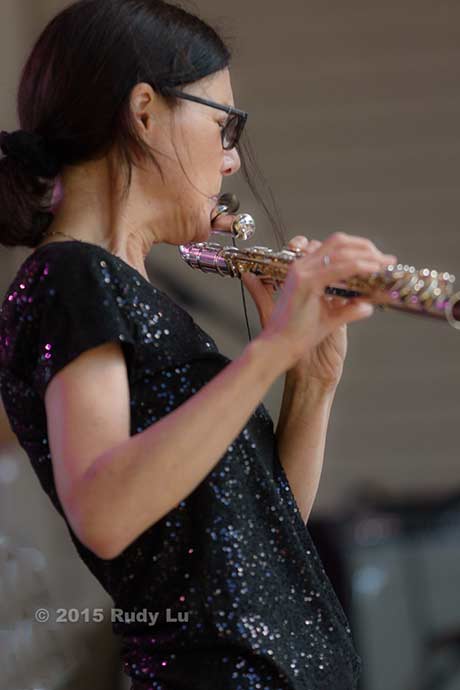
Firehouse 12, 45 Crown Street in New Haven, continues its Spring Concert Series on Friday night with flutist, composer, and arranger Jamie Baum and her Septet+.  It's the first night of three consecutive CD Release concerts - Saturday, the ensemble plays at The Cell Theater in New York City while Sunday, Ms, Baum returns to her home town to perform at The Fairfield Theatre Company, Stage One. They are celebrating the release of "Bridges", the group's new album (reviewed here). On Friday evening, there will be two sets, the first at 8:30 p.m., the second at 10 p.m. Best of all, the musicians on the recording - Jamie Baum (flutes, singing bowl), Amir ElSaffar (trumpet, vocals), Sam Sadigursky (alto sax, bass clarinet), Chris Komer (French horn), Brad Shepik (guitar), John Escreet (piano), Zack Lober (bass, singing bowl), and Jeff Hirshfield (drums) - will crowd into the Firehouse performance space and present the wonderful music on the album plus more.

For ticket information, go to firehouse12.com or call 203-785-0468.

Here's a taste:


If you have ever considered spending a weekend along the Connecticut shoreline, say in Old Lyme, this is the weekend to book a room at the Old Lyme Inn. Not only for the fine food and furnishings, but also for the fact that The Side Door Jazz Club is attached to the Inn and owner Ken Kitchings and his music manager, Rich Martin, have a three-night music extravaganza planned. On Friday night, pianist and composer Renee Rosnes (pictured left) celebrates her new Smoke Sessions Records release, "Beloved of the Sky" with an all-star quartet that features Steve Nelson (vibraphone), Peter Washington (bass), and Carl Allen (drums).  Ms. Rosnes, who is married to pianist Bill Charlap, has not only released 16 albums as a leader but also has worked with the late Joe Henderson, Wayne Shorter, and the SFJazz Collective.

For more information, go to reneerosnes.com.

Here's a track from the new album which features Mr. Nelson and Mr. Washington as well as saxophonist Chris Potter and drummer Lenny White:


On Saturday night, trumpeter Wallace Roney brings his Quintet to Old Lyme, an ensemble that features a veteran rhythm section - bassist Curtis Lundy and drummer Ronnie Burrage - and two fine young musicians - 18-year old saxophonist Emilio Modeste and pianist Oscar Williams.  Mr. Roney, a native of Philadelphia, PA,  has been active on the jazz scene for nearly three decades. He cites three great trumpeters - Clark Terry, Dizzy Gillespie, and Miles Davis - as his mentors.  Over the last decade, Roney has become a mentor for numerous musicians, taking them on the road and into the studio to create music that ranges from mainstream jazz to more electronic adventures, always with a melodic flair and powerful solos.

For more information, go to www.wallaceroney.com.

Here's the Quintet live from Paris, France, from 2017:


Photo: John Abbott
Stay that extra night because, on Sunday, The Side Door presents composer and vocalist René Marie.  One of the most engaging singers and performers on the contemporary scene, Ms. Marie started performing at a young age and turned professional in her mid-teens.  She got married at the age of 18 and became a stay-at-home mother.  It was her son who convinced her to get back into singing. Getting back to music caused a rift in her marriage and she soon was divorced.  Ms. Marie moved to Washington D.C., made her name on the club scene, signed to the MaxJazz label (now Mack Avenue) and released her debut album at the age of 45!  Slowly and steadily, she has developed her musical persona and stage presence that is so appealing.

Joining her will be her touring and recording Trio including long-time members Elias Bailey (bass) and Quentin Baxter (drums) plus newest member (3 years and counting) pianist John Chin. For more information, go to renemarie.com.

Here's the title track of her 2016 Motema album, "Sound of Red":


The Side Door opens its door at 7:30 p.m. and the first set commences one hour later. For more information and reservations, go to thesidedoorjazz.com or call 860-434-2600.

Hopefully, you'll be able get to one or more of these shows.

Thursday, May 10, 2018

Family, Faith, & Remembrances (Large Ensembles)

Flutist, composer, and arranger Jamie Baum first formed her Septet in 1999: the ensemble made its recording debut for the now-defunct Omnitone label then moved to Sunnyside Records for the 2008 release of "Solace." In 2010, trumpeter Amir ElSaffar joined the ensemble, adding not only his instrument but also his great knowledge of Middle Eastern Maqam. Five years later, the group had evolved in Septet+ and issued the amazing "In This Life."  Influenced by Ms. Baum's travels to Southeast Asia and her studies of the work of Pakistani vocalist Nusrat Fateh Ali Khan, the album won numerous accolades. The arrangements blended fiery rhythms, elongated melody lines, and intelligent use of the higher sounds (flute, piano, and trumpet) with lower sounds (alto flute, French Horn and bass clarinet) to create adventurous music.

Ms. Baum's latest project, "Bridges", attracts from the moment one sees Masashi Karabuki's stunning cover photograph ("In This Life" also possess a striking cover - take a look). The nine-song program is split into three distinct sections. The first three tracks, "From The Well", "Song Without Words", and "There Are No Words") are influenced by the composer's recent personal experiences. The opening track celebrates Ms. Baum's explorations into Maqam, Jewish, and South Asian music. While one absorbs the exciting melody line, make sure to pay attention to the splendid leadership and support from the rhythm section (pianist John Escreet, guitarist Brad Shepik, bassist Zach Lober, and drummer Jeff Hirschfield plus guest percussionist Jamey Haddad). There are excellent solos from the leader, bass clarinetist Sam Sadigursky (the newest member of the ensemble), and ElSaffar, whose phrases, at times, reminds this listener of the Muslim call-to-prayer yet also move into "freer" territory.  The trumpeter, who ins increasingly showcasing his vocal talents, gets the lead on the second track, which carries the subtitle "for S. James Baum."  Here, the vocal line is influenced by Hebrew prayer (but not "The Mourner's Kaddish"), a way to give thanks for the life  of a parent or loved one.  Besides the stunning vocal, there are excellent (and emotional) solos from Sadigursky (bass clarinet) and Ms. Baum (alto flute). "There Are No Words" also refers to the mourning process but here there is a sense of renewal and purpose.  Bassist Lober takes the first solo, a handsome melodic turn. Ms. Baum follows, her flute electronically split into two registers. Escreet steps out next for a fleet-fingered dance.

 The next three tracks are dedicated to "Honoring Nepal" The Shiva Suite". Ms. Baum has performed several times at Katmandu Jazz Festival and, like many people, was deeply touched by the destruction caused by the 2015 earthquake.  The "Suite" was commissioned by the Rubin Museum of Himalayan Art in NewYork City. Part 1 "The Earthquake" is a powerful musical depiction of the clam before the devastation as well as the shaking, shuddering, shifting earth before the mournful lament at the close. "Renewal" begins with gentle hand percussion and soft piano sounds (many made with Escreet's hand dampening the strings) the moves forward on the strength of a delightful and percussive melody supplied by the piano and guitar.  Bells and piano introduce "Contemplation", a piece that includes melodies and harmonies for the front line and a finishing section that is both up-tempo and uplifting.

Tabla drummer, percussionist, and vocalist Navin Chettri joins the ensemble for the next two tracks, the powerful "Joyful Lament" and  the peaceful "Mantra."  The former cut opens with voice and tabla before the band is led in by Shepik.  Hirschfield's hard-edged drumming fuels the piece which blends South Indian music with American blues in a playful yet serious fashion (the guitar solo roars out of the ensemble somewhat like what John McLaughlin did with his Mahavishnu Orchestra in the early 70s). It's just Chettri on voice and tanpura (the Indian stringed instrument that creates drones) and Ms. Baum on singing bowl and flute for the latter track. No tension here only a sense of quiet clam and reflection.

The album closes with "Ucross Me", an uptempo piece created by Ms. Baum during a residency at the Ucross Artist Colony in Wyoming.  The piece moves in and out of the rhythm stepping away for solos by ElSaffar plus a wonderful call-and-response before Shepik rocks out once more.  But, pay attention to the interactions of the rhythm section, the reeds and brass.

"Bridges", the album, does what bridges, the structure, are built to do i.e. break down barriers, cross borders, bring people and ideas together, and to take people to new places to have new experiences. Jamie Baum Septet+ continues to make exceptional music, music that makes us think, makes us contemplate, and moves us in so many ways.

For more information, go to jamiebaum.com. There you will see that the ensemble will have a CD Release Weekend at the end of May (5/25-27) with two of the shows in Connecticut.

Enjoy this track from the album:


Personnel:

Jamie Baum - flutes, singing bowl
Amir ElSaffar - trumpet, vocals
Sam Sadigursky - alto sax, bass clarinet
Chris Komer - French horn
Brad Shepik -guitar
John Escreet - piano
Zack Lober - bass, singing bowl
Jeff Hirschfeld - drums 

+
Jamey Haddad - percussion
Navin Chettri - percussion, tanpura, vocals 


Chant Records has released two new recordings led by violinist and composer Meg Okura, her improvised concert with husband Sam Newsome (soprano sax) and pianist Jean-Michel Pilc ("NPO Trio", reviewed here) and "Ima Ima", a studio recording by her 10-member Pan Asian Chamber Ensemble.  It's quite an engaging project that blends the sounds of  Newsome's soprano sax, Tom Harrell (trumpet, flugelhorn), Sam Sadigursky (clarinet, bass clarinet), and Annie Drummond (flute, alto flute, piccolo) with the rhythm section of Brian Marsella (piano, electric piano), Rez Abbasi (guitar), Pablo Aslan (bass), and Jared Schonig (drums) plus several appearances by Riza Printup (harp).

The album's title combines Ms. Okura's native upbringing ("ima" means "now" in Japanese) with her adopted religion ("Ima" is "mother" in Hebrew) while the music blends her myriad of interests, from the folk and classical music she grew up with as well as the jazz that is her passion and life. The title track has a lovely melody line that is supported by an active rhythm section. Ms. Drummond's flute blends with the soprano sax and violin introduce the main theme before Newsome steps out for a lengthy and far-reaching solo. The composer's impressions of her time in Israel are the basis of "A Summer in Jerusalem", a piece that opens as a sound montage: then the bass clarinet introduces the bass line and the ensemble powers forward. The arrangement shows the strong influence of Gil Evans behind the strong solos from Marsella (electric piano), Abbasi, and the leader. After Ms. Okura brings her an end, everyone drops out save Ms. Printup's harp. She introduces the fine flugelhorn solo while the ensemble slowly climbs back into the picture (note the lovely wordless vocal from Ms. Okura).

Getty Images
One can hear Japanese influences on "Tomiya" what Ms. Okura describes n the liner notes as a taiko-drum rhythm: yet it also sounds like a tango plus there is also a mainstream jazz feel.  It's so enjoyable to hear there arrangement opens to allow each voice to have a piece of the melody. Both Harrell and Ms. Okura solo yet the multi-sectioned piece allows for tempo changes and delightful interplay.  Another episodic work, "Birth of Shakayamuni", has its roots in Buddhism.  The sprightly melody is passed around from bass clarinet to flute to piano to violin before the piece moves to a solo section for Sadigursky's clarinet. More th intelligent backing from the guitar and harp. Abbasi's solo comes over a rapid-fire rhythm then gives way to a fiery solo from Ms. Drummond. The violin leads the way on the final section but, again, each voice in the ensemble has a piece of the melody. "Black Rain" takes its inspiration from the atomic bomb attacks that brought World War II to its shocking conclusion.  The poignant melody is shared by the soprano saxophone and violin. Yet, like the other pieces, the melody moves around until Marsella's captivating solo that opens with a more traditional Japanese feel before moving on.  Before Ms. Okura takes her solo, she shares a short conversation with the flutist (listen to how they move around each other with trills and musical curlicues).

"Ima Ima" makes for engaging listening. Filled with strong melodies, excellent arrangements, and fine musicianship, the album is a journey inward and outward with Meg Okura telling her young daughter the story of her ancestors, the story of the challenges her mother went through to come to the United States, and how hard it was to begin a new life.  There is no bitterness, no losing faith: instead, the music can be viewed and listened to as a celebration of survival, renewal, and hope for a brighter future.

For more information, go to www.megokura.com.

Here is the title track:

Tuesday, July 4, 2017

Short Stories In Sound + Geri Allen Passes

Rudy Lu Photo
Over the past two decades, Jamie Baum has proven to be one of the most adventurous flutists, composers, and bandleaders in contemporary music. She has only released five albums as a leader or co-leader since 1997 (her debut, on the German Konnex label, was distributed in the US for a while but has seemed to disappear) but each stands out in ts own way.  Her two Sunnyside albums, 2008's "Solace" and 2013's "In This Life", are among my favorites of the 2000s and, if you can find "Moving Forward, Standing Still" (OmniTone), you will understand why her Septet and Septet + are should be considered among the vanguard of modern jazz.  Add to that 1997's GM recording "Sight Unheard", you'll hear that her influences are many and evolving continually.  She also works in duo with one of her mentors, pianist Richie Bierach, in Far Out Flutes with Robert Dick, Jessica Lurie, and Elsa Nilsson as well as working with pianist Monika Herzog.

JChriss.com
While Ms. Baum is well-known for her impressive playing, the Septet groups do not give her lots of time to stand out - she likes to write material that gives the ensemble members the spotlight.  In fact, the duo with pianist Bierach came about because he thought she needed to be heard as a soloist more often.  She then decided to create Short Stories (the sextet pictured at the left) to compose and perform in the fashion of Thelonious Monk, Wayne Shorter, and Miles Davis.  It's an impressive ensemble featuring long-time associate Jeff Hirshfield (drums), Andy Milne (piano), Gregoire Maret (harmonica), Joe Martin (bass) and either Nir Felder or Gilad Hekselman (guitar).

J Hunter photo
This Friday evening (July 7), Short Stories will perform at 8:30 pm at The Side Door Jazz Club in Old Lyme CT. Though the band, formed in 2015, does not have an album, Ms. Baum has creating material for the group since before she gathered the musicians for its first rehearsal.  For the CT gig, there will be no guitar - Mr Hekselman rejoins the group on July 9 at The Falcon in Marlboro, NY and on July 11 at the Jazz Standard in New York City. Judging by the group's two videos, the music will flow with grace and tension, melody and improvisation, splendid interaction, and fine solos from all involved.

For reservations and more information, go to thesidedoorjazz.com or call 860-434-2600.  To learn more about the flutist and leader, go to jamiebaum.com.

Here's Short Stories in action from 2015 (with Gilad Hekselman):


The passing of pianist, composer, and educator Geri Allen at the age of 60 shook the jazz world to its core.  Since first moving to New York City in the 1980s, Ms. Allen created music that was challenging, soulful, enchanting, powerful, and rhythmically strong, possessing a style that rarely, if ever, sounded like someone else.  Her early recordings (1983 1987) were with Joseph Jarman, Pheroan akLaff, Oliver Lake, Steve Coleman, James Newton, Wayne Shorter, and Woody Shaw (among others) displayed a pianist with great technique who never flaunted that technique but was always musical.  She first performed with drummer Paul Motian in 1986 and, with bassist Charlie Haden, formed an influential trio that recorded four albums from 1988 to 1992.  She also worked and recorded with Haden's Liberation Music Orchestra as well as with vocalist Betty Carter, drummer Ralph Peterson, Jr. (his brilliant "Triangular" on Blue Note is especially satisfying) vibraphonist Bobby Hutcherson, saxophonist/flutist Charles Lloyd, saxophonist Ornette Coleman, and was featured on the soundtrack of Robert Altman's "Kansas City."

Over the past seven years, Ms. Allen recorded several solo (or mostly solo) piano albums including 2010's "Flying Towards The Sound", 2011's "A Child Is Born" and 2013's "Grand River CrossingsMotown & Motor City Inspirations" (a recording that featured three tracks with her mentor, trumpeter Marcus Belgrave), all on Motema Records. That label also released latest recording, 2016's "Perfection", a cooperative with saxophonist David Murray and drummer Teri Lyne Carrington


Geri Allen gave us so much music over the past three decades plus and had so much more to give.  Whether in a solo context, piano trio, unconventional trio, with a tap dancer, or as an accompanist, she was always herself. There are plenty of tributes online (check out David Adler's fine tribute by going to bit.ly/2umyykv) but make sure to to go Ethan Iverson's "Birthday" post (bit.ly/2umyykv) posted on her birthday (June 12), 15 days before her passing.  Dear Lord, she will be missed!

Here's a collection of music from Ms. Allen, soundfiles and one delightful video:


Thursday, May 15, 2014

Byard & Bread

For those of us lucky enough to have seen, heard and/or met Jaki Byard (1922-1999), the pianist/composer/educator left an indelible impression. As a pianist, his ebullient style cam be traced back to the "Rent Party" players of the Harlem Renaissance (James P. Johnson, Eubie Blake) in that the keyboard was his orchestra.  As a young man, Byard loved big band music, learned how to play alto and tenor saxophones, moved to Boston, MA, from his native Worcester, played and taught but it was not until he moved to New York City that he began to get critical notice.  He worked with the mercurial bassist Charles Mingus, Eric Dolphy and, later, with Rashaan Roland Kirk.  As rock music pushed jazz out of the public eyes and ears, Byard returned to Boston and to teaching (first at the New England Conservatory and later to the Hartt School and the Manhattan School of Music).  Though mostly known for his small group recordings, Byard formed the Apollo Stompers in the mid-1970s, a raucous big band that included his daughters as vocalists.  Jaki Byard died from gunshot wounds in 1999 and his killer has never been brought to justice.

"Yard Byard: The Jaki Byard Project" (GM Recordings) is the work of 5 musicians - Jamie Baum (flutes), Jerome Harris (guitar), George Schuller (drums), Ugonna Okegwo (bass) and Adam Kolker (tenor saxophone, clarinet, bass clarinet) -  3 of whom (Ms. Baum, Harris and Schuller) worked and/or studied with the bandleader/Professor.  You can't help but notice the absence of piano. Ms. Baum, for whom the Project has been a goal for a number of years, states on her website "the ensemble's desire is not to recreate "The Jaki Byard sound", but to both explore the beauty and creativity of his compositions and approach to the piano, as well as to convey his serious and whimsical sides."  

The results, titled "Inch By Inch", live up to the group's "desire."  Tracks such as "Aluminum Baby" and "St. Mark's Among The Sewers" have that whimsical feel in both the melody and rhythms, the former driven by the lovely flute melody and Schuller's active percussion, the latter on Kolker's fine tenor sax lines pushed by Okegwo's active bass work.  Jerome Harris, who is, perhaps, better known for his bass playing, is on electric guitar throughout the program.  His handsome work stands out on tracks such as "Ode to Charlie Parker", where he insinuates his melodic lines around the tenor sax and flute, and on "Garr", where he leads the group in with his rippling phrases.  Kolker and Ms. Baum are a formidable front line; the blend of their various instruments creates numerous sonic surprises.  Clarinet and alto flute mesh with guitar for the joyful melody line of "Strolling Along" while the bass clarinet provides the foundation and counterpoint on "Toni." One can not help but notice the firm touch of Okegwo's bass work in support of the group and his solos stand out as well. Schuller keeps the music moving with his usual gleeful style; whether accentuating Kolker's tenor solo on "Dolphy" or relentlessly pushing the tempo on "Twelve" or dancing gently beneath the intertwined bass clarinet, flute and guitar lines on "Gaeta", Schuller stays the course.

Yard Byard serves as a happy reminder of life and work of Jaki Byard.  This quintet not only masterfully paints a picture that leaves no doubt of its love and respect for the person but also makes sure the listener knows just how special the man was.  For more information, go to www.jamiebaum.com.


Like Jaki Byard above, Steve Lacy was a musician for all seasons. Born in New York City in 1934, he first gained critical notice as a teenager playing Dixieland jazz and then went on to play alongside pianist Cecil Taylor in 1956 and 57.  Lacy was one of the first musicians to record an Lp of Thelonious Monk's music and worked with the composer/musician on several occasions.  He went on to form a quartet with trombonist Roswell Rudd (another musician schooled in Dixieland) in the early 1960s, formed a trans-Atlantic quartet with trumpeter Enrico Rava and then later worked with composer Michael Mantler. In 1969, he moved to Paris where he spent the next 2 decades playing with many of the finest European musicians, marrying cellist Irene Aebi and went to form several ensembles around her and alto saxophonist Steve Potts. He and Ms. Aebi  moved back to the United States in 2002 to teach at The New England Conservatory of Music and died due to cancer in 2004.

 In 2006, baritone saxophonist Josh Sinton formed the quartet Ideal Bread to play the music of Steve Lacy, with whom he had studied at NEC. With the help of Kirk Knuffke (cornet), Tomas Fujiwara (drums) and Reuben Radding (bass), Sinton recorded a pair of CDs with the charts he had brought from his lessons with Lacy.  For the group's 3rd CD, "Beating The Teens" (Cuneiform Records), Sinton decided to "recompose, reconstruct and reimagine" the music from Lacy's 3-CD set "Scratching The Seventies", a compilation of the 5 Lps the soprano saxophonist recorded for the French Saravah label. Bassist Adam Hopkins has replaced Radding in the lineup and fits right in to the experimental style Sinton has created for this music.  One of the joys of listening to what the quartet does with this music is that the songs do not easily fit into any one genre.  "Blinks" bounces along atop a martial beat while "Three Pieces from Tao" is now divided into 4 sections that bookend the program.  "The Oil" has a punk-rock feel while "The Uh Uh Uh" dances along on a New Orleans groove. 

Instead of describing each track, I'd advise to pay attention to the interactions of the quartet, to the clear tones of Knuffke's cornet, and to the great range of Sinton's baritone sax (yes, Lacy played soprano in his groups yet Sinton can sound like a tenor and alto plus can reach fairly high without screeching). The rhythm section shines brightly as well.  Hopkins is a melodic bassist with a full tone and Fujiwara is so inventive, such a fine cymbal player with accents that make one smile (it's fascinating to read that Sinton wrote out the drum parts.) "Beating The Teens" is modern music, a reminder that the "tradition" of creative music is ever evolving and that the legacy of Steve Lacy lives on. Ideal Bread deserves to be seen and heard live - until then, climb into the wondrous world of this 2-CD set.  For more information, go to joshsinton.com.  

Monday, August 13, 2012

Check This Out: Jamie Baum's New Project

Flutist-composer Jamie Baum has a fascinating new project - it has already been recorded and, like many musicians, Ms. Baum is appealing to listeners and fans alike to help bring the music to a wider audience.  Allow her to explain:

First question...What do you, your readers, King George I of England (Patron of George Frederick Handel), The Duke Johann Ernst of Weimar (Patron of J. S. Bach) and the National Endowment of the Arts have in common?
Choose your answer:

  1. The love and appreciation of great music
  2. Have discerning taste
  3. Appreciate the importance of supporting the arts and individual artists

Answer: All of the above!

Second question...what’s a nice Jewish girl like me doing... playing jazz and  making a recording of music influenced by a Pakistani Qawwali vocalist, with an Iraqi trumpet player, a Palestinian percussionist and a pianist from the UK? 

Choose your answer:

  1. Creating new, unique and beautiful music
  2. Creating detente between the US, the middle east and South Asia
  3. Having a blast!

Answer: All of the above!

By now, you are probably getting an idea of where I am going with this! But hopefully I’ve peaked your interest, right? You’ve come this far...SO if you would please take a moment of your time and click on this link, I will be so, so appreciative*!


Ms. Baum's 2008 recording, "Solace" (Sunnyside), is such an impressive CD on many levels (compositions, arrangements, solos and group interplay.) When you click the link above, you will get a small taste of her new project;  hopefully, it will pique your interest as it has mine.