Pianist-composer
Jon Davis has been an active participant on the contemporary music scene since the 1980s, first coming to critical attention for his work with bassist Jaco Pastorius. He's also worked with Beatle Jazz, with the Bill Mobley Big Band, with saxophonist Ilhan Ershahan and a long list of other great players.
For "
Moving Right Along", his 6th recording as a leader (and second for Posi-Tone Records), he leads a trio that features drummer
Shinnosuke Takahashi (who appeared on that first CD) and bassist
Yashushi Nakamura through a smart program of originals, standards, and covers. He pays tribute to Pastorius with a lovely version of "
Portrait of Tracy" (one of the late bassist's must enduring melodies) as well as a blazing take of "
Dania" (originally composed for big band). The quiet yet active percussion of Takahashi stands out on the former track (as does the wonderful "dancing" piano solo) while the latter tools along atop the strong walking bass lines. The arrangement for John Coltrane's "
Moment's Notice" opens on a lovely, lilting, Caribbean rhythm and moves forward with glee. The interaction of the drums and piano on Davis's solo is delightful, really the essence of what creative music can be. There's also a great take on The Beatle's "
She's Leaving Home", one that illuminates the bluesier side of the song. Takahashi's splendid cymbal work on the opening choruses of Frank Loesser's "
I've Never Been in Love Before" sets up a tension that is relieved and revived all through the solo section. Nakamura's bass lines explore counterpoint, weaving through the showers of piano notes and cymbal splashes.
Davis takes 2 pieces for solo piano, Thelonious Monk's "
Reflections" and Harold Arlen's "
I Gotta Right to Sing The Blues." The pianist caresses Monk's handsome melody, not rushing the pace, and keeping the reflective quality of the music. The Arlen composition, from 1932, is also quite reflective, an appropriate song to close the CD.
The album includes 5 Davis originals including the McCoy Tyner-like title track that opens the program and the blues-drenched "
Under The Stairway" that follows. It's really quite a pleasure to hear a rhythm section so tuned in to the movement of the leader; though there are few bass or drums solos (and those are much closer to the end of the recording), one can hear just how involved and important Nakamura and Takahashi are to the success of the trio "sound". There's a touch of Horace Silver's sound in the medium-tempo of "
Pensive Puff" (bass line, at times, echoes "
Song For My Father") and a hint of Abbey Lincoln's classic "
Throw It Away" in the bluesy melody of "
Just In Case." The familiar touches serve to draw the listener closer and truly make the piece more enjoyable.
"
Moving Right Along" does just that - for 66 minutes,
Jon Davis, Yasushi Nakamura, and
Shinnosuke Takahashi move the listener through a panoply of musical styles and emotions. You can listen early in the morning as you prepare for the day or late in the evening with a glass of wine. With the typical clean Posi-Tone sound (Nick O'Toole must love drummers), this album is a welcome addition to lovers of piano trio music...and lovers of good music anywhere. For more information, go to
www.jondavismusic.com.
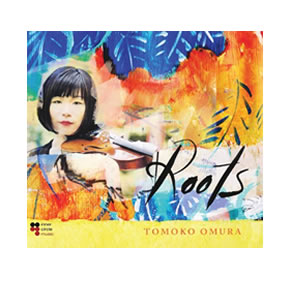
Violinist and vocalist
Tomoko Omura came to the United States from her native Japan in 2004 to study at the Berklee School in Boston. She released her debut CD in 2008, "
Visions", her dedication to 7 violinists who brought their instrument and personalities to the fore of improvisational music. She has gone on to play with numerous musicians including Fabian Almazan, The Mahavishnu Project, and as a member of the Guy Mendilow Ensemble.
For her second album, "
Roots" (Inner Circle Music), Ms. Omura works with the excellent rhythm section of
Glenn Zaleski (piano, keyboards),
Colin Stranahan (drums), and
Noah Garabedian (bass) - guitarist
Will Graefe joins the ensemble on 8 of the 11 tracks. Each of the 10 songs is a melody familiar to Japanese audiences (there are 2 short versions of the Japanese "
National Anthem") and what Ms. Omura has done is filter these pieces through her experiences in the United States and her work as a student and improvising musician. What should stand out, even to the casual listener, is the brilliant musicianship, the fascinating melodies, and the intelligent solos all around. Stranahan is the sparkplug throughout and young Mr Garabedian (whose BJU Records debut recording "
Big Butter & The Eggmen" is quite fine) really fills the bottom with his full sound and active bass lines. Zaleski frames the music with his rich piano chords plus takes a number of strong solos while Graefe's solos and percussive comping help to expand the textures of the music.
The first sound you hear is Ms. Omura's overdubbed voice on the traditional Japanese tune "
Antagata Dokosa (Where Are You From?)"; soon she is joined by a walking bass line and, then, the drummer leads the rest of the band in. Rising out of the piece is the violin and the leader's long melodic lines plus full tone soars above the active rhythms. The guitarist blends a Bill Frisell-like tone with his angular phrasing for an exciting solo that leads into a fiery synthesizer solo from Zaleski. The rhythmic drive on "
Ge Ge Ge" (so smartly pushed by Stranahan and prodded by Garabedian) supports the lovely melody and gives a solid platform for the excellent solos. There are echoes of Appalachian fiddle music is the lovely melody of "
Tinsagu Nu Hana (Green Tea Picking)" and just of hint of "
Danny Boy" in the opening line of "
The Mountain." Some listeners may remember saxophonist Billy Harper's adaptation of "
Soran-Bushi" from the late 1970s - here, the quintet of musicians take the haunting traditional melody and give it wings. The interaction of violin, guitar and piano plus the forceful rhythm section jumps out of the speakers. That is followed by the percussive intro to "
Chakkiri-Bushi" played by the plucked and picked strings of violin and guitar leading to a handsome melody and compelling solos.
Give credit to the wonderful violin work of
Tomoko Omura. Her solos rise organically out of the melodies, her viola-like tones, smartly-placed pizzicato, and vocal-like phrases stand out. And, one can really tell that this is a "working" band, not just a "studio" date. Their individual styles complement each other and all work together to create this beautiful and often exciting soundscape. "
Roots" reaches back for its source material but is most certainly contemporary music at its best. For more information, go to
www.tomokoomura.com.
Here's the opening track - Enjoy!
Cellist/arranger
Akua Dixon has had a long and varied career; she was a founding member of The Uptown String Quartet and now leads Quartette Indigo. She has created string arrangements for recordings by Lauryn Hill and Aretha Franklin, for the Alvin Ailey Dance Theater, and played alongside Duke Ellington, Max Roach, B.B. King, Henry Threadgill, Mary J.Blige and Busta Rhymes plus many more.
Her self-titled and self-released eponymous second CD is, literally, a "holiday for strings" with tracks arranged for string quartet, for 3 violins and cello, and 2 pieces for voice and strings. Only the opening "
Haitian Fight Song" has a traditional bass-and-drums rhythm section although bassist
Kenny Davis also provides the bottom (and rhythm) on 3 other tracks (Ms. Dixon's son Orion makes the lone appearance as the drummer). Violinist
John Blake (who passed in August of 2014) plays 2 great solos, one on the Mingus tune and also on the splendid take of Cachao Lopez's "
A Gozar Con Mi Combo."
Regina Carter is on 3 tracks, soloing with aplomb on the Lopez tune, showing a bluesier side on Duke Ellington's "
Freedom" and a romantic flair on the string quartet arrangement of Astor Piazzola's "
Libertango."
Henry Mancini's "
Moon River" is arranged for string quartet, with the lovely melody supplied by violinists
Patrisa Tomassini and
Gwen Laster. The counter-melody and first solo comes from violist
Ina Paris (who, like Ms. Tomassini and Ms. Laster, are members of Quartette Indigo), all the while Ms. Dixon supplies the foundation for the music. These 4 fine musicians also dance through "Poinciana" and join bassist Davis on Richard Rodgers "
It Never Entered My Mind." Ms. Dixon adds a wordless vocal atop the classy arrangement, displaying a great range of notes and emotions.
Ms. Dixon's daughter
Andromeda Turre (dad is trombonist Steve Turre) joins the string quartet plus Davis on a strong reading of Billy Strayhorn's "
Lush Life" that starts slowly and then heads into a "swing" arrangement. Ms. Turre's does a fine job of inhabiting the lyrics and then tops the piece off with several choruses of "scat" singing.
The variety of music and the compelling arrangements
Akua Dixon presents and creates on this CD offers music to the avid listeners, showing a string quartet need not be staid nor revolutionary - in fact, one can swing!. For more information, go to
www.akuadixon.com.

 Posts


 Ms. Baum's latest project, "Bridges", attracts from the moment one sees Masashi Karabuki's stunning cover photograph ("In This Life" also possess a striking cover - take a look). The nine-song program is split into three distinct sections. The first three tracks, "From The Well", "Song Without Words", and "There Are No Words") are influenced by the composer's recent personal experiences. The opening track celebrates Ms. Baum's explorations into Maqam, Jewish, and South Asian music. While one absorbs the exciting melody line, make sure to pay attention to the splendid leadership and support from the rhythm section (pianist John Escreet, guitarist Brad Shepik, bassist Zach Lober, and drummer Jeff Hirschfield plus guest percussionist Jamey Haddad). There are excellent solos from the leader, bass clarinetist Sam Sadigursky (the newest member of the ensemble), and ElSaffar, whose phrases, at times, reminds this listener of the Muslim call-to-prayer yet also move into "freer" territory. The trumpeter, who ins increasingly showcasing his vocal talents, gets the lead on the second track, which carries the subtitle "for S. James Baum." Here, the vocal line is influenced by Hebrew prayer (but not "The Mourner's Kaddish"), a way to give thanks for the life of a parent or loved one. Besides the stunning vocal, there are excellent (and emotional) solos from Sadigursky (bass clarinet) and Ms. Baum (alto flute). "There Are No Words" also refers to the mourning process but here there is a sense of renewal and purpose. Bassist Lober takes the first solo, a handsome melodic turn. Ms. Baum follows, her flute electronically split into two registers. Escreet steps out next for a fleet-fingered dance.


 The album's title combines Ms. Okura's native upbringing ("ima" means "now" in Japanese) with her adopted religion ("Ima" is "mother" in Hebrew) while the music blends her myriad of interests, from the folk and classical music she grew up with as well as the jazz that is her passion and life. The title track has a lovely melody line that is supported by an active rhythm section. Ms. Drummond's flute blends with the soprano sax and violin introduce the main theme before Newsome steps out for a lengthy and far-reaching solo. The composer's impressions of her time in Israel are the basis of "A Summer in Jerusalem", a piece that opens as a sound montage: then the bass clarinet introduces the bass line and the ensemble powers forward. The arrangement shows the strong influence of Gil Evans behind the strong solos from Marsella (electric piano), Abbasi, and the leader. After Ms. Okura brings her an end, everyone drops out save Ms. Printup's harp. She introduces the fine flugelhorn solo while the ensemble slowly climbs back into the picture (note the lovely wordless vocal from Ms. Okura).