A sure sign that Spring is here is the return of the Firehouse 12 Concert Series, 13 shows over 13 consecutive Friday, starting this week (March 18) and running through June 10. The handsome performance space, located at 45 Crown Street, seats 75 and brings in all kinds of performers in many different styles of jazz.
The series commences with the Adam Rogers Trio playing 2 shows, 8:30 and 10 p.m. Guitarist-composer Rogers, a native of New York City, is a fluid, melodic, player who has recorded and toured with numerous artists, ranging from Paul Simon to Norah Jones to the Gil Evans Orchestra to Michael Brecker to Chris Potter and beyond. The Criss Cross label has issued 5 of his CDs as a leader, the latest a 2009 Trio outing titled "Sight." That recording features bassist John Patitucci and drummer Clarence Penn on a program of 3 originals, 3 standards and 4 jazz classics.
Penn, one of the most in-demand drummers around (the Maria Schneider Orchestra and the Dave Douglas Quintet are 2 of his more high-profile gigs) will join Rogers for the Firehouse date. Anchoring the rhythm section will be the fine young bassist Matt Brewer (the Greg Osby Band).
This is not just music for "guitar freaks" but for people who like thoughtful, adventurous, and "swinging" jazz. For ticket information, call 203-785-0468 or go to www.firehouse12.com.
I had the joy of sitting and chatting with pianist Jaki Byard (pictured left) when he taught at The Hartt School of Music in the early 1980s (where, oh, where did I put that cassette tape?) I admit that I was starstruck - the Worcester, MA, native has played and recorded with the great Charles Mingus, Eric Dolphy, Rahsaan Roland Kirk and Booker Ervin (among others.) Yet, he answered my questions thoroughly and with great humor as well as humility.
Byard (1922-1999) was a gregarious person and musician - in the course of a solo, he could move from "stride" style to classical music to ragtime to no-time and back to the blues. As an accompanist, he was supportive without being intrusive yet always creative (nothing routime about his playing.) In his later years, he not only taught but also led a Big Band (The Apollo Stompers).
High Notes Records has just issued the second volume of "Jaki Byard Live at the Keystone Corner", culled from a series of performances in the great Bay Area night club. Subtitled "A "Matter of Black and White", the program is typical of Byard concert repertoire in that there are a number of standards, a "pop" tune ("I Know a Place", the Petula Clark hit), and an original. His take of Thelonious Monk's "'Round Midnight" is dramatic and soulful while "Do You Know What It Means to Miss New Orleans" starts in a contemplative manner before the left hand drops into a "stride" rhythm. Byard shows the influence of Art Tatum in the middle of the piece but brings the tune around for a bluesy finish. "Alexander's Ragtime Band" is delightful, joyous, played in a sprightly manner, throwing in a few "contemporary chord changes" to spice up the work.
He pays tribute to Billie Holiday with a medley of "God Bless The Child" and "Lover Man." The former has a light, lilting, feel until the middle when Byard reaches deep into the blues feel of the song before moving into a handsome reading of the latter. He flirts with several different styles and pulls one along on the strength of his left hand and wonderful sense of melody. The Duke Ellington-Billy Strayhorn medley that closes the disk begins with an introspective reading of "Lush Life" - filled with handsome chordal sections followed by single-note flourishes, the piece moves into "Day Dream", a reading filled with staccato "triplets" and a lovely reading of the melody. Byard kicks up the tempo for a bravura take on "Johnny-Come-Lately" that changes tempo at will going from a bluesy ballad to a short and bouncy "stride" section into a rip-roaring, knuckle-busting, Rachmaninoff inspired close.
That kind of "stream-of-consciousness" arrangement signified Jaki Byard's way of communicating with the audience through the piano. Everything and nothing was sacred, save for melody. He would play with the "time", change the chordal structure, but, no matter the genesis of the song ("pop" hit, gospel tune, standard or original), the audience always heard melody and harmonic variations. And, the audience knew that there were in the presence of a master.
For more information about the recording, go to www.jazzdepot.com. To learn more about the great Jaki Byard, go to www.jakibyard.org.
Monday, March 14, 2011
Sunday, March 13, 2011
Live Music Keeps One Alive
Don't know about you but there are times I am afraid to turn on the news or open the morning papers. Tragedies abound, many of them man-made and, often, there is no recourse, nothing one can do to make it better. Yes, we can (and should) donate money or supplies at times of famine, natural disaster and other horrific events.
Music has always been my escape valve; when my sister died, I played the Bach "Cello Suites" while writing her eulogy. Sadly, the older one gets, it seems that bad news often outweighs the good.
This week, with the horrible news from Japan amidst the continuing political unrest at home and abroad, I really felt the need for "live" music. Luckily, the Taylor Ho Bynum Sextet decided to play a "warm-up" gig before he headed off to Europe for 5 weeks and then entering the studio later in the Spring. The group assembled in The Big Room, a new performance space in New Haven and proceeded to blow the roof off the place (figuratively, of course.) Joining Bynum (pictured above) was trombonist Bill Lowe, alto saxophonist Jim Hobbs, guitarist Mary Halvorson, bassist Ken Filiano and drummer Tomas Fujiwara. The sextet were using the evening to revisit "Apparent Distance", a long, multi-sectioned composition that Bynum created thanks to a grant from Chamber Music America/The Doris Duke Foundation. They warmed up with a piece dedicated to trombonist Lowe (partially in honor of his 65th birthday), "Look Below", a hard-bop romp where everyone got the chance to "strut their stuff." Ms. Halvorson's wonderfully angular guitar lines worked well with Hobb's high-energy saxophone and Filiano's agile bass lines. The birthday celebrant blew long and hard lines that swung mightily atop Fujiwara's active brush work. Bynum's cornet sputtered, spattered, whooshed, and danced above the fray.
"Apparent Distance" opened with a long unaccompanied introduction from the composer. Utilizing "circular breathing" (a method in which the musicians must breathe through his nose while continuing to expel air through his mouth, allowing him to play a constant tone on the instrument while inhaling), Bynum made all sorts of noises, from short melodies to sputters to snorting and more. Once the ensemble entered, they played a long, flowing, melody that opened into numerous solo sections. Hobbs is one of the more energetic alto players one will ever hear - he absolutely "wails" on the sax, with so much force there are moments onje expects he will just explode. Ms. Halvorson played fascinating counterpoint on several of the solos and created her own statement, manipulating her foot pedals, bending strings, varying her volume. Everyone got the spotlight and all played well. At one point, the cornet, saxophone and trombone played sans rhythm section, weaving lines in and around each other. This is the piece they will record in May and one will be able to hear how the sections flow together as well as how the piece continually moves forward from the opening statement.
For an encore, the Sextet played the blues. "Bowie" hit hard and low, with a "beat" that struck the listener in the chest, making the body shake. Hobbs and Ms. Halvorson combined for a squalling duo, both wailing over the beat, the saxophonist making the most harsh yet fascinating sounds. Lowe started his solo by digging into the slow beat but the rhythm section had other ideas, doubling the pace, lowering the volume and "swinging" through the changes. Filiano played a lovely solo (yes, the bass can make lovely sounds), filled with melodic fragments, overtones and harp-like flourishes.
Was it fun? Absolutely! My "blues" melted away as the Sextet wailed into the evening. Harsh at times? O yes, there were moments when noise supplanted melody but the music never lost its way. The bad stuff is still there, happening all the time but, for 75 minutes, I had the good fortune to forget it all and enjoy great creative music.
Here's a video from last summer of the band hard at play.
Click on this link to watch the video in full size.
http://www.youtube.com/watch?v=VZ-YmC8SNYI&feature=related
Music has always been my escape valve; when my sister died, I played the Bach "Cello Suites" while writing her eulogy. Sadly, the older one gets, it seems that bad news often outweighs the good.
This week, with the horrible news from Japan amidst the continuing political unrest at home and abroad, I really felt the need for "live" music. Luckily, the Taylor Ho Bynum Sextet decided to play a "warm-up" gig before he headed off to Europe for 5 weeks and then entering the studio later in the Spring. The group assembled in The Big Room, a new performance space in New Haven and proceeded to blow the roof off the place (figuratively, of course.) Joining Bynum (pictured above) was trombonist Bill Lowe, alto saxophonist Jim Hobbs, guitarist Mary Halvorson, bassist Ken Filiano and drummer Tomas Fujiwara. The sextet were using the evening to revisit "Apparent Distance", a long, multi-sectioned composition that Bynum created thanks to a grant from Chamber Music America/The Doris Duke Foundation. They warmed up with a piece dedicated to trombonist Lowe (partially in honor of his 65th birthday), "Look Below", a hard-bop romp where everyone got the chance to "strut their stuff." Ms. Halvorson's wonderfully angular guitar lines worked well with Hobb's high-energy saxophone and Filiano's agile bass lines. The birthday celebrant blew long and hard lines that swung mightily atop Fujiwara's active brush work. Bynum's cornet sputtered, spattered, whooshed, and danced above the fray.
"Apparent Distance" opened with a long unaccompanied introduction from the composer. Utilizing "circular breathing" (a method in which the musicians must breathe through his nose while continuing to expel air through his mouth, allowing him to play a constant tone on the instrument while inhaling), Bynum made all sorts of noises, from short melodies to sputters to snorting and more. Once the ensemble entered, they played a long, flowing, melody that opened into numerous solo sections. Hobbs is one of the more energetic alto players one will ever hear - he absolutely "wails" on the sax, with so much force there are moments onje expects he will just explode. Ms. Halvorson played fascinating counterpoint on several of the solos and created her own statement, manipulating her foot pedals, bending strings, varying her volume. Everyone got the spotlight and all played well. At one point, the cornet, saxophone and trombone played sans rhythm section, weaving lines in and around each other. This is the piece they will record in May and one will be able to hear how the sections flow together as well as how the piece continually moves forward from the opening statement.
For an encore, the Sextet played the blues. "Bowie" hit hard and low, with a "beat" that struck the listener in the chest, making the body shake. Hobbs and Ms. Halvorson combined for a squalling duo, both wailing over the beat, the saxophonist making the most harsh yet fascinating sounds. Lowe started his solo by digging into the slow beat but the rhythm section had other ideas, doubling the pace, lowering the volume and "swinging" through the changes. Filiano played a lovely solo (yes, the bass can make lovely sounds), filled with melodic fragments, overtones and harp-like flourishes.
Was it fun? Absolutely! My "blues" melted away as the Sextet wailed into the evening. Harsh at times? O yes, there were moments when noise supplanted melody but the music never lost its way. The bad stuff is still there, happening all the time but, for 75 minutes, I had the good fortune to forget it all and enjoy great creative music.
Here's a video from last summer of the band hard at play.
Click on this link to watch the video in full size.
http://www.youtube.com/watch?v=VZ-YmC8SNYI&feature=related
Thursday, March 10, 2011
Catching Up Again: Recommended Releases
Israeli-born pianist/composer Yaron Herman is steadily gaining recognition around the world. Based in Paris, France, he has recorded a series of CDs that feature his own work, traditional Israeli tunes and occasional covers. "Follow The White Rabbit" is his debut for ACT Music and continues the pattern of of his earlier recordings but with a new rhythm section. Here, bassist Chris Tordini and drummer Tommy Crane serve as his foils and catalysts, pushing the music while providing the pianist with a good cushion for his solos. There is more of a "pop" feel as Herman et al cover pieces by Radiohead ("No Surprises") and Nirvana ("Heart Shaped Box") but with several interesting choices such as "Baby Mine" (from the soundtrack of "Dumbo") as well as the Israeli classic "Ein Gedi." There are plenty of Radiohead covers around but the Trio treats the piece as a lovely ballad, with a music box intro before a gentle reading of the theme. Herman is a powerful yet lyrical pianist and he forcefully rides the strong percussion of Crane on pieces such as "The Mountain in G Minor", the effervescent "Trylon" (hip-hop influence in the tricky beats) and the short, subversive, "White Rabbit Robot." For me, Herman is at his best on ballads, when he can use the keyboard to paint aural landscapes one can get lost in, such as "Cadenza" and the title track (excellent counterpoint from Tordini.)
There are moments when one hears the stylistic influences of Brad Mehldau and Ethan Iverson on Yaron Herman; yet there are many more times that he transcends those players and moves into his own fertile melodic and harmonic world. There's lots and lots of piano trio music around - "Follow The White Rabbit" is a worthwhile addition to the canon. To find out more, go to www.yaron-herman.com.
Drummer Colin Stranahan has released his 3rd CD as a leader. "Life Condition" (Tapestry/Capri Records) is (mostly) a trio recording that blends originals by the group (one each by alto saxophonist Ben Van Gelder and bassist Chris Smith and 2 by the leader) with 4 fascinating covers. Van Gelder caresses the melody line of "How Deep Is the Ocean", his soothing, somewhat breathy, tone so appealing. Bassist Smith takes a fine, melodic, solo while Stranahan accompanies him with delightful brush work. Joe Henderson's "Inner Urge" opens with a short drum solo before the recognizable melody line takes over but the reading of the theme is anything but obligatory. The rhythm beneath is splintered and, all through the song, the trio varies the dynamics. The drum solo refers to the melody on several occasions while, for his solo, Van Gelder plays riffs that dart around the furious bass lines and propulsive drums.
The original pieces are just as impressive, with Smith's "Post Meridian" a lovely ballad with a cascading alto sax solo and the leader's "A Promise" featuring tenor saxophonist Jake Saslow added to the group as he and Van Gelder trade solos over the breakneck tempo. The 2 saxophones also take center stage on Stranahan's mysterious and forceful ballad, "For The Third Time."
The sound quality is excellent - you can really hear the intricacies of the drumming and Smith's "singing" on his bass solos. If you pay attention, "Life Condition" will reward you with endless sonic and melodic treats. If you let it become "background music", it loses its potency. To find out more, go to www.myspace.com/www.colinstranahancom.
Stranahan also appears on this delightful debut from bassist/composer Colin Dean. "Shiwasu" (Roots and Grooves Production) also features saxophonist Sean Newell and pianist Rachel Z. Ms. Z works well with the bassist. They romp through Rodgers & Hart's "My Romance" with Dean's active bass lines dancing beneath the piano solo and Stranahan pushing them with his active cymbal work. Newell's sensuous soprano sax lines over the rich piano chords, thick bass lines and Middle-Eastern percussion make "Growth" quite expressive. The "big" piano chord that opens "Brooklyn Ferry" gives way to an impressionistic tone-poem - one feels as if he is standing by the docks on a warm summer morning. Ms Z's fine solo has elements of "pop" songs, folk melodies, with suggestions of Spanish melodies and more. The bass and drums weave in and around her; the overall effect is mesmerizing and exhilarating. Newell's contemplative tenor saxophone work at the onset of "Bardo" opens to a melodic bass solo before the quartet raises the intensity for a forceful tenor solo. The sonorous piano chords above the skittering drum solo and booming bass lines is exciting. The long, funky, intro to "Akasha" allows Newell's tenor saxophone to build the tension before it is dramatically released by the fine refreshing piano solo.
"Shiwasu" is music that opens many different doors without slamming one in the face. This is a program for a lovely Spring or Summer day (the trees in full flower on the CD cover emphasize that as well); the sounds flow over the listener, drawing one in to this peaceful world that Dean creates with his colleagues. For more information, go to http://rootsandgrooves.com.
There are moments when one hears the stylistic influences of Brad Mehldau and Ethan Iverson on Yaron Herman; yet there are many more times that he transcends those players and moves into his own fertile melodic and harmonic world. There's lots and lots of piano trio music around - "Follow The White Rabbit" is a worthwhile addition to the canon. To find out more, go to www.yaron-herman.com.
Drummer Colin Stranahan has released his 3rd CD as a leader. "Life Condition" (Tapestry/Capri Records) is (mostly) a trio recording that blends originals by the group (one each by alto saxophonist Ben Van Gelder and bassist Chris Smith and 2 by the leader) with 4 fascinating covers. Van Gelder caresses the melody line of "How Deep Is the Ocean", his soothing, somewhat breathy, tone so appealing. Bassist Smith takes a fine, melodic, solo while Stranahan accompanies him with delightful brush work. Joe Henderson's "Inner Urge" opens with a short drum solo before the recognizable melody line takes over but the reading of the theme is anything but obligatory. The rhythm beneath is splintered and, all through the song, the trio varies the dynamics. The drum solo refers to the melody on several occasions while, for his solo, Van Gelder plays riffs that dart around the furious bass lines and propulsive drums.
The original pieces are just as impressive, with Smith's "Post Meridian" a lovely ballad with a cascading alto sax solo and the leader's "A Promise" featuring tenor saxophonist Jake Saslow added to the group as he and Van Gelder trade solos over the breakneck tempo. The 2 saxophones also take center stage on Stranahan's mysterious and forceful ballad, "For The Third Time."
The sound quality is excellent - you can really hear the intricacies of the drumming and Smith's "singing" on his bass solos. If you pay attention, "Life Condition" will reward you with endless sonic and melodic treats. If you let it become "background music", it loses its potency. To find out more, go to www.myspace.com/www.colinstranahancom.
Stranahan also appears on this delightful debut from bassist/composer Colin Dean. "Shiwasu" (Roots and Grooves Production) also features saxophonist Sean Newell and pianist Rachel Z. Ms. Z works well with the bassist. They romp through Rodgers & Hart's "My Romance" with Dean's active bass lines dancing beneath the piano solo and Stranahan pushing them with his active cymbal work. Newell's sensuous soprano sax lines over the rich piano chords, thick bass lines and Middle-Eastern percussion make "Growth" quite expressive. The "big" piano chord that opens "Brooklyn Ferry" gives way to an impressionistic tone-poem - one feels as if he is standing by the docks on a warm summer morning. Ms Z's fine solo has elements of "pop" songs, folk melodies, with suggestions of Spanish melodies and more. The bass and drums weave in and around her; the overall effect is mesmerizing and exhilarating. Newell's contemplative tenor saxophone work at the onset of "Bardo" opens to a melodic bass solo before the quartet raises the intensity for a forceful tenor solo. The sonorous piano chords above the skittering drum solo and booming bass lines is exciting. The long, funky, intro to "Akasha" allows Newell's tenor saxophone to build the tension before it is dramatically released by the fine refreshing piano solo.
"Shiwasu" is music that opens many different doors without slamming one in the face. This is a program for a lovely Spring or Summer day (the trees in full flower on the CD cover emphasize that as well); the sounds flow over the listener, drawing one in to this peaceful world that Dean creates with his colleagues. For more information, go to http://rootsandgrooves.com.
Tuesday, March 8, 2011
Live Music in Connecticut + Another "Hit Pick"
The snow is melting (too quickly in some places), the days are getting longer and people are excited about getting out of the house to hear live music. If you live in the area (New York City and Long Island, Rhode Island, Southern Massachusetts, and Connecticut), here is a listing of fun-sounding gigs.
The New Haven Improvisers Collective is the umbrella organization for several fine groups. Erasmus Quintet, composed of guitarists Jeff Cedrone and Bob Gorry, saxophonist Paul McGuire, percussionist Steve Zieminski and clarinetist/accordion player Adam Matlock, performs Saturday March 12 at The Funky Monkey Cafe & Gallery, inside the Watch Factory Shoppes, 130 Elm Street in Cheshire. The quintet shares the bill with the Zero Dollar Trio. The music starts at 6 p.m. For more information and directions, go to http://thefunkymonkeycafe.com. To get a taste of Erasmus Quintet, go to http://music.nhic-records.com/album/erasmus-quintet-serious-folly.
Received a press release from The BIG ROOM, 315 Peck Street in New Haven - On Sunday March 13, internationally recognized (and New Haven-resident) cornetist/composer Taylor Ho Bynum brings his sextet to The BIG ROOM performing "Apparent Distance", an extended composition Bynum premiered last summer, commissioned by Chamber Music America’s 2010 New Jazz Works grant funded through the generosity of the Doris Duke Charitable Foundation. This is their last stop before an appearance at the Banlieues Bleues Jazz Festival in Paris, France March 25th.
Bynum's Sextet features Jim Hobbs (alto sax), teacher and mentor Bill Lowe (bass trombone, tuba), fellow Wesleyan grad Mary Halvorson (guitar), Ken Filiano (bass), and childhood friend Tomas Fujiwara (drums). The music starts at 7 p.m. For more information and reservations, go to www.thebigroomnewhaven.com.
Pianist Landon Knoblock and percussionist Jason Furman have a new CD. "Gasoline Rainbow" ((Fractamodi Music) is a fascinating blend of sounds and influences, going off and out (but not out of control) in many directions. This is music of possibilities, totally improvised and, one imagines, the recording serves as a blueprint for the duo's live shows.
Knoblock and Furman play at The Buttonwood Tree, 605 Main Street in Middletown on Saturday March 19 at 8 p.m. I'll be interviewing the pianist this week for my Sunday radio show (11 a.m. on WMRD-1150AM in Middletown and WLIS-1420AM in Old Saybrook - alas, still no streaming audio.) For more information about the live show, go to www.buttonwood.org. To learn more about the duo, go to www.landonknoblock.com.
Master percussionist Bobby Sanabria is the leader of the Manhattan School of Music Afro-Cuban Jazz Orchestra and he must love to hear them dig into classic music. In 2009, the ensemble issued "Kenya Revisited Live" (Jazzheads), an absolutely "smoking" modern interpretation of the classic Machito recording from the 1950s. Now, the MSMA-CJO sinks its collective teeth into the Tito Puente's catalog and the results are equally rewarding. This music is impossible to ignore - 30 seconds into the opening track, "Intro/Elegua Chango" and your feet start moving. By the time the applause fades on that track and "Picadillo" kicks in, you turn up the volume and the walls starts to shake. By the time you reach the final track, the rip-roaring "Mambo Adonis", you'll need to take a nap or something to calm down - that's how "hot" the majority of this music is.
There are a number of strong soloists in the ensemble (23 members at times) including pianist Christian Sands, tenor saxophonist Benjamin Britton, alto saxophonist Jonas Ganzemuller, and trumpeter Paul Stodolka but my vote for the MVPs of this team is the rock-solid bassist Alex Salwach and the 5 percussionists (Norman Edwards, Eddy Hackett, Danny Robbins, Obanilu Allende, Jake Goldbas and Cristian Rivera.) Kudos to Bobby Sanabria for another great tribute and also congratulations to the numerous arrangers who made this music sound so full and exciting.
For more information, go to www.jazzheads.com and follow the links.
The New Haven Improvisers Collective is the umbrella organization for several fine groups. Erasmus Quintet, composed of guitarists Jeff Cedrone and Bob Gorry, saxophonist Paul McGuire, percussionist Steve Zieminski and clarinetist/accordion player Adam Matlock, performs Saturday March 12 at The Funky Monkey Cafe & Gallery, inside the Watch Factory Shoppes, 130 Elm Street in Cheshire. The quintet shares the bill with the Zero Dollar Trio. The music starts at 6 p.m. For more information and directions, go to http://thefunkymonkeycafe.com. To get a taste of Erasmus Quintet, go to http://music.nhic-records.com/album/erasmus-quintet-serious-folly.
Received a press release from The BIG ROOM, 315 Peck Street in New Haven - On Sunday March 13, internationally recognized (and New Haven-resident) cornetist/composer Taylor Ho Bynum brings his sextet to The BIG ROOM performing "Apparent Distance", an extended composition Bynum premiered last summer, commissioned by Chamber Music America’s 2010 New Jazz Works grant funded through the generosity of the Doris Duke Charitable Foundation. This is their last stop before an appearance at the Banlieues Bleues Jazz Festival in Paris, France March 25th.
Bynum's Sextet features Jim Hobbs (alto sax), teacher and mentor Bill Lowe (bass trombone, tuba), fellow Wesleyan grad Mary Halvorson (guitar), Ken Filiano (bass), and childhood friend Tomas Fujiwara (drums). The music starts at 7 p.m. For more information and reservations, go to www.thebigroomnewhaven.com.
Pianist Landon Knoblock and percussionist Jason Furman have a new CD. "Gasoline Rainbow" ((Fractamodi Music) is a fascinating blend of sounds and influences, going off and out (but not out of control) in many directions. This is music of possibilities, totally improvised and, one imagines, the recording serves as a blueprint for the duo's live shows.
Knoblock and Furman play at The Buttonwood Tree, 605 Main Street in Middletown on Saturday March 19 at 8 p.m. I'll be interviewing the pianist this week for my Sunday radio show (11 a.m. on WMRD-1150AM in Middletown and WLIS-1420AM in Old Saybrook - alas, still no streaming audio.) For more information about the live show, go to www.buttonwood.org. To learn more about the duo, go to www.landonknoblock.com.
Master percussionist Bobby Sanabria is the leader of the Manhattan School of Music Afro-Cuban Jazz Orchestra and he must love to hear them dig into classic music. In 2009, the ensemble issued "Kenya Revisited Live" (Jazzheads), an absolutely "smoking" modern interpretation of the classic Machito recording from the 1950s. Now, the MSMA-CJO sinks its collective teeth into the Tito Puente's catalog and the results are equally rewarding. This music is impossible to ignore - 30 seconds into the opening track, "Intro/Elegua Chango" and your feet start moving. By the time the applause fades on that track and "Picadillo" kicks in, you turn up the volume and the walls starts to shake. By the time you reach the final track, the rip-roaring "Mambo Adonis", you'll need to take a nap or something to calm down - that's how "hot" the majority of this music is.
There are a number of strong soloists in the ensemble (23 members at times) including pianist Christian Sands, tenor saxophonist Benjamin Britton, alto saxophonist Jonas Ganzemuller, and trumpeter Paul Stodolka but my vote for the MVPs of this team is the rock-solid bassist Alex Salwach and the 5 percussionists (Norman Edwards, Eddy Hackett, Danny Robbins, Obanilu Allende, Jake Goldbas and Cristian Rivera.) Kudos to Bobby Sanabria for another great tribute and also congratulations to the numerous arrangers who made this music sound so full and exciting.
For more information, go to www.jazzheads.com and follow the links.
Monday, March 7, 2011
This Week's Trifecta
Tirtha - Vijay Iyer/Prasanna/Nitin Mitta (ACT Music) -Since signing with ACT Music, pianist Iyer has released the exciting "Historicity" (made many "best-of-2009" lists), the wonderfully melodic "Solo" (2010) and now this fascinating collaboration. Electric guitarist Prasanna is well-versed in Carnatic music as well as Jimi Hendrix and jazz. Tabla artist Mitta is also a master of Indian rhythms - he has played all over the world and is a fine teacher. So, one might have certain expectations for this CD and, trust me, they'll be pleasantly shattered by the strength and variety contained in these 9 tracks. There are certainly times when the tabla rhythms suggest a traditional approach but add Iyer's driving piano style and Prasanna's crisp, circular, guitar lines to the mix and labels are useless. The opening track, "Duality", rises on Mitta's active percussion, rapid guitar phrases and the forceful piano work while "Tribal Wisdom" blends Iyer's bluesy piano chords with traditional tabla rhythms. The interplay of the guitar and piano is both tense and cathartic (the guitarist's tone brings to mind the sound that John Abercrombie used in the 80s and 90s.) Prasanna's "Polytheism" opens like a variation of The Beatles' "In My Life" then goes off on a rhythmic adventure with rumbling piano lines and an exciting guitar improvisation Iyer can be such an appealing performer and composer. His playing is rich, his compositions and i.mprovisations wide-ranging plus his accompaniment is intelligent and involving. A shorter piece, such as "Gauntlet", is fiery while "Remembrance" has big piano chords, flowing lines and a fine introspective guitar part.
There may be some less adventurous listeners who pass on this CD because of the instrumentation. Don't - instead, allow yourself to be challenged, surprised, and mesmerized by the interplay, the variety of melodic and harmonic structures and the heady improvisations. For more information, go to www.tirthatheband.net and hope they do a live show near you.
Spirals - Nordic Connect (ArtistShare) -This is a quintet that blends the handsome brass of Ingrid Jensen with the alto and soprano saxophone sounds of her sister Christine. Add to that the expressive keyboard work of Maggi Olin, the fine percussion of Jon Wikan and the solid as well as melodic acoustic bass work of Mattias Welin - what you get is an hour of music that goes in many directions but never loses its way.
These are songs for listeners to get lost in, with moments that shimmer such as the blend of muted trumpet and and alto saxophone behind Ms. Olin's acoustic piano so on "M-Oving." Christine J's soprano rises gracefully over the incessant rhythmic drive on "Castle Mountain", pushed by the chiming Fender Rhodes chords. Wikan's solo in the middle of the piece raises the temperature without upsetting the mood. There is a stately beauty to the melody of "Song for Inga", led in by the flugelhorn and bass. The dynamic variation within the song allows for the soloists (flugelhorn and soprano sax) to raise the intensity on the solos. Christine J's soprano lines show the influence of Wayne Shorter during her short yet forceful break. Her composition, "Yew", is quite lovely, with a dramatic soprano sax solo, rich piano chords and trumpet that often has a bluesy, introspective, feel. Ingrid J throws electronic effects on the trumpet and duets with Wikan on the opening of "Brejk a Leg" - when the rest of the group comes, the infectious riff has the sound of a Check Corea/Return To Forever tune. Everyone jumps on it, giving the tune a fun ride.
"Spirals" is the quintet's 2nd release (2007's "Flurry" was also released on ArtistShare) - one is easily attracted to the chiming electric piano, the conversations of the horns and the active interplay of the rhythm section. Yet, the slower pieces also charm and seduce. To find out more, go to www.ingridjensen.com.
Endangered Blood - Jim Black/Trevor Dunn/Oscar Noriega/Chris Speed (Skirl Records) - This quartet, originally formed to play a benefit concert, conveys an intensity that burns through the speakers. 8 of the 10 tunes are Speed's pieces and he loves to weave his tenor sax around Noriega's bass clarinet and alto sax. Songs such as "Rare" rise on the powerful drums of Black and the thick bass tones of Dunn - the duo's work throughout the CD is vital, fiery and, often, clamorous. They punch hard beneath the unison sax lines on "Elvin Lisbon" yet the music is buoyant. Dunn's arco bass lines next to Black's clattering drums provide a foreboding feel for the group's take on Thelonious Monk's "Epistrophy". The drummer really pushes at the reeds while Dunn's muscular, booming, bass lines propel the work forward in a "steampunk funk" rush. "Iris" is a moody ballad that would not seem out of placed on a Tom Waits CD yet has the feel of early Duke Ellington ("Black & Tan Fantasy" comes to mind.) There is a sense of mystery that pervades pieces such as "Valya", the listener is not quite sure where the musicians are going. 2 and 1/2 minutes in, the quartet drops into a handsome melody line that then opens into a keening, wailing, alto solo. The saxophonists play a rapid, circular, melody line that leads in "Andrew's Ditty Variation One", the last tune on the disk and one that burns with a mighty fire. The saxes spar, Black pounds and slashes, as Dunn slams through the bass riff.
"Endangered Blood" is spiky, angular, thrilling music that draws the listener in and takes him or her for quite a ride. Play it loud and the walls will shake. For more information, go to www.skirlrecords.com.
There may be some less adventurous listeners who pass on this CD because of the instrumentation. Don't - instead, allow yourself to be challenged, surprised, and mesmerized by the interplay, the variety of melodic and harmonic structures and the heady improvisations. For more information, go to www.tirthatheband.net and hope they do a live show near you.
Spirals - Nordic Connect (ArtistShare) -This is a quintet that blends the handsome brass of Ingrid Jensen with the alto and soprano saxophone sounds of her sister Christine. Add to that the expressive keyboard work of Maggi Olin, the fine percussion of Jon Wikan and the solid as well as melodic acoustic bass work of Mattias Welin - what you get is an hour of music that goes in many directions but never loses its way.
These are songs for listeners to get lost in, with moments that shimmer such as the blend of muted trumpet and and alto saxophone behind Ms. Olin's acoustic piano so on "M-Oving." Christine J's soprano rises gracefully over the incessant rhythmic drive on "Castle Mountain", pushed by the chiming Fender Rhodes chords. Wikan's solo in the middle of the piece raises the temperature without upsetting the mood. There is a stately beauty to the melody of "Song for Inga", led in by the flugelhorn and bass. The dynamic variation within the song allows for the soloists (flugelhorn and soprano sax) to raise the intensity on the solos. Christine J's soprano lines show the influence of Wayne Shorter during her short yet forceful break. Her composition, "Yew", is quite lovely, with a dramatic soprano sax solo, rich piano chords and trumpet that often has a bluesy, introspective, feel. Ingrid J throws electronic effects on the trumpet and duets with Wikan on the opening of "Brejk a Leg" - when the rest of the group comes, the infectious riff has the sound of a Check Corea/Return To Forever tune. Everyone jumps on it, giving the tune a fun ride.
"Spirals" is the quintet's 2nd release (2007's "Flurry" was also released on ArtistShare) - one is easily attracted to the chiming electric piano, the conversations of the horns and the active interplay of the rhythm section. Yet, the slower pieces also charm and seduce. To find out more, go to www.ingridjensen.com.
Endangered Blood - Jim Black/Trevor Dunn/Oscar Noriega/Chris Speed (Skirl Records) - This quartet, originally formed to play a benefit concert, conveys an intensity that burns through the speakers. 8 of the 10 tunes are Speed's pieces and he loves to weave his tenor sax around Noriega's bass clarinet and alto sax. Songs such as "Rare" rise on the powerful drums of Black and the thick bass tones of Dunn - the duo's work throughout the CD is vital, fiery and, often, clamorous. They punch hard beneath the unison sax lines on "Elvin Lisbon" yet the music is buoyant. Dunn's arco bass lines next to Black's clattering drums provide a foreboding feel for the group's take on Thelonious Monk's "Epistrophy". The drummer really pushes at the reeds while Dunn's muscular, booming, bass lines propel the work forward in a "steampunk funk" rush. "Iris" is a moody ballad that would not seem out of placed on a Tom Waits CD yet has the feel of early Duke Ellington ("Black & Tan Fantasy" comes to mind.) There is a sense of mystery that pervades pieces such as "Valya", the listener is not quite sure where the musicians are going. 2 and 1/2 minutes in, the quartet drops into a handsome melody line that then opens into a keening, wailing, alto solo. The saxophonists play a rapid, circular, melody line that leads in "Andrew's Ditty Variation One", the last tune on the disk and one that burns with a mighty fire. The saxes spar, Black pounds and slashes, as Dunn slams through the bass riff.
"Endangered Blood" is spiky, angular, thrilling music that draws the listener in and takes him or her for quite a ride. Play it loud and the walls will shake. For more information, go to www.skirlrecords.com.
Thursday, March 3, 2011
More Choice Words About Many CDs (or Part 2)
Live at Smalls - Ben Wolfe Quintet (SMALLS Live) - I've seen and heard bassist Wolfe play in several different settings, straight-ahead with the Wynton Marsalis Septet and more "out" with Taylor Ho Bynum's Sextet. For this "Live" date, he's in a hard-bop mode with a smashing 5-some featuring Luis Perdomo (piano), Marcus Strickland (tenor sax), Ryan Kisor (trumpet) and Gregory Hutchinson (drums). This is not just a "blowing" session, though there's plenty of room for the soloists to stretch out. Wolfe has provided 8 solid melodies (the final track is a 61-second bass and drum exchange) for the band to explore. "For The Great Sonny Clark" has a Horace Silver-feel in its blues-bop melody line and "walking" rhythm. After a lengthy bass solo, the trumpet and saxophone take short solos before surrendering to Perdomo's handsome spot. The blend of Kisor and Strickland brings to mind Lee Morgan and Wayne Shorter in the early 1960s Jazz Messengers on many of the tracks, none more so than the high-powered "Contraption", with in its rising melody lines and urgent piano chords. Strickland takes a handsome solo, pushing against Hutchinson's propulsive drums and Wolfe's "running" bass lines. There's a pleasing "vibe" to "Unjust", in the short melody line, half of which is stated by the bass, in the rapid-fire yet not too intense tenor solo, the muscular lines in the bass solo, the snappy trumpet solo and Perdomo's "swinging" piano riffs. It sounds like the band is relaxed yet locked into the groove. Strickland certainly has a way with ballads (if you have not checked out his 2009 Criss Cross CD, "Of Song", do so now) - he leads the way through "I'll Know You More" with long tones, no hurrying through the changes, caressing the melody and allowing the lovely piece to breathe.
Ben Wolfe may have more adventurous recordings under his name but none more appealing than this hour-long program. Everyone plays well without hogging the spotlight, the pieces are not cluttered and, as I stated above, there are real melodies for the group to chew on for their solos. For more information, go to www.benwolfe.com.
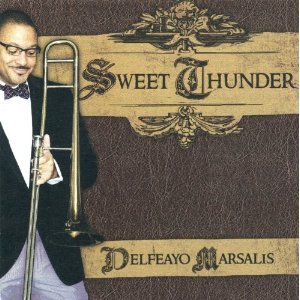
Sweet Thunder - Delfeayo Marsalis (Troubador Jazz Records) - The Marsalis family, especially Wynton and, now, Delfeayo, surely does love Duke Ellington. And, why not? The man, with his musical partner Billy Strayhorn, wrote some of the most enduring music of the 20th Century. One can hear the history of jazz in the Ellington Orchestra oeuvre and, if one does not get hung up on imitating the great soloists that played the music, there is plenty of gold in the music.
Here, trombonist/arranger Delfeayo takes on "Such Sweet Thunder", Ellington's journey into the world of William Shakespeare. First released in 1957, the recording shone the spotlight on many of the Duke's finest players, from the dour Johnny Hodges (not in his playing) to the exuberant Jimmy Hamilton to the always melodic Harry Carney and on. Marsalis re-scores the work for an octet (thought several tracks feature smaller ensembles) with a revolving cast. Pianist Mulgrew Miller appears on 3 cuts including the lovely quintet reading of "Star-Crossed Lovers", a track that also features the Hodges' splashed notes of alto saxophonist Mark Gross. Brother Branford brings his soprano saxophone out on 4 tracks including the gleeful title song and the very handsome "Sonnet for Caesar." Tiger Okoshi's trumpet work is oh-so-slinky on "Half the Fun", especially as he romps atop Winard Harper's fine drumming - also listen for Branford's "snake charmer" soprano solo.)
Delfeayo allows himself a bit of solo space including a sweet Kansas City-style set of choruses on "Sonnet to Hank Cinq" (Harper's drumming is exquisite here), a "bopping" jaunt on "Sonnet in Search of a Moor", and tearing over the changes on "Circle of Fourths", the final cut on the disk that also features a hard-edged tenor saxophone solo from Mark Shim and excellent drumming from brother Jason Marsalis.
There are some who will say that Delfeayo Marsalis is treading on familiar territory by recording this music. Actually, he does a fine job of revisiting the original "Such Sweet Thunder", opening up the material and allowing new voices to emerge. Is this music perfect? Of course not, nor should it be. What it definitely is is fun to listen to- hie thee to a merchant and give this disk an ear. For more information, go to www.dmarsalis.com.
Cast The First Stone - The Cookers (Plus Loin Music) -The self-titled first CD by The Cookers, issued on Jazz Legacy Records, served notice that overlooked musicians can still make strong music. Billy Harper, whose tenor work has always been powerful and who has worked steadily since moving to New York City in 1966, is but one of the reasons to check out this band. His recordings from the 1970s, such as "Capra Black" (Strata East) showed him to an honest descendant of John Coltrane. His 1976 Lp, "Black Saint," was the initial release on the label that bears its name.Trumpeter David Weiss organized this band that also features pianist George Cables, trumpeter Dr. Eddie Henderson, bassist Cecil McBee, drummer Billy Hart and, on 5 of the 7 tracks, alto saxophonist Craig Handy. Azar Lawrence appears as a special guest, playing tenor sax on 3 tracks and soprano on 1.
If you were impressed by the energy level on the debut, this CD hits even harder. The "fire" starts with the brilliance of Hart and McBee; they push, prod, egg on the front line, building an intense flame that one can sense on every track. Even the bassist's "Peacemaker", the only ballad, has moments where one can sense that band could kick it up several notches. When Lawrence joins the other 2 reeds, as he does on Harper's "The Seventh Day", the ensemble creates a warm cushion for the soloists. Cables' insistent piano work on the same track adds tension to the warmth - his solo over the shifting tempos is short but memorable. The pianist's "Think On Me" blends the lightness of a Horace Silver or Herbie Hancock piece with the drive of Freddie Hubbard. Dr. Henderson's crisp solo leads into a fiery tenor spot from Lawrence (Hart and McBee provide major propulsion during his solo.) The CD closes with Harold Mabern's up-tempo romp titled "The Chief" with both Lawrence and Harper "strutting their stuff"" as well as Cables' hard-driving solo before Weiss and Hart "trade 4s", then "2s", and finally "1s" until the drummer gets the spotlight to himself and the piece roars to a close.
Hearing this septet on disk makes one salivate to see them in person. Each member is a leader and composer with talents that give the music its power. Yes, the sound is that of jazz before Miles Davis and others "plugged in" but the results are still quite electric. To find out more, go to www.davidweissmusic.com.
Double Standard: Solo Bass - Boris Kozlov (Self-Released) - Russian-born bassist Kozlov has been in the United States and has worked with a slew of musicians and groups, perhaps best known for anchoring the Mingus Big Band. This is his first release as a leader and it's a bold move. Solo bass recordings are not rare (Ray Brown, Dave Holland, Barre Phillips, Miroslav Vitous, Victor Wooten, etc) but may be considered a "vanity project." Happily, Kozlov thinks melody first so most of these pieces (many from the jazz canon) and that serves to pull the listener right in. Highlights include the sweet, bluesy, take of Billy Strayhorn's "Isfahan" and the contemplative view of Stevie Wonder's "Overjoyed." A sprinkle of "overtones" lead into the high-energy, fast-paced, reading of John Coltrane's "Satellite" and the splay of chordal work on Joe Henderson's "Inner Urge" adds color to the rollicking version. The only "non-solo" piece is "RGB/Self Portrait in 3 Colors", the opening segment of which, an original piece, is solo but leads into the multi-tracked reading of the Mingus tune. The final track, "Anatole", is a dedication to the bassist's teacher in Russia; it's a lovely, heartfelt, ballad with a lovely melody line played in the instrument's higher registers.
A solo bass recording may only attract a audience of musicians but adventurous listeners will discover plenty of musical moments. To find out more, go to www.borisbass.com.
Ben Wolfe may have more adventurous recordings under his name but none more appealing than this hour-long program. Everyone plays well without hogging the spotlight, the pieces are not cluttered and, as I stated above, there are real melodies for the group to chew on for their solos. For more information, go to www.benwolfe.com.
Sweet Thunder - Delfeayo Marsalis (Troubador Jazz Records) - The Marsalis family, especially Wynton and, now, Delfeayo, surely does love Duke Ellington. And, why not? The man, with his musical partner Billy Strayhorn, wrote some of the most enduring music of the 20th Century. One can hear the history of jazz in the Ellington Orchestra oeuvre and, if one does not get hung up on imitating the great soloists that played the music, there is plenty of gold in the music.
Here, trombonist/arranger Delfeayo takes on "Such Sweet Thunder", Ellington's journey into the world of William Shakespeare. First released in 1957, the recording shone the spotlight on many of the Duke's finest players, from the dour Johnny Hodges (not in his playing) to the exuberant Jimmy Hamilton to the always melodic Harry Carney and on. Marsalis re-scores the work for an octet (thought several tracks feature smaller ensembles) with a revolving cast. Pianist Mulgrew Miller appears on 3 cuts including the lovely quintet reading of "Star-Crossed Lovers", a track that also features the Hodges' splashed notes of alto saxophonist Mark Gross. Brother Branford brings his soprano saxophone out on 4 tracks including the gleeful title song and the very handsome "Sonnet for Caesar." Tiger Okoshi's trumpet work is oh-so-slinky on "Half the Fun", especially as he romps atop Winard Harper's fine drumming - also listen for Branford's "snake charmer" soprano solo.)
Delfeayo allows himself a bit of solo space including a sweet Kansas City-style set of choruses on "Sonnet to Hank Cinq" (Harper's drumming is exquisite here), a "bopping" jaunt on "Sonnet in Search of a Moor", and tearing over the changes on "Circle of Fourths", the final cut on the disk that also features a hard-edged tenor saxophone solo from Mark Shim and excellent drumming from brother Jason Marsalis.
There are some who will say that Delfeayo Marsalis is treading on familiar territory by recording this music. Actually, he does a fine job of revisiting the original "Such Sweet Thunder", opening up the material and allowing new voices to emerge. Is this music perfect? Of course not, nor should it be. What it definitely is is fun to listen to- hie thee to a merchant and give this disk an ear. For more information, go to www.dmarsalis.com.
Cast The First Stone - The Cookers (Plus Loin Music) -The self-titled first CD by The Cookers, issued on Jazz Legacy Records, served notice that overlooked musicians can still make strong music. Billy Harper, whose tenor work has always been powerful and who has worked steadily since moving to New York City in 1966, is but one of the reasons to check out this band. His recordings from the 1970s, such as "Capra Black" (Strata East) showed him to an honest descendant of John Coltrane. His 1976 Lp, "Black Saint," was the initial release on the label that bears its name.Trumpeter David Weiss organized this band that also features pianist George Cables, trumpeter Dr. Eddie Henderson, bassist Cecil McBee, drummer Billy Hart and, on 5 of the 7 tracks, alto saxophonist Craig Handy. Azar Lawrence appears as a special guest, playing tenor sax on 3 tracks and soprano on 1.
If you were impressed by the energy level on the debut, this CD hits even harder. The "fire" starts with the brilliance of Hart and McBee; they push, prod, egg on the front line, building an intense flame that one can sense on every track. Even the bassist's "Peacemaker", the only ballad, has moments where one can sense that band could kick it up several notches. When Lawrence joins the other 2 reeds, as he does on Harper's "The Seventh Day", the ensemble creates a warm cushion for the soloists. Cables' insistent piano work on the same track adds tension to the warmth - his solo over the shifting tempos is short but memorable. The pianist's "Think On Me" blends the lightness of a Horace Silver or Herbie Hancock piece with the drive of Freddie Hubbard. Dr. Henderson's crisp solo leads into a fiery tenor spot from Lawrence (Hart and McBee provide major propulsion during his solo.) The CD closes with Harold Mabern's up-tempo romp titled "The Chief" with both Lawrence and Harper "strutting their stuff"" as well as Cables' hard-driving solo before Weiss and Hart "trade 4s", then "2s", and finally "1s" until the drummer gets the spotlight to himself and the piece roars to a close.
Hearing this septet on disk makes one salivate to see them in person. Each member is a leader and composer with talents that give the music its power. Yes, the sound is that of jazz before Miles Davis and others "plugged in" but the results are still quite electric. To find out more, go to www.davidweissmusic.com.
Double Standard: Solo Bass - Boris Kozlov (Self-Released) - Russian-born bassist Kozlov has been in the United States and has worked with a slew of musicians and groups, perhaps best known for anchoring the Mingus Big Band. This is his first release as a leader and it's a bold move. Solo bass recordings are not rare (Ray Brown, Dave Holland, Barre Phillips, Miroslav Vitous, Victor Wooten, etc) but may be considered a "vanity project." Happily, Kozlov thinks melody first so most of these pieces (many from the jazz canon) and that serves to pull the listener right in. Highlights include the sweet, bluesy, take of Billy Strayhorn's "Isfahan" and the contemplative view of Stevie Wonder's "Overjoyed." A sprinkle of "overtones" lead into the high-energy, fast-paced, reading of John Coltrane's "Satellite" and the splay of chordal work on Joe Henderson's "Inner Urge" adds color to the rollicking version. The only "non-solo" piece is "RGB/Self Portrait in 3 Colors", the opening segment of which, an original piece, is solo but leads into the multi-tracked reading of the Mingus tune. The final track, "Anatole", is a dedication to the bassist's teacher in Russia; it's a lovely, heartfelt, ballad with a lovely melody line played in the instrument's higher registers.
A solo bass recording may only attract a audience of musicians but adventurous listeners will discover plenty of musical moments. To find out more, go to www.borisbass.com.
Tuesday, March 1, 2011
Choice Words About Many CDs (Part 1)
Sometimes it can be easier to recommend music than to write longer reviews, especially when time is tight. These disks are so good that I can't resist a paragraph (or 2) about them.
The "swing" beat is irresistible on the opening track of "This Could be the Start of Something Big", the debut release by Andy Farber and his Orchestra (Black Warrior Records). Farber leads this 18-piece ensemble through its paces on the 14 tracks. Jon Hendricks vocalizes and scats in front of the band on the title track (along with his daughter Aria and Kevin Fitzgerald Burke) and the results are so joyous one cannot help but smile. Hendricks also "cuts a rug" on "Roll 'Em Pete", taken at a pace that would break lesser singers. The ballads are heart-felt and smartly arranged, especially the group's take on Mel Brooks' "High Anxiety" (featuring a fine trumpet break from Kenny Rampton.) Most of the solos are short (kudos to the clarinet work of Dan Block) yet filled with ideas and the blend of originals and standards classy. If you like the sophisticated sounds of Duke Ellington and the bluesy qualities of the Count Basie Band, Andy Farber's aggregation will make you smile. To find out more, go to www.andyfarber.com.
Chantale Gagné, a native of Quebec, Canada, has created a CD of music that sparkles, shimmers and grows even better with subsequent listens. "Wisdom of the Water" is comprised of 9 tracks played by the pianist and her fine band that features vibraphonist Joe Locke, bassist Peter Washington and drummer Lewis Nash. Just seeing those names on cover lets you know this will be class music. Ms. Gagné is a facile pianist but one who never favors technique over substance. Yes, several tracks really swing, such as "Squinky Pete" and the trio take (no vibes) on "I Shall Not Be Moved", but it's her fine, lyrical, playing and interactions with the band that impresses one the most. Her work shines on "The Light We Need", especially where she meshes her sound with Locke as well as her sweet solo. Two solo pieces are also included, the short and bouncy "Roseline" and the lovely ballad "Lullaby For Winter" (with its melody reminiscent of light snow falling). Listen once and you'll like this music immediately; play it again and you'll be hooked, smitten by the clean, clear, sounds (and the splendid work of the rhythm section). For more information, go to www.chantalegagne.com.
Trombonist/composer Wayne Wallace had a very good 2010 - his fine recording "Bien Bien" was nominated for a GRAMMY ( his 3rd such honor) and received numerous positive reviews. The new year brings "To Hear From There", his 7th release for the Bay Area-based Patois Records and it's another first-rate set of tunes. The Quintet, comprised of Murray Low (piano), David Belove (electric bass), Paul van Wageningen (trap set) and Michael Spiro (percussion), are equal partners in the proceedings and you can tell - this music is so alive. Wallace's trombone sound is rich and full and his solos swing, strut and croon. When he mixes his phrases with Belove's active bass lines, the music really takes off. The program blends strong originals with intelligent "covers" such as "The Peanut Vendor" (fine throaty vocal from guest Bobi Céspedes and splendid montuno piano from Low) and Juan Tizol's "Perdido" (Kenny Washington adds his distinctive voice on this swinging take.) There's neither a weak nor dull moment among the 11 tracks, Wallace's buttery trombone lines are addictive, Low's piano work sparkles and the rhythm section sizzles and smokes. If "¡Bebo Ya Llego!" doesn't make you smile and want to dance, call your doctor immediately. If the lovely take of J.J. Johnson's "Lament", doesn't melt your soul, there may be no hope. Seriously, Latin Jazz does not get better than this. For more information, go to either www.patoisrecords.com or www.walacomusic.com.
The joy of jazz is that there are always new artists to discover. Saxophonist Benjamin Drazen graduated from the New England Conservatory of Music in the mid-1990s and returned to his native New York City. He's played funk, Latin music, r'n'b and lots of jazz. His debut recording "Inner Flights" shows up on the Posi-Tone Records label, quickly becoming the home for good, straight-ahead, jazz. Drazen, joined by pianist Jon Davis, bassist Carlo De Rosa and drummer Eric McPherson, has created a program that blends hard-bop with the searching aspects of John Coltrane's music. The sound is clean and uncluttered, his alto and soprano sax playing filled with swift, clearly articulated lines with a supporting cast that is solid, creative, and in sync. Pianist Davis, best known for his work with the late Jaco Pastorious as well as the Joris Teepe Band and Beatle Jazz, is a fine player; his solos on pieces like "This Is New" and "Monkish" are fresh and entertaining. His accompaniment on the contemplative ""Prayer for Brothers Gone" and sweetly turned "Polka Dots and Moonbeams" is welcome and free of cliche. Drazen is playful on "Jazz Heaven", filled with twists, bent notes and rapid-fire phrases. He shows his fiery side after moving to soprano on the Coltrane-inspired title track (also featuring excellent support from McPherson and hardy bass work from De Rosa.)
One gets the feeling Benjamin Drazen waited some time before stepping out on his own, building a solid repertoire and working on his mechanics. It's been worth the wait for this music has well-shaped melodic and harmonic ideas without feeling forced or immature. "Inner Flights" is a promising beginning to Drazen's solo career as a leader; let's hope for many more flights. For more information, go to www.benjamindrazen.com or go to www.posi-tone.com.
Take a sonic ride to "Jazz Heaven" courtesy of Posi-Tone Records and IODA Promonet;
Jazz Heaven (mp3)
PS - I have added music to my reviews of Alexis Cuadrado's "Noneto Iberico" and Ralph Bowen's "Power Play" -check it out here and here.
One gets the feeling Benjamin Drazen waited some time before stepping out on his own, building a solid repertoire and working on his mechanics. It's been worth the wait for this music has well-shaped melodic and harmonic ideas without feeling forced or immature. "Inner Flights" is a promising beginning to Drazen's solo career as a leader; let's hope for many more flights. For more information, go to www.benjamindrazen.com or go to www.posi-tone.com.
Take a sonic ride to "Jazz Heaven" courtesy of Posi-Tone Records and IODA Promonet;
Jazz Heaven (mp3)
PS - I have added music to my reviews of Alexis Cuadrado's "Noneto Iberico" and Ralph Bowen's "Power Play" -check it out here and here.
Subscribe to:
Posts (Atom)