Argentinean-born pianist and composer Emilio Teubal creates music that shines with lyrical beauty, sparkling solos and interplay plus rhythms that make you dance and sway. His 2013 BJU release, "Musica Para un Dragon Dormido", is one of my all-time favorite albums. Teubal has been busy since moving to the United States over two decades. He writes constantly and has worked with artists such as bassist Pedro Giraudo, cellist Erik Friedlander, and various tango organizations and groups in the New York City area. Currently, he leads a trio with bassist Pedro Lanouguere and drummer Chris Michael.
Those two musicians are the foundation of his new recording "Futuro" (Not Yet Records). Recorded in several sessions in December 2021 and May 2022 (drummer Michael has been dealing with long COVID so Brian Shankar Adler appears on five of the 10 tracks, all recorded at the later sessions). Joining the trio on three tracks is Sam Sadigursky (clarinet) and Fede Diaz (guitar) while vibraphonist Chris Dingman adds his sound to three other cuts. From the opening measure of the opening cut (the title track), the listener is transported to sunnier climes. The dancing clarinet and percussive guitar wrap around the warming piano figures. Bassist Lanouguere, who leads a quintet that Teubal is part of, is a rich melodic player with a full tone on both acoustic and electric; he also contributes fine bow work (he and the pianist play the opening melody of "Children of MMXX"––he then solos sans bow and is quite impressive there as well.
Photo: Sergio R. Reyes
Of the three tracks Dingman appears on, "Remolinos" stands out for its hypnotic piano figures and circular melody. There is a Steve Reich in the piano lines that is repeated by the vibes and the electric bass throughout. It certainly feels like all four musicians are percussionists and melody makers at the same time. The vibraphonist also appears on the handsome take of Sir Paul McCartney's "Blackbird". While the piece is the shortest track in the program (2:35), the arrangement allows everyone to shine and the melody to stand out.
Photo: Sergio R. Reyes
The blend of the acoustic guitar and clarinet on "Los que Fluyen" hints at tango as well as Brazilian folk forms––Teubal's solo rises out of the main theme, dancing atop the guitar and electric bass then steps aside for Sadigursky to create a masterful, emotional, solo. The quintet imbues "Tokyo Trenque" with such a gentle quality, caressing the melody while Adler's hand percussion clicks underneath. The music picks up with intensity during Lanouguere's acoustic bass solo from which Teubal moves farther away without going "free" but much more impressionistic. The clarinet solo seems to move the rest of the band back to melody; after a quick climax, the music gently sighs to a close.
The album closes with "Los Ultimos Seran Los Primeros" ("The last will be the first"), a wistful Trio piece dedicated to the pianist's father who passed in 2021. The insistent quality in the piano solo allows the listener to hear touches of Keith Jarrett in the delightful two-hand work of Teubal. As you listen to this track (and others), one can really tell that these musicians are in tune with each and with the material. "Futuro" stands out as a work that celebrates life and melodic adventure without sacrificing the rhythms that have sparked the curiosity of Emilio Teubal since he was a boy. Listen to "Rio" below––it's indicative of how the music incorporates its many influences to create sounds that please, hug, and brings joy!
What do you get when mix drummer Matt Wilson, bassist Mimi Jones, and saxophonist Jeff Lederer, give them two nights at the end of February 2020 in the newly reopened Cafe Bohemia in New York City, and let them loose. It's the Leap Day Trio and now you can hear the results on "Leap Day Trio: Live at The Cafe Bohemia" (Giant Steps Arts). The music on the recording is spirited, lively, at times thoughtful, and very human. Messrs. Wilson and Lederer have been friends and musical partners on and off for three decades; adding Ms. Jones to their special mix neither tempers nor hinders their musical fun. Instead, she's a solid foundational player and a melodic soloist (check her out on "The Dream Weaver" and "Leap of Faith").
The nine song, 68 minute program, opens with Wilson's "Dewey Spirit", (listen below) a tune the drummer dedicates to one of his earliest mentors and employers, tenor saxophonist Dewey Redman. Commencing with percussion and Lederer's spiky tenor sax sounds, the piece opens in rubato with Ms. Jones dancing underneath the melody line. When the main theme kicks in, one hears a running bass line, swinging drums, and the saxophonist flying all around his horn. Everyone solos, the energy is contagious, and the crowd enjoys it all.
Two of the next three tracks are ballads ("Leap of Faith" and "Ghost Town") but the track in between ("The Dream Weaver") rumbles along atop the pulsing bass and percussion. "Ghost Town" is a fascinating journey through the musical terrains of blues, post-bop, and during the bass solo, the feel of Native American music. Lederer lets loose on the opening of "Strival For Survival"––that sets the tempo for the rhythm section and they rocket forward. When the tempo slows down for Ms. Jones fine solo, listen for Wilson's delightful work on the cymbals.
Photo: Jimmy Katz
The program closes with the spirited "For Friends"––again, Lederer leads off the piece with a solo introduction but one can hear from his exciting forward lean, the music is going to be fiery. Even when the gentlemen step aside for Ms. Jones spirited solo, the music has great drive.
One hopes that the Leap Day Trio doesn't only convene every four years. In the meantime, celebrate the group's music on "Live at The Cafe Bohemia".
Hear Matt Wilson's musical tribute to Dewey Redman:
Trumpter, composer, mentor, and author Jeremy Pelt has just issued Volume III of "Griot: Celebrating the Lives of Jazz's Great Storytellers". 15 more interviews with artists whose ages range from 89 (Wayne Shorter) to 28 (Elena Pinderhughes) sharing insights into their musical and spiritual upbringing, how they each developed a singular voice, and the changes they have seen in this art form created by black musicians at the start of the 20th Century. These are stories of resilience in the face of the racism that has never truly been eradicated in this country and in places around the world. Many of the artists speak of how the changes that other musical forms (styles) have brought to the music keeps it alive in the face of listeners and label owners apathy. But you also read of how musicians have been mentored by their musical elders, about the rigors of the road, and the cost, mental and physical, of a musician's calling. Still, there are joys galore in their retelling stories of their formative days and nights on and off the bandstand.
Photo: Ra-Re Valverde
I have written before how "Griot" will remind older Black Music fans of "Notes and Tones: Musician-to-Musician Interviews", the 1977 classic interviews drummer Art Taylor compiled that featured 29 of the greats who helped push the music forward in the middle decades of the 20th Century. Jeremy Pelt has given us the 21st equivalent of Mr. Taylor's book and, hopefully, he will continue to converse with his elders, contemporaries, and young people for years to come!
What a joy to be surrounded with such great music––here are two of the more delightful releases of 2023!
Photo: Erika Kapin
Australian-born vocalist Jo Lawry may be best known for working with Sting, Paul Simon, Fred Hersch, and Peter Gabriel but she's been recording her own albums for the past 15 years. She spent nearly two decades living, working, and teaching in New York City (her teaching appointments were at the Manhattan School of Music and at the Boston-based New England Conservatory). Ms. Lawry, who is married to saxophonist Will Vinson, moved back to Australia in 2021 to lead the Equity in Jazz program at Sydney Conservatorium of Music, a program designed to encourage and support women and gender diverse musicians into a career in jazz through dedicated leadership, music development and mentorship. She's released three albums as a leader with the most recent being 2018's "The Bathtub and The Sea."
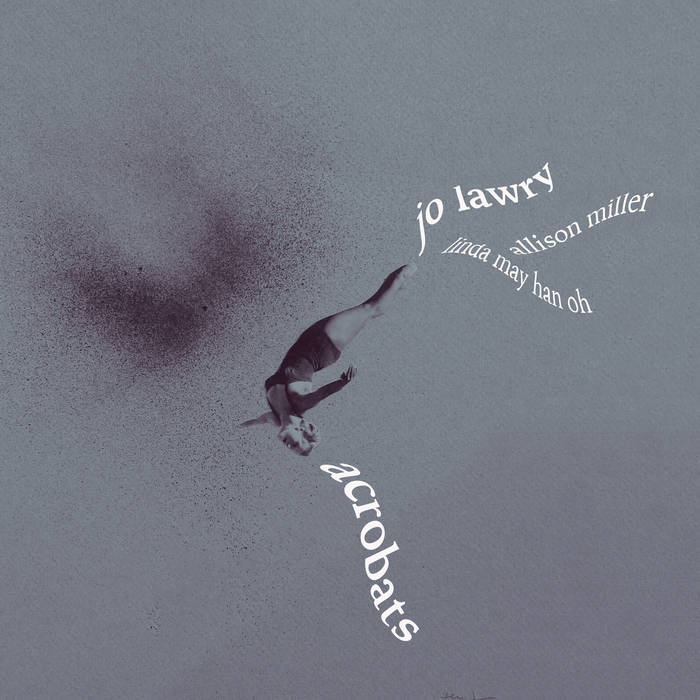
For her latest venture, "Acrobats" (Whirlwind Recordings), Ms. Lawry joins forces with bassist Linda May Han Oh and drummer Allison Miller to create a fascinating program that ranges from standards to two special pieces either written by an Australian composer (the title track comes from the pen of Gian Slater) or made a big hit on the Aussie scene (John Farnham's anthemic "You're the Voice"). Don't be put off by the spare instrumentation as the music is so intimate, delightful, emotional and adventurous that the 43-minute goes by way too quickly. When you listen to this music, you'll hear how melodic all three artists. Both Ms. Han Oh and Ms. Miller certainly know how to swing; right from the voice/bass opening moments of the opening track, Frank Loesser's "Traveling Light" (from "Guys and Dolls", one hears the delightful give-and-take of Ms. Lawry with the rhythm section.
Photo: Erika Kapin
The title track (listen below) illustrates Ms. Miller's splendid hand drumming as well as why Ms. Han Oh is a first-call bassist as she supplies both counterpoint and rhythmic support. Dig the delightful the voice/drums duo on Cole Porter's "You're The Top"; taken at a breakneck pace, the vocalist dances atop the rapid-fire brush work. Later in the program, Ms. Han Oh and Ms. Lawry take a delightful stroll through Al Hoffman and Dick Manning's "Takes Two to Tango" (first made famous in 1952 in separate versions by Pearl Bailey and Louis Armstrong). This version is slower and slinkier than the two versions from seven decades ago yet retains the humor and sassiness that the lyrics embody.
There is nary a weak track on "Acrobats". While her previous album tilted towards folk and pop, it's really great to hear Jo Lawry as a jazz singer (her scat feature on Lennie Tristano's "317 East 32nd Street" is a treat as is the sparkling bass solo). Adding Linda May Han Oh and Allison Miller to this project is a stroke of genius––you'll not hear a better trio album this year!!
For his third album on Edition Records, tenor saxophonist Chris Potter recorded several nights of his February 2022 gig at the legendary Village Vanguard. Six songs from the multi-night engagement make up the program for "Got The Keys to the Kingdom: Live at The Village Vanguard." For the gig, Potter put together an ensemble featuring Craig Taborn (piano), Scott Colley (bass), and Marcus Gilmore (drums). The set is bookended by two long blues/gospel tunes with the first being Mississippi Fred McDowell's "You Gotta Move." The leader goes it along for the first 30 seconds then introduces the blues groove that the rest of the ensemble picks up on. They run the first three verses with Potter adding more energy each time until they break into a short bridge and the saxophone solo commences. It's a tour-de-force, filled with ideas and turns-of-phrases, reminiscent of a Sonny Rollins-like playfulness. Taborn is next and he digs into the song's blues groove. After a quick return to the theme, Gilmore gets the spotlight and, with the help of Colley's short background figure, kicks the heck out of his drums.
Besides the blues, there are two tracks with Brazilian roots, the handsome folk tune "Nazani Na" (transcribed by Heitor Villa-Lobos and Edgar Roquette-Pinto from an Amazonian Indian folk tune) and "Olha Maria", composed by Antonio Carlos Jobim, Chico Buarque, and Vinicius De Moraes). The latter piece opens as a nearly-three minute conversation for Potter and Colley before the pianist and drummer enter. There is also a lovely take on Billy Strayhorn's "Blood Count", a piece he composed in the hospital awaiting treatment for esophageal cancer that would claim his life several months later. When recorded by the Ellington Orchestra, the solo on the piece was poignantly played by Johnny Hodges. Here, the quartet not only interprets the distress of the composer's condition but his fight as well. It's quite a beautiful piece. That's followed by Charlie Parker's "Klactoveedsestene", a jaunty dance for all involved.
The album closes with the title track, a gospel tune first recorded by Washington Phillips in 1929. Again, I hear the influence of Sonny Rollins in the rollicking rhythms, the playful interactions of the group, and Potter's powerful solo. Gilmore and Colley push him hard while Taborn feeds him aggressive chords. The pianist gets the next solo, dancing, strutting, bouncing, feeding off the lively bass and drums. A return to the opening theme then Gilmore begins his magnificent 3:30 solo that reaches its climax with the audience roaring its approval. The entire quartet takes the piece out on that high-energy level.
"Got The Keys to the Kingdom" is a delight from start to finish. If you love high-energy creative, the album has numerous examples. If you need a heartfelt ballad that explores many emotions, that's here as well. Rhythmic adventures? Yes! Great solos? Yes! Chris Potter and his excellent ensemble shine throughout–don't miss this splendid live album!
Composer and arranger Burt Bacharach passed away last Wednesday at the age of 94. Born in Kansas City, Missouri, Bacharach was entranced by the sounds of jazz in his hometown (County Basie!) despite the fact his mother made him study classical music. He did his undergraduate work (in music) at McGill University in Montreal, Quebec, Canada, then went to the Mannes School of Music in New York City, and the Music Academy of the West in California. After a stint in the US Armed Forces, Bacharach worked as a pianist and arranger with singers such as Vic Damone, Polly Bergen, Steve Lawrence, and even several stints playing the Catskills in New York State. In 1956, Bacharach began working with actress and singer Marlene Dietrich, touring Europe and the Middle East on numerous occasions. Their musical relationship lasted into the the early years of the next decade.
At the same time, the pianist was also working as a songwriter in the mid-century "Tin Pan Alley" that was the famous Brill Building. There, he collaborated with lyricists Bob Hilliard ("Any Day Now", "Tower of Strength") and Mack David ("Baby, It's You") but when he teamed up with David's younger brother Hal in 1963, they created a body over the next decade with artists such as Gene Pitney, Jerry Butler, Lou Johnson, the Fifth Dimension, the Carpenters, Tom Jones, Herb Alpert, and, of course, Dionne Warwick. Their work with Ms. Warwick, a brilliant vocalist with a wonderful range, has stood the test of time. Their musical relationship slowed to a halt by 1973 – all three went on to do impressive work yet never hit the heights of the mid-to-late 60s.
My introduction to the music of Burt Bacharach started in the early 1960s as I would use my allowance to scour the bargain bins of 45 rpm "singles" at the local Woolworth's 5 & Dime store. Prices ranged from 10 to 25 cents and I would try my chances. I had already heard Gene McDaniel's "Tower of Strength" (listen below) and had bought a few records on the Wand label, seeing Bacharach's name on some as composer and arranger. Whether the songs were hits or not, the music was always interesting. Bacharach had an affinity for Black vocalists, working with Tommy Hunt, Lou Johnson, and Brook Benton. Looking back and listening to this music, it sounds so "grown-up" for its time, not really (in many cases) rhythm 'n' blues or rock or even "pop" but incredibly well-crafted works of art sung by singers who had previously been "pigeon-holed" by producers into settings that did not show the range of their voices or emotions. Yes, some of Burt Bacharach pieces could be saccharine (luscious swelling strings, dramatic pauses) but the best of them transcended any genre.
Burt Bacharach would go on to write scores for films and writing hit songs with his third wife, Carole Bayer Sager, but when he teamed up withElvis Costello in 1998 to create "Painted From Memory", their work together stands alongside the composer's best work. He never stopped writing and collaborating, even was nominated for a GRAMMY in 2020 for his work with lyricist and instrumentalist Daniel Tashian (pictured above).
Yes, some of the songs can be sappy ("Raindrops Keep Falling On My Head") or sexist ("Wives and Lovers" being the worst offender) but never offensive. His best work stands the test of the time and had been interpreted by singers all around the world.
Growing in the 1960s, the "British Invasion" captured my mind and my ears. First, there was The Beatles, then The Rolling Stones, The Who, and on. Every week, it seemed there was another group from England playing music inspired by American musicians who has been bypassed or pigeon-holed by radio programmers into regional boxes that were hard to break out of. In June of 1965, The Yardbirds hit Top 40 with "For Your Love"–the British quintet were a blues-rock band known for its excellent support of American bluesman and featuring guitarist Eric Clapton. But, the group's turn towards "pop-rock" pushed Clapton to depart and join John Mayall & The Bluesbreakers; the group asked session musician Jimmy Page who, in turn, recommended Jeff Beck and, thus, a career was born.
While The Yardbirds pursued Top 40 audiences with their 45rpm "pop" tunes, their albums featured a lot of blues-inspired material some of which leaked onto the radio. The group's raucous rendition of Bo Diddley's "I'm a Man" gave listeners a hint of Beck's prowess but he lasted less than two years in the group, replaced by Page. After an uninspired pair of recordings, including "Hi Ho Silver Linings" (which included a rare Beck vocal), he formed his own group with Rod Stewart on vocals and Ron Wood on bass. The group released several albums of blues-soaked material but broke up after several years.
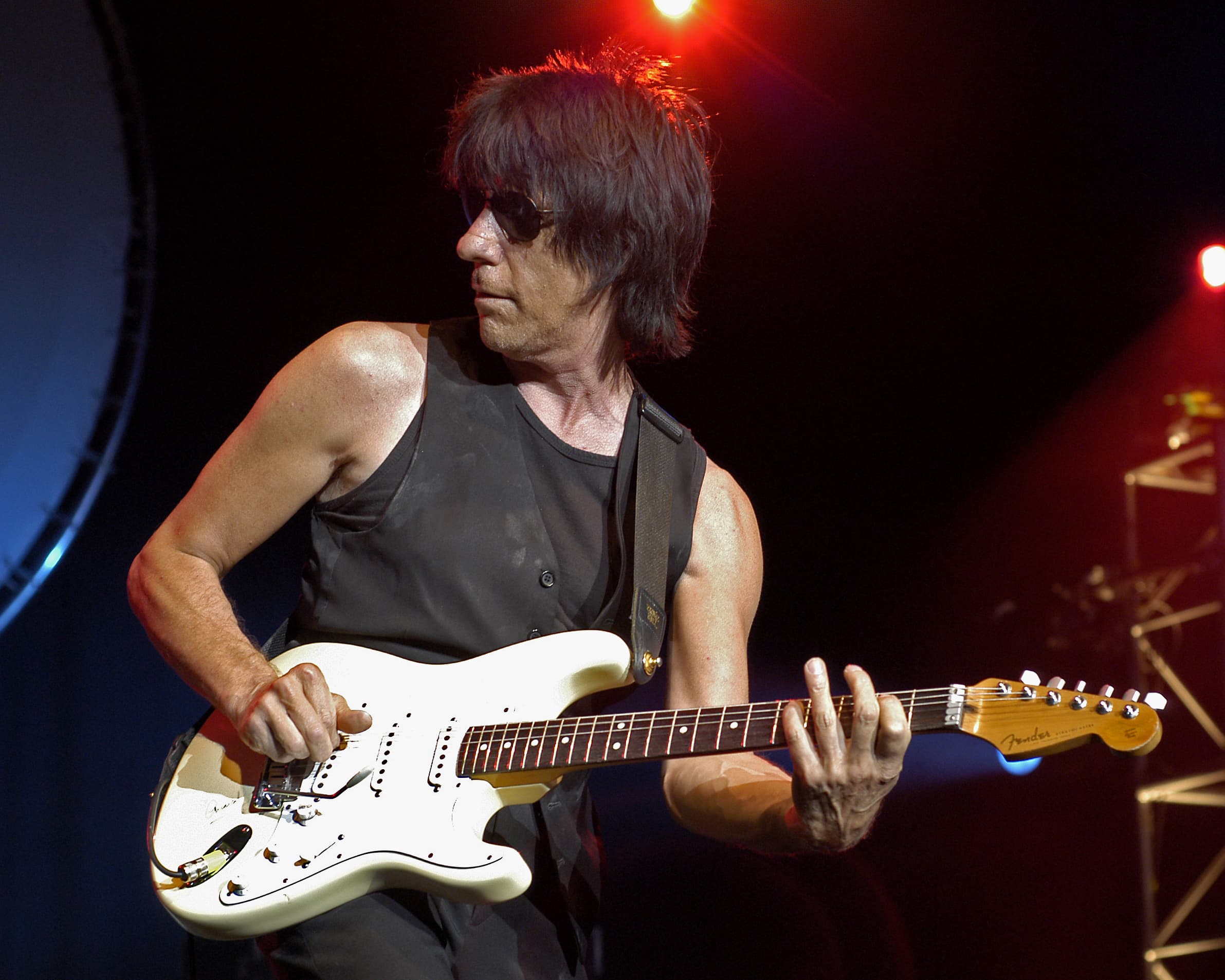
After Beck disbanded his "heavy metal" Beck/Bogert/Appice" (the bassist and drummer from the US band Cactus), he contacted producer George Martin to produce his new instrumental album. Released in 1975, "Blow by Blow" was a huge success thanks to excellent material, especially the two Stevie Wonder songs, the super funky "Thelonious" and the beautiful "'Cause We've Ended as Lovcrs". Beck's guitar playing on the latter track is emotionally rich and truly proved he was more than a technical whiz. A year later, Martin and Beck collaborated on "Wired" which included a number of cuts recorded with keyboardist Jan Hammer who helped to push the guitarist to play with even more abandon. The album includes a stunning take of Charles Mingus's "Goodbye Pork Pie Hat".
The guitarist recorded several albums with Hammer, toured with Hammer's band, and continued to record albums when the inspiration hit. When he wasn't guesting on recordings or doing the occasional tour, Beck would spend the time in his garage rebuilding cars. He had said on numerous occasions that he had no need to always be in the public eye. Still, his albums continued to sell and he would win GRAMMYs in 2011 for "Best Rock Instrumental Performance" (for "Hammerhead" from the album "Emotion & Commotion") and for his rendition of Puccini's "Nessun Dorma" ("Best Pop Instrumental Performance" from the same album).
One of the joys of listening to Jeff Beck is he could make the oddest sounds and make them fit into the context of any song. Like Buddy Guy, another guitarist who pushes the envelope, Mr. Beck could make one grimace, laugh out loud, and really smile. He will be missed but we were so lucky to have him here!!
Here's a live take of "Goodbye Pork Pie Hat":
Here he is shredding "What Mama Said" with guitarist Jennifer Batten:
Back to 1984 and Beck's reunion with Rod Stewart for Curtis Mayfield's "People Get Ready":
For those of you who do not know Francis Davis (pictured left), he is an exceptional writer, critic, and has won a slew of awards for his music journalism and even a GRAMMY. For years, he hosted the Jazz Critics Poll that appeared first in The Village Voice, moved on to several sites (including NPR) and landing several years ago at artsfuse.org, a web-based online arts magazine based in the Boston, MA area. One of that sites goals has been to pick up the slack in arts coverage due to the loss of area newspapers. Best of all, the site looks at the many and varied genres/artists that one is interested in.
Critic/writer Tom Hull has been working with Davis on the poll for years and took over the heavy lifting for 2022. Below is a series of links where you can see the results Hull collated from over 150 jazz critics and writers plus read his essay as well as one from Francis Davis and finally, the list of Jazz Notables who passed in 2022. I am honored to be one of the participants and really enjoy reading what the other contributors have chosen. Hope you do as well!
Two years ago, in the initial months of the COVID-19 pandemic, esperanza spalding and Fred Hersch issued a live recording with five songs they recorded in 2018 at the Village Vanguard. The digital-only album was posted on a special Bandcamp page with all proceeds from sales to the Jazz Foundation of America, an organization raising money to assist musicians affected by the international work stoppage. The album was posted for six weeks only (my review is here) and, unless you own it, disappeared from sight (and sound).
Until now, that is. "Fred Hersch & esperanza spalding: Alive at the Village Vanguard" (Palmetto Records) is available again and, great news, the program has been expanded to eight songs: the "original" five plus "My Little Suede Shoes" from Charlie Parker (first recorded in 1951), Thelonious Monk's "Evidence", and Mr. Hersch's lovely "A Wish" (that he first recorded with Norma Winstone in 2003). The new "additions" make the album even better (and the earlier version was quite delightful). Ms. spalding sticks to vocals and she's a great front-person. Her introduction to Bobby Troup's "Girl Talk" and patter throughout is hilarious but make sure to pay attention the delightful piano that plays along. "But Not for Me" opens the album and really sets the pace–listen below and just how playful both the lady and gent can be (one can just see lyricist Ira Gershwin laughing along with ms. spalding's joyous interpretation). Egberto Gismonti would be thrilled to hear the duo dance through "Loro" (the vocalist even stops her wordless jaunt to to say "bless you" to a patron who sneezed).
Photo: Facebook
O, how imaginative and expansive are the duo's performances of the two pieces from Monk. Actually "Dream of Monk" is Mr. Hersch's reimagining of "Monk's Dream" with original lyrics by the pianist––the vocal is so good especially when ms. spalding is scatting but dig the piano solo. "Evidence" captures the duo in full flight, playfully deconstructing Monk's original theme before the pianist creates a series of inventions around the theme and the rhythm.
How much one wishes to be in an audience when these fine people are playing. In fact, the duo is celebrating the release with 20 dates starting January 8th and running through February 5th (more information can be found by going to https://fredhersch.com/tour/.). For those of us who can't get to any of the gigs, "Fred Hersch & esperanza spalding: Alive at the Village Vanguard" is an absolute gem!
Listen to how the opening track, "But Not For Me" sets the pace for the entire set:
Photo: Leo Aversa
Brazilian-born saxophonist, composer, arranger, and conductor Gaia Wilmer was already a busy musician in her homeland before coming to the United States to study at Berklee Collee of Music and New England Conservatory (both located in Boston, MA). One of her teachers, Frank Carlberg, released Ms. Wilmer's US debut "Migrations" on his Red Piano Records label and serves as co-Producer on her new Sunnyside Records album "Folia: the Music of Egberto Gismonti".
The two-CD set (released on 1/13/23) features her 19-member Large Ensemble plus special guests Gabriel Grossi (harmonica on one cut) cellist Jaques Morelenbaum (on one track), and the honoree Mr. Gismonti (piano on two tracks). One of those tracks with the composer, "7 Aneis", features thunderous piano which during the unaccompanied solo section sounds like Art Tatum interpreting the song of birds but notice how the reed section is so melodic in contrast to the piano. There's a touch of birdsong in the opening of "Bianca", dedicated to the composer's daughter, but it opens up to a Near Eastern rhythm with a handsome melody atop it. Mr. Morelenbaum, who has recorded a duo album of the music of Caetano Veloso with Ms. Wilmer, joins the ensemble for the lovely "Infancia"––the cellist steps out unaccompanied for a moment in the middle of the song before the rhythm section enters pushing up the tempo. The rest of the piece features various members of the ensemble in a call-and-response with the piano, bass, and drums before they dive into the lively melody! The last several minutes features pianist Rafael Martini playing a classically-inspired coda that brings the Ensemble back for a short reprise of the original melody.
CD two opens with "Lôro", one of Mr. Gismonti's most recorded melodies. The arrangements opens with flutists Maiara Moraes and Aline Gonçalves wrapping their sweet lines around each other before the Ensemble plays an introduction to Mr. Grossi–his lively harmonica solo, reminiscent of the sound of the late Toots Thielemans, is accented by staccato blasts from the reeds and brass. Then, the ensemble breaks into the frolicking melody line. Later on, Mr. Grossi returns for an exciting romp of a solo. The composer returns to lead the musicians into "Karatê", yet another romp. Listen to how he and Mr. Martini (on accordion) dance their way through the melody line. The accordion solo jumps off the brass interjections before that section leads the group back into the melody. That song plus "Cego Aderaldo" both come from Mr. Gismonti's 1980 "Circense" album. The latter track opens somberly before the Ensemble breaks into the exciting rhythmic and melodic variations created by the arranger. Different voices step out throughout the performance (there is a splendid flute and clarinets interaction that is joined a minute on by the soprano sax). Guitarist Luciano Camara has a short, handsome, unaccompanied solo before the rest of the rhythm section enters (there's also a momentary vocal exchange between the women and men of the Ensemble right before a spirited exchange between the drums, muted trumpet, and clarinet).
"Folia" closes with "Baiâo Malandro", a piece that opens at a blistering tempo before introducing the amazing melody line that rises high before sliding back down. After a series of pinpoint twists-and-turns, there's a series of short solos including flute and flugelhorn (Diego Garbin) that grow into a rollicking call-and-response over the rampaging rhythm section. Drummer Lourenço Vasconcellos (son of pianist Renato Vasconcellos) steps out for just a moment before the Ensemble returns with an exciting close to a delight-filled album.
Gaia Wilmer has crafted quite a wonderful tribute to Egberto Gismonti. She's credited as having "arranged, recomposed, and conducted" the music and the Large Ensemble. While she does not play a note, her arrangements are colorful, imaginative, thoughtful, witty, and most impressive. Chances are very good you've never heard of many or all of the 19 members who comprise her group but a deep dive will show that each one is a busy musician and educator in Brazil and beyond. Start the New Year with "Folia: The Music of Egberto Gismonti"––the music and performances will make one feel like the sun shining even on the darkest days!
Special Guests: Gabriel Gross - harmonica Jaques Morelenbaum - cello Egberto Gismonti - piano
Orchestra: Maiara Moraes - reeds Aline Gonçalves - reeds Fernando Trocado - reeds Rui Alvim - reeds Gustavo D'Amico - reeds Joana Queiroz - reeds Henrique Band - reeds Bruno Soares - trumpet Diego Garbin - trumpet Gilson Santos - trumpet Pedro Paulo Junior - trumpet Rafael Rocha - trombone Everson Moraes - trombone Jonas Hocherman - trombone Leandro Dantas - bass trombone Luciano Camara - guitar Rafael Martini - piano & accordion Mayo Pamplona - bass Lourenço Vasconcellos - drums
You should think of "OTIS Pt 2" as the other albums that could have been in "Part 1" save for the space and attention span (mine). I love this music and the genuine creativity of the musicians makes me hope for a future that is bright and welcoming for our successors.
Fergus McCreadie – "Forest Floor" (Edition Records) – This is the third album from Scottish pianist McCreadie, the third to feature his trio of bassist David Bowden and drummer Stephen Henderson. All are busy on the growing Jazz scene in Scotland (and beyond) but when they come together to play McCreadie's music, magic happens! The pianist has become even more melodic in the past several years; though he can still play with exquisite technique, the pianist and the rhythm section are concentrating on telling stories and delivering messages in their music. One can still hear the influence of Highland reels, at times, and that is a welcome delight!
Listen to "The Unfurrowed Field":
Vadim Neselovskyi – "Odesa: a Musical Walk Through a Legendary City" – (Sunnyside Records) – Speaking of stories, four months after Russia invaded Ukraine (February 2022), pianist, composer, and educator Neselovskyi released this tribute to the city where he was born and raised (moving to Germany at the age of 17). One can not help but write that emotional pull of the terrible war (and the horrific stories we have heard and seen) gives this music heft––still, this is a tribute to the vibrant country where the pianist spent his formative years, to the family and friends he left behind, and to his desire that the country remain free. Since the album's release, Neselovskyi has toured extensively raising money to help refugees and the displaced within the country.
Walk down the "Potemkin Stairs":
Andrew Cyrille, William Parker, & Enrico Rava – "2 Blues for Cecil" (TUM Records) – This release was a delightful surprise when it was issued in late January. These three masters play tribute to pianist and composer Cecil Taylor, not be imitating him or covering his music but by demonstrating how the rhythmic innovations and startling melodic explorations can be interpreted so magically. Messrs. Cyrille and Rava (both born in 1939) sound great together and Mr. Parker (13 years their junior) keeps them on their musical toes. All three contribute compositions and there are four improvised plus a sweet version of "My Funny Valentine".
Here's "Ballerina":
Clark Sommers Lens – "Intertwine" (Outside In Music) – Bassist Sommers is often the glue in the various sideman projects he takes part––on his own, he shows a fine ear for melody, for allowing his music to breathe, and for giving his bandmates the room to create. There is a lot of music on "Intertwine" so let it roll through your brain and soon it will find its way to your heart. While I find the ballads most rewarding, there are several hard-edged pieces that sound great turned up loud! Great playing from the leader and from Chris Madsen (tenor sax), Geof Bradfield (bass clarinet, soprano and tenor saxes), Matt Gold (guitar), and Dana Hall (drums).
Here's "Second Guess":
Ernesto Cervini – "Joy" (TPR) – Drummer, composer, arranger, and publicist Cervini is a fan of the mysteries of Canadian author Louise Penny. And, for good reason. She writes mysteries where the lead character, Chief Inspector Armand Gamache, spend many days and nights in the fictional town of Three Pines, Quebec, solving complicated murders and discovering just how magical a place it can be. The drummer has created a fascinating suite of music featuring members of Turboprop, Tune Town, and Tetrahedron, groups that he leads or co-leads. Also, there are a number of guests, all who work to describe the characters who inhabit the town as well as the Chief Inspector and two of his closest associates. It's a smart idea that covers a lot of musical and literary territory!
Blues inspired by duck? Listen here to "Ruth's Rosa":
David Murray Brave New World Trio – "Seriana Promethia" (Intakt Records) – Murray, who excels on bass clarinet and tenor, remains vital well into his seventh decade. This "power trio" date on Intakt features bassist Brad Jones and drummer Hamid Drake playing music that swings, rock, whispers, squalls, and, at times, that you can dance to. The music on this album, all originals from Murray, is neither dated nor imitative but vital, exciting, and impressive. There's not a wasted note in this program only music that will challenge, soothe, and ultimately remind you of the power and grace of Black American Music.
Dance to the funky title track:
James Brandon Lewis Quartet – "Live: Molecular Systematic Music" (Intakt Records) – Bassist Jones (see directly above) is also a member of saxophonist and composer Lewis's "Molecular Music" Quartet. Along with Lewis and Jones are pianist Aruan Ortiz and drummer Chad Taylor. This double CD set was recorded on the opening night (May 15) of the ensemble's 2021 European tour, the first time the group had played together since they recorded the second album, "Codes of Being" (released in October of 2021). The excitement and enthusiasm of the musicians is palpable; the fiery playing may remind some of John Coltrane's classic Quartet but these songs display Lewis's growing maturity as a songwriter and a leader. He is quickly becoming a major voice as a musician, composer, and storyteller.
Hear "Of First Importance":
Art Hirahara – "Verdant Valley" (Posi-Tone Records) - Pianist and composer Hirahara is an impressive pianist (also plays organ on occasion) and has developed into a top-notch composer. His work for producer Marc Free and Posi-Tone Records (now eight albums as a leader and more as a sideman) sparkles with creativity and swings lustily with a softer side that is often lyrical and poetic. Joined here by bassist Boris Kozlov and drummer Rudy Royston with saxophonist/ flutist Donny McCaslin showing up on over half the tracks, the album jumps out of the speakers with a joy and intensity second to none. This is another recording that will make you glad to be alive in this day and age!
Hear "Zero Hour":
Dave Douglas Quintet – "Songs of Ascent: Book 1 – Degrees" (Greenleaf Music) – Mr. Douglas and his "Be Still" Quintet––Jon Irabagon (saxophones), Matt Mitchell (piano), Linda May Han Oh (bass), and Rudy Royston (drums)––created these musical interpretations of Old Testament Psalms in a unique. The leader played all his parts, sent those of to Mr. Irabagon who played his parts and passed them on to Mr. Mitchell and so on. To these ears, this music is alive, feeling like the Quintet is playing together in a studio. That's a tribute to the composer's vision and the great talents of the ensemble.
There's a "Book 2" that is only available to subscribers of Greenleaf Music. Believe me, it's worth the investment! Go to https://greenleafmusic.com/ and find out more.
Listen to "Lift Up My Eyes":
Pablo Ablanedo – "Chistreza" (Newvelle Records Digital) – The folks at Newvelle Records have begun this year to release digital versions of the high quality vinyl albums that have captured listeners attention over the past six years. "Chistreza" is a gem from pianist-composer Ablanedo featuring the band he recorded his debut album with over 20 years before. What a band––violinist Jenny Scheinman, saxophonists Chris Cheek, Jerome Sabbagh, and Anat Cohen (clarinet only), trumpeter Diego Urcola, guitarist Ben Monder, bassist Fernando Huergo, and drummer Franco Pinna (with saxophonist Daniel Ian Smith on two tracks. Best of all, the original compositions are well-drawn, the arrangements sharp, and the soloists impressive.

 Posts
Posts


 The nine song, 68 minute program, opens with Wilson's "Dewey Spirit", (listen below) a tune the drummer dedicates to one of his earliest mentors and employers, tenor saxophonist Dewey Redman. Commencing with percussion and Lederer's spiky tenor sax sounds, the piece opens in rubato with Ms. Jones dancing underneath the melody line. When the main theme kicks in, one hears a running bass line, swinging drums, and the saxophonist flying all around his horn. Everyone solos, the energy is contagious, and the crowd enjoys it all.