Showing posts with label Dan Tepfer. Show all posts

Thursday, November 23, 2023

Thanksgiving Day 2024; Two Alto sax-Piano duos + One Quartet


Been absent from this blog for two months but not for a lack of great new albums but more so for being much too busy. Teaching coillege freshmen as I do is more fun than work; when you add to that the stresses of Middle East War and the horrors perpetrated in the name of freedom, music becomes a much-needed escape but writing does not seem to be enough.

Still, it's Thanksgiving Day in the United States, a day for remembering how lucky many of us are. We have a roof over our heads, food to eat, time to read, the ability to walk most streets without fear, heat in our domiciles, lights in our living areas, and, for some, vehicles to take us out into the country.  Today is a good day to get away from the bluster of candidates, especially who treat democracy as a toy to throw in the trash when it displeases, people who flaunt their wealth, shoot off their mouth, point fingers, and make promises to sweep personal freedoms under a big rug.  

Tomorrow, the news will still be bad, the bluster will return yet we have the power to make the world less of a scary place by celebrating and protecting our freedoms, by staring hate in the eyes until it blinks and slinks away. Set an example of doing good and maybe, just maybe others will join you. No matter their religion, gender, political persuasion, we should all understand compassion and how to practice compassionate caring.  Can't hurt to try––the music is always there to fall back onto.

Photo: Jimmy Katz
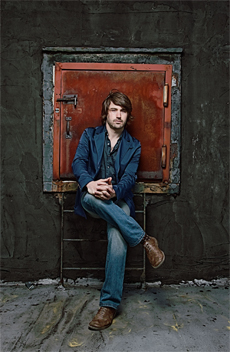
I've spent a lot of time recently falling back on the music of two saxophonists, Miguel Zenón and Andrew Rathbun. In the case of the former, he has two new duo albums, one with long-time Quartet member pianist Luis Perdomo (pictured left) and the other with friend and duo pianist Dan Tepfer (pictured below).   Perdomo came to the United States from his native Venezuela in 1993 and by the end of that decade, was playing in groups led by Ravi Coltrane and soon became as founding member of Zenón's Quartet.  The pianist and saxophonist both have a love for the folkloric and popular of their home countries (Zenón is from Puerto Rico), both have a love for melody as well as rhythmical variations, and both are brilliant improvisers.  The music created and arranged for the Quartet has travelled a wide swath of territory over the course of 10 albums, winning numerous awards and lavish praise from critics and reviewers around the world.

Six months into the Pandemic, the duo went into the Jazz Gallery in New York City and recorded a program of songs from the Bolero era, a musical style that began in Cuba in the 1890s and, during the 20th Century, spread throughout the Caribbean and Latin America.  Upon its January 2021 release, "El Arte Del Bolero" (Miel Music) was celebrated not only for its musicality but for its gentle persuasions and splendid playing.  Three years later, the duo reconvened in a recording studio with the expression "to play songs we know and love" (Zenón). "El Arte Del Bolero; Volume 2" expands upon its predecessor by expanding its repertoire with songs from Mexico, Panama, and Venezuela.  The seven-song program is a true delight, especially when the duo moves beyond the melody to create fascinating solos. Listen below to "Paula C.", to how how Zenón caresses the melody as Perdomo creates a quiet symphony beneath him.  As the alto saxophonist dances into solo, the pianist is so playful, whimsical at times, beneath the flowing sax but never losing the pulse.  "En La Soledad" (from the fertile mind of Puerto Rican composer Tito Rodriguez: 1923-73) may remind some John Coltrane's "Central Park West" especially due to the rubato feel.  It's a lovely ballad that kisses one's heart.

The album closes with "Silencio"; composed by legendary Puerto Rican songwriter Rafael Hernández (1892-1965), the rapid-fire music belies song title and flows forward on the delightful alto solo atop the dancing piano lines. When Perdomo steps out, you can hear a touch of the New Orleans "Spanish Tinge", especially in his delightful left hand.   

"El Arte Del Bolero" is a joy from start to finish. The duo of Miguel Zenón and Luis Perdomo reminds us once again of the great music created in the Caribbean and Latin America; they do so with style, grace, and love!

For more information and to purchase the recording, go to https://miguelzenon.bandcamp.com/album/el-arte-del-bolero-vol-2.

Hear the duo play Rubén Blades' "Paula C.":


While the duo of Miguel Zenón and Dan Tepfer has not played together as long as the one reviewed above, these two musicians have improvised numerous times over the past decade-plus. Over two nights in June 2018, they got together at the Yamaha Artists Services in New York City and laid the tracks that make up their first album together. "Internal Melodies" (Main Door Music/self-released) combines the duo's love for spontaneous composition, pieces each composed for the occasion as well as a duo interpretation of "Fanfares" by György Ligeti and a sparkling take of "317 E 32nd St." by Lennie Tristano.


Tepfer is one of the more adventurous pianists of the 21st Century diving into the worlds of classical music, electronic music, and computer music. He's also  a great jazz pianist and, like Zenón, eschews labels. Together, they push each other to create music that is both mentally satisfying but also moves with grace and occasional rhythmic excitement.  The 12-song program opens with the short and totally improvised "Soundsheets" before they embark on the pianist's "The Thing and its Opposite"––after a particularly angular composed melody that the alto saxophonist reads with grace, Tepfer moves into a more ethereal mode. He steps aside and Zenón dances forward alone, phrases building on top of each other without losing sight of the original melody. They return together to the opening melody yet the music feels somewhat lighter. The pianist also composed the title track. The melody has a lightness to it, especially in how Zenón plays through it. Tepfer picks up on that with a solo that hints at Beethoven in how it unfolds gently, steadily building the intensity without overwhelming the mood.

Listen below to the saxophonist's "La Izquerida Latina Americana", to how Tepfer creates a martial rhythm with his left hand before Zenón introduces the melody.  There is a seriocomic feel to the music without falling too hard into either camp.  Zenón's "Centro de Gravedad" is a gentle ballad with a lilting melody line underscored by a mix of powerful chords and gentle piano trills. Tepfer's solo has a flamenco feel, his articulated notes giving the music a sense of drama.  The saxophonist also brought "La Libertad" to the duo; it, too, is a handsome ballad and both musicians create heartfelt solos. 

The album closes with the Tristano classic plus another spontaneous piece "Freedrum".  The former is a delightful romp, the duo bringing out the dancing quality of the rhythm and melody.  The final track combines Tepfer's piano "percussion" with Zenón's playful melody for a short but spirited finish to a wide-ranging program. "Internal Melodies" goes in many directions over the course of an hour but Dan Tepfer and Miguel Zenón never lose their way.  Their musical conversations can be serious or light-hearted; all told, this music is generous in spirit and a delight to listen to!

For more information and to purchase, go to https://dantepfer.bandcamp.com/album/internal-melodies. 

Hear the duo play Zenón's "La Izquerida Latina Americana":


Although alto saxophonist and composer Andrew Rathbun has been recording and touring since the late 1990s, he's still gets recognized a "Rising Star" in recent Downbeat Critics Polls. That's a nice honor but he has created music that needs to be heard by more people. The Toronto, Ontario, Canada native has recorded impressive music for labels such as Fresh Sounds New Talent Records, Origin, Centaur, and SteepleChase.  Along the way, he has collaborated with pianists Ran Blake, Jeremy Siskind, and Gary Versace, flugelhornist Kenny Wheeler, drummers Billy Hart, Michael Sarin, Bill Stewart, and Jeff Hirshfield, among others.  


What stands out for this listener is that, since his earliest recordings, Andrew Rathbun has been an excellent composer. He certainly can improvise as impressively as his contemporaries but telling a story with his music is just as important. For his latest SteepleChase recording, "Speed of Time", he's joined by Gary Versace (piano), John Hébert (bass), and Tom Rainey (drums).  While the majority of eight-song program was composed during the Pandemic, this music is written with these musicians in mind, as a group project.  The title track kicks off the album––it's got a funky rhythm, a well-drawn melody, and strong solos from the leader and the pianist.  Rathbun quickly dances away from the melody, creating a playful interaction with the rhythm section pushing up the intensity until Versace takes over building his far-ranging solo off Rainey's herky-jerky rhythms. 

Photo: Domenic Gladstone
The leader plays both tenor and soprano saxophones for the insistent up-tempo jaunt that is "Widen the Doorway".  Versace's solo, at the onset, keeps turning back on itself but soon bounces forward atop the insistent work of Hébert and Rainey. The leader's tenor solo opens unaccompanied and then he jumps upon the rhythm section. More reed overdubs on "Still a Thing"; this time, the soprano leads the way on the melody (although the solo is again on tenor) with the rhythm section creating quite a funky rhythm.  

The soprano is featured on the ballad "Wandering"––in the liner notes, Rathbun pays tribute to the late Wayne Shorter, particularly the "human cry" that the great musician often employed in his playing. There's a sense of urgency in the rhythm section but the deliberate pace never wavers. Excellent solos from pianist and bassist precede the leader's spotlight where Rathbun shows but never overdoes the Shorter influence.  More soprano can be heard on "Velocity Unknown", a fascinating piece in an odd time signature (9/4). Rainey's delicate cymbal dance decorates behind the opening bass solo. Rathbun enters two minutes with his own delicate sound. Every time you think the music will erupt, the quartet gathers themselves and continue their gentle journey forward. The power in this piece comes from Rathbun's powerful solo as well as Versace's impressive improvisation.

"Speed of Time" closes with "Tooth and Nail", an insistent work powered by the active drumming. The piece opens with short exposition from Rainey joined quickly by the tenor sax.  After the quartet push their way through that long introduction, the music jumps forward with the drums and bass stoking the fire for the impressive tenor and piano spots.  This particular track sounds even better at a higher volume, the drums shaking the speakers.

Andrew Rathbun keeps "rising", keeps getting better as a composer and musician––this album is yet another fine example of his musicality and creativity.

For more information, go to https://andrewrathbun.com/. 

Here's the title track:


Thursday, May 29, 2014

Brooklyn Jazz Underground on Top

It's been 4 years since the debut CD by the Rob Garcia 4 and 2 since the band's 2nd effort.  "The Passion of Color" (Brooklyn Jazz Underground Records) is the 3rd release featuring Garcia (drums), Dan Tepfer (piano) and Noah Preminger (tenor saxophone) with bassist Joe Martin joining the band (Chris Lightcap was on the 1st and John Hebert on the 2nd).

What has always impressed about Garcia's music is how equally important melody and rhythm are (not one above the other.)  There's nothing radically changed on this date but, if anything, the ensemble is tighter.  Garcia pushes his soloists on the up-tempo pieces; the title cut drives with such intensity especially during the very tenor solo.  Preminger has often accentuated his "softer" side but here he delivers quite a forceful solo.  Tepfer takes a more impressionistic approach which allows the leader's sparkling cymbal work to stand out.  Dig how the 4-some transforms Max Roach's hard-edged "It's Time" into a medium-tempo ballad, imbuing the piece with more of a blues feel. Garcia's short drum solo is notable for his melodic sensibility and staying "in the mood."  As a composer, Garcia writes to the strengths of his band.  Preminger's tenor on "Purple Blush" explores the melody in the style of Archie Shepp, short shards of melody in sync with the rhythm section.  Meanwhile, Tepfer is both melodic and abstract, downright bluesy too.  The playful rhythms of "The Caterpillar Vs. The Butterfly" gives the quartet plenty of room to maneuver in and around the propulsive bass lines (Martin "runs" not "walks") and the skitter, jittery, drums.  The pianist channels Bud Powell as he slides around the bass and drums. Garcia's splendid brush work sets the proper mood on "The Garden's Poet", a short tune that shows that everyone in the group can play melodies in support of each others.

The disk comes to a close on 2 fascinating tracks.  Speaking of melody, Garcia gives himself the spotlight, going it alone on "The Painter", delivering a drum solo that both swings and sings.  Then, Martin's full-tone bass lines lead the band in on a first-rate reading of Jimi Hendrix's "Little Wing." No one holds back, each member of the group digs deep into the modern blues that the composer created nearly 5 decades  ago and, although the piece is fairly quiet, there is an intensity of emotion that is palpable throughout.

The Rob Garcia 4 uses an impressive musical palette to create "The Passion of Color." The trust that the members of the group have with each other and the material provides the listener with an aural experience that satisfies on many levels, continuing to do so on subsequent listens.  And, as good as the recording is, the RG4 are a great band to see in person.  For more information, go to www.robgarcia.com.  CT residents, be aware - the Rob Garcia 4 plays The Side Door Jazz Club in Old Lyme on Thursday July 10. Go to thesidedoorjazz.com for ticket information.

Pianist/composer John Chin, a native of Korea who was raised in Los Angeles, has just issued his 2nd CD as a leader (his debut, "Blackout Conception", was released in 2008 on Fresh Sound New Talent). "Undercover" is a self-produced disk from sessions held in May of 2010 and finds the pianist in the company of drummer Dan Rieser and bassist Orlando Le Fleming.   At the time of the taping, the trio had been playing together for some time and Chin wanted to document its progress.  The 3 musicians worked in one room with no preconceived arrangements; the results are quite impressive.  Juan Tizol and Duke Ellington's "Caravan" is given quite a funky backbeat, a cross between Ramsey Lewis and The Bad Plus.  The pianist's polyphonic improvisations (basically, the right and left hands playing several line at the same time) give the trio a full sound.  3 of the other "covers" on the recording were penned by saxophonists including 2 by Wayne Shorter ("Edda" and "Fall") plus John Coltrane's "Countdown." Shorter's "Fall", recorded by Miles Davis on the "Nefertiti" Lp, has great drive, rightfully capturing the mood that composer intended but giving more of a pronounced backbeat.   Rieser and Le Fleming lock in nicely, giving Chin the foundation he needs to explore the harmonic possibilities.  The counterpoint created by the interaction of the piano and bass on Charlie Chaplin's exquisite "Smile" as well as the drummer's playful exploration of the rhythm makes for excellent listening.

Chin supplies 3 original pieces including the sweetly melodic title track that, at times, has the sound and feel of a Bruce Hornsby composition.  Chiming piano chords introduce "If For No One", a tune that blends a Brazilian feel with a classically inspired melody.  After the introduction and theme, Chin's solo rises out of the lower end of the keyboard, building in intensity before the pianist steps aside for the bass solo. "Seemingly" is a imposing ballad and a piece where Le Fleming's strong feel for melody meshes well with that of the pianist.

Again, it's no secret that there are, seemingly, thousands of piano trio recordings released each year.  Don't miss hearing "Undercover", especially for the intense group interactions and the impressive choice of material.  John Chin may have waited 4 years to release this CD; his patience and belief in his musical vision makes this project stand out. For more information, go to www.johnchin.com. Give the music a listen by clicking on the Bandcamp link below.


Tenor saxophonist/composer Gianni Gagliardi, born in Barcelona, Spain and now living in Brooklyn, opens his debut CD "Nomadic Nature" with the sound of rain and thunder.  The song, "Paris", rises out of those sounds with a haunting circular melody that is pushed forward by the drive of Mark Ferber's drums, the throbbing bass lines of Alexis Cuadrado, the 2-handed chords of pianist Luke Marantz and hypnotic guitar work of Gilad Hekselman.   The youthful leader (25 at the time of these sessions) pushes forward with a solo that stays in the middle of his range, displaying the influence of Mark Turner.  He takes a more playful approach on "L'ironie D'une Jolie Prisse De Tete" (roughly translated as "the irony of a pretty headache") with the melody have a smattering of Iberian colors resting atop the electric piano chords.  "Macanudo Man" opens in a style reminiscent of Weather Report in its "Mysterious Traveler" phase, the major difference being Hekselman's probing guitar lines. The "grungy" guitar and distorted electric piano sounds give "Varicela Patagonia" a harder edge and the leader takes advantage of the "heaviness" of the chords to heft to his solo.

Perhaps, the most impressive piece is the handsome ballad "Margolinda" that opens with an impressionistic unaccompanied piano solo that leads to the finely constructed saxophone melody. Marantz takes a solo that moves away from that melody line  while Gagliardi sticks fairly closely to the chord structure.  The strength of the piece lies both in the strong melody but also in the propulsive work of Ferber and Cuadrado (the guitarist sits out for this performance).

"Nomadic Nature" speaks to the fact that young Gianni Gagliardi has already traveled far and wide.   He's well on his way to discovering his "sound", aided greatly on this project by an excellent ensemble.  As he continues to mature, one hopes he does not lose that inquisitive side of his song creation and lyrical nature to his saxophone playing.  For more information, go to giannigagliardi.com.

Monday, October 8, 2012

Trios Live and Recorded Live

Firehouse 12, 45 Crown Street in New Haven, welcomes back pianist Dan Tepfer - he last appeared in the performance space several years ago as a member of the Rob Garcia Quartet.  This time, he's the leader of a Trio that features bassist Ben Street and drummer Ted Poor.  They'll be playing music from a new CD thhat should be released fairly soon. Tepfer has been on the contemporary music scene for less than a decade but has already made quite an impression on critics and listeners.  He's worked extensively with saxophonist Lee Konitz, recorded a fascinating version of Bach's "Goldberg Variations" that included his own "Variations", appeared on fine recordings by bassists/composers Alexis Cuadrado ("Noneto Iberico") and Anne Mette Iversen ("Poetry of Earth") and played several gigs (but sadly never recorded) with drummer Paul Motian.

The Dan Tepfer Trio will play 2 sets - 8:30 and 10 p.m. - for more information, go to firehouse12.com or call 203-785-0468.

Many fans of the contemporary jazz scene know the hard-driving drummer Dave King from his work with The Bad Plus, Happy Apple and his different solo ventures.  "I've Been Ringing You" is his third release as a leader for Sunnyside Records and finds him in a more contemplative trio setting than TBP.  Joining him is the legendary Midwestern bassist Billy Peterson, who has played with artists such as Prince, Ben Sidran, Bob Dylan, Leo Kottke, the Steve Miller Band and multi-instrumentalist Ira Sullivan. In the piano chair is the masterful artist from the Upper Peninsula of Michigan, Bill Carrothers whose repertoire ranges from abstractions of Civil War music to reinterpreting the music of Clifford Brown for piano trio (and beyond.)  King has recorded with the pianist on 2 projects, including the spontaneously improvised "Shine Ball", released on the Fresh Sound New Talent label.

With the exception of the title track (a ballad with a melody line reminiscent of "The Alcotts" movement from  Charles Ives' "The Concord Sonata" and is credited to the Trio), the group performs pieces that most people should recognize.  The opening cut, Gordon Jenkins' "Goodbye", begins with King creating long tones on the waterphone before Carrothers and Peterson enter, the pianist caressing the melody while the bassist lays down a simple foundation. The piece slowly develops, never going beyond a crawl, fading on the bass notes and waterphone.  Ornette Coleman's oft-recorded "Lonely Woman" also moves slowly but here one hears the impressive bass counterpoint and King's active brush work.  At times, the piano phrases sound like klezmer melodies then moving onto contemporary classical lines.  Quiet yet intense, the track is a highlight of the CD.  King really "bounces" the beat on "People Will Say We're In Love" while Peterson also pushes forward but Carrothers, who enters 70 seconds into the 3:23 cut, is no hurry as he explores the handsome melody.

Recorded in 4 hours on a March day in Minnesota, "I've Been Ringing You" is a music for a quiet night. Dave King, who can be quite a powerful player, whispers much of the time, preferring to allow the melodic work of the pianist and bassist to stand out. Well worth your time, this 38-minute gem should find a home in your soul. For more information, go to www.sunnysiderecords.com.

Wednesday, November 2, 2011

Live Music, Power Emitting and Permitting + Music to Weather the Storm

The good news about the October storm is that New Haven seems to be unscathed and that Firehouse 12, 45 Crown Street, will continue its Fall 2011 Concert Series Friday November 4 with a visit from Rudresh Mahanthappa & Samdhi.  Alto saxophonist Mahanthappa has been on quite a creative tear over the past several years, releasing CDs with fellow alto saxophonists Bunky Green and Steve Lehman, working alongside guitarist Rez Abbasi, trumpeter Amir El Saffir and pianist Danilo Perez.  His tart tone and rapid-fire lines combine the intelligence of Charlie Parker and Indian classical music.

Samdhi is the saxophonist's "electric" quartet;  the band features guitarist David Gilmore, electric bassist Rich Brown and drummer Damion Reid.  Their self-titled debut CD, released on ACT Music, is quite exciting and wonderfully musical, with melodies that rush forward like waves breaking on the shore during a storm and solos that leap from the speakers. 

Samdhi plays 2 sets, 8:30 and 10 p.m.  There's a waiting list for both sets (no surprise) so call 203-785-0468 to put your name on it.  For more information, go to firehouse12.com.

The blur to the left is guitarist Sean Clapis performing at The Buttonwood Tree, 605 Main Street, in Middletown. He and pianist Noah Baerman were scheduled to make a return appearance to the performance space in late August but their plans were curtailed by Hurricane Irene. This week's snow-ice storm has paralyzed the Middletown area but it looks like Main Street is back in business so Clapis and Baerman, who first played together a decade ago when the guitarist was a student in the Center for Creative Youth summer program at Wesleyan (Baerman was the instructor), will perform Saturday night at 8 p.m.  I saw their first Buttonwood gig in 2010 and really enjoyed the duo's give-and-take.  Over the last year, they have played a number of times and are building a strong repertoire.  To reserve a seat or 2 (I recommend that you do), call 860-347-4957 or go to www.buttonwood.org.

There are certain pieces of music that help to heal during times of duress and, for me, Johann Sebastian Bach's "Goldberg Variations" is one on those magical works.  Composed in 1741 and consisting of an "aria" and 30 "variations" using the same chord progression, the work, written for harpsichord, was popularized in the 20th Century by Canadian pianist/conceptualist Glenn Gould.  There have scores of recordings over the past 4+ decades (Gould alone recorded the "Goldbergs" 4 times) by the likes of Peter Serkin, Keith Jarrett, Murray Perahia, Roslyn Tureck, Simone Dinnerstein, Anthony Newman and Pierre Hantai.

On November 8, Sunnyside Records will release a splendid recording of the "Goldberg Variations" by pianist Dan Tepfer.  The 29-year old Tepfer adds his own twist on the piece by adding improvised "variations" on the original "variations" - make sense?  His improvisations use the same chord progression but stretches those chords in many fascinating directions.  Of course, when Tepfer plays the piece live, his "variations" will be different each time.

"Goldberg Variations/Variations" is quite lovely yet it may be challenging for some when Dan Tepfer plays his more "modern" takes on the 270-year old chord progressions.  But, challenging in a good sense.  He certainly plays the original with both dexterity (some of the passages are incredibly fast) but his improvisations help to bring out the emotional and melodic richness of the work. One hears joy, melancholy, pride, a touch of sorrow and, most certainly, the kind of beauty that is created from love of creativity. and follow the instructions.

Self-recorded (the pianist was granted use of the Yamaha Artists Services Salon in Manhattan in the middle of the night), Dan Tepfer approaches JS Bach's composition, a work that many consider timeless, and makes the music sound "new" again.  Find this recording - play it when you are happy and your spirits will rise even higher.  Play it when your life has turned dark and your spirit will be caressed.  To find out more, go to www.dantepfer.com.

If you are quick enough, the website nextbop.com is streaming the recording.  Click on the link and follow the instructions.