Pianist and composer Matthew Shipp turns 60 years old in early December and remains one of the busiest, most creative musicians on the Black Music scene. His current Trio––bassist Michael Bisio and Newman Taylor Baker––is, arguably, his finest ensemble while his music continues to expand. The band's new album, "The Unidentifiable" (ESP Disk), captures one's ears and mind from the opening seconds of "Blue Transport System" and refuses to let go until the 10:31 "New Heaven and New Earth" fades to silence. Even then, moments return in snatches of melody, sounds, and beats. Upon first listening, you might think Newman Taylor Baker's splendid drumming is the reason to return. Perhaps it's Michael Bisio's powerful and often melodic bass work or the muscular piano, long flowing phrases, or thoughtful compositions that the leader supplies that turn your head. In fact, it's all three and more.
Photo Mark Lazarski
I've learned to listen to a new Matthew Shipp Trio all the way through each time. This is not music you "cherry-pick" your favorites and ignore the rest. Listen to how the rhythm section goes its own way on "Phantom Journey" or provides a gentle cushion of colors for the exploring piano lines on "Dark Sea Negative Charge". Baker's trance-like drums go alone on the short "Virgin Psych Space 1" serving as an intro to the trio's reading of "...Space 2". Note how each music builds on those drums, Bisio's bass weaving in and around while Shipp's piano travels above.
There is a quiet passion pulsing on the above-mentioned "Dark Sea...."; check out the fascinating hard drumming on "Trance Frame" (another short solo piece) and the powerful piano on "Phantom Journey." The sound of the album, engineered by Jim Clouse in Park West Studios in Brooklyn, NY, is clean and loud. Te lengthy final track will glue you to the chair, the thick bass tine, dancing snare work, and the ever-exploratory piano lines slowly build to a powerful climax–Bisio's bowed bass and overtones atop Shipp's gently piano melody become a contrast in light and darkness dropping out so the music can close on Baker's subtle brushwork.
"The Unidentifiable" is one more high point in the creative career of Matthew Shipp, not just for the music he composed for the Trio but also for his continued dialogue with Michael Bisio and Newman Taylor Baker. There is no compromise, no cliches, just a powerful message of creativity in uncertain times.
Pianist and composer Lafayette Gilchrist has created an amazing amount of music, relevant music, over the past three decades. A resident of Baltimore, MD, since 1987, his music covers a wide swath of territory, from House to Jazz to Hip Hop to Funk to Blues and beyond. His music has been featured on the HBO series "The Wire" "Treme", and "The Deuce", he's played with the David Murray Quartet as well as drummer Louis Moholo-Moholo, and bassist William Parker. The pianist gets compared to many keyboard masters, from McCoy Tyner to Willie :The Lion" Smith––his ability to play so any styles reminds this listener of the late Jaki Byard.
It's been 13 years and myriad experiences since his last Trio album ("3") was issued. "Now" (self-released) has arrived and it's an collection of amazing adventures. Two CDs, 16 songs (all originals), 150 minutes, and the great rhythm section of Herman Burnie (bass) and Eric Kennedy (drums), the music is an incredible journey. Opening with "Assume The Position" (first heard on David Simon's "The Wire"), the listener is bowled over by the thundering chords, the rapid-fire drums, and the pounding bass. Latter on Disk one, "BMore Careful" is a New Orleans-inspired blues that serves a warning and a spotlight for Burnie's handsome arco work. Kennedy's drums and Gilchrist's piano are mixed high and loud making the music jump from the speakers.
Dig into "On Your Belly Like a Snake", another hard-edged romp. Most of the longer pieces (seven of the 16 tracks are 10 minutes or longer) usually have stretches where the band eases off the intensity but here it's a short break before the drums push the leader to play harder. Disk one closes with "The Midnight Step Rag", a delightful dance with a touch of the Crescent City in Kennedy's drumming and a bouncy piano solo. You can just about pick out the deep notes of the bass but also listen to the pianist's active left hand.
Photo: Theresa Keil
Disk two opens with the 13:33 "Tomorrow Is Waiting Now (Sharon's Song)", a handsome medium tempo ballad that builds in intensity on the strength of Gilchrist's splendid piano playing. Burnie creates a fine solo as well and even though Kennedy does not solo, he plays an integral role throughout the piece. The following piece, "The Wonder of Being Here", is a true ballad, a handsome one at that. The bassist shows his melodic side, especially beneath the lovely piano solo. Later on the disk, "Can You Speak My Language" is a poignant ballad, the two-handed piano playing and Gilchrist's melodic runs seem to nod towards Keith Jarrett.
Disk two and the album closes with "Specials Revealed", a rich melody wrapped in a soulful rhythm. Gilchrist's solo is built off the repeating chords in his left hand and he gracefully moves up the keyboard while Burnie hugs the bass line and Kennedy pushes the rhythm forward. I understand the title of the song is also the name the leader has given the Trio–that make sense as this is special music. Yes, "Now" is a lot of music to take in all at once, really three good sets of music on two CDs. But, take your time and do take it all in. One can hear so much in the music that Lafayette Gilchrist, Herman Burnie, and Eric Kennedy have created for this album. Gilchrist's collection of songs plumb his own experiences as well as those of his community, reminding us that music not only tells stories but moves us emotionally. "Now" moves, oh yes it moves!
The trio of Geof Bradfield (tenor and soprano saxophones), Ben Goldberg (clarinet and contra-alto clarinet), and Dana Hall (drums, percussion) first met in 2017 at The Hyde Park Jazz Festival in Chicago, IL. That chance encounter led to "General Semantics" (Delmark Records), recorded a year later. All three musicians have years of experiences behind them as leaders, co-leaders, or group members (Bradfield and Hall have worked together over two decades)––one can tell from the music that recorded how comfortable they are with each other, willing to push and be pushed into many different musical areas.
What a splendid sonic journey this is. Opening with the quiet rush of "Air" (Bradfield on tenor, Goldberg on contra alto, and Hall using brushes), the music dances forward delightfully as the two reed players carry on quite a conversation. Composed by the late pianist Cecil Taylor and recorded in 1961 by Steve Lacy, the "swinging" track has a timeless feel. "Tioga Street Zenith" is a three-way conversation, a bit more frenzied yet Hall sticks with brushes as the reeds spar and parry. "Last Important Heartbreak of the Year" may sound like the title of a Country ballad but is really a rollicking tune with New Orleans drumming goosing the reeds right along. A bit later in the program, "Hit Flip Switch" (from Goldberg's prolific pen) also is a delightful romp, hearkening back to the raucous music of Louis Armstrong and Johnny Dodds. Bradfield's laughing soprano and Goldberg's playful clarinet should tickle one's fancy!
The soprano sax and clarinet combo returns to dance together yet again on Hermeto Pascoal's happy "8 de Agosto"––again, the two reeds weave around each other as Hall kicks and sticks away with glee. Bradfield's tenor sax introduces the title song which soon drops into a funky beat, Goldberg's contra alto clarinet producing the bass line. The tenor solo is built off that bass line while Hall keeps the tune close to the ground. "Half The Fun" opens with a "deep" solo from Goldberg over quiet hand-held percussion. Several minutes later, Hall drops into a modified "jungle" rhythm a la 1920's Duke Ellington, Goldberg plays a slinky bass line, and Bradfield creates a sweet soprano sax melody.
The album comes to a close with "Under and Over" which has a "freer" feel as the tenor sax and drums open the piece in a fiery conversation. After they stop, Hall drops into a slow, bluesy, beat, Goldberg's clarinet gets the melody while Bradfield acts as the bass line. There's a feel of Julius Hemphill's "Hard Blues" in the sound of the music, in the way the sax and clarinet move together. The piece closes with a classically-inspired clarinet and tenor saxophone duet.
The trio of Geof Bradfield, Ben Goldberg, and Dana Hall reminds us that when like-minded musicians get together, magic can happen. Magic does happen on "General Semantics"––this delightful and musical recording is well worth your attention!
Like most musicians, clarinetist and composer Ben Goldberg had a busy Spring and Summer 2020 planned with concerts, tours, recordings, etc. By the middle of March, all that had evaporated and he was sitting home shocked, wondering what to do until the world reopened. After a few days of contemplation, Goldberg decided to record one song a day in his home studio. He has a number of instruments, acoustic and electric––Bb Clarinet, Eb Albert System Clarinet, Contra Alto Clarinet, Roland JX-03 Synthesizer, Korg MS-20 Synthesizer, Empress Tape Delay Pedal, Memory Boy Analog Delay––and so, on March 19, he posted his first piece in his Bandcamp page, dubbing the sessions the "Plague Diary". The recordings are free but donations are welcome; the address is below.
Goldberg posted one track each and every day until April 7. Since then, he's averaging five to seven pieces a week (from April 30 to June 28, he did not miss a day) and has yet to go more than two days between pieces. As of this writing (9/14/2020), the clarinetist has posted 148 separate recordings. Some are experimental while others have delightful melodies and playful treatments. Some tracks last no more than 90 seconds while others are multi-sectioned, episodic, and are over 17 minutes long. All of it is fascinating. While we do not know the thought processes behind the songs, many of the pieces are dedicated to musicians he has worked with (such as Ron Miles and Myra Melford) and others who have inspired him (Charlie Parker, family members).
Over his career, now well into its 3rd decade, Ben Goldberg (clarinets) has created music has taken listeners many places, from the experimental side of klezmer to evocations of Steve Lacy. His work with Tin Hat has explored and expanded upon modern chamber music as well as the poetry of e.e. cummings. He has worked with guitarist Nels Cline exploring the music of Andrew Hill and is a member of Myra Melford's Be Bread.
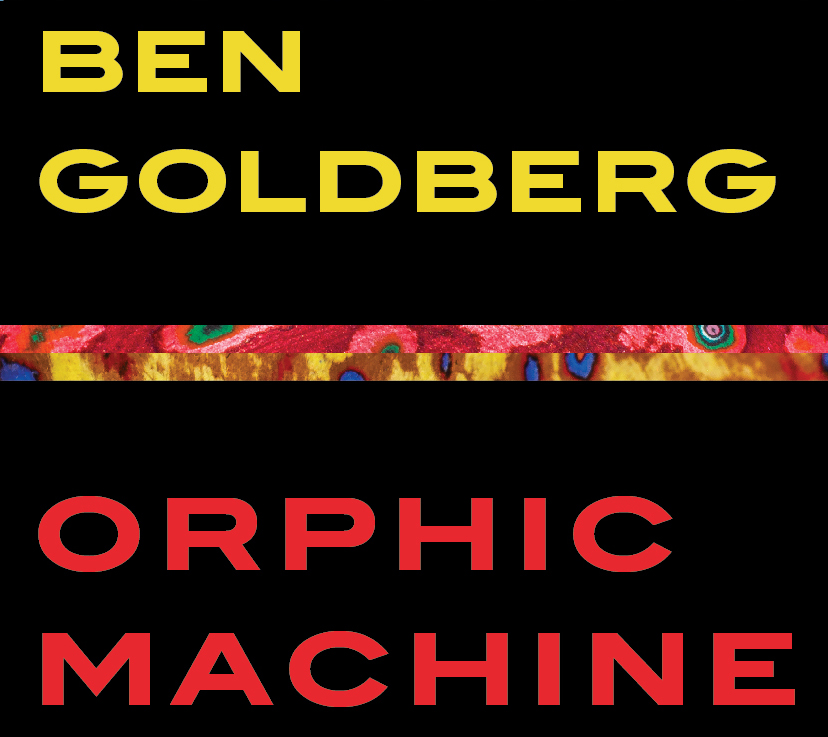
All of his associations and influences are in evidence on "Orphic Machine" (BAG), a multi-layered program of original music built upon the words of the late poet Allen Grossman (1932-2014). The poet's "lyrics" do not come from a poem but from a treatise/reflection on poetry, "Summa Lyrica" from the 1991 book "The Sighted Singer." The project, commissioned by Chamber Music America/New Jazz Works, features a nonet composed of Goldberg's associates past and present including Ms. Melford (piano), Mr. Cline, Carla Kihlstedt (violin, voice), Ron Miles (trumpet), Rob Sudduth (tenor saxophone), Kenny Wollesen (vibraphone, chimes, drums on "Bongoloid Lens"), Ches Smith (drums, vibraphone on "Bongoloid Lens"), and Greg Cohen (acoustic bass). The music has influences, ranging from The Beatles to Kurt Weill to the blues to swing to several sections that remind this listener of the music that Dick Connette created for his Last Forever projects.
What stands out from this program is how Goldberg utilizes the different voices at his disposal. This music rarely sounds cluttered (although the final track, the title cut, does "roar" for the final few minutes), each voice stands out. Ms. Kihlstedt has a soft voice and, rarely, if ever, is she lost in the mix. Most of the time, the words set the tone of the music for the piece. "Care", for instance, and the repetition of the line "I find myself in the act of care" (an ear worm of the highest order) helps to open the music, leading the nonet to a great guitar solo that really kicks hard.
There are several strictly instrumental pieces including the "cool jazz"-inspired "What Was That", the short and sweet "How To Do Things With Tears" (great muted trumpet interaction with piano, clarinet and bass) and the Kansas City blues of "Bongoloid Lens" (sounds like a Frank Zappa title). These pieces do not act as after-thoughts or interludes but serve to illustrate the poet and the composer's approach to how they create. Poetry and music can certainly be impressionistic but can also cut to the quick, exposing emotions in a visceral manner (think Allen Ginsberg's "Howl" or John Coltrane's "Birmingham"). Yes, there is a "cool" feel at times in the music found on "Orphic Machine" (check out the vibes solo on "Immortality" and the funky work beneath it by Cline, Cohen and Smith but then listen to how the band kicks into high gear as the clarinet wails and the guitar bellows) but the solos often are the fire that illuminate the heart of the artist's intent.
"Orphic Machine" is a lot to take in one sitting (nearly 76 minutes) yet if you approach it slowly (perhaps 2 or 3 cuts at a time), chances are good you'll fall under its spell. Time will allow for the words to take hold, helping you understand the intent of the poet as well as how the composer illustrates the vocal lines. Ben Goldberg has created a project that ranks among his best work, music that will resonate for years to come.
The intelligence of Myra Melford's music is found in the details, such as the way she combines disparate voices into coherent yet far-ranging musical statements. "Snowy Egret" is both the title of her new ENJA album and the quintet that plays its brilliant program. Blending the laconic yet piercing tones of Ron Miles (trumpet), the often gentle phrases of Liberty Ellman (guitar), the thick active lines of Stomu Takeishi (bass guitar) and the multi-faceted attack of Tyshawn Sorey (drums), this music looks forward yet has its antecedents in her earlier work. In the mid-to late 1990s, Ms. Melford recorded 2 albums ("The Same River Twice" and "Almost Twice") with the quintet of Dave Douglas, Erik Friedlander, Chris Speed and Michael Sarin, music as contemporary now as it was then. The lineup also refers back to Be Bread, an ensemble also with guitar, trumpet, piano, bass and drums with the addition of the clarinet of Ben Goldberg.
In the liner notes, Ms. Melford writes that "the music on this recording composed for the "new" quintet is inspired by Eduardo Galeano's "Memory of Fire" trilogy, his history of the Americas." Throughout the program, the composer stitches musical phrases from South America with blues and jazz strains of the United States. There are moments that explode with furious abandon and others that are so quiet one has to lean into the speakers. "The Kitchen" open on a fiery drum solo, moving into a short riff, then quick duo or trio interactions until a slinky melody line ignites the band, now powered by Takeishi's percussive bass lines and Sorey's propulsive approach into Ms. Melford's expansive solo. The interplay between the piano, bass and drums reaches a thunderous conclusion. The rhythmic drive of "Promised Land" is built upon a short piano figure that is turned every which way by the quintet then listen to the interplay of bass and guitar as well as the drums and piano beneath Miles's fascinating solo (there is a very short quote from "The Girl From Ipanema" right near the end). The blend of Ms.Melford's melodica and Miles's muted trumpet at the onset of "Ching Ching/For Love of Fruit" reminds me of the Gil Evans's arranged interactions between Miles Davis and the orchestra on "Sketches of Spain" but soon moves into a funky rhythm that both Sorey and Takeishi continue to stoke through Ellman's exciting solo. When you go back to listen to this track (and others), notice how much music is packed into under 6 minutes. The longest song (8:34), "The Virgin of Guadalupe", opens with solo trumpet, a deliberate and emotional melody is repeated with the addition of the piano and repeated again when the rest of the musicians enter. Slowly, the piece begins to move out, like a flower opening in summer sunlight, the trumpet darting atop the martial drumming, giving way but not totally disappearing as the guitar solo unfolds. The rhythm section begin to interact with the guitar, taking their cues from the rippling phrases. When the piano re-enters, the gentle circular melody brings the piece to a soft landing.
Ms. Melford's blues-drenched two-handed solo piano opening to "The Strawberry", the final track, seems to bring the music home to Chicago. However, when the band enters, the rhythm takes on a Brazilian feel during the trumpet solo but soon becomes "second-line"; so, perhaps, this is a reminder how New Orleans was the port-of-entry for slaves from Africa and "free" people from South America, how blues and jazz is a true fusion of all the streams flowing in and out of it and how modernity is often a fresh coat of paint on a classic structure. Therein lies the brilliance of what Myra Melford has created with Snowy Egret, music that can go in so many directions and still make you feel at home. Like the 2 recordings cited in the opening paragraph, the avid listener can find new sounds each time he or she returns to the program. And, one imagines, the journey is even sweeter heard live in concert.

 Posts
Posts



byJohnSpiral.jpg)