Pianist and composer Roberto Magris (born 1959, Trieste, Italy) is truly a citizen of the world. With a long career playing jazz in venues large and small, in big cities and faraway villages, he's become an emissary, an ambassador if you will, for the power of music, the joy of interplay, and for playing this music with and for all generations. His recordings have paired with drummer Albert "Tootie" Heath, saxophonist Herb Geller, bassist Dr. Art Davis, multi-instrumentalist Ira Sullivan, drummer Idris Muhammad, and a slew of others. These albums have both explored the "tradition" as well as creating new pathways of enjoyment.
His latest album, "World Gardens" (JMood Records), finds the pianist in the studio with bass Dominique Sanders, drummer Brian Steven, and percussionist Pablo Sanhueza. Sharp-eyed readers and listeners will notice a resemblance to the mere recent sounds and ensembles of Ahmad Jamal but the most telling comparison is how music joy both leaders imbue their respective music with. The new album blends standards, originals, individual pieces from drummer Andrew Cyrille and pop megastar Michael Jackson, and several folk songs into a 75+ minute program that will have you tapping your feet and smiling broadly. That's not to say the quartet doesn't slow the pace every once a while (the leader's "Another More Blues", Jimmy Dorsey's "I'm Glad There is You" with its slow swing feel, and the lovely Slovenan folk tune "Vse Najilepse Rozice/All the Most Beautiful Flowers" played as a piano solo) but the mood throughout is upbeat and positive.
Right out of the gate, the musicians hit their stride on the late Jackson's mega-hit "Never Can Say Goodbye" - what the leader does well is emphasize both the handsome melody and the rhythms inherent in the song's construction. The rhythms percolate but never overheat while Magris dances with glee throughout his solo. The quartet takes its time entering the special musical world of "Blue Bamboo" (a Chinese folk song from Yunnan Province) and not how each voice is important to the song, from the elegant percussion to the bass rhythms and counterpoint, plus the powerful piano solo. Hard to not to be seduced by the powerful rhythmic drive of Magris' "Song For an African Child." With a subtle nod to the rhythms and South African melodies of Abdullah Ibrahim, the piece bounces along with infectious melody lines and playful interactions.
In the midst of the deep chill that comes and goes in the Northeastern states of the US, "World Gardens" will have you dreaming of spring and summer. Roberto Magris and his delightful band reminds us that dark times and moods can often be alleviated by music that asks nothing more of you than to sit back, relax, and dig the sounds! A special attraction at the close of the album is the "Audio Notebook" of Executive Producer Paul Collins - it's his own review!
For more information, go to www.jmoodrecords.com.
Here's a taste:
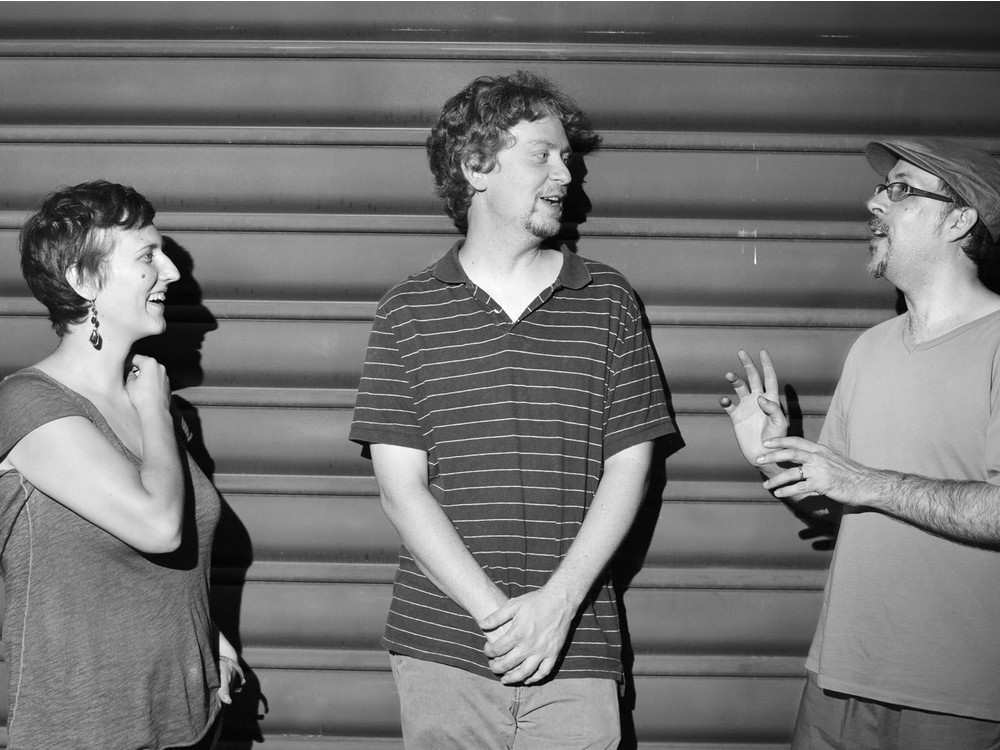
Although you might mistake the three men in the photo on the left as cast members of "Law & Order" (pick a version), it's actually (from left to right) Ernesto Cervini (drums, percussion, reeds), Daniel Fortin (bass), and Chris Donnelly (piano, synth, Fender Rhodes, spoons) - collectively, they are known as Myriad3. In Fall of 2018, the trio released its fourth album "Vera" (Alma Records) and the music continues the ensemble's adventures in sound. Earlier albums leaned towards the modern trio sounds of The Bad Plus but this recording is certainly the trio's most inventive and personal document.
Pay attention to the opening three tracks. Each song tells a story. Donnelly's "Pluie Lyonnaise" is a ballad that has a long introduction with the pianist sticking to chords and the rhythm section creating a solid foundation. The trio does not rush, takes it time to set the mood before Donnelly takes a classically inspired jaunt. The bass and drums return playing the original tempo and the pianist dances above them. "Tamboa" starts out with hand percussion then the piano picks up on the rhythm. Soon, Cervini is pushing the tempo on drums. Then, there's a bass solo that leads to a slower-paced piano solo. Obviously, there's a lot going on here and it strikes this listener that the trio push and prod each other so that the music is not stale. The third track, "Ward Lock", builds off the simple figures created by the bass and piano. Cervini's splendid cymbal work surround the lovely child-like melody played by the piano before the trio moves into the solo section Pay attention to how the musicians are listening to each other, they are all creating the story together.
I could continue, telling you how lovely the following track, "Diamond", but you should discover this for yourself. If you like piano and willing to move away from the styles of Bill Evans, Fred Hersch, Oscar Peterson, Brad Mehldau and so many others, you will hear music on "Vera" that will renew your faith in creative music. Myriad3 writes its own material (one exception here is Igor Stravinsky's delightful "Piano-Rag-Music"), they usually play the songs on the road before heading into the studio, and one can tell these pieces are not thrown together for the sake of the recording. Sit with this music, let it flow over you but pay attention - the band does not take short cuts, they don't fill space for the sake of an album, and each piece has its own story. Took a while for me to discover the beauty and joy in this music. I needed to slow down, take a breath, throw away expectations, and just listen. "Vera" is delightful from start to finish - just give the music a chance.
For more information, go to www.myriad3.com.
Listen to this track - have fun:
Showing posts with label piano quartet. Show all posts
Tuesday, January 29, 2019
Thursday, October 27, 2016
Music That Moves (Live) & On CD
![]() |
| NY Times |
This Friday (October 28), the Matt Mitchell Quartet will come to New Haven to perform in the Fall 2016 Concert Series at Firehouse 12, 45 Crown Street. They will perform 2 sets - 8:30 and 10 p.m. - featuring the music from "Vista Accumulations." Another one of the reasons the album sounds so good is how alive the music sounds. I imagine the Quartet sounds even better in person.
For ticket information, go to firehouse12.com or call 203-785-0468. To fond out more about this very busy musician - he is a member of Tim Berne's Snakeoil, Rudresh Mahanthappa's Bird Calls, the Dave Douglas Quintet, and works with artists such as , saxophonist Darius Jones, John Hollenbeck, and multi-reed artist Anna Webber (see below) - go to www.mattmitchell.us.
Here's the Quartet in action:
**********************************
As stated above, Mr. Mitchell works with Anna Webber, the saxophonist, flutist, and composer from British Columbia, Canada. Along with another one of the collaborators mentioned above, drummer and percussionist John Hollenbeck, they make up Anna Webber's Simple Trio, named for the ensemble's "SIMPLE" CD released by Skirl Records. Skirl has just released the Trio's second effort "Binary" and it's a powerful followup to the group's debut album. The saxophone-piano-drums trio is an interesting blend not often heard bit it works wonderfully with these musicians. The 12 tracks, all composed by Ms. Webber, blend short and long pieces, most with a sense of urgency that pins the listener to the chair. Half the tracks are short (none over 3:35 and four under 2 minutes) "Rectangles" which could be group improvisations. Several, including "Rectangles 3a" and "Rectangles 3c", are powerful statements, built upon the insistent rhythms the trio creates. Yet "Rectangles 1a" that closes the program is a very quiet but still jarring tenor sax-led ballad.
![]() |
| Peter Hum |
![]() |
| fullyaltered.com |
For more information, go to www.annakristinwebber.com or skirlrecords.com/anna-webber/.
Here's the opening track (and the obligatory "kitten" video!):
Guitarist Michael Musillami and bassist Rich Syracuse are both veterans of the music, putting in decades of travel, recording, practice, and teaching. Yet, they did not begin playing together until 2015. The guitarist has spent the last 2 decades at the helm of Playscape Recordings, touring with his trio of Joe Fonda and George Schuller, augmenting them with guest soloists. The bassist is best known for his long associations with baritone saxophonist Nick Brignola and pianist Lee Shaw.
Musillami and Syracuse just released their debut album, "Of The Night: the Music of Wayne Shorter" (Playscape) and it's quite a charmer. It's the second excellent recording of Mr. Shorter's music released in the last few months - Denny Zeitlin's "Early Wayne" being the other - and illustrates just how influential a composer the saxophonist is. Miles Davis gets plenty of credit for the music he created in the 1950s and 60s (deservedly) but one feels that the compositions of Mr. Shorter will inspire musicians for generations to come. Why? Because of the open quality of the pieces. Listen to 13 minute "Footprints" that opens the duo's album. Notice how the guitar and bass converse, how they play with and support each other and also play counterpoint to each other. The expansive melody line and the chordal blueprint opens up so many exploratory avenues for these musicians and they do waste any opportunities.
"Of the Night" has the feel of a late-night session but one that the participants had been thinking about for a while. Michael Musillami and Rich Syracuse are certainly veterans but they play with the joy and energy of musicians half their age. Doesn't hurt that their explorations take place in the world of Wayne Shorter, a composer and musician whose music has inspired players and listeners for over five decades, music that opens so wide it allows for many different interpretations. This is a delightful album that will yield many hours of listening pleasure.
For more information, go to playscape-recordings.com.
Tuesday, April 12, 2016
Sweet Sounds of Spring Live + CD Picks
At the risk of sounding like a broken record (explain that to your children), The Side Door Jazz Club goes from strength to strength. This weekend, 2 great pianists and their ensembles will brighten the Shoreline nights. On Friday (4/15), pianist and composer Renee Rosnes will play at the Old Lyme venue. Hot on the heels of her new CD, "Written In the Rocks" (Smoke Sessions), arguably the finest album of her career (which is now in its third decade), the pianist will bring 2 of the musicians from the recording, vibraphonist Steve Nelson and bassist Peter Washington as well as the wonderful drummer Lewis Nash.
The CD, (pictured left) which also features reed master Steve Wilson and drummer Bill Stewart, sounds contemporary and timeless. Ms. Rosnes' "The Galapagos Suite" makes up the bulk of the program; it's an ode to evolution and the natural sciences. Her compositions all have strong melodic lines yet leave plenty of room for great improvisations. The songs have power while the interactions of the musicians, especially the rhythm section, are often riveting, each person a storyteller. Here's the opening line from a review by WBGO-FM's Gary Walker - "If I wanted to be a great writer, I would make a deal with the devil to be able to tell a story the way Renee Rosnes does when she sits at the piano." No argument here.
The Renee Rosnes Quartet will play two sets with the first commencing at 8:30 p.m. To make a reservation, call 860-434-0886.
Here's the title track:
On Saturday night, Jan and Ken welcome pianist and composer Manuel Valera. He's played the venue before with the New Cuban Express but, this time, the Cuban-born Valera brings the rhythm section of Ben Street (bass) and the delightful drummer Clarence Penn (a true master of "groove" who blends power and subtlety like few of his contemporaries). Valera's last Trio album was recorded in 2014 at New Haven's Firehouse 12 (watch the video below) and features EJ Strickland (drums) and Hans Glawischnig (bass). I love how the pianist lets loose in the Trio setting and, with such empathetic colleagues, the music really goes many different ways while maintaining the rhythmic excitement.
The Manuel Valera Trio hits The Side Door stage at 8:30 p.m. For tickets and more information, go to thesidedoorjazz.com. To learn more about the pianist and his career, go to www.manuelvalera.com.
Firehouse 12 in New Haven welcomes drummer and composer Ari Hoenig & Trio on Friday (4/15). Joining him will be pianist Nitai Hershkovits and drummer Or Bareket, both natives of Israel and both busy as sidemen and as leaders. Neither musician is on Hoenig's latest (and self-released) CD, "The Pauper and the Magician" but have worked with the drummer in the past. Hoeing is quite an expressive and expansive player yet never gets in the way of fellow musicians. As a composer, he writes pieces that grow organically from both the rhythm and the melody, leaving plenty of room for improvisations and interactions.
The Ari Hoenig Trio will play two sets - 8:30 and 10 p.m. (separate admission for each set) - for more information, go to firehouse12.com or call 203-785-0468. To find out more about the leader, go to arihoenig.com.
********************************************************
Tenor saxophonist and composer Kirk MacDonald is a veteran of the Canadian jazz scene (yes, there is a busy scene up North) where he's been involved ensembles big and small for the past three decades. "Symmetry" (Addo Records) is a release from late 2013 that just seeing the light of day in the US and finds the saxophonist in the company of pianist Brian Dickinson, bassist Neil Swainson, and drummer Dennis Mackrel plus guest Tom Harrell (trumpet and flugelhorn. All the tracks come from the pen of the leader. The ten tracks cover over 76 minutes leaving plenty of time for lengthy, but never boring, solos. This is also Mackrel's first time recording with MacDonald and he displays his formidable talent throughout, teaming up with Swainson and Dickinson to keep the music flowing beneath the front line. The appropriately named "Mackrel's Groove" is a spotlight for how well he can drive a band - his interactions with the leader near the close of the tracks explodes out of the speakers. Harrell shines throughout as well. His delicate flugelhorn lines on "Shadows" are lyrical while he takes a rollicking solo on "Bop Zone." The leader swings lustily on many of his solos, displaying a style that is built off the foundations of Sonny Rollins (and I hear both John Coltrane and Chris Potter in some of his phrases as well).
Kirk MacDonald is a busy musician and educator (he has been on the faculties of McGill University and University of Toronto - he now is a full time Professor at Humber College in Toronto, CA) with a resumé that speaks to his versatility as a player and community member. "Symmetry" is a lively collection of songs that, despite its length, eschews cliches and trite phrases which displaying the power of working together and a love for what you do. For more information, go to kirkmacdonald.com.
Pianist Steve Kuhn (born 3/24/1938) has been active on the contemporary music scene since the mid-1960s. While at Harvard, he worked with Chet Baker and Coleman Hawkins. Kuhn then played in John Coltrane's Quartet right before McCoy Tyner, recorded a series of fine albums for both ECM (including several with vocalist Sheila Jordan) and Concord Jazz in the 70s and 80s (returning to Manfred Eicher's label in the 2000s) and has a number of CDs on the Japanese Venus label. In 2012, ECM released "Wisteria", a studio album with electric bassist Steve Swallow and drummer Joey Baron.
"At This Time" find the trio of Kuhn, Swallow, and Baron on the Sunnyside label. The hour-long program (7 standards and 2 Kuhn originals), recorded in August of 2015, is quite enjoyable. The pianist and bassist have a long association, know how to work together to support each other as well as provide freedom of expression. Add Baron to the mix and this recording really sparkles. The Trio really swings on several tracks including the opener, "My Shining Hour" and on Kurt Weill's "This Is New" (from the 1941 musical "Lady In the Dark"). Swallow's thick electric tone and Baron's splendid cymbal work give Kuhn a fine cushion and he plays with abandon on both tracks, really digging into his solos. Among the ballads, Quincy Jones' (Theme from) "The Pawnbroker" stand out for its lyricism and the Latin groove under the piano solo. Kuhn's composition "The Feeling Within" is a handsome solo piano performance that one easily gets lost in. The trio takes a gentle, wistful, and bluesy stroll through Leonard Bernstein's "Lonely Town" (from "On the Town") and close the album with a sweet take of Gil Fuller's "I Waited For You."
At 78, Steve Kuhn continues to perform at the height of his talents as does Steve Swallow (75 years old). If you decide to just let "At This Time" play in the background, it's delightful; if you sit and pay attention, the interactions really jump out as do the melodies. Also, listen to how expansive Joey Baron (the young one at 60) plays on the uptempo tracks and his sweet brush work on several of the ballads (especially on "Carousel" from the British composer Duncan Lamont). As I have noted many times, there are plenty of piano trio recordings available on the market; there are few as enjoyable as this new disk from Steve Kuhn.
For more information, go to stevekuhnmusic.com.
Here's this delightful trio in action from 2014:
The CD, (pictured left) which also features reed master Steve Wilson and drummer Bill Stewart, sounds contemporary and timeless. Ms. Rosnes' "The Galapagos Suite" makes up the bulk of the program; it's an ode to evolution and the natural sciences. Her compositions all have strong melodic lines yet leave plenty of room for great improvisations. The songs have power while the interactions of the musicians, especially the rhythm section, are often riveting, each person a storyteller. Here's the opening line from a review by WBGO-FM's Gary Walker - "If I wanted to be a great writer, I would make a deal with the devil to be able to tell a story the way Renee Rosnes does when she sits at the piano." No argument here.
The Renee Rosnes Quartet will play two sets with the first commencing at 8:30 p.m. To make a reservation, call 860-434-0886.
Here's the title track:
On Saturday night, Jan and Ken welcome pianist and composer Manuel Valera. He's played the venue before with the New Cuban Express but, this time, the Cuban-born Valera brings the rhythm section of Ben Street (bass) and the delightful drummer Clarence Penn (a true master of "groove" who blends power and subtlety like few of his contemporaries). Valera's last Trio album was recorded in 2014 at New Haven's Firehouse 12 (watch the video below) and features EJ Strickland (drums) and Hans Glawischnig (bass). I love how the pianist lets loose in the Trio setting and, with such empathetic colleagues, the music really goes many different ways while maintaining the rhythmic excitement.
The Manuel Valera Trio hits The Side Door stage at 8:30 p.m. For tickets and more information, go to thesidedoorjazz.com. To learn more about the pianist and his career, go to www.manuelvalera.com.
Firehouse 12 in New Haven welcomes drummer and composer Ari Hoenig & Trio on Friday (4/15). Joining him will be pianist Nitai Hershkovits and drummer Or Bareket, both natives of Israel and both busy as sidemen and as leaders. Neither musician is on Hoenig's latest (and self-released) CD, "The Pauper and the Magician" but have worked with the drummer in the past. Hoeing is quite an expressive and expansive player yet never gets in the way of fellow musicians. As a composer, he writes pieces that grow organically from both the rhythm and the melody, leaving plenty of room for improvisations and interactions.
The Ari Hoenig Trio will play two sets - 8:30 and 10 p.m. (separate admission for each set) - for more information, go to firehouse12.com or call 203-785-0468. To find out more about the leader, go to arihoenig.com.
********************************************************
Tenor saxophonist and composer Kirk MacDonald is a veteran of the Canadian jazz scene (yes, there is a busy scene up North) where he's been involved ensembles big and small for the past three decades. "Symmetry" (Addo Records) is a release from late 2013 that just seeing the light of day in the US and finds the saxophonist in the company of pianist Brian Dickinson, bassist Neil Swainson, and drummer Dennis Mackrel plus guest Tom Harrell (trumpet and flugelhorn. All the tracks come from the pen of the leader. The ten tracks cover over 76 minutes leaving plenty of time for lengthy, but never boring, solos. This is also Mackrel's first time recording with MacDonald and he displays his formidable talent throughout, teaming up with Swainson and Dickinson to keep the music flowing beneath the front line. The appropriately named "Mackrel's Groove" is a spotlight for how well he can drive a band - his interactions with the leader near the close of the tracks explodes out of the speakers. Harrell shines throughout as well. His delicate flugelhorn lines on "Shadows" are lyrical while he takes a rollicking solo on "Bop Zone." The leader swings lustily on many of his solos, displaying a style that is built off the foundations of Sonny Rollins (and I hear both John Coltrane and Chris Potter in some of his phrases as well).
![]() |
| ottawacitizen.com |
Pianist Steve Kuhn (born 3/24/1938) has been active on the contemporary music scene since the mid-1960s. While at Harvard, he worked with Chet Baker and Coleman Hawkins. Kuhn then played in John Coltrane's Quartet right before McCoy Tyner, recorded a series of fine albums for both ECM (including several with vocalist Sheila Jordan) and Concord Jazz in the 70s and 80s (returning to Manfred Eicher's label in the 2000s) and has a number of CDs on the Japanese Venus label. In 2012, ECM released "Wisteria", a studio album with electric bassist Steve Swallow and drummer Joey Baron.
![]() |
| John Rogers/ECM |
At 78, Steve Kuhn continues to perform at the height of his talents as does Steve Swallow (75 years old). If you decide to just let "At This Time" play in the background, it's delightful; if you sit and pay attention, the interactions really jump out as do the melodies. Also, listen to how expansive Joey Baron (the young one at 60) plays on the uptempo tracks and his sweet brush work on several of the ballads (especially on "Carousel" from the British composer Duncan Lamont). As I have noted many times, there are plenty of piano trio recordings available on the market; there are few as enjoyable as this new disk from Steve Kuhn.
For more information, go to stevekuhnmusic.com.
Here's this delightful trio in action from 2014:
Saturday, January 23, 2016
Pianists to the Fore
When one stops to think about it, 2016 is a heady time for piano trios. From Fred Hersch to The Bad Plus, Keith Jarrett's Standards Trio to 3-somes led by Kenny Barron, Kenny Werner, Yaron Herman, Shai Maestro, Romain Collin and Jason Moran (and so many more), all kinds of musicale being made around the world every night and day. It's not just economics, I think, but a logical evolution of the music from the days of Errol Garner, George Shearing, Bill Evans and the seemingly indefatigable Ahmad Jamal (85 years old).
Throw into that mix the fine pianist Bill Charlap. Over the past 18 - almost 19 - the pianist has led a trio featuring bassist Peter Washington and drummer Kenny Washington (no relation) . Together, they have issued a series of recordings for Blue Note Records and on the Venus label from Japan (Charlap has recorded several CDs for the label with bassist Jay Leonhardt and drummer Bill Stewart under the monicker New York Trio). In 2015, the Charlap Trio backed Tony Bennett on the "The Silver Lining: The Songs of Jerome Kern."
Charlap and the Washingtons will be in residence this Friday and Saturday night (1/29-30) at The Side Door Jazz Club in Old Lyme, CT. They'll play several sets of music, new and old, and they;ll do so melodically yet with a rhythmic fire. Would not be surprised if the shows are sold out so call 860-434-0886 or go to thesidedoorjazz.com to get your name on the list.
The following Friday (Feb. 5), guitarist Lionel Loueke brings his Trio to Old Lyme and you won't ant to miss that show!
************************************************
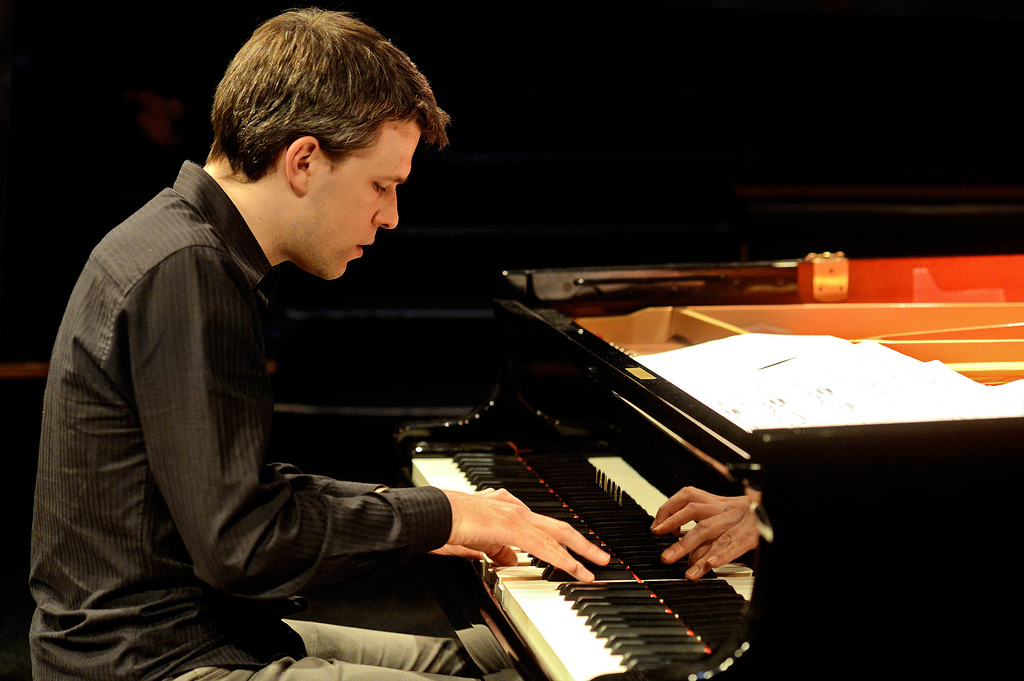
Before recording his 3 CD as a leader, pianist and composer Florian Hoefner moved from New York City to St. John's, Newfoundland, Canada. He had been in tumult of the Big Apple since relocating from Berlin, Germany, in 2008 to study at the Manhattan School of Music. Hoefner had already recorded several albums in Germany with a quartet known as Subtone as well as a pair of CDs with saxophonist Roman Ott (one disk featured guitarist Kurt Rosenwinkel with whom the pianist had studied.) Those experiences helped him with his vision for his original music and the subsequent "sound" of his own band.
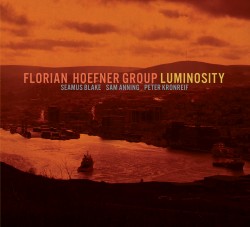
His debut recording as a leader , "Songs Without Words", was issued in 2012 on the Seattle, WA-based OA2 Records label as was 2013's "Falling Up." His quartet, dubbed the Florian Hoefner Group, included bassist Sam Anning, drummer Peter Knonreif, and saxophonist Mike Ruby. He has moved to OA2's mother label Origin Records for his new album, "Luminosity", 8 songs that feature the same rhythm section but now finds Seamus Blake on saxophones. The music reflects his move to the Northern climes with pieces such as the exciting "Newfound Jig", the introspective "North Country" and the brilliant (as in the quality of light in St. John's) title track. The blend of Blake's soprano sax (he is beholden to no one for his singular sound) and the rippling piano lines plus the highly sympathetic rhythm section make that track stand out. The "Jig" shows its Irish roots at the outset before the band moves into more of a "swing" beat - yet, listen to how Kronreif takes the music in unexpected directions without anyone losing his way.
One hears the influence of the Keith Jarrett European Quartet in the high energy of "Elements" and, even there. the music takes a quick turn into a melodic bass solo. When the pianist reenters, the intensity slowly but assuredly returns, propelled by the active rhythm section. After another downshift, Blake enters on tenor saxophone, easily dancing atop the shifting rhythmic landscape. The saxophonist effortlessly shifts into higher gear without losing his melodic side.
All of the 8 tracks (all Hoefner originals) clock in over 5 minutes; still, the composer and the band do not just play the theme and rush into long solos. Listen for the interplay, as this is a band that has logged serious "stage time", and you can hear how supportive they are. Sure they can "blow" - all 4 have a great time on "The Bottom Line" - but everything is played with a purpose with the sense of a group sound.
"Luminosity" will hold your interest with its expansive melodies, its fine rhythm section, and intelligent solos. The Florian Hoefner Group is a "working band" and it shows in the care they and creativity they give to this music. For more information, go to www.florian-hoefner.com.
Give a listen to the title track:
Over the past decade+, Cuban-born pianist and composer Aruán Ortiz has been impressing audiences and critics alike with his lively piano playing and impressive blend of Cuban, Latin and African rhythms. His 2013 recording with bassist Michael Janisch, "Banned In London", released on Janisch's Whirlwind Recordings, stood out for many reasons, not the least of which was the pianist's lively interactions with saxophonist Greg Osby. He's worked and recorded with trombonist Steve Turre, trumpeter Wallace Roney, and bassist Esperanza Spalding (among others).
![]() |
| Bluenote.com |
Charlap and the Washingtons will be in residence this Friday and Saturday night (1/29-30) at The Side Door Jazz Club in Old Lyme, CT. They'll play several sets of music, new and old, and they;ll do so melodically yet with a rhythmic fire. Would not be surprised if the shows are sold out so call 860-434-0886 or go to thesidedoorjazz.com to get your name on the list.
The following Friday (Feb. 5), guitarist Lionel Loueke brings his Trio to Old Lyme and you won't ant to miss that show!
************************************************
Before recording his 3 CD as a leader, pianist and composer Florian Hoefner moved from New York City to St. John's, Newfoundland, Canada. He had been in tumult of the Big Apple since relocating from Berlin, Germany, in 2008 to study at the Manhattan School of Music. Hoefner had already recorded several albums in Germany with a quartet known as Subtone as well as a pair of CDs with saxophonist Roman Ott (one disk featured guitarist Kurt Rosenwinkel with whom the pianist had studied.) Those experiences helped him with his vision for his original music and the subsequent "sound" of his own band.
![]() |
| photo by Krysta Brayer |
One hears the influence of the Keith Jarrett European Quartet in the high energy of "Elements" and, even there. the music takes a quick turn into a melodic bass solo. When the pianist reenters, the intensity slowly but assuredly returns, propelled by the active rhythm section. After another downshift, Blake enters on tenor saxophone, easily dancing atop the shifting rhythmic landscape. The saxophonist effortlessly shifts into higher gear without losing his melodic side.
All of the 8 tracks (all Hoefner originals) clock in over 5 minutes; still, the composer and the band do not just play the theme and rush into long solos. Listen for the interplay, as this is a band that has logged serious "stage time", and you can hear how supportive they are. Sure they can "blow" - all 4 have a great time on "The Bottom Line" - but everything is played with a purpose with the sense of a group sound.
"Luminosity" will hold your interest with its expansive melodies, its fine rhythm section, and intelligent solos. The Florian Hoefner Group is a "working band" and it shows in the care they and creativity they give to this music. For more information, go to www.florian-hoefner.com.
Give a listen to the title track:
Over the past decade+, Cuban-born pianist and composer Aruán Ortiz has been impressing audiences and critics alike with his lively piano playing and impressive blend of Cuban, Latin and African rhythms. His 2013 recording with bassist Michael Janisch, "Banned In London", released on Janisch's Whirlwind Recordings, stood out for many reasons, not the least of which was the pianist's lively interactions with saxophonist Greg Osby. He's worked and recorded with trombonist Steve Turre, trumpeter Wallace Roney, and bassist Esperanza Spalding (among others).
For his new album, "Hidden Voices" (Intakt Records), he joins forces with bassist Eric Revis (Branford Marsalis Quartet, Tarbaby) and drummer Gerald Cleaver (Craig Taborn, Joe Morris, Roscoe Mitchell) to fashion a most fascinating sound. The 10-song program includes 6 originals, one collective improvisation, a medley 2 Ornette Coleman works ("Open & Close/The Sphinx"), "Skippy" by Thelonious Monk and a Cuban standard "Uno, Dos, y Tres, Que Paso Más Chévere" done as a piano solo. That final song (also the last track on the disk, composed by Rafael Ortiz (no relation), is described by leader as a tune “everybody in Cuba knows from festivities and carnivals." The younger Ortiz gives the song an abstract feel, hinting at the rhythm and the pianist caressing the melody.
![]() |
| Photo by Michael Weintrob |
Elsewhere. Ortiz and company create an open-ended program, from the disjointed yet funky opener "Fractal Sketches" to the inventive re-imagining of "Skippy." On the latter track, Revis propels the music from the bottom while Cleaver and Ortiz spin fascinating webs from the spiky melody. The pianist pushes the melody up and down (at times, sounding somewhat like Matthew Shipp) while the piece rumbles forward. "Caribbean Vortex/Hidden Voices" features the insistent claves of Arturo Stable and Enildo Rasúa, the rhythms supporting the rapid-fire snare work of Cleaver and clanging left hand of the pianist. As the piece moves forward, the piano solo grows in intensity but the rhythms stay steady and solid. The hypnotic single-note piano leads one into "Analytical Symmetry", a piece that opens slowly like a flower then explodes for just a moment before moving inward for a bass - piano dialogue. The 2-part "Arabesques of a Geometrical Rose" opens with a piano solo. Subtitled "Spring", the melody, in places, reminds this writer of Monk in its uncommon beauty. Part 2, "Summer", brings back the rhythm section for a blues-drenched reinterpretation of the initial melody. Revis's thick bass tones and Cleaver's active drumming propel the pianist into a series of short single-note runs interspersed with "dark" chords.
Repetition is important to many of these pieces - the piano lines often dictate the rhythms that Gerald Cleaver expands upon while the often-furious bass lines of Eric Revis work in counterpoint to active hands of Aruán Ortiz. "Hidden Voices" may refer to the Cuban artists, poets, playwrights, and musicians who have had to maintain personal and artistic silence for most of the Castro dictatorship. This powerful music now belongs to the world. For more information, go to www.aruan-ortiz.com.
Here's the Trio in concert 6 months before the recording date:
Labels:
CD Picks,
Live Music,
piano quartet,
piano trio,
The Side Door Jazz Club
Wednesday, March 11, 2015
Soul and Searching
Composer, arranger and pianist Ted Howe is a native of Boston, Massachusetts, a graduate of the Berklee School of Music (where he also taught) and has recorded 3 small group CDs for Summit Records. "Pinnacle" (Hot Shoe Records) is the recorded debut of the Ted Howe Jazz Orchestra. The 16-piece ensemble mainly features musicians from the Atlanta with the exception of bassist John Patitucci (who has worked with Howe in the past) and LA-based trombonist Andy Martin. The program is divided into 4 pieces written between 2011-12 and the 3-part "Suite #1 for Jazz Orchestra", a work that Howe began working on in 1980 within former teacher Herb Pomeroy. The 18-minute "Suite.." takes up over 1/3rd of the album and is an exercise in multiple tempos, sound manipulation and a variety of textures from the majority of the musicians (for instance, alto saxophonist Sam Skelton also doubles soprano sax, flute and clarinet while Geoff Haydon plays both acoustic piano and Rhodes). What stands about this work (and, for that fact, the rest of the recording) is how Howe concentrates on melody, harmony and the blending of textures and not so much on spotlighting soloists. There is a "pop" sensibility to sections of the melody in all 3 parts as well as how drummer Marlon Patton not only drives the band but also frames the pieces. Having Patitucci and his thick electric bass tones securing the "bottom" is another plus.
While all the songs have names usually reserved for classical pieces, there is no doubt this is a jazz album. After a solemn rubato opening to "Presto for Two Trombones", the rhythm section kicks into high gear and the reeds share the melody with trombonists Martin and Francisco Torres. "Impromptu for Trumpet" opens with the composer on piano then moves into a dialogue with the trumpet of Lester Walker. Soon, the rest of the Orchestra enters and the ballad moves in a Brazilian direction. As the trumpeter's solo builds in intensity, his cohorts move with him. Howe takes the lead again on "Adagio For Piano"; while he is the only soloist (and he shines in this spotlight) on the track, the writing for the various sections is colorful, used to move the piece forward. Kudos to the excellent work on acoustic guitar by Dan Baraszu. The program closes with the funky and forceful "Etude for Three Clarinets". Patitucci and Patton really ignite the piece and the clarinet work of Skelton, Don Erdman and and Seth Kuehn (on bass clarinet) is engaging.
"Pinnacle" is dedicated to Herb Pomeroy and inspired by the multi-faceted career of Duke Ellington. The music is lively and smart, the musicians engaged and focussed; what the project is not is an imitation of the Ellington oeuvre. Ted Howe waited a long time to document this music and the results are charming. For more information, go to www.hotshoesrecords.com.
For "The Left Side of the Moon" (self-released), her 3rd CD as a leader, pianist/composer Chantale Gagné not only returns to the tried-and-true rhythm section of her previous releases - Peter Washington (drums) and Lewis Nash (drums) - but also adds the evocative sounds of Steve Wilson (soprano and alto saxophones, flute).
It's been 4 years since her sparkling "Wisdom Of The Water" CD; listening to the new disk alongside the older one shows that, if anything, Ms. Gagné has matured even more as a composer and as a musician. She has such a lovely touch on ballads such as the title song (which features the lovely soprano sax work of Wilson) yet is not afraid to let the music go in unexpected directions. Halfway through the piece, the tempo doubles, the intensity increase and the rhythm section drives the piece forward. There is a stateliness to the melody of "A la claire Fontaine" (a duo for soprano and piano) but, once into her solo, the pianist takes a rhythmic approach to her playing, setting the stage for a saxophone solo that soars over her powerful chords. Wilson's flute adds another sonic dimension to "Up Again", a touch of blues and longing. The piano solo is deliberate over the counterpoint of the bass and dancing brush work.
The uptempo pieces have a power in both the rhythm and the melody lines. "Mystère" opens the program and is the only trio piece yet it still sets the scene for what follows. Dramatic piano chords are all one hears until Washington and Nash come in setting a driving beat. But Ms. Gagné soon changes the intensity and song ebbs and flows forward. "Your Blues is My Blues" is just that, a joyful blues romp with delightful drums and walking bass laying the foundation for the pianist and alto saxophonist to swing their souls. Another "danceable" work is "Just a Dream", this time a seductive tango, with Nash leading the band through its paces. There is also a Latin feel to "Moon Gazing" (plus a glorious moment of "swing" now and then) with Wilson's soprano swooping and diving over the responsive rhythm section. One hears traces of earlier jazz styles (50s and 60s) on "Echoes", another vehicle for the vivid soprano sounds plus an expansive piano solo.
"The Left Side of the Moon" comes to a close with the short (95 seconds) unaccompanied piano piece, "Roach Rag." It's a light-hearted sendoff to an album that is the most emotionally rich recording that Chantale Gagné has made thus far in her relatively short career. She has built such a strong musical relationship with Peter Washington and Lewis Nash; there are several moments when it seems the 3 breathe together. Adding Steve Wilson to the mix provided the composer several new sounds to work with and the results are splendid indeed. For more information, go to www.chantalgagne.com.
Here's "After You":
Here's a delightful idea. Conceived in living rooms and small performance spaces, the Susan Krebs Chamber Band makes intimate jazz that swings, sways, soars but never roars. "Simple Gifts" (GreenGig Music) finds Ms. Krebs voice in collaboration with piano (Rich Eames), violin/viola (Paul Cartwright), percussion (Scott Breadman) and the many reeds of Rob Lockart (tenor and soprano saxophones, bass clarinet, flute).
The program starts with the easy loping beat of "Let's Call a Heart a Heart"; the rich vocal gets great support from the bluesy piano, swooping violin, the tenor and bass clarinet and the percussion. Breadman makes the most of his small trap set (cajon, hand percussion and cymbals), propelling the band forward with ease and pizazz. The melody and arrangement of Jimmy Rowles' "Looking Back" may remind some of the sound Sting created for his song "Russians" (but without the angst of Brecht/Weill that one hears in the later piece.) Cartwright strums his violin to set the rhythm on Sergio Mendes's "So Many Stars", working in tandem with the piano and percussion while the soprano dances around the voice. A gypsy feel permeates the band's interpretation of Abbey Lincoln's "Throw It Away", with Cartwright's rich violin lines flying above the growling bass clarinet and dancing rhythms of percussion and piano. Eames take a dazzling solo on "For All We Know" while Ms. Krebs delivers a dramatic vocal. At times, there is a theatrical nature to her approach to the lyrics; that works very well on pieces like "For All We Know" and "Once Upon A Summertime." The violin also has that quality on the pieces so the sounds match well.
The CD close with the title track, the Shaker traditional that Aaron Copland used to such great effect in "Appalachian Spring." This version has the feel of a Bruce Hornsby song, most noticeable in the saxophone and piano. Lockart's vibrant solo reverberates in a similar fashion to what Jan Garbarek created in "Witchi-Tai-To" in 1970. Again, Breadman's work is exemplary as he not only sets the pace but knows how to push the soloist.
"Simple Gifts" is intimate yet expansive, playful yet emotionally strong, music to lift your spirits. Through this music, one can hear how much fun The Susan Krebs Chamber Band has when they work together. And it's contagious. For more information, go to www.susankrebsmusic.com.
While all the songs have names usually reserved for classical pieces, there is no doubt this is a jazz album. After a solemn rubato opening to "Presto for Two Trombones", the rhythm section kicks into high gear and the reeds share the melody with trombonists Martin and Francisco Torres. "Impromptu for Trumpet" opens with the composer on piano then moves into a dialogue with the trumpet of Lester Walker. Soon, the rest of the Orchestra enters and the ballad moves in a Brazilian direction. As the trumpeter's solo builds in intensity, his cohorts move with him. Howe takes the lead again on "Adagio For Piano"; while he is the only soloist (and he shines in this spotlight) on the track, the writing for the various sections is colorful, used to move the piece forward. Kudos to the excellent work on acoustic guitar by Dan Baraszu. The program closes with the funky and forceful "Etude for Three Clarinets". Patitucci and Patton really ignite the piece and the clarinet work of Skelton, Don Erdman and and Seth Kuehn (on bass clarinet) is engaging.
"Pinnacle" is dedicated to Herb Pomeroy and inspired by the multi-faceted career of Duke Ellington. The music is lively and smart, the musicians engaged and focussed; what the project is not is an imitation of the Ellington oeuvre. Ted Howe waited a long time to document this music and the results are charming. For more information, go to www.hotshoesrecords.com.
For "The Left Side of the Moon" (self-released), her 3rd CD as a leader, pianist/composer Chantale Gagné not only returns to the tried-and-true rhythm section of her previous releases - Peter Washington (drums) and Lewis Nash (drums) - but also adds the evocative sounds of Steve Wilson (soprano and alto saxophones, flute).
It's been 4 years since her sparkling "Wisdom Of The Water" CD; listening to the new disk alongside the older one shows that, if anything, Ms. Gagné has matured even more as a composer and as a musician. She has such a lovely touch on ballads such as the title song (which features the lovely soprano sax work of Wilson) yet is not afraid to let the music go in unexpected directions. Halfway through the piece, the tempo doubles, the intensity increase and the rhythm section drives the piece forward. There is a stateliness to the melody of "A la claire Fontaine" (a duo for soprano and piano) but, once into her solo, the pianist takes a rhythmic approach to her playing, setting the stage for a saxophone solo that soars over her powerful chords. Wilson's flute adds another sonic dimension to "Up Again", a touch of blues and longing. The piano solo is deliberate over the counterpoint of the bass and dancing brush work.
The uptempo pieces have a power in both the rhythm and the melody lines. "Mystère" opens the program and is the only trio piece yet it still sets the scene for what follows. Dramatic piano chords are all one hears until Washington and Nash come in setting a driving beat. But Ms. Gagné soon changes the intensity and song ebbs and flows forward. "Your Blues is My Blues" is just that, a joyful blues romp with delightful drums and walking bass laying the foundation for the pianist and alto saxophonist to swing their souls. Another "danceable" work is "Just a Dream", this time a seductive tango, with Nash leading the band through its paces. There is also a Latin feel to "Moon Gazing" (plus a glorious moment of "swing" now and then) with Wilson's soprano swooping and diving over the responsive rhythm section. One hears traces of earlier jazz styles (50s and 60s) on "Echoes", another vehicle for the vivid soprano sounds plus an expansive piano solo.
"The Left Side of the Moon" comes to a close with the short (95 seconds) unaccompanied piano piece, "Roach Rag." It's a light-hearted sendoff to an album that is the most emotionally rich recording that Chantale Gagné has made thus far in her relatively short career. She has built such a strong musical relationship with Peter Washington and Lewis Nash; there are several moments when it seems the 3 breathe together. Adding Steve Wilson to the mix provided the composer several new sounds to work with and the results are splendid indeed. For more information, go to www.chantalgagne.com.
Here's "After You":
Here's a delightful idea. Conceived in living rooms and small performance spaces, the Susan Krebs Chamber Band makes intimate jazz that swings, sways, soars but never roars. "Simple Gifts" (GreenGig Music) finds Ms. Krebs voice in collaboration with piano (Rich Eames), violin/viola (Paul Cartwright), percussion (Scott Breadman) and the many reeds of Rob Lockart (tenor and soprano saxophones, bass clarinet, flute).
The program starts with the easy loping beat of "Let's Call a Heart a Heart"; the rich vocal gets great support from the bluesy piano, swooping violin, the tenor and bass clarinet and the percussion. Breadman makes the most of his small trap set (cajon, hand percussion and cymbals), propelling the band forward with ease and pizazz. The melody and arrangement of Jimmy Rowles' "Looking Back" may remind some of the sound Sting created for his song "Russians" (but without the angst of Brecht/Weill that one hears in the later piece.) Cartwright strums his violin to set the rhythm on Sergio Mendes's "So Many Stars", working in tandem with the piano and percussion while the soprano dances around the voice. A gypsy feel permeates the band's interpretation of Abbey Lincoln's "Throw It Away", with Cartwright's rich violin lines flying above the growling bass clarinet and dancing rhythms of percussion and piano. Eames take a dazzling solo on "For All We Know" while Ms. Krebs delivers a dramatic vocal. At times, there is a theatrical nature to her approach to the lyrics; that works very well on pieces like "For All We Know" and "Once Upon A Summertime." The violin also has that quality on the pieces so the sounds match well.
The CD close with the title track, the Shaker traditional that Aaron Copland used to such great effect in "Appalachian Spring." This version has the feel of a Bruce Hornsby song, most noticeable in the saxophone and piano. Lockart's vibrant solo reverberates in a similar fashion to what Jan Garbarek created in "Witchi-Tai-To" in 1970. Again, Breadman's work is exemplary as he not only sets the pace but knows how to push the soloist.
"Simple Gifts" is intimate yet expansive, playful yet emotionally strong, music to lift your spirits. Through this music, one can hear how much fun The Susan Krebs Chamber Band has when they work together. And it's contagious. For more information, go to www.susankrebsmusic.com.
Labels:
Big Band,
CD reviews,
chamber jazz,
piano quartet
Subscribe to:
Posts (Atom)