Showing posts with label Mary Halvorson. Show all posts

Wednesday, November 10, 2021

Five by Twos

Photo: John Rogers
Believe it or not, the duo of Dan Weiss (drums) and Miles Okazaki (guitar) has been together for 25 years playing with other musicians in various combinations; saxophonist and composer Ohad Talmor just issued his latest album "Mise en Place" (Intakt Records) with the duo serving as his musical partners. Both Weiss and Okazaki were commissioned to compose pieces for their duo by John Zorn's Stone Commissioning Series in early 2020; only the guitarist's eight-part "The Memory Palace" received its performance debut (2/26/2020). The drummer's debut of "Middlegame" was set for late March but was postponed due to the pandemic. 
 

Now Cygnus Recordings has issued the two suites on CD, digital download, and as a two-Lp set.  Aptly titled "Music for Drums and Guitar", the music is a fascinating amalgam of the two musicians various interests and how they communicate in sound.  Okazaki's 36-minute piece,  has moments of sly funky beats, throbbing grooves, flourishes of folk and classical influences, prog-rock and more. Plus there's a feeling of playfulness that inhabits pieces such as "Part II" and "Part IV" –– the guitarist digs in to the groove Weiss lays down and the dance forward.  The melody of "Part VII" is long but flows atop a river of percussion that builds in intensity until a flurry of guitar notes rain down on the frenetic drums.  "Part VIII" closes the suite slowly at first but the circular guitar riff begins to expand –– note how the snare echoes the rapid-fire guitar riffs. As the performance builds to a fiery climax, Okazaki steps on the "fuzz' pedal and the proceedings explode right up to the final chord.

Photo: John Rogers
Weiss's seven-part suite "Middlegame" displays all of his strengths without the music turning into a mere display of technique. First and foremost, not only does the drummer "swing", he is quite a melodic player. Note how "Parts I and II" set up the template for the rest of the work.  Weiss leads the guitarist in, all the while creating rhythms that have power and depth.  "Part III" finds the drums up front with Okazaki as the support and melodic foil. By the last 90 seconds of the piece, the guitarist is locked into the beat, his percussive lines in step with Weiss. The longest piece in the suite and on the album (12:52), "Part V", is also driven by the rhythms with the guitarist being the "foundation" while Weiss steps up.  The drummer moves in and around the guitar switching from swinging the beat to being "conversational" on his kit.  

Dig deeply into "Music for Drums and Guitar" and you will find a world of endless possibilities.  As stated above, Dan Weiss and Miles Okazaki have history together so they know each other's strengths.  There are no 'dead" spots in this program; instead, the music continues to move forward, slowly down now and then to contemplate textures and introspective interactions.  There's much to discover!!

For more information, go to www.milesokazaki.com/. To purchase the album, CD, or digital download, go to https://mfdag.bandcamp.com/. 

Here's "Part II" from each suite:


The duo of Mary Halvorson (guitar, effects) and Sylvie Courvoisier (piano) first recorded together on 2017's "Crop Circle" (Relative Pitch Records), a collection of tracks that highlighted each musicians strengths as well as how they intuitively move through both composed and improvised material.  In June of this year, the duo got back together and recorded the 12 tracks that make up the two musicians second album and debut for Pyroclastic Records.  "Search for the Disappeared Hour" features five pieces composed by the guitarist, four by the pianist, and three improvisations.  The music draws in the listener while also challenging one's expectations. 

Ms. Halvorson's "Golden Proportion" opens the program; the opening melody is played by the guitar supported by powerful piano chords and rippling runs. On occasion, the musicians venture outside the stated rhythm yet never lose sight of the main thrust of the music.  Listen carefully and, right before the end, you'll hear a quote from Beethoven.  The pianist's "Mind Out of Time" finds Ms. Halvorson experimenting with sounds from the guitar while Ms. Courvoisier plays a dark, 20th Century style classical background.  The guitarist's "Bent Yellow" has a piano rhythm that references the music of Robin Holcomb; note how both musicians move in and out of blues patterns from the middle of the track forward. there are splashes of humor, the playful interactions of the duo creating a lightness that's hard to ignore. 

Photo: Self-portrait
Among the many delights on the recording is how the duo frame melodies so that they stand out. "Gates & Passes" is a ballad that builds up from the opening long melody into a long, dissonant, guitar solo. Note how Ms. Courvoisier never changes her pace or mood building her solo off the song's handsome chord structure. "Party Dress", an impromptu piece by the duo, has such a gentle feel even with the extended reverb on the guitar. "The album's closing piece, "Blizzard Rings", is also an improvisation that sounds like a dream, one in which someone is in a room full of wind-up toys –– the piano and guitar move in and around each other through to the soft finish.

"Searching for the Disappeared Hour" is quite an aural adventure through the creative minds of Mary Halvorson and Sylvie Courvoisier. If you are a fan of the two musicians, the music will delight and surprise you; if you are new to their explorations, keep an open mind and notice how the duo feeds off each others ideas, energy, and melodies.  


Here's the opening track:


Photo: Steve Mullensky
Does the end of Daylight Savings Time get you down?  Knowing that the evening starts earlier and the night lasts longer truly bother you?  My prescription for surviving the next several months is a healthy dose of "Reconvexo". No, it's not a new drug like the ones you might see on the nightly newscasts –– it's actually the new Anzic recording by the duo of Anat Cohen (clarinet, bass clarinet, voice) and Marcello Gonçalves (7-string guitar, voice). Recorded in January of 2020 while the duo was quarantined in Rio de Janiero, the nine-song program features songs from the Música Popular Brasileira songbook.  Their debut collaboration, "Outra Coisa: The Music of Moacir Santos", came out in 2017 so this time, they decided to play songs by some of Brazil's most popular composers.  

The album opens with the title track. Composed by Caetano Veloso for his sister Maria Bethânia for a 1989 album, the song has been covered by a slew of artists.  It's a bright melody that Ms. Cohen exults in while Gonçalves provides not only support but a percussive drive that pushes the song forward. Veloso and Milton Nascimento co-wrote "Paula e Bebeto", an episodic piece where the guitar and clarinets (Ms. Cohen overdubs bass clarinet) share the melody before the pace slows down for a lovely clarinet solo. The brightness of the guitar is expertly recorded so that you marvel at the brilliant accompaniment and how the piece moves organically.  Nascimento had his hand in composing two other songs on the album; he composed the words for Fernando Brant's lovely "Maria, Maria" which comes from a 1978 album about the legacy of slavery in Brazil while "Ânima" (composed with Zé Renato) is the title track for the singer's 1982 album.  The performance is truly beautiful with a melody that sounds like birds singing on a Spring morning. 

Other composers included in the program are Dori Caymmi, Gilberto Gil, the team of Antonio Carlos Jobim and Luis Bonfa, the 19th Century Venezulean composer Heraclio Hernandez, and the team of Stevie Wonder and Syreeta Wright.  "Never Dreamed You's Leave in Summer" is the tune that closes the album –– the sparkling arrangement of the Wright/ Wonder song does not sound out of place in this delightful collection.

"Reconvexo" is splendid from start-to-finish, sounding lovely at any time of day (early morning as the sun rises works for me) –– the duo of Anat Cohen and Marcello Gonçalves has created a delight-filled alternative to moping and negativity. One should feel cleansed after listening to this music!

For more information, go to www.anatcohen.com/index. To hear more and to purchase the album, go to https://anatcohen.bandcamp.com/album/reconvexo.

Here's "Ânima":


Photo: Whitney George
There is something soothing about two steel-string guitarists playing through their way through a set of songs that makes you long for sitting around a fire soaking in the sounds.  Cameron Mizell and Charlie Rauh have played together for a number of years but never like they have over the eight-plus months it took the duo to record its second album, "Local Folklore" (Destiny Records).  Both players contributed five songs to the program and both recorded in their own studios.  Despite the "remote" recording, this music sounds bright, collaborative, highly melodic and harmonic with a wistful quality permeating the songs.  Mizell and Ruah are busy leaders on their own yet when they come together, their musical conversations feel like a respite from the road, a quiet evening lost in melody and stories.


That's what "Local Folklore" is, a melody-laden journey into the heart.  Mizell's title song leads off the program on a uptempo note,, the strumming guitars setting the pace for the well-crafted melody and the fine, articulate, solos that follow. Rauh's "Petey & Kyle" follows with its Beatles-like melody just begging for words.  Yet, you can tell this is a story of two friends walking through life together   Still, Mizell's pieces also have stories connected to them whether. When you just sit and listen, you probably know people who the guitarists describe with their instruments and melodies.

Mizell switches to electric on several tracks mostly for the sustain and effects that add atmosphere and an orchestral feel to pieces such as Rauh's "A Forgiving Sort of Place" and lovely "Arolen".   The sounds are not intrusive; instead they add a sense of shimmering light off a mountain lake to the songs.  On he album closing "On Sundays I Walk Alone", the overdubbed electric plays both rhythm and the theme while Rauh's acoustic plays counterpoint.

"Local Folklore" is music for early in the morning and late in the evening.  The melodies are soothing, the musicianship impressive, a cooperative journey into the human heart and soul.  Cameron Mizell and Charlie Rauh may have had to curtail their "live" shows in the pandemic but, judging by the quality of their new album, both musicians made good use of their time.  

For more information, go to www.cameronmizell.com/ and www.charlierauh.com.  To purchase the album, go to https://destinyrecords.bandcamp.com/album/local-folklore. 

Here's the sweet "Greenwood Waltz":  

Monday, November 9, 2020

Guitarists Galore (Part One)

         Growing up in the 1960s, guitar "heroes" were all the rage (for some of us).  There was Eric Clapton, Jimi Hendrix, Steve Miller, Carlos Santana, Ritchie Blackmore (Deep Purple), Peter Green, Buddy Guy, Jeff Beck, Jimmy Page, and so on.  Every one of these musicians has his own "style", critics and reviewers would argue who's the best or the flashiest or the most overrated/ underrated, and fans would chip in with their own opinions.  While that sort of hype has mostly dissipated, there are still a number of really fine artists from around the world adding their unique voices to the mix.

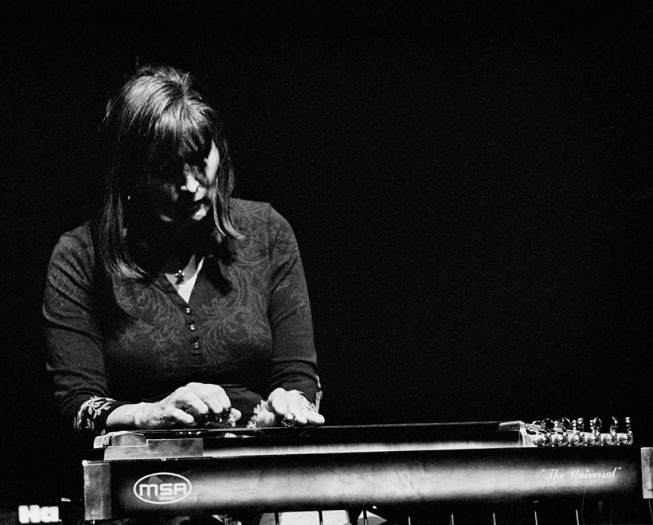
Pedal steel guitarist Susan Alcorn has been playing her instrument for over four decades. She was at a club in Chicago when she first heard the instrument and the sound fascinated her.  The next day, she purchased one and soon was playing in country bands around the Windy City. Moving to Houston, Texas, helped her to learn and to play Western Swing. Ms. Alcorn began to study jazz improvisation and a meeting with composer/ conceptualist/ performer Pauline Oliveros led to a collaboration that opened the eyes of the younger artists to a multitude of sounds and possibilities.  Subsequent meetings with Eugene Chadbourne and German bassist Peter Kowald led to more expansion of creativity; her first album date as a leader or co-leader was with guitarist Chadbourne in 1996––since then, she has issued eleven albums plus appeared on several more.  It was on guitarist Mary Halvorson's 2016 octet album "Away With You" that this writer first heard Ms. Alcorn and her work within that ensemble was ear and mind-opening.


The majority of her albums are solo but her new recording, "Pedernal" (Relative Pitch Records) features the pedal steel player with her friend Ms. Halvorson, bassist (and duo partner) Michael Formanek, violinist Mark Feldman, and drummer Ryan Sawyer.  The music, all composed by Ms. Alcorn, is often soft and slow; yet the quintet also gives the interactions power while creating intelligent, far-ranging, solos.  The title track opens the program.  It's a delightful blend of folk, country, classical, and blues influences with a touch of anarchy at times. The blend of electric and pedal steel guitars and players not afraid to stretch notes and ideas makes one pay closer attention. Feldman's sweet violin tone is a handsome –placed on the right side of the mix with Ms. Halvorson on the left (Ms. Alcorn is in the center), the violinist can both stand out and blend in.

Photo: Nicole Fara Silver
That opening song sets the tone for the entire album. "Circular Ruins" has a somber first several minutes before opening up to Ms. Halvorson's sparring with the bass and drums. A moment later, Feldman takes over the match.  The leader joins in as well.  "R.U.R." has a boppish feel in its quick tempo; its first set of solos features angular swift lines. The pace slows down in the second of the piece for a rubato, spacey, group of interactions, that break down to duos (pedal steel and drums, drums and guitar) and occasional interjections from the leader and violinist before returning to the main theme.

Photo: David Lobato
The centerpiece of the album is the 13+ "Night in Gdansk", a episodic piece that runs the gamut in dynamics, in melodic interplay, its interactions and counterpoint giving way to short unaccompanied transitions. There's mystery within this music, the plaintive violin melodies, the guitar duo with lines that connect then spin away from each other, how the drummer and bassist are both foundation and colorists to the sounds above them in the mix. There's a lot to take in on the initial listenings––hit "repeat" when you hit the final note, start over, and you will slowly but surely begin to see the overall shape of the piece.

The program closes with the delightful, playful, folk/bluegrass influenced "Northeast Rising Sun" where everyone gets to let loose.  Ms. Alcorn sits back, letting Ms. Halvorson and Mr. Feldman gleefully solo over the scampering rhythm section before she reenters her most playful solo.  A short, melodic, bass solo leads us back to the original melody and the sweet close.

Susan Alcorn and her excellent musical companions have produced a splendid album, emotionally rich yet adventurous, and ultimately satisfying. If you have never heard the pedal steel guitarist, start with "Pedernal" but make sure to check out her fascinating solo albums (2015's "Soledad", also on Relative Pitch Records, is especially rich music).  Pay attention and the rewards are copious.

For more information, go to www.susanalcorn.net/recordings.  To listen to more and purchase "Pedernal", go to https://relativepitchrecords.bandcamp.com/album/pedernal. 

Here's the opening track:


Photo: Oresti Tsonopoulos
Guitarist, composer, and educator Alex Wintz is one busy person. Between gigs with Etienne Charles, Roxy Coss, and Nick Finzer, his own trio, and private lessons, the California native (raised in New Jersey) stays quite busy.  The current pandemic has certainly slowed down the gigs but not the teaching.  While he appeared on numerous albums, Wintz has only one recording as a leader––2017's "Life Cycle" (Culture Shock Records)––to his name. That album featured his Trio, bassist Dave Baron and drummer Jimmy MacBride, plus guests Lucas Pino (tenor saxophone), Victor Gould (piano), and Ben Williams (acoustic bass) on selected tracks.  

In January of 2019, a recording engineer friend of Wintz made the offer of six hours in the studio. The guitarist brought the trio in to Red Bull Studios; they had been playing as often as they could and had built up a good-sized repertoire.  They set up, did a quick sound check, and started recording. As the title tells you, these sessions are "Live to Tape" and Finzer's label, Outside In Music has issued the results on vinyl, CD, and digital downloads.  No overdubs, only a few takes (at most), the seven-song program consists of four Wintz originals and one piece each from Herbie Hancock ("Textures"), Annie Clark/ St. Vincent ("What Me Worry"), and Herbert Martin/ Michael Leonard ("I'm All Smiles").  The recording and mix (Evan Sutton) posits the listener in the middle of the Trio and, while there's no crowd noise or words from the leader, one feels as if he is in concert space.

Clicking, percussive, guitar leads the Trio and the listener into "Idris", a tribute to the late drummer Idris Muhammad (1939-2014) who imbued every fast song he played with an irrepressible dancing beat. MacBride is right on top of the beat throughout and his bandmates dance with glee. "Textures", composed by Herbie Hancock for his 1980 "Mr. Hands" Lp, dances gently in a Caribbean mode (the composer's version mixed synths with acoustic piano)––the melody is quite lovely and the rhythm section gives it an Ahmad Jamal-feel.  The St. Vincent composition follows; the trio treats the ballad respectfully giving the song a bluesy shade a la Jimi Hendrix's "Little Wing". 

The straight-ahead jump of "Ely, MN" (a Wintz original) allows the band to gallop ahead although there are numerous momentary slowdowns on the way. MacBride and Baron do a great job of push the music forward with the guitarist complying with a hard-driving solo.  The drummer also gets to step out which he does with great force and style.  

"Live to Tape" closes with "I'm All Smiles", a perfect tune in that the music on this album will make you do just that––smile.  This album is the perfect Friday or Saturday evening experience.  At the end of a long week, turn down the lights, pour a libation, sit back and let the delightful sounds produced by the Alex Wintz Trio wash away the week's detritus.  No deep messages on the album; in fact, just one and that could be "take it easy and enjoy!" 

For more information, go to www.alexwintzmusic.com/.  To hear more and purchase the album, go to https://alexwintz.bandcamp.com/album/live-to-tape. 

Here's the Trio with the Herbie Hancock piece:


When the pandemic hit in earnest back in March, many countries closed down, limiting access to restaurants, theaters, clubs, stadiums, schools, airports, shops, and just about every place where people congregate.  Many of us wondered then how artists would respond to this major threat to their livelihood. Musicians are adapting to online concerts, a number of venues have opened to present concerts but the audience is only allowed in via the Internet. Musicians are figuring out ways to record at home.  In April, we read reports of musicians streaming short "concerts" every day or week plus others who lived in cities stepping out on their balconies or onto the streets in front of their domiciles.  In warmer climes, groups have performed in large public spaces but few, if any, will play to a crowd indoors for a while longer.


Danish guitarist and composer Mikkel Ploug, who has worked on both sides of the Atlantic Ocean with artists such as Kenny Wheeler, Pete Robbins, Mark Turner (their 2018 duo album "Faroe" is a quiet gem) and a host of others, was ensconced in his apartment at a loss for ideas. Two weeks into the shutdown, Ploug opened his balcony doors in the early evening, put his amplifier and a chair out there and proceeded to play a lullaby for the neighborhood children. The response was immediate and overwhelmingly positive so he continued every night for the next month.  Soon, the videos he recorded of each performance went viral so Ploug started a Kickstarter program to raise money to record these Danish lullabies and "pop" standards in a studio setting.  The result is the truly lovely "Balcony Lullabies" (Stunt Records). 

The 13 songs include nine traditional songs plus "Julia" (The Beatles), "Somewhere Over The Rainbow" (Harold Arlen), "The Nearness of You" (Hoagy Carmichael), and "You are My Sunshine" (Jimmie Davis/ Charles Mitchell).  There are not "bravura" performances, recorded to show off the guitarist's versatility but they do show he can adapt material to his solo guitar and make it meaningful to any audience.  Whoever listens will find their own favorites but keep in mind that there are "lullabies", pieces of music that allow your mind to wander. The sound of Ploug's acoustic and electric guitars is lovely throughout and one wishes he lived nearby so that the music could waft through the windows of the house.  He had previously recorded a solo album (the all-acoustic "Alleviation" in 2017) that is also worth exploring. 

The pandemic has scared many of us, forced us to retreat and think only of ourselves. "Balcony Lullabies" reminds us that we should not abandon our neighbors and have empathy for those separated from their families, for those younger ones who cannot connect with their friends or continue their education in a proper setting. Will this worldwide problem help us appreciate patience? Who knows? In various places, pandemic "fatigue" has created an upsurge in cases but art can remind us of the best in people. Mikkel Ploug, has created a delight-filled interlude, escape if you will, from the madness.  

For more information, go to www.mikkelploug.com.  Go to sites such as amazon.com and iTunes to for purchase options. 

Here's the "live" version of the album's final track (recorded 4/15/20):


Tuesday, November 3, 2020

Looking at the World Through Very Different Glasses

It's endlessly fascinating what music can do for the curious/ avid listener. On one hand, we have a great pianist spending time away from the city to play through the scourge of the pandemic. On the other, a stunning sextet of musicians joined on three tracks by one of the forefathers of British "art rock" exploring a variety of approaches to creative music with words that have many meanings.

Sixteen years ago, pianist Fred Hersch and his life partner Scott Morgan celebrated their union by building a house in the Pennsylvania woods. It is the place they go to escape the craziness of New York City and to rest in the midst of their very busy schedules. When the pandemic closed down all opportunities to play to a live audience, Hersch began releasing a "Song of the Day" on his Facebook page; after a month, he decided to do a short concert once a week but that only lasted for two weeks. In August of this year, the pianist left Morgan in the city, traveled to their second dwelling, and spent a week recording "Songs From Home" (Palmetto Records).  With help from fellow pianists Benoit Delbecq (co-producer and mixing engineer) and Dan Tepfer plus two piano technicians (Greg Graham and Chris Solliday), the music will certainly warm your heart and soul.

Anyone who follows Fred Hersch knows his programs are always an eclectic mix of standards, "pop" tunes", Thelonious Monk, and originals.  "Songs From Home" is different as there's no Monk and only one original.  It's a mix of standards, jazz works, and delightful interpretations of Joni Mitchell (listen below), Jimmy Webb, and Lennon & McCartney.  The album opens with an introspective take on "Wouldn't It Be Loverly" (from "My Fair Lady")––one could say that this performance is a comment on the lockdown and the desire to get back to some semblance of "normal".  Webb's "Wichita Lineman", one of the finest songs he composed, is filled with love, longing, a prayer for people separated by their jobs.  The one Hersch original "West Virginia Rose" is paired with the traditional "The Water is Wide"; the first melody has the feel of a Randy Newman ballad while the traditional is filled with hope. Kenny Wheeler's handsome "Consolation (a Folk Song)" follows and, like many of the late Canadian-born trumpeter's pieces, has a lovely and expansive melody. Duke Ellington's "Solitude" is an apt choice for this program. One can picture the pianist at the keyboard sifting through memories as he slowly plays the memorable melody..  

Fred Hersch turned 65 on October 21; the program closes with a jaunty reading on "When I'm Sixty-Four" (he certainly was at the time). Playful and expansive, the performance reminds us all we have much to be thankful for. Yes, times are troublesome, the pandemic rages on, but music is wonderful medicine for the trouble soul. "Songs From Home" may be viewed by some as a response to the pandemic. So be it. To these ears and heart, it's a timeless, highly emotional, and deeply satisfying album that resonates long after the final note rings out. 

For more information, go to fredhersch.com.  

Listen to Fred Hersch play Joni Mitchell's "All I Want":


Photo: Reuben Radding
One should always expect the unexpected when listening to the many different recordings, ensembles, and pairings that guitarist/ composer Mary Halvorson posits herself in.  Code Girl started as a quintet to create settings for the poems she had been writing. With long-time associates Tomas Fujiwara (drums, percussion) and Michael Formanek (acoustic bass), the guitarist built a front line with vocalist Amirtha Kidambi and trumpeter Ambrose Akinmusire.  The quintet's self-titled debut album was issued in early 2018 garnering critical acclaim for its mysterious blend of improvisational music, "progressive rock", the often-impressionistic lyrics, and the spellbinding vocals.

The group's second album, "Artlessly Falling" (Firehouse 12 Records), finds Akinmusire replaced by Adam O'Farrill plus the addition of Maria Grand (tenor saxophone, vocals) and, on three of the eight pieces, the voice of Robert Wyatt. Mr. Wyatt first came onto the British music scene in the mid-1960s as the drummer of Soft Machine, a quartet that created a beguiling mix of jazz, rock, minimalism, and more. When that group splintered, he helped form Matching Mole and embarked on a solo career, his soft vocals blending with his embrace of "free jazz."  After an accident in 1973 left him paralyzed from the waist down, Wyatt regrouped creating a series of albums featuring his idiosyncratic compositions, often-political lyrics, and voice. He came out of retirement to record his vocals for Code Girl, fitting seamlessly into the beguiling, swirling, sounds.

Among the first sounds you hear on the album opener, "The Lemon Trees", are the sweet harmonies of Ms. Kidambi and Ms. Grand. Quiet brush work and simple, foundational, bass notes plus O'Farrill sharp trumpet lines serve to introduce Wyatt's first vocal.  He sings one verse before the trumpeter creates a his own "sing-song" solo. Fujiwara steps out next with a pounding solo before the sextet falls back into the song, Wyatt now double-tracked.  "Last Minute Smears" follows with lyrics taken directly from Judge Brett Kavanaugh's testimony during his Senate confirmation hearing.  The dark ballad, replete with martial drumming and breathy tenor sax solo, is not farcical but does condemn the process with its own words. 

Wyatt (pictured left) returns for "Walls and Roses"; he starts off the piece then Ms. Halvorson kicks the piece into a more "hard rock" direction dropping for Ms. Kibambi's verse. After one more "guitar shredding", Wyatt returns and then Ms. Grand sings a verse.  The different voices, tempo and dynamic changes, keep the listener engaged. His third and final appearance comes on "Bigger Flames", an Impressionistic "word painting" with slightly askew strummed guitar chords and trumpet/ saxophone counterpoint. Despite being recorded in England, Wyatt sounds as if he sitting in front of the band.

Photo: James Wang
Tracks such as "
Mexican War Streets (Pittsburgh)", "Muzzling Unwashed", and "A Nearing" show the influence of not only Wyatt but also the "freer" side of the late bassist Jack Bruce. The rhythm section is insistent throughout those songs, pulling the ensemble forward urgently. Note how the voices fit seamlessly into the mix of instruments. There are moments in "Mexican War..." that feel influenced by by both Kurt Weill and Black Sabbath!  The lyrics speak to the history and the present in a city ever-changing.  Formanek's percussive then melodic unaccompanied bass sets the tone for "A Nearing" which also stands out for Ms. Kidambi splendid vocal as well as O'Farrill's interactions with Ms. Halvorson, his inventive lines, and how he negotiates the dynamic rhythm section. Ms. Grand also creates a potent solo that is impressive for her in the maelstrom created by the guitar and drums.

Photo: James Wang
The album closes with the title track. Ms. Halvorson's modulated guitar accompanies Ms. Kidambi with the rhythm section swirling up a storm.  Soon, one notices the trumpet and tenor saxophone creating their own swirling lines in their respective corners of the sound spectrum.  Note the change near the end when the rhythm section kicks into a forward gear. The vocalist holds her own in the sonic storm singing right up to the abrupt ending. One should go right back and listen again as there is too much to take in in one sitting. 

Mary Halvorson's Code Girl creates its own genre, taking from so many streams of contemporary music. Is it Jazz, is it Rock, Progressive, Art-Rock?  Ms. Halvorson's lyrics are all in different poetic forms e.g the title song is a sestina and the opening track a double tanka.  Call "Artlessly Falling" whatever you want but don't dare ignore it. The music and words are much too beguiling and thought-provoking to be typecast.  

For more information, go to www.maryhalvorson.com.  To hear more and to purchase the recording, go to https://maryhalvorson.bandcamp.com/album/artlessly-falling. 

Go to the link below to hear the opening track:

Sunday, June 10, 2018

Three's Such Good Company (Pt 1)

Face it - at this moment, there are, at least, a zillion trios (okay, maybe only a few million) working in jazz and creative music.  Whether it's by the musicians choice or by economic need, the trio "form" is well-known to most music listeners. To this listener, the best threesomes are the ones who break, or really, "tweak" the mold and are a working unit of equal partners instead of leader with rhythm section.  It's nothing new. Remember the Benny Goodman Trio with pianist Teddy Wilson and drummer Gene Krupa or Lester Young's Trio with Nat "King" Cole (piano) and drummer Buddy Rich? They was first formed respectively in 1935 and 1951.  Move to the 1980s for the trio of Paul Motian (drums), Joe Lovano (saxophones), and Bill Frisell (guitar); they were active up until the drummer's passing in 2011. Trumpeters Dave Douglas and Avishai Cohen have led successful trios. The list goes on and on.

This post looks at three recordings by two trios, one a regular working group, the other created for the studio.


Photo: Amy Touchette
Thumbscrew, the trio of Mary Halvorson (guitar, effects), Tomas Fujiwara (drums, and Michael Formanek (bass), came together by accident or divine intervention when the bassist subbed in a grape that the guitarist and drummer were playing in.  One thing led to another and they formed a trio (now they work together in Formanek's Ensemble Kolossus, in Ms. Halvorson's Code Girl, and Fujiwara's The Hook Up - unlike those groups listed, Thumbscrew is a true cooperative with each member contributing works for the group. In fact, the band's self-titled Cuneiform Records debut featured three pieces each by the members (as does the new recording, "Ours").  Since the beginning, it's been clear that these compositions are written with this band in mind.

Now, we get not one but two new albums from Thumbscrew; like the others, both are on the Cuneiform label (a sweet surprise because the label was supposed on a year-long sabbatical).  "Ours", as stated above, is composed on all original pieces while "Theirs" features 10 classic works by a fascinating blend of composers. The pieces on album #1 go in so many and varied directions.  There's the well-constructed melody of Ms. Halvorson's "Snarling Joys" that opens the album.  She builds such a fascinating picture as there piece commences. The rhythm section feeds in ways that may remind some of the psychedelic jams of The Grateful Dead.  Formanek's "Cruel Heartless Bastard" has the feel of work by Nirvana, save for the crazy variations on the speed of the music.  The thunderous drums and bass that open Fujiwara's "Saturn Way" have an ominous feel heightened by the skewed guitar sounds.

Photo: Amy Touchette
The bassist shines on "One Day", his strong melodic feel plus his innate sense of rhythm is the driving force of the piece (Fujiwara drives it forward as well but the bass is more upfront).  My favorite song title is Formanek's "Words that Rhyme With Spangle (angle bangle dangle jangle mangel mangle strangle tangle wangle wrangle)" - it takes a long to write that title as it does to listen to the song (4:59) but what a fun cut. There are moments when this music gets so funky while the guitarist dances atop the beat.  The song that closes the album, "Unconditional", is a sweet ballad from the pen of the bassist. It's a treat to hear how each member embellishes the melody, Ms. Halvorson taking the lead, Formanek playing counterpoint, and the rolling drums that color the proceedings.

"Ours" and "Theirs" were recorded over four days in June 2017 while the trio was in residence at City of Asylum in Pittsburgh, PA.  In its own words, "City of Asylum creates a thriving community for writers, readers, and neighbors."  The directors first invited the Trio there in 2015 which led to their second album, "Convallaria."  Both times, Thumbscrew had the time to workshop the material and try the songs out in front of an audience before recording.  That could be another reason why the music sounds so fresh.

Here's the other lovely ballad:


The composers that Thumbscrew investigate on "Theirs" include Benny Golson, Jacob Do Bandolim, Herbie Nichols, Jimmy Rowles, Brooks Bowman, Evelyn Danzig, Julio De Caro, Wayne Shorter, Stanley Cowell, and Misha Mengelberg.  Some names you might recognize, others you might know the song but not the composer (Bowman composed "East of the Sun" for a Princeton review while Ms. Danzig is best known for "Scarlet Ribbons"). Then there are "foreign" composers such as the late Mengelberg, the Brazilian Do Bandolim, and the Argentinean De Caro. The project reminds me of the "Free Jazz Classics" that Ken Vandermark & The Vandermark 5 recorded in the early 2000s, several albums on which the band revisited music by the artists who influenced them individually and collectively.

That's what happening here. We hear Nichols's delightful "House Party Starting" with its melody that straddles bebop, Monk, and blues. Shorter's "Dance Cadaverous" opens gently, the three musicians feeling their way into the melody. Ms. Halvorson's electric-acoustic guitar sounds like a mandolin on the theme; slowly, the piece opens up, the intensity rises and Fujiwara leads the way.  The trio deconstructs and the re-constructs "East of the Sun", making oblique references to the melody all the way through. The album's "dance piece" is "Benzinho"; composed by mandolin master Do Bandolim (1914-1969), the music bounces along happily.

Photo: Amy Touchette
Among the 10 cuts are two surprising performances. Jimmy Rowles's "The Peacocks" is a certified "classic standard" with hundreds of cover versions since the original was issued in 1975 as a duo piece featuring the composer on piano with saxophonist Stan Getz. Here, the trio opens the piece in rubato but soon moves onto the melody in a slow, gentle, fashion.  Ms. Halvorson's effects create a short echo at the end certain but she stays true to the melody through the bridge and into the next verse (the bass counterpoint is also gentle and filled with quiet spaces). While the guitar dominates the solo section, the rhythm section keeps its cool and the piece is a treat. The reading of "Scarlet Ribbons (For Her Hair)" owes much to guitarist Johnny Smith's 1958 version (listen here), especially is slow and steady pace as well as the gentle reading of the melody. Fujiwara's brush work is so sweet while Formanek is steady and solid beneath the wide-ranging solo.

"Ours" is a blueprint for the music of Thumbscrew - yet, the band has been together for three years at the time of the recording so one feels this album is as much listeners to understand the myriad influences that goes into the compositions of Mary Halvorson, Michael Formanek, and Tomas Fujiwara.  The trio is one tour the second half of June and then has a six-day run at The Village Vanguard in New York City (July 17-22). One hopes this excellent pair of recordings gives a boost to the fortunes of Cuneiform Records, one of the most impressive of independent labels in the United States.

For more information, go to www.thumbscrew.net.

Here's the Herbie Nichols track:


Photo: Anna Yatskevich
Pianist and composer Theo Hill, a native of Albany, New York, first studied jazz piano with the late (and, in her neck of the woods, legendary Lee Shaw (1926-2015). After graduating from the Jazz Conservatory at SUNY/Purchase, Hill moved to New York City.  Slowly yet steadily, he has built quite the resume working with drummer Jeff "Tain" Watts, trumpeter Wallace Roney, vocalist Gregory Porter, and many others. He has recorded with trombonists Frank Lacy and David Gibson; currently he holds down the piano chair in the Mingus Big Bang and with T. S. Monk. His debut album. "Live at Smalls", came out on SmallsLIVE in 2014 and featured a quintet. Hill now records for Posi-Tone Records which released his label debut, a trio date titled "Promethean", in May of 2017.

Hill's new Posi-Tone recording, "Interstellar Adventures", features the first-rate rhythm section of Rashaan Carter (acoustic and electric bass) and the sublime Rudy Royston (drums and percussion).  The ensemble alternately dances, roars, pounds, caresses, and glides its way through a program that includes five Hill originals plus five songs by composer/performers you could say are the pianist's influences and musical mentors.  "Promethean" only had one original amidst the 11 tracks, with two composed by the late Kenny Kirkland.  You can hear the influence of that pianist's appealing ballad "Revelations" as well as on Hill's originals, such as the title track. It's in the turn of a phrase or the attack at the beginning of the solo; not overt but there.  Hill also covers Marcus Miller's "For Those Who Do" and one can hear how his flowing lines show that pianist's influence.

Instead of looking and listening for influences, dig into the music itself.  The trio shines on Tony Willams's "For Those Who Do", a fiery number that flies forward on the propulsive bass lines and the thunderous drums.  Hill taps into those energy sources, builds on its intensity, and delivers a stunning performance. Sam Rivers's "Cyclic Episode" may start in a gentler fashion but soon builds up its own head of steam. This time, it's Royston responding to Hill's flying fingers and matching him phrase for phrase, power to power. Carter's bass is the foundation but he really captures the intensity. Hill moves to electric piano and Carter to electric bass for a romp through Jan Hammer's "Thorn of a Wild Rose", a tune the composer recorded with both Charlie Mariano and Elvin Jones.  The thick bass groove, the delightful cymbal work, and the leader's strong piano work give the song a real lift.

Hill's originals shine as well. After an introspective opening statement, "The Comet" thunders out on the power of the pianist's left hand (a hint of McCoy Tyner here), Carter's intelligent bass work, and Royston's percussive storm. It's breathtaking music at any volume but, played very loud, might just bring down walls. The album closes with "Enchanted Forest" with both Carter and the pianist going "electric." The bassist gets the first solo, showing a melodic side to his obvious impressive technique.  Hill approaches the electric piano in a different manner, somewhat quieter, and enjoying the sonic capabilities of the instrument. It's a placid finish to an imposing program.

The interaction of the three musicians, the intelligent compositions, and knowing the strengths of the rhythm section, all that and more makes "Interstellar Adventures" worth listening to again and again.   Theo Hill is making the most of his many and varied collaborations and sideman gigs, maturing before our very ears.  Going to be exciting to see and hear how he continues to grow.

For more information, go to www.theoshill.com.

Turn it up and feel the power:

Sunday, April 1, 2018

Two X Five : Spring Music

One reads so much about the influence of John Coltrane on the sounds of jazz over the past five decades (since his passing) but many believe that his contemporary and still-quite-alive fellow saxophonist Wayne Shorter (who will turn 85 in late August of this year) has had and still has just an important of an influence.

Saxophonist Joe Lovano and trumpeter Dave Douglas created a quintet, Sound Prints, to explore Shorter's influence and music.  The  band's second recording is called "Scandal" (Greenleaf Music) and features the same rhythm section - pianist Lawrence Fields, bassist Linda May Han Oh, and drummer Joey Baron - as its 2015 self-titled debut live recording for Blue Note.

Photo: Merrick Winter
Because both leaders are so oft-recorded, one should know what to expect when they get down to making music. Both play with fire, both with abandon (check out the trumpet solo on "Full Sun" as well as the tenor sax solo on Shorter's "Fee Fi Fo Fum") yet the music would not be so impressive without the excellent rhythm section.  Baron, who first recorded with Douglas when both were members of John Zorn's Masada in the early 1990's, is the perfect drummer for this outfit.  He captures the excitement that Tony Williams brought to the Miles Davis Quintet of the mid-1960s yet also plays with such a high touch (listen to his brush and cymbal work on Douglas's "Ups and Downs" as well as the Latin-tinged fire of Lovano's "The Corner Tavern").  Ms. Oh, who has worked alongside Douglas for the past seven years, is solid and inventive plus her solos are delightfully melodic.  Pianist Fields has worked and recorded with Lovano, drummer Jeff "Tain" Watts, trumpeter Christian Scott Atunde Ajuah, and drummer Terri Lyne Carrington.  On the title track, his background work beneath the solos is quite inventive and engaging. When he steps, as he does on Shorter's "Juju" and Douglas's slyly funky "Mission Creep", Fields not only swings but shows great power and thought.  Listen to his intelligent backing on Lovano's "Full Moon"; it's impressionistic and not cliched as well as the lovely opening minutes of the final track, Douglas's "Libra."

"Scandal" is easy to recommend to fans of Joe Lovano and Dave Douglas. The music blends their myriad influences whether it be Clifford Brown, Booker Little, Miles Davis, Sonny Rollins or the afore-mentioned John Coltrane and the group's inspiration Wayne Shorter.  Sound Prints will appeal to fans who have followed creative music for many years and to younger listeners who want to understand how creative musicians push through the borders created by genres.  Try to see/hear this band in person so that you can see creativity, interaction, and intelligence in action.

For more information, go to greenleafmusic.com/scandal/.

Here's the band in action in the studio:


Over the past decade, guitarist, composer, and conceptualist Mary Halvorson has played in numerous settings, from several of Anthony Braxton's groups to alongside drummer Weasel Walter to Marc Ribot's Young Philadelphians to duets with fellow guitarist Noel Akchoté and pianist Sylvie Courvoisier to a trio with pianist Jason Moran and cornettist Ron Miles (BANGS) to her fellow Wesleyan grad (and Braxton student) Taylor Ho Bynum.  She has co-led groups with bassist Stephan Crump (Secret Keeper) and violist Jessica Pavone plus led her own trio, quintet, septet, and octet.  One of her other ensembles is Thumbscrew, a trio that features drummer Tomas Fujiwara and bassist Michael Formanek.  Ms. Halvorson has developed a unique voice, one that allows to fit in many different settings as well as being a stand-out soloist.


Her new album for Firehouse 12 Records features a quintet composed of Messrs. Formanek and Fujiwara plus trumpeter Ambrose Akinmusire and the fascinating voice of Amirtha Kidambi.  The group and its 2-CD set bear the name Code Girl: it's the guitarist's first album on which she writes both songs and lyrics.  It's a riveting combination of sounds, the powerful work of Akinmusire combined with Ms. Halvorson percussive yet melodic style and the fascinating work of Ms. Kidambi who has worked with saxophonist Darius Jones and leads the contemporary experimental band Elder One.  The rhythm section keeps the music flowing, swinging at times, and, in the case of Formanek, quite melodic in his support and counterpoint.

If you are familiar with Ms. Halvorson's music, you know that she has no fear so one will hear swatches of "free jazz", "hard bop", and "prog rock" without falling totally into categories.  "Possibility of Lightning" has so much going on, from its nearly impenetrable lyrics (excellently articulated) to the fuzz guitar solo to the playful interaction of trumpet and guitar.  Ms. Kidambi can be added instrument as she shows with her march-like attack throughout the song. There's a calm beauty to "Storm Cloud", just voice and guitar on the opening verse.  Formanek's bowed bass comes in for the next verse and here one hears a sound reminiscent of the late bassist Jack Bruce's more experimental work.  Even when the trumpet and drums enter, the music remains calm and focussed.

There are compelling moments throughout the 90+ minute program.  In the opening minutes of "The Unexpected Natural Phenomenon", one can hear the influence of Gil Evans-Miles Davis's "Sketches of Spain" in the how the music moves and the airiness of the background.  After Ms. Kidambi sings through the verses, she breaks into a wordless vocal that suggests the work of Jeanne Lee. That inventive direction leads to fiery solos from both Ms. Halvorson and Akinmusire plus listen to the powerful drums beneath the trumpet solo that leads to the Fujiwara's thunderous solo. Dig the bass drum, low bass notes, and Ms. Halvorson's quiet chords at the opening of "Drop The Needle", a tune with a double-tracked vocal and more of the Jack Bruce feel.  The verse in the middle of the song, the one that goes "one might drop the needle/ an entire song transcends/ repeat a twirling hypnotic/ melody in descending order", may be the best description of the album.  

"Code Girl" makes more sense the more you listen.  Music is a "code", it speaks to all of us in different ways and we respond to various sounds, solos, lyrics, and emotions.  Mary Halvorson is a sound master (bless those "bent" notes) and has created a new, fruitful, fertile, direction for her music.   One can really tell that she, Tomas Fujiwara, Michael Formanek, Ambrose Akinmusire, and Amirtha Kidambiare are each so emotionally involved in this music.  It may initially sound different but, once you invest yourself in this program, there are numerous musical rewards.

For more information, go to www.maryhalvorson.com.
Here's the opening track: