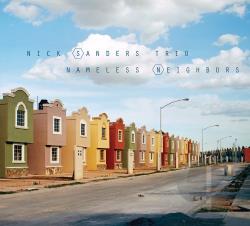
O ho, yet another piano trio CD in a season filled with them. "Nameless Neighbors" (Sunnyside Records) is the debut recording from the Nick Sanders Trio. New Orleans-native Sanders is a graduate of the New England Conservatory of Music (NEC) where he studied with Danilo Perez, George Garzone, Cecll McBee, Jason Moran, Jerry Bergonzi and John McNeil (not a shabby crew of people to learn from and work alongside.) Fred Hersch produced the sessions that resulted in these 13 tracks (including 2 solo piano cuts) - Sanders composed 10 of the pieces and chose 3 smart covers, including "'Orse at Safari" (Herbie Nichols), "Manganese" (Thelonious Monk, also titled "Wee See" or "We See") and "I Don't Want To Set the World On Fire" (a 1941 hit by The Inkspots). One can hear the influence of the Crescent City in Sanders's composing, especially on "New Town" (in the fiery opening section) and "Dome Zone" (one of the solo piano pieces.) It's not overt but can be detected in the rhythmic movement of the piano lines.
There are numerous reasons why this recording stands out, not the least of which is the rhythm section. Bassist Henry Fraser and drummer Connor Baker (both currently NEC students) play with great fire and sensitivity that belies their relative youth. They certainly can swing ("Row 18, Seat C" is the best example of the "driving" quality of the 2) but the composer is always throwing them curves, "stop-on-a-dime" tempo shifts and changes in dynamics. Their work on the title track illustrates how the musicians are listening to each other as they navigate the changes. After a soft, introspective solo piano intro, "Motor World" races forward on "motor rhythm" in Sanders' left hand and Baker's propulsive snare drum. In the middle, there is a "free" section held in check by Fraser's stout bass work. Nothing feels sloppy or out of place.
There's a sense of playfulness in "Hymn" and "Flip" that builds from the pianist's desire to move away from the tried-and-true. The former literally leaps away from its solemn opening section while the latter starts at a sprightly pace only to slow down within 45 seconds for a quiet bass solo. Fraser's pleasing bass is also featured on "Simple" - he goes it alone for the first 3 minutes of the track (which is the longest on the program at 6:43) drawing he listener in on the strength of his melodic sense and rich tones. Sanders' melody and solo draw on the song's title, with the falling notes like a spring shower.
"Nameless Neighbors" joins the parade of excellent piano trio CDs issued in 2013 (other examples being the new Joey Calderazzo "Live" also on Sunnyside, "Pascal's Triangle" by Pascal Le Boeuf, the debut CD by Myriad3 and the new Noah Haidu on PosiTone). These CDs may have the same figuration but are all quite different and all enjoyable. The Nick Sanders Trio is young but, judging by the original works on this debut, the leader is already a formidable composer and arranger as well as an impressive pianist. And, the rhythm section is also mighty impressive. Be sure to pay attention to the cover photograph by Alejandro Cartagena - it, too, has great power. For more information, go to nicksandersmusic.com.
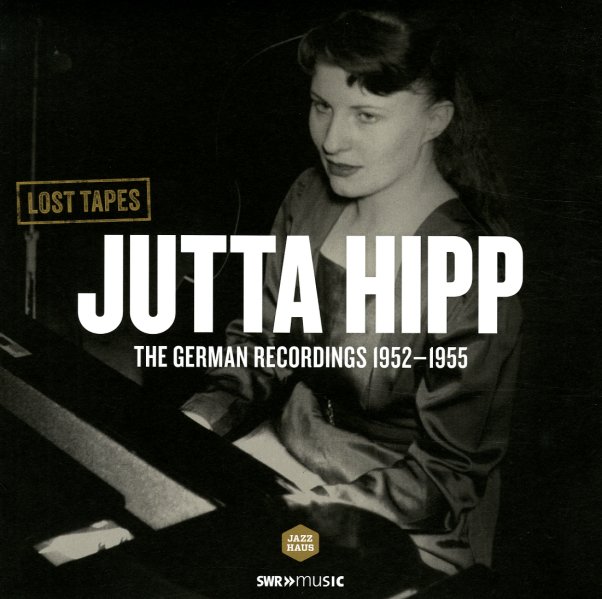
For the most part, German-born pianist Jutta Hipp has been forgotten over the 5+ decades since she left the music world to become a seamstress and painter (she passed in 2003.) She came to America in 1955 at the age of 30 at the urging of composer/journalist Leonard Feather. Her 1956 Blue Note recording with Zoot Sims is, perhaps, her most famous as well as the one that sold the most. The music revealed a pianist steeped in the styles of Teddy Wilson and Horace Silver, a facile soloist who held her own playing alongside the more famous Sims.
The German-based SWR Music/Jazzhaus label is in the midst of a project that will release hundreds of CDs over the next several decades that document Sudwestrundfunk studio and live recordings, programs and shows that started in late 1940s and went on for over 3 decades. "Jutta Hipp: The German Recordings 1952-55" captures 4 different session over a 30-month period. The most recognizable names here are trombonist Albert Mangelsdorff (who appears on 6 tracks recorded in 1953), guitarist Attila Zoller (2 tracks from 1955) and tenor saxophonist Hans Koller (who appears on 11 tracks spread over 3 dates.) The vast majority of the material is comprised of recognizable jazz standards with the exception of 1 track each composed by Mangelsdorff tenor saxophonist Joki Freund (who appears on 2 pieces from the 1955 session.)
Ms. Hipp's playing is solid throughout, steeped in the blues and swing of the 1930s and 40s. On the 1952 sessions, Koller is shaky on several tracks but bassist Franz "Shorty" Roeder is a strong accompanist and drummer Karl Sanner reliable if unremarkable. Koller is stronger on the 1953 sessions, sharing the front line with Mangelsdorff. The trombonist is more than a decade away from his best work but certainly displays his "swing" chops.
If you don't know Jutta Hipp, the best place to start is the Blue Note recording but "The German Recordings" have their charms, especially the leader's finely drawn solos. Not essential, but worth hearing - to find out more about Ms. Hipp, go to https://www.facebook.com/pages/Jutta-Hipp/148942215117356.
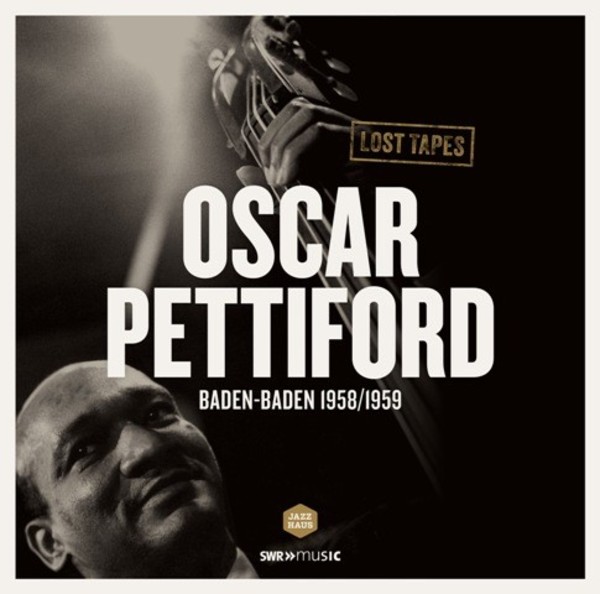
Bassist/cellist Oscar Pettiford (1922-1960) moved to Germany in 1958 and immediately became one of the busiest musicians on the European continent. He remained busy throughout the rest of his short life, dying at the age of 37 from complications of a Polio-live virus.
Pettiford, a native of Oklahoma whose mother was a Native American and Father half-Black, half-Native American, turned professional in his teens playing in his father's touring band. In 1943, he moved to New York City joining, in succession, the bands of Charlie Barnet and Roy Eldridge. The bassist was involved in the birth of the "Be-Bop" movement co-leading a group with Dizzy Gillespie. Pettiford went on to work in the 40s with the Duke Ellington Orchestra and Woody Herman Thundering Herd. He led his own bands small and large in the 1950s, although he worked on many sessions with artists such as Thelonious Monk, Art Blakey, Miles Davis, Milt Jackson and with Sonny Rollins on "The Freedom Suite" Lp.
SWR/Jazzhaus Records has collected 4 session from a 7 month period from before and after an automobile accident that laid him up for several months and issued them as "Oscar Pettiford Lost Tapes: Germany 1958-59." The 16 tracks range from a pair of duets with trumpeter Dusko Goykovich that open the program to one quartet track featuring soprano saxophonist Lucky Thompson (Ellington's "Sophisticated Lady" to 4 cuts that feature the clarinet of Rolf Kuhn (including a slow reading of fellow Oklahoman Charlie Christian's "A Smooth One.") The December 2, 1958, studio session feature drum master Kenny Clarke, guitarist Attila Zoller and 2 tracks with saxophone section featuring tenor saxophonist Hans Koller and 3 baritone saxophonists (but no guitar). Clarke, Zoller, and Koller are featured on the final 2 cuts, recorded live in concert the following night.
Pettiford is an excellent bassist and cellist, not only as a "supporting" musician but also as a soloist. His bass sound is so "full" on the duet tracks that one can hear the influence he had on Ray Brown, Ron Carter and others who followed. Even his cello work sounds "big' as is demonstrated on the live recording of "All The Things You Are." Koller's chops have vastly improved in the 6 years after the Jutta Hipp sessions (see above); he blends the smoother tones of Lester Young with the tenor presence of Coleman Hawkins on pieces such as the leader's "Blues In the Closet" and "O.P."
Overall, "Oscar Pettiford Lost Tapes" are definitely a good find. The sessions serve as a reminder of what a strong musician he was, even in the last year of his short but fruitful, life. For more information on the SWR releases, go to www.jazzhaus-label.com. To lear more about the bassist and his career, click here.
Showing posts with label Jazzhaus label (SWR). Show all posts
Wednesday, June 5, 2013
Saturday, December 29, 2012
Live From Germany, It's Jazz From The 50s + 60s
The Jazzhaus label, located in Halle, Germany, owns the rights to all the video and audio recordings from the archives of Sudwestrundfunk (SWR); we are talking 3000 hours of footage featuring over 400 ensembles and soloists playing all styles of jazz (just look at the 4 examples in this column.)
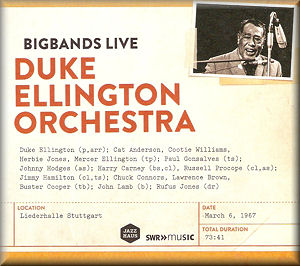
First up is the Duke Ellington Orchestra, recorded in March of 1967 in Stuttgart. The band was in the midst of a long tour which would be interrupted 2 months later by the death of Billy Strayhorn. The band features a number of its long-time stalwarts, from saxophonists Johnny Hodges, Paul Gonsalves and Harry Carney to trumpeters Cat Anderson and Cootie Williams plus the silky smooth clarinet of Jimmy Hamilton and splendid trombone of Lawrence Brown. This digital mix moves the rhythm section of bassist John Lamb and drummer Rufus Jones as well as the impressionistic piano work of the leader. As for the material, it covers a wide swath of the Ellington/Strayhorn songbook, from the tried-and-true "Tutti for Cootie" to newer pieces like "Swamp Goo" (with a raucous solo from Russell Procope on clarinet.) Strayhorn's "Blood Count" is presented as "Freakish Lights" and there is a splendid take of French composer Raymond Fol's "Salome" (Cat Anderson hits some seriously high notes on the climax of the song.)
Yes, there are plenty of Duke Ellington recordings on the market but there always seems to be room for one more, especially one as well-done as this live document. Duke Ellington and the Orchestra spent so much time "on the road" that one might expect that the musicians could phone in the concert. That's certainly not the case here. It's easy to understand why this music remains so popular - it's vital, emotionally rich and, much of the time, loads of fun.
Most of us who discovered trombonist Albert Mangesldorff did so through a series of Lps released by the MPS Records label. Those recordings included several solo recordings in which the German-born trombonist showed off his skill playing multi-phonics (split notes) - he went on record with the likes of saxophonists John Surman and Lee Konitz, bassist Jaco Pastorius and drummers Elvin Jones, Ronald Shannon Jackson and Han Bennink. This recording features his working Quintett from 1964 including Heinz Sauer (tenor sax and soprano sax), Gunter Kronberg (alto sax), Gunter Lenz (bass) and Ralf Hubner (drums). At the time of this recording, the group had returned for a tour of Asia and it shows in the music. This group would go on to record "Now Jazz Ramwong" later in the year - it's the opening track on this CD and one can hear the languid yet loping (hypnotic) groove that would also show up in John Coltrane's Quartet recordings several years later. The ensemble also understood swing - you can hear that on "Set 'Em Up" but the majority of the music reflects the sounds they heard interacting with other musicians on their Far East tour. "The rhythm section takes center stage on "Raknahs" (a tribute to Indian ragas - turn the title around) - later on in the program, they perform the sitar master's "Theme From Pather Panchali" digging deep into the Indian rhythms without abandoning a Western beat. "Far Out Far East" is a bass spotlight for Lenz, who acquits himself impressively. On the closing track, "Es Sungen Drei Engel", the Quintett truly struts its stuff with strong ensemble playing and a rousing trombone solo.
Of all the Jazzhaus recordings I have heard so far, the Albert Mangelsdorff Quintett CD is the most revealing, giving one the true insight into the trombonist's development of his music and playing. This is highly recommended.
This live date from saxophonist Zoot Sims (1925-1985) dates from 1958 and came about after Sims met fellow saxophonist Han Koller while on tour with the Benny Goodman Orchestra. With the help of producer Joachim-Ernst Berendt, the reed players organized a band and a concert to take place in Baden-Baden, Germany. Along for the ride are trombonist Willie Dennis (4 tracks), flautists Adi Feuerstein and Gerd Husemann (2 tracks), baritone saxophonist and flautist Helmut Brandt (3 tracks) and the rhythm section of Hans Hammerschmid (piano), Peter Trunk (bass) and the great Kenny Clarke (drums).
As opposed to the first 2 recordings, this one has a looser vibe yet there are moments where everyone and thing falls into place. Pianist Hammerschmid's "Blue Night" swings pleasingly and the horn arrangment, bolstered by Brandt's baritone, is smart. The bari player gets the spotlight on "I Surrender Dear" while Dennis gets the honor on "These Foolish Things." - both do a fine job and I like the way it breaks up the the order. Sims and Koller break out their clarinets for Hammerschmid's "Minor Meeting for Two Clarinets" (you can hear that both players paid attention to the afore-mentioned Mr. Goodman.) Clarke sparks the saxophonists on Denzil Best's romp titled "Alan's Alley" and swings like mad on Koller's reading of Richard Rodger's "Falling In Love." Sims' mellow tenor leads the way on the classic "Tangerine", playing a most melodic solo.
This recording seems to get better with each listen. There is a lot to pay attention to (the rhythm section, the smart arrangements, and the majority of good solos) - if you like your jazz "straight-ahead", this CD is a pleasurable experience.
John Birks "Dizzy" Gillespie was one of those musicians who never failed to make his listeners smile. A sparkling yet playful trumpeter (who can' forget those cheeks) as well as a influential vocalist, Gillespie was one of the pioneers in bring bebop as well as Latin Jazz to a wider audience. This recording comes from 2 concerts in late November 1961 features a band that Leo Wright (alto sax, flute), Bob Cunningham (bass), Mel Lewis (drums) and the pre-movie and television soundtrack composer Lalo Schifrin on piano. The program commences with a swinging take of Duke Ellington's "The Mooche" - stretched out to just over 16 minutes, everyone gets plenty of time to solo. Wright digs in nicely while Dizzy gets pretty funky. Schifrin takes a wide-ranging solo, displaying a bit of his classical upbringing and a good dollop of the blues as well. Wright's flute leads the way with a sometimes lilting, sometimes gritty solo on "Willow Weep For Me" (the trumpeter sits this tune out.) The leader shows off his blues chops on "I Can't Get Started" and brings out the mute for his Middle-Eastern tinged "Kush." Wright takes flight on the latter tune with a solo that begins in a Charlie Parker mode before taking a turn to the Eric Dolphy side. Lewis and Cunningham really push the soloists (dig the drummer behind the pianist) and, though the song stretches to nearly 16 minutes, there is not a boring moment.
There are 2 versions of Gillespie's "Con Alma" (recorded 2 days apart) and, while the structure and solo order is the same, it's interesting and instructive to compare the solos. Can't say that I like one over the other but Leo Wright really shines on the second version.
The late 1950s and 1960s were a fertile time for jazz, especially as it marched across the globe. These 4 CDs cover a lot of musical territory and each has rewards for jazz lovers. For more information, go to www.jazzhaus-label.com.
First up is the Duke Ellington Orchestra, recorded in March of 1967 in Stuttgart. The band was in the midst of a long tour which would be interrupted 2 months later by the death of Billy Strayhorn. The band features a number of its long-time stalwarts, from saxophonists Johnny Hodges, Paul Gonsalves and Harry Carney to trumpeters Cat Anderson and Cootie Williams plus the silky smooth clarinet of Jimmy Hamilton and splendid trombone of Lawrence Brown. This digital mix moves the rhythm section of bassist John Lamb and drummer Rufus Jones as well as the impressionistic piano work of the leader. As for the material, it covers a wide swath of the Ellington/Strayhorn songbook, from the tried-and-true "Tutti for Cootie" to newer pieces like "Swamp Goo" (with a raucous solo from Russell Procope on clarinet.) Strayhorn's "Blood Count" is presented as "Freakish Lights" and there is a splendid take of French composer Raymond Fol's "Salome" (Cat Anderson hits some seriously high notes on the climax of the song.)
Yes, there are plenty of Duke Ellington recordings on the market but there always seems to be room for one more, especially one as well-done as this live document. Duke Ellington and the Orchestra spent so much time "on the road" that one might expect that the musicians could phone in the concert. That's certainly not the case here. It's easy to understand why this music remains so popular - it's vital, emotionally rich and, much of the time, loads of fun.
Most of us who discovered trombonist Albert Mangesldorff did so through a series of Lps released by the MPS Records label. Those recordings included several solo recordings in which the German-born trombonist showed off his skill playing multi-phonics (split notes) - he went on record with the likes of saxophonists John Surman and Lee Konitz, bassist Jaco Pastorius and drummers Elvin Jones, Ronald Shannon Jackson and Han Bennink. This recording features his working Quintett from 1964 including Heinz Sauer (tenor sax and soprano sax), Gunter Kronberg (alto sax), Gunter Lenz (bass) and Ralf Hubner (drums). At the time of this recording, the group had returned for a tour of Asia and it shows in the music. This group would go on to record "Now Jazz Ramwong" later in the year - it's the opening track on this CD and one can hear the languid yet loping (hypnotic) groove that would also show up in John Coltrane's Quartet recordings several years later. The ensemble also understood swing - you can hear that on "Set 'Em Up" but the majority of the music reflects the sounds they heard interacting with other musicians on their Far East tour. "The rhythm section takes center stage on "Raknahs" (a tribute to Indian ragas - turn the title around) - later on in the program, they perform the sitar master's "Theme From Pather Panchali" digging deep into the Indian rhythms without abandoning a Western beat. "Far Out Far East" is a bass spotlight for Lenz, who acquits himself impressively. On the closing track, "Es Sungen Drei Engel", the Quintett truly struts its stuff with strong ensemble playing and a rousing trombone solo.
Of all the Jazzhaus recordings I have heard so far, the Albert Mangelsdorff Quintett CD is the most revealing, giving one the true insight into the trombonist's development of his music and playing. This is highly recommended.
This live date from saxophonist Zoot Sims (1925-1985) dates from 1958 and came about after Sims met fellow saxophonist Han Koller while on tour with the Benny Goodman Orchestra. With the help of producer Joachim-Ernst Berendt, the reed players organized a band and a concert to take place in Baden-Baden, Germany. Along for the ride are trombonist Willie Dennis (4 tracks), flautists Adi Feuerstein and Gerd Husemann (2 tracks), baritone saxophonist and flautist Helmut Brandt (3 tracks) and the rhythm section of Hans Hammerschmid (piano), Peter Trunk (bass) and the great Kenny Clarke (drums).
As opposed to the first 2 recordings, this one has a looser vibe yet there are moments where everyone and thing falls into place. Pianist Hammerschmid's "Blue Night" swings pleasingly and the horn arrangment, bolstered by Brandt's baritone, is smart. The bari player gets the spotlight on "I Surrender Dear" while Dennis gets the honor on "These Foolish Things." - both do a fine job and I like the way it breaks up the the order. Sims and Koller break out their clarinets for Hammerschmid's "Minor Meeting for Two Clarinets" (you can hear that both players paid attention to the afore-mentioned Mr. Goodman.) Clarke sparks the saxophonists on Denzil Best's romp titled "Alan's Alley" and swings like mad on Koller's reading of Richard Rodger's "Falling In Love." Sims' mellow tenor leads the way on the classic "Tangerine", playing a most melodic solo.
This recording seems to get better with each listen. There is a lot to pay attention to (the rhythm section, the smart arrangements, and the majority of good solos) - if you like your jazz "straight-ahead", this CD is a pleasurable experience.
John Birks "Dizzy" Gillespie was one of those musicians who never failed to make his listeners smile. A sparkling yet playful trumpeter (who can' forget those cheeks) as well as a influential vocalist, Gillespie was one of the pioneers in bring bebop as well as Latin Jazz to a wider audience. This recording comes from 2 concerts in late November 1961 features a band that Leo Wright (alto sax, flute), Bob Cunningham (bass), Mel Lewis (drums) and the pre-movie and television soundtrack composer Lalo Schifrin on piano. The program commences with a swinging take of Duke Ellington's "The Mooche" - stretched out to just over 16 minutes, everyone gets plenty of time to solo. Wright digs in nicely while Dizzy gets pretty funky. Schifrin takes a wide-ranging solo, displaying a bit of his classical upbringing and a good dollop of the blues as well. Wright's flute leads the way with a sometimes lilting, sometimes gritty solo on "Willow Weep For Me" (the trumpeter sits this tune out.) The leader shows off his blues chops on "I Can't Get Started" and brings out the mute for his Middle-Eastern tinged "Kush." Wright takes flight on the latter tune with a solo that begins in a Charlie Parker mode before taking a turn to the Eric Dolphy side. Lewis and Cunningham really push the soloists (dig the drummer behind the pianist) and, though the song stretches to nearly 16 minutes, there is not a boring moment.
There are 2 versions of Gillespie's "Con Alma" (recorded 2 days apart) and, while the structure and solo order is the same, it's interesting and instructive to compare the solos. Can't say that I like one over the other but Leo Wright really shines on the second version.
The late 1950s and 1960s were a fertile time for jazz, especially as it marched across the globe. These 4 CDs cover a lot of musical territory and each has rewards for jazz lovers. For more information, go to www.jazzhaus-label.com.
Subscribe to:
Comments (Atom)