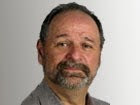
Alto saxophonist-composer Travis Sullivan is, perhaps, best known for his 18-piece big band, Bjorkestra, an ongoing project in which he reimagines and reshapes the music of the Icelandic singer/songwriter and notorious shape-shifter. In the midst of that heady project, one might forget that he himself is a strong writer and talented musician.
"New Directions" should and will open eyes and ears to Sullivan's ability to write for a small ensemble. Joined by Mike Eckroth (piano), Marco Panascia (bass) and Brian Fischler (drums), Sullivan creates music that keeps the listener on his/her toes because not only is there a strong rhythmic pulse on most tracks but also what they play is involving, melodic and seeminglty without artifice. "Jamia's Dance" opens the program and sets the stage with its handsome melody, shifting rhythms, the leader's sweet tone and Eckroth's piano work that is both powerful and impressionistic. It's the interplay of the rhythm section, the pianist's ability to color the music and Sullivan's vibrant alto saxophone that stands out. Even the sweet take of "Spring Is Here" displays a maturity of thought, no one rushing the beat, the long tones and "singing" quality of the alto and the truly complementary work of the rhythm section. And the emotional content of these pieces make them stand out - these songs are not just exercises in technique. Instead, they tell musical "stories", are constructed so that one can't miss the melodic content but also can hear how the solos grow from the thematic material. The other "cover" tune is a snappy take on "Everybody Wants to Rule The World", the 1985 hit for the British duo Tears for Fears. This is music that is alive and makes one think how good the quartet must sound in a "live" setting.
One other aspect stands out (for this reviewer) - these 10 songs are so rich with ideas that one does not immediately reach out for comparisons (i.e., Sullivan sounds like "fill-in-the-blank", his writing is influenced by"so-and-so".) Just listen. Enjoy the lightness of the interactions, the heat of the solos and the quality of the work. To find out more, go to www.travissullivan.com.
Click below to enjoy the opening track, courtesy of Posi-Tone Records and IODA Promonet.
Jamia's Dance (mp3)
Perhaps the last instrument one would expect on a program dedicated to the music of alto saxophonist is a didgeridoo but trumpeter Mark Rapp adds it to his arsenal on "Good Eats" (Dinemec Records), his 4th release and 1st with his Melting Pot quartet. One might assume that the tribute would include an alto saxophone but, once again, Rapp surprises the listener by adding guest Don Braden playing tenor saxophone and alto flute 6 of the 11 tracks. Joe Kaplowitz mans the Hammond B3 organ, Ahmad Mansour adds funky electric guitar and Klemens Marktl supplies the drum work. Another interesting aspect of the program is that Rapp et al don't copy Mr. Donaldson's sound and songs; no, they have a joyous time with it. Okay, the opening cut, "Alligator Boogaloo", doesn't stray far from the funky strut of the original and "Everything I Do Gonna Be Funky" is a joyful 60's style romp (hot tenor solo from Braden) but moving on to "Brother Soul" and a Middle-Eastern feel creeps into the piece (splendid drum work from Marktl and rich guitar riffs liven the music.) "One Cylinder" transfers Donaldson's tune into "Bitches Brew" territory, with Rapp's muted trumpet (heavy on the echo) and Mansour's rambling guitar lines. There's a heady bebop/blues take of "Spaceman Twist" (great opening Charlie Parker-style riff that is the theme), a sweet laid-back reading of "The Glory of Love" and a funky, danceable, jaunt through "Pot Belly."
Everyone plays well and they show great respect for what Lou Donaldson has brought to jazz. They do it by tapping into the playful, soulful, side of his music. Marktl supplies the "serious" beat, Kaplowitz the much-needed organ foundation and Mansour the "chunky" riffs and rippling solo lines. Mark Rapp and Don Braden are, most often, the "main course" and ride the rhythmic tide. Essential listening? Perhaps not, but, if you need a hefty serving of "funky fun", dig into "Good Eats." To find out more, go to www.markrapp.com.
Friday, May 20, 2011
Tuesday, May 17, 2011
Hands & Brass
Percussionist Dan Weiss, who has performed and/or recorded with saxophonist David Binney, guitarist Rez Abbasi, saxophonist Rudresh Mahanthappa and bassist Eivind Opsvik (to name but 4), not only has mastered the trap set but also the tabla drums. For his second set of compositions for drumset, "Jhaptal Drumset Solo" (Chhandayan Publication), Weiss again enlists guitarist Miles Okazaki to play the repeated melody line (in the style of the Indian tamboura but a melodic drone not one tone) while he plays the 36 different pieces for tabla on his drums. The project will be of great interest to drummers and less so to the average listener. I find it quite peaceful (even when Weiss is really "wailing") but one really has to be "in the mood." It is fascinating how he transfers the tabla lines to the snare and the subtle shifts in the rhythmic patterns. For more information, go to www.danweiss.net.
Though the covers bear a similarity and the music features an excellent drummer (in this instance Obed Calvaire), the new CD by trumpeter-composer Sean Jones, "No Need For Words" (Mack Avenue) is contemporary music strong on interplay, melodic variations and excitement. With a core band of Calvaire, Orrin Evans (piano, electronic keys), Brian Hogans (alto saxophone, electronics) and Luques Curtis (bass), Jones continues to move forward. "Look and See" opens the program in a high-powered fashion with Calvaire really pushing the tempo. His accents have a hard edge and he's not afraid to crack down hard on his snare. Evans is stalwart throughout, whether negotiating his way through the hard-bop rhythms of "Touch and Go", opening the pretty ballad "Momma" with a gospel-tinged unaccompanied statement or creating a keyboard maelstrom on "Love's Fury." The last piece would be out of place on a Living Colour CD, with its noisy background and Calvaire's percussive onslaught (guest guitarist Matt Stevens adds "wailing" sounds to the tune while percussionist Kahlil Kwame Bell stokes the percussive fire.) Jones' mellow muted trumpet adds a mellow "midnight" touch to the title track, a fairly quiet homage to a romantic liaison. Evans' light touch, the solo that grows from just a few well-placed notes, and fine background work that supplies Jones and Hogan with an easy cushion, is delicious to hear. The final track, "Forgiveness (Release)", also has a gospel feel, amplified here by the presence of Corey Henry's Hammond organ. Hogans' solo is short but very emotionally powerful and, when he and Jones rise high above the insistent rhythm section in the last several minutes of the piece, the listener is carried away by their musical testimony. The quiet coda brings the program to a most satisfying close.
"No Need For Words" is Sean Jones' 6th CD as a leader and one can truly hear how he has developed as a composer, arranger and bandleader. From his debut in 2004, one could tell he was a very good musician but his growth has been impressive. This CD is audible proof of that - to find out more, go to www.seanjonesmusic.com.
Tom Harrell is well into his 5th decade as a performer, having graduated from Stamford University in 1969 to step right into the Stan Kenton Band. He is not only a fine musician but also an excellent (and, somewhat, underrated) composer. He has led a big band, composed music for trumpet and piano and created symphonic arrangements for vocalist Elizabeth Kontomanou. His growing discography has many strong entries.
Since 2006, he has led a quintet featuring Wayne Escoffery (tenor saxophone), Danny Grissett (piano, Fender Rhodes), Ugonna Okegwo (bass) and the human dynamo that is Johnathan Blake (drums). "The Time of the Sun" (HighNote) is the group's 4th CD and it's as good as the previous 3. Why? First and foremost, this is a working group, one that Harrell knows extremely well and writes to their individual strengths. Escoffery, who is also listed as one of the producers, adds heft and fire to the sound, playing off the more mellow edges of the leader. Listen to him wail above Blake and Grissett's burbling Rhodes on "Ridin'" - he follows a long, rather fiery, solo from Harrell (who really has a great time riding the percussive tidal wave), starting slowly, then really digging in to the groove. "Estuary"is another in a series of lovely melodies that Harrell dresses in mellow Brazilian rhythmic patterns. Grissett's spare embellishments beneath the solo opens up during his spot with handsome single-note runs that rise like mist off a lake. Escoffery's solo is, understandably, a bit stronger yet the way he moves into the higher register of the tenor without force is a treat. Blake creates a "modern" groove for the riff-driven "Dream Text", a piece that has a melody line that resembles some by the Becker-Fagen duo aka Steely Dan. Grissett's Rhodes' chords emphasize the Dan connection but, pay attention to the fine flugelhorn solo because it's one of Harrell's best on record. Throughout the CD, Ugonna Okegwo is the unsung hero as he really holds the beat down and allows Blake to embellish what the soloists are creating.
Tom Harrell, like Wayne Shorter, Charles Lloyd, and Herbie Hancock, is both a fine composer and strong soloist. Like those 3 modern "masters", he is not a slave to any one style so his music always sounds fresh. The 65-year old Harrell surrounds himself with younger players (bassist Okegwo turns 50 next year while the others are only in their mid-50s), musicians who are leaders as well and who are dedicated making this music come alive. And, believe me, it truly does. (I almost forgot to mention the solar "sounds" that open the CD - very interesting way to set the sonic table.) To find out more, go to www.tomharrell.com.
Sunday, May 15, 2011
The Professor Sells Out + CD Pick
Firehouse 12, 45 Crown Street in New Haven, presents Anthony Braxton's newest project, a septet venture that carries the sobriquet Echo Echo Mirror House. The good Professor (playing saxophones and clarinets for these shows), who has been on the faculty of Wesleyan University for over 2 decades, has written new music for conventional instruments and musicians wielding iPods. Joining him will be Aaron Siegel (percussion), Carl Testa (bass, bass clarinet, electronics), Mary Halvorson (guitar), Jessica Pavone (viola, violin), Jay Rozen (tuba) and Taylor Ho Bynum (cornet).
All the advance tickets for both the 8:30 and 10 p.m. shows have been sold out (and have been for a good long time) so the folks at the Firehouse suggest you write (info@firehouse12.com) or call (203-785-0468) to get your name on the waiting list. To get more information, go to www.firehouse12.com.
Pianist/scientist Jean-Michel Pilc has issued his second solo CD, "Essential" (Motéma); the 18 tracks (just under 67 minutes) run the gamut from standards ("Caravan", "Take The A Train", "Too Young To Go Steady" and more) to the "Waltz in A minor" by Chopin to a 6-part series of "Etudes" and beyond.) Much of this program is quiet and intimate, a lovely series of audio dreams for the end of the day. Even the Ellington and Strayhorn pieces are softer and a bit more abstract that one might expect. The music is in no way somnambulance personified. A good example is "Caravan" - here, Pilc takes the tune through a number of tempo changes, from a bluesy stroll to an out-of-time romp. "Someday My Prince Will Come" moves easily under Pilc's fingers, with long flowing lines moving in and around the melody. He even summons up the spirit of Art Tatum at one point in his pleasing rendition of "I Remember You." One of the more impressive pieces is the pianist's abstract on "Blue in Green", slowly unfolding from the opening notes, not hurrying forward but lightly treading on the melody.
The 6 short "Etudes" ,broken up into numbered "Tableaux", have the feeling of being improvised and, at times. may remind some of the ramblings of Keith Jarrett. Yet, because these are brief, none overstay their welcome. From the rumbling bass lines of "No.1" to the child-like melody line of "..2" to the abstract ballad that is "..3" and on, this is the creative essence of the pianist. He moves gracefully through the pieces (as he does through most of the program) and one feels comforted, almost cuddled, by the generous chords and lilt of "..6."
Received a note from vocalist Kendra Shank about a courageous and inventive creative musician - read it, follow the link and pass it on.
"I'm singing in this film documentary about guitarist Sangeeta Michael Berardi (pictured left) who, since contracting Parkinson's disease, continues to make music by utilizing his tremors in creative ways. An inspiring man, who has much to teach us about living. You can see the film trailer and donate to the project by clicking on the link below. One of the gift options for those who pledge, is an autographed copy of my CD "A Spirit Free: Abbey Lincoln Songbook." Please direct all inquiries about the project to burrillcrohn@earthlink.net."
Labels:
cd review,
Firehouse 12,
Kendra Shank,
Parkinson's Disease
Friday, May 13, 2011
Listening Pleasure
Sitting by myself last night, I finally got to really listen to "Live at Smalls", the new CD by the Bruce Barth Trio. The jazz club, located at 183 West 10th Street in New York City, has been issuing "live' recordings for the past year or so, thanks to an ambitious plan of Spike Wilner. One can actually go to the club's website - www.smallsjazzclub.com - and watch live feeds of performances and they are building an archive of these performances as well.
Anyway, I'm in the big chair letting Barth's music wash over me and am blown away by just how impressive drummer Rudy Royston's playing is in this band. First of all, you can't miss him, because Royston is way "up" in the mix. Secondly, it's a trio gig so he stands out. His work on Barth's "Wilsonian Alto" is positively stunning. He's right on top of the beat and while bassist Vicente Archer is holding down the tempo, Royston is absolutely dancing underneath Barth's flowing, funky, fiery phrases. In the midst of the solo, Royston takes off and he is accenting the pianist's lines, he's firing off machine-gun riffs, he's all over the kit and I swear the room is levitating. The piece slows down for the excellent bass solo; when the pianist returns, the music just boils over. Elsewhere on the program, he bounces and romps through the pianist's "Almost Blues", softly emphasizes the handsome melody of "Yama", mostly on the floor toms and cymbal but always subtle.
Let's take nothing away from Barth. His flowing lines and rapid phrases shine throughout "Peaceful Place", buoyed by the active percussion and Archer's rich, full-toned, bass lines. The pianist delivers a heartfelt reading of "Good Morning Heartache", first recorded by Billie Holiday in 1946. As mighty as Barth is on uptempo pieces, he can be so gentle and contemplative on ballads. His rippling phrases are filled with blues, with longing, with regret while Archer plays off and under him.
"Live at Smalls" is one of those recordings that makes one feel as if he or she is right next to the bandstand. Some "live" recordings feel "juiced up" or muddy and distant - this one is immediate, exciting, alive and human. Bruce Barth, Vicente Archer, and Rudy Royston deliver the goods. Enjoy!
For more information, go to www.brucebarth.com.
Honorable mention goes to another master musician, the great Belgian guitarist and harmonica virtuoso Jean "Toots" Thielemans. His new "European Quartet: Live" CD, released by Challenge Records, is made up of pieces recorded over a 3-year period. Accompanied by Karel Boehlee (piano, synthesizer), Hein Van de Geyn (acoustic bass), and Hans van Oosterhout (drums), the youthful "harmonicat" (now 89-years old, he's had to retire from guitar playing) runs through an eclectic program of standards, Brazilian tunes, and his "hits" ("Theme from Midnight Cowboy", "Bluesette"). Listen to his unaccompanied take of "Round Midnight" - it's heartfelt, touching, and pleasing. And, he can "swing" so well, as he displays during "On Green Dolphin Street" and the hard-driving take of "Summertime" (his cohorts acquit themselves very well in support and on their own.)
Mr. Thielmans is one of those master musicians who always satisfies his audiences. His harmonica work, easily recognizable, continues to be inventive. What he may have lost in "speed", he more than makes up for with his inventiveness, his joy for playing and melodic flair. May he continue to bring those qualities to his music for years to come. Check him out at www.tootsthielmans.com.
O, What I Wrote + More Free Music
The other day, I posted a column that included a review of the new CD by Musica Pacifica titled "Dancing in the Isles." It's a wonderful collection of dances tunes and classical pieces from the 17th and 18th Century concentrating on the British Isles. I heartily recommended it and still do but wish to clear up a misconception of my part about the lack of improvisation in the music, especially the traditional works. The West Coast-based septet wrote to say "there's improvisation in all the lines we made up in the dance tunes (they appear as only a single melody line), and in all of the ornamentation we add to the Baroque pieces--the masque dances, Locke, Matteis, Veracini, even Oswald (not so much the Purcell)."
And, of course there is. Many of the pieces are either handed down from one generation of musicians to another or the composer left room in the music for individual interpretation. Also, we should also give credit to the creative musicians who record this timeless music for injecting their own personality and vitality to the music. To find out more, go to www.musicapacifica.org.
Received an email from guitarist-composer Mike Baggetta announcing the imminent arrival (June 1) of the new CD from TIN/BAG, the duo he co-leads with trumpeter/composer Kris Tiner. "Bridges", recorded in early 2010, features 9 pieces including a sweet and melancholy reading of Bob Dylan's "Just Like a Woman". The guys want you to check it out by going to http://tinbag.bandcamp.com/ where you can not only pre-order the CD but also listen to all the tunes. And, the best part (besides the fine music)) is you can download the Dylan song for FREE! To find out more, go to www.kristiner.com/tinbag.
Potpourri for Spring
What follows is a series of short reviews of recordings that have arrived in the past month as well as a link to music you might be interested in downloading.
Eric Alexander has issued a slew of recordings both as a leader, member of a collective (One For All) and as a sideman in his 2 decades on the "scene.". His big tone, his creativity, and his ability to sound like himself in a musical genre (hard-bop) that has had its share of impressive tenor saxophonists makes his music so approachable. "Don't Follow The Crowd" (HighNote) is yet another strong addition to his discography. It does not hurt one bit that his long-time partner Harold Mabern is at the piano yet again as the Memphis native is one of creative and classiest of people to sit at the keyboard. The rhythm section of Nat Reeves (bass) and One For All partner Joe Farnsworth (drums) is top-notch. My one issue with the CD is all the echo on Alexander's tenor. Other than that, there is a sweet version of Henry Mancini's "Charade" (Mabern's accompaniment is so good) and a lovely take on Michael Jackson's "She's Out of My Life" (really!) that has one of the more graceful solos I have ever heard from Alexander. There are several "burners" starting with the Alexander's "Nomor Senterbress" that opens the program with a catchy melody line (sounds mystical) and his "Remix Blues", a piece with smart chord changes and great cymbal work.
This quartet sounds great together (no surprise given their long relationship) and the music is solid but not stolid. One can see sitting in Dizzy's Club Coca Cola or the Jazz Showcase listening to this fine music. To find out more, go to www.ericalexandermusic.com.
Best known for his stellar work with Kneebody and his appearances with Ben Allison, David Binney and Pearl Jam, Shane Endsley is a fine trumpeter and has just issued his second CD as a leader. "Then The Other" is the debut CD for Kneebody's Low Electrical Records and features his Music Band. Craig Taborn plays piano (very nicely) alongside bassist Matt Brewer and drummer Ted Poor. Whereas Endsley's work with the Kneebody collective is very high-powered and, to my ears, tightly structured, this session is somewhat "looser" (do not read as "sloppy) and more conversational. The quartet's interactions are pleasing to hear, the rhythm section really pushes many of the pieces along and the solos are quite impressive. Endsley's tone shows the influence of Dave Douglas and Ron Horton; none of these brass-men display blues "roots" but have styles that has elements of Clifford Brown. One hears crisp, clear, lines, not a lot of "smears" but more of a melodic approach. It's fun to hear Taborn alongside Endsley, the way they move through the middle section of "Pedals", holding back, staying on the melody lines or adding quiet colors. There's a touch of rock music and Ben Allison in "Kings County Ramble", notable for Poor's active percussion, Taborn's rippling piano fills and the leader's wide-ranging solo. The title track, an unconventional ballad in form, is quiet throughout, with subtle percussion work (Poor picks up the intensity later on but plays so melodically), minimalist (at times) piano and bass lines that give the piece its depth. The piece unfolds slowly so it's a surprise when the band falls into a steady beat - it does not last very long and feels through-composed, giving the work even more variety. Kneebody bandmate Kaven Rastegar composed "Conditional Love" (the only piece not by Endsley) - it's a pretty ballad that has room for a short piano solo and a really fine bass solo. "Gallery Piece" brings the program to a close, with a romping rhythm and a trumpet solo that heats up in an exciting fashion.
Shane Endsley and the Music Band has been touring since the release of the CD and I'm told the interplay of the musicians has gotten stronger, making the music even more exciting. There is so much to like here and one's enjoyment grows with subsequent listens. The leader's work on the slower pieces is measured and musical yet he also displays plenty of fire when pushed by the rhythm section. To find out more, go to kneebody.com/ler/.
"Dancing in the Isles" (Solimar Records) is the 9th recording by Musica Pacifica, a septet dedicated to the classical and early musics of Europe. This CD, subtitled "Baroque and Traditional Music from England, Scotland, and Ireland", is a joyful reminder that people did not just sit around at the end of a long day. The 33 tracks (just under 75 minutes) range from the 5 "English Country Dances" from the mid-17th Century that open the program to the longer works of Francesco Veracini (1690-1768) and Henry Purcell (1659 - 1695) at the close. In between, one hears a 3-part medley of traditional Scots tunes, a 3-part medley of traditional Irish tunes (arguably the highlight of the CD), 5 tunes that make up "An English Court Masque" (more complicated works that come from theater performances), a Sonata by James Oswald (1710-1769), a 4-part Suite by Matthew Locke (1621, perhaps 1622-1677) and "6 Ayres in G major" by Nicola Matteis. Playing this pleasing, structured and often beautiful music is Judith Linsenberg (recorders, whistle), David Morris (baroque cello, viola da gamba), Charles Sherman (harpsichord), Charles Weaver (baroque, theorbo which is a long-necked lute), Peter Maund (percussion) and baroque violinists Elizabeth Blumenstock and Robert Mealy. Based in the San Francisco Bay area, the septet is known for its extensive repertoire (ranging from Vivaldi to Telemann to the Bachs, J.S., W.F. and C.P.E.) and championing the use of period instruments.
No improvisation here but a treasure trove of fine sounds and excellent musicianship. Though the music is certainly "old", Musica Pacifica gives the works its full attention, respect, and has fun bringing the sounds to life. This is dance music - enjoy! For more information, go to www.musicapacifica.org.
Dawn of Midi, the creative music trio that issued its debut CD to critical acclaim in 2010 (my review is here), is offering fans a free download of 7 tracks recorded last year on 3 different dates. The trio, composed of contrabassist Aakaash Israni, percussionist Qasim Naqvi, and pianist Amino Belyamani, create music with influences that range from contemporary classical music to improvisational jazz to post-modern rock - what's most impressive is that they already have the own identity and labeling is really futile. Their music takes such fascinating paths, not so much about technical facility (and all 3 are quite good musicians) as in following their muse. Not for the traditional piano trio fan but for the person who likes to be challenged and can go deeper into the music on subsequent listens; Dawn of Midi is giving all listeners the opportunity to judge for themselves. Go to www.dawnofmidi.com/music/ and try the music on.
Monday, May 9, 2011
Firehouse 12 Concert + Discovering the "Noble Path"
The Firehouse 12 Spring 2011 Concert Series rolls right along - attendance has been excellent with a slew of sold-out shows (both sets of Anthony Braxton's 5/20 concert are already full and have a waiting list) amidst its eclectic group of performers.
This week, saxophonist and composer Rob Brown returns to the venue for the 3rd time as a leader (I believe his trio played in the 1st year of the series), this time with his 4-Tet The Virginia native has been part of the creative music scene for nearly 3 decades, working and recording with the afore-mentioned Professor Braxton, pianist Cecil Taylor, the late trumpeter/conceptualist Bill Dixon, drummer Hamid Drake, various dance companies, poets and performance artists. His discography includes over 20 CDs and Lps as a leader or co-leader and many more as a sideman.
His latest release, recently issued on the Marge label (based in France) features the group he's bringing to the Firehouse. It's an impressive cast, including vibraphonist Matt Moran, bassist Chris Lightcap and drummer Gerald Cleaver. All have performed here in the past; this is Cleaver's 9th appearance, Lightcap's 8th and Moran's 5th. The music the quartet creates resonates with far-flung influences, from the blues to Ornette Coleman's sounds to the rhythmic explorations of Matthew Shipp. They'll play 2 sets, 8:30 and 10 p.m. For more information and to buy tickets, call 203-785-0468 or go to www.firehouse12.com. To find out more about the busy career of Rob Brown, visit www.robbrownmusic.com.
Born in the Bay Area of San Francisco, pianist Art Hirahira has been playing, studying and teaching music most of his life. He's studied with Charlie Haden and Wadada Leo Smith at CalArts, performed with Dave Douglas, Vincent Herring, Travis Sullivan's Bjorkestra, Jim Black, Jenny Scheinman, Fred Ho, Sean Nowell, royal hartigan, and Rufus Reid. His work on saxophonist Sarah Manning's impressive 2010 recording "Dandelion Clock" (Posi-Tone Records) really caught my attention (Ms. Manning's playing is mighty impressive as well) and now the label has issued his first CD as a leader in over a decade.
"Noble Path" features the pianist/composer in the company of bassist Yoshi Waki and drummer Dan Aran and is one of those "piano trio" recordings that captures one's ear with its musicality, subtlety and intelligence. Don't let that scare you away - the music also has bounce, swing, and strong solos. The program starts with the warm swing of Hirahira's "I'm OK", with a melody, a piece that feels influenced by Phineas Newborn Jr. and Harold Mabern, with a piano solo that moves easily from two-handed chordal phrases to rippling single-note runs. Waki and Aran keep the flow moving without over-playing.
The CD includes 4 "standards", ranging from the driving hard-bop attack of "All or Nothing at All" to the gracious take on Dizzy Gillespie's "Con Alma" to the lithe swing of Duke Ellington & Billy Strayhorn's "Isfahan" (really strong piano solo) to Cole Porter's gentle ballad "Ev'ry Time We Say Goodbye" (the rhythm section is soft, supportive and creative behind the pianist.) Each song respects the original piece but the trio's interactions make each piece shine anew.
Hirahara's compositions cover much creative ground. The title track starts with a handsome melody (with a bit of a country music twist in the phrases) before stretching out into a sweet piano solo (Aran's snare work mirrors the pianist's lines nicely.) A hint of both gospel music and Vince Guaraldi can be detected on the beautiful "Peace Unknown" with the pretty melody and piano solo supported by melodic bass lines and muted drums. "Ebb and Flow" has a joyous swing, gentle not hard-edged while "Nocturne" is dreamy at the onset then opens up with some of the "freest" playing on the CD (the musicians go "out" without losing the melodic kernel of the piece.) "Change Your Look" begins with a harder attack (there's a hard-driving section in the first third of the performance) then the pianist takes it down before jumping back into a faster pace. The tempo shifts back and forth as the intensity rises, ending on a short, impressionistic, solo piano coda.
"Noble Path" is a generous hour's worth of music, generous in many senses, not the least of which is the abundance of melody. Like the trio music of Bill Evans and Denny Zeitlin, the listener is drawn in by the quiet intensity of the players, by solos that capture the ear with unique turns-of-phrase, and sharp interplay. Art Hirahara is a musician and person you should check out - his music will win you over. For more information, go to www.arthirahara.com.
Download and enjoy the title track by clicking on the link below, courtesy of Posi-Tone Records and IODA Promonet.
Noble Path (mp3)
Subscribe to:
Posts (Atom)