Thursday, November 7, 2019

Large & Larger Ensembles Autumn 2019 (Pt 2)

Pianist-composer Michele Rosewoman, born in Oakland, California, has been active on the contemporary music scene since the mid-1970s.  After moving to New York City in 1978, she became even busier working in the bands of Jimmy Heath, Julius Hemphill, Billy Hart, Butch Morris, Oliver lake, and many others. Ms. Rosewoman also worked in Afro-Cuban and Afro-Caribbean bands led by Paquito D'Rivera, Celia Cruz, Román Diaz, and others. Her 1984 debut album, "The Source" (Soul Note), featured trumpeter Bakaida Carroll and was in a more exploratory vein. Subsequent recordings introduced her Quintessence band that's been in existence since 1986 and has featured over saxophonists Greg Osby, Miguel Zenon, Steve Wilson, Mark Shim, and Gary Thomas plus drummers Terri Lyne Carrington, Gene Jackson, and Cecil Brooks.  At the same time, she began to work with a trio as well as with New Yor-Uba, a larger ensemble inspired by the Yoruba tribe of Nigeria, Benin, and Togo.

To celebrate the 35th anniversary (!) of New Yor-Uba, Ms. Rosewoman has recorded and released "Hallowed (featuring "Oru de Oro")" (Advanced Disques Music).  The program spotlight her 10-movement rhythmic suite "Oru de Oro" (roughly translated as "room of gold") that features the 10-member ensemble plus percussionist Román Diaz taking sacred rhythms and beats from the study of Yoruba deities.  The leader's arrangements keep the focus on the various drums while leaving room for her colorful horn voicing and powerful piano work.  Each song is dedicated to a different diety (often more than one) – still the music allows in all listeners to follow the melodies and ride the waves provided by the rhythm section.  Quite notable is the work of Chris Washburne, most especially his amazing tuba work on "Flowers That Bloom In The Dark."   Check out his mighty trombone solo on "Mountain Sky, Healthy High" as well as the strong solo of the leader. There is an delightful blend of saxophone and brass on "Forest of Secrets" that opens to a splendid flute spot from Román Filiú and a short trumpet solo from Alex Norris.


Percussionist Diaz's declamatory poem over Ms. Rosewoman's sweet Fender Rhodes and bassist Gregg August's fine bass work leads the listener into "The World is The First To Know", the first of the two tracks that close the album (but are not part of the suite).  Vocalist Nina Rodriguez shows up 1/3rd of the way into the track, singing sweetly over the Rhodes before breaking into a "folkloric" chant over hand drums and joined by a chorus of Ms. Rosewoman, Mr. Diaz, and percussionist Mauricio Herrera. When the ensemble reenters, there are powerful solos from saxophonists Filiú and Stacy Dillard as well as the leader.  As the piano fades, the drums, Ms. Rodriguez, and chorus return to sing the band out.

"Hallowed" closes with "Alabanza", one final rhythmic treat that is not only the longest track on the album bot one that spotlights the solo work of many of the ensemble members.  Halfway through the piece, the tempo changes, becoming more energetic and, if possible, even more exciting (Robby Ameen's drum solo absolutely shakes the walls). The vitality of the music, the splendid instrumental work, the continuous drums, and more, illustrates that Michele Rosewoman's New Yor-Uba is quite a force to be reckoned with.  Don't be surprised if you just want to get and dance.

For more information, go to www.michelerosewoman.com.

Give a good listen:


Personnel:

Alex Norris--trumpet, flugel horn 
Román Filiú--alto & soprano saxophones, flute 
Stacy Dillard--tenor saxophone 
Chris Washburne--trombone, bass trombone, tuba 
Andrew Gutauskas--baritone saxophone (on the final two tracks)
Michele Rosewoman--piano, fender rhodes, vocals 
Gregg August--bass 
Robby Ameen--drums 
Román Diaz--batá, congas, vocals 
Mauricio Herrera--batá, congas, vocals 
Rafael Monteagudo--batá, congas 
Nina Rodríguez--lead vocals (on "The Wind Is the First To Know")


Saxophonist and composer Joel Miller first came to critical notice in1997 when he won the Grand Prix of the Montreal International Jazz Festival.  That was also the year he released his debut album.  Since then, he's released a dozen or so albums as a leader and/or co-leader, married composer and bandleader Christine Jensen, traveled all around the world, performing music that touches so many different genres and styles.  And Miller is a avid listener therefore he has no fear of putting different elements into his music.

"Unstoppable" (Multiple Chord Music) is his latest and features a unique large ensemble.  The 15-member group features 2 flutists, three clarinetists plus a bass clarinet player, two saxophonists, two trumpets, a horn player, a percussion, and rhythm section of piano, guitar, bass, and drums.  Five of the 14 tracks feature an additional percussionists (three of those tracks add one more percussionist).  The program, all composed and arranged by Miller, features three suites plus one stand-alone piece "Dance of the Nude Fishes", a rocking, good-time, tune that makes one want to dance all over the house.  First suite is "Song Story", a three-movement work whose opening section "Gyre" leans towards a mix of Aaron Copland, Maria Schneider, and Miller's wife Ms. Jensen (who leads an award-winning orchestra in Canada).  Percussionist Erin Donovan adds vibraphone which often shadows David Ryshpan's piano.  Part 2, "A Party", opens like a flat-out rocker a la Abba with a lovely coda at the end of each playing of the theme.  Miller's gutsy, gusty, tenor sax solo blasts out over the band – the piece picks up speed and the reeds and brass blow short phrases at each other.  Miller turns to soprano sax for a solo over a rubato rhythm and near the close of the movement, the plays alongside him. Part 3, "A Change of Scenery", opens as a soulful ballad that, at ties, reminds this listener of Procol Harum's "A Whiter Shade of Pale", itself a mixture of JS Bach and Stax/Volt. Miller's tenor solo has great emotion and power and leads the band into a closing explosion a la Steve Reich.  Really – that's what I hear.

The other two suites are just as engaging.  The six-movement "What You Can't Stop" has a dark opening section but that changes quickly as the music takes on a lighter mode led by flutes and glockenspiel. This piece also has a panoramic sound in the fashion of Copland's majestic suites of the 1930s and 40s.  As the music moves forward, the piece changes for light to introspective to a brisk Latin beat (dig the cajón and cabasa) to a short, romp, led by the saxophones to a final movement that begins softly, layering the various voices and looking at previous thematic material before scurrying and slowing back down to a gentle close.

The third Suite, and the final four tracks on the CD, "Deerhead Hoof Suite", opens with tolling guitar chords and a Americana-style melody from the brass. As the "Intro" rolls along, it drops into a "rock and roll" beat still with the trumpets taking the lead. "2: Pachamama" opens as a handsome ballad; no one voice or section takes the lead as it is shared across the sound spectrum. Then, Miller's tenor sax steps out for the mix and into the spotlight. Listen to the different voices swirling around his lead. "3: How Do You Breathe" has an appealing forward motion and several lyrical themes shared among the instrumental voices.  As befitting the final movement, aptly titled "Finale", the music has a dancing feel, steady 4/4 drums, and, once again, the brass voices stand out. Miller's tenor solo has a wild streak running through it leading to a handsome fade and a return to the tolling guitar sound.

"Unstoppable" is a delightful look inside the creative mind of saxophonist Joel Miller. While it rarely sounds like a "big band" album, his arrangements utilize the instrumentation in enchanting and, often, powerful ways.  Sit back and soak in the sounds!!

For more information, go to joelmillermusic.com.

Enjoy this "Dance...":


Personnel:

Joel Miller - tenor & soprano saxophones, conductor 
Billy Kerr - flute 
Nadia Sparrow - flute 
Mark Simmons - clarinet 
Luc Jackman - clarinet 
Jennifer Bell - bass clarinet 
Bruno Lamarche - tenor saxophone & clarinet 
Jocelyn Veilleux - horn 
Lex French - trumpet 
Bill Mahar - trumpet 
David Ryshpan - piano 
Erin Donovan - percussion 
Steve Raegele - guitar 
Fraser Hollins - bass 
Kevin Warren - drums 
Sacha Daoud - percussion (tracks 2, 4, 6, 7, 8, 9) 
Kullak Viger Rojas - percussion (tracks 2, 7, 8) 
Christine Jensen - guest conductor (tracks 1, 2, 3, 10) 


Saxophonist, composer, and arranger Chelsea McBride (a resident of Toronto, Ontario, Canada) made quite a delightful splash in 2017 with the release of the debut album of her Socialist Night School large ensemble.  The 19-member group is conversant in many different styles – they can rock, they can push forward a blues and caress a ballad, and the solos that rise out of the ensemble are often impressive.  Vocalist Alex Samaras has a supple voice, a tenor with a broad range but not a belter.  When you mix that with the intelligent arrangements and how they frame his voice, it's an excellent listening experience.

The SNS's second album (it's debut recording in 2014 was an EP) is here; "Aftermath" (self-released) is a panoply of sounds and moods filled with fine melodies, mostly held together by Samara's voice.  Nine of the 10 tracks have lyrics and tells stories that deal with conflict, personal issues, reflection, and resolution.  Opening with "Revolution Blues", a song that takes a cynical look at street demonstrations and the commitment for change, one is introduced to a full sounding band. Powered by drummer Geoff Bruce and the baritone sax of Conrad Gluch, the piece has a kick but also a softer side plus a fine tenor sax-trombone dialogue between the leader and Aidan Sibley.  "Say You Love Me" is about commitment as well, one that has dissipated into lies and broken hearts.  One of the more powerful lines is "I thought I'd be hurt forever/But I turned you into art."  Alison Young creates a heart-wrenching solo, filled with cries and screams.  

Image: YouTube
When you pay attention, it's easy to be caught into the twin webs of the lyrics and the music.  "House on Fire" speaks to the rape of the world's natural resources ("I can take your dirt and make it gold/ Turn your trees to goods that can be sold") while the music refers to Blood, Sweat, and Tears bouncy lines on "And When I Die."  Gluch and Bruce are again quite impressive but the time both get to solo.  The high-energy "Fly By Night" begins with a short solo from guitarist David Riddel before Samaras tells the story living by his wits and his fists. "Niagara" is a love song about a person so much in love that he/she cannot live alone and wishes to be covered with the waters from the famous Falls.  The performance is a vocal tour-de-force yet pay attention to the different sections layered around the voice. 

The final two tracks begin with the bluesy, sassy, "Porcelain", a swinger that could easily move into Michael Buble's repertoire.  Again, it's the baritone that leads the arrangement giving the saxophones plenty of space to swing.  Naomi Higgins and Colleen Allen step to the fore with their alto sax interactions – the rhythm section picks up the power and they respond in kind.  The album moves out on "Love Is On The Line", a quiet ballad that speaks to a relationship that could either way. The narrator is looking for commitment and is willing to stay but "All I want to know is: Will you stay? ,,,,,,All I have to say/ All my love is on the line."  There's a lovely trombone solo from William Carn and fine acoustic guitar work by Riddel but the finest moments belong to Samaras's voice and the fine arrangement in the final minute.  

Chelsea McBride's Socialist Night School makes music that involves the listener, making one pay attention to the words, the solos, and the arrangements; this is not background music. You can hum along with some tunes, see yourself in the stories the leader creates, and appreciate the musicianship as well as the fine vocal work of Alex Samaras.  Take your time in entering into this sonic world – give it your mind and your soul and you will be richly rewarded.

For more information, go to crymmusic.com/projects/socialistnightschool/.

Here's the opening track:


Personnel:

Chelsea McBride – tenor sax, conductor, composer 

Colleen Allen – soprano and alto saxophones, piccolo, flute, alto flute 
Naomi Higgins – soprano and alto saxophones, flute, alto flute 
Alison Young – tenor saxophone, flute, clarinet 
Patrick Smith – tenor and soprano saxophones, flute, clarinet 
Conrad Gluch – baritone saxophone, bass clarinet, contrabass clarinet, alto flute 

James Rhodes, Justin See, Tom Upjohn, Kaelin Murphy – trumpets/flugelhorns 

William Carn, Aidan Sibley, Jill Richards – trombones 
Nicholas Sieber – bass trombone, tuba 

Alex Samaras – voice 
Chris Bruder – piano 
David Riddel – guitar 
Steven Falk – acoustic and electric basses 
Geoff Bruce – drums 


Nonet 2019

Alto saxophonist Lee Konitz (born 1927) first encountered Ohad Talmor (1970) in Switzerland in 1990; the young saxophonist, composer, and arranger began to work with Konitz three years later.  After the younger man moved to New York City in 1995, he began a relationship that continues to this day.  In 2002, with the aid of bass clarinetist Denis Lee, Konitz and Talmor revived the elder musician's nonet. Along the way, Talmor arranged an album that appeared on OmniTone Records in 2006 but also two albums with two different string quartets (Palmetto and OmniTone) and with a big band (also on OmniTone from 2007).

Sunnyside Records is the home for the new Lee Konitz Nonet album "Old Songs New" – Talmor organized a group that has no brass instruments but features a string trio (violist Judith Insell plus cellists Mariel Roberts and Dimos Goudarolis) plus a reed section composed on Caroline Davis (flutes), Christof Knoche (clarinet), and the afore-mentioned bass clarinetist Lee.  Bassist Christopher Tordini and drummer George Schuller (who also helped with the mixing and editing) round out the ensemble. The program features seven standards plus two Konitz originals "Kary's Trance" and "Trio Blues."   The former track, first recorded in 1956 by Konitz in a quartet setting, is a delightful swing piece with a handsome solo from the leader and an excellent arrangement.  The latter track, the final cut on the album, is what the title intimates, a tune for Konitz and the rhythm section to "blow"over. All three players solo but nothing is hurried and the music unfurls in a delightful fashion from beginning to end.

Image: YouTube
The bulk of the material are "standards", many of which the a lot saxophonist has played over six decades.  They range from the moody "Goodbye" (Gordon Jenkins) to the lovely ballad "In The Wee Small Hours of the Morning" to the introspective "You Go To My Head".  Each track stands out for the way the arrangements add multiple colors, some times echoing the melody, other times providing counterpoint.  The lightness of the alto is matched by the gentle flute and clarinets while the strings provide depth to the atmosphere.  There are moments in Konitz's solos (such as "...My Head" and "I Cover The Waterfront") when one can really hear him relishing the melody and having a delightful time playing.  Note the delight in the spicy arrangement of "This Is Always" (composed by Harry Warren and Mack Gordon) plus the bluesy solo from Konitz.

Considering he had turned 90 the week before the 2017 recording, Lee Konitz sounds fine throughout "Old Songs New".  Even though these are works that he had played many times, his improvisations are a delight, displaying wit, wisdom, and a playful quality that brings a smile to the listener's face.  Be sure to listen to the fine, creative, arrangements of Ohad Talmor who must revel in the joy of placing his friend in such musical settings.  Sit back, relax, and soak in the sounds.

For more information, go to ohadtalmor.com.

Enjoy this slice:


Personnel:

Lee Konitz - alto saxophone 
Ohad Talmor - arranger, conductor, 
tenor saxophone on "I Cover The Waterfront") 
Caroline Davis - flute & alto flute 
Christof Knoche - clarinet 
Denis Lee - bass clarinet 
Judith Insell - viola 
Mariel Roberts - cello 
Dimos Goudaroulis - cello 
Christopher Tordini - bass 
George Schuller - drums


Friday, November 1, 2019

Large & Larger Ensemble Music Autumn 2019 (Pt 1)

Even without a new release from the Maria Schneider Orchestra (coming in 2020), 2018 and 2019 have been banner years for large ensemble music. Over the next two posts, we'll explore eight albums released in the last several months or coming out in the next few weeks.

Born in Urbana, Illinois, and raised in Milwaukee, WI, trumpeter Brian Lynch began playing at a young age and apprenticed in the band of pianist Buddy Montgomery.  Before moving to New York City from San Diego, CA, in late 1981, Lynch also played with saxophonist Charles McPherson.  Once he got to the Big Apple, he started to work in groups led by Horace Silver and Toshiko Akiyoshi and in the final edition of Art Blakey's Jazz Messengers as well as spending 20+ years as a member of the Phil Woods Quintet. Lynch has a simultaneous career playing Latin Music, starting in 1982 with Angel Canales, with vocalist Hector LaVoe, and a long-standing gig with Eddie Palmieri.  He's conducted workshops throughout the world plus has been on the faculties of NYU, Long Island University, and currently serves on the faculty of the Frost School of Music at the University of Miami.

Lynch has recorded numerous albums for labels such as Criss Cross, Sharp Nine, Venus Records, Cellar Live, and since 2009, has released six albums on his own Holistic MusicWorks label.  His new albums combines his love of Latin music, big band jazz, and, especially, reading.  "The Omni-American Book Club: My Journey Through Literature In Music" (HMW) takes its name from a 1970 essay by Albert Murray (1916-2013) and features a 19-piece band plus guests (see "Personnel" below) playing nine pieces (plus two "extended version") composed and arranged by Lynch.  Each song is dedicated to two writers, activists, and/or educators – the extensive liner notes talk about each dedicatee and the particular  book or books that inspired Lynch.)

Photo: Andrea Canter
It is nearly impossible to choose which songs to focus on since each one stands out.  Drummer Dafnis Prieto is in the "driver's seat" for the opener "Crucible For Crisis" (for David Levering Lewis and W.E.B. DuBois) – the music will make you jump out of your chair (or just shake the windows of the car as you speed down the highway. There are powerful solos from Prieto, flutist "Maraca" Valle, and Lynch over the delightful rhythm section plus pay close attention to how the drummer pushes his fellow musicians to the boiling point as they bring the song to a close.  "The Trouble With Elysium" (for Naomi Klein and Mike Davis) turns the spotlight on David Liebman and his expressive soprano saxophone.  Kyle Swan is the drummer here and he keeps the rhythms percolating as does pianist Alex Brown; Liebman gets into a musical conversation with tenor saxophonist Gary Keller that nearly steals the show. Regina Carter and Lynch take the lead on "Affective Affinities" (for Ned Sublette and Eric Hobshawn), the only true ballad on the album. Especially delightful is when the two mesh their musical voices and then, as the rhythm section kicks the music up a notch or two, the violinist and trumpeter start trading quick solo lines.  As baritone saxophonist Mike Brignola leads the reeds back in, Ms. Carter flies above the band, dancing all the way.

There's so much music (nearly two hours over two CDs) on "The Omni-American Book Club", such a good ensemble, impressive writing, first-class soloists, and a reminder American music has deep roots in the numerous communities around the country and the world. The blend of blues, jazz, funk, Latin, Afro-Cuban, and more is so attractive plus the distinctive trumpet sounds and attack of Brian Lynch is powerful and so alive.  Highly recommended!!

For more information, go to hollisticmusicworks.com/announcing-brian-lynchs-first-big-band-album-the-omni-american-book-club/.

Here's the album opener:


Personnel:

Brian Lynch Leader, Trumpet, Compositions and Arrangements 

Tom Kelley: Alto Sax (lead), Soprano Sax, Flute 
David Leon: Alto Sax, Flute, Clarinet 
Gary Keller: Tenor Sax, Soprano Sax, Flute, Clarinet 
Chris Thompson-Taylor: Tenor Sax, Clarinet 
Mike Brignola: Baritone Sax, Bass Clarinet 


Dante Luciani: Lead Trombone 
Carter Key: Trombone 
Steven Robinson: Trombone 
John Kricker: Bass Trombone 

Michael Dudley: Lead Trumpet 
Jean Caze: Trumpet 
Jason Charos: Trumpet 
Alec Aldred: Trumpet 

Alex Brown: piano 
Lowell Ringel: bass 
Boris Kozlov: electric bass (three tracks) 
Kyle Swan: drums (six tracks) 
Hilario Bell: drums (four tracks) 
Murph Aucamp: percussion 
Little Johnny Rivero: percussion (two tracks)


Guest Artists:

Dafnis Prieto: drums ("Crucible for Crisis")
Orlando "Maraca" Valle: flute ("Crucible for Crisis")
Donald Harrison: alto saxophone ("The Struggle Is In Your Name" - two versions)
Regina Carter: violin ("Affective Affinities")
David Liebman: soprano saxophone ("The Trouble With Elysium")
Jim Snidero: alto saxophone ("Tribute To Blue (Mitchell)")


Saxophonist and composer Remy Le Boeuf is having a particularly productive 2019.  In May, Outside In Music issued his debut album as a leader "Light as a Word" (a quintet date) and five months (November 1), SoundSpore Records is releasing "Remy Le Boeuf's Assemble of Shadows", his first venture into large ensemble writing and arranging.  If you are a fan of Maria Schneider's elegant melodies and intellectual as well as emotional arrangements, this is an album for you.  With 18 "regular" band members plus two special guests (see "personnel" below), the music draws you in and does not let go, in fact resonates long after the final track fades away.

The seven-song program opens with two longer pieces, "Strata" and "Honeymooners" before launching into the "Assembly of Shadows Suite", a five-part, 28-minute, story in sound. When you spend time with this music, several elements stand out.  First, the melodies are excellently constructed, with themes and counterpoint shared by various members of the ensemble.  Even the "I: Introduction" to the "Assembly of Shadows Suite", which clocks in at 83 seconds, the entire band, with the exception of the drums, plays melody lines.  There are moments throughout the Suite that hearken back to the music of Aaron Copland. Like Maria Schneider's music, the solos grow out of the melody and do not overstay their welcome.  While Le Bouef is the leader, his voice is often just part of the ensemble. Play special attention to the work of guitarist Alex Goodman; note his solo on the title track and he is supported first by just the rhythm section the by the delightful splay of colors from the reeds and brass.  Trumpeter Phillip Dizack steps out of the brass section for the next solo and his clear times and well-articulated notes stay out against the background.

Make sure to pay attention to the lovely cover photo (Levi Mandel) – to these eyes and ears, it's the visual interpretation of the music.  The stunning intensity of "IV: Transfiguration", a striking piece of music, has the mood of sitting on the top of a hill and watching the sun rise.  The light tone of the leader's alto sax paired with the thicker sound of the baritone sax (Carl Maraghi) plus the section arrangements hearken back to Claude Debussy and Duke Ellington.    That mood is carries over to "V: A Light Through the Leaves" most certainly inspired by standing at a distance away from the stand of trees and watching the morning (or evening) sun move through the trees.

If you're looking for a big band "blowing" session, "Remy Le Boeuf's Assemble of Shadows" is not for you. However, if it is music with heart, soul, emotion, sensitivity, and delightful melodies, listen here.  That's not to say there aren't impressive solos (check out Le Boeuf's soprano spotlight on "Honeymooners" – don't miss the section near the end that sounds like Wayne Shorter's solo on Steely Dan's "Aja"). It's important to note that two of the three producers are composer and arranger Mike Holober plus author/Navy veteran/bassist/investment banker Kabir Sehgal (who is the co-producer of the Brian Lynch Big Band and the Samuel Torres album). Brilliant sound, brilliant music, this album will delight you over many listens.

For more information, go to remylebouef.com.

Here's the opening track:


Personnel:

Conductor: Gregory Robbins 
Woodwinds: Remy Le Boeuf (Alto Sax, Soprano Sax, Flute, Alto Flute), 

Anna Webber (Flute on one track), 
Ben Kono (Tenor Sax/Clarinet), 
Vito Chiavuzzo (Flute, Alto Sax), 
John Lowery (Tenor Sax/Clarinet), 
Carl Maraghi (Bari Sax/Bass Clarinet) 
Trumpets: John Lake, Tony Glausi, Philip Dizack, Matt Holman 
Trombones: Eric Miller, Natalie Cressman, Isaac Kaplan, Jennifer Wharton,  and Nick Depinna (trombone overdubs on three tracks) 
Guitar: Alex Goodman 
Piano: Martha Kato 
Bass: Matt Aronoff 
Drums: Peter Kronreif 
Percussion: James Shipp 


"Alegria" is the Spanish word for joy and happiness – it can also mean recklessness. It is also the title of the fourth album by master percussionist Samuel Torres and, judging by the music, the first two meanings are most apropos. 10 musicians, most of whom live and perform in New York City, make up the band.  Sounds like they're having the time of their lives.  Right out of the gate, "Salsa, Jazz Y Choke" dances forward on the power of Torres and drummer Pablo Bencid.  "Choke" is modern take on salsa that became famous in 2008, a mix of traditional rhythms with the more modern sound of house music and reggaeton.  The rhythm is so infectious throughout the song which features strong solos from trombonist Marshall Gilkes and pianist Luis Perdomo plus a short but powerful break from the leader.

Photo: Diego Almanza
The rhythmic adventure rarely lets up throughout the album.  "Barretto Power"; this track, a blend of Latin and "boogaloo"influences (from New York City). explodes out of the speakers with great excitement, egged on by the electric bass of Ruben Rodriguez and the two percussionists.  Ivan Renta's baritone solo is a fiery statement and Bencid's thundering drums helps take the tune out.  The one exception to the rhythmic adventures is "Bolero Para Raquel", a lovely ballad with shivering sax fills, long trumpet lines, and a handsome solo from tenor saxophonist Joel Frahm.  Back to the rhythm as the title tune bounces forward, has a hummable melody, and truly makes you want to dance.  A fleet yet sweet alto solo from Will Vinson precedes a delightfully exploratory solo from Perdomo.  The pianist feeds off the rhythm section and rolls along above the brass and reeds interjections.

The album closes with "Anga", another lively dance tune set to a fiery Afro-Cuban rhythm.  The trumpets ride above the reeds on the theme leading the way for trumpeter Alex Norris to take the first solo followed by the raucous baritone sax of Renta who trades phrases with trombonist Gilkes.  Not surprisingly, after their impassioned dialogue, the leader gets the final solo over the dancing piano and electric bass, adding a call-and-response with the brass and reeds before Torres brings the piece to a rousing close.

Looking for party music, sophisticated party music?  Enjoy lively solos amid intelligent and creative arrangements?  Grab a copy of "Alegria" and let Samuel Torres and his nine associates rock the house.  The neighbors might complain but the dancers understand!

For more information, go to www.samueltorres.com.

Personnel:

Michael Rodriguez + Alex Norris (trumpet, flugelhorn)
Marshall Gilkes (trombone)
Will Vinson (alto and soprano saxophones)
Joel Frahm (tenor and soprano saxophones)
Ivan Renta (baritone saxophone, bass clarinet, flute)
Luis Perdomo (piano, Fender Rhodes)
Ruben Rodriguez (electric bass)
Pablo Bencid (drums)
Samuel Torres (congas, bongos, kalimba, log drum, cajon, maracas, djembes, talking drums, güiro, timbal, tambourine, clave, shaker,shakes, EFX, all compositions and arrangements)

Here's the band playing the title track (recorded live this week – 10/29/19 – at Dizzy's Coca-Cola in NYC):


"Ragmala" (Meta Records/BRM) is a sprawling, entertaining, and fascinating three LPs/ two CD set that combines the talents of two large ensembles, Go: Organic Orchestra and Brooklyn Raga Massive.  The album, a hair under two hours long, is the brainchild of percussionist/conductor and composer (he composed 18 of the tracks and co-wrote the other two) Adam Rudolph. His 20-song program unites 38 musicians plus two guests to play music that peacefully obliterates the borders between American music, North and South Indian musics, and North African music. There are moments that blend sitar and tanpura (an Indian stringed instrument used to create a drone) with the driving drums of Hamid Drake plus tablas, mrdangam, and African drums.  Add to that trumpets, trombone, French horn, saxophones, bassoon, clarinet, a string section, harp, guitars, electric bass, flutes, and voice and the music suddenly becomes indescribable.  Classical? Jazz? World Music?  yes, and more.

Photo: Adrien Tillman
What Rudolph and company have created is a world symphony, one that reminds listeners the blues and jazz that grew out of New Orleans and other Southern regions as well as the Carnatic music of India have its roots in the emotional interactions of religions, worship, and families. Also, the rhythms that percolate throughout the album, whether they be thunderous drums or the flow of the voices, bring us together no matter our race, beliefs, and politics.

There are so many amazing moments on this recording, moments when the ensembles loud as if they are channeling Miles Davis music post "Bitches Brew", long, hypnotic drones interrupted by swatches of brass, reeds, violins, and drums of all shapes and sizes. There are moments that hearken back to discovering Ravi Shankar and ragas in the 1960s or Terry Riley in the 1970s. Start at the beginning of "Ragmala" and let it flow. Enjoy the interruptions when the vocal music changes the mood, when all the voices rise to a fever pitch then dissipate down to a whisper.  Kudos to Adam Rudolph who makes the collaboration come alive, offering so many possibilities for further musical and cultural opportunities. You'll not hear a large ensemble like Go: Organic Orchestra & Brooklyn Raga Massive many times in your life – this music must make for an amazing aural adventure in a concert hall.  It certainly makes for a fascinating album/ CD experience.

For more information, go to metarecords.com/go.html as well as www.brooklynragamassive.org.


Personnel:

Jay Ghandi - bansuri 
Arun Ramamurthy - violin 
Trina Basu - violin 
Samarth Nagarkar - vocal 
Neel Murgai - rhythm sitar, overtone singing 
Sameer Gupta - tabla 
David Ellenbogen - electric rhythm guitar 
Abhik Mukherjee - sitar 
Bala Skandan - mridangam 
Mari Tanaka - tampura 

Kaoru Watanabe - c flute, fue, noh kan 
Michel Gentile - c flute 
Sylvain Leroux - chromatic tambin, tambin, c flute 
Ze Luis - c and alto flute 
Mariano Gil - bass flute 

Avram Fefer - tenor saxophone, bass clarinet 
Sean Sonderegger - bass and contrabass clarinet, soprano saxophone 
Sara Schoenbeck - bassoon 
Ivan Barenboim - b flat clarinet 

Charles Burnham - violin 
Julianne Carney-Chung - violin 
Sana Nagano - violin 
Gwen Laster - violin 
Richard Carr - violin 
Stephanie Griffin - viola 
Leco Reis - contrabass 

Graham Haynes - cornet, flugelhorn, kudu horn, bamboo vaccine 
Stephen Haynes - cornet, flugelhorn, solo alto, pocket trumpet, didgeridoo, conch, kudu horn 
Peter Zummo - trombone, didgeridoo, conch, kudu horn 
Libby Schwartz - french horn 

Mia Theodoratus - harp 
Marco Cappelli - electric and acoustic guitars 
Alexis Marcelo - keyboards 
Damon Banks - electric bass 

Harris Eisenstadt - bata (iya, itotele, okonkolo) 
Rogerio Boccato - caxixi, mineiro, temple blocks, bells, wood box surdo 
Hamid Drake - drum kit, okonkolo 
Adam Rudolph - iya, itotele 

Special Guests 
Hassan Hakmoun - sintir, vocal 
Abderahim Hakmoun - qarqaba, vocal 

Monday, October 28, 2019

All Treats & No Tricks!! (Piano edition)

As we head into the Holiday season for 2019, artists and record labels are releasing albums at a......well....at a record pace. Here's a bunch that feature pianists in various setting.

Kenny Barron & Mulgrew Miller - The Art of the Piano Duo: Live (Groovin' High Records/ Sunnyside Records) - Two modern masters of jazz piano as well as two great friends, Kenny Barron (born 1943) and Mulgrew Miller (1955-2013) were invited to tour Europe several times in the decade between the beginning of the 21st Century and Mr. Miller's passing.  Not surprisingly, someone thought to record the concerts.  The music on this set was recorded in Marciac, France, in 2005 and in Switzerland in May of 2011. Happily, Sunnyside has released three full concerts on this 3-CD set.  With set lists ranging from Broadway and popular standards to Duke Ellington, Joe Henderson, and Thelonious Monk, the duo has a rip-roaring time playing melody, counter-point, rhythm, and impressive solos.

Photo: Bern Jazz Fest 2010
It's impossible to pick out one or two standout tracks as there are no duds over the three hour + program.  One thing is certain – there is something for everyone to like.  These gentlemen can swing plus know how to caress a ballad so that the listener does not miss the emotion inherent in the lyrics.  It's hard to to pick who's playing which solo and that really does not matter.  Just dive in and go with the amazing flow!

For more information, go to kennybarron.com/recordings/art-piano-duo-live/.  You can also Fns out more by going to sunnysidezone.com/album/the-art-of-piano-duo-live.

Here's a piece to whet your (musical) whistle:


Here's the duo in action from Vienna, Austria (this piece is not on the album but it's certainly worth checking out):


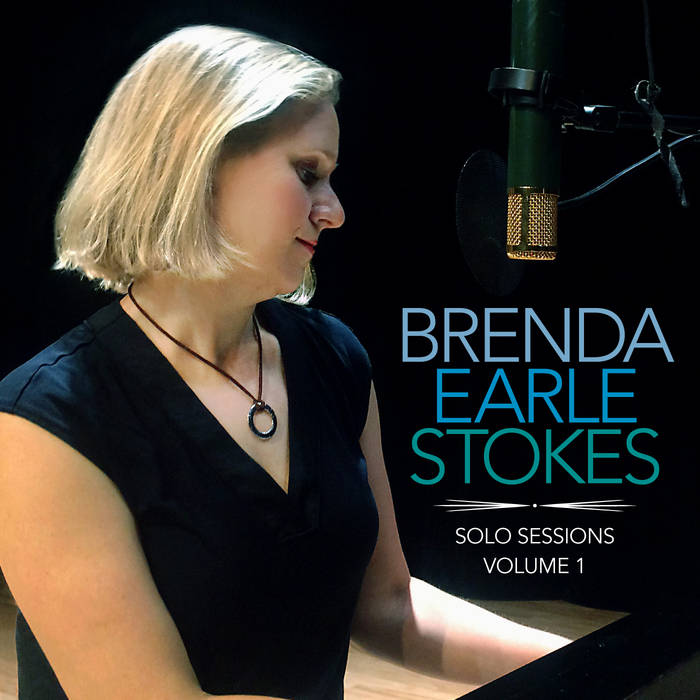
Brenda Earle Stokes - Solo Sessions, Vol. I (AllSheNeeds Music) - One can never know what will befall them when they move away from home.  School, jobs, marriage, and children (and much more) change most people so that when they come home, they are changed.  Vocalist-educator-pianist Brenda Earle Stokes was raised in Sarnia, Ontario, Canada, where she went to school, took piano lessons (from the age of four), where she performed, and became prepared to study further in the "Big City."  She has performed on cruise ships, taught and performed in places and far-flung as Australia and New Zealand.  Since 2002, Ms. Stokes has issued four albums that feature standards and originals backed by session men and friends.  She is featured on piano on various tracks but the focus has always been on her voice.

Album #6 brings her home, right to the Sarnia Public Library into the performance room where she played as a young girl and participated in other events.  This is not the first time she's recorded singing and playing the keys but it's the first time she has felt compelled to "go it alone" on record (she had done so in concert). No need to worry as the recording is a stone joy from the opening notes to the close.  Along the way, Ms. Stokes explores songs from the Great American Songbook, from Brazil, from the years the she was growing up, and even back to a Leroy Carr blues (from the 1930s).  That track, "How Long Blues", displays her chops with a blow to Memphis Slim. Another delightful surprise is the slinky version of "The Power of Love" (the Huey Lewis & The News tune from the 1985 movie "Back to the Future") – not only is the music deeply funky but there's a bit of gospel feel in there as well.  There's a delightful version of Steve Swallow's "Ladies in Mercedes" (with lyrics by Norma Winstone)  and a lovely take of Dave Brubeck's "Strange Meadowlark." That latter track appears on the pianist's classic 1959"Time Out" Lp; here, Ms. Stokes adds Iona Brubeck's lyrics  and really digs into the piece.

There's plenty more so check out "Solo Sessions, Vol. 1" – revel in the music and the fact that there's more to come!  Brenda Earle Stokes, whose voice has alway been appealing to these ears, shows just how fine a pianist she is as both an accompanist and soloist.  Put on the music, sit back, and enjoy.

For more information, go to brendaearle.com.

Here's Ms. Stokes's version of a song by the trio of Billy Steinberg, Rick Nowels, and Marie Claire D'ubaldo first recorded by K.D. Lang:


Champian Fulton can play piano, she can sing, she can swing, she can be sassy, and can be silky smooth.  Over the past dozen years, she's had 10 albums as a leader or lead singer. Number 11 is a delightful live session recorded late February of this year in Vancouver, British Columbia, Canada, and featuring Ms. Fulton alongside tenor saxophonist Cory Weeds.  "Dream a Little..." (Cellar Live Records) finds the duo exploring nine standards and one original over the course of an hour.  It's quite a treat to hear Weeds weave his tenor lines around the piano on "Fly Me To The Moon" and carrying on a conversation with Ms. Fulton's vocal on "Darn That Dream".  One can hear traces of Sarah Vaughan and Betty Carter on the latter track plus dig the Art Taum-esque piano solo on this most delightful ballad.

Mr. Weeds leads the way into "Tangerine": soon, the duo is off and running its respective way through the changes.  Ms. Fulton is an excellent accompanist, giving her partner a lovely cushion of chords to play as well as a sprightly bass line.  The pianist takes the lead on "I'd Give a Dollar for a Dime", pleading for the coin to play a one song on the juke box.  Mr. Weeds plays an expansive blues-tinged counterpoint. The album closes with Buddy Johnson's "Save Your Love For Me".  Using the Eddie "Lockjaw" Davis arrangement, the duo dogs in and swings the heck out of the piece.  Pay attention to how the piano colors the background behind the expansive tenor solo.  Make sure to check out the great piano solo that follows.  A bit of Earl "Fatha" Hines, James P. Johnson, and Eubie Blake plus a whole bunch of Champian Fulton makes for a finger-snapping treat.

"Dream a Little..." is a lot of fine music in one dynamic duo package. Champian Fulton & Cory Weeds certainly had fun that night (check out the pianist's giddy response to the tenor solos) and you will as well once you surrender to the sweet sounds.

For more information, go to www.champian.net.


To paraphrase one of the more famous advertising phrases of early 20th Century (see here), "They smile when Laszlo Gardony sits at the piano, because they know, they're going to hear some great music before he stands back up."  His new solo piano album, "La Marseillaise" (Sunnyside Records), was recorded live in March at the Berklee College of Music Keys Fest.  While his small group has always been impressive, when he plays sans accompaniment, Gardony just seems more expressive.  Plus his programs always combine originals, fully improvised pieces, standards, and pieces that mesh blues, gospel, New Orleans, and r'n'b into magical works.   Every time I have seen Mr. Gardony play in concert, he's smiling and having the time of his life – even though this is a recording, that happiness comes through loud and clear on this album!

The opening track, "Revolution" (one of five original pieces), is based on the French Revolution-inspired song that gives the album its title.  After the classical-style reading of the theme, the pianist's left hand gets into quite a boogie-woogie groove.  Note the up-tempo rhythm the pianist gives "O Sole Mio" making the song feel more like Myra Melford than Elvis Presley "It's Now or Never").  In the middle of the program, the mood goes to introspection on Errol Garner's "Misty" – it's such a lovely reading, a bit bluesy yet always melodic.  That's followed by a powerful performance of fellow pianist (and label mate) Denny Zeitlin's classic "Quiet Now."  Also introspective in nature, Mr. Gardony plays so expressively that it seems like the piano is singing.

There are two fully improvised pieces. "Four Notes Given" is based on four notes suggested by the audience and the pianist elaborates on those tones.  The resulting music has a hypnotic sound not unlike the solo piano work of Keith Jarrett.  "On The Spot", an apt title, builds quickly from the initial melodic fragment; it's rapid pace and long flowing lines leaves the listener breathless.

"La Marseillaise" closes with another original, "Bourbon Street Blues", a piece first recorded in a small group setting. Played solo, the music has the feel of an Allen Toussiant composition right down to the dancing left hand and the rollicking melody lines. There is no way one can feel blue listening to the music. Laszlo Gardony plays with such verve, empathy, and downright ebullience tha one feels the urge to hit "repeat" each time the final applause dies down.  As I write this, we're heading into the "darker" months of the year so let "La Marseillaise" carry you through the grey days and crisp, chilly, nights!

For more information, go to LGJazz.com.

Here's the opening cut:


Saturday, October 19, 2019

A Gift of Trio Music to Celebrate 10 Years

In 2008, pianist Fred Hersch began to deal with bad reactions from the medications he was taking for his AIDS-related issues.  In the beginning of that year, he became psychotic and paranoid, holing up in his New York City apartment.  The doctors changed his medications and, by the end of March, he was feeling better. He was able to record with his Pocket Orchestra in May but several weeks after that gig, the pianist fell into a coma where he remained for over two months. His recovery took the better part of eight months, many of which were spent away from the piano.  When he was feeling better, he organized a new trio, an ensemble that features bassist John Hébert and drummer Eric McPherson.  That trio celebrates its 10th anniversary in 2019 and its label, Palmetto Records, has decided to release the Trio's albums in a six-CD box set titled "10 Years / 6 Discs".

Over the decade, I have reviewed five of the six albums released here, the only not covered was the Trio's debut "Whirl." That album, recorded in January of 2010 (less than year after Mr. Hersch began playing again), set the tone for the next decade (save for the fact there's not a piece by Thelonious Monk, one of the pianist's musical mentors).  Yet, one can hear the wonderful interactions of the rhythm section, the wonderful and adventurous solos from the pianist that hint at classical music – he has such a fine left hand and Hébert's attentive and melodic bass work gives the leader plenty of inventive space. Pay attention to McPherson as well, his sensitivity and swing, how he "decorates" ballads with his brush work, ands intelligent use of cymbals.

Photo: John Abbott
Many writers compare Fred Hersch to Bill Evans and/or Keith Jarrett; yet, I've been listening to Mr. Hersch since his early albums since his early albums with Art Farmer and  Jane Ira Bloom.  One can hear that he is a close listener, attentive to the needs of the person leading the group or acting an equal partner in a duo setting.  Plus he can swing with the best of them (there are times he reminds this writer of Hank Jones – perhaps it's his ability to play songs from different genres and make them his own, whatever, they are both such intelligent musicians.

"10 Years / 6 Discs" is the perfect gift for someone who wants to hear contemporary jazz at its finest.  there's not a weak moment among the albums and few, if any cliches. It's very hard to pick one album over the other.  The Fred Hersch Trio is one of the best "piano trios" on the scene today and one always hopes to hear mote from them.  Buy the album and go see them live. In fact, no matter who Fred Hersch is playing with (or even playing solo), go see him – his music will make you smile, sigh, give you hope, and make you move your feet.

For more information, go to fredhersch.com.

Here's the Trio in action from 2017 with "Skipping", a song that appeared on both "Whirl" and the Trio's 2018 "Live in Europe" albums: