I posted a review of the new Taylor Ho Bynum Sextet CD this morning and forgot to add that he's playing this Saturday evening (11/19) at 8 p.m. in The Big Room, 319 Peck Street in the Elm City. The composer/cornetist is appearing with Positive Catastrophe, the 10-member band he co-leads with Abraham Gomez-Delgado (vocals, percussionist). The band plays a fascinating mix of Latin, progressive jazz and world music (the co-leaders call it "trans-idiomatic") and they do it with panache and great joy. The other members of the band include Kamala Sankaram (voice, accordion), Mark Taylor (french horn), Reut Regev (trombone), Matt Bauder (tenor saxophone), Michael Attias (baritone saxophone), Pete Fitzpatrick (electric guitar), Alvaro Benavides (electric bass) and Tomas Fujiwara (drums). The New Haven gig is the second in a 4-day jaunt that starts in New York City on Thursday and ends on Sunday in Baltimore. The band is working on new material in preparation for its second CD (to be released on Cuneiform Records in the Spring of 2012.) Seating is limited for The Big Room so send an email to thebigroomnewhaven@gmail.com and reserve your tickets. To find out more about this adventurous group, go to www.cuneiformrecords.com/bandshtml/positive.html.
Israeli-born guitarist Assaf Kehati came to the United States in 2007 to study at the New England Conservatory of Music in Boston, Massachusetts. There, he had the opportunity to study and play with saxophonist George Garzone, pianist Ran Blake and drummer Billy Hart. "Flowers and Other Stories" (AK Jazz) is his 2nd release and also the 2nd one to feature his Israeli "working band" of Alon Farber (saxophone), Daniel Sapir (bass) and Udi Shlomo (drums). Kehati's music is a pleasing blend of jazz and world music influences with an occasional touch of adult-contemporary rock music. One of the most pleasant aspects of the program is that the compositions and arrangements are so intelligent - this is not just theme-solo-theme music. Kehati's round tone may remind some of Kurt Rosenwinkel and Pat Metheny; his single-note runs rise pleasingly over the lively and involved rhythm section ("Mr. Mario" shows them at their best, both reacting to and pushing Kehati forward.) There's a melancholy sweetness to "Tali" and Farber's fluid soprano saxophone. Shlomo's drumming has a conversational feel yet is not intrusive. Kehati's hypnotic guitar chording leads in the 12-minute "The Most Beautiful Flower"; his solo, following Farber's reading of the theme, starts so quietly, little fragments of melody supported by Sapir's long bass tones and the gentle drum work. As the solo continues, the intensity builds and Kehati's lines get longer until Farber takes over and goes on his own dynamic roller-coaster. Again, Shlomo's drum work stands out, his propulsion and fire leading to the quiet guitar chords that slowly take the song to its conclusion.
"Don't Attack" is another long piece (just under 10 minutes) that starts as a ballad and again Farber's sweet soprano lays out the melodic theme. As he moves through his fine solo, the rhythm section begins to intensify their attack and continue the driving support as Kehati digs deeply for his solo. Sapir's bass work on "The Snow and the Sun" is exemplary, quite melodic even as he is supportive. Here, Farber's tenor saxophone explores a melody that is closer to folk-rock. The final track, "Invisible Green", is a ballad all the way through. Farber sits out as the guitarist plays the plaintive theme (reminiscent of Pat Metheny but also one might hear The Beatles in several of the chord patterns) and delivers a solo filled with rippling lines and bell-like tones.
"Flowers and Other Stories" does not hit the listener over the head with pounding rhythms and long, complicated, solos. Instead, it is thoughtful and thought-provoking music that attracts one with its melodic framework, its dynamic variations and strong instrumental work from all involved. Music to ponder not to blast through the house. For more information, go to www.assafkehati.com.
Gerald Wilson, composer and bandleader, turned 93 in September of this year. Mack Avenue released his latest CD, "Legacy", in July and Jason Crane of The Jazz Session conducted a 2-part interview with the master arranger that he posted in late October. Thanks to the late October snowstorm here in Central Connecticut, our yard is filled tree limbs and scattered branches. Listening to Mr. Wilson account of how he got started in the world of jazz made the cleanup go a lot easier. Crane let the Mississippi native dominate the conversation and the story of his time with Jimmy Lunceford as well as how Eleanor Roosevelt coerced the United States Navy to start a jazz band in World War II is both entertaining and priceless. Go to thejazzsession.com/2011/10/24/the-jazz-session-318-gerald-wilson-part-1/ and enjoy the history (and civics) lesson.
Monday, November 14, 2011
Catching Fire in the Firehouse + CD Picks by CT Musicians
That's saxophonist Jeff Lederer and drummer Matt Wilson on the left - both gentlemen will be in New Haven on Friday night (11/18) as Lederer's Sunwatcher quartet performs 2 sets at Firehouse 12, 45 Crown Street. Joining them will be bassist Avery Sharpe and pianist Jamie Saft, playing a program described as a "love letter to Albert Ayler. Lederer, a native of Los Angeles, California, is a long-time member of Wilson's Quartet. He's a fiery player (not unlike Ayler) who doubles on clarinet and writes songs that stretch time and melodies that burn with intensity as do the solos that follow. He's recorded 4 CDs with his wife, the vocalist Mary LaRose, that combine folk, jazz and world music influences plus he leads Shakers 'n' Bakers, a group whose repertoire comes from the ecstatic music of the Shaker religious sect. Lederer is an educator and has also created an arrangement of Vivaldi's "Four Seasons" for chamber orchestra and Salsa band(!)
I expect that performance space/recording studio is going rock when Sunwatcher hits the stage. The first set begins at 8:30 p.m. with the second at 10. For tickets, call 203-785-0468 or go to firehouse12.com. To learn more about Jeff Lederer and his music, go to www.littleimusic.com.
Chuck Obuchowski interviews Jeff Lederer on WWUH-91.3 FM Tuesday morning 11/15 at 10 a.m. You can listen online at wwuh.org.
Firehouse 12 is also excited about its latest CD release, "Apparent Distance" by the Taylor Ho Bynum Sextet. Cornetist Bynum created the 43-minute long 4-part Suite with support from Chamber Music America New Jazz Works and the Doris Duke Charitable Foundation. Recorded at the Firehouse in New Haven (where Bynum now resides with his wife, the dancer/choreographer/teacher Rachel Bernsen), the music is, at turns, bluesy, hard-edged, "in-the-pocket", conversational, raucous and exciting. Written for his "working" sextet of Bill Lowe (bass trombone), Jim Hobbs (alto saxophone), Mary Halvorson (electric guitar), Ken Filiano (bass) and long-time friend Tomas Fujiwara, the "Suite" opens with "Shift"; Bynum starts the piece with one of his signature statements, moving rapidly through phrases, stopping short to smear notes or squeal like a teapot. Lowe and Hobbs join in for a 3-part discussion that is ballad-like in structure that leads directly into "Strike", a rapid-motion rhythmic piece built off the propulsive drumming of Fujiwara, the pulsating bass of Filiano and the furious strumming of Halvorson. Hobbs, Bynum's cohort in The Fully Celebrated Orchestra, takes the first solo, building to a hyper-climax. Everyone stops for Bill Lowe's tuba solo, a growling, multi-phonics filled, statement that allows Filaino's bowed bass to join in with the sax and cornet quietly keening in the background. The longest section (at nearly 21 minutes), "Source" opens with an understated guitar solo before Bynum steps up and joins Halvorson in a dialog. Later in the piece, Hobbs' alto solo ignites the rhythm section into creating a fiery conversation. The final section, "Layer", moves through various sonic landscapes, ending in a funereal march led by highly amplified and distorted guitar lines and martial drumming.
I was lucky enough to see and hear the Bynum Sextet play this music several times before they committed it to CD. Though much of it notated, there's room for the musicians to "speak their piece" within the framework of the composition. "Apparent Distance" is Taylor Ho Bynum's most complete work; his influences (Bill Dixon, Anthony Braxton, Lester Bowie) have been absorbed and what the listener hears is fresh, exciting and forward-looking. To find out more, go to taylorhobynum.com.
Over the past decade, I have heard a lot about and read even more about the Curtis Brothers. The Hartford, Connecticut, natives have been turning heads since their teenage years and time spent at Jackie McLean's Artist Collective and the Greater Hartford Academy of the Performing Arts. Their 2009 recording, "Blood.Spirit.Land.Water.Freedom", displayed pianist Zaccai's burgeoning composing talent and ability to infuse the pieces with both jazz and contemporary Latin influences. Bassist Luques has worked with a slew of jazz artists, from Gary Burton to Dave Valentin to Christian Scott as well as trumpeter Brian Lynch, saxophonist Donald Harrison and drummer Ralph Peterson.
The latter 3 appear on "Completion of Proof" (Truth Revolution Records), the Brothers' 3rd CD and most fully realized program. Zaccai composed and arranged the entire album and it's his propulsive piano mixed with Luques' rock-solid bass lines and Peterson's highly-active drumming that is the heart of this music. The majority of the pieces are up-tempo, replete with strong melodies and arrangement that allow each soloist to dig in. It's Lynch one hears first on the opening track, "Protestor", and he works well against the rhythmic tidal wave beneath him. Alto saxophonist Harrison actually stokes the fire higher and one can hear Peterson react with his "conversational" drums. Zaccai goes next and he, too, spars with Peterson - the results are exhilarating. The mid-section of the CD is dedicated to the 3-part "Manifest Destiny Suite" - joining the rhythm section and Lynch are alto saxophonist Joe Ford, tenor saxophonist Jimmy Greene, bata player Pedro Martinez (2 tracks) and percussionist Rogerio Boccato (1 track). This is not music for the faint of heart. "The Wrath" builds off the strong percussion and McCoy Tyner-like chords to include strong solos and great interaction. "Mass Manipulation" is more thoughtful, Lynch's lyrical lines over the cascading saxophones, rippling piano, the counterpoint from the bass and shimmering percussion. Here, the arrangement has the saxophones playing echoing lines that lead into Greene's forceful statement and a strong bass solo. The title track blends Latin rhythms, be-bop horn lines and hard-bop drive into a heady plunge into the politics of occupation. Zaccai's piano solo is a dazzling blend of rapid-single note runs that push Peterson into driving even harder. "Sol Within" starts softly but gets louder on the strength of Reinaldo De Jesus pushing the tempo on the Barriles de Bomba (drums made from the wood of rum barrels.) Lynch and Zaccai both take fine solos, the latter creating an exciting interaction with the drummers.
I expect that performance space/recording studio is going rock when Sunwatcher hits the stage. The first set begins at 8:30 p.m. with the second at 10. For tickets, call 203-785-0468 or go to firehouse12.com. To learn more about Jeff Lederer and his music, go to www.littleimusic.com.
Chuck Obuchowski interviews Jeff Lederer on WWUH-91.3 FM Tuesday morning 11/15 at 10 a.m. You can listen online at wwuh.org.
Firehouse 12 is also excited about its latest CD release, "Apparent Distance" by the Taylor Ho Bynum Sextet. Cornetist Bynum created the 43-minute long 4-part Suite with support from Chamber Music America New Jazz Works and the Doris Duke Charitable Foundation. Recorded at the Firehouse in New Haven (where Bynum now resides with his wife, the dancer/choreographer/teacher Rachel Bernsen), the music is, at turns, bluesy, hard-edged, "in-the-pocket", conversational, raucous and exciting. Written for his "working" sextet of Bill Lowe (bass trombone), Jim Hobbs (alto saxophone), Mary Halvorson (electric guitar), Ken Filiano (bass) and long-time friend Tomas Fujiwara, the "Suite" opens with "Shift"; Bynum starts the piece with one of his signature statements, moving rapidly through phrases, stopping short to smear notes or squeal like a teapot. Lowe and Hobbs join in for a 3-part discussion that is ballad-like in structure that leads directly into "Strike", a rapid-motion rhythmic piece built off the propulsive drumming of Fujiwara, the pulsating bass of Filiano and the furious strumming of Halvorson. Hobbs, Bynum's cohort in The Fully Celebrated Orchestra, takes the first solo, building to a hyper-climax. Everyone stops for Bill Lowe's tuba solo, a growling, multi-phonics filled, statement that allows Filaino's bowed bass to join in with the sax and cornet quietly keening in the background. The longest section (at nearly 21 minutes), "Source" opens with an understated guitar solo before Bynum steps up and joins Halvorson in a dialog. Later in the piece, Hobbs' alto solo ignites the rhythm section into creating a fiery conversation. The final section, "Layer", moves through various sonic landscapes, ending in a funereal march led by highly amplified and distorted guitar lines and martial drumming.
I was lucky enough to see and hear the Bynum Sextet play this music several times before they committed it to CD. Though much of it notated, there's room for the musicians to "speak their piece" within the framework of the composition. "Apparent Distance" is Taylor Ho Bynum's most complete work; his influences (Bill Dixon, Anthony Braxton, Lester Bowie) have been absorbed and what the listener hears is fresh, exciting and forward-looking. To find out more, go to taylorhobynum.com.
The latter 3 appear on "Completion of Proof" (Truth Revolution Records), the Brothers' 3rd CD and most fully realized program. Zaccai composed and arranged the entire album and it's his propulsive piano mixed with Luques' rock-solid bass lines and Peterson's highly-active drumming that is the heart of this music. The majority of the pieces are up-tempo, replete with strong melodies and arrangement that allow each soloist to dig in. It's Lynch one hears first on the opening track, "Protestor", and he works well against the rhythmic tidal wave beneath him. Alto saxophonist Harrison actually stokes the fire higher and one can hear Peterson react with his "conversational" drums. Zaccai goes next and he, too, spars with Peterson - the results are exhilarating. The mid-section of the CD is dedicated to the 3-part "Manifest Destiny Suite" - joining the rhythm section and Lynch are alto saxophonist Joe Ford, tenor saxophonist Jimmy Greene, bata player Pedro Martinez (2 tracks) and percussionist Rogerio Boccato (1 track). This is not music for the faint of heart. "The Wrath" builds off the strong percussion and McCoy Tyner-like chords to include strong solos and great interaction. "Mass Manipulation" is more thoughtful, Lynch's lyrical lines over the cascading saxophones, rippling piano, the counterpoint from the bass and shimmering percussion. Here, the arrangement has the saxophones playing echoing lines that lead into Greene's forceful statement and a strong bass solo. The title track blends Latin rhythms, be-bop horn lines and hard-bop drive into a heady plunge into the politics of occupation. Zaccai's piano solo is a dazzling blend of rapid-single note runs that push Peterson into driving even harder. "Sol Within" starts softly but gets louder on the strength of Reinaldo De Jesus pushing the tempo on the Barriles de Bomba (drums made from the wood of rum barrels.) Lynch and Zaccai both take fine solos, the latter creating an exciting interaction with the drummers.
One can clearly hear on "Completion of Proof" that The Curtis Brothers are not only carrying on the jazz tradition but adding fresh ideas into the ongoing fusion that is jazz. They take no shortcuts but play with vigor, honesty and the purest of intentions - creating a better world through musical interactions. To find out more, go to curtisbrothersmusic.com.
Saturday, November 12, 2011
3 Cohens + 1 + 1 More (Not Related)
Yuval (soprano saxophone), Anat (tenor saxophone, clarinet) and Avishai (trumpet) are the children of Bilha and David Cohen. Born and raised in Tel Aviv, Israel, the siblings attended the Thelma Yellin High School of Arts and, thanks to scholarships from Israel-American cultural foundations and the World Scholarship Tours, they were able to attend Berklee School of Music. Yuval is the only one of the 3 to live in Israel - he is currently a Professor of Music at the Rubin Academy of Music & Dance in Jerusalem; he also teaches at the Rimon School for Jazz and Contemporary Music, at his alma mater Thelma Yellin High School and is the conductor of the big band of the Tel Aviv Music Conservatory. Most jazz fans know that Anat has worked with the DIVA Big Band and currently leads several groups. Avishai holds down the trumpet chair in the SF Jazz Collective, tours and records with Third World Love and his own Triveni Trio. He's also now part of trumpeter Dave Douglas's Tea for Three, a sextet that also features trumpeter Enrico Rava.
"Family" (Anzic Records) is the 3 Cohens' 3rd CD. The self-produced recording features the exciting rhythm section of Aaron Goldberg (piano), Matt Penman (bass) and Gregory Hutchinson (drums). After meeting and gigging with vocalist Jon Hendricks, the Cohens invited the 90-year old scat master to record several tracks. He ambles through a sweet reading of "On the Sunny Side of the Street" getting great support from pianist Goldberg. After an impressive and jaunty scat solo, the Cohens take the tune to New Orleans, trading "fours" and then playing together for a chorus. Hendricks also graces the final track, "Roll 'Em Pete", an uptempo romp with a pretty sprightly "vocalese" solo followed by a raucous clarinet spot from Anat. Yuval then takes off on the soprano then hands the spotlight to Avishai for a bluesy solo. Goldberg swings mightily then cedes the floor to
Penman and Hutchinson. 5 minutes of pure joy that ends way too soon.
If you only listen to the opening 3 tracks, you'd think the family was making a tribute to Charles Mingus. The blues-drenched "Shufla De Shufla" with its hard-edged drive and fiery solos can be compared to "Wednesday Night Prayer Meeting" and "Haitian Fight Song" while "Blues for Dandi's Orange Bull Chasing An Orange Sack" opens with a George Gershwin-like piano solo the front line moves into a rapid hard-bop melody. The third track, "With the Soul of the Greatest of Them All" is sub-titled "Dedicated to Charles Mingus" - Penman starts the tune off with a muscular solo and Yuval's splendid soprano soars through the melody line and chord structure that suggests the great bassist-composer without imitating him.
There are several fascinating covers including a New Orleans style arrangement of Duke Ellington's "The Mooch" followed by a up-tempo, modernistic, jaunt through "Do You Know What It Means to Miss New Orleans." Anat supplies a Middle-Eastern intro to "Tiger Rag" which then jumps right into a clarinet romp that would please Benny Goodman. She and Avishai pull out the stops for one chorus then Penman and Goldberg hit it hard.
Avishai's title track is a sweet ballad with a stunning arrangement for the saxes and trumpet plus more excellent work from the rhythm section. Goldberg is quite sympathetic here, supporting and supplying a rich chordal backdrop. He leads the group in and quietly takes the piece out.
"Family" is a real treat, well-played, smart arrangements, solid songs and a real sense of a group having a great doing what they love. That all starts with the close-knit Cohens and the joy that emanates from their love and respect for each other as well as their great knowledge of the jazz tradition. And, with Jon Hendricks as the icing on the musical cake, this CD is loads of fun. For more information, go to 3cohens.com.
In 2009, Yuval Cohen recorded a duo CD with his good friend and pianist Shai Maestro. Over the course of 3 sessions in a Jerusalem , they produced "Song Without Words" (Anzic Records), 8 intimate musical conversations. The 24-year old pianist is best known for his association with Israeli-born bassist-composer Avishai Cohen (no relation to Yuval and his family) and will be releasing his debut CD as a leader in 2012.
But, this recording is a series of sweet encounters throughout. The hypnotic melody line that permeates the title track hints at a Brazilian love song while the melody and rhythm of "Nehama" reminds the listener of Erik Satie and Paul Simon. The duo plays with the structure of "Bye Bye Blackbird", hinting at the melody as they dance around each other. Yuval's playful solo quotes several different tunes while Maestro romps gaily through the chords. The impressionistic aural painting of Johnny Mercer & Hoagy Carmichael's "Skylark" is heartfelt, the soprano sax lines hinting at the latter composer's laconic vocal style. The duo offer a fun romp through John Coltrane's "26-2", with fine unison playing on the theme and "Giant Steps" style chords from the pianist (dig the quick double-time lines Maestro throws in several times.) "Shir Hasade" (the Song of the Field) is a work by noted Israeli composer David Zehavi (1910-1977); the piece has a lovely melody and this emotional performance has to be a reflection of the love the musicians have for their native land.
"Song Without Words" may remind some listeners of "Red Lanta", the 1973 ECM recording of pianist Art Lande and reed player Jan Garbarek. Several of the pieces that Yuval Cohen and Shai Maestro create here have the same innocence and sweetness that the earlier duo displayed on several tracks. Both recordings are conversations, not competitions, encounters where melody and harmony are king and queen, where the interplay is intuitive, not forced. During the recent power outage in Connecticut, this CD, along with Dan Tepfer's delightful "Goldberg Variations/Variations", kept me sane and entertained in the car. For more information, go to www.yuvalcohenmusic.com.
Pianist Emmet Cohen (no relations to any other Cohen in this review) recorded his debut CD, "In The Element" (Badabeep) in August of 2010 when he was 20 years old. However, he is no newcomer, having started piano at the age of 3. He later studied at the Youth Keyboard program at the University of Miami and, at the age of 10, was accepted in the Manhattan School of Music Pre-college Program. He's won a slew of awards and came in third in the 2011 Thelonious Monk Piano Competition.
So, can Emmet Cohen play? Yes, can he play! This program features the fine rhythm section of Joe Sanders (bass) and Rodney Green (drums) - they push him hard on the uptempo pieces and offer finely honed accompaniment on the slower or softer pieces. Trumpeter Greg Gisbert shows up for 3 tunes, his crisp tone leading the way on Cohen's funky hard-bop Cohen original "Just Deserts." The pianist and trumpeter caress "Good Morning Heartache", both delivering sweet solos while Sanders plays fine counterpoint and Green offers soft brush work. The trio rendition of Frank Foster's "Simone" is quite entrancing with good solos from all, especially bassist Sanders, a player with great melodic instincts (he's an integral member of pianist Gerald Clayton's trio and has also recorded with trumpeter Ambrose Akinmusire.) Cohen shows impressive "chops" on the burning "Resentment (Without Reason)", flying above the bass and drums. The title track also offers the listener an opportunity to hear the trio swing mightily, Cohen leading the way with passion.
Cohen goes it alone on "For All We Know" and creates a lovely piece, reminiscent of Fred Hersch, a pianist who makes sure we can always hear the melody even as he moves through different chordal variations. The young man displays his impressive skills but never at the cost of losing sight of the song's heart.
"In the Element" introduces Emmet Cohen, a young man with great talent and great promise. Joe Sanders and Rodney Green are a delight, allowing Cohen the freedom and breathing room he need to explore the myriad possibilities. To find out more, go to www.emmetcohen.com.
"Family" (Anzic Records) is the 3 Cohens' 3rd CD. The self-produced recording features the exciting rhythm section of Aaron Goldberg (piano), Matt Penman (bass) and Gregory Hutchinson (drums). After meeting and gigging with vocalist Jon Hendricks, the Cohens invited the 90-year old scat master to record several tracks. He ambles through a sweet reading of "On the Sunny Side of the Street" getting great support from pianist Goldberg. After an impressive and jaunty scat solo, the Cohens take the tune to New Orleans, trading "fours" and then playing together for a chorus. Hendricks also graces the final track, "Roll 'Em Pete", an uptempo romp with a pretty sprightly "vocalese" solo followed by a raucous clarinet spot from Anat. Yuval then takes off on the soprano then hands the spotlight to Avishai for a bluesy solo. Goldberg swings mightily then cedes the floor to
Penman and Hutchinson. 5 minutes of pure joy that ends way too soon.
If you only listen to the opening 3 tracks, you'd think the family was making a tribute to Charles Mingus. The blues-drenched "Shufla De Shufla" with its hard-edged drive and fiery solos can be compared to "Wednesday Night Prayer Meeting" and "Haitian Fight Song" while "Blues for Dandi's Orange Bull Chasing An Orange Sack" opens with a George Gershwin-like piano solo the front line moves into a rapid hard-bop melody. The third track, "With the Soul of the Greatest of Them All" is sub-titled "Dedicated to Charles Mingus" - Penman starts the tune off with a muscular solo and Yuval's splendid soprano soars through the melody line and chord structure that suggests the great bassist-composer without imitating him.
There are several fascinating covers including a New Orleans style arrangement of Duke Ellington's "The Mooch" followed by a up-tempo, modernistic, jaunt through "Do You Know What It Means to Miss New Orleans." Anat supplies a Middle-Eastern intro to "Tiger Rag" which then jumps right into a clarinet romp that would please Benny Goodman. She and Avishai pull out the stops for one chorus then Penman and Goldberg hit it hard.
Avishai's title track is a sweet ballad with a stunning arrangement for the saxes and trumpet plus more excellent work from the rhythm section. Goldberg is quite sympathetic here, supporting and supplying a rich chordal backdrop. He leads the group in and quietly takes the piece out.
"Family" is a real treat, well-played, smart arrangements, solid songs and a real sense of a group having a great doing what they love. That all starts with the close-knit Cohens and the joy that emanates from their love and respect for each other as well as their great knowledge of the jazz tradition. And, with Jon Hendricks as the icing on the musical cake, this CD is loads of fun. For more information, go to 3cohens.com.
In 2009, Yuval Cohen recorded a duo CD with his good friend and pianist Shai Maestro. Over the course of 3 sessions in a Jerusalem , they produced "Song Without Words" (Anzic Records), 8 intimate musical conversations. The 24-year old pianist is best known for his association with Israeli-born bassist-composer Avishai Cohen (no relation to Yuval and his family) and will be releasing his debut CD as a leader in 2012.
But, this recording is a series of sweet encounters throughout. The hypnotic melody line that permeates the title track hints at a Brazilian love song while the melody and rhythm of "Nehama" reminds the listener of Erik Satie and Paul Simon. The duo plays with the structure of "Bye Bye Blackbird", hinting at the melody as they dance around each other. Yuval's playful solo quotes several different tunes while Maestro romps gaily through the chords. The impressionistic aural painting of Johnny Mercer & Hoagy Carmichael's "Skylark" is heartfelt, the soprano sax lines hinting at the latter composer's laconic vocal style. The duo offer a fun romp through John Coltrane's "26-2", with fine unison playing on the theme and "Giant Steps" style chords from the pianist (dig the quick double-time lines Maestro throws in several times.) "Shir Hasade" (the Song of the Field) is a work by noted Israeli composer David Zehavi (1910-1977); the piece has a lovely melody and this emotional performance has to be a reflection of the love the musicians have for their native land.
"Song Without Words" may remind some listeners of "Red Lanta", the 1973 ECM recording of pianist Art Lande and reed player Jan Garbarek. Several of the pieces that Yuval Cohen and Shai Maestro create here have the same innocence and sweetness that the earlier duo displayed on several tracks. Both recordings are conversations, not competitions, encounters where melody and harmony are king and queen, where the interplay is intuitive, not forced. During the recent power outage in Connecticut, this CD, along with Dan Tepfer's delightful "Goldberg Variations/Variations", kept me sane and entertained in the car. For more information, go to www.yuvalcohenmusic.com.
Pianist Emmet Cohen (no relations to any other Cohen in this review) recorded his debut CD, "In The Element" (Badabeep) in August of 2010 when he was 20 years old. However, he is no newcomer, having started piano at the age of 3. He later studied at the Youth Keyboard program at the University of Miami and, at the age of 10, was accepted in the Manhattan School of Music Pre-college Program. He's won a slew of awards and came in third in the 2011 Thelonious Monk Piano Competition.
So, can Emmet Cohen play? Yes, can he play! This program features the fine rhythm section of Joe Sanders (bass) and Rodney Green (drums) - they push him hard on the uptempo pieces and offer finely honed accompaniment on the slower or softer pieces. Trumpeter Greg Gisbert shows up for 3 tunes, his crisp tone leading the way on Cohen's funky hard-bop Cohen original "Just Deserts." The pianist and trumpeter caress "Good Morning Heartache", both delivering sweet solos while Sanders plays fine counterpoint and Green offers soft brush work. The trio rendition of Frank Foster's "Simone" is quite entrancing with good solos from all, especially bassist Sanders, a player with great melodic instincts (he's an integral member of pianist Gerald Clayton's trio and has also recorded with trumpeter Ambrose Akinmusire.) Cohen shows impressive "chops" on the burning "Resentment (Without Reason)", flying above the bass and drums. The title track also offers the listener an opportunity to hear the trio swing mightily, Cohen leading the way with passion.
Cohen goes it alone on "For All We Know" and creates a lovely piece, reminiscent of Fred Hersch, a pianist who makes sure we can always hear the melody even as he moves through different chordal variations. The young man displays his impressive skills but never at the cost of losing sight of the song's heart.
"In the Element" introduces Emmet Cohen, a young man with great talent and great promise. Joe Sanders and Rodney Green are a delight, allowing Cohen the freedom and breathing room he need to explore the myriad possibilities. To find out more, go to www.emmetcohen.com.
Thursday, November 10, 2011
Unique
Alexander Berne is a musician/conceptualist who began his career as a jazz saxophonist who left the music world for over a decade and became immersed in the world of art. Still, music filled with his mind but not the jazz he had been playing. Now, he heard new instruments and, acting on his instinct, started to build a collection of reeds (for instance, there is a reed slide trumpet and a "saduk" that is a cross between a saxophone and a daduk, a double-reed pipe) that would create the myriad sounds he was imagining. Wine glasses, vacuum cleaner, prepared piano, specially tooled pipes, and much more become the rhythm section and front lines in this project. Calling his one-man operation the Abandoned Orchestra may suggest a desolate aural landscape but this program is so much more than that.
"Flickers of Mime/Death of Memes" (Innova) is the result of months creating sounds, mixing concepts, and being patient. And the listener must be patient as well. There is a story line in the notes but my suggestion is to first approach these 2 discs with open ears. The music , can be quiet with flowing lines that do not suggest recognizable melodies-yet, there are moments on the first disc when the rhythmic patterns suggest African rhythms meshing with the sounds of a gamelan. "Flicker III" conjures up the percussive experiments of Peter Gabriel in the 1980s while "Flicker IV" blends flute, saxophone and homemade reeds in a trance-like East Asian style. There are places when the percussion swirls, the reeds moan and swoop upwards and sounds enter from all sides, when a piano line will rise out of the aural stew and then be covered by random noises. The percussive drive on "Flicker VIII" beneath the dervish-like reed lines and keyboard swirls bears a strong resemblance to The Beatles' "Tomorrow Never Knows" while "Flicker X" channels Phillip Glass.
"Death of Memes" (Disc 2) begins with ominous percussion and an indeterminate direction but, as the piece moves forward, one hears the melodic fragments rise out of the mist, piano figures that recall Appalachian banjo lines and reeds that reflect the music of India and the Far East. There is a solemn beauty to the softness of "Meme III" while "Meme V" has rotating reed lines over a drone that remind this listener of the Muslim call to prayer blended with traditional South Indian melodies. "Meme VI" is a darker work; now the drone swells while the melody is a low, keening, wail. The steady drum beat (the heart) of "Meme VIII" fades in and out as the reeds rise and fall - we are walking through a sonic rainforest that is unfamiliar yet not uncomfortable. "Meme IX" is the closing prayer rising to an unseen power that reaches a peak then slowly fades to silence.
With "experimental" music such as this or certain works of Terry Riley, it takes the listener a while to find the emotional heart and, yes, this is an emotional experience. Alexander Berne is not concerned with displaying technical prowess, with reworking the ideas of other people. Like John Cage, Anthony Braxton, Henry Threadgill and the author James Joyce, he has created a language that is all his own from what has come before. "Flickers of Mime/Death of Memes" is an adventure and a wondrous one at that. For more information, go to alexanderberne.com.
"Flickers of Mime/Death of Memes" (Innova) is the result of months creating sounds, mixing concepts, and being patient. And the listener must be patient as well. There is a story line in the notes but my suggestion is to first approach these 2 discs with open ears. The music , can be quiet with flowing lines that do not suggest recognizable melodies-yet, there are moments on the first disc when the rhythmic patterns suggest African rhythms meshing with the sounds of a gamelan. "Flicker III" conjures up the percussive experiments of Peter Gabriel in the 1980s while "Flicker IV" blends flute, saxophone and homemade reeds in a trance-like East Asian style. There are places when the percussion swirls, the reeds moan and swoop upwards and sounds enter from all sides, when a piano line will rise out of the aural stew and then be covered by random noises. The percussive drive on "Flicker VIII" beneath the dervish-like reed lines and keyboard swirls bears a strong resemblance to The Beatles' "Tomorrow Never Knows" while "Flicker X" channels Phillip Glass.
"Death of Memes" (Disc 2) begins with ominous percussion and an indeterminate direction but, as the piece moves forward, one hears the melodic fragments rise out of the mist, piano figures that recall Appalachian banjo lines and reeds that reflect the music of India and the Far East. There is a solemn beauty to the softness of "Meme III" while "Meme V" has rotating reed lines over a drone that remind this listener of the Muslim call to prayer blended with traditional South Indian melodies. "Meme VI" is a darker work; now the drone swells while the melody is a low, keening, wail. The steady drum beat (the heart) of "Meme VIII" fades in and out as the reeds rise and fall - we are walking through a sonic rainforest that is unfamiliar yet not uncomfortable. "Meme IX" is the closing prayer rising to an unseen power that reaches a peak then slowly fades to silence.
With "experimental" music such as this or certain works of Terry Riley, it takes the listener a while to find the emotional heart and, yes, this is an emotional experience. Alexander Berne is not concerned with displaying technical prowess, with reworking the ideas of other people. Like John Cage, Anthony Braxton, Henry Threadgill and the author James Joyce, he has created a language that is all his own from what has come before. "Flickers of Mime/Death of Memes" is an adventure and a wondrous one at that. For more information, go to alexanderberne.com.
Tuesday, November 8, 2011
Rites Make Mighty Music + Bass-less Trios
Saxophonist-composer Marty Ehrlich brings his Rites Quartet to Firehouse 12 in New Haven this week (11/11/11) for 2 sets, 8:30 and 10 p.m. Ehrlich, a native of St. Louis, Missouri, has been involved in the creative music scene since his teen years when he performed with the Human Arts Ensemble, an improvisatory group with a similar approach to the Art Ensemble of Chicago. After attending the New England Conservatory of Music in Boston, Ehrlich (a fine clarinettist as well as an excellent alto saxophonist) moved to New York City. Over the past 3+ decades, he's worked and recorded with Muhal Richard Abrams, Oliver Lake, Anthony Braxton, Leroy Jenkins, Myra Melford and Julius Hemphill. His association with Hemphill(1938-1995) still resonates in Ehrlich's music, through his passionate musicianship, the blues-soaked melodies and the exciting, challenging, ensembles that he leads.
The group he brings to the Elm City - cellist Erik Friedlander, trumpeter Ron Horton and drummer Ben Perowsky - plays music that hearkens back to and expands upon the music Hemphill created for his ground-breaking "Dogon A.D." Lp. The blend of Ehrlich's plaintive alto sax and the fullness of the cello lines is complimented by the sharp brass and exciting drumming. The quartet's 2009 debut CD, "Things Have Got To Change" (Clean Feed), featured Freidlander, trumpeter James Zollar and drummer Pheroan akLaff, is a splendid recording that includes 3 pieces from Hemphill. For ticket information, go to firehouse12.com or call 203-785-0468.
Upon initial listening to "Pink Paradise" (Naive), the 2nd CD by the French "power trio" Sidony Box, I heard parallels to the music of the late drummer Tony Williams' Lifetime. That group,featuring the powerful guitar work of John McLaughlin and the fiery organ of Larry Young, took its cue from the electric fusion of Miles Davis and moved it even further "out." Instead of organ, Sidony Box utilizes the melodic alto saxophone of Elie Dalibert yet one can connections to Lifetime in the excellent guitar playing of Manuel Adnot and the colorful, inspired, drumming of Arthur Narcy. There are several pieces, including the opening track "Last Star", where the Narcy is the lead voice (without being a soloist) for long stretches. His "machine gun" snare and pounding floor tom lead the way on "Suédois", a powerful work framed by Adnot's guitar with an emotional alto solo. "Léman" is reminiscent of John Abercrombie's "Timeless"; this is a soft meditative work that moves slowly over its 10 minutes, the volume rarely rising above a whisper. That is followed by "Ultimate Pop Song" which also takes some time before the volume picks up but turns out to sound like its title, with a handsome melody played by alto and atmospheric guitar.
The propulsive "Tatooine" , the punkish "TMNT", the incendiary "Suédois" and the squalling "Wilson" (hints of "death metal") led me to make the Tony Williams' Lifetime connection. And when Sidony Box changes gears, the contrast is delightful. Altogether, "Pink Paradise" is, at times, noisy but always entertaining. To hear for yourself, go to en.naive.fr/#/artist/sidony-box.
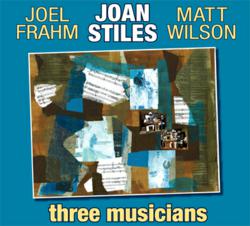
I must admit that I am always pleased to see the names of Matt Wilson (drums) and Joel Frahm (tenor saxophone, soprano saxophone) on the cover of recordings. Both are exhilarating, expansive, musicians who play with a seeming ego-less blend of intelligence and wit. And, you will discover by the end of the first few tracks, so does the leader.
Brooklyn, NY, native Joan Stiles (piano) started out playing guitar in her teenage years but soon moved to keyboards. Later, after starting a family, she went back to school to study classical music and soon began studying jazz piano with Dick Katz and, later, with Harold Danko.
"Three Musicians" (Oo-Bla-Dee Music) is her 3rd CD. 10 of the 12 tracks are standards with one, "In the Sunshine of My Funny Valentine's Love" that is a snappy mash-up of Cream, the Richard Rodgers' melody from "Babes in Arms" and a theme from J.S. Bach. The other catchy medley, "Brother, Can You Spare a Dime" paired with "Can't Buy Me Love" may sound like a "cutesy" idea but is really inspired and downright fun. The 3 tracks in the middle of the program - "All The Things You Are", "Blood Count" and Mary Lou Williams' "O.W." - are duets with Frahm that sparkle with ideas and interplay. "Blood Count", the lovely Billy Strayhorn melody, one of the last songs he composed, is striking in its emotional content yet both the pianist and saxophonist (Frahm playing high in the tenor's range) create a performance that is neither saccahrin nor lifeless. The 2 Thelonious Monk tunes, "Introspection" and "Nutty", live up to their names and notable for Frahm's excellent solo on the former and Stiles' intelligent accompaniment (dig the "Rhapsody in Blue" quotes) on the latter (love Wilson's martial and melodic drumming as well.)
Listeners can tell when musicians are just goofing or going through the motions. While there is much humor on "Three Musicians", Ms. Stiles, along with Messrs. Frahm and Wilson, are having a wonderful time and their joy radiates through the speakers. The ballads are sensitive without being sappy and the 2 originals show Ms. Stiles' myriad influences without aping any particular pianist. This CD should bring a broad smile to your face because the 3 musicians play music with heart, soul and joy. For more information, go to www.joanstilesmusic.com.
The group he brings to the Elm City - cellist Erik Friedlander, trumpeter Ron Horton and drummer Ben Perowsky - plays music that hearkens back to and expands upon the music Hemphill created for his ground-breaking "Dogon A.D." Lp. The blend of Ehrlich's plaintive alto sax and the fullness of the cello lines is complimented by the sharp brass and exciting drumming. The quartet's 2009 debut CD, "Things Have Got To Change" (Clean Feed), featured Freidlander, trumpeter James Zollar and drummer Pheroan akLaff, is a splendid recording that includes 3 pieces from Hemphill. For ticket information, go to firehouse12.com or call 203-785-0468.
Upon initial listening to "Pink Paradise" (Naive), the 2nd CD by the French "power trio" Sidony Box, I heard parallels to the music of the late drummer Tony Williams' Lifetime. That group,featuring the powerful guitar work of John McLaughlin and the fiery organ of Larry Young, took its cue from the electric fusion of Miles Davis and moved it even further "out." Instead of organ, Sidony Box utilizes the melodic alto saxophone of Elie Dalibert yet one can connections to Lifetime in the excellent guitar playing of Manuel Adnot and the colorful, inspired, drumming of Arthur Narcy. There are several pieces, including the opening track "Last Star", where the Narcy is the lead voice (without being a soloist) for long stretches. His "machine gun" snare and pounding floor tom lead the way on "Suédois", a powerful work framed by Adnot's guitar with an emotional alto solo. "Léman" is reminiscent of John Abercrombie's "Timeless"; this is a soft meditative work that moves slowly over its 10 minutes, the volume rarely rising above a whisper. That is followed by "Ultimate Pop Song" which also takes some time before the volume picks up but turns out to sound like its title, with a handsome melody played by alto and atmospheric guitar.
The propulsive "Tatooine" , the punkish "TMNT", the incendiary "Suédois" and the squalling "Wilson" (hints of "death metal") led me to make the Tony Williams' Lifetime connection. And when Sidony Box changes gears, the contrast is delightful. Altogether, "Pink Paradise" is, at times, noisy but always entertaining. To hear for yourself, go to en.naive.fr/#/artist/sidony-box.
I must admit that I am always pleased to see the names of Matt Wilson (drums) and Joel Frahm (tenor saxophone, soprano saxophone) on the cover of recordings. Both are exhilarating, expansive, musicians who play with a seeming ego-less blend of intelligence and wit. And, you will discover by the end of the first few tracks, so does the leader.
Brooklyn, NY, native Joan Stiles (piano) started out playing guitar in her teenage years but soon moved to keyboards. Later, after starting a family, she went back to school to study classical music and soon began studying jazz piano with Dick Katz and, later, with Harold Danko.
"Three Musicians" (Oo-Bla-Dee Music) is her 3rd CD. 10 of the 12 tracks are standards with one, "In the Sunshine of My Funny Valentine's Love" that is a snappy mash-up of Cream, the Richard Rodgers' melody from "Babes in Arms" and a theme from J.S. Bach. The other catchy medley, "Brother, Can You Spare a Dime" paired with "Can't Buy Me Love" may sound like a "cutesy" idea but is really inspired and downright fun. The 3 tracks in the middle of the program - "All The Things You Are", "Blood Count" and Mary Lou Williams' "O.W." - are duets with Frahm that sparkle with ideas and interplay. "Blood Count", the lovely Billy Strayhorn melody, one of the last songs he composed, is striking in its emotional content yet both the pianist and saxophonist (Frahm playing high in the tenor's range) create a performance that is neither saccahrin nor lifeless. The 2 Thelonious Monk tunes, "Introspection" and "Nutty", live up to their names and notable for Frahm's excellent solo on the former and Stiles' intelligent accompaniment (dig the "Rhapsody in Blue" quotes) on the latter (love Wilson's martial and melodic drumming as well.)
Listeners can tell when musicians are just goofing or going through the motions. While there is much humor on "Three Musicians", Ms. Stiles, along with Messrs. Frahm and Wilson, are having a wonderful time and their joy radiates through the speakers. The ballads are sensitive without being sappy and the 2 originals show Ms. Stiles' myriad influences without aping any particular pianist. This CD should bring a broad smile to your face because the 3 musicians play music with heart, soul and joy. For more information, go to www.joanstilesmusic.com.
Wednesday, November 2, 2011
Live Music, Power Emitting and Permitting + Music to Weather the Storm
The good news about the October storm is that New Haven seems to be unscathed and that Firehouse 12, 45 Crown Street, will continue its Fall 2011 Concert Series Friday November 4 with a visit from Rudresh Mahanthappa & Samdhi. Alto saxophonist Mahanthappa has been on quite a creative tear over the past several years, releasing CDs with fellow alto saxophonists Bunky Green and Steve Lehman, working alongside guitarist Rez Abbasi, trumpeter Amir El Saffir and pianist Danilo Perez. His tart tone and rapid-fire lines combine the intelligence of Charlie Parker and Indian classical music.
Samdhi is the saxophonist's "electric" quartet; the band features guitarist David Gilmore, electric bassist Rich Brown and drummer Damion Reid. Their self-titled debut CD, released on ACT Music, is quite exciting and wonderfully musical, with melodies that rush forward like waves breaking on the shore during a storm and solos that leap from the speakers.
Samdhi plays 2 sets, 8:30 and 10 p.m. There's a waiting list for both sets (no surprise) so call 203-785-0468 to put your name on it. For more information, go to firehouse12.com.
The blur to the left is guitarist Sean Clapis performing at The Buttonwood Tree, 605 Main Street, in Middletown. He and pianist Noah Baerman were scheduled to make a return appearance to the performance space in late August but their plans were curtailed by Hurricane Irene. This week's snow-ice storm has paralyzed the Middletown area but it looks like Main Street is back in business so Clapis and Baerman, who first played together a decade ago when the guitarist was a student in the Center for Creative Youth summer program at Wesleyan (Baerman was the instructor), will perform Saturday night at 8 p.m. I saw their first Buttonwood gig in 2010 and really enjoyed the duo's give-and-take. Over the last year, they have played a number of times and are building a strong repertoire. To reserve a seat or 2 (I recommend that you do), call 860-347-4957 or go to www.buttonwood.org.
There are certain pieces of music that help to heal during times of duress and, for me, Johann Sebastian Bach's "Goldberg Variations" is one on those magical works. Composed in 1741 and consisting of an "aria" and 30 "variations" using the same chord progression, the work, written for harpsichord, was popularized in the 20th Century by Canadian pianist/conceptualist Glenn Gould. There have scores of recordings over the past 4+ decades (Gould alone recorded the "Goldbergs" 4 times) by the likes of Peter Serkin, Keith Jarrett, Murray Perahia, Roslyn Tureck, Simone Dinnerstein, Anthony Newman and Pierre Hantai.
On November 8, Sunnyside Records will release a splendid recording of the "Goldberg Variations" by pianist Dan Tepfer. The 29-year old Tepfer adds his own twist on the piece by adding improvised "variations" on the original "variations" - make sense? His improvisations use the same chord progression but stretches those chords in many fascinating directions. Of course, when Tepfer plays the piece live, his "variations" will be different each time.
"Goldberg Variations/Variations" is quite lovely yet it may be challenging for some when Dan Tepfer plays his more "modern" takes on the 270-year old chord progressions. But, challenging in a good sense. He certainly plays the original with both dexterity (some of the passages are incredibly fast) but his improvisations help to bring out the emotional and melodic richness of the work. One hears joy, melancholy, pride, a touch of sorrow and, most certainly, the kind of beauty that is created from love of creativity. and follow the instructions.
Self-recorded (the pianist was granted use of the Yamaha Artists Services Salon in Manhattan in the middle of the night), Dan Tepfer approaches JS Bach's composition, a work that many consider timeless, and makes the music sound "new" again. Find this recording - play it when you are happy and your spirits will rise even higher. Play it when your life has turned dark and your spirit will be caressed. To find out more, go to www.dantepfer.com.
If you are quick enough, the website nextbop.com is streaming the recording. Click on the link and follow the instructions.
Samdhi is the saxophonist's "electric" quartet; the band features guitarist David Gilmore, electric bassist Rich Brown and drummer Damion Reid. Their self-titled debut CD, released on ACT Music, is quite exciting and wonderfully musical, with melodies that rush forward like waves breaking on the shore during a storm and solos that leap from the speakers.
Samdhi plays 2 sets, 8:30 and 10 p.m. There's a waiting list for both sets (no surprise) so call 203-785-0468 to put your name on it. For more information, go to firehouse12.com.
The blur to the left is guitarist Sean Clapis performing at The Buttonwood Tree, 605 Main Street, in Middletown. He and pianist Noah Baerman were scheduled to make a return appearance to the performance space in late August but their plans were curtailed by Hurricane Irene. This week's snow-ice storm has paralyzed the Middletown area but it looks like Main Street is back in business so Clapis and Baerman, who first played together a decade ago when the guitarist was a student in the Center for Creative Youth summer program at Wesleyan (Baerman was the instructor), will perform Saturday night at 8 p.m. I saw their first Buttonwood gig in 2010 and really enjoyed the duo's give-and-take. Over the last year, they have played a number of times and are building a strong repertoire. To reserve a seat or 2 (I recommend that you do), call 860-347-4957 or go to www.buttonwood.org.
There are certain pieces of music that help to heal during times of duress and, for me, Johann Sebastian Bach's "Goldberg Variations" is one on those magical works. Composed in 1741 and consisting of an "aria" and 30 "variations" using the same chord progression, the work, written for harpsichord, was popularized in the 20th Century by Canadian pianist/conceptualist Glenn Gould. There have scores of recordings over the past 4+ decades (Gould alone recorded the "Goldbergs" 4 times) by the likes of Peter Serkin, Keith Jarrett, Murray Perahia, Roslyn Tureck, Simone Dinnerstein, Anthony Newman and Pierre Hantai.
On November 8, Sunnyside Records will release a splendid recording of the "Goldberg Variations" by pianist Dan Tepfer. The 29-year old Tepfer adds his own twist on the piece by adding improvised "variations" on the original "variations" - make sense? His improvisations use the same chord progression but stretches those chords in many fascinating directions. Of course, when Tepfer plays the piece live, his "variations" will be different each time.
"Goldberg Variations/Variations" is quite lovely yet it may be challenging for some when Dan Tepfer plays his more "modern" takes on the 270-year old chord progressions. But, challenging in a good sense. He certainly plays the original with both dexterity (some of the passages are incredibly fast) but his improvisations help to bring out the emotional and melodic richness of the work. One hears joy, melancholy, pride, a touch of sorrow and, most certainly, the kind of beauty that is created from love of creativity. and follow the instructions.
Self-recorded (the pianist was granted use of the Yamaha Artists Services Salon in Manhattan in the middle of the night), Dan Tepfer approaches JS Bach's composition, a work that many consider timeless, and makes the music sound "new" again. Find this recording - play it when you are happy and your spirits will rise even higher. Play it when your life has turned dark and your spirit will be caressed. To find out more, go to www.dantepfer.com.
If you are quick enough, the website nextbop.com is streaming the recording. Click on the link and follow the instructions.
Labels:
Dan Tepfer,
Firehouse 12,
The Buttonwood Tree
Thursday, October 27, 2011
Two's A Winner (Part 1)
Don't know much about drummer Deric Dickens but one listen to "Speed Date" (self-released) and you'll know he's influenced by Ornette Coleman and the "Mu" duo of Don Cherry & Ed Blackwell (you'll also know that if you read the liner notes, which I did after listening to the CD.) Joining him on this 20-track "date" are Ben Cohen (tenor saxophone on 3 tracks), Jon Crowley (trumpet on 3 tracks), Kirk Knuffke (cornet on 4 tracks), Jeff Lederer (tenor saxophone on 2 tracks, clarinet on 1), Jeremy Udden (alto and C Melody saxophone on 3 tracks) and Matt Wilson (drums, wooden flute, bottle on 4 tracks). 6 tracks were created "by the clock" in that a stop watch was used and the duo had 74 seconds to instantly compose a piece.
Each participant brings his special flavor to the program, whether it's Lederer somewhat madcap style, Knuffke's exploratory side, Crowley's low-key playfulness (a la Lester Bowie), Udden's sweetly melodic side, Cohen's mellow edge (a Ben Webster quality is evident in his smoky tones) and Wilson's...well, Matt Wilson is always irrepressible. Lederer's "Duck Dance", adapted from a traditional Seminole Indian song is a quirky formal then informal then "free" romp while "Swing It Sista", featuring Udden, could easily have been a radio favorite in the 1930s or 40s (dig that hepcat brush work.) Knuffke's "coronet" (at least, that is what's listed in the liner notes) jumps out of the speakers on the danceable "Roy at the Store" while turning muted and mournful on "Knowing the Unknown." Wilson and Dickens do their Buddy Rich impressions on the short but spunky "Hold On" Barney", go "native" on the sharp-edged "I Don't Speak Caveman" (Wilson shrieking on wooden flute) and tell quite a story on "Search For the Cobra." Dickens can be flashy but prefers to swing with Lederer on the saxophonist's free-bopping "4 on the Floor." Crowley stays in his trumpet's mid and lower ranges for "Bizsnatch" and dances along on the snappy "My Beard Only Grows Red" (one of the pieces where you can really hear the Blackwell influence and also shades of Billy Higgins.)
"Speed Date" should please listeners who believe that 21st Century jazz is too conservative (that is what I have read in some publications.) Deric Dickens and his 6 collaborators are very involved in their dialogues and, lucky us, we get to sit right in the middle. For more information, go to www.dericdickens.com.
Each participant brings his special flavor to the program, whether it's Lederer somewhat madcap style, Knuffke's exploratory side, Crowley's low-key playfulness (a la Lester Bowie), Udden's sweetly melodic side, Cohen's mellow edge (a Ben Webster quality is evident in his smoky tones) and Wilson's...well, Matt Wilson is always irrepressible. Lederer's "Duck Dance", adapted from a traditional Seminole Indian song is a quirky formal then informal then "free" romp while "Swing It Sista", featuring Udden, could easily have been a radio favorite in the 1930s or 40s (dig that hepcat brush work.) Knuffke's "coronet" (at least, that is what's listed in the liner notes) jumps out of the speakers on the danceable "Roy at the Store" while turning muted and mournful on "Knowing the Unknown." Wilson and Dickens do their Buddy Rich impressions on the short but spunky "Hold On" Barney", go "native" on the sharp-edged "I Don't Speak Caveman" (Wilson shrieking on wooden flute) and tell quite a story on "Search For the Cobra." Dickens can be flashy but prefers to swing with Lederer on the saxophonist's free-bopping "4 on the Floor." Crowley stays in his trumpet's mid and lower ranges for "Bizsnatch" and dances along on the snappy "My Beard Only Grows Red" (one of the pieces where you can really hear the Blackwell influence and also shades of Billy Higgins.)
"Speed Date" should please listeners who believe that 21st Century jazz is too conservative (that is what I have read in some publications.) Deric Dickens and his 6 collaborators are very involved in their dialogues and, lucky us, we get to sit right in the middle. For more information, go to www.dericdickens.com.
Subscribe to:
Posts (Atom)