Showing posts with label trumpet-led trio. Show all posts

Monday, April 20, 2020

Trumpet Stories Based on History (Distant Past & Recent)

Dave Douglas goes from strength to strength. The trumpeter, composer, label owner, podcast host (he's an excellent interviewer), and social activist, is a musical adventurer. He writes and records with numerous musicians, rarely releasing more than two or three albums with the same lineup. This allows him so much creativity, to have different voices and instruments interpret his music.  His "sound" is crisp, reminiscent of the "cleaner, clearer" styles of Clifford Brown and Booker Little.

His newest adventure is "Dizzy Atmosphere" (Greenleaf Music) Inspired by John Birks "Dizzy" Gillespie, Douglas went into the studio with long-time associate Joey Baron (drums) plus four younger musicians including Fabian Almazan (piano), Matt Stevens (guitar), Carmen Rothwell (bass), and Dave Adewumi (trumpet). The program, seven Douglas originals and two Gillespie-penned gems, reminds one of the trumpeter's other tribute albums including 1990's "In Our Soul" (Mary Lou Williams), 1995's "In Our Lifetime" (Booker Little), and 1997's "Stargazer" (Wayne Shorter) –– each album included several songs by the artist plus a majority of Douglas compositions.  You can find the first and third albums by going to davedouglas.bandcamp.com and the second at www.newworldrecords.org/products/dave-douglas-in-our-lifetime.

Piet Mondrian (MOMA)
The album opens with "Mondrian", named for the Dutch painter Piet Mondrian (1872-1944) who moved to New York City in 1938, spending the final six years of his life and career influenced by the sights and sounds of the city. The painting on the left, "Broadway Boogie-Woogie"captures the hustle-and-bustle of the wartime years.  Douglas's music moves in a powerful, if a bit, anxious manner building up from Almazan's left and Ms. Rothwell's foundational lines.   Gillespie was in the City at that time as well and this music captures his youthful vigor and sense of exploration. The second track offers a play on words: "Con Almazan" refers back to "Con Alma".  The Douglas variation features an excellent give-and-take for the two trumpets, a powerful guitar statement, a majestic piano solo, and adventurous work from the bassist and drummer.

 The two Gillespie pieces are right in the middle of the program.  "Manteca" (credited to Gillespie, Gil Fuller, and Chano Pozo) has an irresistible bounce, playful interactions between trumpets, guitars and piano, plus delightful solos from Douglas and Adewumi riding atop the groove.  "Pickin' The Cabbage" is purportedly Dizzys first published piece; recorded in 1940 by Cab Calloway's Orchestra , the ensemble where you could find the composer in the trumpet section at the time. It's a funky blues and, again, the two trumpeters have a great time playing off each other.  Ms. Rothwell and Baron provide quite a deep bottom plus the drummer gets a rousing solo.

Photo: Lawrence Sumulong
The three ballads on the program stand out as well. "See Me Now" finds the sextet moving slowly through the melody with the composer's muted trumpet in the lead. Note the melodicism of the piano in contrast to the quiet moaning of the guitar. The two trumpets open "Pacific" (the title may refer to how "peaceful" the music is) before Almazan moves gently, in an introspective manner, through the melody. The trumpets and guitar take over  moving contrapuntally through the next few minutes. Listening to Adewumi and Douglas playing in and around each other along with the waves of notes from the piano is a reminder that music can soften the blow of everyday life by challenging us to listen creatively.  The album closes with "We Pray", a handsome piece with a sweet trumpet melody, another fine piano solo, and excellent brush work from Baron. This piece as well as "Pacific" also appear on 2019's "Devotion", Douglas's album with Uri Caine and Andrew Cyrille.

Photo: Yousuf Karsh
"Dizzy Atmosphere" bears the subtitle "Dizzy Gillespie at Zero Gravity", an apt title as older generations of musicians probably felt that Mr. Gillespie's entry on the music scene was an alien invasion. Yet, the title also reminds us that his music turned a lot of ears, his joie-de-vivre, his mentorship, his endless curiosity, and crackling trumpet sound changed our world for the better.  Dave Douglas taps into that wellspring of creativity and curiosity, fashioning sounds that serves as a reminder that creative music has often moved forward by looking back and digging deeper.

For more information, go to greenleafmusic.com and/ or davedouglas.com. The album will be released on May 1, 2020 –– go to davedouglas.bandcamp.com/album/dizzy-atmosphere for purchase information.

Here's one of the two Dizzy tunes on the album:


Trumpeter, composer, and educator Ian Carey, born in Binghampton, NY, has lived-in the San Francisco Bay Area for the past two decades after studying in various places including in New York City (he attended the New School) where one of his teachers was Maria Schneider.  Carey is also a fine writer with occasional blog posts that are fun and educational (check an example out here).  He leads the Quintet + 1, an ensemble that has the same rhythm section since his 2006 5-piece group debut; pianist (acoustic and electric) Adam Schulman, bassist Fred Randolph, and the dynamic drummer Jon Arkin.  Saxophonist and flutist Evan Francis appears on the first three recordings with tenor saxophonist Kasey Knudsen becoming the + 1 on the third –– bass clarinetist Sheldon Brown replaced Francis for the fourth recording, 2016's "Interview Music".

The lineup remains the same for Carey's fifth release, "Fire In My Head (The Anxiety Suite)", his debut for Slow & Steady Records (the first four were released by the trumpeter's Kabocha Records). The "Suite" is comprised of five sections, each with individual themes yet connected to the whole in many ways.  Carey is a democratic leader, making sure everyone is heard, has their moments in the spotlight, but it's his way with arranging the pieces that truly stand out.  Listen below to "II: This Is Fine"; note how the brass and reeds share the melody, echoing each other, coming together then pushing apart, in and out, back and forth, while the rhythm section pushes the piece forward with abandon.  Schulman's solo is a hard-bop, single-note, romp followed by the leader's intense statement before bassist Randolph steps out.

Carey composed this music in the aftermath of the 2016 U.S. Presidential election. In the album liner notes, he admits to struggling with anxiety throughout his life and that the issue was heightened by the events leading up to Election Day and its aftermath.  While there is a nervous undercurrent to this music, there is also a creative guide to surviving these times. "III: Thought Spirals" is an intelligently constructed piece that leaves room for through-writing, tempo changes, group interplay, solos, and even a short section for a trumpet and reeds sans accompaniment.  The "glue" on this track is Schulman's hypnotic Fender Rhodes drone that permeates the piece.

On earlier recordings, one could clearly hear Carey's influences from both the classical and jazz world.  Those have been folded into the mix plus the fact that the trumpeter had multiple opportunities to work with this group of musicians performing and refining the program gives the music a freshness.  Each voice is clearly delineated yet there is also a clear group "sound." "Fire In My Head (The Anxiety Suite)" was recorded before but is being released during the current global pandemic.  There are times when the density of the sound verges on overwhelming but there is also an undercurrent of hope in the "Suite".  Perhaps, that's because the final track, "V: Resistance", speaks to our ability to rise above the foolishness and. childish behavior of certain officials and do what's right for ourselves, our children, our community, and, inevitability, our country. Sheldon Brown's powerful solo on that track stands out as an expression of freedom.

"Fire In My Head (The Anxiety Suite)" is powerful music made all the more relevant in our current situation. This music will resonate long after the blows from the Coronavirus have been absorbed and (hopefully) eliminated.  The Ian Carey Quintet + 1 has thrown down the gauntlet; listener, start healing your self through creativity, confrontation, and reflection.

For more information, go to iancareyjazz.com –– for purchase information, go to iancarey.bandcamp.com/album/fire-in-my-head-the-anxiety-suite.

Here's the second movement a.k.a . "This Is Fine":


Trumpeter and composer Ben Holmes, a native of Ithaca, NY, now lives in Brooklyn, NY.  He's studied Jewish Music, in particular Jewish music of the 20th Century with the emphasis on popular musicians such as clarinetist Dave Tarras plus trumpeters Ziggy Elman and Mannie Klein.  Holmes has co-led the Tarras Band with clarinetist Michael Winograd, co-leads a duo with accordionist Patrick Farrell and played with Vampire Weekend as well as Slavic Soul Party. As a leader, he's recorded a Trio album in 2012 and Quartet album (for Skirl Records) in 2015.

In 2019, Holmes appeared as part of a larger ensemble on Michael Winograd's "Kosher Style", one of the best klezmer albums of the past few years.  Now, he's released "Naked Lore" (Svejk Music/ Chant Records), a nine-song program of originals based on classic Jewish and Klezmer melodies. Joining the trumpeter is Brad Shepik (acoustic and electric guitars) and Shane Shanahan (percussion) –– the makeup of the band will remind close listeners of Dave Douglas's Tiny Bell Trio, an ensemble that Sheik played with as well.  But the music here has more of Middle-Eastern and Iberian Peninsula feel, with the hand percussion.  The Portuguese guitar adds a Mediterranean feel to "Swamplands Chusidl" but the funky rhythm Shanahan creates places the listener in Brooklyn. Holmes gets such a clear tone from his trumpet, a classical sound, yet the music does not feel stilted in any manner.

Pieces such as "The Sunbeast Emerges" (listener below), "Interlude on Avenue J", and "Two "Oh No!"s and an "Oh!", no "No!" have an urgency that jumps out of the speaker. Shanahan creates an insistence that pulls the trumpet and guitar, especially during Shepik's solo on the last track listed. "Interlude..." features more percussive excitement as the guitar and trumpet create a circular melody that is quite alluring.  "Invocation II/ The Dust of Unremembering" opens with a stunning solo trumpet statement that runs nearly three minutes. The second half of the six minute opens with Shepik playing a hypnotic guitar figure while Shanahan wails away on the frame drum. When Holmes reenters, he's playing muted trumpet and the music takes on an air of mystery.

YouTube
The final two tracks include the soothing then raucous "First We Were Sad; Then We Danced" and the lovely medium-tempo "All Together".  "First..." tells you all you need to know right in the title while "All..." also starts slowly then picks up on the strength of the rollicking percussion.

"Naked Lore" should be considered one as of the albums involved in the "changing of the guard" in contemporary Jewish music. Listeners who love music well-played as well as challenging can find a home here in these melodies and rhythms. Ben Holmes is an exciting trumpeter, an excellent musician whose has found his soul in this music and makes you see and hear it as well.

For more information, go to www.ben-holmes.com. To purchase the music, go to benholmes.bandcamp.com/album/naked-lore.

Here's a taste of "The Sunbeast Emerges":

Monday, January 6, 2020

Trio Joys!

Trumpeter, educator, and artist Jamie Breiwick has made a name for himself over the past two decades in each of his chosen fields.  His artwork adorns many albums by Mid-Western artists including those on Shifting Paradigm Records (as well as the cover of the Lesser Lakes Trio of which he is a member).  He has worked with numerous artists in the Milwaukee area including Matt Wilson, saxophonist Ralph Bowen, and pianist David Hazeltine.  Breiwick has taught and directed ensembles in several different schools and is  currently on the faculty of the Prairie School in Racine, WI.

His new release for Shifting Paradigm is "Awake/The Music of Don Cherry" and features the trumpeter in the company of bassist Tim Ipsen and drummer/engineer Devin Drobka (also a member of Lesser Lakes). The tribute to the great pocket trumpeter, member of the Ornate Coleman Quartet that recorded for Atlantic Records, and a world traveler, features six songs (plus two "alternate" takes) from Cherry's repertoire.  Breiwick doesn't attempt to "mimic" the elder trumpeter's style; instead, he and his rhythm section move inside the music with passion and excitement, making it their own.  Check out the trio's journey through "Awake Nu" (composed for Cherry's 1966 Blue Note Lp "Where Is Brooklyn?"). The trumpeter romps throughout as the bass and drums roil and rumble.

Before joining Colin Wolcott and Nana Vasconcelos in 1978 to record and tour as CODONA, Cherry recorded "Hear & Now" for Atlantic Records.  Breiwick and company take one tune from that album, "Mahakali", remove the South Indian sounds and replace them with a funky backbeat, making it feel like a dance tune.  There are two versions of "Art Deco" from the 1989 album of the same name for A&M – that album paired with the rhythm section from several of Ornette's Atlantic Lps, bassist Charlie Haden and drummer Billy Higgins.

"Awake/The Music of Don Cherry" hopefully will push younger listeners to discover the work of Don Cherry (1936-1995) as well as discover the impressive recordings of Jamie Breiwick.  This album s short – with the two alternate takes, it's just under 33 minutes – and it certainly leaves the involved listener wanting more. That said, listening to this music will be time well spent!

For more information, go to jamiebreiwick.net.

Here's "Brown Rice":


Photo: Omid Zoufonoun
Bassist, educator, and composer Jeff Denson first came to critical notice in the early 2000s as a member of a trio with Berklee classmates Florian Weber (piano) and Ziv Ravitz (drums). The threesome toured and recorded with alto sax legend Lee Konitz.  Denson went to earn his graduate degrees at Florida State University and the University of California/San Diego where he studied with and befriended fellow bassist Mark Dresser. The bassist is currently on the faculty of the California Jazz Conservatory. He has recorded a slew of albums as a leader, co-leader, and sideman plus started his own Ridgeway Records in 2015 – the label's initial release featured Denson's trio backing Lee Konitz.

The label's latest release is "Between Two Worlds" credited to the trio of Denson (acoustic bass), Romain Pilon (guitar), and Brian Blade (drums).  Pilon, a native of France, and Denson have been friends for over two decades, working together on ideas that led to bringing Blade, who is one busy musician and first met the bassist in 2017 when they were the rhythm section for guitarist Joel Harrison's "Spirit House", into the mix to record the 10 songs – five each composed by Denson and Pilon – that make up the album.  At first glance, one might wish to compare this trio with the one that recorded with Pat Metheny on 1976's "Bright Size Life" but the newer recording is quieter, more contemplative, but no less interesting.

While each track is unique, it's best to first listen to the program without trying to pull it apart.  Listen to how melodic both Pilon and Denson are as composers and soloists as well as how Blade easily, often quietly, moves the music forward.  You'll notice how these songs are three-way conversations, how supportive each person is underneath the solos, and how no one person hogs the spotlight.  When you go back on further listens, moments begin to stand out.  one has Blade's unaccompanied opening to Denson's "Listen Up" sets the pace for what follows and never loses its forward motion when the bass and guitar enter.  Dig the playing of the drums and guitar beneath Denson's solo. Pilon's "Generation" opens in ballad setting yet picks up in intensity during the guitar solo.

The title track, composed by Denson, is a spotlight for the bassist's impressive arco playing, his solo rising above the guitars (Pilon overdubbed) and Blade's melodic drumming.  The musicians don't rush through the ballad, allowing the contemplative mood to spread gently through the sound spectrum.  Listen to the song posted below to hear how the trio interact, how they change direction naturally, and always pay attention to the overall sound and mood.

"Between Two Worlds" will grow on you.  The music does not explode one's ears as much as it expands in the mind.  Give the music the attention it deserves and you will be rewarded!  Kudos to Jeff Denson, Romain Pilon, and Brian Blade!

For more information, go to www.jeffdenson.com and/or www.romainpilonguitarist.com.

Here's a cut for your edification and enjoyment:


Check out the video below for even more information (and to enjoy Brian Blade's delightful smile):


Sunday, May 8, 2016

Magical Musical Trios

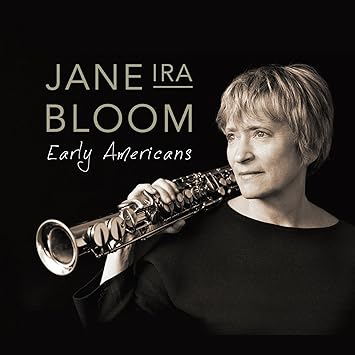
In a career that has spanned over 3 decades, 15 albums, numerous collaborations with musicians from around the world, dance troupes and even the National Aeronautics and Space Administration (NASA), soprano saxophonist and composer Jane Ira Bloom has never recorded a trio album. With the release of "Early Americans" (Outline Records), she can cross that accomplishment off her carer bucket list.  With her latest associates (and long-time friends), drummer Bobby Previte (he has appeared on 7 of Ms. Bloom's recordings) and bassist Mark Helias (this is his third), she has created a program of 12 originals plus a stunning solo reading of Leonard Bernstein's "Somewhere."

Kelly Davidson
The album opens with "Song Patrol", a rhythmic adventure with a handsome melody. First, the listener notices how the drums and bass immediately lock not the rhythms then the lovely soprano sax enters with the melody. Ms. Bloom's tone, unlike any other soprano saxophonist (that's a compliment), is creamy, husky at times but always with a vocal quality.  "Nearly", a tribute to the late trumpeter Kenny Wheeler, is an attractive ballad, with the echo of the saxophonist often filling the silence between phrases.  There's a West African feel to the exciting "Hips & Sticks", Previte really dancing while Helias moves his melodic accompaniment around the bass. Listen to the percussive quality of Ms. Bloom's playing, intimating a flute or bird song. Can't miss the James Brown funkiness of "Rhyme or Rhythm" as the rhythm section locks into the beat while Ms. Bloom dances atop the infectious sounds, her electronically altered sound casting a spell.  Electronics reappear on "Big Bill" a piece that just rocks out with the soprano saxophone darting like a sparrow over the bouncy bass lines and thumping drums. The ending will make you chuckle.

John Dolan
The program includes several lovely ballads besides the two solo pieces. "Mind Gray River" is a powerful, impressionistic, work, riding on the strummed bass chords and thumping drums/splashing cymbals.  The interplay of sound and silence, bowed bass and clicking percussion, and a blend of long and short phrases from the saxophone lends an abstract beauty to "Say More."  The stunning bass work of Helias on "Other Eyes", a duet adventure with Ms. Bloom, is simple, direct and ever-so-melodic. The soprano melody is also direct yet with a dream-like quality.

"Early Americans" is a joy from beginning to end. It's fun, melodic, rhythmical, adventurous, emotionally satisfying, and, at times, quite moving.  Jane Ira Bloom continues to search the worlds around her, above and inside her to create music that resonates long after the sounds fade.  Few musicians are comfortable taking the chances that she has throughout her career - her contemporaries such as Dave Douglas, her long-time friend Fred Hersch, Vijay Iyer, and Henry Threadgill come to mind.  Even fewer have the emotional depth she plumbs through her music.  Find this album; listen to it over and over until your soul is satisfied.

Here's a track to whet your appetite:


On the surface, bringing together the talents of David Murray (tenor saxophone, bass clarinet), Geri Allen (piano) and Terri Lyne Carrington (drums) may seem a bit far-fetched but actually makes great sense.  Murray, now in his 4th decade as a musician, has recorded over 130 albums and still seems as young as he did when he joined the World Saxophone Quartet in the late 1970s. Ms. Allen recorded her debut as a leader in 1984, having grown up in Detroit, MI, and studying at Howard University, and going on to be a major voice on the contemporary scene. Ms. Carrington also began her career in the 1980s going on to play with Wayne Shorter, Dianne Reeves, Steve Coleman, and Herbie Hancock (among others) - she's also has a number of critically acclaimed albums and won three GRAMMYs.

"Perfection" (Motéma Music) is their first album together and comes mighty close to living up to its name. The song that gives the recording the name is a previously-unreleased transcription of an Ornette Coleman solo from the early 1960s that trumpeter Bobby Bradford transcribed and later gave to Murray.  It's the only track with extra musicians - bassist Charnett Moffett, trombonist Craig Harris, and trumpeter Wallace Roney, Jr. - and is a high-energy romp with solos all around.

Given that both Murray and Ms. Allen are such individualists and powerful soloists, it's important to note how much of a group effort this album is  Each member contributes original pieces - three each by Murray and Ms. Carrington while Ms. Allen provides two plus a lovely arrangement of the traditional folk tune "Barbara Allen."  The pianist first heard that song in rehearsal with bassist Charlie Haden and, since it's her mother's name, she chose to play it as a tribute to both the bassist and her parent.  Ms. Carrington's "Geri-Rigged" is a high-powered song that showcases how well the drummer composes and interacts within the ensemble.  She and the saxophonist take off at one point, reminiscent of how John Coltrane and Elvin Jones used to duet. Her "Samsara (for Wayne)" is a lovely ballad tribute to Wayne Shorter, featuring fine solos from both Ms. Allen and Murray (who always sounds like himself).  Here, Murray's tone is deeper, filled with emotion.  The saxophonist composed "The David, Geri & Terri Show", a rhythmic jaunt with exciting solos from all and an especially fiery exchange between Ms. Allen and Mr. Murray. His "Cycles and Season" bounces between funky and straight-ahead rhythms. The trio cycles through several iterations of the theme and chorus before the saxophonist plays an impassioned solo.  Ms. Carrington does a lovely tap dance on drums at the opening of and through the duration Ms. Allen's "For Fr. Peter O'Brien" with Mr. Murray on bass clarinet and the composer playing a bluesy yet dancing piano solo.  The piece is dedicated to the Reverend O'Brien (1940 - 2015), the first Executive Director of the Mary Lou Williams Foundation and long-time friend of jazz.

The Murray, Allen & Carrington Power Trio is no misnomer. This album is quite powerful but not just in how the music is played but also in the emotional power of the songs and the wonderful interactions of the musicians.  Let's hope this ensemble can continue to build upon its "Perfection."

For more information, go to motema.com/artists/murray-allen-carrington-power-trio/. And, here's the Trio in action - with its guests - on the title track:


Trumpeter and composer Duane Eubanks, the youngest of the three brothers from Philadelphia, PA. who have made their impact of contemporary jazz, released his Sunnyside Records debut in 2015, a sextet date titled "Things of That Particular Nature". He pared the group down to  the rhythm section of Dezron Douglas (bass) and Eric McPherson (drums) and you can hear the results on "DE3: Live at Maxwell's" (Sunnyside).

What's obvious from the outset is that this is a true trio effort (even down to Jimmy and Deena Katz's cover image with the drummer in the middle - on the back, the bassist is in the middle).  The leader's liner message notes the Hartford, CT. connection with both McPherson and Douglas graduates of the Jackie McLean Institute of Jazz at the University of Hartford (the bassist is a native city as well).  What stands out is the terrific interactions of the trio, the thick bass sounds dancing over the active drumming while the trumpet weaves his way in and out of the spotlight.  "A Slight Taste", its rhythmic melody introduced by composer Douglas while McPherson's brushes scamper over the drum kit, is a delightful romp. The slow blues of "Saturday Moanin'" (credited to all three) features a handsome trumpet melody; the deliberate pace of the piece allows the listener to hear each part and the leader's soulful solo perfectly captures the mood.

"Strokish", the longest piece in the program at 7:09, opens with an exciting three-minute drum solo, that leads into a high-powered dance for the trio.  The furious "walking" bass lines and splendid drum work gives Eubanks support for a ripping solo. Douglas's melodic and percussive bass solo leads his musical partners into "Ebony Slick"; he and McPherson then set up a funky rhythm for the hard-hitting trumpet.  Eubanks play the tune's theme in the horn's middle range while his solo dances through the octaves.  The album's closer "Little Rock" (the composition also credited to the trio) builds up from the lovely circular bass lines into a conversation between the trumpeter and drummer that gives both the freedom to move in and away each other.  There are moments near the close where the trumpet lines are fragments of melody but the bassist brings the music to a gentle (and satisfying) finish.

DE3 and co-producer Jimmy Katz set up the recording equipment in New York City's legendary Maxwell's Drum Shop, creating a sonic atmosphere like NPR's "Tiny Desk Concert."  You don't hear the audience but the results are intimate, drawing the listener in, hanging on every sound.  Duane Eubanks, who has worked with numerous artists from Elvin Jones to Alicia Keys, is making his mark as a leader and this new album is, arguably, his best.

For more information, go to www.duaneeubanks.com.  To listen to several tracks (with an option to purchase the recording), go to sunnysidezone.com/album/live-at-maxwells.  Duane Eubanks brings a Quartet to The Side Door Jazz Club in Old Lyme, CT on June 10 - to find out more, go to thesidedoorjazz.com.