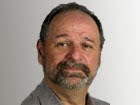
Composer, arranger, and reed player
Mike McGinnis has built quite a fascinating career. With gigs alongside
Anthony Braxton,
Yo La Tengo,
Alice Coltrane and son
Ravi plus playing in the pit band of the Broadway musical "
Fela!" (among others), he's shown his versatility. As a leader or co-leader, he's recorded with
The Four Bags,
OK|OK, in a trio setting with pianist
Art Lande and bassist
Steve Swallow for two albums on Sunnyside Records, with an octet playing original music influenced by Filipino-American painter
MuKha, and led a dectet playing the music of
Bill Smith.
His latest musical adventure, "
Time Is Thicker", is the debut album on McGinnis's new label Open Stream Music. It's a delightful program composed of five in-studio jams, three standards, and "
Abnegation" by the late bassist Bob Bowen (1965-2010). McGinnis, who plays clarinet throughout (elsewhere he plays bass clarinet, soprano and baritone saxophones), organized the group with fellow Brooklyn-ites drummer
Vinnie Sperrazza and bassist
Elias Bailey, both of whom get equal billing on the cover. The drummer has worked with the leader before (as well as with trumpeter John McNeil, Stew & The Negro Problem, cellist Hank Roberts, and in the groups Landline plus Curtis/ Garebedian/ Sperrezza. The bassist is best known for his work with vocalists Freddy Cole and Rene Marie –– he first "hit the road" at the age 19 with the Tommy Dorsey Orchestra under the direction of Buddy Morrow.
The music runs the gamut from exciting trio collaborations such as the opening "
Get In The Car" which runs right out the gate on the power of Bailey's galloping bass lines to a swinging take of the Lerner/ Lane classic "
On a Clear Day You Can See Forever." There are several impressionistic pieces; "
Low Bow Prelude" is bowed bass and clarinet that leans towards 20th Century classical minimalism whereas as "
Bow Legged Releve" is a livelier interaction with the three voices gleefully weaving in and around each other. Bowen's ballad "
Abnegation" is a lovely stroll with Sperrazza's brushes quietly in the background, Bailey's bass serving as counterpoint, and McGinnis's clarinet singing the handsome melody –– one can hear a hint of Jimmy Giuffre's music in this and other interactions on the album. Listen to below to the delightful take on "
Tin Tin Deo"; the piece dances out for over eight minutes but never loses its lively character. McGinnis creates a splendid long solo as the rhythm section moves from its relentless pace into shorter shuffle paces.
"
Time Is Thicker" closes as it opened, with a romp. This time, it's Cole Porter's "
Just One Of Those Things" that the trio kick into high gear. Sperrazza gets to play with the rhythm while Bailey's walking...running...bass lines keeps the piece from spinning off its axis. There is a brief moment in the clarinet solo when McGinnis conjures up the spirits of Artie Shaw and Benny Goodman. Pull a chair and get acquainted with the sounds of
Mike McGinnis,
Elias Bailey, and
Vinnie Sperrazza – your head will be in a better place when you do.
For more information, go to
www.mikemcginnis.com. To purchase the album, go to
https://openstreammusic.bandcamp.com/album/time-is-thicker.
Here's the Chano Pozo/ Gil Fuller classic:
 |
| Photo: Jimmy Katz |
Alto saxophonist and composer
Michael Thomas has been a busy musician since moving to New York City in 201l. His debut album was issued later that year. He's performed with drummer Dafnis Prieto, fellow saxophonist Miguel Zenón, and trumpeters Nicolas Payton and Etienne Charles. Since 2015, he and bassist/ composer
Edward Perez have led the
Terraza Big Band – the ensemble's 2019 delightful debut album "
One Day Wonder" was issued on Outside In Music. In 2018, Thomas joined the faculty of the Jackie McLean Jazz Institute at the University of Hartford's Hartt School of Music. He currently leads a quartet featuring bassist
Hans Glawischnig, trumpeter
Jason Palmer, and drummer
Johnathan Blake. That ensemble recorded its debut album at The Jazz Gallery in New York City on August 14 and 15, 2019. Recorded by
Jimmy Katz, the two-record set, "
Event Horizon", has just been issued on Katz's
Giant Step Arts, the label he co-owns with his wife
Dena.
The recording, released as a two-disk set, features nine pieces composed by Thomas plus a "
Bass Intro" and a "
Drum Intro" – there's also a "
Sax Intro" that leads off Disk two (since it's Thomas playing, he gets the credit for the "composition"). The fullness group pieces are all over 8:40 seconds with two above 13:50. What stands out on initial listenings is the stamina of the rhythm section. Glawischnig is a melodic bassist so his lines are often moving while Blake is quite an active drummer. After a few more "deep listens", one begins to hear the different pieces and how the solos grow naturally from melodies. There are moments when the more energetic tracks bring to mind the music of the classic John Coltrane Quartet, especially the long saxophone solos that continue to explore the many variations in the structure of the original composition. Palmer is one of the premiere contemporary trumpeters; while he can play "fiery", his solos are witty, even danceable (listen to "
Dr. Teeth" to see what I mean), and he engages fully with the rhythm section each he picks up his horn.
You can hear the influence of Coltrane (as well as Anthony Braxton and Roscoe Mitchell) on the unaccompanied "
Sax Intro" –– the circular lines resemble allegro lines from a classical composition. Those phrases Thomas plays show up again during his muscular solo on the song that follows. "
Chant" is one of the more powerful pieces on a program of powerful songs. Again, the trumpet solo tamps down the volume but not the interactions. Both Blake and Glawischnig stand out for their creative support of the soloists. The closing two minutes of the 14-minute track is a drum solo over cascading lines by the saxophone, trumpet, and bass. One can imagine the audience jumping out of their seats last the amazing climax.
"
Event Horizon" is an album that will grow the more you listen. While there are plenty of long solos from Thomas and Jason Palmer, make sure to pay attention to the songs. There are no quick hooks the leap into the solos. Instead, pieces like "
Underground", "
Drift", "
Framework", and the title track take their time to their time to develop and each member of the quartet is integral to making sure the listener understands the structure, melody, and harmony the composer puts into each composition. In these pandemic days, I found listening to this album by
Michael Thomas while taking a long walk made me appreciate this substantive music even more. Take a deep breath and dive in!
For more information, go to
www.michaelthomasjazz.com. You can listen to and purchase the album at
https://michaelthomasjazz.bandcamp.com/album/event-horizon.
Here's the quartet in action:
 |
| Photo: Roberto Cifarelli |
Bassist and composer
Omer Avital came to the United States from his native Israel in 1992 and immediately started working with artists such as Roy Haynes, Kenny Garrett, and Jimmy Cobb (plus many more). He became part of the scene at Smalls Jazz Club, recorded a series of albums for the Fresh Sound New Talent, toured the globe with
Third World Love, a quartet that also featured trumpeter Avishai Cohen (that group recorded four albums), and so much more. He moved back to Israel in 2002 for three years to study, returning to Brooklyn in 2005. Since then, he has recorded and toured with numerous artists from classical, world music, and jazz. He's a powerful bassist, with a great ear for melody as well as percussion.
In 2016, the bassist formed
Qantar with four young Israeli ex-patriates who had emigrated to the United States to expand their musical knowledge and opportunities to play. With Avital as the leader and main composer, the musicians ––
Asaf Yuria (tenor and soprano saxophones),
Alexander Levin (tenor saxophone),
Eden Ladin (piano), and
Ofri Nehemya (drums) –– have begun to record on their own and perform in numerous groups around the NYC area. As
Omer Avital Qantar, they have just issued their second album, "
New York Paradox", on the bassist's
Zamzama Records. The quintet's self-titled 2018 debut album displayed a band with its roots in both Middle-Eastern rhythms and the hard-bop of people such as Art Blakey and John Coltrane.
The new album is all that and more. The blend of the two saxophones, Ladin's exploratory piano, Nehemya's powerful and exciting drummer, and Avital's splendid musicianship and compositions, makes for a program that one would love to hear in a club setting. Actually, that's not a surprising reaction as the quintet recorded in Avital's Brooklyn recording & performance space
Wilson Live. The opening track, "
Shabazi", blows out of the speakers at a pace that will take your breath. There's a hint of McCoy Tyner in the powerful piano lines while the intertwined tenors pour out the riffs. Avital and Nehemya set an incredible pace and there are delightful solos from Yuria and Levin plus a driving drum explosion over the repetitive piano and bass figures.
The soulful "
Zohar Smiles", a ballad that highlights the sparkling soprano sax of Yuria as well as a strong, soulful, turn by Levin plus powerful chords from the piano. "
Just Like The River Flows" blends a Middle-Eastern flavored melody line with Nehemya's dancing drums. The whirling dervish soprano sax solo over powerful drums and the driving tenor solo near the end makes the track stand out. "
Today's Blues" is a flat-out swinger that has a bit of that Blakey/ Jazz Messenger feel. "
C'est Clair" has that feel as well but is "cooler" and has more of a blues feel that the previous track.
"
Bushwick After Dark" closes the album with even more of that blues feel of "..
.Clair." But there's also a raucous quality to the tenor solos. The seductive sound of the bass and drums underneath allows the soloists to let their imaginations roam. Avital steps out as well – his melodic and playful solo is the perfect embodiment of the entire band's attitude. Serious fun indeed
"
New York Paradox" is the sound of a "working" band having a terrific time playing. Once these crazy days pass, you are well-advised to check out
Omer Avital Qantar at a performance space near you. Until then, the band's exciting, inviting, new album will more than whet your appetite.
For more information, go to
www.omeravital.com. To purchase the album, go to
https://omeravital.bandcamp.com/album/quantar-new-york-paradox.

 Posts
Posts