Showing posts with label Josh Lawrence. Show all posts

Thursday, August 8, 2024

Family, Friends, Dancing, and Singing (Large Ensembles)


In a perfect musical world, pianist, composer, bandleader, and label owner Orrin Evans would be a bonafide superstar. Think about it – the music he creates is such a delightful fusion of Black Music old and young. He can "out", he can play "in", he's a great "comper" and has no fear of mixing soul/ r'n'b into different settings.  Over the course of 20 albums on labels such as CrissCross, Palmetto, Posi-Tone, Smoke Sessions, and his own Imani Records, he's led groups of all sizes, from trios to 14-member big bands and, bless his soul, has yet to make a boring record.

"Walk a Mile in My Shoe" (Imani Records) is the fifth album from the Captain Black Big Band: nine members strong for this recording (plus guests bassist Anthony Tidd, trumpeter Nicholas Payton, and organist Jesse Fischer as well as seven tracks with vocalists), the the nine-song program ranges from "standards" to 70s "pop" tunes to Blues to soul. Evans serves as "overseer" with production credits going to "the Village" (current and former band members. Trombonist David Gibson contributed four arrangements, Mark Stasio two, and one each from Josh Lawrence, Todd Bashore, and original member John Raymond.  The vocalists –– Paul Jost, Joanna Pascale, Bilal, and Lisa Fischer –– all bring unique singing styles to the mix and it's a real pleasure to hear how the arrangers create new worlds for each one.


The album opens with "Dislocation Blues"; penned by the late Chris Whitley the songs creeps in on the funky drums of Anwar Marshall and the liquid electric bass of Anthony Tidd. Paul Jost digs into the lyrics shadowed by Evans and organist Fischer.  Jost also shines on Todd Bashore's brilliant, smoky, and elegant arrangement of David Gates's "If" (first recorded by Bread in 1971).  Caleb Wheeler Curtis plays a wonderful soprano saxophone solo yet it's the arrangement of the sections that truly stand out.  The ensemble sounds so big yet the arrangement as well as the excellent sound mix keeps the vocalist front and center.

Photo: Rob Davidson
Other highlights include vocalist Lisa Fischer sounding great on her two appearances. She absolutely "owns" "Blues In The Night" (from the prolific pens of Harold Arlen and Johnny Mercer) yet the brilliant arrangement by Mark Stasio also stands out. The piano solo scorches the speakers. Listen below to Stevie Wonder's "Overjoyed". Here, Ms. Fischer sounds so tender, accompanied in the opening moments by only trumpeter Nicholas Payton and Evans.  Josh Lawrence's fine arrangement has echoes of Burt Bacharach especially when accompanying the vocal after the solos. 

Photo: Lisa Hagen Glynn
The one purely instrumental piece is a smashing brass and reeds only arrangement (David Gibson) of Jerome Kern's "Smoke Gets In Your Eyes".  Short and ever-so-sweet!!

Bilal's two appearances include a funky original "All That I Am" (with Nicholas Payton grooving with the band) and a heartfelt take on Marvin Gaye's pleading "Save The Children".  The lyrics are still quite prescient and the vocalist makes sure the listener understands the plight of inner-city youth.  The instrumentalists capture the feel of the early-to-mid 70s groove that the late Mr. Gaye on his albums.

The album title "Walk a Mile In My Shoe" refers to the malformation of Orrin Evans's left foot, a condition that kept him from playing sports with his friend. The cover shows the special shoes he had to wear. Don't feel bad for him. Mr. Evans used his experiences, his surgeries, the pain, and, as he done often over his career, created a positive message of perseverance and moving forward.  This particular reminds of the programs the late trumpeter Lester Bowie created for his Brass Fantasy ensemble, the blend of old and new, jazz and pop, the delicious funky backbeat, the swirling arrangements. It's like a variety show and I mean that in the nicest possible way. Fun for the whole family.


Here's the CBBB with Ms. Lisa Fischer on Stevie Wonder's "Overjoyed:":


Personnel:

Sean Jones, Josh Lawrence – trumpets
Todd Bashore – alto saxophone, flute
Caleb Wheeler Curtis – tenor/soprano saxophones
David Gibson, Reggie Watkins – trombones
Vicente Archer, Madison Rast – double bass
Anthony Tidd (“Dislocation Blues”) – electric bass
Anwar Marshall, Mark Whitfield II – drums
Orrin Evans – piano

Guest soloists: Nicholas Payton (trumpet), Jesse Fischer (organ)

Guest vocalists:
Lisa Fischer ("Blues In The Night" and "Overjoyed")
Paul Jost ("Dislocation Blues" and "If")
Bilal ("All That I Am" and "Save The Children")
Joanna Pascale ("Sunday In New York")


Photo: Jonathan Yee
Florida-native and trumpeter Jonathan Powell moved to New York City in 2001 where he found work in a number of bands but, most notably, the Afro-Colombian ensemble La Creacion. He's gone on to work with Arturo O'Farrill & His Afro-Latin Jazz Orchestra, Eddie Palmieri, Snoop Dogg, Ricky Martin, Miguel Zenón, and Pedro Giraudo (amog many others). In 2007, he started his own band, nu Sangha, and has since released two albums.  He moved to Colorado Springs, CO, to become part of the U.S. Air Force Falconaires Big Band. Before he left, he went into a New York City studio to record a new album, one that reflect his two decades as a sideman in numerous ensembles.

"Mambo Jazz Party" (Circle 9 Records) is as, the title says. a "party".  Just check out the personnel list; see all those percussionists, the brass and reeds, and then take a listen to the track below Now, try to sit still. I didn't think so. Powell, whose brother Jeremy plays tenor saxophone on 10 tracks and flute on one more, has the kind of sharp tone that cuts right through the band. His section work is exceptional. The trumpeter's experiences in Latin ensembles echoes throughout the program. There's the amazing rhythm section built around bassist Luques Curtis and drummers/percussionists Camilo Molina, Marcos Lopez, Marcos Torres, and Luisito Quintero. The rhythms percolate, bounce, sway, rumble, thunder, and make one want to dance around the floor. For example, "Paramahansa" bubbles in on congas, bongos, and more until the ensemble enters to state the sweet melody. The brass swirl all around the percussion on the fiery take of Joe Henderson's "Inner Urge", the piercing tones of the trumpet matched the mellower sound of Doug Beavers on trombone. 

Manuel Valera joins the "party" for several tunes including the sensuous take of Herbie Hancock's "Butterfly". His electric piano and synth work dances around ad underneath Powell's "electric" trumpet solo before the keyboardist dances atop the band. 

Listen below to Eddie Palmieri's "Un Dia Bonita" featuring the exciting vocals of Anthony Almonte. Notice that brilliant percussion, the hypnotic piano work of Mr. Valera, and how much fun the vocalist is having. Of course, you cannot miss the groove. 

Tracks like "Frogwala" and the album opener "Juancito" will test your speakers capability to withstand the thunderous rhythm section. The latter track also features a solo from the great trombonist Jimmy Bosch, founder of La Orquestra and his Sexteto de Otro Mundo. Powell's "Totem Pole" closes the program. The opening moments bring McCoy Tyner's large ensemble to mind but solos by bassist Luques Curtis, the leader, and trombonist Doug Beavers emphasize the Latin sound as does the rollicking drum solo from Camilo Molina that closes the piece.

Need an excuse to party. Roll up the rugs, fire up the grills, chill the libations, and throw "Mambo Jazz Party" on the stereo. Jonathan Powell has created a delightful antidote to the blues and the news –– open your ears and put on your party shoes.

For more information, go to www.jonathanpowell.net/. To purchase the album (digital, CD, or two-Lp set), go to https://jonathanpowell.bandcamp.com/album/mambo-jazz-party.  

Personnel:

Jonathan Powell trumpet, flugelhorn, & EVI
Andrew Gould alto saxophone 
Jeremy Powell tenor saxophone & flute 
Jimmy Bosch trombone solos ("Juancito")
Doug Beavers trombone
Itai Kriss flute 
Louis Fouché alto saxophone solo ("Juancito")
Nir Felder electric guitar ("Hope")
Axel Tosca piano, fender rhodes & synth
Manuel Valera fender rhodes & synth ("Butterfly" and "Yogananda")
Luques Curtis bass
Camilo Molina drums & timbales, shekere & clave, maracas & guiro, bongos, and bata (10)
Marcos Lopez congas 
Marcos Torres congas 
Luisito Quintero bongos, guiro, campana, miscellaneous percussion 
Ariacne Trujillo lead vocal ("You're Everything")
Anthony Almonte lead vocal ("Un Dia Bonita"), coros (
"You're Everything")
Jeremy Bosch coros ("You're Everything" and "Un Dia Bonita" )

Listen to "Un Dia Bonita II": 

Friday, July 12, 2024

The Power of Posi-Tone Thinking

Producer Marc Free and Chief Mixer-Master Nick O'Toole continue to issue high-quality music on the Posi-Tone Records, mixing newer artists with great rhythm section and giving established artists the opportunity to continue to stretch their creative wings. Here are three exciting new albums.

Photo: Anna Yatskevich
Vibraphonist and composer Behn Gillece has, over the past decade-and-a-half, taken part in dozens of sessions for Posi-Tone.  He first came to critical attention as part of duo with saxophonist Ken Fowser – they released four albums from 2009 to 2013.  Gillece released his debut album as a leader in 2015 and since then has recorded five more but also has been part of several ensembles created by Producer Free. Groups such as New Faces, Out to Dinner, and Idle Hands have released albums combining his vibes and some of his compositions with artists such as saxophonists Roxy Coss, Donny McCaslin, and Tim Green plus trombonist Ryan Keberle, drummer Donald Edwards, guitarist Will Bernard, and others.

Since the beginning of the Pandemic in 2020, Free has employed the "regular" rhythm section of pianist Art Hirahara, bassist Boris Kozlov, and either Rudy Royston or Donald Edwards on drums for his recording sessions in New York City.  They have done impressive work on numerous occasions adapting to different styles, harmonic ideas, and rhythms.  Gillece's seventh solo album, "Stick Together", features Messrs. Hirahara, Kozlov, and Royston in a 10-song, 56-minute, program that stands out for the excellent musicianship and intelligent compositions.  On top of all that, this music really swings.  "Almost There" opens the album on a slow pace; then the groove kicks in and the quartet dances forward. One of the joys of listening to these four musicians is that when they are playing, they are "playing".  Royston is disruptive, noisy, but always on the beat.

Listen below to "Four Of a Kind" and you'll see why that's the exact right title. After a quick run-through of the theme, they hit the floor running powered by Kozlov's mighty bass and Royston's wonderful attack.  The vibes solo is infectious which gives Hirahara the jolt for a flying fingers solo. This is the kind of performance that makes an audience rise from their seats and cheer.

The group slows down the pace several times including the lovely "Changing My Day" (the drummer sits out) and the medium-tempo "Dreamscape."  The latter track picks up the pace for a far-ranging vibes solo.  "Cascades Merging" has a similar feel with a slower opening and then a bump in the tempo for the solos.

One of the delightful surprises is the quartet's take on Sam Rivers' "Cyclic Episodes". The tune, which first appears on Rivers' 1962 Blue Note classic "Fuschia Swing Song", really does swing atop the excellent cymbal work and the melodic "walking" bass lines.

"Stick Together" closes with "Lazy September", a duet for vibraphone and piano.  Not only does the song have a handsome melody but also Hirahara's emotional, rhapsodic, piano support.  It's a gentle ending to a pleasing musical experience.  Behn Gillece has created an album that one can return to time and again, enjoying the music on many levels.  

For more information, go to www.behngillece.com.  To hear more and to purchase the album, go to https://behngillece.bandcamp.com/album/stick-together

Swing along with the quartet on "Four of a Kind":


Photo: Ola Baldych
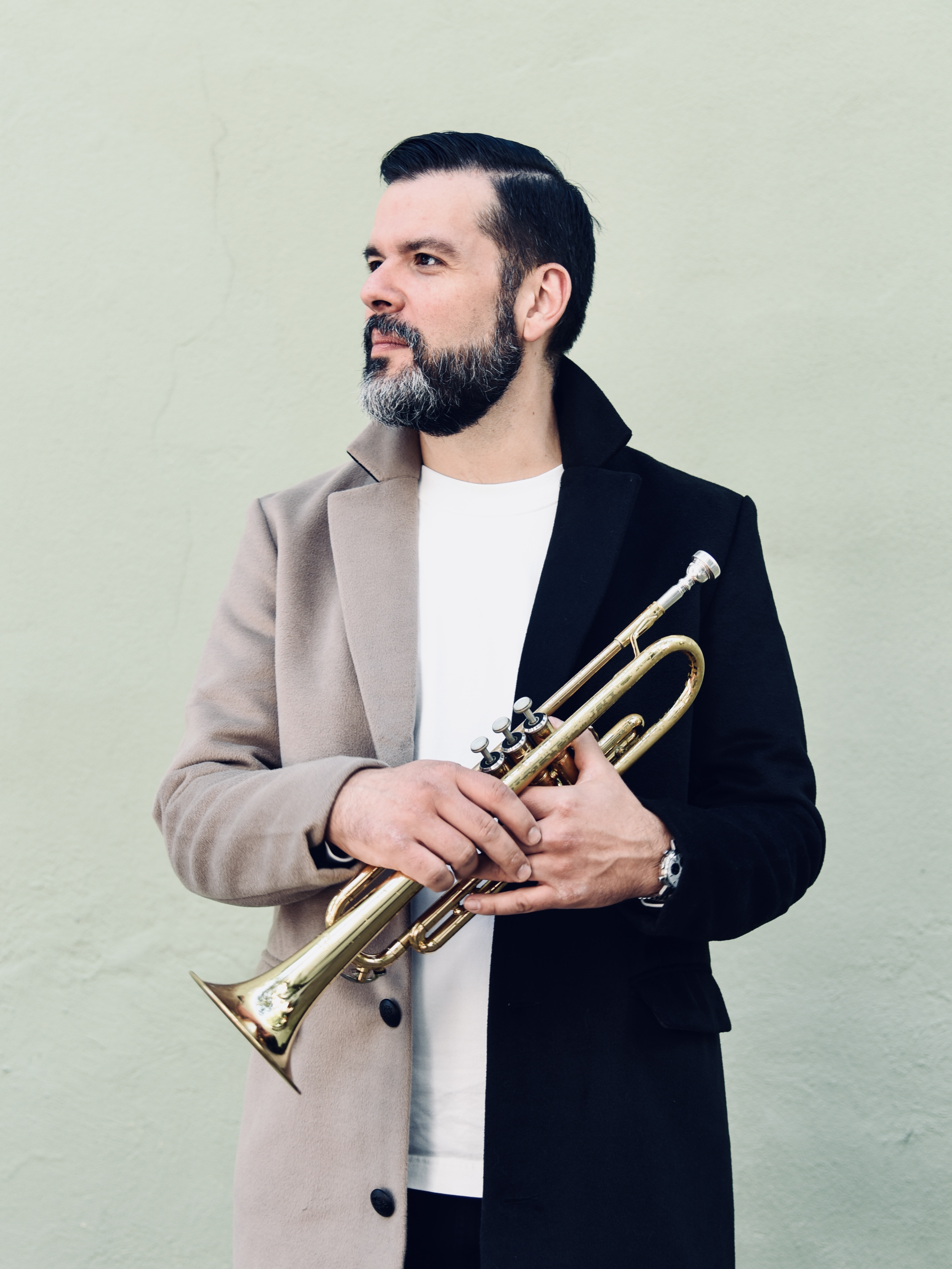
For many of us, our introduction to trumpeter and composer Josh Lawrence was 2017's "Color Theory", his debut recording on Posi-Tone.  He certainly has done a lot in the last decade as member of the Fresh Cut Orchestra, working and recording with TARBABY, Posi-Tone's New Faces, Erykah Badu (among many others), and is now Director of Jazz Studies at Interlochen Center for the Arts and conductor of Interlochen Jazz Orchestra. His recorded output for Marc Free's label shows a musician who has created his own voice, who's not afraid of showing vulnerability in his musical and sonic choices and who has developed into an excellent composer.


His sixth Posi-Tone release, "Measured Response", is a thoughtful, intelligent, and, at times, quite playful collection of songs. Eight of the 10 pieces in the 57-minute program are Lawrence originals plus one song each by John Coltrane ("Wise One") and Charlie Haden ("Song For the Whales").  Unlike many of the label's releases which usually open with "barnburners", "Where Do We Go?" is a slower blues based on a Pandemic vacation trip.  There are excellent solos from the leader and tenor saxophonist Diego Rivera atop the gentle swing created by pianist Art Hirahara, bassist Luques Curtis, and drummer Rudy Royston.  "A Tragic Tango Comedy" follows – reminiscent of tangos composed the late Carla Bley, it's fun to hear Royston and Curtis play with the rhythms and Hirahara's ornamental yet rhythmical piano accompaniment.  The solos are concise and never overtly technical.  

Photo: Ola Baldych
Lawrence's choice of "cover" songs is inspired and inspiring. Charlie Haden's "Song For the Whales" (which the late bassist recorded with the Liberation Music Orchestra on 2016's "Time/Life") is an elegiac piece that utilizes Curtis's bowed bass as "whale song", Hirahara's rippling piano lines like waves over the prayer-like melody played by sax and trumpet, and pounding drums. That melody is actually lovely, moving slowly over the rhythm section.  John Coltrane's "Wise One" (from 1964's "Crescent" Lp) has a similar rubato feel in the opening 80 seconds before the bass and drums kick in for the powerful piano solo. Lawrence is next, caressing the melodic variations as the thundering rhythm section attempts to push him; instead, he leads them back to the opening, taking the piece out on a bluesier note.

Listen below to "Every Choices Comes With An Invoice" (Lawrence borrowed the title from Busta Rhymes) – it's an antithesis to the ballads as the piece explodes out of the gates on rapid-fire bass lines and frenetic drums. Lawrence digs into his solo displaying his own fire and versatility.  Riviera also rises to the challenge the rhythm section lays down. The pianist initially tamps down the fire before he too is inspired by Curtis's flying fingers.  

Photo: Ola Baldych
There are moments when the music feels like Miles Davis circa 1960-62 when one listens to songs such as "Flip On A Drip" (a "smoking" piece that really highlights what a good accompanist Hirahara can be) and other pieces ("Between the Lakes") that move towards the sound of the classic Davis Quintet in 1966 and '67. The muted trumpet and solemn melody on "Prelude To a Farewell (For Barry Harris)" pay tribute to one of Lawrence's most important teachers and mentors. The simple beauty of the lines played by trumpet and saxophone give way to a rhapsodic piano solo that also features excellent bass work and soft cymbals. Riviera's tenor spot has a gentle power that speaks to the heart as does Lawrence's short yet poignant turn in the spotlight.  

The album closes with "Texas Tenor", a bluesy ballad that gives Riviera a chance to take center stage. His solid solo hints at Coleman Hawkins and David "Fathead" Newman. Lawrence follows with a romp over the bouncing rhythms.  Because the leader is all about sharing, Hirahara creates a playful, "in your face", solo that brings the quintet back to the bridge and a quick close.  

With "Measured Response", Josh Lawrence and company have created a compelling artistic triumph that also is great fun to play loud.  Lawrence's material brims with creativity which his fellow musicians much to work with. He does not worry about playing "quiet" or giving other soloists more room to shine. This album is well worth diving into often!
 
For more information, go to www.joshlawrencejazz.com/. To hear more and purchase the album, go to https://joshlawrence.bandcamp.com/album/measured-response

Listen to Josh and the band tear it up on "Every Choice Comes With an Invoice":


Photo: Anna Yatskevich
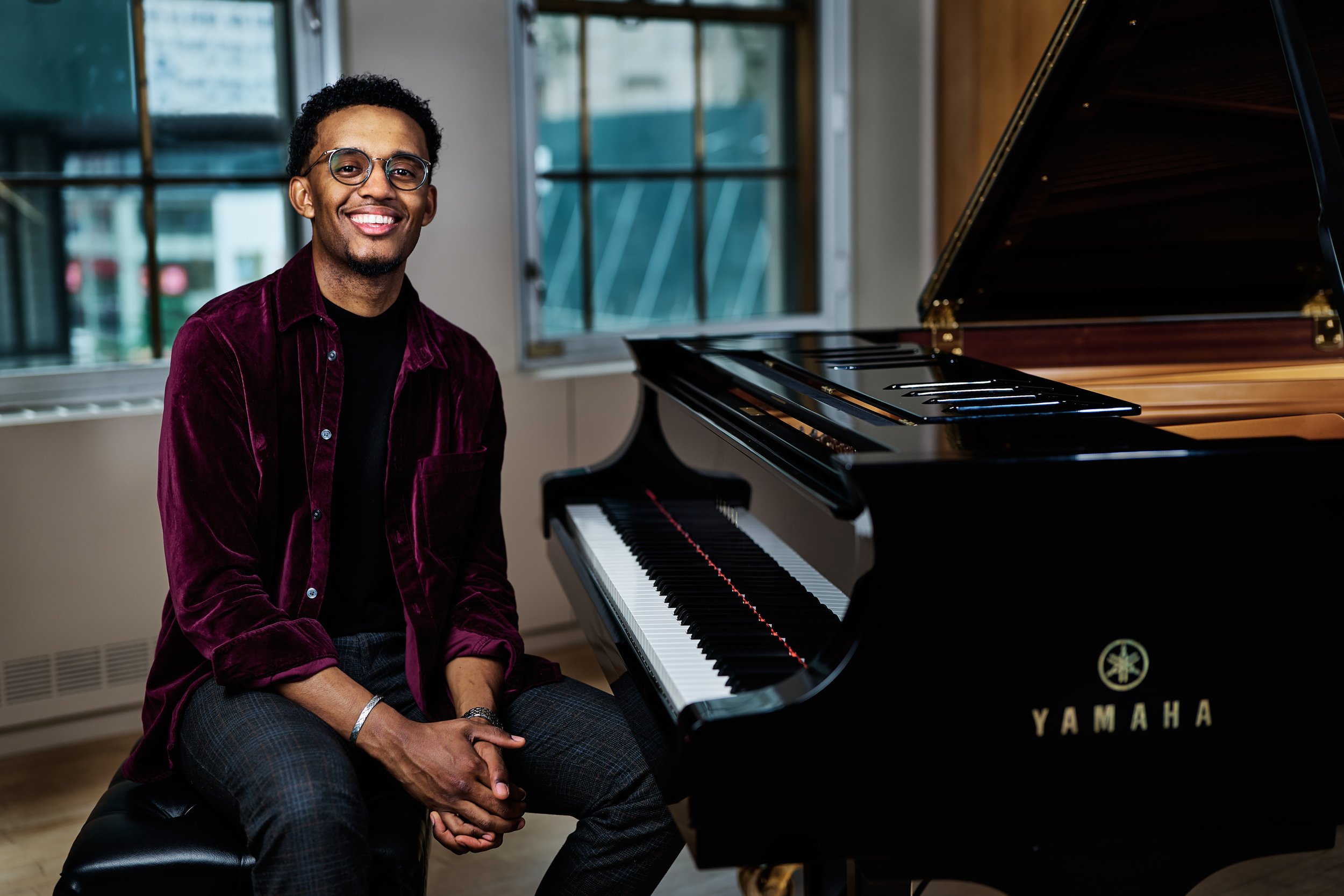
Pianist, drummer, and composer Luther Allison made his recording debut at the age of 19 when he appeared (as the drummer) on trombonist Michael Dease's 2016 Posi-Tone recording "Father Figure".  Since then, he's appeared on several Dease albums plus releases by Diego Rivera (as pianist), Markus Howell (drummer) and on Samara Joy's GRAMMY-winning 2023 "Tight".  The Charlotte, NC, native now lives in New York City where he has performed with bassist Rodney Whittaker, vocalist Jazzmeia Horn, saxophonist Gregory Tardy, drummer Ulysses Horn, and so many others. Allison also teaches at Jazz Summer camps and as a clinican touring all the globe.

To his credit, Allison waited several years and had a plethora of musical and life experiences before recording his debut as a leader.  "I Owe It All To You" is a trio featuring bassist Boris Kozlov and drummer Zach Adelman.  The 10-song, 53-minute, program is a blend of four originals with four songs composed by piano greats James Williams, Mulgrew Miller, Harold Mabern, and Donald Brown plus a song each from Stevie Wonder and Richard Rodgers.  The album opens with the title track which, within the first few moments, one can hear the influences that underlay Allison's style – there's blues, gospel, hard-bop, a touch of Hip Hop, and a quest to create his own voice. The young man is an excellent soloist and the rhythm section makes sure he's a solid foundation to go off on his solo flights.  Just when you think the song is over, there's a slower, sly, gospel coda.

Photo: Roby Davidson Media
Click on the link below and listen to Allison's "Until I See You Again"; the tune has such a lovely melody but to how the tempo changes subtly throughout the solo as well as the fine bass work of Kozlov.  

It's fun to hear where the trio takes the material. The pianist's take on Rodgers's "I Didn't Know What Time It Was" starts out with a funky piano riff and goes through a couple of changes before settling into a swinging groove for the piano solo. Allison's two-handed approach may remind some of the late Harold Mabern, a musician whose blues roots ran deep through his music. It's interesting how the Mabern tune, "There But For the Grace of..." starts so regally before dropping into a delightful fast-paced groove. The trio caresses the melody of the late Mulgrew Miller's "From Day To Day", the longest track in the program at just over seven minutes. That's plenty of time for all three musicians to sparkle.

The album closes with "Lu's Blues", a high-powered blues introduced by a thundering two-handed piano attack before the rhythm section creates a break-neck pace. No problem for Allison who challenges the bassist and drummer to keep up with him. Yes, it'a technically impressive but also impressive how melodic the pianist can be at faster-than-light speed.  

No doubt about it, Luther Allison is a talent to be watched.  His choice of material, his own songs have weight and show his influences without being slavish to any one in particular. It's going to be a joy listening to him grow. Put on track one, sit back, and enjoy this 53-minute ride. I promise it'll make your day better!

For more information, go to www.luthersallison.com.


Listen to the lovely "Until I See You Again":

Friday, March 15, 2019

Posi-Tone Roundup 2019 (Pt 1)

Last July, I had the opportunity to see and her the sextet New Faces, an ensemble that features saxophonist Roxy Coss, trumpeter Josh Lawrence, vibraphonist Behn Gillece, pianist Theo Hill, bassist Peter Brendler, and drummer Vinnie Sperrazza (although there was a sub on drums). They were touring to support the self-titled debut album on Posi-Tone Records and the sextet filled The Side Door Jazz Club with its joyful mix of hard-bop and ballads. All of the members have issued albums on the label as leaders and Posi-Tone co-owner Marc Free organized the recording session and the tour to showcase their talents in venues around the United States. Everyone played well but I was particularly knocked out by the work of Behn Gillece.  I have heard and reviewed his work with saxophonist Ken Fowser; I liked the music but was not overly impressed with the vibraphonist until seeing him in a live setting.  Each solo was a compact yet expansive treat with an excellent blend of melody and percussion that intelligent players bring to the instrument.


My positive impression carries over to his new album.  "Parallel Universe" is his fourth release for the label and features an impressive lineup. Tenor saxophonist Stacy Dillard, trumpeter Bruce Harris, pianist Art Hirahara, bassist David Wong, and drummer Rudy Royston (all leaders on their own except for Wong whose sideman credits are quite stellar) sound as if they are having a ball in the studio making their way through 11 Gillece originals. "Break The Ice" opens the program in a "smoking" vein, with a feel in the rhythm section plus piano as if the song would fit right in on a McCoy Tyner album.  Royston plays with the abandon one has come to expect from him without overshadowing the soloists.  Hirahara's accompaniment is top-notch (throughout the whole album) and Wong really gets the bottom moving.  


Beside the great energy the sextet exudes, Gillette's melodies do a fine job of setting the table for the soloists.  The title track's opening section highlights Royston's fills during the melody and then jumps right into a muscular tenor sax solo. At the start of his solo, Harris brings the intensity level down but just for a moment before diving into a playful improvisation.  Royston creates a funky feel at the onset of "Smoke Screen", a quartet track that finds Hirahara on Rhodes electric piano.  Wong locks into the groove giving the song a dancing foundation.  Another quartet track, "Evening Glow", opens slowly before the pianist introduces the handsome melody line.  Listen to the interactions throughout, the responses of the piano to the vibes, Wong's melodic bass, Royston's splendid cymbal work - it's easy to get lost in this song.  Hirahara returns to Rhodes on the final quartet track "Candle in The Dark", the lovely ballad that closes the album.

Photo: Mark Robbins


If you're like me, it's the faster tracks that will initially catch your attention. "Alice's Journey" is a high-powered barn-burner with both the leader and Dillard firing on all cylinders over the manic pace set by the rhythm section. If anything, "Eviscerate" is even a bit faster with the saxophonist and leader delivering splendid solos.  Dillard also plays with abandon on "Shadow of the Flame", pushed forward by the active piano, "running" bass line, and the powerful drums. Harris delivers a hardy solo before Gillece jumps in with a fiery statement.

"Parallel Universe" is the quintessential Posi-Tone release with great musicians having a ball playing tunes that allows enough time to create fine solos without going on and on. Behn Gillece is a smart leader, never hogging the spotlight but being happy as a member of this powerhouse ensemble.  Time to go back and listen closely to his previous releases to figure out what I missed. In the meantime, check out this delight-filled music.  

For more information, go to www.behngillecejazz.com.

Here's the opening track:


Trumpeter and composer Josh Lawrence also shone brightly during The Side Door gig.  He plays with such assurance and a sparkling wit, even when his line explodes out of the horn, Lawrence keeps his cool.  "Triptych", his third album as a leader (and third for Posi-Tone Records) shows his continuing maturation process, especially as a composer. Comprised of three suites plus one song from the Earth, Wind, & Fire canon, Lawrence wrote and arranged the music for a splendid quintet including Hartford, CT, natives Zaccai (piano) and Luques (bass) Curtis, drummer Anwar Marshall, alto saxophonist Caleb Curtis (no relation, on five tracks) and organist Brian Charette (on the EW&F tune). 


Photo: Ola Baldych


The first suite of songs, "Happiest Together", takes its name from the opening track "We're Happiest Together."  The bright, mid-tempo, waltz has the feel of a walk through a green park on a late Spring day. Both Lawrence and Zaccai Curtis base their solos on the melody while Luques Curtis plays excellent counterpoint and Marshall sets a sprightly tempo.  "Sugar Hill Stroll" continues the "walking together" theme opening with trumpet and bass setting up the melody and the pace. There's such a bright feel to the tune and to Lawrence's jaunty solo.  "Sunset in Santa Barbara" is the final track in this suite and is a subtle, Latin-influenced, ballad with excellent muted trumpet from the leader and a lovely pianist solo as well.


Suite #2 is titled "Lost Works" and is an original piece supported by a grant from Chamber Music America funded by the Doris Duke Charitable Foundation.  Nowhere on the album does it give the listener the history of the composition but, in the promotional material (as well as on the trumpeter's website), one learns the suite is "a eulogy for the first three paintings of Vasily Kandinsky's (1866-1944) "Composition" series which were labeled "Degenerate Art" by the German Nazi Party, confiscated...and ultimately destroyed during World War II."  Surprisingly, the first section of the "...Works" (labeled "Composition #1") is a high-powered romp, fueled by Marshall's galloping drums and strong solos from pianist, alto saxophonist, and trumpeter. "....#2" is slower, darker, its rhythm and tone introduced by the piano. When the trumpet and alto sax play the melody, there is a sad component, almost a religious feel as well as a hint of a 1950s-60s ballad by Miles Davis.  After a fine bass solo, Lawrence and Caleb Curtis weave their instrumental voices around each other before pianist Curtis plays a splendid solo. Saxophonist Curtis creates a lovely solo that starts up in the higher register of his instrument and serves as a "light" in the darkness of the mood.  "...#3" builds off the active left hand of pianist Curtis and his brother's foundational bass lines.  More uptempo the the previous track, it speaks to the power of art, whether visual or instrumental, to bring one hope in troubled times.


"Earth Wind Fire", the final suite, is dedicated to the band that intrigued the trumpeter was a youngster. The mysterious rhythms of the bass and piano, the keening alto sax, the short, low, lines of the trumpet, and Marshall's dancing drum lead "Earth" in until the piece falls into a sinuous rhythm. You can hear everybody's voice as they dance around but it's the drummer who commands one's attention with his playful work.  There are moments where the music takes on an African feel. "Wind" is a soulful ballad with Lawrence's mid-range animated trumpet substituting for Philip Bailey's falsetto.  While there are no lyrics, both the piano and especially the trumpet have a vocal quality in their solos.  The bass and drums set up such a hypnotic beat and feel, it's easy to get lost in these sounds. "Fire" lives up to its name, an incendiary piece of music built upon Zaccai Curtis's powerful McCoy Tyner chords and the polyrhythms from the drums. Pay attention to the bass lines as Luques Curtis locks in with Marshall and gives the music even more of an explosive feel. And the solos from the front line are all worthy of attention.

"Triptych" closes with "That's The Way fo the World", the lovely ballad from the pens of Charles Stepney, EW&F bassist Verdine White, and the band's founder and leader Maurice White.  Brian Charette's organ work gives the piece an extra voice that is soulful and sweet plus opens up the path for Zaccai Curtis to create his own soulful sound.  Zan added attraction is the overdubbed trumpet choir that serves as the "horn section" for the track.  The piece serves as a tribute to the band and as a reminder that popular music has its roots in jazz, blues, rhythm 'n' blues, and in the communities around the United States that supported musicians when the "establishment" looked down their noses at "popular" music.

As I wrote earlier, Josh Lawrence continues to grow as a musician and especially as a composer. Go see this band live as their music, interactions, and the excellent material they play will warm you as much as it will excite you!

For more information, go to www.joshlawrencejazz.com.