We're Here To Listen - Leslie Pintchik (Pintch Hard) - Ms. Pintchik, composer, arranger and pianist and her group - Scott Hardy (bass, acoustic guitar) and Mark Dodge (drums) plus guest percussionist Satoshi Takeishi - play with beauty, sensitivity, dexterity and a desire to connect with the listener on a personal and emotional level. On this, her 3rd release, she proves herself to be a musical poet and painter. Opening the program with Bob Dylan's "Blowin' In The Wind", one can hear this is a band that listens, reacts and enjoys interplay. The tune is rearranged, given an arrangement that allows the rhythms to open up at the end of the verses - Dodge and Takeishi kick the piece into a samba beat that is infectious and Ms. Pintchik rides joyously atop it. Hardy's bass solo, played (mostly) in the higher register, is wonderfully melodic but is also the start of a trend that nearly undermines the program. It's not faint praise to say that Hardy is a skilled and very musical bassist. The lines he plays beneath the piano are rich with ideas but he solos on all but 2 of the 10 tracks. And, it's usually right after the pianist finishes her solo. His solos are really good but the pieces become predictable because of the lack of variety in the arrangement.
The CD is ripe with beautiful tracks, from the lovely chestnut "For All We Know" to the Monk-influenced and blues-drenched "In the Wrong Place at the Right Time" (dedicated to U.S. Airways pilot "Sully" Sullenberger and his safe emergency landing in the Hudson River.) On the latter piece, the interaction of the pianist with percussionist Takeishi is divine and quite fun. The swing feel of "There You Go" is delightful while bassist Hardy's "Ancient" has a lovely melody line - the mood shifts within the song are highly effective. On this, the last track on the CD, the bassist finally gets to solo first and it's a welcome change.
The arrangement of "I Can't Make You Love Me" (composed by Mike Red and Allen Shamblin but made famous by Bonnie Raitt) opens up slowly and you can help but feel the tension that the words hold conveyed in the music. About 2/3rds of the way through the 7 minute + track, the 4 musicians break the mood by speeding up the piece and, while it's well done, it seems superfluous after the handsome and affecting slow portion.
I can't ignore the work of the 2 percussionists. This music never really gets loud yet the supportive work of Dodge and the colors that Takeishi provides are impressive throughout. Their interactions with the pianist and bassist keeps the listener involved, even on the ballads.
Despite my criticisms, "We're Here To Listen" is worth investigating. Much of the music has great depth, there is humor, sadness and flashes of exuberance; in other words, this is music of the human condition. Approach it with open ears and you'll find plenty to enjoy. For more information, go to www.lesliepintchik.com. There, you will find a link to the DVD of this band in concert - watch the clip that is provided and see the magic of creative interplay.
Mechanism - Florian Ross (Pirouet) - This CD of solo piano pieces (with occasional loops added) is the reason for the title of the column. I've listened to the 38-year old German born pianist/composer's program over a dozen times and I can't seem to find the proper words to describe its hold on me. This is not hard-edged and angular music nor is it "New Age" noodling. 17 tracks in under 56 minutes means few pieces are drawn out - in fact, 2 are barely over 60 second long and another 6 don't reach 3 minutes. Yet, the listener is never cheated, whether it's the dazzling pianistics of "Gyorgy" (63 seconds long) to the Erik Satie-like blues of "Catflap" (2 minutes), the songs do not feel incomplete. When Ross does stretch out, as he does on the 6 minute "Rondo Nr. 1", he varies the tempo and intensity to keep one's attention on the lovely, lilting, melody line he composed. There are times when one hears the influence of Keith Jarrett in the rumbling left hand rhythms but that does not happen often. The pianist's focus is on melody, on the harmonies the chords provide and imply. One feels impelled to listen, to let these pieces play over and over. The sounds comfort the listener, cares fall away, one relaxes.
If it's experimentation you are looking for, look elsewhere. If it's sounds and music that can "soothe the savage beast", the charming collection that Florian Ross presents here is just the right tonic. For more information, go to www.florianross.de.
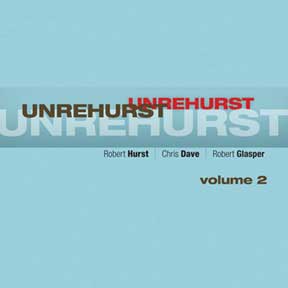
Unrehurst: Volume 2 - Robert Hurst (Bebob Records) - Detroit Michigan-born bassist Hurst (Wynton Marsalis, Branford Marsalis, Harry Connick, Jr., Geri Allen) is featured here with his Houston, Texas, cohorts Robert Glasper (piano) and Chris "Daddy" Dave (drums) in a program recorded live at Smoke in New York City in March of 2007. "Volume 2" was taped 7 years after its predecessor, a set that also featured Glasper plus drummer Damion Reid.
What one gets here seems like the second set of a real good night of music. It's loose, easy, fun and, at times, charming. One can hear that these musicians are friends, they don't step on each other and they really enjoy a groove. All but 1 of the 5 tracks are over 12 minutes yet there is enough variety to keep one's interest. The set opens with Cole Porter's "I Love You", commencing with a short bass intro - when piano and drums enter, they ride Hurst's groove before a quick reading of the theme. Then, it's back to the groove and Glasper's long, unfolding, solo. In his own music, Glasper often melds hip-hop elements with bebop and other jazz styles - here, he channels his inner Herbie Hancock, taking the listener for a roller-coaster ride over Dave's explosive drum work and Hurst's "running" bass lines.
Glasper's "Truth Revealed" starts as a sweet medium-tempo ballad, with a handsome melody (and good counterpoint from the bassist) but builds in intensity through the piano solo. Hurst's solo is filled with long, rapid-fire lines that play against Dave's quiet cymbal work.
Thelonious Monk's "Monk's Dream" is fun, plenty of give-and-take, stops and starts, rhythmic shifts and that's just in the first 2 minutes. When Dave and Hurst lock into the groove, Glasper goes off into a multi-directional solo that is pure stream-of-consciousness. The bass solo also goes in various directions, at first playfully sparring with the drums then moving off into a melodic yet percussive set of riffs. When the Trio reunites, they trade choruses with Dave and one expects the theme to return. And, it does but in a series of variations that play off the melody and then the rhythm - there is even a short, impressionistic, coda as the music trails off.
If you're looking for a straight-ahead piano trio experience, "Unrehurst" is not really the place to go. But, if you want music that builds off tradition as well as friendship, capturing the experimentation and interplay that jazz can offer, this CD is a treat. For more information, go to www.roberthurst.com.
Giant Peach - The O'Farrill Brothers (ZOHO) - Here's a band with some kind of lineage - Grandfather Chico O'Farrill was a great composer/arranger and, arguably, the originator of "Latin Jazz" while father Arturo is also a fine composer/arranger and leader of the The Afro Cuban Latin Jazz Orchestra (whose new ZOHO release "40 Acres and a Burro" will be reviewed in the next few weeks.) Composer/trumpeter Zach (16) and drummer Adam (18) have performed with numerous artists and the quintet that appears on this, their debut CD, is a real working group - and it sounds like one. Hartford-area native Zaccai Curtis is the pianist, Michael Sachs the rock-solid bassist and Brazilian-born Livio Almeida plays tenor saxophone. Don't look at the CD cover or the names and expect either music for children or Latin jazz. The program swings, struts, dances, and is filled with fine playing. The only non-original tune, Benny Golson's "Stablemates", opens the program but it's not a "neo-con" turn. Brother Zack's parade-style drumming leads the way in and the band marches on through. Brother Adam gets the first solo and dives in, playing mostly in the lower and middle registers before giving way to Almeida's more mellow approach. The saxophonist contributes "Face It!" to the set and the tune has great forward motion, pushed mightily by Sacks' fine bass work. One can hear the influence of Wayne Shorter on the saxophonist's style, especially during his solo. The title track, penned by Adam, has an impish Thelonious Monk feel in the opening theme and the trumpet solo is a real joy, bluesy and brash over the driving snare drums. Curtis's solo really moves with and against the softer yet aggressive drum patterns. "The Composing Process" (great name for a song) is a multi-sectioned piece with a rich melody line and good harmonies; there's plenty of stops-and-starts in the rhythm section beneath Adam's crisply played solo. There's more playful percussion on "Crazy Chicken", another excellent piano spot for Curtis and the opportunity for Zack to let loose with a smartly-turned drum solo - the best part of the solo is that it's musical and not showy. Adam creates an exciting Latin groove for "Happy Hours" that is anything but typical. Sacks gets the first solo and displays a flair for melody even as the drummer dances behind him. The bassist's tune, "Side Street", is a funky groove with twists and turns - Almeida really digs into his solo giving it his gutsy best.
"Giant Peach" is tasty and joyous music played by young musicians with a healthy respect for the past and their eyes and ears in the present. The rhythms are delicious (sounds great loud), the playing impressive and the melodies quite mature. Best of all, the young players remind us that jazz can be fun and funky without selling out to "modern fashions." The future for these 5 fine musicians looks very bright. For more information, go to www.zohomusic.com.
As You Like - BANN (Jazz Eyes) - The quartet takes its name from its members - Seamus Blake (tenor saxophone), Jay Anderson (acoustic bass), Oz Noy (guitar) and Adam Nussbaum (drums) spent 2 days in the bassist's New Paltz, New York, studio and the results are worth sitting down and soaking in. Opening with 2 standards and a tune from the debut Crosby, Stills and Nash Lp, the music is loose-limbed and playful. After a playful groove introduces the pace, Blake and Noy read the theme from Jerome Kern's "All the Things You Are" in unison (first line) and with harmony (second line.) The solos are rich with ideas and there's a strong sense that these 4 musicians are friends. They're playing together; not just "playing" their instruments, but having fun with music. Thelonious Monk's "Played Twice" is another of that master composer's pieces that sounds simple but is anything but. After Blake and Noy play the head (twice), the piece relaxes into a reggae-soaked groove courtesy of Nussbaum's slapping snare and Anderson's popping bass lines. Both Blake and Noy get to solo over the shifting (and shifty) grooves..now be-bop, now reggae, now back. Anderson, as melodic a bassist as you'll hear, tosses in a quick solo then Nussbaum trades bars with the band.
The bassist provides 2 original pieces to the program, the swinging "Will Call" (Noy has a great solo, trading licks with Blake) and the bluesy, boozy, "At Sundown." On the latter piece, Noy's guitar slides, moans, squeals and wails through his solo, moving up and down the fretboard with abandon but not insanely. The guitarist's "Minor Shuffle" has a Steely Dan feel in the melody line and opens up to a blazing guitar solo as well as a fine tenor solo. The title track is credited to all 4 members - it's got a catchy groove, feeling like the tune the band would play in the last set when they were kicking back.
BANN's music is fun to kick back to, doesn't ask a lot but delivers with good grooves and fine solos. There are times when that's exactly what a listener needs. For more information, go to www.musiceyes.com.
Here's the title track for your edification, courtesy of Music Eyes and IODA Promonet: As You Like (mp3)
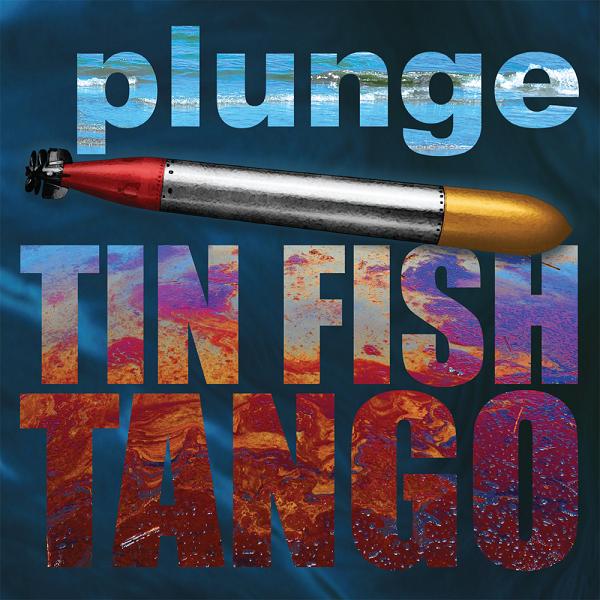
Tin Fish Tango - Plunge (Immersion Records) - Plunge is trombonist Mark McGrain's group and it just might be the funkiest chamber group one has ever encountered. Most of the music is played by McGrain, bassist James Singleton, saxophonists Tim Green (7 tracks) and Tom Fitzpatrick (the other 6 tracks) plus special guest Kirk Joseph (sousaphone on 2 tracks.) The combination of Joseph and Singleton on "Huff-A-Round" is irresistible with the duo laying down a groove one could drive upon (exactly what McGrain and Fitzpatrick do.) Singleton whips out his bow for several short phrases while Joseph blows some inspired bottom lines. He also appears on the disk's longest track, the 9-minute plus "Big Bhang Theory", with its sinuous, slithery, bass lines and bluesy solos - the band resides in New Orleans and one can hear the Crescent City influence in the way the band mixes blues, jazz and soul riffs into their melodies and solos. There's the strut of "Strollin' With Sidney", the slow drag of "The Kroop" (McGrain gets "down and dirty" here) and the "walking blues" of "Diddlin'" (good tenor work from Fitzpatrick.)
The interplay of brass and reeds is downright intoxicating on several tracks including the group improvisation titled "Pelican Down" and the funky "Bright Side." The latter track has an urgency in the propulsive bass line and the hard-edged keening tenor sax solo (Tim Green.) McGrain never tosses off a solo - instead he always seems to go for the jugular, digging into the melody and grabbing on to the groove. Singleton is both the glue and the "groove merchant", holding down the bottom with his round bass sound and giving the beat a beat of a kick when called for (it's displayed to its fullest several times but especially on "Love's Wildest Talents.")
The only issue with "Tin Fish Tango" is the program goes on a bit too long (68 minutes) but there are pleasures throughout. Everyone plays well and the inspired moments outweigh the limpid passages. Pour a cup of herbal tea, dim the lights and savor the sounds. For more information, go to www.immersionrecords.com.
Anthony Braxton, over his long and multi-faceted career, has produced scores of recordings, so much so that it has always been hard to keep track of what he's doing and when he did it. All that is about to change - no, the good Professor (he's on the faculty of Wesleyan University in Middletown, CT) is not laying down his many reeds or his pen. Read the informative press release below and follow the links provided.
ANTHONY BRAXTON AND THE TRI-CENTRIC FOUNDATION TO LAUNCH NEW WEBSITE MARCH 1
New York, NY - On Tuesday, March 1st, Anthony Braxton and the not-for-profit organization Tri-Centric Foundation will publicly launch a comprehensive new website documenting the composer's music and legacy. The site, to be accessible at http://tricentricfoundation.org, will offer an array of unprecedented features, including exclusive access to Braxton's extensive personal archive of live recordings and the first-ever digital downloads of the complete out-of-print catalog of releases from his own Braxton House label.
True to its name, the Tri-Centric site will be split into three parts: a one-stop informational home for the composer and the foundation; a 'friendly experiencer' section for an immersive jump into Braxton's sound world; and New Braxton House Records, an online label dedicated to offering Braxton's music for convenient and affordable download.
New Braxton House Records will be releasing two album-length downloads per month, with material ranging from recent Ghost Trance Music concerts to rare recordings from the 1970s, from solo saxophone recitals to orchestra performances. The label's initial release will be a Sextet (Philadelphia) 2005, a double album-length performance from Braxton's long-time working ensemble featuring the composer on saxophones, with Taylor Ho Bynum (brass), Jessica Pavone (viola), Jay Rozen (tuba), Carl Testa (bass), and Aaron Siegel (percussion). Additionally, for a limited time the website will be offering a free album download: Septet (Pittsburgh) 2008 with the same ensemble plus Mary Halvorson (guitar). The full catalog of the old Braxton House imprint from the late 1990s will also be available in downloadable format for the first time.
Customers can buy any recording on an a la carte basis, or may choose to become subscribers, receiving each month's two new downloads plus 10% off all back-catalog items for $12+1 a month, with all proceeds from the sales directly supporting the Tri-Centric Foundation. Additionally, in a move reminiscent of Frank Zappa's Beat the Boots, the website will be culling from the hundreds of unauthorized Braxton concert bootlegs available online, 'liberating' those with the most historical value and offering them free-of-charge.
About the Tri-Centric Foundation:
The Tri-Centric Foundation is a not-for-profit organization that supports the most ambitious work of eminent musician/composer Anthony Braxton, while also cultivating and inspiring the next generation of creative artists to pursue their own visions with the kind of idealism and integrity Braxton has demonstrated throughout his long and distinguished career.
Specifically, the foundation encourages broad dissemination of Braxton’s music through creation of, and support for, performances, productions, recordings and other new media technologies. It also documents, archives, preserves and disseminates Braxton’s scores, writings, performances and recordings and advocates for a broader audience, appreciation, funding and support base for Braxton’s work. The new www.tricentricfoundation.org website is a critical component of this larger mission.
Perpetual Motion - Donny McCaslin (Greenleaf Music) -Did not know quite what to expect when reading that the new McCaslin CD was going to be "electric" but will tell you here that, if you are a long-time listener to his music, this is one enjoyable set of songs. Featuring the rhythm section of Adam Benjamin (Fender Rhodes, piano), Tim Lefebvre (electric bass) and either Antonio Sanchez (drums cuts 1-6) or Mark Guiliana (drums cuts 6-9), the music not only has "perpetual motion" but also lots of "forward motion." Blasting out of the gates with "Five Hands Down", the band plays with great fire (Sanchez knows how to electrify a rhythm) and McCaslin responds with a fiery solo, even squealing a bit near the climax. The title track has the feel of a Wayne Shorter-Joe Zawinul collaboration with a melody that continues to move upward and plenty of shifts in the rhythm section. The leader's solo, over Lefebvre's roiling bass lines and Sanchez's stormy cymbals, moves away from any Shorter influence into a percussive, squalling, booming statement. Uri Caine joins the fun on "Firefly", a ballad that builds atop Sanchez's active percussion and distorted Rhodes lines. It does build to a boil but moves into an "r'n'b" feel on the way out. The pianist also contributes the final track, "For Someone", a beautiful ballad that he plays solo. There's a touch of "fatback funk" in Guiliana's drums on "Memphis Redux", a sweet journey down to the Southland that may remind some of The Crusaders (after they jettisoned the word "Jazz" from their monicker) - both McCaslin and Benjamin (on acoustic piano) dig deep into their souls on the solo while the bass pops, bumps and jumps underneath. "L.C.Z.M." moves in on a funky riff that has the feel of a classic Led Zeppelin line and while the piece has tremendous drive, there is no bombast to weigh the groove down.
Producer David Binney brings out his alto saxophone for "Impossible Machine", a tune he co-write with McCaslin. The 2 reed players explore the long melody line before McCaslin moves out into a well-drawn solo -the way he moves around the chordal interjections and with the shifting rhythms is exciting as well as pleasing.
In the late fall of 2010, I saw Donny McCaslin play as part of guitarist Joel Harrison's ensemble and was highly impressed by his control. Yes, he plays with fire and virtuosity but rarely gets lost and never just "shows off." Yes, "Perpetual Emotion" is an "electric" album but not just because of the presence of the amplifiers. Dig into this music and you'll find plenty of soul and honesty. For more information, go to www.donnymccaslin.com.
Courtesy of Greenleaf Music, here's a taste of "L.C.Z.M." Donny McCaslin - L.Z.C.M. by greenleaf_music
Across The Sky - Geggie Trio + Donny McCaslin (Plunge) - I first heard bassist John Geggie when he was a part of the quartet known as Chelsea Bridge that released several CDs in the 1990s and also his work with pianist D.D. Jackson. A steady hand in the rhythm section, he's also a fine soloist and strong composer. It's hard to believe that this 2007 recording and 2008's "Geggie Project" Trio CD on the Ambiences Magnetiques label are his first as a leader in a career that spans 2 decades and genres as varied as classical, folk and jazz.
This Trio features pianist Nancy Walker, drummer Nick Fraser and special guest McCaslin, Canadians all but the guest. Yet, McCaslin is no "Donny-come-lately" - he is an integral part of the music that moves back and forth organically from "straight-ahead" pieces to short, fully improvised, tracks featuring smaller combinations.
The program opens with "The Eyes Are Worth 1000 Words", a piece with a loping bass line, a nifty bop phrase thrown into the theme and a sly tenor line. McCaslin plays around with Fraser's snappy drumming, Walker's occasional chords and his intensity rises atop the cushion provided by Geggie. He moves with the beat, behind and ahead of it, creating a memorable solo. Fraser gets a short but effective spot that leads back to the opening theme. The strength of this material is that every track is different, ranging from the ethereal ballad "From Which" (McCaslin plays high and softly in the tenor range and it's quite lovely) to the gentle funk of "Or Not" (with the leader's declamatory bass solo and Walker's rippling yet understated phrases.) The title track, composed by Geggie, has an open feel due to the rubato nature of the group interaction - there is beauty in the way Walker works beneath and alongside the tenor lines, all the while the rhythm section controls the shifting dynamics. The piano solo, with phrases that move like slowly falling water, is very lovely.
"Brume" and "Ruelles" are group improvisations that come one after the other, the former (translated as "mists") building softly on the whispering tenor sax and the rising piano figures while the latter ("streets") is a "freer" conversation among the participants that picks up in speed but never gets lost.
It's just piano and bass interacting on "Les Jardins de Luxembourg", creating a melancholy and mysterious dialogue of ringing notes and overtones. The pianist joins the saxophonist for the short and ethereal "Reflection", an Erik Satie-like impression. The CD closes with "Pompidou", just bass and tenor in a short yet bracing interaction.
"Across The Sky" is music of the highest order, a program in which technique gives way to interaction and group dynamics. The melodies are smartly drawn while the improvisations display the trust and sense of adventure one craves hearing in creative music. For more information, go to www.johngeggie.com.
Graylen Epicenter - David Binney (Mythology) -I have been a fan of alto saxophonist/composer David Binney's music since I reviewed "The Luxury of Guessing" in 1995. What was impressive then and, perhaps, moreso now, is the urgency in his compositions, the interactions, the themes that stretch out then open to cogent solos and the excellence of his sidemen (all of whom are friends - listen to his highly informative and entertaining conversation with Jason Crane on "The Jazz Session" by clicking here.)
One of the things you'll learn about this new CD is that the title has no meaning - Binney just liked the way the 2 words sounded together. One has to laugh hearing that admission because it seems (at least to this listener) that Binney always knows what he wants from his music. These pieces have musical themes and always seem to be moving forward. The title track, at 12:35, is the longest cut yet is multi-sectioned with melodies for each change, powerful solos from guitarist Wayne Krantz and Binney, strong rhythm section work from pianist Craig Taborn, bassist Eivind Opsvik and drummer Brian Blade and a lovely interlude with an atmospheric wordless vocal from Gretchen Parlato. "Equality at Low Levels " features Binney doubling on soprano and alto saxophones shadowed on the theme byTaborn - the middle of the piece finds the saxophonist back on alto sparring, jabbing and jousting (musically) with the pianist (who seems to get "freer" as the piece moves forward.)
Drummer Dan Weiss joins the group for 5 pieces, doubling with Blade on 4 of those tracks. The duo push mercilessly on "Terrorists and Movie Stars" prodding, even goading Binney and tenor saxophonist Chris Potter to "open up" and let fly, all the while Taborn is goosing the rhythm with pounding chords. The drum "twins" open "Any Years Costume" with a blazing dialogue that roars and jumps out of the speakers. After the ensemble pushes through the theme, the drummers along with Opsvik, drive the solo section underneath Binney's passionate solo. Trumpeter Ambrose Akinmusire spars with the drummers and Taborn for his hard-edged solo. The piece takes an interesting detour towards the quiet during Opsvik's handsome solo but ends dramatically.
Parlato returns to sings along with the saxophones and trumpet on the short (1:35) but challenging "Same Stare, Different Thoughts." She also contributes lyrics to "Home", a piece that Binney has recorded several times in the past but never with words. Much of the opening moments feature voice, quiet and spare piano lines, nearly inaudible alto saxophone and soft drums (from Blade.) The piece builds slowly as Ms. Parlato stretches her lines into wordless sounds that open to Binney's expressive and emotional alto solo. Blade reacts to the soloist's energy and the piece builds to an intense finish.
The CD closes with "Waking to Waves", a piece that opens with impressionistic vibrations before the efforts of drummers Blade and Weiss, Kenny Wollesen (vibraphone) and Rogiero Boccato (shakers and more) create a Brazilian rainforest of sound for the handsome melody (reminiscent of Caetano Veloso) - there is a mix of voices, saxophones, and Krantz's acoustic guitar before Akinmusire takes off for a powerfull solo that drives right to the last note.
"Graylen Epicenter" is a stunning CD, with so much variety in sound and melody that the temptation to play it over and over is hard to resist. If you have not paid attention to David Binney, be advised. This is but one of a dozen CDs he has released (as either a leader or co-leader) since the turn of the Century. Each one is worth investigating (his work for Criss Cross is among the Dutch label's most impressive releases) - This new effort sets the bar very high for 2011 (and beyond.) For more information, go to www.davidbinney.com.
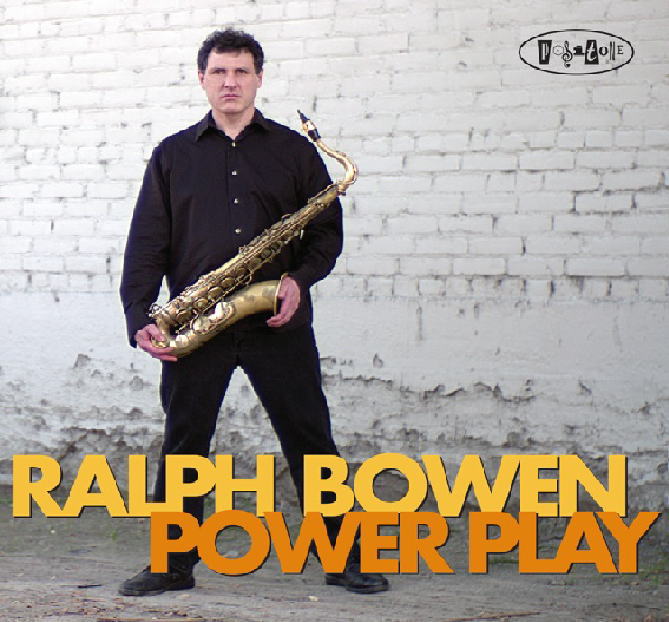
Power Play - Ralph Bowen (Posi-Tone Records) -Tenor saxophonist/composer came out of Canada in the mid-1980s to study in the United States and first came to critical notice as a member of the Blue Note labels hand-picked ensemble of "young lions" known as Out of the Blue. That group featured, among others, alto saxophonist Kenny Garrett, bassist Bob Hurst and drummer Ralph Peterson. Bowen went on to work with pianists Michel Camilo, Hank Jones and Horace Silver as well as vocalist Shirley Scott and bassist Charles Fambrough.
This release, his 3rd for Posi-Tone, features the fine piano work of long-time friend Orrin Evans, bassist Kenny Davis and drummer Donald Edwards. Evans' tolling McCoy Tyner-like chords give great power to "Drumheller Valley" as does Edwards' powerful drumming. Bowen starts his solo (after a fine one from Evans) quietly but soon rides the roiling rhythm section to impressive heights. "Two-Line Pass" has the speed of a hockey game in the flying bass lines of Davis - Bowen blazes a mighty trail through the piano chords, having fun interacting with the ensemble. Evans takes his own joy ride with Edwards supplying the high-octane percussive push.
Bowen wisely plays "My One and Only Love" as the pretty ballad it is, staying close to the melody and chord changes for his handsome solo. There is a sense of joy in his solo, a happiness that carries through the entire piece.
Other highlights include the handsome uptempo ballad "Bella Firenze" with an Evans solo that is relaxed and "swinging" at the same time and an energetic give-and-take featuring Bowen and Edwards (which ends on a fadeout.) "Walleye Jigging" has a pleasing melody played over shifting tempos that opens to an understated piano solo before Bowen and Edwards have more strong interaction. Bowen's lithe and gentle soprano saxophone is featured on the final track, "A Solar Romance." Take the time to listen to Davis's long tones on the bass and Edward's exemplary work on the cymbals as well as Evans' impressionistic piano (somewhat reminiscent of another, older, Evans - Bill.)
"Power Play" does have its share of powerful playing but there is also a goodly amount of dynamic variation from track to track. What does not change throughout the program is the fine musicianship and the excellent interplay. Some might call Bowen's approach "modern hard bop" - call "honest good music" that's well played and you won't go wrong. For more information, go to www.ralphbowen.com or www.posi-tone.com.
Here's the opening track, "K.D's Blues" courtesy of Posi-Tone Records and IODA Promonet: K.D.'s Blues (mp3)
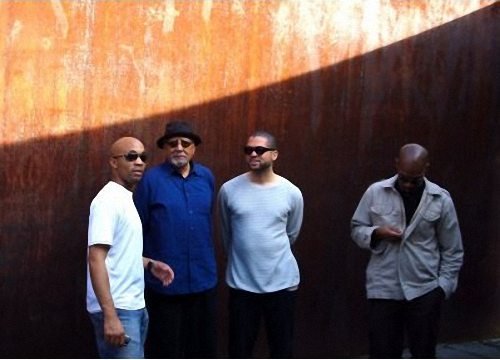
Charles Lloyd and his New Quartet (plus a very special guest) played at Crowell Concert Hall on the campus of Wesleyan University tonight (Friday January 28, 2011.) Instead of a review, here are some impressions of the evening.
Eric Harland is a excellent drummer, creative and intuitive plus he wears great glasses as well as snappy sneakers.
Reuben Rogers played with great virtuosity, especially his work with the bow but, due to the murky sound conditions of Crowell Hall (better in the back, I'm told) he all but disappeared during the louder passages. Still, his unaccompanied solos were wonderfully musical.
Finally got to see and hear Jason Moran and he did not disappoint. There were moments of pure melodic beauty and others where his intensity approached that of Cecil Taylor.
Listening to Mr. Lloyd tonight and then to his 1967 recording of "Forest Flower", his style of playing has not changed very much - his airy phrases, his tendency to play circular lines (probably learned from the blues players he heard while growing up in Memphis) and his powerful flute styling. He, also, knows how to put a band together and give them plenty of room to shine.
The special guest was Alicia Moran Hall, wife of Jason. She's a mezzo-soprano with a wonderful range and was invited onstage to sing "Go Down, Moses." O my, how she plumbed the depths of the material and fit her voice around Lloyd's expressive tenor sax playing.
The Quartet played with great spirit throughout and, during the quieter moments, you could pick out all the instruments without any strain. There was one piece that was introduced by a lovely piano solo, then, one by one the rest of the ensemble added their voices including Mr. Lloyd. The way the music was building, the insistent drumming and pedal-point bass, it sounded (to these ears) like Marvin Gaye's "What's Going On" but, then a quick shift and into the melody of "Caroline, No." It was one of several times during the program that I laughed at the playfulness.
"Lift Every Voice and Sing" is a stirring anthem, with nary a bomb bursting. Mr. Lloyd, ever the teacher, made the audience stand. It was worth it especially the interweaving of Ms. Moran's voice, Mr, Moran's piano and the forthright tenor saxophone.
Finally, I had the pleasure of meeting Tom Reney, the host of "Jazz A La Mode" heard weeknights on WFCR-FM in Amherst, MA. I've been listening to Tom since he began in 1984, checking out his first hour (8 p.m.) on my drive home from work (in the days I closed my shop at 8.) For those who have never heard his program, click here and find out more.
After a week of snow, ice and cold, the concert was like manna from heaven. Perfect, not truly, but definitely a joy to behold.
If my iPod stays at home or in the car (not in really cold or extremely hot weather), I have a bag that holds a number of CDs for review purposes. On occasion, I forget to unpack the contents. The following reviews are the result of my recent unpacking.
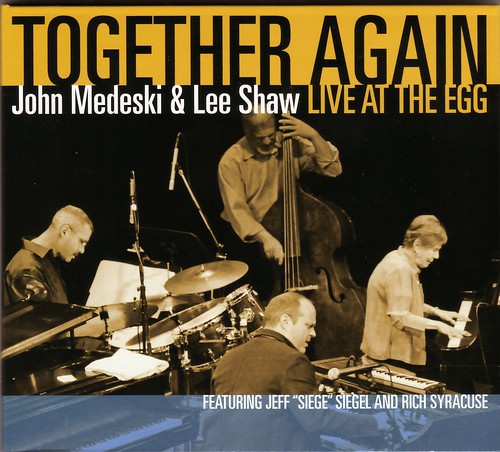
Together Again: Live at The Egg - John Medeski & Lee Shaw (ARC) - The octogenarian Ms. Shaw may not be the first person one thinks of when looking for a musical partner for the mercurial Mr. Medeski but they have a history. When Medeski was in his early teens and Ms. Shaw was living in Fort Lauderdale, FL, he studied with her and became immersed in jazz. Now, 3 decades, the teacher and student pair up for a concert recording. Bassist Rich Syracuse and drummer Jeff Siegel, Ms. Shaw's rhythm section, join the pianists and the results make for an enjoyable hour of music. Right off the bat, the program, recorded live in Albany, New York, opens with a group improvisation. "Lizards" scurries at times and moves quite deliberately at others but always in a forward direction, not getting stuck in a endless repetitive rut. Medeski unpacks his melodica for the uptempo waltz "Prairie Child" (note Siegel's stick work a la Shelley Manne on Sonny Rollins' classic "I'm An Old Cowhand.") Ms. Shaw's solo is a two-handed delight, rich with chords and dancing riffs. "Caravan" meets "St. Thomas" at the onset of "Holiday" with bouncing bass riffs and an exciting drum solo - when the pianists enter, the piece becomes even livelier with a melody that is hummable and solos that really jump. Medeski's B-3 organ shows up on the final 3 tracks including the lovely and haunting "Tears", a piece that is just the 2 keyboards taking their time to move gently through the fine melody. Medeski's "Wiggly's Way" closes the CD in a funky fashion with the rhythm section showing a New Orleans bent; Ms. Shaw's solo illustrates that she can be melodic and still "get down" while Medeski pushes hard against Siegel's hard-edged percussion. I love the way the quartet takes the piece out, a fun musical conversation.
If you don't know Lee Shaw's music, you'd be wise to check out her vast discography - she's recorded for numerous labels including CIMP, Cadence Jazz Records, LuvLee Records as well as her most recent recordings on ARC (Artists Recording Collective.) You would go not wrong starting with "Together Again." For more information, go towww.leeshaw.org or www.artistsrecordingcollective.info.
Afterlife Music Radio: 11 New Pieces for Solo Cello - Marika Hughes (DD Records) -With the way the weather has been in the Northeast since the beginning of 2011, one needs music to really get lost in. Ms. Hughes, best known for her work with Red Pocket, 2 Foot Yard, Charming Hostess and violinist Charlie Burnham's Hidden City, has made a unique contribution to the solo cello repertoire. She commissioned 11 new works from contemporary composers, several of whom you might not expect to write for cello. Drummer Nasheet Waits (Jason Moran Trio, Tar Baby) created the lovely and mysterious "Korean Bounce", more a ruminative blues than an Asian folk tune. Saxophonist Abraham Burton is represented by "Change", a thought-provoking blend of long tones and pizzicato lines - it, too, has blues in its DNA.
Jenny Scheinman's sweet "Ba Da Bum" is a short and folky romp while bassist Todd Sickafoose (a member of the band with whom Ms. Hughes recorded her other new CD, "The Simplest Thing" ) created "Murmur", an episodic piece that is mostly arco (bowed) but closes with an intense then peaceful pizzicato (plucked) section. Bassist Trevor Dunn's "Singulus" opens quietly and has a fascinating blend of melodic fragments and longer tones. The title track, courtesy of multi-instrumentalist Shahzad Ismaily, moves slowly and quietly until 1/3rd of the way through its 6 minutes, sharply bowed notes erupt and lead to what sounds like a bowed "walking" bass line and back to a more pensive mood. "Bring In the Nasty", composed by Raz Mesinai (co-producer and engineer of the recording), offers harsher tones and a circular melody line that goes on relentlessly until the fade.
Many different moods, tones and ideas make "Afterlife Music Radio" a musical adventure to be savored and re-explored many times. To find out more, go to www.marikahughes.com - there, you'll read about the CD Release concert on 1/28/11 at the 92YTribeca in New York City.
A Boy's Journey - Peter Hum Quintet (self-released) - Peter Hum is an excellent jazz journalist based in Ottawa, Canada - you can (and really should) read his columns from The Ottawa Citizen by going to http://jazzblog.ca. As it turns out, he's also a fine pianist, having played with many of Canada's finest musicians (including guitarist Sonny Greenwich, clarinetist Phil Nimmons, saxophonist Rob Frayne and bassist John Geggie (among many.)
Now, he's issued his debut CD, fronting a quintet composed of Kenji Omae (tenor saxophone), Nathan Cepelinski (alto and soprano saxophones), Alec Walkington (acoustic bass) and Ted Warren (drums). The selections are filled with handsome melodies, rich harmonies, pleasing interactions, and numerous good solos. The blend of the reeds on pieces such as "C.G." is so inviting; the pieces moves briskly atop the propulsive drumming and Hum's full chords. Walkington's bass "walks in" the beginning of "New Toy", a piece with rolling piano riffs, Cepelinki's fine alto solo (like rays of sunshine) and a section for the bassist to take off. "Big Lou" must be quite a character (dedicated to Hum's son Pascal) - the piece that bears his name opens with sly (and slightly bent) bass notes before Warren's funky drums and the keening horns come in. Hum's electric piano sound is warm and his phrases ride easily atop the funky rhythms. The title track is dedicated to the composer's father, a native of Ottawa, who, as a very young boy (4) traveled across Canada to go to China and made the return trip 10 years later. The music has moments that move slowly before picking up in intensity (note Cepelinski's fine soprano solo over Warren's explosive drumming.) Hum's rippling electric piano leads "Unagi" (named for Japanese freshwater eels), a energetic piece that sounds a bit like Chick Corea (early Return to Forever) and featuring good solos from the reeds, the drummer as well as the pianist.
The CD closes with the longest track, "Three Wishes" - at nearly 11 minutes, the piece starts slowly, thoughtfully, a short, poetic, melody for the alto saxophone before Warren kicks the piece into a much higher gear for the solo sections. After the saxophones take their turn, the drummer takes a fine and understated solo before the coda reintroduces the theme. A short silence follows and Hum reenters, leading the saxophonists into a short reading of the main melody - it's a very effective ending to an excellent piece.
"A Boy's Journey" is quite a strong debut for composer/musician Peter Hum, blending a penchant for flowing melodies with exciting rhythms. When critics/reviewers make recordings (here, I'm thinking of people like saxophonist Chris Kelsey and as far back as Leonard Feather), one might think it would be easy to snipe at their shortcomings but many of the releases are well thought out, with a strong sense of direction and purpose. It's true about Peter Hum's music and you should seek it out.
For more information, go to www.peterhum.com - Hum's description of the recording session makes for fascinating reading and you can find it by clicking here.
Every once in a while, a critic or commentator will bemoan the passing of classical music. Perhaps these people have never read Alex Ross's "The Rest is Noise" and "Listen to This" or heard Nico Muhly on the radio or seen Gustavo Dudamel conduct the Los Angeles Philharmonic. If "dead" is based on market share, you can throw those figures out the window. With the advent of the Internet, more people are exposed to different types of music all the time.
Thanks to groups like the Kronos Quartet, SO Percussion, the Chiara String Quartet and people like Marin Alsop, Joshua Bell, Yo-Yo Ma and others, classical music is alive and well in concert halls, performance spaces and night clubs (yes, clubs where rock and jazz musicians play.)
Janus is 3 young musicians, Amanda Baker (flute, voice), Beth Meyers (viola, banjo, vocals) and Nuiko Wadden (harp, percussion), with a repertoire that ranges from Debussy to Toru Takemitsu to contemporary composers such as Caleb Burhans, Cameron Britt, Jason Treuting, Angelica Negron, Sophia Gubaidulina and others. In existence since 2002, the trio's debut CD, "i am not" (New Amsterdam), was issued late last year.
Flutist Baker lives in New London, CT, and will be my guest this Sunday (1/30/11) at 11 a.m. on WMRD-AM 1150, Middletown, CT, and WLIS-AM 1420, Old Saybrook, CT. She's studied at Northwestern University and Yale University, performed with the Coast Guard Band and was principal flutist with the Guangzhou Symphony Orchestra in Southern China.
On the show, we'll talk about her training, the origin of Janus and how the group finds its music. And, we'll listen to several tracks from the excellent recording. If all goes according to plan, there will be an archived recording of the show - the site is in the works.
In the meantime, here's Janus performing Burhans' "Keymaster."

 Posts
Posts