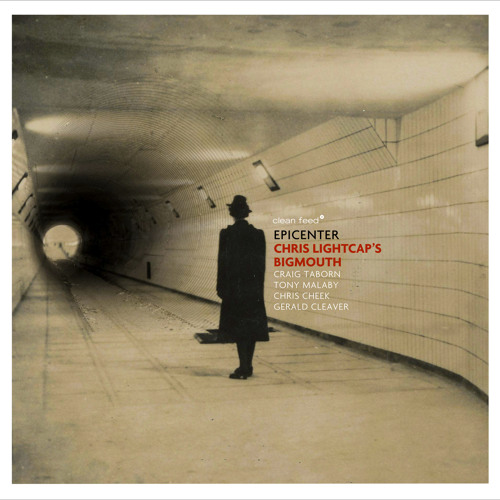
Bassist/composer Chris Lightcap is a busy musician, currently working in the groups of violinist Regina Carter, guitarist Joe Morris, drummer Matt Wilson, saxophonist Chris Cheek and pianist Craig Taborn. The last 2 mentioned are also members, along with tenor saxophonist Tony Malaby and drummer Gerald Cleaver of the bassist's quintet, Bigmouth. He named the group after the title of his 2003 Fresh Sound New Talent recording which featured a song of the same name. "Epicenter" (Clean Feed Records) is the ensemble's new recording, Lightcap's 4th as a leader since 2000, all of which feature a 2-saxophone lineup (the 3rd CD added alto saxophonist Andrew D'Angelo for several tracks). Malaby and Cleaver have been in the group since its inception with Taborn joining as the 5th member in 2005 and Cheek replacing Bill McHenry before 2010's "Deluxe" recording (also on Clean Feed).
photo by Nada Zgank
The majority of the music on the new recording is the result of a commission (and grant) from Chamber Music America. The composer created a suite titled "Lost and Found New York" - it's a musical documentary of his move to New York and his experiences over the past 15+ years. The 8-song program (interesting how all 4 of the bassist's recordings have 8 tracks) opens with the forceful "Nine East", its insistent electric piano figures dancing beneath the whirling saxophones. As the soloists step up, Lightcap keeps that musical figure alive while Cleaver pushes forward. The bassist then overdubs several acoustic guitars for "White Horse", the horns and organ moaning in the background while the melody moves around them. The title track opens to reveal a melody influenced by Ornette Coleman then into a muscular bass solo, an exciting piano solo and then both Malaby and Cheek solo. There's is only a short ensemble before the piece reaches its conclusion. The evocative "Arthur Avenue" speaks of warm summer nights strolling the streets while "Down East" (and its 1950's style 2-handed piano chords) has the saxophonists wailing like r'n'b players "walking the bar". The rhythm section lays down a seductive rhythm for "Stillwell"; after the electric piano introduces the chordal structure, the saxes plays a melody that sounds inspired by Adulah Ibrahim's soulful South African music. Slowly, the intensity picks up through the various solos until the drums bring the listener down to silence. There's tenderness in the quiet figures played by the saxophonists behind the rhythm section on "Stone By Stone", like a persistent gentle breeze. The music steadily opens up but never loses that tender quality.
The program closes with a raucous reading of Lou Reed's "All Tomorrow's Parties", a nod to the halcyon days of the late 1960s and a city that does not exist anymore. Taborn pounds the keys of the acoustic piano, the saxophones play the plaintive melody, the bass throbs next to the pounding of the drums. The music fades on the insistent piano chords, jangling like the composer's guitar often sounded but nodding to the trance-like figures of the early music of Terry Riley.
The music on "Epicenter" is built on the strength of the elemental drum patterns (which open up and settle down so organically), the strong melodic bass lines, the incredible motion of the keyboards and the praying, braying and soothsaying nature of the 2 tenor saxophones. Chris Lightcap's Bigmouth opens wide, pulling at the listener to pay attention and enjoy how his songs describe his adopted home. For more information, go to chrislightcap.com.
Here's the title track:
The new CD from tenor saxophonist Doug Webb, "Tripl3 Play" (Posi-Tone Records, is a treat from the handsome opening notes to the hair-raising riffs that bring the program to a close. In between, Webb and fellow tenor men Walt Weisskopf and Joel Frahm swing, bluster and carouse their way through a set that literally roars out of the speakers. A good portion of the excitement can be attributed to how the trio interact and push each other into a fiendish yet friendly competition. Also, one must give a lot of credit to the rhythm section of Brian Charette (organ) and force-of-nature that is drummer Rudy Royston for how they make sure the fires are always stoked.
There's nary a ballad to be found in the 60-minute run. In fact, the music goes from swinging to burning and beyond. Tunes such as "Avalon", "Giant Steps" and the title track hit the ground running and never let up. There's also a heady dollop of blues on tracks such as Randy Aldcroft's "Your Place or Mine" and Lou Donaldson's "Alligator Boogaloo." Try to sit still listening to Lanny Morgan's "Pail Blues" or Weiskopf's "Three's a Crowd" - impossible! Webb makes sure everybody gets heard therefore the solos are often short. Yet, the results are not inconsequential. Sure, this is a "blowing session" yet there is great respect for the music, for the tradition and for keeping the listener satisfied. To find out more about the saxophonist, go to www.dougwebb.us.
Here's the opening track:
California native John O'Gallagher (alto saxophone) is a busy musician, working and recording with drummers Owen Howard and Jeff Williams, trumpeter Ralph Alessi, pianist Frank Carlsberg and a host of big bands. "The Honeycomb" (Fresh Sound New Talent) is his 9th as a leader and a return to the trio format, the 4th CD he has released with just bass and drums. These 8 tracks feature the magnificent voices of Johannes Weidenmuller (bass) and Mark Ferber (drums); they are equal partners in this venture, often engaging in conversations as he moves through a solo. The opening cut, "Uroboros" (named for the mythical serpent that eats its own tail) is one of several pieces that may remind you of the work that another brilliant alto saxophone, Henry Threadgill, produced with Steve McCall (drums) and Fred Hopkins (bass) in Trio Air. The music twists and turns, with both the saxophonist and drummer using the bouncing bass lines as a springboard for their inventions. "Petulant Snoot" comes in on quiet bass lines and splashing cymbals with a melody that suggest blues. After several times through that melody, the energy picks up and O'Gallagher rides the fiery drums and the foundational yet freewheeling bass lines. Yet, this is no ordinary "blowing session" in that every track has both a well-constructed melody and a well-defined foundation. The fun of the listening experience is hearing how the musicians work within and outside of the structure. "Kerberos" (named for a computer authentication protocol) has an incredibly funky beat, spilling forward on the power of the drums and alto sax. Even the excellent bass solo picks up on that energy.
"Go Where You Are Watching" is a quiet piece, with fine brush work throughout, plus a saxophone solo section where Weidenmuller not only sets the pace but also plays counterpoint. O'Gallagher's lines are longer here, tones are sustained and there are delightful moments (just a few) when the sax and bass play the same notes. The title track has a slippery rhythm, starts slowly and then takes off like a race car, the saxophone solo a blizzard of rapid-fire lines that fly over the propulsive rhythm section (Ferber matches the leader's energy!)
By the time one reaches the final track, the powerful "Turducken", the seduction is complete. Those people who love creative music, enjoy how musicians create a group sound while maintaining their own "voice", how pieces can have structure and "freedom" built into its performance, should really enjoy "The Honeycomb." The music created by the John O'Gallagher Trio absolutely shines and is a powerful reminder that the best recordings are the ones where you hear the musicians "play" and not work. To find out more, go to www.johnogallagher.com.
Saxophonist, composer and arranger Jim Stranahan retired from teaching after 3+ decades of working with students in the Denver Colorado, area. During that time, he also was a popular free-lance musician working with the likes of Rosemary Clooney, Bob Hope and Lee Konitz.
"Migration to Higher Ground: Jim Stranahan Little Big Band" (Tapestry) comes 3 years after his previous recording for the label "Free For All." The 9 tunes include 5 featuring the leader in front of a 11-piece band (the rollicking "Bayou Bounce" adds the sousaphone of Ben Faust); many of the band members also teach in the Denver-area including trumpeters Brad Goode and Hugh Ragin plus the impressive bassist Eduardo "Bijoux" Barbosa. Beside the New Orleans-inspired "..Bounce", the ensemble performs the Afro-Cuban title track, replete with fiery trumpet work, strong drum work from Todd Reid, a melodic/percussive Barbosa solo and a rippling guitar spotlight for Mike Abbott. "Mambo Facil" opens with a saxophone cadenza that is all Stranahan, overdubbing tenor and soprano then leading into a lively montuno. The sweeping brass lines over the "dancing" drums create a splendid frame for the soloists (flutist Joe Anderies stands out). The remaining 2 Little Big Band tracks include the mellow "Paul and Dave", a tribute to Paul Desmond and Dave Brubeck, plus a "swinging" reading of Brubeck's "In Your Own Sweet Way" which features the leader's swooping soprano lines over the responsive counterpoint of the reeds and brass.
The other 4 tracks belong to a sextet that features Goode and trombonist Wade Sanders from the larger ensemble plus the rhythm section of pianist Glen Zaleski, bassist Rick Rosato and the leader's son Colin on drums. The rhythm section is also a working group; one can hear that in their interactions and the liveliness of the music. Father Stranahan's alto flies over his son's active drums on "Straight From The Source" and floats his husky tenor sounds gently, but with a strong taste of the blues, on the Monk-inspired "Blues and a Half" (the track also features crisp solos from Goode and Zaleski).
The remaining sextet tracks include a rousing rendition of Sonny Rollins' "St. Thomas" which features a smart arrangement from Dad that only hints at the melody until the ensemble wraps it around a splendid drum break. The CD closes with Jim overdubbed 6 times swinging his way through Charlie Parker's "Donna Lee" with the help of the rhythm section - listen for the interaction of the drums with the sax breaks during Zaleski's sprightly solo plus a strong soprano solo.
Jim Stranahan shows his strengths as a soloist, arranger and bandleader on "Migration To Higher Ground." He is generous as a leader on the Little Big Band and gets to play more expansively on the Sextet cuts. There is plenty to like on this CD, a worthy successor to his previous Tapestry release. For more information, go to caprirecords.com/artists/jim-stranahan.
While I was away this past weekend, saxophonist Eric Wyatt came to The Side Door Jazz Club in Old Lyme, CT for a CD-Release Party celebrating his first United States release, "Borough of Kings" (Posi-Tone Records). In my preview of the show, there's a bit of Wyatt's history (read it here).
The recording features Wyatt's working group of Benito Gonzalez (piano), Ameen Saleem (bass) and Shinnosuke Takahashi (drums, mixing engineer) plus guests Duane Eubanks (trumpet on "Can He Come Out"), Kyle Poole (drums on "Can He Come Out") and Clifton Anderson (trombone on "What Would I Do Without You"). The quartet tracks display the influence of John Coltrane and are filled with electricity, sparks flying between the soloists and the delightful rhythm section. The title track shows Takakhashi really driving the band, pushing both Wyatt (on tenor) and Gonzalez to play with fire throughout. Wyatt moves to soprano for the pianist's "Quest", playing a solo that rises high above the forceful rhythm section. Gonzalez, who also works with drummer Franklin Kiermyer and saxophonist Azar Lawrence, often shows the influence of McCoy Tyner, especially in his insistent supportive work and fiery solos. Wyatt's biting tenor sax work is also featured on Mr. Coltrane's "Countdown" and the hard-hitting "One for Hakim", the latter featuring rampaging solos from leader and pianist. There's also quite a splendid saxophone-drums dialogue on that track and plenty of Coltrane quotes as the piece fades.
The 2 tracks with the guests have a much different vibe from the Quartet cuts. Eubanks and Poole bring the "funk" on "Can He Come Out" with Wyatt plugging in for a danceable confection - it's fine and dandy but seemingly out of place. The final track, What Would I Do Without You", features the trombone of Anderson and, while it's not as hyperactive as many of the Quartet cuts, Wyatt and his guest bring good energy on the "straight-ahead" groove.
"Borough of Kings" will be most American listeners initial interaction with the music of Eric Wyatt. The majority of the program feels alive and, chances are quite good, this is what the group sounds like in person. This CD is a worthwhile investment of your time and money. For more information, go to www.ericwyatt-music.com.
Perpetual Motion - Donny McCaslin (Greenleaf Music) -Did not know quite what to expect when reading that the new McCaslin CD was going to be "electric" but will tell you here that, if you are a long-time listener to his music, this is one enjoyable set of songs. Featuring the rhythm section of Adam Benjamin (Fender Rhodes, piano), Tim Lefebvre (electric bass) and either Antonio Sanchez (drums cuts 1-6) or Mark Guiliana (drums cuts 6-9), the music not only has "perpetual motion" but also lots of "forward motion." Blasting out of the gates with "Five Hands Down", the band plays with great fire (Sanchez knows how to electrify a rhythm) and McCaslin responds with a fiery solo, even squealing a bit near the climax. The title track has the feel of a Wayne Shorter-Joe Zawinul collaboration with a melody that continues to move upward and plenty of shifts in the rhythm section. The leader's solo, over Lefebvre's roiling bass lines and Sanchez's stormy cymbals, moves away from any Shorter influence into a percussive, squalling, booming statement. Uri Caine joins the fun on "Firefly", a ballad that builds atop Sanchez's active percussion and distorted Rhodes lines. It does build to a boil but moves into an "r'n'b" feel on the way out. The pianist also contributes the final track, "For Someone", a beautiful ballad that he plays solo. There's a touch of "fatback funk" in Guiliana's drums on "Memphis Redux", a sweet journey down to the Southland that may remind some of The Crusaders (after they jettisoned the word "Jazz" from their monicker) - both McCaslin and Benjamin (on acoustic piano) dig deep into their souls on the solo while the bass pops, bumps and jumps underneath. "L.C.Z.M." moves in on a funky riff that has the feel of a classic Led Zeppelin line and while the piece has tremendous drive, there is no bombast to weigh the groove down.
Producer David Binney brings out his alto saxophone for "Impossible Machine", a tune he co-write with McCaslin. The 2 reed players explore the long melody line before McCaslin moves out into a well-drawn solo -the way he moves around the chordal interjections and with the shifting rhythms is exciting as well as pleasing.
In the late fall of 2010, I saw Donny McCaslin play as part of guitarist Joel Harrison's ensemble and was highly impressed by his control. Yes, he plays with fire and virtuosity but rarely gets lost and never just "shows off." Yes, "Perpetual Emotion" is an "electric" album but not just because of the presence of the amplifiers. Dig into this music and you'll find plenty of soul and honesty. For more information, go to www.donnymccaslin.com.
Courtesy of Greenleaf Music, here's a taste of "L.C.Z.M." Donny McCaslin - L.Z.C.M. by greenleaf_music
Across The Sky - Geggie Trio + Donny McCaslin (Plunge) - I first heard bassist John Geggie when he was a part of the quartet known as Chelsea Bridge that released several CDs in the 1990s and also his work with pianist D.D. Jackson. A steady hand in the rhythm section, he's also a fine soloist and strong composer. It's hard to believe that this 2007 recording and 2008's "Geggie Project" Trio CD on the Ambiences Magnetiques label are his first as a leader in a career that spans 2 decades and genres as varied as classical, folk and jazz.
This Trio features pianist Nancy Walker, drummer Nick Fraser and special guest McCaslin, Canadians all but the guest. Yet, McCaslin is no "Donny-come-lately" - he is an integral part of the music that moves back and forth organically from "straight-ahead" pieces to short, fully improvised, tracks featuring smaller combinations.
The program opens with "The Eyes Are Worth 1000 Words", a piece with a loping bass line, a nifty bop phrase thrown into the theme and a sly tenor line. McCaslin plays around with Fraser's snappy drumming, Walker's occasional chords and his intensity rises atop the cushion provided by Geggie. He moves with the beat, behind and ahead of it, creating a memorable solo. Fraser gets a short but effective spot that leads back to the opening theme. The strength of this material is that every track is different, ranging from the ethereal ballad "From Which" (McCaslin plays high and softly in the tenor range and it's quite lovely) to the gentle funk of "Or Not" (with the leader's declamatory bass solo and Walker's rippling yet understated phrases.) The title track, composed by Geggie, has an open feel due to the rubato nature of the group interaction - there is beauty in the way Walker works beneath and alongside the tenor lines, all the while the rhythm section controls the shifting dynamics. The piano solo, with phrases that move like slowly falling water, is very lovely.
"Brume" and "Ruelles" are group improvisations that come one after the other, the former (translated as "mists") building softly on the whispering tenor sax and the rising piano figures while the latter ("streets") is a "freer" conversation among the participants that picks up in speed but never gets lost.
It's just piano and bass interacting on "Les Jardins de Luxembourg", creating a melancholy and mysterious dialogue of ringing notes and overtones. The pianist joins the saxophonist for the short and ethereal "Reflection", an Erik Satie-like impression. The CD closes with "Pompidou", just bass and tenor in a short yet bracing interaction.
"Across The Sky" is music of the highest order, a program in which technique gives way to interaction and group dynamics. The melodies are smartly drawn while the improvisations display the trust and sense of adventure one craves hearing in creative music. For more information, go to www.johngeggie.com.
Graylen Epicenter - David Binney (Mythology) -I have been a fan of alto saxophonist/composer David Binney's music since I reviewed "The Luxury of Guessing" in 1995. What was impressive then and, perhaps, moreso now, is the urgency in his compositions, the interactions, the themes that stretch out then open to cogent solos and the excellence of his sidemen (all of whom are friends - listen to his highly informative and entertaining conversation with Jason Crane on "The Jazz Session" by clicking here.)
One of the things you'll learn about this new CD is that the title has no meaning - Binney just liked the way the 2 words sounded together. One has to laugh hearing that admission because it seems (at least to this listener) that Binney always knows what he wants from his music. These pieces have musical themes and always seem to be moving forward. The title track, at 12:35, is the longest cut yet is multi-sectioned with melodies for each change, powerful solos from guitarist Wayne Krantz and Binney, strong rhythm section work from pianist Craig Taborn, bassist Eivind Opsvik and drummer Brian Blade and a lovely interlude with an atmospheric wordless vocal from Gretchen Parlato. "Equality at Low Levels " features Binney doubling on soprano and alto saxophones shadowed on the theme byTaborn - the middle of the piece finds the saxophonist back on alto sparring, jabbing and jousting (musically) with the pianist (who seems to get "freer" as the piece moves forward.)
Drummer Dan Weiss joins the group for 5 pieces, doubling with Blade on 4 of those tracks. The duo push mercilessly on "Terrorists and Movie Stars" prodding, even goading Binney and tenor saxophonist Chris Potter to "open up" and let fly, all the while Taborn is goosing the rhythm with pounding chords. The drum "twins" open "Any Years Costume" with a blazing dialogue that roars and jumps out of the speakers. After the ensemble pushes through the theme, the drummers along with Opsvik, drive the solo section underneath Binney's passionate solo. Trumpeter Ambrose Akinmusire spars with the drummers and Taborn for his hard-edged solo. The piece takes an interesting detour towards the quiet during Opsvik's handsome solo but ends dramatically.
Parlato returns to sings along with the saxophones and trumpet on the short (1:35) but challenging "Same Stare, Different Thoughts." She also contributes lyrics to "Home", a piece that Binney has recorded several times in the past but never with words. Much of the opening moments feature voice, quiet and spare piano lines, nearly inaudible alto saxophone and soft drums (from Blade.) The piece builds slowly as Ms. Parlato stretches her lines into wordless sounds that open to Binney's expressive and emotional alto solo. Blade reacts to the soloist's energy and the piece builds to an intense finish.
The CD closes with "Waking to Waves", a piece that opens with impressionistic vibrations before the efforts of drummers Blade and Weiss, Kenny Wollesen (vibraphone) and Rogiero Boccato (shakers and more) create a Brazilian rainforest of sound for the handsome melody (reminiscent of Caetano Veloso) - there is a mix of voices, saxophones, and Krantz's acoustic guitar before Akinmusire takes off for a powerfull solo that drives right to the last note.
"Graylen Epicenter" is a stunning CD, with so much variety in sound and melody that the temptation to play it over and over is hard to resist. If you have not paid attention to David Binney, be advised. This is but one of a dozen CDs he has released (as either a leader or co-leader) since the turn of the Century. Each one is worth investigating (his work for Criss Cross is among the Dutch label's most impressive releases) - This new effort sets the bar very high for 2011 (and beyond.) For more information, go to www.davidbinney.com.
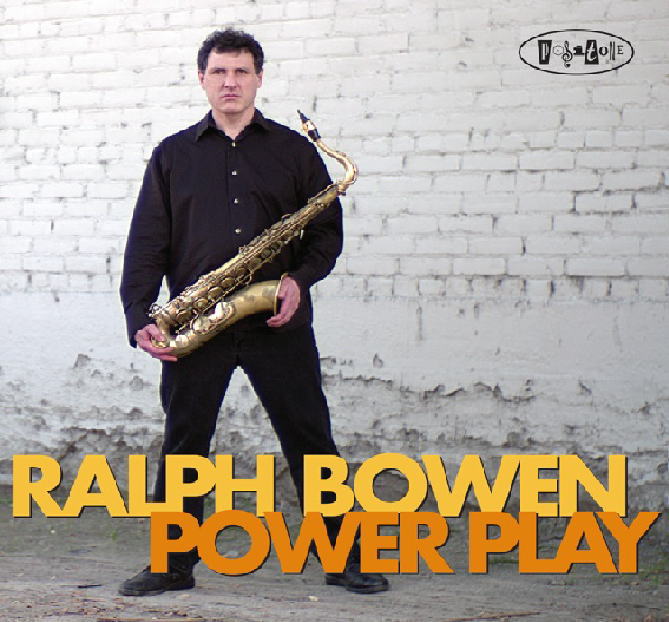
Power Play - Ralph Bowen (Posi-Tone Records) -Tenor saxophonist/composer came out of Canada in the mid-1980s to study in the United States and first came to critical notice as a member of the Blue Note labels hand-picked ensemble of "young lions" known as Out of the Blue. That group featured, among others, alto saxophonist Kenny Garrett, bassist Bob Hurst and drummer Ralph Peterson. Bowen went on to work with pianists Michel Camilo, Hank Jones and Horace Silver as well as vocalist Shirley Scott and bassist Charles Fambrough.
This release, his 3rd for Posi-Tone, features the fine piano work of long-time friend Orrin Evans, bassist Kenny Davis and drummer Donald Edwards. Evans' tolling McCoy Tyner-like chords give great power to "Drumheller Valley" as does Edwards' powerful drumming. Bowen starts his solo (after a fine one from Evans) quietly but soon rides the roiling rhythm section to impressive heights. "Two-Line Pass" has the speed of a hockey game in the flying bass lines of Davis - Bowen blazes a mighty trail through the piano chords, having fun interacting with the ensemble. Evans takes his own joy ride with Edwards supplying the high-octane percussive push.
Bowen wisely plays "My One and Only Love" as the pretty ballad it is, staying close to the melody and chord changes for his handsome solo. There is a sense of joy in his solo, a happiness that carries through the entire piece.
Other highlights include the handsome uptempo ballad "Bella Firenze" with an Evans solo that is relaxed and "swinging" at the same time and an energetic give-and-take featuring Bowen and Edwards (which ends on a fadeout.) "Walleye Jigging" has a pleasing melody played over shifting tempos that opens to an understated piano solo before Bowen and Edwards have more strong interaction. Bowen's lithe and gentle soprano saxophone is featured on the final track, "A Solar Romance." Take the time to listen to Davis's long tones on the bass and Edward's exemplary work on the cymbals as well as Evans' impressionistic piano (somewhat reminiscent of another, older, Evans - Bill.)
"Power Play" does have its share of powerful playing but there is also a goodly amount of dynamic variation from track to track. What does not change throughout the program is the fine musicianship and the excellent interplay. Some might call Bowen's approach "modern hard bop" - call "honest good music" that's well played and you won't go wrong. For more information, go to www.ralphbowen.com or www.posi-tone.com.
Here's the opening track, "K.D's Blues" courtesy of Posi-Tone Records and IODA Promonet: K.D.'s Blues (mp3)

 Posts
Posts