Clarinetist-soprano saxophonist Mike McGinnis walked into Systems Two Studio in Brooklyn, NY, on March 28, 2016, in the company of pianist Art Lande and bassist Steve Swallow. When they exited the building later that very same day, they had recorded a bushel of songs. Eight were released in April of 2017 on "Recurring Dreams" (Sunnyside Records). 13 months later, McGinnis and his musical partners have issued 12 more tracks under the title of "Singular Awakening." The majority of these tracks come from the first hour of the session when the three musicians just started playing - in fact, eight of the pieces are improvisations. What stands out here, as it did on the trio's initial offering (my review here), is how much fun they have playing music.
The program opens and closes with a song each from Swallow and Lande. "Here Comes Everybody" is a joyous romp that bounces atop Swallow's melodic and thick electric bass. Lande's Monk-like accompaniment is a treat over the fiery clarinet solo. The bassist's rollicking "Bite Your Grandmother" has the feel of a Charlie Parker tune with jumping solos from Lande and McGinnis (on soprano). The pianist's contributions, "Shining Lights" and "For Elise", have strong melody lines: in fact, all three musicians share the statement of the melody on the former track while the latter is a lovely ballad (reminiscent of Randy Newman). This song reminds the listener how much influence reed master Jimmy Giuffre has on the trio. The classical quality of the musicians' interactions and the clarity of their notes stands out.
In between, the improvisations range from the free-wheeling "Shockinawe" (and its furious interplay) to the lovely ballad "A First Memory" to the siren-like clarinet that introduces "O'Flaherty Decides to Play Jazz", a tune that also has McGinnis playing "rhythm" clarinet while Swallow walks and Lande dances across the keys. "Slow Dance In a Whisper" is also quite a beautiful ballad with Swallow creating the melody over sparse piano chords (McGinnis sits out this track) - the bassist's instrument sounds so acoustic. The dream-like piece is airy, with sustained piano notes and intelligent use of space and silence.
If you did not hear this trio's first album, that's okay: but I'd suggest buy them both. This is music that speaks to the creative listener, those people who enjoy when musicians take chances and leaps-of-faith the way Mike McGinnis, Art Lande, and Steve Swallow usually do and definitely do here. "Singular Awakening" shines brightly!
Here's a taste of one of the improvised tracks:
Pianist and composer Roberta Piket is a musician who can play in any type of ensemble as well as solo. Still, it's fun to hear her in a trio. "West Coast Trio" (13th Note Records) gives the listener a big clue in its title. The pianist ventured west from her NYC digs to Los Angeles for a West Coast tour. She lined up drummer Joe La Barbera who recommended bassist Darek Oleszkiewicz: they went into the studio, then hit the road. Ms. Piket came back to the East Coast with a good memories of her tour and a delightful recording.
The nine tracks include two Piket originals, the attractively flowing tribute to her teacher Richie Bierach titled "Mentor" and the handsome ballad "A Bridge to Nowhere" (one of the two tracks to feature guitarist Larry Koonse). Note La Barbera's splendid cymbal work on the latter track as well as the wonderful chordal work from the leader beneath the guitar solo. The other seven tracks feature a number of recognizable standards ( i.e. "Windmills of Your Mind" and "My Buddy") and some surprises (Chick Corea's hard-driving "Humpty Dumpty" and John Hicks's sweetly melodic "Yemenja") plus a swinging reading of George Shearing's "Conception" (the other track to feature guitarist Koonse) as well as a lovely reading of "Flor de Lis" by Brazilian composer ands vocalist Djavan (Billy Mintz joins the trio on percussion to add percussive spice to the mix).
Photo: Jason Kahn
For some reason, the track that really impresses me is the swinging reading of Richard Rodgers's "Falling In Love With Love" - the trio plays so inspired, they interacting as if they were breathing as one, and their joy jumps out of the speakers. Oleszkiewicz's solo is splendid, quite melodic (as he is throughout the album) while the standard 8 bars trio - 8 bars drum solo is anything but standard. It's the give-and-take that audiences enjoy so much and that this trio generously supplies. "Windmills.." also gets an uptempo reading: again, the three musicians sound so in sync that you want to immediately replay the song to hear what each individual is playing.
The best "piano trios" are the ones in which the listener gets lost in the group's sound before he starts to listen to the solos. "West Coast Trio" is one of those recordings. You expect that, based on previous recordings and live gigs one may have seen and/or heard, these musicians will play well. Roberta Piket chose her companions and the material wisely and we are the beneficiaries.
Here's Roberta talking about the trio, the music, and the conception:
NPO Trio is Meg Okura (violin), Sam Newsome (soprano saxophone) and Jean-Michel Pilc (piano and its debut is an often dazzling, free-wheeling, improvisational collection titled "Live at The Stone" (Chant Records). Ms Okura, born in Japan, is married to Mr. Newsome and both have known and played with the pianist for the past two decades. After her move to the United States, the violinist converted to Judaism. Besides leading various ensembles (including her Pan-Asian Chamber Jazz Ensemble and the J-Orchestra), she has worked with a wide variety of musicians, from the late Michael Brecker to the Jewish/Middle Eastern band Pharaoh's Daughter.
The album features three fascinating musical adventures including the untitled six-part, 49-minute suite that opens the program. Based on the Yiddish tune "Oyfn Pripetchik" (a song about a parent teaching her children the alphabet), the music is often spell-binding aa the piano rolls beneath the high notes of the violin and the soprano sax alternately wails and sighs. The opening section, "A Four Forty", is the prelude: about five minutes in, the original melody makes its first of numerous appearances. The plaintive tune rises out of the din of the aptly-titled "Bells, Whistles, and Sirens", after the riveting piano, the hard-edged soprano, and the high-notes of the violin have taken the listener on a journey through a chaotic world. Along the way, the musicians portray a world where so many people are dealing with relocation with the hope of a new life ("Travels" and "Exodus and Emancipation") - the journey the trio "plays" is not an easy one but fragments of the original melody help to soothe the troubled heart. By the time you reach the last section, "Pleading" (which is mostly a duet for soprano sax and piano), you begin to understand that this is not the climax of the journey but that your plea is a prayer fore the strength to go on. Newsome's tremendous range of notes and emotions are amazing to follow, to be absorbed in, to be able to tell such a powerful story that one hangs on every note.
The track following the suite, "Unkind Gestures", is the shortest improvisation (6:54) but its power comes from its anger and the musicians attempt to reconcile that emotion the power of creativity to transform the players and the listeners. If you listen closely, on occasion you hear snippets from John Coltrane's "Giant Steps", the melody line often fragmented but recognizable. "Yiddish Mama No Tsuki", the final track, combines Ms. Okura native and adopted heritages taking two songs dedicated to mothers which the trio play and then create variations. It opens with solo violin followed by solo piano; then, Ms. Okura and Pilc play a tango which Newsome's "clicking" soprano joins after a moment. It is fascinating to hear the soprano saxophonist go from the keys clicking to a soaring melody to an abrasive set of sounds and back to melody. The trio changes directions and moods several times during the last half of the piece, closing on a rippling piano line, more clicking saxophone, and chords plus the violinist hitting the strings with her bow .
One hopes that is just the beginning for NPO, that Meg Okura, Sam Newsome, and Jean-Michel Pilc continue to play together, to make challenging and such rewarding music. "Live at The Stone" is an aural magic show that reaches for your heart and your mind.
If I count correctly, "Fred Hersch Trio: Live in Europe" (Palmetto records) is the 12th trio album has released since 1984. The pianist seems to have transcended the genre with his only equal, the now-defunct trio of Keith Jarrett, Jack DeJohnette, and Gary Peacock. In some ways, the Hersch Trio - bassist John Hébert and drummer Eric McPherson has been the rhythm section since 2009 - has, arguably, passed the Jarrett Trio for its inventive and playful approach. The new album, recorded on the penultimate date of the Hersch Trio's second 2017 European tour, came about through serendipity. Recorded in a 1930's-built hall in Brussels, Belgium, the pianist did not know the group was being captured on tape until after the concert. Upon learning of the recording's existence and listening back to the show, Hersch knew this music had to be released.
Photo: John Abbott
The word "playful" is a perfect description of the first four tracks. The album opens with a sprightly reading of Thelonious Monk's "We See", a performance that owes as much to the Marx Brothers as any other group. The interaction of the three musicians is joy personified. Even when Hébert and McPherson fall into a swiftly swinging tempo, Hersch goes in many different directions. Next is "Snape Maltings" which is actually a town in England 105 to the Northeast of London (and not related to "Harry Potter"), shows the dynamic range of the Trio as the melody moves from one instrument to the next with delightful elasticity. The following song, "Scuttlers", is not a misspelling of the famous Boston, MA, night club but a musical interpretation of the songs of crabs "scuttling" along the beach. Kudos to McPherson who truly captures the sound of crabs on his trap set (pun intended). The fun continues as the Trio revisits "Skipping, a Hersch original they recorded on the first album they did together, 2009's "Whirl." It's a aural treat to hear where the group takes the sweet melody.
The album also includes three tribute songs (all composed by Hersch). There's the lovely ballad, "Bristol Fog" (for the late pianist John Taylor), and the sweet, sashaying, tune "The Big Easy" (dedicated to New Orleans resident, author Tom Piazza (the novel "City of Refuge", "Understanding Jazz: Ways to Listen", and the major write for the HBO series "Treme"). Sandwiched between those two tracks is the rambunctious "Newklypso", dedicated to Sonny Rollins. It's a treat to hear the pianist dancing atop the delightful rhythm section.
The final three tracks include two compositions of Wayne Shorter ("Miyako" from 1969's Blue Note Lp "Schizophrenia" and "Black Nile" from 1964's "Night Dreamer"). The former is a medium-tempo ballad with a splendid piano solo over the fine work of the bass and drums. The latter jumps out of the gate with a strong drum solo before the Trio pushes the piece forward - if you ever had a doubt about Hersch's "bop chops", listen here and listen closely. The "encore" tune is a piano solo stroll through "Blue Monk" - the composer Monk has been a great influence on the musician Hersch as he takes the classic tune through a delightful transformation without losing the heart of the original (dig the stride section which says a lot about Monk's inspirations).
"Live In Europe" is an excellent addition to the other recordings by the Fred Hersch Trio - the program rivals 2014's "Floating" as one of this ensemble's best. If you love the music this group makes, you'll buy the album with or without my recommendation. If you have never heard Messrs. Hersch, Hébert, and McPherson live or on CD, wait no longer - this is glorious music and deserves your attention!
Here's a live take on the tune for Mr. Rollins from earlier in 2017:
It's hard to believe that the trio of Larry Goldings (Hammond B-3 organ), Peter Bernstein (guitar), and Bill Stewart (drums) first played together in 1991. All three musicians have had busy careers: Goldings has appeared on a slew of albums and has toured with the likes of James Taylor, John Mayer, Maceo Parker, and Jim Hall. Bernstein first hit the jazz road with saxophonist Lou Donaldson in 1990 and has toured and recorded with drummer Jimmy Cobb and Joshua Redman. He's released a number of excellent albums for Criss Cross, SMALLS Live, and Smoke Sessions. Stewart has a had a very busy career, also working with Maceo Parker as well as Seamus Blake, Pat Metheny, and John Scofield. He has led groups that have recorded for Blue Note, ENJA, and Pirouet.
"Toy Tunes" is the trio's 12th album in its career and their second for the German-based Pirouet Records. From the opening moments of "Fagen" (Goldings tune for the Steely Dan co-founder) to the gently swinging "Maybe" (from the musical "Annie"), it's clear that these three musicians are on the same wave-length. There's no clutter, you can hear each instrument clearly, and melody is king. Besides the "Annie" tune, the trio also take a delightful ramp through "I'm In The Mood For Love", pushed forward by Stewart's splendid brush work beneath the guitarist and organist sharing the melody before Bernstein takes off on a delightful solo. Goldings has active bass pedal feet and really shows his swinging side on this track.
To their credit, this trio is not afraid to take a few chances. Carla Bley's "And Now The Queen" is a challenging piece that heads out but never loses its way (Bernstein's guitar work brings Mary Halvorson to mind). The title track is a Wayne Shorter tune from his Blue Note days that was to released by the label until 1980 and is on the "Et Cetera" album. The tune has a pleasing melody played by the guitarist with his partners creating an easy swing beneath him. Stewart's "Calm" may remind some of John Abercrombie's "Timeless" - not so much for the melody but for the atmosphere the organ and brushes create for the guitar lead to travel over.
On initial listening, "Toy Tunes" sounds a bit tame yet, if you sit and really listen, you will be rewarded. Larry Goldings, Peter Bernstein, and Bill Stewart are masterful artists and the musical portraits they create/play bring to mind Larry Young (in his Blue Note days). This is fun, funky, classy music that has surprising depth and warmth.
Drummer and composer Jeff Cosgrove is a fearless musician/improviser. He lives in rural Maryland, performs mostly in the Washington D.C. , Virginia, and West Virginia areas. He has played and recorded with musicians such as violist Mat Manieri, saxophonist Noah Preminger, pianists Matt Shipp and Frank Kimbrough, plus saxophonist Jeff Lederer and bassist Martin Wind. Check out his page at Bandcamp for a slew of live recordings.
His latest release, "Hunters & Scavengers" (self-released), features the dynamic duo of Scott Robinson (tenor and baritone sax) and Ken Filiano (bass). With Cosgrove's muscular drumming leading the way, this trio powers through 10 pieces, all but one (Ornette Coleman's "Lonely Woman") credited to the three participants. There are moments when the pace is blistering, such as the aptly titled "Don't Look (Just Run)"; its fire is created by the manic bowed bass and strong cymbal work while Robinson's sax plays whirling figures.
Cosgrove's roiling drums join in dialogue with Robinson's tenor sax for the first 2/3rds of "Patterned Behavior", reminding this listener of dialogues that John Coltrane created with Rashied Ali on "Interstellar Space." Here, the duo never gets as frenetic as that duo: when Filiano joins in, the music gets a bit more heated yet never loses its forward motion. The bassist's arco work is other-wordly on "Simple Justification", moaning and keening while Robinson creates an emotional melody and Cosgrove drives. Soon, Filiano steps out for a powerful pizzicato solo, his full tone and melodic sensibility helping to mold the piece, push his companion in a different direction.
There's a noisy playfulness (and a bit of electronic manipulation on the bass) to "Song of The Cuddlefish" - it's one of the pieces that you have to listen to several times to hear how the three instruments move in towards each other and then away, responding to each other's power as well as the subtle gestures each musical makes. The trio can be gentle, as they demonstrate on "Rays of Dawn." The piece unfolds slowly, no one rushes, there is intelligent of silence, longer tones from both Robinson and Filiano while the leader slides his brushes over the snare drum and cymbals.
Jeff Cosgrove gathers master musicians, does not impinge on what artists such as Scott Robinson and Ken Filiano do best, and adds his own special spices to create quite the tasty stew. There is power, intelligence, and delight at play in this music. It's challenging music for sure but the challenges reap many rewards.
Saturday evening April 28, CT jazz mavens have a tough decision to make. Do they head to Middletown and Wesleyan University to catch T.S. Monk celebrate the music of his father, Thelonious Monk? Perhaps, there's drummer. composer, and arranger John Hollenbeck who brings his Large Ensemble to Western CT State University for a rare appearance. Then again, you may want to take a trip to Old Lyme to see/hear saxophonist and NEA Jazz Master Dave Liebman perform with his Expansions quintet. What's a fan to do?
A number of great jazz artists celebrated their 100th birth anniversaries in 2017, none, arguably, more influential than Thelonious Sphere Monk (1917 - 1982). Monk moved out of the post-World War II "be-bop" explosion to create a music that had its roots in blues, in "free" improvisation, in melodic adventure, with an uncanny sense of creating melodies that caught your ear and, often, made the listener want to tap his feet and shake his head. While Monk only published 60+ compositions in his career, many of them have served as guideposts for several generations of creative musicians, from John Coltrane to Jason Moran and beyond.
T.S. Monk (born 1949) played in his dad's band later in the elder Monk's career. After his father's passing, the son created the Thelonious Monk Institute, not only to honor his memory but also to help young musicians along their way. The son had success in the r'n'b field in a group that featured his sister Barbara but turned to jazz in the 1990s, traveling the world and continuing his father's legacy.
T.S. Monk brings his Sextet to Crowell Concert Hall, Wyllys Avenues, in Middletown for an 8 p.m. concert. Titled "Celebrating 100 Years of Thelonious Monk", the drummer/leader heads a fine band that includes the excellent young pianist Theo Hill plus Willie Williams (tenor saxophone), Randall Haywood (trumpet), April May Webb (vocals), Patience Higgins (alto saxophone, flute), and Kenny Davis (bass) - I realize that it's actually a septet but that's jazz for you. For ticket information, go to www.wesleyan.universitytickets.com. Here's a track from one of T.S. Monk's early (1997) tributes to his father: The John Hollenbeck Large Ensemble gathers at 7 p.m. in the Veronica Wegman Concert Hall, 43 Lake Avenue Extension on the campus of Western CT State University in Danbury. The 20-member ensemble is celebrating its 20th anniversary (!) have a new album, "All Can Work", released earlier this year on New Amsterdam Records (my review is here). The album illustrates Hiollenbeck's myriad influences, from Kenny Wheeler to William Shakespeare to Billy Strayhorn to Cary Grant's experiments with LSD to the great trumpet teacher and Ensemble member Laurie Frink (who passed in 2013), and more. The biggest influences on the composer and arranger Hollenbeck have been his long associations with Meredith Monk and Bob Brookmeyer (1929-2011). One can hear the influences in the melodies the drummer creates, how he uses voice, and his fascinating arrangements.
I love how this group can go from "a whisper to a scream" in a heartbeat, how the solos grow organically out of the ensemble work, and how vocalist Theo Bleckmann is part of the ensemble sound as well as lead vocalist. The band is stocked with many of the best musicians working in creative music, many of whom have been members since the group's inception. For more information and a listing of the personnel, go to www.eventbrite.com/e/23rd-annual-jazz-fest-featuring-the-john-hollenbeck-tickets-44268366877.
Here's the JHLE in action:
Photo: Wolfgang Gonaus
Saxophonist, flute player, and composer Dave Liebman is in the midst of a long and successful career. Born in Brooklyn, NY in 1946, the NEA Jazz Master (2011) first came to critical notice in the 1970s playing join the bands of Miles Davis and Elvin Jones. His association with pianist Richie Bierach began during that time period, culminating with the fusion-jazz group Lookout Farm whose early albums on ECM are quite impressive. He's recorded with so many people, teaches now at the Manhattan School of Music even as he conducts workshops all around there world. Liberian continues to work with Bierach in various settings including the powerful Quest group (with drummer Billy Hart and bassist Ron McClure). In recent years, he's recorded with Saxophone Summit, with the University of Toronto (CA) Jazz Orchestra, with percussionist Adam Rudolph, with the PRISM Saxophone Quartet, and his own Big Band.
Dave Liebman returns to The Side Door Jazz Club in Old Lyme with his impressive Expansions quintet. This band - Matt Vashlishan (alto sax, flute, clarinet), Bobby Avey (piano, keyboards), Alex Ritz (drums, percussion), and Tony Marino (bass, electric bass) - has been in existence for eight years, has released three albums on Whaling City Sounds, and stays busy with tours and residencies. The music covers a large swath of musical territory with all members contributing original material and arrangements.
The first set commences at 8:30 p.m. For more information and reservations, go to thesidedoorjazz.com or call 860-434-2600.
Here's Expansions dancing its way through one of Wayne Shorter's classic tunes:
Canadian-born poet, essayist, and novelist Margaret Atwood (born Ottawa, Ontario, Canada) 1939) is currently enjoying renewed popularity these days thanks to HULU's production of "The Handmaid's Tale" and NETFLIX's production of "Alias Grace." Her depictions of dystopian societies hits home in this time of Boko Haram and ISIS. Before her novels became popular, she wrote numerous volumes of poetry and that's where composer and saxophonist Andrew Rathbun (a native of Toronto, Ontario, Canada) has concentrated his attention. He has taken several poems written 40+ years and created a pair of suites that are part of an ambitious project that takes Ms. Atwood's poetry and his music on a fantastic voyage.
"Atwood Suites", featuring the 16-member Andrew Rathbun Large Ensemble and released by Origin Records, is a fascinating two-CD sonic adventure. Joining the ensemble for the first CD is vocalist Luciana Souza and soloist Tim Hagans (flugelhorn): one can hear the influence of Kenny Wheeler especially on "Power Politics I-III" , a piece the late trumpeter/flugelhornist performed with Rathbun after their 2002 Fresh Sound New Talent collaboration "Sculptures." One can hear tinges of Wheeler in Hagan's impressive solos and his the horns and brass interact with him plus the fine rhythm section - Nate Radley (guitar), Jeremy Siskind (piano, Fender Rhodes), Dave Ambrosio (bass), and Bill Stewart (drums) - that pushes the music forward. The sectional work throughout is impressive (a full list of the personnel is below). While Hagans is the principal soloist on disk one, there is also sterling performances from saxophonists Quinsin Nachoff (tenor), Dan Pratt (tenor), John O'Gallagher (alto) plus trombonist Mike Fahie and guitarist Radley.
The "Suites" succeed on many levels but pay special attention to the tremendous vocal work of Ms. Souza (pictured left). Oftentimes, this combination of large ensemble, poetry, and vocals can sound pretentious or stodgy but, the singer inhabits the poetic fragments that tell of the interaction of men and women, of love and being subsumed in relationships There are also moments when Ms. Souza sings wordless lines alongside one of the sections. Her voice glides, the words flow, sometimes, there is fire, other times, subtle interactions with the musicians. After a lovely reed introduction, "Two Islands" opens with just voice and piano: the melody is lovely (Siskind is a fine accompanist) perfectly suited for Rathbun's long and supple melody line. Hagan's burnished tone and lyrical solos stand out in fine contrast to the vocal, the sectional work, and Stewart's powerful push.
Photo: Dominic Gladstone
Disk two opens with "Fractured", a perfect title for the jagged melody that introduces the piece. Aubrey Johnson wordless vocals support the melody, serve as counterpoint on the Fender Rhodes solo, and float effortlessly along with the sectional work. Owen Howard takes over for this track and the first one of there suite below and his solid, swinging, style gives the tracks an excellent boost. The final three tracks are also part of suite Rathbun composed in 2012 (they were first performed that year). Presented out of order, - "V", "I", and "II" features sumptuous melodies, two separate compositions that open with "chorales" ("V" with just reeds, "II" with reeds and brass), and all three take time to introduce thematic material before heading into solos. This is music that, at times, seems to float (the influence of Kenny Wheeler's "airy" sound permeates "I") and the use of the different sections (notably the range of the various reeds, including flutes) of the band alongside the voice is creative and satisfying.
"Atwood Suites" is serious music yet such a joy to sit and listen. Andrew Rathbun has taken his time to create a program that takes several of his older pieces and the use of a larger ensemble gives him more possibilities. With the help of his co-producer George Schuller, he's made music that will stick to your mind even as it takes you out of the everyday.
REEDS: John O'Gallagher - Soprano, Alto Saxophones Ben Kono - Alto Saxophone, Flute, Clarinet Quinsin Nachoff - Tenor Saxophone, Clarinet Dan Pratt - Tenor Saxophone, Flute, Clarinet Carl Maraghi - Baritone Saxophone, Bass Clarinet
TRUMPETS: Seneca Black - Trumpet Matt Holman - Trumpet, Flugelhorn Dave Smith - Trumpet, Flugelhorn Russ Johnson - Trumpet, Flugelhorn Tim Hagans - Flugelhorn (1-6, soloist)
TROMBONES: Alan Ferber - Trombone Mike Fahie - Trombone JC Sanford - Trombone Chris Olness - Bass Trombone
RHYTHM/VOICE Luciana Souza - Voice (Disc 1) Aubrey Johnson - Voice (Disc 2) Nate Radley - Guitar Jeremy Siskind - Piano, Rhodes David Ambrosio - Bass Bill Stewart - Drums Owen Howard - Drums (1,2 Disc 2) Here's a look at how the album came together:
Pianist, composer, and arranger Edward Simon came to the United States from his native Venezuela to study music at the Philadelphia Performing Arts School when he was 12 years old! After his graduation (at the age of 15), he went on the University of the Arts (also in Philadelphia, PA) to study classical music before heading to the Manhattan School of Music to study with jazz pianist Harold Danko. By the age of 21, he was already working with musicians such as saxophonist Bobby Watson before going on to spend eight years in the Terence Blanchard Group. Simon has also created several groups, most notably Afinidad with co-leader alto saxophonist David Binney. In 2010, he took over the piano chair in the SF Jazz Ensemble (from founding member Renee Rosnes) and in 2012 became a member of Ninety Miles, a cooperative featuring vibraphonist Stefon Harris, trumpeter Nicolas Payton, and saxophonist David Sanchez.
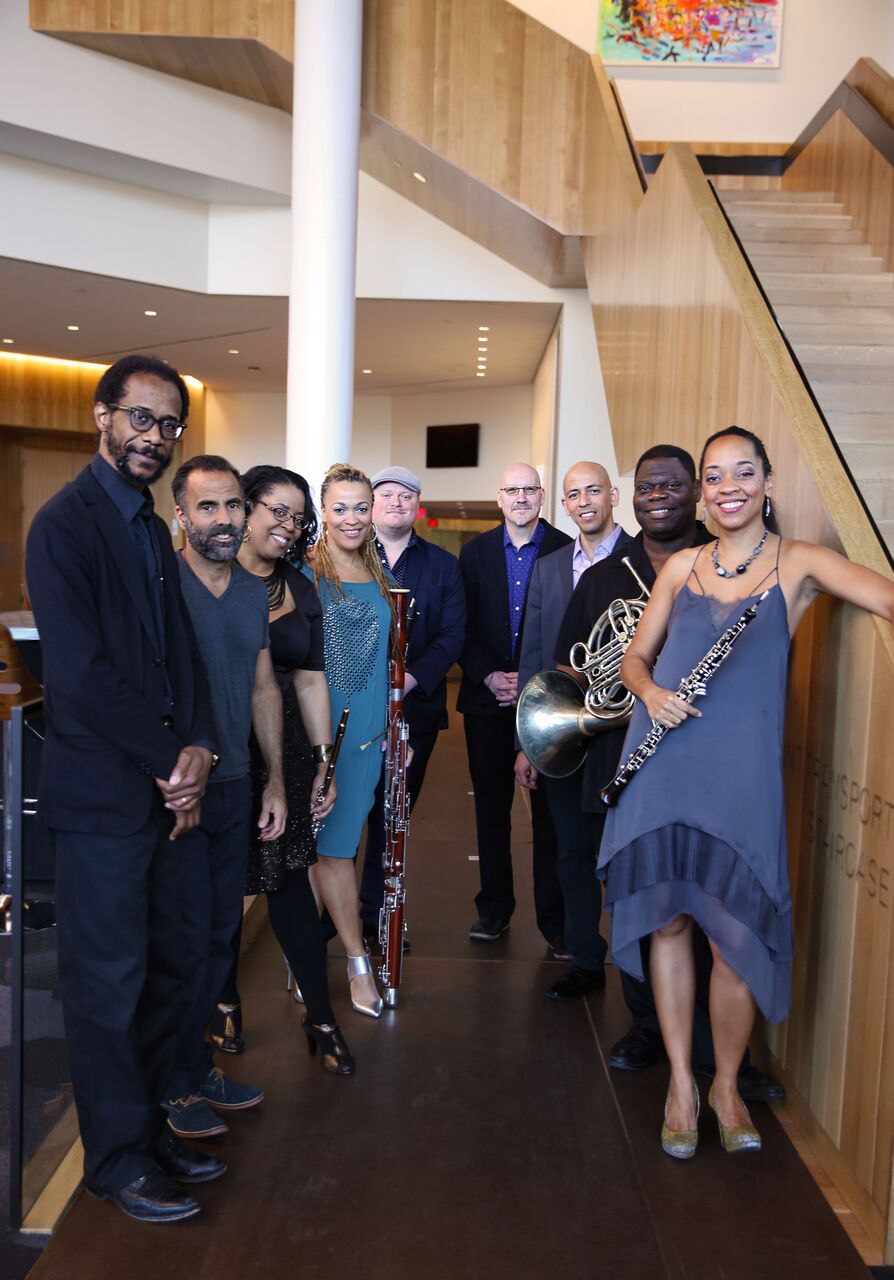
"Sorrows & Triumphs" (Sunnyside) is his 13th release as a leader. The program consists of two suites, one that bears the album's title and another titled "House of Numbers" - there is also one track, "Incessant Desires", that was written for the SFJazz Collective. Musicians include Afinidad (Binney, bassist Scott Colley, and drummer Brian Blade) plus guests Gretchen Parlato (vocals, lyrics), guitarist Adam Rogers, plus percussionists Rogerio Boccato (two tracks) and Luis Quintero (three tracks). In an inspired move, instead of typical reed and brass sections, Simon invited the Imani Winds chamber ensemble and wrote a number of smashing arrangements. Imani Winds, whose music covers a wide swath of musical territory (from includes Valerie Coleman (flute), Toyin Spellman-Diaz (oboe), Monica Ellis (bassoon), Mark Dover (clarinet), and Jeff Scott (French horn).
There is quite a flow to this music, one that seems to run through every tune. Even ballads such as "Chant", the music flows gently from Ms. Parlato's whispery vocals to Binney's alto sax to Imani Winds. The restraint that Blade and Colley show as the music moves forward, not forcing the movement but allowing the piece to open up slowly. It's such a joy to hear the rhythm section take pieces such as "Equanimity" and the album opener "Incessant Desires" and guide the musicians forward (dig the bassoon echoing the bass lines on parts of the second track). Also, note how Simon supports the alto sax solo before the voice and the winds return. On the former track, Rogers moves out of the ensemble to create a splendid solo, melodic and quite rhythmic - Blade shines as he reacts to the solo and pushes him forward. "Triangle" is a funky piece not just because of the great percussion work of Blade and Boccato but also because the horn arrangement and Simon's dancing piano have such a delightful joie de vivre. "Venezuela Unida" opens with a short wind intro before the bass, drums, and congas/shakers drop into a sensuous rhythm. The melody dances along atop the bubbling bottom (reminiscent of Weather Report circa 1976). Compare this version with Simon's arrangement for the new SFJazz Collective "Live: SFJazz Center" (released 4/13/2018) - the arrangement is quite similar but Blade and Quintero push the piece a bit differently than Obed Calvaire and Warren Wolf do: both versions are delightful.
The album closes with the enchanting "Triumphs" with Ms. Parlato delivering a lovely vocal after Colley's opening bass solo. The hypnotic rhythms, the breathy saxophone, the quick, circular, figures played by the piano, all combine to draw the listener in. If you listen closely, you hear Rogers's clicking guitar in unison with piano. Also, there's exciting synth work from the leader. Ms. Parlato contributes the lyrics to the final cut, "Rebirth" - her quiet voice opens the song with just keyboard and bass accompaniment. She enunciates every word before the bassist delivers a heartfelt solo over piano and brushes. When Simon steps out for his solo, Imani Winds enter with its individual voices adding emotional depth to the proceedings.
"Sorrow & Triumphs" really is quite triumphant. It is music that frees the spirit, music that is, at times, dreamlike and at other times, rooted to the rhythms Edward Simon heard growing up in Venezuela. The impressive melodies, the intelligent arrangements, and the delightful musicianship are all good reasons why you should dig into this sublime recording.
With the recent commemoration of the 50th anniversary of the assassination of Dr. Martin Luther King, Jr, readers, viewers, and listeners have been reminded of the tumultuous year that was 1968. Many of the big cities in the United States reeled from days and weeks of riots but few were scarred the way Baltimore, MD. was. Like other other cities, industry and businesses moved away taking jobs that were the backbone of people trying to raise their standard of living. While its closest neighbor. Washington D.C., bounced back after a decade or so, the Charm City has had a much slower recovery
Todd Marcus, a native of Northern New Jersey, is both a musician (clarinet, bass clarinet) and community activist. He has lived in Baltimore, MD, in 1997, settling in or near the Sandtown-Winchester/Upton sections, learning about Black music and begin to serve the community through the Intersection of Change non-profit organization that, over the years, has created progress that serve battered women, offers arts and business classes plus created a farm that not only grows food for the community but offers employment to people returning from incarceration.
As a musician, Marcus has worked with Baltimore native Gary Bartz, pianist Orrin Evans, Bennie Maupin, and many others. As a leader, he has issued three albums, one with a nonet, another with two quartets, and the very impressive 2015's "Blues for Tahrir" with his Jazz Orchestra. His latest disk, "On These Streets" (Stricker Street Records), is an expansive program (inspired by the progress that's been made in the communities after the shooting of Freddie Gray) that features interviews and commentary from the neighborhood where he works plus music played by a core group of George Colligan (piano), Kris Funn (bass), and Eric Kennedy (drums, vocal) plus guests Warren Wolf (vibraphone on 5 tracks, drums on one) and Paul Bollenbeck (electric guitar on four tracks). The program is composed of all Marcus originals save for the gospel song "I Surrender All" (a late 19th Century hymn composed by Judson W. Van DeVenter with music by Winfield S. Weeden). That last track spotlights the soulful vocal of drummer Kennedy while Wolf moves to drums.
The majority of the music is up-tempo, celebrating the energy, the creativity, and the tension that infuses the streets where Marcus and his rhythm section live (Colligan was born in New Jersey but raised in Columbia, MD, while Bollenbeck's professional career received as boost when he moved to Washington, D.C.) The title track opens the album in a funky, mid-60s Herbie Hancock style - the leader, who plays bass clarinet throughout the album, takes the first solo ad the rhythm section takes its cue from him, pushing forward intently. Collegian is the perfect partner on this project as he can add such powerful chords as well as create hard-edged solos. Wolf joins on "An Intersection of Change" and his voice blends nicely with the clarinet and piano. He's also can be heard on the lovely ballad "It Still Gets Still" where he supports the piano and adds meditative colors to the background plus takes a very melodic solo. Bollenbeck shines on "PTSD In The Hood", his soaring solo rising over the power supplied by the rhythm section (Kennedy's drums really spur the guitarist dig in). Marcus's fiery solo over the rollicking drums and chords from the vibes, piano, and "wah-wah" guitar.
The last two tracks on the disk truly shine. "Covered In Snow" comes late in the program yet the attractive ballad has a fine melody plus excellent solos from Colligan and Marcus, - make sure to check the interactions between the leader and Wolf's vibes. The funky "NJ' 88", a tribute to Marcus's birth state, is a treat from start to finish. Fun, Marcus, Wolf, and Colligan solo with abandon while Kennedy keeps the groove going.
Perhaps the joy one hears throughout this album tells the listener that there is progress "On These Streets" of Baltimore. Though there is much work to do, Todd Marcus must have faith that what he and many other dedicated residents have contributed to bring a sense of security and renewed possibility to the hard-hit neighborhoods. Listen to the voices, listen to the music, and look for hope and possibility.
Pianist and composer Matthew Shipp is a fascinating conceptualist, creating music that touches on so much of the history of Twentieth and Twenty-First Century creative music. On his new double-CD, "zerO" (ESP Disk), you can hear talk about his concepts, the weight that he gives as both a composer and musician to the concept of "zero", and much more. As you sit listening to the 11 piano solos that make up "zer0", the music transports the listener beyond the "everyday" to a sound universe that combines thick rhythm lies with dancing solos, robust chords, and melodies that often have a circular feel. Of the eight (approximately) solo piano recordings Shipp has produced over the past 20+ years, this is definitely one of the best-sounding productions.
I do not plan to discuss specific tracks on this album. Start at the first note and stay still after the final notes fall silent. Shipp's rumination takes in the sound of the blues in is many-faceted state of grace yet does not seem rooted to an specific style or sound. His sense of dynamic variation and melodic phrases, his forward motion, the mix of chords and single-note lines pique the listeners interest so it would make sense to go back and listen again. You'll pick out how the pianist shifts rhythms and makes complete statements out of fragmented phrases.
"zer0" is one more step forward for pianist Matthew Shipp. Yes, you can hear concepts that he has used throughout his career. His music does "speak truth to power" with the same urgency of fellow pianists Jason Moran and Vijay Iyer, not to afraid to "look back" constantly and infuse his music with the abundance of "voices" that preceded him: it's how he created his own "voice' and how he continues to grow as an artist and person.
In her year of celebrating her 60th Birthday, Satoko Fujii is planning to release an album per month, with each disk featuring a different ensemble or a solo effort for the pianist-composer. "Ninety-Nine Years" (Libra Records) is the second album from her "Orchestra Berlin", a dectet (their debut featured 12 musicians) that blends three reeds (ten saxophonists Matthias Schubert and Gebhard Ullmann plus baritone saxophonist Paulina Owczarek), three trumpets (Richard Koch, Lina Allemano, and Natsuki Tamura), trombonist Matthias Muller, bassist Jan Roder, and two drummers (Michael Grenier and Peter Orins). If you're a fan of Ms. Fujii's large ensemble music, you already know she likes to create different groupings within each song and that sounds and textures rule the music.
After a rousing opening song, "Unexpected Incidents" (which, after a long percussion intro, breaks into a rollicking, raucous, tune), the title track goes in several directions in its 13-minutes. Opening with a slow yet powerful bass solo, the piece seems to open up and slow down at will with the baritone sax, basses, and percussion in the center of the music. There is a long saxophone solo (with only light percussion and high-pitched bowed bass underneath) that finally erupts into a powerful closing section, mournful but with a wailing tenor saxophone over the ensemble. Dedicated to Ms. Fujii's mother-in-law (who passed just months before her 100th birthday), the piece is a combination of mourning and celebration.
Highlights abound. "On the Way" combines various drums interludes with a funky brass dominated melody before a hilarious trumpet solo (chattering, squalling). The band returns, seemingly one-by-one, to a delirious, percussion-fueled (sounds very "second-line New Orleans) finish. "Oops"also has a bit of the "kitchen sink" approach, with ensemble melodies, a powerful sax solo that starts out unaccompanied and continues over a "slow drag" section, and hardy trumpet solo over just the bass and drums. That solo veers off into "free" territory before the dark ensemble melody returns. The album closes with "Follow The Idea", yet another piece that goes in numerous directions: the proceedings sound improvised with all sorts of "strutting" from the reeds and brass amid the various "conversations."
"Ninety-Nine Years" is striking (no pun intended) music, surprising at times but never dull or filled with cliches. Satoko Fujii continues to create fascinating music, music that asks much of the musicians, challenges audiences, and is highly rewarding.
Tenor saxophonist and composer Noah Preminger is in the midst of a very busy time. Since the beginning of 2018, the Connecticut native has released three albums. What connects them all is the probing mind, warm sound, and intelligence that the saxophonist has displayed since his debut "Dry Bridge Road" was issued almost 10 years ago.
"Genuinity" is Preminger's debut release for Criss Cross Jazz. The recording features his "working band" mates of the past several years, trumpeter Jason Palmer and bassist Kim Cass. The newest member is drummer Dan Weiss and his presence gives the band and music ever more possibilities. This album moves away (but not all the way) from the political commentary of 2017's "Meditations on Freedom" or the blues influenced sounds of 2015's "Pivot: Live at the 55 Bar" and 2016's "Dark Was The Night, Cold Was the Ground."
From the opening flurry of notes from the tenor sax on "Halfway To Hartford" to the jauntiness of the final track "Acknowledgement" (not the John Coltrane song from "A Love Supreme"), the nine original pieces are free from clutter and filled with ideas. Palmer continues to be an excellent musical companion, his crisp tone, his ability to turn on the fire and then move easily back to softer counterpoint stands out on pieces such as "Nashua" and the barn-burning "Ah". One of the standout tracks is "Mad Town" where the tenor and trumpet weave lines in and out of each other, sometimes playing together and other times in a call-and-response. Cass is the foundation on that piece as Weiss interacts with the soloists throughout.
Photo: Jimmy Katz
It's a treat to soak in the Weiss's funky drums on "Ts and Her Spirit"; he keeps up the dancing beat all the way through, especially as Preminger and Cass trade lines back-and-forth in the second half of the song (yet pay attention to the delightful interactions between sax and trumpet before that. In juxtaposition to the funkiness is the only ballad on the recording, "My Blues For You." A song this slow can often be overplayed but Preminger and company never rush, basking in the deep bass notes and quiet drums-and-cymbals. Palmer's solo cuts against that grain, his combination of long tones, bluesy smears, and fast-paced phrases standing out. Preminger, too, mixes up the intensity, "crying" at times, throwing out quick riffs at other times, and "getting down" as well.
There's much to enjoy delving into "Genuinity" and the music sounds great flowing out of the speakers. Such a clean recording (kudos to engineer Michael Marciano): you can hear everyone making it seem as if this was a "live" recording. Definitely alive!
Dig into the opening track:
Mr. Preminger has joined forces with drummer Rob Garcia to create the Dead Composers Club, an ensemble dedicated to paying music by the "great" composers. Their debut recording is "Chopin Project" (Connection Works) and features the saxophonist and drummer joining forces with Preminger's bassist Kim Cass and guitarist Nate Radley on a 10-song program of "Preludes", "Nocturnes", and one "Etude" from the pen of Polish composer Frédéric Chopin (1810-1849). While the name of the quartet might be a touch snarky, the music combines impressive melodies with powerful rhythms and intelligent improvisations. It's true that you can hear may different influences (from progressive rock to John Coltrane and beyond), you cannot miss those Chopin themes.
No matter whether you know the original music or not, it's quite impressive to hear what the quartet does. Listen to how Cass introduces "Prelude Opus 28 No 2 in A-minor", his "bouncing bass" line underneath Preminger's reading of the lovely melody. Garcia's cymbals and floor tom work colors the piece as do the quiet chords from Radley. The guitarist rises out of the saxophone solo to create a fascinating that rolls atop the bass and drums. Preminger plays through the melody on "Nocturne Opus 62, No 2 in E-major" and then Radley takes over with a handsome solo over the fine brush work and melodic bass. The guitar sound lends the song as "Americana" feel: there's also a hint of blues in the sax solo.
Theres a playful nod towards "prog-rock" in the guitar chords and hard-hitting drums at the onset of "Prelude Opus 28 No 6 in B-major" - Preminger digs into the formal sounding melody before Radley steps out for a solo that builds off the melody. Pay attention to the great work of the rhythm section during the solos, to the counterpoint from the bass and subtly driving drums. Listen to how Cass supports and shadows the saxophone melody on "Nocturne Opus 32 No 2 in Aflat-major", his intelligent counterpoint supported by guitar chords that echo the melody and Garcia's sweet brush work.
Instead of taking about every track, my suggestion is you sit down and really listen to "Chopin Project." What Noah Preminger and Rob Garcia, along with Nate Radley and the sublime Kim Cass, have done is make one listen to Chopin's music with new ears. The musicians show respect to the original intent of the music but also illustrate how to make the pieces sound fresh and relevant to new audiences.
Here's one of the quartet's delightful takes:
"Whispers and Cries" (Red Piano Music) pairs Noah Preminger with pianist Frank Carlberg for a program of standards and one traditional from the American Civil War, "Aura Lee." As to be expected, the duo does not play it safe. The impressionist opening to Billy Strayhorn's "Take The A Train" leads to a playful, stop-and-go interpretation of the melody. It's fascinating to hear how they decide to deal with the song. And, it's that way through all 10 songs. Thelonious Monk's "Reflections" does have a reflective quality at the beginning yet the duo has its way while working through the solos (nice bit of stride behind the tenor as well as a piano solo that dances through the changes). Even if you have heard "Tea For Two" more times that you can remember, here the opening tenor solo slowly steadily, brings the familiar melody to the forefront. When Carlberg steps out alone, his playful solo does not stray far from the melody yet sets the pace for Preminger's take on the melody and changes. The same goes for the delightful chestnut, "These Foolish Things", which has a delightful bluesy solo from the pianist (a touch of James P Johnson can be detected in the playful piano stylings) along with fine lyrical work from the saxophonist
For some of us, our introduction to "Try a Little Tenderness" was Otis Redding's demonstrably over-the-top live performances in the mid-1960s. No such histrionics here, just an impressive tenor saxophone introduction that takes up half the piece. When the piano enters, Preminger moves into the melody as Carlberg sets an easy pace. The pianist steps out for a short but sweet solo that moves in and around the melody.
Since he first came to critical notice a decade ago, Noah Preminger has always had a knack playing ballads. From the get-go, his work on slower pieces displayed emotional depth along with lyricism. On "Embraceable You", he imbues the Gershwin melody with a blues sensibility, carrying all the way through. The pianist responds to the emotion of the music with a quiet solo that hews closely to the melody ands sets the tone for the return of the saxophonist and the gentle finish.
Photo: JImmy & Deanna Katz
"Whispers and Cries" may take its name from the 1972 film by Ingmar Bergman (the duo turns the name around) but this is no chilly, metaphysical, paean to the dread and death that often occupied the Swedish director. What Noah Preminger and Frank Carlberg did on the two days in July of 2017 in Boston's Jordan Hall is explore ten songs, listening to each other, reacting, prodding, pushing, interacting, giving each other space, caressing melodies, playing with rhythms, making music that touches the soul as it involves the mind.

 Posts