Showing posts with label ESP Disk. Show all posts

Tuesday, January 14, 2020

Matt Shipp 2020 (Pt 1, with Ivo Perelman)

Every year in January, a package from pianist Matthew Shipp arrives in my mailbox.  2020 is no exception other than two packages have shown up this year.  The first mailing included two new albums (see below) that feature Shipp with longtime associate, saxophonist Ivo Perelman.  The two have recorded numerous albums as a duo and in a trio and quartet setting.

Photo: Peter Gannushkin
In 2017, Perelman and Shipp put together a session for Leo Records (the saxophonist's "home" for releases) featuring bassist William Parker and drummer Bobby Kapp.  That recording, "Heptagon", included seven spontaneous musical conversations pushed forward by the inclusion of the (then 75-year old) drummer who Perelman first heard on Argentinean-born saxophonist Gato Barbieri's 1967 debut on ESP-Disk "In Search of The Mystery." The Brazilian native Perelman was greatly inspired by Barbieri's fiery tenor sax tone and headlong rushes into "free" music and, for his own recording, wanted to mine the expertise and imagination of the American drummer.


In April of 2018, the quartet came together again in Brooklyn, NY, and the results of their collaboration can be heard on "Ineffable Joy."  This time, it's ESP-Disk that has released the album, the label that Perelman first heard Barbieri, the one Kapp had also recorded with saxophonist Noah Howard, the label on which bassist Parker recorded in 1973 with saxophonist Frank Lowe, and where Shiop has releasing albums since 2015.  With song titles such as "Ecstasy", "Ebullience", "Bliss", "Elation", and "Exuberance", one can certainly tell the moods that permeate the music.  Yes, these pieces are all improvised and that freedom opens the door for the musicians to let the music go in multiple directions.

Photo: Mark Sheldon
My suggestion to the listener is just sit and listen; let the music flow around you, listen to the conversations between the rhythm section and the front line, notice how crisp and articulate Shipp's piano playing is, and how Perelman's sound can go from a. ferocious shout to a sweet, Ben Webster-style crooning.  There are moments on each track that stand out.  For instance, right after Perelman enters on "Jubilation", the rhythm section picks up in intensity, giving the saxophonist a push into a dynamic interaction – pay attention to how Shipp responds, to how he joins the bass and drums to raise the intensity level.  Yet, this music breathes so many times the dynamics change on a dime.  The beauty of the opening moments of "Elation", the quiet intro suggesting a 1940s Duke Ellington ballad which Perelman underscores with his melodic work.  The delight that jumps out of the speakers when the quartet is dancing through "Rejoicing" is palpable and soul-satisfying (listen below).

One may remember how, in the 1960s, music as free and adventurous as "Ineffable Joy" was just considered "noise", "emotionless", and "alien".  But, if life was all one emotion, one energy level, one voice above all, it would be dull.  Five+ decades later, the energy, emotion, and melodic strength that Ivo Perelman, Matthew Shipp, William Parker, and Bobby Kapp bring to this project is reason to celebrate.

For more information, go to www.ivoperelman.com or www.akamu.net/shipp.htm.

Here's music that to replenish your soul:


Photo: Peter Gannushkin
As I stated above, Matthew Shipp and Ivo Perelman have a recorded a slew of albums especially in duo settings.  Listen to any one of them and you hear how the two musicians play off each other, inspire each other, push, pull, and dance together.  They first connected in 1996 but it was not until 2011 that the duo began a journey that has produced many recorded conversations – the musicians as well as the audience do not feel as if these musical adventures has reached its zenith.  Is it because they are the same age (the saxophonist is five weeks older than the pianist) or that they have often mined similar veins (duos of saxophone and piano)?  Whatever the connections, the music they create is exciting, emotionally strong, adventurous, and beyond categorization.

In June of 2019, as the duo were in the midst of a tour celebrating Perelman's thirty-year career, they appeared at "The Art of Improvisation", one of a series of music festivals held throughout Germany.  The duo's one-hour June 26 concert can be heard on "Live In Nuremberg" (SMP Records) – it's a delight to sit and listen as the music tumbles out of the speakers, the many changes in direction, the passion of the conversation so handsomely captured by recording engineer Gerhard Grell.

This music moves in many directions throughout its hour on the stage so the best way to "hear" the music is to let it flow.  You will find moments that soothe you, that excite, that are furious, that are deeply melodic (almost lullaby-like at times) – it's not music for the faint-hearted but for the adventurous listener, one who will hear something different each time he or she listens, how both musicians follow and lead, how they inspire each other, how they anticipate, and how they sing.

Yes, there are many recordings of the Ivo Perelman/ Matthew Shipp duo and each one has its own magic, mysteries, and rewards.   The album only has two tracks; "Part 1" is 55:45 long followed by the four minute "Encore", the delightful epilogue.  "Live in Nuremberg" is the latest document of the musicians' conversations and well worth exploring.


Here's the duo in concert the day before (thanks to somethingelsereviews.com for leading me to this concert):

Monday, March 18, 2019

Piano Trio Adventures & Meditations

The Matthew Shipp Trio - Newman Taylor Baker (drums), Matt Shipp (piano, compositions), and Michael Bisio (bass) - has been a unit for the past five years and you can hear their familiarity with each other every time they hit the stage or create a recording.  Because the leader takes chances, the bassist and drummer are encouraged to do so as well. In fact, the material Ship writes for the group calls for that.  They do not make "wine bar music"; instead, this music asks the listener for total concentration.

"Signature" (ESP) is the third album by this particular version of the Trio. To my ears, it's the best.  One reason is that it is the best-sounding recording that Shipp has ever made in my memory.  Many of the earlier mixes were too "compressed" for my ears but here you can clearly hear each instrument. The piano is clear and ringing, the drums sharp and the cymbals crystalline, and the bass thick and deep.  There is stunning lyricism in the opening solo piano passages of the title track and the majority of the piece like a piece by Herbie Nichols but with a more elastic rhythm.  Listen to how the piano rumbles at the onset of "Flying Saucers" plus the brilliant, rapid-fire riffs from Bisio. Throughout the album, the playing of Newman Taylor Baker stands out, not just for his amazing rhythmic drive but for the sounds he chooses to play under the solos. Check out his active drumming and fascinating cymbal work on "The Way", how both the piano and bass move with him and without.

Photo: Susan O'Connor
Thanks to the excellent recording and mix that I referred to above, every track is a gem.  Even the three short solo pieces:  Bisio's droning bow work is featured on the 49-second "Deep to Deep" while Newman Baker's two-minute solo is appropriately titled "Snap." Later in the program, "New Z" is another solo percussion piece, with hand-held sounds plus impressive cymbal work covering nearly four minutes.  That leads into "This Matrix" which, at 16:25, is the longest cut on the disk.  There's a lot to enjoy here, from the rippling piano phrases to the dancing bass lines to the helter-skelter drumming that pushes the piece forward.   Shipp is in charge for the first nine minutes before he and Newman Baker drop out for a fine bass solo, one filled with melody and thoughtful use of silence before building to a rapid-fire closing.  What follows is a short ballad for bass and piano, joined shortly by Newman Taylor Baker on brushes.  There's quite a blues feel in the last several minutes of the program and the ending is delightfully subtle. There's a slow yet determined push towards the close - on first listen, it seemed the music just stopped but really, it feels as if the conversation stopped in mid-sentence.

"Signature" is splendid music, well-played, creative, powerful, gentle at times, and certainly modern music at its best.  The Matthew Shipp Trio was quite impressive for the decade+ when Whit Dickey was in the drum chair but Newman Taylor Baker brings a different dimension that has energized both pianist Matthew Shipp and bassist Michael Bisio.  I wrote that, to my ears this is the finest recording these three musicians have made as a unit; this certainly is one of the top three recordings Matthew Shipp has made.

For more information, go to www.espdisk.com/catalogue/5000list.html/5029.html.

Here's the title track:


Drummer and composer Jeff Cosgrove, a native of the Washington, D.C. area, is fond of playing in and recording with trios.  His most recent albums include dates with Scott Robinson and Ken Filiano plus Frank Kimbrough and Martin Wind.  Over the past several years, he has recorded a trio featuring bassist William Parker and pianist Matthew Shipp (the pianist has recorded a total of seven times with the drummer), self-releasing two albums both of which feature three improvisations that cover a lot of musical territory.  The communication between the three musicians seem telepathic; each player not only does his "own thing" but also works towards a common goal - creating memorable interactions that listeners can return to time and again, hearing new connections each time.

The trio now has a third release. "Near Disaster" continues the group's improvisatory adventures. Over the course of three lengthy tracks, the longest, "October Nights Sky", at 35+ minutes, the shortest, "Last Steps, First", at 9, the band gets loose. The music they create is extremely powerful with cascading riffs from Shipp, melodic underpinning from Parker, and all propelled by Cosgrove's drums. he's quite active, reminding this listener of both levin Jones and, especially, Andrew Cyrille.  It's obvious throughout that the drummer responds to his bandmates and vice versa.

The music asks the listener to "go with the flow" - the flow is there, rarely collapsing into a "free-for-all". Notice the intensity and melodicism that inhabit the quiet moments of "...Nights Sky" and how that remains when Cosgrove and Shipp begin to power forward.  The opening of "Spherical" serves as an homage to Thelonious Monk (perhaps where the title comes from?) before the trio digs in and takes the music on quite a journey. Listen to how Parker creates such a danceable feel underneath as Cosgrove interacts with the piano.  This is what appeals to me about improvisatory music, how the musicians create new ideas from what one person plays and then go off in unexpected directions.

Photo: Jimmy Katz
Take your time to delve into "Near Disaster", don't ignore the noise because, throughout the album, the music coalesces into many fascinating turns-of-phrase and musician interactions.  Most of us know what Matthew Shipp and Williams Parker have contributed to creative music over the past three decades. Jeff Cosgrove, who keeps quite a busy performance schedule in the D.C.-Maryland-Virginia area, is a force to be reckoned with, not only as a musician but also a catalyst for bringing artists together from different areas of creative music.

For more information, go to jeffcosgrovemusic.com.

Here's the opening track:

Thursday, April 12, 2018

The Sounds Abound

With the recent commemoration of the 50th anniversary of the assassination of Dr. Martin Luther King, Jr, readers, viewers, and listeners have been reminded of the tumultuous year that was 1968. Many of the big cities in the United States reeled from days and weeks of riots but few were scarred the way Baltimore, MD. was. Like other other cities, industry and businesses moved away taking jobs that were the backbone of people trying to raise their standard of living.  While its closest neighbor. Washington D.C., bounced back after a decade or so, the Charm City has had a much slower recovery

Todd Marcus, a native of Northern New Jersey, is both a musician (clarinet, bass clarinet) and community activist. He has lived in Baltimore, MD, in 1997, settling in or near the Sandtown-Winchester/Upton sections, learning about Black music and begin to serve the community through the Intersection of Change non-profit organization that, over the years, has created progress that serve battered women, offers arts and business classes plus created a farm that not only grows food for the community but offers employment to people returning from incarceration.

As a musician, Marcus has worked with Baltimore native Gary Bartz, pianist Orrin Evans, Bennie Maupin, and many others. As a leader, he has issued three albums, one with a nonet, another with two quartets, and the very impressive 2015's "Blues for Tahrir" with his Jazz Orchestra.  His latest disk, "On These Streets" (Stricker Street Records), is an expansive program (inspired by the progress that's been made in the communities after the shooting of Freddie Gray) that features interviews and commentary from the neighborhood where he works plus music played by a core group of George Colligan (piano), Kris Funn (bass), and Eric Kennedy (drums, vocal) plus guests Warren Wolf (vibraphone on 5 tracks, drums on one) and Paul Bollenbeck (electric guitar on four tracks).  The program is composed of all Marcus originals save for the gospel song "I Surrender All" (a late 19th Century hymn composed by Judson W. Van DeVenter with music by Winfield S. Weeden). That last track spotlights the soulful vocal of drummer Kennedy while Wolf moves to drums.  


The majority of the music is up-tempo, celebrating the energy, the creativity, and the tension that infuses the streets where Marcus and his rhythm section live (Colligan was born in New Jersey but raised in Columbia, MD, while Bollenbeck's professional career received as boost when he moved to Washington, D.C.) The title track opens the album in a funky, mid-60s Herbie Hancock style - the leader, who plays bass clarinet throughout the album, takes the first solo ad the rhythm section takes its cue from him, pushing forward intently.  Collegian is the perfect partner on this project as he can add such powerful chords as well as create hard-edged solos. Wolf joins on "An Intersection of Change" and his voice blends nicely with the clarinet and piano. He's also can be heard on the lovely ballad "It Still Gets Still" where he supports the piano and adds meditative colors to the background plus takes a very melodic solo. Bollenbeck shines on "PTSD In The Hood", his soaring solo rising over the power supplied by the rhythm section (Kennedy's drums really spur the guitarist dig in).  Marcus's fiery solo over the rollicking drums and chords from the vibes, piano, and "wah-wah" guitar.

The last two tracks on the disk truly shine. "Covered In Snow" comes late in the program yet the attractive ballad has a fine melody plus excellent solos from Colligan and Marcus, - make sure to check the interactions between the leader and Wolf's vibes. The funky "NJ' 88", a tribute to Marcus's birth state, is a treat from start to finish. Fun, Marcus, Wolf, and Colligan solo with abandon while Kennedy keeps the groove going.

Perhaps the joy one hears throughout this album tells the listener that there is progress "On These Streets" of Baltimore. Though there is much work to do, Todd Marcus must have faith that what he and many other dedicated residents have contributed to bring a sense of security and renewed possibility to the hard-hit neighborhoods.  Listen to the voices, listen to the music, and look for hope and possibility.

For more information, go to toddmarcusjazz.com.

Here's a track to whet your appetite:


Pianist and composer Matthew Shipp is a fascinating conceptualist, creating music that touches on so much of the history of Twentieth and Twenty-First Century creative music.  On his new double-CD, "zerO" (ESP Disk), you can hear talk about his concepts, the weight that he gives as both a composer and musician to the concept of "zero", and much more.  As you sit listening to the 11 piano solos that make up "zer0", the music transports the listener beyond the "everyday" to a sound universe that combines thick rhythm lies with dancing solos, robust chords, and melodies that often have a circular feel. Of the eight (approximately) solo piano recordings Shipp has produced over the past 20+ years, this is definitely one of the best-sounding productions.

I do not plan to discuss specific tracks on this album.  Start at the first note and stay still after the final notes fall silent.  Shipp's rumination takes in the sound of the blues in is many-faceted state of grace yet does not seem rooted to an specific style or sound. His sense of dynamic variation and melodic phrases, his forward motion, the mix of chords and single-note lines pique the listeners interest so it would make sense to go back  and listen again. You'll pick out how the pianist shifts rhythms and makes complete statements out of fragmented phrases.

"zer0" is one more step forward for pianist Matthew Shipp. Yes, you can hear concepts that he has used throughout his career. His music does "speak truth to power" with the same urgency of fellow pianists Jason Moran and Vijay Iyer, not to afraid to "look back" constantly and infuse his music with the abundance of "voices" that preceded him: it's how he created his own "voice' and how he continues to grow as an artist and person.

For more inferno, go to www.matthewshipp.com.

Here's the opening track:


In her year of celebrating her 60th Birthday, Satoko Fujii is planning to release an album per month, with each disk featuring a different ensemble or a solo effort for the pianist-composer. "Ninety-Nine Years" (Libra Records) is the second album from her "Orchestra Berlin", a dectet (their debut featured 12 musicians) that blends three reeds (ten saxophonists Matthias Schubert and Gebhard Ullmann plus baritone saxophonist Paulina Owczarek), three trumpets (Richard Koch, Lina Allemano, and Natsuki Tamura), trombonist Matthias Muller, bassist Jan Roder, and two drummers (Michael Grenier and Peter Orins).  If you're a fan of Ms. Fujii's large ensemble music, you already know she likes to create different groupings within each song and that sounds and textures rule the music.

After a rousing opening song, "Unexpected Incidents" (which, after a long percussion intro, breaks into a rollicking, raucous, tune), the title track goes in several directions in its 13-minutes.  Opening with a slow yet powerful bass solo, the piece seems to open up and slow down at will with the baritone sax, basses, and percussion in the center of the music. There is a long saxophone solo (with only light percussion and high-pitched bowed bass underneath) that finally erupts into a powerful closing section, mournful but with a wailing tenor saxophone over the ensemble.  Dedicated to Ms. Fujii's mother-in-law (who passed just months before her 100th birthday), the piece is a combination of mourning and celebration.

Highlights abound. "On the Way" combines various drums interludes with a funky brass dominated melody before a hilarious trumpet solo (chattering, squalling).  The band returns, seemingly one-by-one, to a delirious, percussion-fueled (sounds very "second-line New Orleans) finish. "Oops"also has a bit of the "kitchen sink" approach, with ensemble melodies, a powerful sax solo that starts out unaccompanied and continues over a "slow drag" section, and hardy trumpet solo over just the bass and drums. That solo veers off into "free" territory before the dark ensemble melody returns.  The album closes with "Follow The Idea", yet another piece that goes in numerous directions: the proceedings sound improvised with all sorts of "strutting" from the reeds and brass amid the various "conversations."

"Ninety-Nine Years" is striking (no pun intended) music, surprising at times but never dull or filled with cliches. Satoko Fujii continues to create fascinating music, music that asks much of the musicians, challenges audiences, and is highly rewarding.

For more information, go to www.satokofujii.com.


Wednesday, June 6, 2012

The Next Roundup (Part 1)

Jason Crane, yes, he of The Jazz Session, has hit the road and you can follow his adventures by logging in at jasoncrane.org.  Crane, who is also an accomplished poet, will give readings while on tour as well as interview a slew of musicians in his continuing quest to acknowledge the many people who are busy creating jazz. And, there are ways to support him - clink on the links above to check it all out.

NAXOS of America has begun to re-issue ESP Disks, the American label that did so much to document "free-jazz" and creative African American music in the 1960s and 70s.  Among the latest releases is "Blues for Albert Ayler", a 1974 recording by the Frank Wright Quartet.  Wright (1935-1990) played tenor saxophone and flute and signed with ESP in the mid-60s.  By the end of the decade, he had relocated to Europe which was a much more active scene for musicians involved in "free avant-garde." At the time of this recording (July 1974), Wright had decided to move back home and assembled the quartet on this CD with drummer/club owner Rashied Ali.   Rounding out the band was bassist Benny Wilson and guitarist James "Blood" Ulmer. The tapes lay dormant until 2007 when Ali (1933-2009) played them for current ESP producer Michael D. Anderson.  He and Ali soon signed a contract but it has taken until 2012 for the music to be released.  Recorded live at "Ali's Alley", the music pays tribute to Ayler displaying much of the same intensity and sonic explorations that the saxophonist (1936-1970) created in his time on the scene.  Powered by Ali's explosive drum work and Wilson's active bass lines ( his isa name unknown to me though he worked regularly with Ali in the 70s), Wright pays tribute to Ayler's creativity by being his own man.  Ulmer, whose guitar work was and still is informed by the work of Ornette Coleman, is a strong presence, adding fiery licks throughout much of the 74+ minute 6-part "Suite."  There are stops along the way for unaccompanied solos from Ali and Wilson (his bowed bass solo lasts 12 minutes) as well as intense dialogues from Wright and Ulmer.

There is quite an assemblage of musicians on "Marzette Watts & Company", 3 pieces written by the saxophonist and recorded for ESP in December of 1966. The front line includes Byard Lancaster (alto sax, flute, bass clarinet), Clifford Thornton (trombone, cornet), Sonny Sharrock (electric guitar) and Karl Berger (vibraphone) and a rhythm section that consists of J.C. Moses (drums) and either Henry Grimes or Juni Booth on bass. Watts (1940 - 1998), a native of Alabama, was quite involved in the Civil Rights Movement as a student at Alabama State College and his music reflects the turbulence of the times.  Yet, it is hardly cacophonous but more impressionistic with the reeds, brass, vibes and Sharrock's raucous guitar weaving in and around each other - yes, the band blows quite hard at times but the intensity is built organically from the interactions of the ensemble.  There are several moments where one can hear the connections between this music and the sounds Miles Davis created on "Bitches Brew". 

Watts later recorded for Savoy Records but, in the 70s he became a recording engineer and then an educator (with a short stay at Wesleyan University here in my hometown, brought to the school by Thornton, who spent 6 years on the faculty.)  This reissue is a welcome reminder of the power of creative interplay and Marzette Watts' voice in the creative avant-garde.

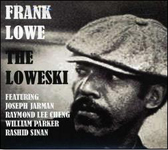
Last but certainly not least is "The Loweski", a 1973 recording from tenor saxophonist Frank Lowe and a companion piece to the better-known ESP Disk, "Black Beings".  The 5-part suite features Art Ensemble of Chicago founding member Joseph Jarman, bassist William Parker, drummer Rashied Sinan and violinist Raymond Lee Cheng (also known as "The Wizard" - these recordings are the only ones in his discography.) While the Watts' recording hinted at high-energy, "The Loweski" has moments of true caterwauling.  Lowe kicks off the proceedings with a long, unaccompanied solo that goes off in many directions, with melodic shards followed by riffs with a hard, percussive, feel.  Throughout his career, Lowe was known for "pushing the envelope", never settling for cliches or giving in to currenbt fashions. "Part 2" features Lowe's tenor locked in a squalling match with Jarman's alto while the rhythm section pushes at breakneck speed.  "Part 3" features Cheng's violin being shredded over those same fiery rhythms (Sinan is quite impressive pushing the tempo). Parker, who today is acknowledged as a fine bandleader and composer, is quite solid here, his propulsive lines matching the energy of the soloists and drummer.

These 3 ESP Disk releases remind us of those post-John Coltrane years, when musicians continued to push against barriers and boundaries.  Many of these musicians left the United States not only because of the political climate (the Vietnam War, urban riots, the Nixon Presidency) but also because European audiences seemed to be more open to adventurous music.  For more information about these recordings and other offerings from ESP, go to www.espdisk.com. 

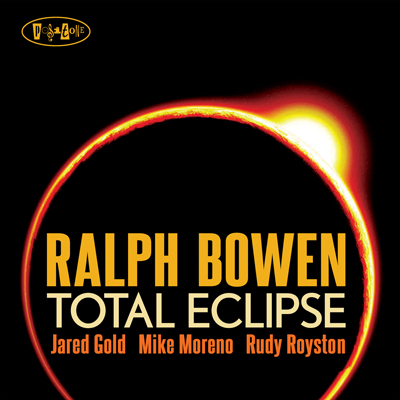
"Total Eclipse", the 4th Posi-Tone Records release from Ralph Bowen, has much to recommend it. Just look at the group Bowen plays with; the fine young organist Jared Gold, the supple guitarist Mike Moreno and the splendid drummer Rudy Royston. Powered by the drummer (who, in the last few years, has worked with saxophonist JD Allen, bassist Ben Allison, guitarist Bill Frissell, bassist Linda Oh and so many more), this music seems to surge forward. His relentless drive on "Hip Check" really propels the band (the leader lays down his most high-powered solo of the set) while his increasing intensity on the title track (you can download it below) spurs everyone to really dig in.  Yet, his subtle touch paired with Gold's creative accompaniment on "On Green" complement the fine solos of Moreno and the leader.  Then, there is Gold who continues to impress with his overall work.  As an accompanist, he reminds me of the late Larry Young in his early Blue Note days.  He's quite impressive throughout but no more so than on "Exosphere" where his background work is essential to the forward motion of the tune.  Yes, he's got "soul" in his phrases, blues in his sounds, but his solos are jazz to the core, explorations that go in unexpected but smart directions.   Moreno is a solid partner to Bowen on the front line, his "round" yet sometime "sharp' sound playing off the burbling organ and hearty tenor saxophone.  He understands how to build a solo, often starting out experimenting with a counter-melody then digging into the groove and pushing the intensity (all this is quite noticeable on "Arrows of Light.")

As for Ralph Bowen, he luxuriates and flourishes in these sounds.  His tenor sounds quite relaxed yet also quite focused. The 9 tracks, all Bowen originals, feel fresh, taking influences from all parts of the jazz world (hard-bop, funk, touches of Latin rhythms) and creating good music.  The sweet melody of "In My Dreams", the only true ballad on the CD, brings to mind soul music from the 1970s while "Into The City" is "funk-swing" at its best.   Bowen plays some solid soprano sax on "The Dowsing Rod", his handsome tones and lyrical solo giving way to the more "stinging" sounds of Moreno's guitar.

Play "Total Eclipse" from beginning to end and you'll hear 4 musicians not only having a great time but also making adult music of the first order.  "Adult", in that is not "dumbed-down" for commercial success but that it is playful, inspired, fully realized and involves the listener on many levels.  Ralph Bowen continues to produce really good music - don't hide your eyes or ears from this "..Eclipse."

Here is the title track, courtesy of Posi-Tone Records and IODA Promonet:
Total Eclipse (mp3)