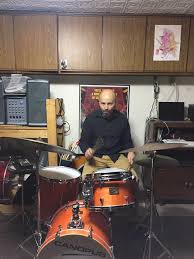
Percussionist and educator Rogério Boccato, a native of Brazil, has worked on many fine recordings including Maria Schneider's "The Thompson Fields", Billy Child's "Rebirth", and Alan Ferber's "Jigsaw", to name but three. It's easy to understand his popularity in rhythm sections: his style is often understated, spare, creating colors with his hand percussion, his delightful way with brushes, and how he can play so powerfully without overwhelming the rest of the musicians. Currently, Boccato is on the faculty of the Manhattan School of Music as well as the Hartt School of Music/The University of Hartford. He also performs with pianist Fred Hersch (Pocket Orchestra), saxophonist Jimmy Greene, and with the Maria Schneider Orchestra.
His debut album as a leader is "No Old Rain" (Red Piano Music) and it features the Rogério Boccato Quarteto with Dan Blake (tenor and soprano saxophones), Jay Anderson (bass), and Nando Michelin (Fender Rhodes). The two-day session (June 1-2, 2016), recorded in bassist Anderson's home studio, is a 10-song program featuring music composed by Milton Nascimento, Egberto Gismonti, Toninho Horta, and Edu Lobo. The use of Fender Rhodes may remind some listeners of Chick Corea's work with the acoustic version of Return to Forever (the group that first recorded for ECM) and Herbie Hancock's work on Wayne Shorter's interpretations of Nascimento's music on "Native Dancer" (1974).
Blake's soprano playing is quite impressive (and, happily, not just a clone of Shorter's iconic playing) - when he and Anderson make their way through Lobo's "Canto Triste", they do so with warmth and emotional tenderness. If you have never paid attention to Anderson's bass work, he is one of the modern masters of ensemble playing, with a rich tone and an intuitive ear for counterpoint. In the opening minutes of Horta's "Bicycle Ride", he and Blake, on tenor, introduce the melody, work through it playing melodic phrases with and apart from each other, before the Rhodes and drums enter. The addition of Michelin and Boccato changes the tone of the piece, moving the music away from the melody into more rhythmic areas.
The program is also intelligently programmed. The first three tracks - Nascimento's "Cais" and "Clube da Esquina no. 2" plus Gismonti's "Tango" - flow easily into each other. The next three tracks do the same - the afore-mentioned "Bicycle Ride", Gismonto's "Bianca" and Nascimento's "Cravo e Canela" - and it gives the listener the feeling of being a spectator, watching the four musicians feed off each other and the material, making logical musical decisions as well as surprising connections. Later on the album, the Quarteto pairs Horta's "Pedro da Lua" and "Viver de Amor." On the latter track, Michelin creates a delightful solo as he rides the waves created by Boccato and Anderson, interacting with them as well as raising the intensity leading into Blake's powerful tenor solo.
"No Old Rain" is a delightful exploration of Brazilian music that not only shows the influence the four featured composers had on percussionist Rogério Boccato but how he was influences by the North American musicians who explored the music of his native Brazil. It's so easy to listen to this recording from beginning to end, 56 minutes of pure joy in playing music that speaks to the heart, the soul, and the feet.
Here's a live version of the opening track (note Michelin on acoustic piano):
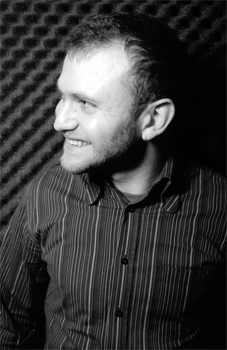
Bassist and composer Noam Wiesenberg, a native of Tel Aviv, Israel, first studied cello before switching to acoustic bass (at the age of 20). In his native country, he played with the Jerusalem Symphony Orchestra, the Haifa Symphony Orchestra, and the Israeli Defense Force Education Unit Orchestra. He studied composition and arranging at the Jerusalem Academy of Music and Dance as well as jazz performance at the Rimon School of Jazz and Contemporary Music in Ramat HaSharon, Israel. Wiesenberg then moved to the United States to study at Berklee College in Boston. After graduation, the bassist moved to New York City where he has worked with saxophonist Dave Liebman, drummers Antonio Sanchez and Billy Hart, guitarists Lage Lund and Jonathan Kreisberg, pianist Aaron Goldberg, and vocalist Camilla Meza. He also arranged music for vocalist Lalah Hathaway that she performed with the Metropole Orkest (conducted by Vince Mendoza) as well as serving as arranger/music director of drummer Ari Hoenig's Nonet.
All those experiences has led Noam Wiesenberg to his debut recording as a leader. "Roads Diverge" (BJU Records) finds the bassist in the company of Philip Dizack (trumpet), Immanuel Wilkins (alto saxophone, clarinet), Shai Maestro (piano, Fender Rhodes), and Kush Abadey (drums) with tenor saxophonist Dayna Stephens on the title track. Abadey is one of those drummers, like Rudy Royston and Eric Harland, who not only makes the music seem brighter but also creates colors with his fine cymbal work. Listen how he pushes the band forward on the title track. He and Wiesenberg lock in the groove but also move in and out, prodding the soloists to move in different directions. The drummer's work is so subtle throughout the first 2/3rds of "Shir Le'Shir" but notice how he, Maestro, and the bassist push below saxophonist Wilkins during his excellent solo.
Photo: BJU Records
The joy of this record comes from the excellent compositions, songs that have smartly constructed melodies and intelligent arrangements plus solos that are usually built off those melodies. Philip Dizack's trumpet tone is bright and clear, his notes well-articulated while solos are often exciting. He and Wilkins trade zones on "Resfeber", winding in and around each other as the rhythm section pours on the fire. Listen also tho the fine piano work of Maestro whose playing is a delight all the way through the program. Dizack shines on the ballad "Melody For Ido", his combination of phrases, some rising high in the trumpet's range, bringing a sense of controlled fire. When that is meshed with Wilkins's warm alto tones, the results are impressive.
As for the bassist, he rarely solos, preferring to build the foundations of the majority of the nine tracks. The two exceptions are the opening "Prelude", in which Wiesenberg plays the melody over the piano and keyboard effects of Maestro, and the album's final track, Radiohead's "The Tourist." Wiesenberg overdubs himself on pizzicato and arco bass, not only playing the melody but also harmony and counterpoint on arco placed across the sound spectrum. He also plays a short pizzicato solo. Technically, it's brilliant without being flashy or showy.
"Roads Diverge" is an impressive debut album. All of Noam Wiesenberg's talents are on display, illustrating an artist with great promise and a fine ear for melodies and harmonies. The quintet he writes for gives him a very large palette of sounds and the bandleader takes full advantage. Give Noam Wiesenberg and his music a close listen.
Tenor saxophonist and composer Noah Preminger is in the midst of a very busy time. Since the beginning of 2018, the Connecticut native has released three albums. What connects them all is the probing mind, warm sound, and intelligence that the saxophonist has displayed since his debut "Dry Bridge Road" was issued almost 10 years ago.
"Genuinity" is Preminger's debut release for Criss Cross Jazz. The recording features his "working band" mates of the past several years, trumpeter Jason Palmer and bassist Kim Cass. The newest member is drummer Dan Weiss and his presence gives the band and music ever more possibilities. This album moves away (but not all the way) from the political commentary of 2017's "Meditations on Freedom" or the blues influenced sounds of 2015's "Pivot: Live at the 55 Bar" and 2016's "Dark Was The Night, Cold Was the Ground."
From the opening flurry of notes from the tenor sax on "Halfway To Hartford" to the jauntiness of the final track "Acknowledgement" (not the John Coltrane song from "A Love Supreme"), the nine original pieces are free from clutter and filled with ideas. Palmer continues to be an excellent musical companion, his crisp tone, his ability to turn on the fire and then move easily back to softer counterpoint stands out on pieces such as "Nashua" and the barn-burning "Ah". One of the standout tracks is "Mad Town" where the tenor and trumpet weave lines in and out of each other, sometimes playing together and other times in a call-and-response. Cass is the foundation on that piece as Weiss interacts with the soloists throughout.
Photo: Jimmy Katz
It's a treat to soak in the Weiss's funky drums on "Ts and Her Spirit"; he keeps up the dancing beat all the way through, especially as Preminger and Cass trade lines back-and-forth in the second half of the song (yet pay attention to the delightful interactions between sax and trumpet before that. In juxtaposition to the funkiness is the only ballad on the recording, "My Blues For You." A song this slow can often be overplayed but Preminger and company never rush, basking in the deep bass notes and quiet drums-and-cymbals. Palmer's solo cuts against that grain, his combination of long tones, bluesy smears, and fast-paced phrases standing out. Preminger, too, mixes up the intensity, "crying" at times, throwing out quick riffs at other times, and "getting down" as well.
There's much to enjoy delving into "Genuinity" and the music sounds great flowing out of the speakers. Such a clean recording (kudos to engineer Michael Marciano): you can hear everyone making it seem as if this was a "live" recording. Definitely alive!
Dig into the opening track:
Mr. Preminger has joined forces with drummer Rob Garcia to create the Dead Composers Club, an ensemble dedicated to paying music by the "great" composers. Their debut recording is "Chopin Project" (Connection Works) and features the saxophonist and drummer joining forces with Preminger's bassist Kim Cass and guitarist Nate Radley on a 10-song program of "Preludes", "Nocturnes", and one "Etude" from the pen of Polish composer Frédéric Chopin (1810-1849). While the name of the quartet might be a touch snarky, the music combines impressive melodies with powerful rhythms and intelligent improvisations. It's true that you can hear may different influences (from progressive rock to John Coltrane and beyond), you cannot miss those Chopin themes.
No matter whether you know the original music or not, it's quite impressive to hear what the quartet does. Listen to how Cass introduces "Prelude Opus 28 No 2 in A-minor", his "bouncing bass" line underneath Preminger's reading of the lovely melody. Garcia's cymbals and floor tom work colors the piece as do the quiet chords from Radley. The guitarist rises out of the saxophone solo to create a fascinating that rolls atop the bass and drums. Preminger plays through the melody on "Nocturne Opus 62, No 2 in E-major" and then Radley takes over with a handsome solo over the fine brush work and melodic bass. The guitar sound lends the song as "Americana" feel: there's also a hint of blues in the sax solo.
Theres a playful nod towards "prog-rock" in the guitar chords and hard-hitting drums at the onset of "Prelude Opus 28 No 6 in B-major" - Preminger digs into the formal sounding melody before Radley steps out for a solo that builds off the melody. Pay attention to the great work of the rhythm section during the solos, to the counterpoint from the bass and subtly driving drums. Listen to how Cass supports and shadows the saxophone melody on "Nocturne Opus 32 No 2 in Aflat-major", his intelligent counterpoint supported by guitar chords that echo the melody and Garcia's sweet brush work.
Instead of taking about every track, my suggestion is you sit down and really listen to "Chopin Project." What Noah Preminger and Rob Garcia, along with Nate Radley and the sublime Kim Cass, have done is make one listen to Chopin's music with new ears. The musicians show respect to the original intent of the music but also illustrate how to make the pieces sound fresh and relevant to new audiences.
Here's one of the quartet's delightful takes:
"Whispers and Cries" (Red Piano Music) pairs Noah Preminger with pianist Frank Carlberg for a program of standards and one traditional from the American Civil War, "Aura Lee." As to be expected, the duo does not play it safe. The impressionist opening to Billy Strayhorn's "Take The A Train" leads to a playful, stop-and-go interpretation of the melody. It's fascinating to hear how they decide to deal with the song. And, it's that way through all 10 songs. Thelonious Monk's "Reflections" does have a reflective quality at the beginning yet the duo has its way while working through the solos (nice bit of stride behind the tenor as well as a piano solo that dances through the changes). Even if you have heard "Tea For Two" more times that you can remember, here the opening tenor solo slowly steadily, brings the familiar melody to the forefront. When Carlberg steps out alone, his playful solo does not stray far from the melody yet sets the pace for Preminger's take on the melody and changes. The same goes for the delightful chestnut, "These Foolish Things", which has a delightful bluesy solo from the pianist (a touch of James P Johnson can be detected in the playful piano stylings) along with fine lyrical work from the saxophonist
For some of us, our introduction to "Try a Little Tenderness" was Otis Redding's demonstrably over-the-top live performances in the mid-1960s. No such histrionics here, just an impressive tenor saxophone introduction that takes up half the piece. When the piano enters, Preminger moves into the melody as Carlberg sets an easy pace. The pianist steps out for a short but sweet solo that moves in and around the melody.
Since he first came to critical notice a decade ago, Noah Preminger has always had a knack playing ballads. From the get-go, his work on slower pieces displayed emotional depth along with lyricism. On "Embraceable You", he imbues the Gershwin melody with a blues sensibility, carrying all the way through. The pianist responds to the emotion of the music with a quiet solo that hews closely to the melody ands sets the tone for the return of the saxophonist and the gentle finish.
Photo: JImmy & Deanna Katz
"Whispers and Cries" may take its name from the 1972 film by Ingmar Bergman (the duo turns the name around) but this is no chilly, metaphysical, paean to the dread and death that often occupied the Swedish director. What Noah Preminger and Frank Carlberg did on the two days in July of 2017 in Boston's Jordan Hall is explore ten songs, listening to each other, reacting, prodding, pushing, interacting, giving each other space, caressing melodies, playing with rhythms, making music that touches the soul as it involves the mind.
Pianist, composer, and educator Frank Carlberg, is also the founder of Red Piano Records. Based in Brooklyn, NY, the label has issued a number of impressive CDs over the past 5+ years, many of which feature Carlberg as leader, co-leader or ensemble member. His own projects are often built around poets, i.e. 2009's "The American Dream", the poems of Robert Creeley set to the pianist's original melodies. His most constant co-conspirators are his wife Christine Correa (vocals) and Michael Sarin (drums).
Both are featured on his latest project. "Word Circus" sets the words of 4 contemporary poets - Ken Mikolowski, Joe Elliot,Anselm Berrigan, and Ron Padgett - to an impressive group of melodies. Rounding out the group are bassist Pascal Niggenkemper and alto saxophonist John Gallagher. There is a minimalist feel to Mikolowki's "Things to Do in a Economic Crisis"; in fact, the title is longer than the body of the poem which reads "Buy low/Sell high." The music is much more expansive, the funky melody and rhythms supporting Ms. Correa as she plays with the title and the 4 words. O'Gallagher and Carlsberg share the solo space, pushed along by the forceful rhythms. Mikolowoski also wrote "Ecology", a ballad on which Ms. Correa caresses the short free-form verse that reads "Some day soon nothing will be made out of wood not even trees." The interaction of the music starts quietly but slowly picks up during the piano solo, a lengthy excursion during which Carlberg moves farther and farther away from the original melody. The blend of the wordless vocal and O"Gallagher's supporting alto sax lines creates great tension that Sarin picks up on and expands upon before the short, quiet, coda that returns to the poem. (The 10 tracks on Carlberg's 2013 CD "Big Enigmas" all use Mikolowski's poems for its lyrics).
The 2 shortest tracks, "On Some Level" and "Lullaby", both utilize poems by Ron Padgett. The former has a pleasing melody, an honest message and a wonderful counter melody played by O'Gallagher winding in and out of the vocal. "Lullaby" has a similar melody line with ethereal sounds from the saxophone, a musical forest one might encounter in a dream. The trance-like piano figures and skittering drum sounds (floor toms, snare and cymbals) set a mysterious path for the alto sax and wordless vocal to follow; soon, Ms. Correa returns to the text and the story comes together.
If we use the British meaning of circus (anopencircle,square,orplazawhere severalstreetsconverge), it helps to bring "Word Circus" into better focus. The different "avenues" of voice, words, melody, and musical interpretation do converge into an "aural" plaza that feels, at times, comfortable and a bit unsettling. The "poetry projects" of Frank Carlberg may remind some of the work Steve Kuhn and Sheila Jordan created for ECM (specifically 1979's "Playground") and that's fine - the music has much to offer, returning to your mind at all times of day like a slowly unraveling puzzle.
For his debut album as a solo artist, pianist, organist, and composer Dan Kaufman has created a most comfortable setting for his original music. With the splendid rhythm section of drummer Jonathan Blake and bassist Matt Clohesy (several tracks feature percussionist Keita Ogawa) plus the expressive work of Sam Sadigursky (tenor and soprano saxophones) and Gilad Hekselman (guitar), Kaufman creates 8 portraits of contemporary music that easily transport the listener beyond the mundane.
While living in Boston, MA, Kaufman studied with Danilo Perez and Fred Hersch (it's hard not to recognize the work these 2 men have done with a number of young pianists on the scene) at the New England Conservatory and recorded/worked with the Either/Orchestra, Miguel Zenon and drummer Bob Moses. Graduate work at the Julliard School brought him into the teaching sphere of Kenny Barron and then onto work and/or recordings with trumpeter Dominick Farinacci, trombonist Nick Vayenas, bassist Ben Wolfe, as well as saxophonists Wayne Escoffery and Donald Harrison. He has worked with vocalists such as Nneena Freelon, Kevin Mahogony and Gretchen Parlato.
All of that education and training doesn't amount to much (other than an impressive resumé) if one's music does not move the listener. Kaufman wisely titled debut CD "Familiar Places" because it does displays his talents as a composer and performer while illustrating how he has already begun the (life-long) process of moving away from his influences. On certain levels, the music is "familiar" in its song forms and melodies that allude to Messrs. Hersch, Barron and Keith Jarrett. What stands out is the work of the musicians, the rhythmic attack and the gentle colors created by Blake, the lively interplay of piano with saxophone and guitar, and Kaufman's expressive piano. Hear how he floats atop the rhythm section on "Dew Eye" and creates a chordal cushion for both the guitar and saxophone. "Kuumba" suggests an African excursion such as the ones created by Abdullah Ibrahim and Randy Weston yet the "lighter-than-air" quality of the piano chords, the lilting lines of soprano sax, gentle melody from the guitar as well as the excellent work from Blake, Ogawa and Clohesy in creating the "bounce" makes the music shine brightly. "Cross Check" suggests both the late Allen Toussaint and the long-running New Orleans-based group Astral Project in its funky attack; dig the overdubbed Hammond B-3 solo, the sweeping guitar sounds and the sweet soprano sax lines.
Cornelia Street Cafe
There is a grace and maturity in the handsome ballad "Falling Petals" plus fine bass work, a gentle piano solo, and an expansive, emotionally rich, tenor sax statement. When you return to listen again, pay close attention to how Blake maneuvers so freely beneath the rest of the band. His drive and delivery on the title track makes the music sound new, refreshing and challenges his musical companions to play with similar intent and creativity.
By the time the listener reaches the final track, "Farmington", one should feel comfortable following the musicians wherever they take the music. The sound is expanded to allow the organ to rise out of the rhythm section, for the "gospel" chords from the piano serve as counterpoint to the guitar sounds, and for the drummer to create his own storm that passes like a late summer shower.
Dan Kaufman, along with producer and fellow pianist Randy Ingram, have created a aural document of an artist spreading his creative wings, enjoying his opportunity and getting the best from his fellow participants. "Familiar Places" has been in rotation on my trips to and from school for the past 2 months, the music filling the car with its joyous noise and seemingly putting color back into the late autumn/early winter skies.

 Posts


 His debut album as a leader is "No Old Rain" (Red Piano Music) and it features the Rogério Boccato Quarteto with Dan Blake (tenor and soprano saxophones), Jay Anderson (bass), and Nando Michelin (Fender Rhodes). The two-day session (June 1-2, 2016), recorded in bassist Anderson's home studio, is a 10-song program featuring music composed by Milton Nascimento, Egberto Gismonti, Toninho Horta, and Edu Lobo. The use of Fender Rhodes may remind some listeners of Chick Corea's work with the acoustic version of Return to Forever (the group that first recorded for ECM) and Herbie Hancock's work on Wayne Shorter's interpretations of Nascimento's music on "Native Dancer" (1974).