New releases continue to cross my desk and so many are worth writing about. All too often, I find recordings that got pushed aside; now's the time to bring them front-and-center.
"
Inside Voices" (self-released) is the 4th recording from Kenosha Kid, the Athens, GA-based ensemble led by guitarist and composer
Dan Nettles. Actually, it's the 4th studio album by the band - go to
kenoshakid.bandcamp.com where
there are a slew of live recordings featuring various lineups. Some of the more recent ones feature the material heard on "
Inside Voices" often in lengthier versions. Besides the guitarist, the rhythm section features
Robby Handley (bass) and
Marlon Patton (drums) plus the "Horns From Hell" trio Nettles encountered at the Banff Centre for the Arts -
Jacob Wick (trumpet),
Peter Van Huffel (alto saxophone) and
Greg Sinibaldi (tenor and baritone saxophones).
The album is an atmospheric blend of Americana, improvisations, smoky ballads and crunchy guitar. Opening with the somber ballad "
Vanishing Point", Nettles the composer/arranger makes sure one hears the melody which is bathed in the warmth of trumpet, alto and baritone saxes. Handley and Patton create a solid foundation (as they on all 7 tracks) while the leader builds a forceful solo. "
Liberty Bell" opens as a "country' ballad yet Nettles' smart chord choices and sustained guitar notes over plucked bass and quiet drums set a blues-drenched mood. The horn arrangements and poignant melody hearken back to the early recordings of The Band. "
Mushmouth" has a James Brown-feel in the horn writing, a slippery melody line and a driving rhythm while "
Zombie Party" blends odd noises (in the opening seconds), a pronounced "rock" beat, and a catchy melody to grab your attention. On the latter track, the short solos from the horns are wonderfully askew while the guitar sounds reaches back to The Ventures. "
Everyone I Know" closes the program in a raucous blend of roiling horns and crackling guitar, held together by Patton's solid drumming.
It's quite informative and engrossing to compare the various live versions of the songs heard on "
Inside Voices" to hear how
Dan Nettles shaped the arrangements and crafted the recorded versions. The album has great focus and sounds substantial; as a listener who likes electric guitar, I really enjoy Nettles' approach to this music, his role in the ensemble and his various 6-string sounds.
Kenosha Kid - the name comes from Thomas Pynchon's 1973 novel "
Gravity's Rainbow" - is certainly worth discovering. To find out more, go to
www.kenoshakid.com.
Take a listen to "
Liberty Bell":
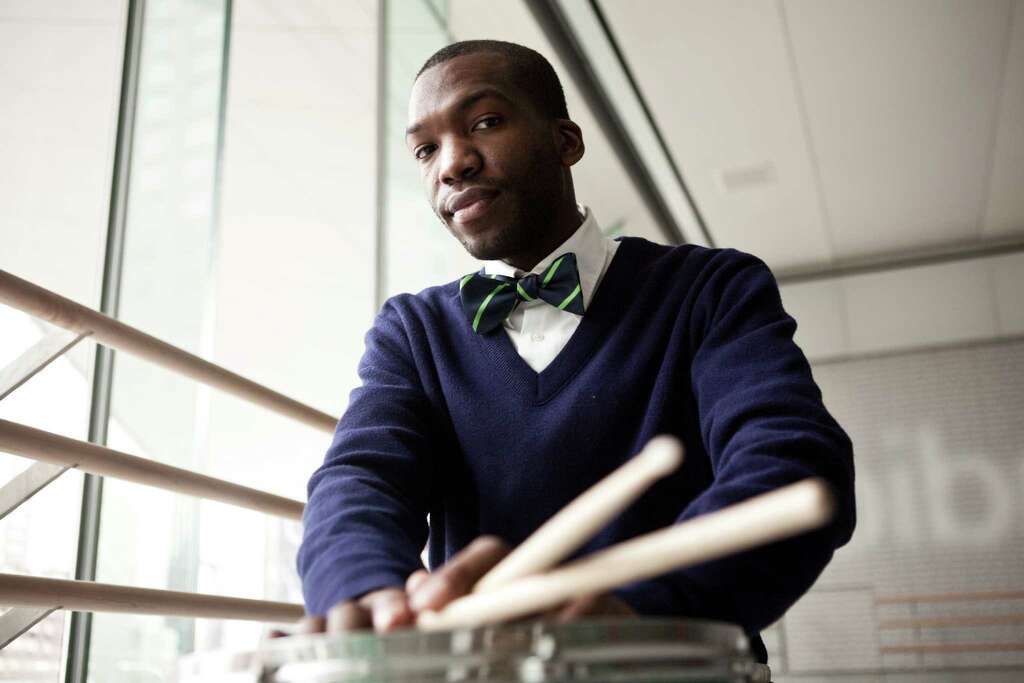
For his second album as a leader, drummer and composer
Reggie Quinerly brings a sparkling quintet into the studio to interpret his various stories. His fine debut, "
Freedmantown", paid tribute to his roots in Houston, Texas. The new recording, "
Invictus" (Redefinition Music), takes its name from the 1888 William Ernest Henley poem (read it
here), an ode to perseverance that ends with the couplet "
I am the master of my fate, I am the captain of my soul." The music, 10 originals and a bluesy rendition of "
My Blue Heaven", features a different ensemble from the debut including
Warren Wolf (vibraphone), New Haven CT-native
Christian Sands (piano, Rhodes),
Yotam Silberstein (guitar) and coproducer
Alan Hampton (bass).
From the outset, the emphasis is on melody and interplay. The blend of vibes and piano plus Silberstein's Wes Montgomery-style chording gives "
Tavares" (named for and dedicated to Norwalk CT-native
Horace Silver - it's one of his middle names) its unique sound while the rhythm section strolls pleasantly beneath. Throughout the program, Quinerly makes sure the listener understands this is a group effort. One can hear the strong influence on the medium tempo swing and piano chords of "
My Blue Heaven." The tune swings with ease and grace atop the insistent drums and bouncing bass lines. "
The Child of the 808" (named for a drum machine featured prominently in soul music in the 1980s and 90s) features the drummer creating acoustically the feel of a drum loop while Hampton plays a funky bass pattern. One can imagine the voice of Gretchen Parlato on a piece like this. Quinerly composed "
Kunst Überlebt" as a solo piano work and Sands shines on this emotionally rich ballad. Another sparkling ballad is "
Variation 24" which features more fine work from the pianist, from Wolf, the exquisitely quiet rhythm section and a lovely guitar solo. Quinerly's active dancing brush work enlivens "
The Star, The Crescent and the Police Captain"; the rhythm has a Brazilian feel and the pianist, on Rhodes, plays with great joy. The bluesy strut of "
Lester Grant" (dedicated to one of the leader's drum teachers in Houston) has a great groove and a sprightly melody with lively solos from Silberstein and Sands plus fine interplay between them and Wolf's vibes.
"
Invictus" is a gentle celebration from beginning to end. The music does not roar; instead these songs have a gracefulness and dancing quality that is quite appealing plus the ballads are heartfelt and devoid of cliche.
Reggie Quinerly and his talented cohorts celebrate a number of the enduring qualities of Black American music, including interplay, love of melody, swing, and telling cogent stories. Give this music a close listen - it's well worth it. For more information, go to
www.reggiequinerly.com.
Here's the delightful tribute to the late Mr. Silver:
Consider the trumpet. At first glance, it's all brass and valves with a history that dates back to the Old Testament and is often confused with the shofar (or, ram's horn). Yet, the 2 distinct instruments share a common usage, to wake up the congregation at times of prayers.
In the right hands, the trumpet can create quite a joyful noise. Louis Armstrong remains one of the most recognizable trumpeters in American music but, over the decades, there have been so many that left or continue to leave their mark, more than this is space here to mention. It's an instrument that lends itself to all styles and genres of classical and modern music
Thomas Bergeron (pictured left) is conversant in the many languages of his chosen horn. He has worked with symphony orchestras, with folk singers (most notably, Judy Collins and Arlo Guthrie), r'n'b artists (The Temptations), rock bands (Vampire Weekend) and jazz artists (Ernie Watts, Jon Irabagon). His debut album, "
The First of All My Dreams" (issued in 2011 on Daywood Drive Records) was a quintet session based on the piano music of Claude Debussy. For his new CD, "
Sacred Feast" (self-released) Bergeron convened a first-rate sextet of collaborators including the classy rhythm section of
Satoshi Takeishi (drums, percussion) and
Michael Bates (acoustic bass). On his front line, the trumpeter (who also plays flugelhorn on several tracks) utilizes the elegant cello of
Hannah Collins, the active guitar of
Jason Ennis, and the atmospheric accordion/piano of
Vitor Gonçalves. Add to that eclectic mix the expressive voice of
Becca Stevens and the music truly is a feast.
For this program, Bergeron turns his attention to the music of
Olivier Messiaen (1908-1992, pictured left), the French composer whose body of work, like his years on this planet, covered a great swath of territory. He may be most famous for his composition "
Quatour pour la Fins du Temp" ("Quartet for the End of Time") mostly composed and certainly premiered when Messiaen was a prisoner in Stalag VIIIA camp in Gôrlitz, Germany in 1941. He was captured in 1940 while serving as a nurse. He was released in 1942 and went back to Paris.He was greatly influenced by bird songs, eventually composing a group of pieces from his studies including "
Catalogue d'oiseaux" ("
Bird Songs"), 7 books of songs based on many different birds.
Bergeron's recording commences with "
Part 1" of the title composition, a adaptation of Messiaen's choral piece "
O, Sacrum Convivium" ("
O, Blessed Sacrament"). The piece is arranged for guitar, accordion and trumpet. The austere melody is surrounded by the breathy accordion and long sustained notes from the electric guitar. The other 2 "
Parts" are placed at the middle and end of the program and are different section of the original pieces. For "
Part 2", Bergeron employs a "looping" system that spreads his trumpet lines across the sound spectrum as well as weaving around the accordion and guitar. Ms. Stevens' voice blends well into pieces such as "
Pourquoi?" and "
Vocalise" - on the former track, she lends a somber touch to the song while Ennis, Gonçalves, and Takeshi move freely around her and Bergeron adds cogent counterpoint. The first voice one hears on the latter track is the accordion as he sets an autumnal mood But, when the voice and acoustic guitar enter, followed by the bowed bass, percussion and cello, the piece picks up in intensity and the melody swells and ebbs, as if breathing with the musicians. The setting for "
Le Sourire" ("
The Smile"), a handsome ballad, makes it seem as if the singer is remembering a smile instead of returning or initiating one herself. The articulated trumpet notes mesh well with Ms. Stevens' delicate approach.
"
Rondeau" leaps out on the strength of Takeishi's active percussion. The piano solo is a joyful romp over the rhythm section, with Bates' bass offering as much propulsion as the drums. Oddly enough (considering the title), "
The Lost Bride" ("
La Fiancée Perdue") also is one of the brighter songs. Again the rhythm section leads the way with the accordion offering a rhythmical counterpoint to the bass as well as the rippling guitar phrases. The blend of formality and animated rhythms make "
To Fabricate Unknownness" quite an attractive piece. Again, the pianist offers a sparkling solo plus Takeishi gets a spotlight of his own. His playful spotlight actually takes the tune to its rapid-fire close.
Some listeners may listen to "
Sacred Feast" and be reminded of Dave Douglas's "
Charms of the Night Sky" quartet with accordionist Guy Klucevsek or John Hollenbeck's eclectic Claudia Quintet. Sonically, there are similarities yet
Thomas Bergeron frees up the rhythm section (to be fair, the Douglas recordings with his group have no drummer), adds the fine vocals of Ms. Stevens (who shines brightly here), and this music goes in its own entertaining direction. The trumpeter's clear tones and intelligent arrangements stand out as does this excellent recording.
For more information, go to
www.thomasbergeronmusic.com.
Give a listen to "
Pourquoi?"

 Posts
Posts