Clarinetist-soprano saxophonist Mike McGinnis walked into Systems Two Studio in Brooklyn, NY, on March 28, 2016, in the company of pianist Art Lande and bassist Steve Swallow. When they exited the building later that very same day, they had recorded a bushel of songs. Eight were released in April of 2017 on "Recurring Dreams" (Sunnyside Records). 13 months later, McGinnis and his musical partners have issued 12 more tracks under the title of "Singular Awakening." The majority of these tracks come from the first hour of the session when the three musicians just started playing - in fact, eight of the pieces are improvisations. What stands out here, as it did on the trio's initial offering (my review here), is how much fun they have playing music.
The program opens and closes with a song each from Swallow and Lande. "Here Comes Everybody" is a joyous romp that bounces atop Swallow's melodic and thick electric bass. Lande's Monk-like accompaniment is a treat over the fiery clarinet solo. The bassist's rollicking "Bite Your Grandmother" has the feel of a Charlie Parker tune with jumping solos from Lande and McGinnis (on soprano). The pianist's contributions, "Shining Lights" and "For Elise", have strong melody lines: in fact, all three musicians share the statement of the melody on the former track while the latter is a lovely ballad (reminiscent of Randy Newman). This song reminds the listener how much influence reed master Jimmy Giuffre has on the trio. The classical quality of the musicians' interactions and the clarity of their notes stands out.
In between, the improvisations range from the free-wheeling "Shockinawe" (and its furious interplay) to the lovely ballad "A First Memory" to the siren-like clarinet that introduces "O'Flaherty Decides to Play Jazz", a tune that also has McGinnis playing "rhythm" clarinet while Swallow walks and Lande dances across the keys. "Slow Dance In a Whisper" is also quite a beautiful ballad with Swallow creating the melody over sparse piano chords (McGinnis sits out this track) - the bassist's instrument sounds so acoustic. The dream-like piece is airy, with sustained piano notes and intelligent use of space and silence.
If you did not hear this trio's first album, that's okay: but I'd suggest buy them both. This is music that speaks to the creative listener, those people who enjoy when musicians take chances and leaps-of-faith the way Mike McGinnis, Art Lande, and Steve Swallow usually do and definitely do here. "Singular Awakening" shines brightly!
Here's a taste of one of the improvised tracks:
Pianist and composer Roberta Piket is a musician who can play in any type of ensemble as well as solo. Still, it's fun to hear her in a trio. "West Coast Trio" (13th Note Records) gives the listener a big clue in its title. The pianist ventured west from her NYC digs to Los Angeles for a West Coast tour. She lined up drummer Joe La Barbera who recommended bassist Darek Oleszkiewicz: they went into the studio, then hit the road. Ms. Piket came back to the East Coast with a good memories of her tour and a delightful recording.
The nine tracks include two Piket originals, the attractively flowing tribute to her teacher Richie Bierach titled "Mentor" and the handsome ballad "A Bridge to Nowhere" (one of the two tracks to feature guitarist Larry Koonse). Note La Barbera's splendid cymbal work on the latter track as well as the wonderful chordal work from the leader beneath the guitar solo. The other seven tracks feature a number of recognizable standards ( i.e. "Windmills of Your Mind" and "My Buddy") and some surprises (Chick Corea's hard-driving "Humpty Dumpty" and John Hicks's sweetly melodic "Yemenja") plus a swinging reading of George Shearing's "Conception" (the other track to feature guitarist Koonse) as well as a lovely reading of "Flor de Lis" by Brazilian composer ands vocalist Djavan (Billy Mintz joins the trio on percussion to add percussive spice to the mix).
Photo: Jason Kahn
For some reason, the track that really impresses me is the swinging reading of Richard Rodgers's "Falling In Love With Love" - the trio plays so inspired, they interacting as if they were breathing as one, and their joy jumps out of the speakers. Oleszkiewicz's solo is splendid, quite melodic (as he is throughout the album) while the standard 8 bars trio - 8 bars drum solo is anything but standard. It's the give-and-take that audiences enjoy so much and that this trio generously supplies. "Windmills.." also gets an uptempo reading: again, the three musicians sound so in sync that you want to immediately replay the song to hear what each individual is playing.
The best "piano trios" are the ones in which the listener gets lost in the group's sound before he starts to listen to the solos. "West Coast Trio" is one of those recordings. You expect that, based on previous recordings and live gigs one may have seen and/or heard, these musicians will play well. Roberta Piket chose her companions and the material wisely and we are the beneficiaries.
Here's Roberta talking about the trio, the music, and the conception:
NPO Trio is Meg Okura (violin), Sam Newsome (soprano saxophone) and Jean-Michel Pilc (piano and its debut is an often dazzling, free-wheeling, improvisational collection titled "Live at The Stone" (Chant Records). Ms Okura, born in Japan, is married to Mr. Newsome and both have known and played with the pianist for the past two decades. After her move to the United States, the violinist converted to Judaism. Besides leading various ensembles (including her Pan-Asian Chamber Jazz Ensemble and the J-Orchestra), she has worked with a wide variety of musicians, from the late Michael Brecker to the Jewish/Middle Eastern band Pharaoh's Daughter.
The album features three fascinating musical adventures including the untitled six-part, 49-minute suite that opens the program. Based on the Yiddish tune "Oyfn Pripetchik" (a song about a parent teaching her children the alphabet), the music is often spell-binding aa the piano rolls beneath the high notes of the violin and the soprano sax alternately wails and sighs. The opening section, "A Four Forty", is the prelude: about five minutes in, the original melody makes its first of numerous appearances. The plaintive tune rises out of the din of the aptly-titled "Bells, Whistles, and Sirens", after the riveting piano, the hard-edged soprano, and the high-notes of the violin have taken the listener on a journey through a chaotic world. Along the way, the musicians portray a world where so many people are dealing with relocation with the hope of a new life ("Travels" and "Exodus and Emancipation") - the journey the trio "plays" is not an easy one but fragments of the original melody help to soothe the troubled heart. By the time you reach the last section, "Pleading" (which is mostly a duet for soprano sax and piano), you begin to understand that this is not the climax of the journey but that your plea is a prayer fore the strength to go on. Newsome's tremendous range of notes and emotions are amazing to follow, to be absorbed in, to be able to tell such a powerful story that one hangs on every note.
The track following the suite, "Unkind Gestures", is the shortest improvisation (6:54) but its power comes from its anger and the musicians attempt to reconcile that emotion the power of creativity to transform the players and the listeners. If you listen closely, on occasion you hear snippets from John Coltrane's "Giant Steps", the melody line often fragmented but recognizable. "Yiddish Mama No Tsuki", the final track, combines Ms. Okura native and adopted heritages taking two songs dedicated to mothers which the trio play and then create variations. It opens with solo violin followed by solo piano; then, Ms. Okura and Pilc play a tango which Newsome's "clicking" soprano joins after a moment. It is fascinating to hear the soprano saxophonist go from the keys clicking to a soaring melody to an abrasive set of sounds and back to melody. The trio changes directions and moods several times during the last half of the piece, closing on a rippling piano line, more clicking saxophone, and chords plus the violinist hitting the strings with her bow .
One hopes that is just the beginning for NPO, that Meg Okura, Sam Newsome, and Jean-Michel Pilc continue to play together, to make challenging and such rewarding music. "Live at The Stone" is an aural magic show that reaches for your heart and your mind.
If you're a fan of creative trumpet, 2017 has been a banner year. It's not at all surprising that Wadada Leo Smith is on the list of best albums - TUM Records issued two at the same time with "Solo: Reflections and Meditations on Monk" standing out for me. With four Thelonious Monk classicsjuxtaposed with Smith originals, the music draws in the listener with its organic of sound, reverberation, and silence. There are no dull moments and one can just luxuriate in how this master musician, 76 years on December 18, plays with such power, intelligence, rhythm, and melody. I was able to attend one night of his "Create Festival" this year (the East Coast version) and can tell you he continues to grow as a musician, composer, and, above all, a human being.
Trumpeter and composer Kenny Warren was a new name to me when "Thank You For Coming to LIFE", his debut recording for Whirlwind Recordings crossed my desk. As I did my research, his previous recordings quickly came to light (his Americana-flavored pair of "Laila & Smitty" disks are stand-outs) plus his recent work with Slavic Soul Party; all those albums and more illustrate the work oof a original thinker and player. This Quartet date - JP Schlegelmilch (piano), Noah Garabedian (bass), and Satoshi Takeishi (drums - has but six songs yet each shines with its own brightness and invention. Strains of funk, hard bop, classical music, blues, and more, enlivened by the delightful interplay, did bring to mind Wynton Marsalis's "Black Codes" group, especially the urgency, emotion, and the sheer joy of playing music with friends.
Just as a list such as this has to include Wadada, it's a rare year that Dave Douglas does not give the listener multiple treats. 2017 brought us "Little Giant Still Life" (Greenleaf Music), an album made in collaboration with The Westerlies (trumpeters Riley Mulkerhar and Zubin Hensler plus trombonists Andy Clausen and Willem de Koch) and the delightful drumming ofAnwar Marshall. Inspired by the art and artistry of Stuart Davis (1892-1964, composer Douglas creates a aural gallery show that uses the rhythms of the paintings. Note the sly humor in several tracks, the delightful "basso profundo" of the trombones, the use of harmony and counterpoint, and how Marshall makes so much of these pieces dance. One continues to be impressed at how hard Dave Douglas works and how he takes guidance and direction from his influences and creates timeless music.
Then there's the second album from Douglas's Riverside, a quartet featuring the continually amazing bassist Steve Swallow plus Chet Doxas (tenor sax, bass clarinet) and his brother Jim (drums). While their debut Greenleaf album nodded in the direction of Jimmy Giuffre, this second effort, "The New National Anthem" finds its inspiration coming from Mr. Swallow's wife, Carla Bley (they even toured Europe with the composer-pianist). Playful, melodic, genre-busting, highly interactive, this music has such a bright quality, even the ballads take the listener in such fascinating directions. Long-time fans of Mr. Swallow and Mr. Douglas know they are in for a quality experience from every album but one cannot help but be impressed by the work of the Canadian brothers (Chet's clarinet stands out while Jim locks right in with the bassist, making it sound like they have been a rhythm section for two decades, not just two recordings).
The second album by trumpeter-composer Rebecca Hennessy's FOG Brass Band (self-released) upends one's conception of a traditional Brass ensemble. Yes, it's a sextet but there are three horns (trumpet, trombone, tuba) plus a rhythm section of electric guitar, piano, and drums (no marching band, this). The composer gives the band such a fascinating collection of tunes in many different styles, such well-formed melodies, smart harmonies, intelligent interplay, a heck of a rhythm section, and don't miss how strong the solos are. FOG is part of a growing eclectic music scene in Toronto, Ontario, Canada. Yes, Ms. Hennessy often take her inspiration from musicians and composers (especially the afore-mentioned Carla Bley and a touch of Duke Ellington) from the country just south of hers but she is quickly developing her "voice" and arranging style.
Trumpeter and composer Sam Boshnack puts to music the story of pioneering journalist Nelly Bly (1864-1922), successfully and not-so-subtly reminding the world of both the power of a single-minded woman but also how the press can tell important stories. Her Quintet, which features the sublime clarinet playing of Beth Fleenor, understands that the story comes first yet the music offers them music freedom. The "Nellie Bly Project" may only be 34 minutes long but packs quite a punch, especially in the two long, episodic pieces. Sam Boshnack, with both her Quintet and the B'shnorkestra, is becoming an important voice in the Pacific Northwest and, hopefully, soon around the world.
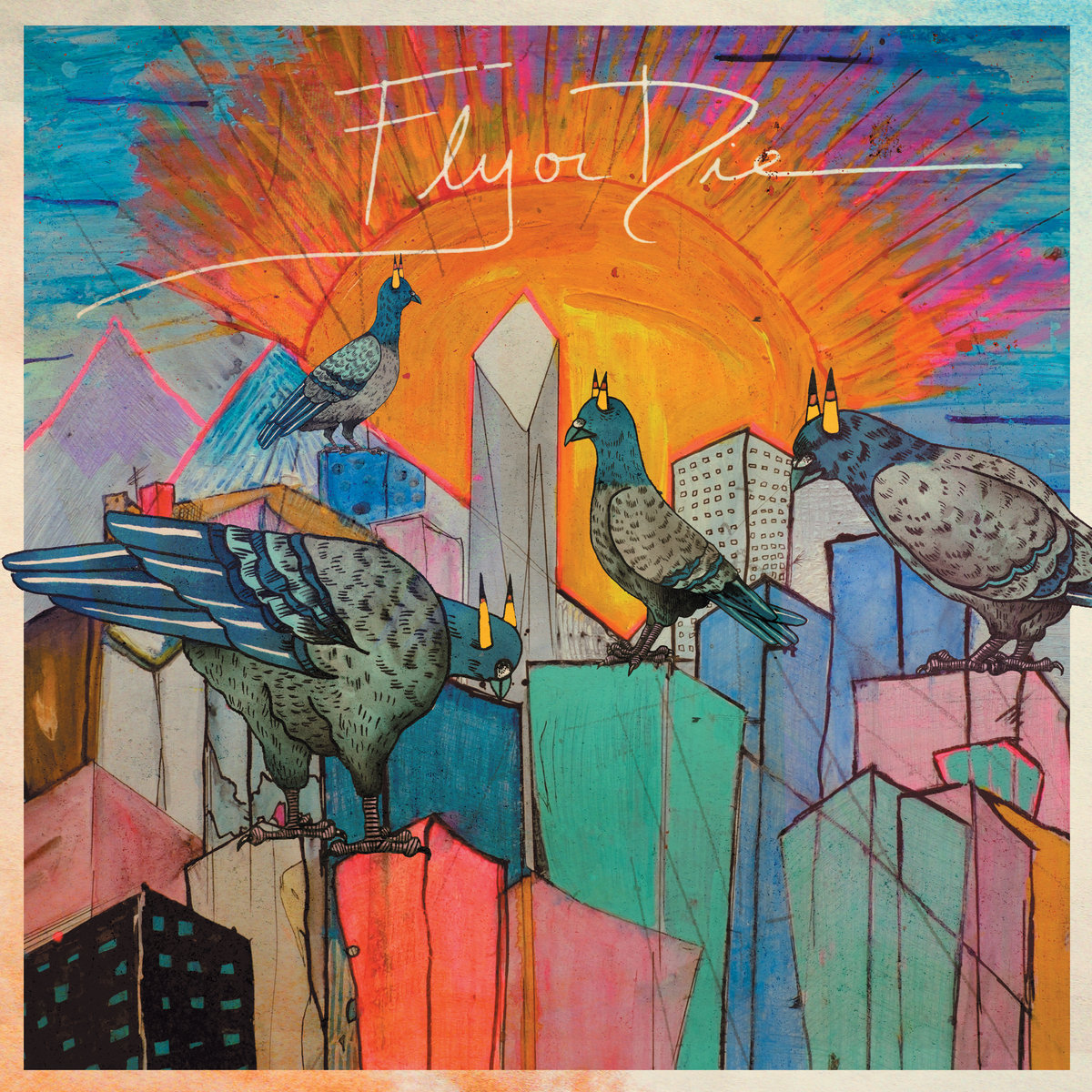
The debut album from trumpeter and composer Jaimie Branch, "Fly or Die" (International Anthem), is chock full of ideas, with "hard" beats, brash tones, and features the great playing of Tomeka Reid (cello), Jason Ajemian (bass), and Chad Taylor (drums). Pieces such as "Theme 001" bristle with the energy of Julius Hemphill's "Hard Blues" whereas "Theme 002" reminds this listener of saxophonist Matana Roberts's work with Taylor and bassist Joshua Abrams for their Sticks & Stones trio. "Theme Nothing" also blends African rhythms, this time with a hint of blues-rock. There are also pieces with multiple overdubs (the muted opening of "Leaves of Glass" is among the quieter sections of the album and employs the cornets of Ben Lamar Gay and Josh Berman, a short, buzzing, solo, and a pair of tracks with acoustic guitarist Matt Schneider. Plenty of variety packed into 36 minutes and it makes one impatient for more of Jaimie Branch's fascinating music.
Drummer and composer Tomas Fujiwara created quite a project for his new album "Triple Double" (Firehouse 12 Records). This sextet features two guitarists (Mary Halvorson and Brandon Seabrook), two brass (trumpeter Ralph Alessi and the cornet of Taylor Ho Bynum), and two drummers (the leader plus Gerald Cleaver). There is a "progressive rock" and a blues-rock feel to a number of the pieces and, like Ms. Branch's music, often bristles and erupts. With two such powerful drummers, the band occasionally leaves subtlety behind in favor of a mighty roar but notice how easily they can pull back (especially on "Blueberry Eyes"). Each musician has her or his own "voice" and it's such a aural pleasure to hear Ms. Halvorson articulate lines interacting with Seabrook's "noisier" elements or Alessi's flowing lines in counterpoint with Bynum's splintered, raucous, interjections. There are a trio of duo pieces - the first, "Hurry Home B/G"", is an unhurried interaction between Seabrook and Cleaver while the second, "Hurry Home M/T" uses similar elements for the duo of Ms. Halvorson and Fujiwara. Right in the middle of the program, the leader opens "For Alan" with a recording of a lesson he had (as a 10-year old) with the great drummer-educator Alan Dawson (1929-1996) - once the voices drop out, Fujiwara and Cleaver take off on an exciting percussive journey. They are not "one-upping" or "cutting" each other; instead, they get carried away on the power of multi-rhythms and making each other dance. Mr. Dawson comes back in near the close to teach about syncopation.
Amidst the tumult of sounds, what stands out is the friendship, the musicality, and the willingness to expand the spend as far as these six musicians can. Give in, let your mind open, and you'll hear many fascinating sounds and exhilarating interactions!
***************************
I am halfway through this year's list - next time out, it's large ensemble music and more.
I do not believe anyone would argue the importance of John Coltrane (1926-1967) on 20th Century Black American Music (and beyond). His tenor saxophone playing, built off the advancements of Coleman Hawkins, Lester Young, Don Byas, and others, created sounds that still ripple through music. And his soprano work laid the path for people such as Wayne Shorter and Dave Liebman. His quartet music, especially the group with McCoy Tyner, Paul Chambers or Jimmy Garrison, and Elvin Jones remains a touchstone for artists such as Branford Marsalis and Joe Lovano. Coltrane's long-form compositions as well as his lengthy performances set the table for experimentalists in the AACM and in Europe. His embrace of spirituality opened doors for artists such as Pharaoh Sanders, Franklin Kirmeyer, Marion Brown, and Archie Shepp not to forget what his widow Alice Coltrane created in the 1970s and 80s.
As this article is about to post, we are four weeks away from the 50th anniversary of his passing (from liver disease). To honor his life and legacy, Resonance Records is releasing "Compassion: The Music of John Coltrane", a recording from the 40th Anniversary show that BBC3 commissioned from Dave Liebman in 2007. The producer, Robert Abel, asked the saxophonist if he could assemble the Saxophone Summit, a sextet that had been in existence (and still is) for the gig but several key members were not available including Ravi Coltrane, the Coltranes son. The quintet Liebman (tenor/soprano saxophone, wooden recorder, C flute) did assemble included Joe Lovano (tenor sax, aulochrome - a double soprano saxophone - alto clarinet, Scottish flute) plus the splendid rhythm section of Phil Markowitz (piano), Ron McClure (bass) and Billy Hart (drums).
The two saxophonists chose material from the last decade of John Coltrane's life. Opening with the hard-driving "Locomotion" (from the 1957 Blue Note recording "Blue Train", the band locks in and the music soars. All the soloists shine, thanks to their dedication to the project as well as the locomotive rhythm section. The one medley on the program, "Central Park West/Dear Lord", is a feature for the saxophonists. The first tune features Lovano dancing through his solo. A quick shift moves into a sparkling piano introduction leading into Liebman's expressive soprano sax in the spotlight. Neither saxophonist imitates the "Coltrane sound" which helps both pieces shine.
There's a splash of humor in the use of recorded and Scottish flute to introduce the delectable "Olé" but, when the rhythm section kicks in, the tenor (Lovano) and soprano (Liebman) lead the way. The piano solo is a delight, goosed forward by Hart's explosive drumming. Then the saxophonists have their say leading to Liebman's powerful soprano adventure. Also pay attention to McClure who is a strong "foundational" player.
Every song on the album stands out. From the heartfelt ballad "Dr. King" (clarinet and flute in the lead) to the expressive blues of "Equinox" (tenor/soprano) to the lengthy (17:27) "Compassion" (originally released in 1965 on "Meditations"). A long poly-rhythmical drum solo serves as an introduction for that final track then the two tenors state the theme and the music takes off. Lovano breaks out the aulochrome and creates quite a solo, switching in-and-out of the double reed sound nt unlike many of Rahsaan Roland Kirk's multi-reed adventures. The piano solo starts at a high level and keeps rising. A rapid-fire interaction with Liebman, now on soprano and Lovano on tenor, takes the piece to its conclusion.
"Compassion" is a wonderful tribute as well as a reminder of the vivid trails that John Coltrane blazed during his short but often amazing tenure in our world. This quintet, co-led by Dave Liebman and Joe Lovano, never settles for merely replaying the past but illustrates how the music has grown in time and was doing what jazz does best - moving forward on the strength on its innovators.
Dave Douglas, trumpeter, composer, podcaster, and label owner, has always been productive with, at least, two to three ensembles going at the same time. Several years ago, he partnered with electric bassist Steve Swallow and the Doxas brothers (tenor saxophonist and bass clarinetist Chet and drummer Jim) to create Riverside. The American-Canadian quartet's self-titled debut album was dedicated to the multi-reed master Jimmy Giuffre. The ensemble chose to create new music inspired by the clarinetist/saxophonist whose career moved from big bands to small groups to "free" music to electronic experimentation. Steve Swallow had worked with Giuffre in his Trio with pianist Paul Bley that played totally improvised music in the early 1960s. At that time, Swallow played acoustic bass - when Giuffre reconvened the Trio in the late 1980s, the bassist had switched to electric bass changing the overall sound of the group.
The music on and attitude of the second Riverside album, "The New National Anthem" (Greenleaf Music), was inspired by composer, pianist, and wife of Steve Swallow, Carla Bley. The title track, originally recorded by Gary Burton for his 1967 Lp, "A Genuine Tong Funeral", is just right for an anthem; you know, long enough for the flag to be raised but before the crowd gets restless. Ms. Bley, who is known for both the political nature of her music as well as the humor often found in her compositions, also composed "King Korn" which first appeared on a 1963 Paul Bley Lp (and which the late pianist recorded on several other occasions). Here, the piece has an Ornette Coleman/Don Cherry feel thanks to the sharp interactions of the trumpet and clarinet. Her other contribution is the Kurt Weill- inspired "Enormous Tots" (from her "Tropic Appetites" suite and the bouncy, martial, feel is perfect for both Chet Doxas (on tenor) and the trumpeter to play around with delight.
jongarelick.com
There's a cowboy music-cum-Nino Rota feel to "Il Sentiero", a tune with a boozy trumpet solo, pounding drums, sweetly melodic bass, and rippling clarinet, a touch of carnival in the Old West. Douglas's "King Conlon" is his musical response to learning "King Korn" (programmed as the following track) - it's a delightful jumble, perhaps more Charlie Parker than Conlon Noncarrow. There's a hint of be-bop in the trumpet-clarinet-drums that opens the piece. Drummer Doxas swings delightfully while Swallow dances along with the soloists.
The saxophonist's "View From A Bird" has a lovely solo bass introduction, a good reminder that Swallow is like no one else, putting musicality in front of technique, the third melodic member of the group. Sometimes, you have to listen closely to hear what he is playing but it's worth the concentration. Listen to how he and drummer Doxas lock the groove down on "Americano" and how he continues to do so even as his section mate kicks the tune to a higher level. Also, pay close attention to how good this music sounds, how you can everyone's part even when they play loud. Notice Swallow's stunning solo on "Demigods", how it perfectly fits the bluesy nature of the song and does not interrupt the flow. The bassist contributed a new song, "Never Mind", to the session, a blues-drenched ballad with strong solos from the saxophonist and trumpeter.
Long-time listeners to the music of Dave Douglas may hear a comparison to the trumpeter's "Magic Triangle"/ "Leap of Faith" quartet (with Chris Potter, James Genus, and Ben Perowsky), also a piano-less ensemble. Still, Riverside is blessed by the maturity of trumpeter/composer, the presence of master musician Steve Swallow, and the influences that the Doxas brothers bring to the music, not to forget lessons learned from listening to the music of Carla Bley. "The New National Anthem" is worth your attention (and you do not need to stand and salute, unless you want to).

 Posts
Posts