Showing posts with label Patrick Cornelius. Show all posts

Monday, September 30, 2024

Rush Hours, Part 1 - Nonet & Octet

 Lots of music yet so little time –– here begins a series of shorter reviews of the more exciting releases of the past several months. 

Commissioned by SF Jazz and the Hewlett Foundation, Miguel Zenón composed "Golden City" for sextet and a three-member trombone section (two of whom double on other brass - see below).  A musical history of San Francisco, the piece made it debut at SF Jazz in 2022 and was recorded a year later for the composer's Miel Music label.  Zenón makes sure each member of the ensemble has a feature, often at the beginning of the track. The album opens "Sacred Land" – the leader's sweet alto tone plays the intro alone before the brass enter for support and then the whole band arrives.  The story moves quickly to "Rush" (yes, the 1800s Gold Rush) to "Acts of Exclusion" (the 1862 law that curtailed the immigration of Chinese works) to "9066" (FDR's Executive Order that authorized the interment of Japanese Americans, the majority of who were already American Citizens).  One can sense the urgency and poignancy in the melodies and musicianship.

Photo: Herminio Rodriguez
Not only is the writing excellent but the performances stand out. Drummer Dan Weiss stands out as a master framer of the pieces and as a melodic presence. Pianist Matt Mitchell is the other "builder" of the foundation; along with bassist Chris Tordini, the two give the "front line" great support throughout. Percussionist Daniel Diaz creates rhythmical excitement but also adds colors that are necessary to the success of the music. Guitarist Miles Okazaki is solid in support and his ensemble work plus his solos stand out.  The three brass players – Diego Urcola, Alan Ferber, and Jacob Garchik – truly fill out the sound thanks to the splendid arrangements.  Perhaps the best part of this project is how Zenón gives so much room to the band that when his "voice" appears, his playing delights in flights of joy, power, sweetness, all while being highly melodic.

There's so much to like on "Golden City" from how Miguel Zenón tells the sprawling story to how the musicians give so much life and heart to the music to the wonderful playing over the course of 69 minutes.  Highly recommended! 

For more information, go to https://miguelzenon.com/. To hear more and to buy the music, go to  https://miguelzenon.bandcamp.com/album/golden-city

Listen to "Acts of Exclusion":


Personnel:

Miguel Zenón - alto saxophone
Matt Mitchell - piano
Chris Tordini - bass
Dan Weiss - drums
Miles Okazaki - guitar
Daniel Díaz - congas, tripandero and percussion
Diego Urcola - trumpet and valve trombone
Alan Ferber - trombone 
Jacob Garchik - tuba and trombone


Trombonist, composer, and band(s)leader Ryan Keberle is quite busy but he must have jumped at the opportunity to make this album for Marc Free and Posi-Tone Records. He's been doing a lot of smaller group work with Reverso (trio), Collectiv Do Brasil (quartet), and Catharsis (now a quintet) but it's been 14 years since his last Double Quartet album. "Bright Moments" is his first album as a leader on the label and, arguably, it's one of the 10 best Marc Free has ever released. Why?  Because Keberle had the opportunity to arrange the songs, all originals, to utilize the talents of a brilliant rhythm section – pianist Art Hirahara, bassist Boris Kozlov, and drummer Rudy Royston –  and have his melodies "sung" by the great "voices" of Pat Cornelius (reeds, flute), Diego Rivera (tenor sax, flute), Alex Norris (trumpet, flugelhorn), and Michael Dease (baritone sax).  All but one of the songs have appeared on previous albums – the new versions give both the composer and the audience a different perspective.

You can hear the influence of Keberle's immersion into Brazilian music on "Edu" – the music rolls forward on the power of the drums and the deep baritone sounds. The expansive melody is shared by the reeds and brass before Norris steps out for a handsome solo. "Despite the Dream", which the trombonist composed for Catharsis's 2020 "The Hope I Hold". This powerful ballad opens up in the middle as the tempo speeds up and short solos lines are created by Cornelius (alto sax) and Norris. Later, Cornelius and Dease (whose bari work is mighty impressive) take longer solos. "Sisters of Mine" was originally recorded by Reverso. Here, the tribute to the composer's two sibs serves as a vehicle for a lovely tenor solo from Rivera. To get there, the melody is presented by Cornelius (soprano sax), Norris, and Keberle (such a lovely tone).  Melody sharing abounds on this album.  The bass clarinet (Cornelius), trumpet, and flutes (Rivera and Cornelius) each introduce the melody on "All Ears", which is repeated twice without a solo. Yet, the piece is so satisfying because of how all the voices are utilized to make the piece so successful.

Photo" Anna Yatskevich
"Bright Moments" closes with the oldest piece in the collection. "When I'm Away" is from 2006 and was on the first of Keberle's two Double Quartet albums.  The arrangement is similar but the 2024 "voices" includes reeds whereas the older take has a four-piece brass section. Either way, it's a beautiful piece of music and features an excellent from the leader, brilliant backing from the great rhythm section.

If you're a Ryan Keberle fan, this is yet another gem in his growing discography (plus there's a new Catharsis album coming in October). Great music played by a great band – "Bright Moments" indeed!

For more information, go to https://ryankeberle.com/.  To hear more and purchase the album, go to https://ryankeberlejazz.bandcamp.com/album/bright-moments

Here's the opening track, "Quintessence":


Personnel:

Ryan Keberle - trombone
Alex Norris - trumpet; flugelhorn 
Michael Dease - baritone saxophone
Patrick Cornelius - alto saxophone, soprano saxophone, bass clarinet, and alto flute
Diego Rivera - tenor saxophone; flute 
Art Hirahara - piano
Boris Kozlov - bass
Rudy Royston - drums

Monday, March 25, 2024

Saxophones A'Plenty (Part One)

Over the last several months, I have received a slew of excellent albums that feature the saxophonist as a leader or co-leader.  Here are the three of the best.  

In March of 2022, Argentinean-born saxophonist and composer Julieta Eugenio's debut Trio album. "Jump", was issued on Greenleaf Music.  Backed by Hartford, CT-born Jonathan Barber (drums) and Hartford-area resident Matt Dwonszyk (bass), the music displayed the leader's melodic tendencies and softer tones on the tenor. Even better, the rhythm section joined in the conversation, making the music come alive.  Ms. Eugenio composes music that leaves plenty of space for her compatriots to display their talents –– overall, a solid effort that made one wish for more.

Now we have "Stay", her second release on her own label, Christalyn Records.  With the exception of two duets with Leo Genovese playing Fender Rhodes, the new recording features Messrs. Barber and Dwonszyk.  The two years between recording dates shows a band that has gelled even more through numerous gigs. Listen below to the title track.  Dwonszyk's bass sets the pace pushed ahead by Barber's drums while the leader paints a handsome and somewhat mysterious canvas with her Middle-Eastern sounding melodies that dance out of the tenor.  "Trapped" follows with its modified samba beat and various tempo shifts. The vocal quality of the tenor sax meshes well with the bassist's counterpoint. One can hear a tinge of Charles Lloyd in Ms. Eugenio's sweet tone.  One hears it in "Sunday Stranger" as well plus even a touch of Lester Young in the saxophonist's melodic bent.

Photo: Alexx Duvall
There are four duets, each carrying the title "Breath" ("I-IV"), scattered through the 10-song program. The first two feature Genovese; "1" opens with solo tenor before the Rhodes enters and the music takes on the feels of a walk through a rain forest.  "II" starts in a more stately manner with a classical feel and maintaining that throughout the piece. "III" and "IV" feature Ms. Eugenio in musical dialogue with Barber. The former track finds the tenor dancing atop the African-inspired drum while the latter cut dances to a darker beat. It's more sensuous, a touch of Persian rhythms for the whisper-soft tenor to improvise over.

Before "Breath IV" closes the album, Ms. Eugenio and the rhythm section dig into Duke Ellington's "Sophisticated Lady".  After a lovely unaccompanied tenor saxophone opening, the piece becomes a sweet, slow, ballad. Here you hear a touch of Ben Webster in the saxophonist's sound. Barber's brushes, at times, sound like gentle sighs while the melodic bass accompaniment pushes the saxophonist to dig deeper during her long improvisation.  The bass solo features short snippets of several other Ellington melodies before Ms. Eugenio returns on the bridge and then to a sweet final verse and cadenza.

"Stay" is an excellent leap forward for Julieta Eugenio.  Her debut Trio release introduced the world to her sound and ideas while the new album allows her more freedom of movement. Kudos to both Jonathan Barber and Matt Dwonszyk for their splendid work.  If you like saxophone-led trios that simmer instead of burn, that favor well-developed melodies instead of long solo-filled tunes,  take an extended dive into "Stay". 

For more information, go to www.julieta-eugenio.com/. To purchase the album, go to  https://julietaeugenio.bandcamp.com/album/stay.

Here's the title track:


In November of 2022, tenor saxophonist and composer Willie Morris went into a Brooklyn, New York, studio and recorded his debut album as a leader. Aptly named "Conversation Starter", the album was released on Posi-Tone Records to positive reviews.  Less than three months later, he returned to the same studio (Acoustic Recording) to record "Attentive Listening" for Posi-Tone. Alto saxophonist and flutist Patrick Cornelius plus pianist Jon Davis return from the first session while bassist Boris Kozlov takes the place of Adi Meyerson and Rudy Royston takes over the drum chair from E.J. Strickland.  The first five tracks of the 10-song program are Morris originals while both Cornelius and Davis provide two pieces each and Kenny Dorham's "La Mesha" (composed by the trumpeter for Joe Henderson's 1963 album "Page One") is a lovely ballad.  Morris, a native of St. Louis, MO, now on the faculty of his alma mater The Juilliard School in New York City, is a perfect fit for producer Marc Free's label as he can swing like crazy plus is a strong writer.  

The program opens with the John Coltrane-inspired "Water Fountain of Youth".  The rhythm section sets a fiery pace (Davis channels McCoy Tyner in his powerful chordal work) and after a quick reading of the theme, Morris takes off on a powerful solo –– to his credit, his sound leans more to the afore-mentioned Joe Henderson than "Trane".  Cornelius (on alto) and Davis follow both riding the waves of energy produced by Kozlov and Royston.  Instead of continuing in the no-holds-barred mode, "Terminal Lucidity" follows; it's a contemplative ballad that takes its time to work through the main theme. The leader's solo is introspective and so melodic. Pianist Davis follows for a short yet rich solo before the reeds return to the main theme.  Listen below to "The Imitation Game" to hear how the quintet handles a hard-bop tune.  Love how the bass and drums leap out of the speakers setting a "wicked" pace. The soloists have such a great time matching their energy to the rhythm section. It all makes the music snap, crackle, and pop! 

Photo: Anna Yatskevich
Later on in the program, Davis's "Moving Right Along" balances between two tempos during the opening thematic section before Cornelius's lively alto leads way into the solos. Morris follows, at first tamping down the energy of his enthusiastic predecessor before he catches fire which leads to a sparkling piano solo over Royston's rollicking drum work.  Cornelius switches to alto flute for  his piece "Leaving Paradise".  It's a lovely bossa nova with opportunities for delightful solos from Davis and Morris (displaying more than a hint of Stan Getz in his fine solo).  "Et Tu, Caribou?", also from Cornelius, bounces like one of the mid-1940s Charlie Parker cuts that earned so much fame. The composer leads the solo parade with a swinging romp before Morris enters ––  he sounds as if he's having time of his life dancing over the changes.  Davis follows with his own romp. There's room for Royston to strut his own stuff before the theme returns.

The album closes with Davis's "Daly Minor Blues" for two. The solo piano opening is so fine and introduces Morris who plays the main melody with the pianist.  The tenor solo opens with the gravitas of Coleman Hawkins and Ben Webster before Morris takes flight.  The composer plays a modified "barrelhouse"-style solo that is quite witty. Then, the two musicians take the tune out bring this most delightful program to a gentle close.

"Attentive Listening" calls for just that. Pay attention to what Willie Morris and this fine band are playing for a most satisfying experience. 

For more information, go to https://williemorrismusic.com/. To hear more and to purchase this album, go to https://williemorrisjazz.bandcamp.com/album/attentive-listening.

Dive into "The Imitation Game":


Here's an intriguing grouping, a trio led by Dan Weiss (drums, compositions) and featuring Miguel Zenón (alto saxophone) and Matt Mitchell (piano). For Weiss's new album, "Even Odds" (Cygnus Recordings), the drummer composed six of the 20 pieces with the remainder being created from snippets of solo drum pieces that he recorded and his bandmates soloed over.  Because the leader has such "big ears", this music goes in multiple directions. The opening piece, "It Is What It Is", jumps out of the gate like a trimmed-down but sped-up version of Keith Jarrett's "The Windup" (from his 1974 recording "Belonging" with Jan Garbarek, Jon Christensen, and Palle Danielsson). The music has a reckless abandon feel yet never loses its way (which is amazing because there are moments when the three musicians are soloing at the same time).

Listen below to hear how the trio navigates through "The Children of Uvalde".  It's a mournful tune dedicated to the victims and survivors of the 2022 school shooting in their small Texas town.  Zenón plays one of the most powerful, emotionally moving, solos of his career followed by an impressive and evocative Mitchell solo. The program features pieces named for drummers such as "Bu" (a shortened version of Art Blakey's Buhaina nickname) and "Max Roach" (self-explanatory) plus "Nusrat" (for Pakistani singer Ustad Nusrat Fateh Ali Khan).  There's the occasional drum solo ("Recover the Mindset", "Too Many Outs", and "Bribes and Ultimatums") but really the focus is on the trio.  That the three musicians could create such impressive sounds from the sketches of rhythms Weiss created is also most impressive.  Tracks such as "Runner-Runner" and "Nineteen to the Dozen", though short (56 seconds and 1:13), sound through-composed. 

This is such an interesting sonic journey, one that never runs out of ideas or surprises. "Fathers and Daughters" is another lovely ballad, more like a lullaby, with such quiet percussion, an introspective alto sax solo, and and folk-like piano chords.  "Conversing With Stillness" starts off in a hurry but slows down into a very slow pace not unlike certain piano works by Erik Satie. The afore-mentioned "Nusrat" brings the program to a close. There is a real bounce in both the alto saxophonist's melodic lines and Weiss's dancing drums yet note the shimmering piano background, sounding like a summer downpour. Such a positive close to a fascinating collection of pieces.

"Even Odds" takes its time to grow on the listener. It's not really background music; if you pay attention, the richness of the ideas, melodies, and rhythms that Dan Weiss creates with more than a little help from his friends Matt Mitchell and Miguel Zenón, is worth exploring time and again.  

Fore more information, go to www.danweiss.net/. To hear more and purchase the album, go to https://even-odds.bandcamp.com/album/even-odds.

Listen closely to "The Children of Uvalde":


Sunday, November 1, 2020

Autumn 2020 Treats

Nowadays, music comes from everywhere, from artists around the world. Two of the three groups reviewed below are transatlantic in composition while one is from a group of musicians based in Chicago but with international experience.

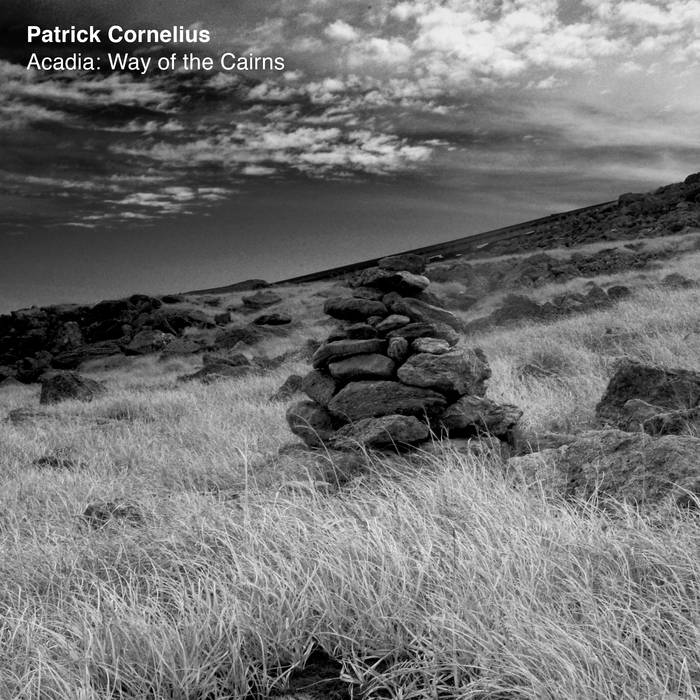
It's been 12 years since alto saxophonist and composer Patrick Cornelius recorded with the Transatlantic Collective.  Composed of Cornelius, bassist Michael Janisch, Estonian pianist Kristjan Randalu, and drummer Paul Wiltgen (from Luxembourg, that band spent the better part of four years recoding and touring.  Janisch and Cornelius stayed in touch; in fact, the Wisconsin-born bassist, head of Whirlwind Recordings (and now a resident of London England), has released three of Cornelius's albums as a leader. The saxophonist reached out to his three friends with a new project, music inspired by Maine's Acadia National Park; they gathered in England, rehearsed, played several gigs, entered the studio, and emerged with a new album.  The result is "Acadia: Way of the Cairns" (Whirlwind), a delightful suite (seven pieces by Cornelius, one each for Randalu and Wiltgen) that sparkles and shines from beginning to end. The group has now been dubbed Acadia after this project, 

First thing one should notice is how clean and clear the sound––you can hear all four musicians without an issue.  Janisch's bass playing is particularly strong; he is the first soloist on the opening title track, his melodic lines and thick tone set the pace for the band.  The skipping rhythms of "Blueberry Mountain" are propelled forward by Wiltgen with a touch of hip hop in his attack. Note how Cornelius dances over the rhythm section plus Randalu's short but dazzling solo that starts low in his left hand, gleefully darting up the keyboard. The rhythmic attack on this tune as well as the opening moments of "On The Precipice" features echoes of pianist Keith Jarrett's European Quartet with Jan Garbarek, Jon Christensen, and Palle Danielson.  The powerful "Darkest Night" is in the middle of the program, introduced by the circular piano lines with the bass introducing the main melody before Cornelius introduces the second part of the theme.  The saxophonist's exciting solo is underpinned by the heft of the piano chords.

Randalu introduces his composition "Valse Hésitante" with a lilting melody before the saxophonist joins in counterpoint. There's a touch of Erik Satie in the gentle melody as well as the opening phrases of the piano solo. Check out the formal sound of the saxophone solo, almost as if this was a recital.  The drummer's contribution, "Ten Years Later", might refer to the band's extended hiatus. The ballad, which closes the program, is a finely constructed piece in which all four musicians move the melody forward.  Cornelius steps out for a short, soulful, solo that closes on a bluesy return to the original melody.  

"Acadia: Way of the Cairns" moves with purpose, style, energy, and soul. Patrick Cornelius writes to the strengths of his musical partners and they respond in kind.  This music pulls the listener, leaving one satisfied but ready to dig right back in.  That's what the best music does!

For more information, go to www.patrickcornelius.com/projects/acadia. To listen to more music and purchase the album, go to https://patrickcornelius-whirlwind.bandcamp.com/album/way-of-the-cairns

Here's the quartet playing "Darkest Night":


Greg Osby (United States: soprano and alto saxophones) and Florian Arbenz (Switzerland: drums, percussion) have played together for over 22 years, playing concerts in Europe and the United States.  "Reflections of the Eternal Lines" (Hammer Recordings) is their first duo recording but they have recorded together before with the drummer's cooperative trio VEIN. This album was inspired by the paintings of Swiss artist Stephan Spicher, whose workshop was the host for the recording. The pieces, composed by the drummer, run the gamut from the hard driving "Groove Conductor" to the dancing rhythms of "Wooden Lines" to the quiet kalimba/ soprano sax piece "The Passage of Light" (which has the feel of a ballad by Billy Strayhorn).  The mysterious "Chant" rumbles forward on the sounds of a gong, orchestra bells, and cymbals while Osby creates a lovely melody.  

Black American Music has had a number of fine saxophone/ drums duos; examples include John Coltrane and Rashied Ali ("Interstellar Space"), Max Roach with both Anthony Braxton and Archie Shepp (for Hat Hut Records), plus Dewey Redman and Ed Blackwell.  "Reflections of The Eternal Line" will remind you of those albums yet has its own beauty and mystery.  The duo of Greg Osby and Florian Arbenz recorded alongside Stephan Spicher (see and hear below), each artist inspired by the others.  Sit down, turn the speakers up loud (or wear head phones), and the sounds create paintings in your mind. What an aural treat!

For more information, go to www.florianarbenz.com/osby/.  To purchase, go to https://florianarbenz.bandcamp.com/

Here's the delightful opening track:


The city of Chicago, Illinois, reverberates throughout "Forward", the new album by trumpeter/ flugelhornist Chad McCullough.  It's his debut on Outside In Music and features a stellar cast of Windy City regulars including pianist Rob Clearfield, bassist Matt Ulery, and drummer Jon Deitemyer plus, on three of the six tracks, Ryan Cohan (keyboards, programming, co-producer).  The program, all McCullough originals, features three quartet pieces and three that add Cohan to the mix.  First time through, one can hear the influence of the late Kenny Wheeler, especially in the open-ended nature of the music and performances––Cohan's synthesized strings actually add to the airiness, giving an ethereal feel to "Oak Park", a symphonic grandeur to "Grave at the Gavel or Grace at the Gallows", and a winter-like atmosphere to "Water Tower Sunset."  

Like Wheeler, McCullough does not dominate this music, allowing the rhythm section to set the tone of each piece. If you have paid any attention to Rob Clearfield, you'll know he's one of the most lyrical pianists on the scene. Not only does he create a solid foundation for the trumpet to ride on but he also creates space for Ulery and Deitemeyer to move independently––you'll hear that on pieces such as "Gentle" and the fast-paced "Focal Point."  On the latter piece, the rhythm section plays with great energy and purpose––Clearfield dominates the first several minutes, engaging in a musical conversation with the bass and drums that is exhilarating. McCullough picks up on that energy, creating his own dialogue with the group.

Photograph: Roberta Ciprus
If you have any familiarity with the city of Chicago, several of the songs will create a mental picture of the city.  "Oak Park" is where Frank Lloyd Wright, "November Lake" will remind you of the breezes off Lake Michigan that make you catch your breath, and "Water Tower Sunset" will posit one in the bustle of North Michigan Avenue. 

What impresses most about "Forward" is how the music, whether the pace be slow or fast, is so alive with ideas, melody, and sense of purpose. At this time, when music is one of the few ways to "travel" safely, Chad McCullough has created a journey that is emotionally uplifting and ultimately satisfying.  

Here's a taste of "Grace at the Gavel or Grace at the Gallows":


Chad McCullough, with Jon Deitemyer, Matt Ulery, pianist Paul Bedal, and synth artist Paul Mutzabaugh, played an "Album Release Concert" in mid-October (two weeks ago, as of this writing) at the Fulton Street Collective in Chicago. Below is an excerpt of the full show, the lively "Focal Point":


Monday, May 13, 2019

Sonic Explorations: Hard-Bop, Post-Bop, & Beyond

Alto saxophonist and composer Patrick Cornelius returns to Posi-Tone Records with "This Should Be Fun", a delightful 10-song program that finds him in the company of the fine young British pianist John Escreet, bassist Ben Allison, and drummer Mark Ferber.  It's important to mention their names as the band is so important to the success of this music.  Does not hurt one bit that Cornelius, a native of San Antonio, Texas, is an excellent songwriter - his pieces have well-developed melodies, thoughtful harmonies, are conducive to both excellent ensemble work and intelligent interplay.  The composer uses the word "fun" deliberately as the sounds throughout most of the album prove.

Photo: Sara Pettinella
Nine of the 10 songs are originals with one track,"Dissolution", from guest Nick Vayenas (the trombonist is a long-time friend of Cornelius - in fact, he has appeared on all of the saxophonist's previous releases plus they worked as co-leaders on the first album either player ever released in 2000).  What a treat to listen to Allison and Ferber create the underpinnings on each track, how melodic the bassist is (his phrasing is rarely cliché-filled), and the power and subtlety the drummer brings to the songs (for example, "Telescope" finds him responding to what the soloist are doing but also pushing them to dig deeper).  Then, there's Escreet - he can and does play many different styles.  Here, he sets up the chordal patterns, and, on occasion, the pace (his playful two-handed rhythmic intro to "Restless Willow" can be heard throughout the piece as both a touchstone and a pace setter).  His solos are quite delightful, playful, and, in the case of the final track "For Morgan", emotionally satisfying.  That track, written in response to the sudden passing of Cornelius's high school saxophone teacher and mentor Morgan King, is a tender and loving remembrance. The melody has a soulful, gospel-like feel, and the leader's alto sounds, at times, as if he's praying as well as also celebrating the life of an extraordinary person.

Among the other highlights are the jaunty title track, the Brazilian-tinged sway of "Leaving Paradise", and the aching ballad "Precious Souls."  "....Fun", as you will hear below, has a bouncy New Orleans feel and delightful interplay of sax and trombone. Drummer Ferber really dances on this track as does Escreet.  There's quite an atmospheric feel to "...Paradise", the smooth blend of the horns, and the lilt in the piano solo.  It's just Cornelius and Allison on the ballad "Precious Souls" - inspired by the present administration's separation of children from their families along the Texas-Mexico border, the music s a plaintive cry to the humanity of the people of the people involved this decision, one that reverberates to this day and hour.

"This Should Be Fun" is another fine album by Patrick Cornelius.  Each one has been different with one of the constants being the excellent songwriting.  The leader has a "sweeter" sound, neither gutsy nor gusty, but also not soft and irrelevant.  He sings on the saxophone in a manner that makes one listen closely, closer to hear the melodies throughout his solos as well as his interactions with the band.  All in all, a fine hour of music from start to finish.

For more information, go to www.patrickcornelius.com.  

Step out with the title track:


Photo: Pete Coco


Tenor saxophonist Sam Dillon makes his Post-Tone debut with "Force Field"; coming just seven months after his album debut "Out In The Open", released on Cory Weeds' Cellar Live.  Dillon, a native of New York City, has been playing saxophone since before he was a teenager and has numerous high-profile gigs.  He's worked with drummer Joe Chambers's Moving Pictures Jazz Orchestra, the Captain Black Big Band, the Big Apple Circus, and many more. Dillon is also an educator and conducts numerous workshops with high school bands.  His C.V. is already chock-full of accomplishments and he's only in his mid-30s.
If you only listen to the opening three tracks on the nine-song program, you might expect the album to a high-powered blast.  The title track kicks off the show; one can hear the influence of McCoy Tyner on the song, with Dillon blowing off the powerful changes play by Theo Hill (piano, Rhodes), the thick bass lines of David Wong, and the rampaging drums of Anwar Marshall.  Played loud, this will shake the speakers and the windows!  "Go For the Jugular" follows. Composed by trombonist Michael Dease, the hard bop romp features the composer along with alto saxophonist (and frequent collaborator) Andrew Gould along with trumpeter Max Darché.  The piece hearkens back to the sound of Art Blakey's Jazz Messengers, capturing the energy of the great drummer's many ensembles.  Hill moves over to Rhodes for Chick Corea's "Straight Up and Down", a tune whose melody line is a spotlight for Darché's energetic trumpet.  The lighter sound of the electric piano does not get lost in the onslaught of the horns and rhythm section. In fact, Hill's solo is quite powerful.

The music slows down with the appropriately titled "Shift".  It's a sweet ballad with the tenor, alto, and trumpet on the front line.  Wong's active bass lines stand out as does the subtle drum work from Marshall - the interaction of Hill with the soloists also is sweet to hear as is the pianist's wide-ranging solo.  "Marionette", from the pen of pianist Lars Jansson, opens with tenor sax and electric piano, moving softly through the handsome melody.  Dillon caresses the melody at the beginning of his solo, moving easily away and back to the main theme.

Still, the emphasis is mostly on uptempo tunes. Dease returns for Dillon's "Two-Part Problem", a fast-paced romp that Hill fills with powerful chords and long-single note runs.  The leader digs into his solo and flies over the propulsive drums and galloping bass lines. The album closes with Charlie Parker's "Dexterity".  Dig Wong's fine bass work.  Hill sits this one out so it's Dillon, Marshall, and the bassist filling the sound spectrum. They have great fun doing so and it shows.

Sam Dillon, to play on the words of the Parker tune, is quite a dexterous musician.  He does not tend to show off but plays shorter, pithy, solos.  That leaves plenty of room for the other musicians to show their talents. Theo Hill's fine piano work stands out throughout the album and the rhythm section shines.  "Force Field" is a pleasure to listen to and bodes well for the future of its leader!

To find out more, go to www.samdillonmusic.com.

Here's the title song: