Showing posts with label Florian Arbenz. Show all posts

Sunday, November 1, 2020

Autumn 2020 Treats

Nowadays, music comes from everywhere, from artists around the world. Two of the three groups reviewed below are transatlantic in composition while one is from a group of musicians based in Chicago but with international experience.

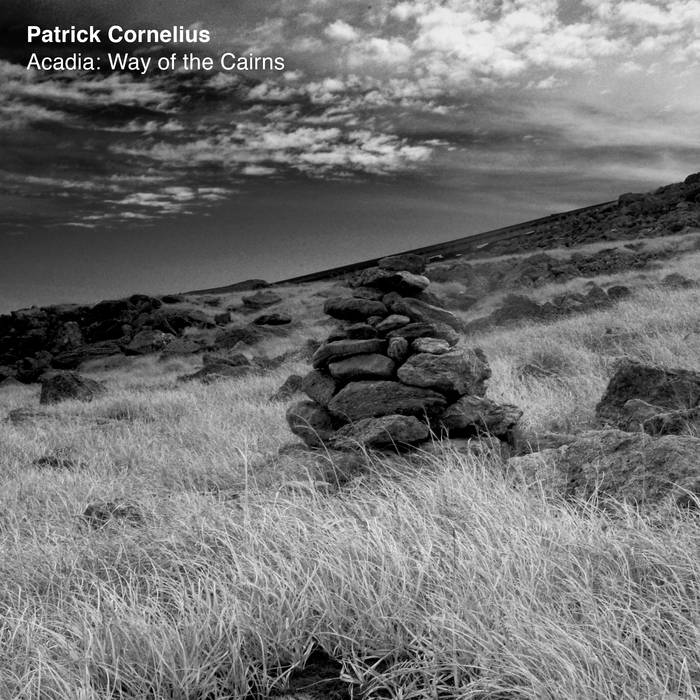
It's been 12 years since alto saxophonist and composer Patrick Cornelius recorded with the Transatlantic Collective.  Composed of Cornelius, bassist Michael Janisch, Estonian pianist Kristjan Randalu, and drummer Paul Wiltgen (from Luxembourg, that band spent the better part of four years recoding and touring.  Janisch and Cornelius stayed in touch; in fact, the Wisconsin-born bassist, head of Whirlwind Recordings (and now a resident of London England), has released three of Cornelius's albums as a leader. The saxophonist reached out to his three friends with a new project, music inspired by Maine's Acadia National Park; they gathered in England, rehearsed, played several gigs, entered the studio, and emerged with a new album.  The result is "Acadia: Way of the Cairns" (Whirlwind), a delightful suite (seven pieces by Cornelius, one each for Randalu and Wiltgen) that sparkles and shines from beginning to end. The group has now been dubbed Acadia after this project, 

First thing one should notice is how clean and clear the sound––you can hear all four musicians without an issue.  Janisch's bass playing is particularly strong; he is the first soloist on the opening title track, his melodic lines and thick tone set the pace for the band.  The skipping rhythms of "Blueberry Mountain" are propelled forward by Wiltgen with a touch of hip hop in his attack. Note how Cornelius dances over the rhythm section plus Randalu's short but dazzling solo that starts low in his left hand, gleefully darting up the keyboard. The rhythmic attack on this tune as well as the opening moments of "On The Precipice" features echoes of pianist Keith Jarrett's European Quartet with Jan Garbarek, Jon Christensen, and Palle Danielson.  The powerful "Darkest Night" is in the middle of the program, introduced by the circular piano lines with the bass introducing the main melody before Cornelius introduces the second part of the theme.  The saxophonist's exciting solo is underpinned by the heft of the piano chords.

Randalu introduces his composition "Valse Hésitante" with a lilting melody before the saxophonist joins in counterpoint. There's a touch of Erik Satie in the gentle melody as well as the opening phrases of the piano solo. Check out the formal sound of the saxophone solo, almost as if this was a recital.  The drummer's contribution, "Ten Years Later", might refer to the band's extended hiatus. The ballad, which closes the program, is a finely constructed piece in which all four musicians move the melody forward.  Cornelius steps out for a short, soulful, solo that closes on a bluesy return to the original melody.  

"Acadia: Way of the Cairns" moves with purpose, style, energy, and soul. Patrick Cornelius writes to the strengths of his musical partners and they respond in kind.  This music pulls the listener, leaving one satisfied but ready to dig right back in.  That's what the best music does!

For more information, go to www.patrickcornelius.com/projects/acadia. To listen to more music and purchase the album, go to https://patrickcornelius-whirlwind.bandcamp.com/album/way-of-the-cairns

Here's the quartet playing "Darkest Night":


Greg Osby (United States: soprano and alto saxophones) and Florian Arbenz (Switzerland: drums, percussion) have played together for over 22 years, playing concerts in Europe and the United States.  "Reflections of the Eternal Lines" (Hammer Recordings) is their first duo recording but they have recorded together before with the drummer's cooperative trio VEIN. This album was inspired by the paintings of Swiss artist Stephan Spicher, whose workshop was the host for the recording. The pieces, composed by the drummer, run the gamut from the hard driving "Groove Conductor" to the dancing rhythms of "Wooden Lines" to the quiet kalimba/ soprano sax piece "The Passage of Light" (which has the feel of a ballad by Billy Strayhorn).  The mysterious "Chant" rumbles forward on the sounds of a gong, orchestra bells, and cymbals while Osby creates a lovely melody.  

Black American Music has had a number of fine saxophone/ drums duos; examples include John Coltrane and Rashied Ali ("Interstellar Space"), Max Roach with both Anthony Braxton and Archie Shepp (for Hat Hut Records), plus Dewey Redman and Ed Blackwell.  "Reflections of The Eternal Line" will remind you of those albums yet has its own beauty and mystery.  The duo of Greg Osby and Florian Arbenz recorded alongside Stephan Spicher (see and hear below), each artist inspired by the others.  Sit down, turn the speakers up loud (or wear head phones), and the sounds create paintings in your mind. What an aural treat!

For more information, go to www.florianarbenz.com/osby/.  To purchase, go to https://florianarbenz.bandcamp.com/

Here's the delightful opening track:


The city of Chicago, Illinois, reverberates throughout "Forward", the new album by trumpeter/ flugelhornist Chad McCullough.  It's his debut on Outside In Music and features a stellar cast of Windy City regulars including pianist Rob Clearfield, bassist Matt Ulery, and drummer Jon Deitemyer plus, on three of the six tracks, Ryan Cohan (keyboards, programming, co-producer).  The program, all McCullough originals, features three quartet pieces and three that add Cohan to the mix.  First time through, one can hear the influence of the late Kenny Wheeler, especially in the open-ended nature of the music and performances––Cohan's synthesized strings actually add to the airiness, giving an ethereal feel to "Oak Park", a symphonic grandeur to "Grave at the Gavel or Grace at the Gallows", and a winter-like atmosphere to "Water Tower Sunset."  

Like Wheeler, McCullough does not dominate this music, allowing the rhythm section to set the tone of each piece. If you have paid any attention to Rob Clearfield, you'll know he's one of the most lyrical pianists on the scene. Not only does he create a solid foundation for the trumpet to ride on but he also creates space for Ulery and Deitemeyer to move independently––you'll hear that on pieces such as "Gentle" and the fast-paced "Focal Point."  On the latter piece, the rhythm section plays with great energy and purpose––Clearfield dominates the first several minutes, engaging in a musical conversation with the bass and drums that is exhilarating. McCullough picks up on that energy, creating his own dialogue with the group.

Photograph: Roberta Ciprus
If you have any familiarity with the city of Chicago, several of the songs will create a mental picture of the city.  "Oak Park" is where Frank Lloyd Wright, "November Lake" will remind you of the breezes off Lake Michigan that make you catch your breath, and "Water Tower Sunset" will posit one in the bustle of North Michigan Avenue. 

What impresses most about "Forward" is how the music, whether the pace be slow or fast, is so alive with ideas, melody, and sense of purpose. At this time, when music is one of the few ways to "travel" safely, Chad McCullough has created a journey that is emotionally uplifting and ultimately satisfying.  

Here's a taste of "Grace at the Gavel or Grace at the Gallows":


Chad McCullough, with Jon Deitemyer, Matt Ulery, pianist Paul Bedal, and synth artist Paul Mutzabaugh, played an "Album Release Concert" in mid-October (two weeks ago, as of this writing) at the Fulton Street Collective in Chicago. Below is an excerpt of the full show, the lively "Focal Point":


Tuesday, July 14, 2020

More Drums In Front

Photo: Gord Loser
Drummer and composer Florian Arbenz, a native of Switzerland, is a musician that has his hands and feet in both the classical and jazz worlds.  Active for over two decades, Arbenz has worked with numerous American musicians –– he co-leads a duo with saxophonist Greg Osby plus has played with trombonist Glenn Ferris, reed masters Bennie Maupin and Dave Liebman, as well as Swiss composer/ conductor Heinz Holliger and American conductor Kent Nagano. Arbenz is also one-third of VEIN, a jazz trio that also features his brother Michael on piano and bassist Thomas Lähns.

The drummer's latest project is dubbed Convergence, an apropos name for a group that features musicians from Cuba, Brazil, Great Britain, Australia, and Europe.  The sextet –– Arbenz (drums, compositions), Jim Hart (vibraphone), Jorge Vistel (trumpet), his brother Mikael (tenor saxophone), Nelson Veras (guitar), and Rafael Jerjen (acoustic bass) –– has just issued its self-titled debut album (on the drummer's Hammer Music label).One can hear the influences of the afore-mentioned Mr. Osby plus Steve Coleman, and Dave Holland (in the blend of vibes with sax and trumpet).  The music jumps out of the speakers with an urgency of the newer sounds of Liberty Ellman and Steve Lehman. Tunes such as the album opener "Little Idea" (listen below) and "Sound" have a funky dance/ M-Base Collective feel.

Once you have listened through the album, go back and check out songs such as "Translacion" and "Nocturne".  The former opens with the unaccompanied Hart setting up a three-chord pattern. Bass and drums enter quietly, then guitar, sax, and trumpet. The foppish melody line is a pleasing contrast to the trance-like rhythm section. Jerjen's fine bass intro leads into a heart-felt ballad with the emotionally rich tenor sax and trumpet glide easily over the gentle cymbal and brush work of the drummer and the long, resonant, tones of the vibes.

Photo: Hans Buerkle
Like most albums, the more you listen to Convergence, the more the individual work of the musicians stand out. Veras's excellent guitar work is featured throughout "Ambar" while the rest of the band movie and around him. Turn up the volume for the aptly-titled "Sound" and listen to the excellent interaction of Arbenz and Jerjen. The album closer, "Edificio 17", is a fast-paced, even breath-taking groove with the Vistel brothers working in tandem and also echoing each other on the opening theme. Mikael's mid-range tenor solo feeds off Arbenz's energy. The leader takes a long yet exciting solo in the middle before Jorge Vistel's fine solo, his tone reminiscent of the late Kenny Wheeler, leads the sextet forward to a rousing close.

One hears plenty of promise in the debut recording of Florian Arbenz & Convergence. Each of the musicians involved have developed strong voices and the more they play the leader's music, the more those voices will push the material forward.  As debuts go, this one rocks!

For more information, go to www.florianarbenz.com.  To hear more of the album plus purchase the recording, go to https://florianarbenz.bandcamp.com.

In the meantime, here's a taste:


Are you still mourning the passing of pianist McCoy Tyner? Do you miss the sound the pianist's 1970 albums for both Blue Note and Fantasy?  May I draw your attention to "Happy Synapse", the second album on Rainy Day Records by drummer Sasha Mashin. Mashin, a resident of Moscow, Russia, gathered a mighty sextet with fellow native musicians Dmitry Mospan (tenor saxophone) and Mikan Novikov (acoustic bass) plus Rosario Giuliani (alto saxophone, from the Veneto region of Italy), Benito Gonzalez (piano, from Venezuela, now in NYC), and Josh Evans (trumpet, born in Hartford, CT).  Everyone but the bassist and drummer contributed two pieces to the album (which is split into "1" and "2" on Bandcamp, iTunes, and from other suppliers)

The power in this music comes from the leader who drives each tune as if he were driving a race car through the streets of Moscow. The album opens with a drum solo before the pounding piano chords take the sextet into the theme of Giuliani's "The Hidden Voice" –– Mashin pushes the band in the style of Art Blakey and Jeff "Tain" Watts. Gonzalez's solo harnesses that power and blazes forward before Mospan jumps in and flies away. "Incantation", one of the three tracks on the collection that clocks in near or above 13 minutes, opens with a fiery bass solo. When Novikov drops into a circular bass line, the band enters playing Mospan's composition and its echoing voices.  The composer's powerful tenor solo leans more to Coltrane as he piles up phrase-upon-speedy phrase, setting quite a high bar for those who follow. Evans is more than up to the task before Gonzalez enters and rides the powerful waves of sound generated by the rhythm section.

Evans contributes the most Tyner-ish piece, the delightful "Sulieman Saud" that opens disk 2.  The pianist states the opening theme before the reeds and trumpet enter with a fascinating, if a bit dissonant, second theme. Gonzalez produces a tremendously playful solo giving way to solos from Mospan followed by the composer (his most playful spot as well).  The drummer takes a turn supported by the thunderous chords and booming bass.

The album closes with the longest track (13:19), Giuliani's "The Hidden Face of Stars", its rubato opening giving way to a modified Latin and Blues groove. The theme is a call-and -response between the "front line" and the piano. The sextet takes its time working through lengthy melody section but then they move easily into the solos. Evans goes first and creates a fascinating story moving in and around the beat and the insistent and exploratory piano chords. Mashin sounds busy beneath him but he's really stroking the fire as he does throughout the album.

An album as boisterous as "Happy Synapse" deserves to be heard, to be listened to loud, and, in a less panic-stricken, to be heard in person. The only overt political statement about the album is how this American art form, Creative Black Music, stealthily has made inroads into Eastern Europe, the Middle East, the Far East, and just about everywhere.  Sasha Mashin and his international sextet play this music with enthusiasm, with joy, and abandon –– enjoy the ride!

For more information, go to sashamashin.com. To hear more of the album and to purchase the two distinct releases, go to https://rainydaysrecords.bandcamp.com/album/happy-synapse-part-1.

In the meantime, give a listen: