Showing posts with label Mike Baggetta. Show all posts

Tuesday, January 21, 2020

New Ideas for The New Decade

Photo: William Brown
Pianist and composer Theo Hill, a native of Albany NY, continues to mature with every gig and every recording.  A graduate of SUNY/ Purchase, he's been on the New York City scene for the past 16 years performed with numerous ensembles large and small. He's currently the pianist in the Mingus Big Band; thanks to his association with Posi-Tone Records, he has recorded with trombonist David Gibson, saxophonist Sam Dillon, and is a member of the sextet New Faces.  Hill has also recorded with trombonist Frank Lacy, trumpeter Josh Evans, and saxophonist T.K. Blue.  His 2014 recording debut as a leader was "Live at Smalls" featuring a quintet of saxophonists Dayna Stephens and Myron Walden plus bassist Joe Sanders and drummer Rodney Green.

"Reality Check" is Hill's third recording for Posi-Tone.  Featuring an excellent trio of young musicians including Joel Ross (vibraphone), Rashaan Carter (acoustic and electric bass), and Mark Whitfield Jr. (drums).  The 10-song program contains seven originals plus one each each from David Berkman, Stevie Wonder, and Mulgrew Miller.  What one notices on initial listening is the energy level of this music and how well the participants listen to each other as well as interact.  Opening with Berkman's "Blue Poles" (from the pianist's 2000 album "Communication Theory"), the focus is on melody, rhythm, and getting to the heart of the performance. While the rhythm section pushes the vibes and piano forward, the music does not settle into a groove even as Ross charges forward. Before you realize, Carter locks in Ross while Hill feeds them chords and Whitfield Jr. plays with abandon.  It takes a few seconds to notice how the rhythm section drops into a rapid-fire swing for Hill's delightful solo.

Besides acoustic piano, Hill plays Fender Rhodes as well as synthesizer on the album.  His creamy Rhodes sound atop the bubbling rhythm section on "Swell" is a delight while the string sounds produced by the synth on "Afrofuturism" does more than fill out the sound, helping to illustrate the title of the track (be sure to note Whitfield Jr.'s excellent drumming as well as Carter's fine bass accompaniment and counterpoint). After the delightful bass intro to "Aquanaut", the band kicks in to a hearty beat, not unlike pieces by McCoy Tyner (but a touch funkier).  The powerful forward motion of the piece has an urgent quality as do the solos by Hill and Ross.  The quartet's take on Mr. Wonder's "Superwoman" (more Rhodes and synths) is quite handsome – again, listen how the drummer "colors" the proceedings while the electric bass swims beneath the piano.

"Reality Check" also includes Mulgrew Miller's "Pressing The Issue"; the piece is a hard-hitting, high energy, track featuring fiery solos from Ross and Hill, one more track that brings McCoy Tyner to mind. The final tune, "Song of the Wind", is an attractive blend of Rhodes, synth, and vibes that gives the piece an ethereal feel.  Carter's bubbling base lines and Whitfield Jr.'s intelligent brushes leans towards a "fusion" feel yet the interactions are exciting while the solos are probing.  Theo Hill and company have created a soul-satisfying song experience, music with heart and soul as well as plenty of rhythmic fire.  Play it loud and often!

For more information, go to www.theoshill.com.

Photo: Emra Islek
For the past decade+, bassist and composer Harish Raghavan has been the foundation of rhythm sections for artists such as Kurt Elling, Walter Smith III, Eric Harland, pianist Taylor Eigsti, and Ambrose Akinmusire (and others).  The native of Northbrook, IL (just north of Chicago) first studied drumming and took up the bass when he was 16.  He attended college at USC and studied with John Clayton and privately with Robert Hurst.  Upon moving to New York City in 2007, Raghavan started to work on a regular basis and continues to do to this day.

The bassist formed his first band in 2017 and wrote numerous compositions for a quintet.  He went into the studios in December of 2018 with Joel Ross (vibraphone), Micah Thomas (piano), Immanuel Wilkins (alto saxophone), and Kweku Sumbry (drums).  The results can be heard on "Calls For Action", the two-Lp/ one CD set issued in December of 2019 on Whirlwind Records.  While Raghavan is the leader and wrote all 15 of the pieces on the program, this is most certainly a group effort.  His interactions with drummer Sumbry (from Washington D.C.) are stimulating throughout – the bassist frees up up the young percussionist who pushes at the melody lines, interacts with the solos as the leader keeps the music moving forward (check out the lovely ballad "I'll Go and Come Back" for evidence of their work).

Photo: Emra Islek
Ross and Thomas tease out the melody of "Los Angeles" as the bassist strums accompaniment as the drummer dances around his cymbals. Wilkins, a native of the fertile Philadelphia, PA. scene, gets to state that melody. The ballad moves slowly, in a stately fashion, even as Sumbry threatens to explode.  The lovely piano and vibes accompaniment set the tone for Wilkins's handsome solo.  The generous support from the rhythm section pushes the vibraphonist and pianist to create counterpoint while the saxophonist keeps his cool and helps to calm the rest of the band. It's a gorgeous piece.

Then there are the pieces that tear the tops off one's speakers.  "Sangeet" starts quietly, alto sax and bass, stating the folk tune-like melod. As the quintet digs into the piece and Sumbry heats up, the group kicks into a higher gear and really begin a frantic dance.  "4560 Round Top" comes in on a rapid-fire circular melody presented by the front line while Raghavan and Sumbry play rhythms that have a South Indian feel. Listening to Ross dance above them is one of the many album highlights. Thomas and Sumbry combine to push the intensity even higher as the piece races to the finish line.  The drummer takes a long, passionate, solo at the opening of "Junior", setting the pace for a romp – the sax and vibes introduce the rhythmical melody line weaving in and around each other.  The thick bass lines and the skittering drums create a swirling storm never overwhelming those playing solos or melody lines.

It's amazing to read that Harish Raghavan and company created the 15-song, 70-minute, "Calls For Action" in one marathon session on December 15, 2018 – obviously, the group was ready. Such an impressive program, one that sounds great (you can really hear the deep notes of the leader's bass, especially on the three short solo pieces at the beginning, middle, and end of the album); the music also makes one wish to hear this youthful ensemble (all but the 37 year-old bassist are in their mid-20s) in person.  Kudos to engineers Joe Blaney (studio), Andy Taub (mix), and Dave Darlington (master) plus producer Walter Smith III for jobs well done.  Harish Raghavan may have been quite patient in waiting to record as a leader but the wait was well worth it.

For more information, go to harishraghavan.com.

Check out "Los Angeles":


Photo: Aaron Winters
Saxophonist and composer Luke Norris, a native of Long Island, recently completed his studies at the Eastman School of Music in Rochester, NY.  His first two EPs, both issued on Bandcamp, posit him as singer-songwriter playing guitar, drum machines, keyboards, and doing all the vocals.  Meeting guitarist Mike Baggetta as a summer music camp pushed Norris in a new direction and he began writing pieces that combine an acoustic trio (saxophone, bass, and drums) with electric guitar.  Baggetta'a use of looping and other electronic programs for guitar created a sound in the saxophonist's mind that is now realized on "Northernsong" (Ears&Eyes Records).

With the rhythm section of Tyrone Allen (bass) and Daniel Sunshine (drums) plus the guitarist's inventive playing pushes the eight-song program in often mesmerizing territories.  From the opening notes of the opening track, "Sketches in C", one hears music that takes Norris's interest in folk music and makes it move in unexpected ways.  The song has a long, handsome, melody played by tenor sax and guitar, while the bass and drums move freely underneath. Baggetta's shimmering guitar tones give the piece an ethereal feel, especially the quiet looped drone in the background. On the closing track, "Things Ending Begin Again",  the "nervous" drone beneath the lovely melody Norris writes for soprano sax and guitar is somewhat off-putting. Yet, the interaction of the quartet creates a melodic portrait that resonates long after the guitar sounds take the piece out.

The guitarist and rhythm section give Norris a comfortable cushion to go for a fascinating soprano sax adventure on "Bruising Stones."  Allen and Sunshine lock in with Baggetta and really push the piece forward.  When the guitarist creates his solo, the tempo becomes understated but picks up intensity as he creates his handsome solo. "Strong Heritage" is more raucous, Baggetta going for a harder tone yet when the leader (on tenor) starts his solo, the guitarist drops out for a moment, returning to underpin the solo with fiery chording. Baggetta then roars through his solo, Sunshine sounding on the drums as Allen unites with Norris to keep the song on its foundations.

Dig the rocking opening of "Excavate", the guitar and drums connecting once more to create a wall-of-sound.  The contrast with Norris's melodic tenor creates a tension that rarely lets up. The saxophonist leaps into the fray as the piece careers forward, as the rampaging drums and insistent guitar lines urge him on.  Yet. Norris and Allen return to the melody to bring the piece to a place where Baggetta's unaccompanied electric guitar can wind the music down.

"Northernsong" may frustrate some listeners who want their musical experience easily put into a genre or style. The addition of guitarist Mike Baggetta gives the music a more dynamic and wider range of sounds. The more Luke Norris can perform this music and begin to comprehend its myriad possibilities, the more roads he can explore in the future. With this release, he's definitely on his way.

For more information, go to www.lukenorrismusic.com.  

Here's a track to whet your appetite:


Saturday, March 2, 2019

Music That Challenges, Surprises, and Satisfies

Pianist and composer Matt Choboter, originally from Vancouver, British Columbia, Canada, is currently, living, playing, and studying in three European cities (Copenhagen, Berlin, and Paris).  he's now signed to Greg Osby's Inner Circle Music label. His second album as a leader, "Spillimacheen" (named for a river in British Columbia), features trumpeter Simon Millerd and guitarist Maxime Rheault-Trembley in the front line plus bassist Cole Birney-Stewart and drummer Andrew Thomson providing the propulsion. Choboter is the driving force, the director, yet one gets the feeling throughout the album that he gives the band plenty of space to help re-shape (but not overthrow) his original vision for his compositions.

Choboter graduated from Capilano University in Vancouver and has gone on to study with pianist Jean-Michel Pilc and drummer Dan Weiss. He also spent a significant amount time in 2015 studying Carnatic rhythm and melody in India. All the influences play into his original music but not overtly. His pieces are often episodic with plenty of ensemble plating as well as lengthy solos, never sounding forced or over-thought.

In the instance of the two pieces in the middle of the program, the title track and "Meaninglessness", the two long tracks (8:42 and 13 minutes respectively) move into each other as if this was a concert presentation. Millerd's breathy solo at the end of "Spillimacheen" pours over into the following track.  The trumpeter continues to solo after the theme section (which he shares with the piano).  Notice how the song dissolves a third of the way with Thomson taking a short solo that has the feel of a First Nations  (Canadian Native Americans) drum chant before Choboter changes the direction of the music once again.  Sit back, listen to how all of the musicians can be heard, how what they play, even if is quiet riffs or gentle cymbal splashes, in integral to the music.

Photo: Justin Choboter
In case one thinks all of Choboter's music has an "inward" feel or is introspective, just listen to the power of the band on "Outsider."  Thomson really pushes this music forward as does the leader, especially in his exciting solo (notice how the snare is in sync with the piano notes). "Soweto" follows and, while the music tiptoes in on bowed bass and squealing trumpet, once the chiming piano chords enters, the music becomes like a whirling dervish, stopping to allow in the trumpet yet continuing to dance forward.

At 80 minutes, "Spillimacheen", like the river that gives the album its name, twists and turns, bubbles and then becomes calm, changing with every melodic or rhythmic idea.  Matt Choboter makes modern music that is every bit as intriguing as his grandfather's painting that graces the cover of the album.  Take your time and dive in to this music with an open mind and heart.

For more infraction, go to mattchoboter.com.

Here's the opening track:


I have listened to and talked with guitarist Mike Baggetta since the mid-2000s when I discovered his duo music with trumpeter Kris Tiner in their duo known as TinBag).  Over the last 15 years, the guitarist has crafted quite a career with a quartet that recorded for Fresh Sound New Talent (and featured saxophonist Jason Rigby) to solo work to a reunion with Tiner and a trio with drummer Billy Mintz and bassist guitarist Jerome Harris.  His latest album, "Wall of Flowers" (Big Ego Records), is a trio disk, this one with bassist Mike Watt (Minutemen) and drummer Jim Keltner (whose credits date back to the 1960s and include legends like Joe Cocker, Leon Russell, George Harrison, Charlie Watts, Ry Cooder, The Traveling Wilburys and many, many more).


What you have here is a delightful potpourri of sounds ranging from quiet ballads to wailing guitar workouts.  The album opens with "Hospital Song (intro)", a solo piece featuring several overdubbed guitars that leads into the trio version of "Hospital Song."  The rhythm section lays down quiet a beat and Baggetta's overdubbed guitars play a handsome melody that to these ears display a California twang (he's a native of Agawam, Massachusetts - go figure).  There are also two versions of "Blue Velvet", one for solo acoustic guitar, and the other a duo for Baggetta's electric guitar and Keltner's quiet shuffle rhythm.  Both expose the handsome melody (composed in 1950 by Bernie Wayne and Lee Morris) and leave room for solos built off that recognizable tune.  There's a sinister feeling to "I Am Not A Data Point", starting with the circular bass line which leads into Baggetta's howling, argumentative, guitar sounds (quite like Jimi Hendrix's noisy experiments with his tremolo bar/Whammy Bar). Watt holds it all together while Keltner skitters and jiggles across his snare and floor tom.  There's a similar feel to "Dirty Smell of Dying" with Baggetta's overdubbed guitars screaming, strumming, and howling in the distance over the rhythm section. The bass and drums take centerstage in the last third of the tune - the mix has Keltner's kit spread across the audio spectrum with Watt's bass right in the middle.

The album closes with the title song, a tune that starts slowly with melodic guitar chords over the solid rhythm section.  The piece take sit time to move through the melody but when Baggetta steps into his solo, the music picks up in intensity.  No overdubs, just the guitarist working with and interacting with the bassist and drummer from beginning to end.

"Wall of Flowers" is a powerful recording. Yes, it shows off the compositional and guitar skills of Mike Baggetta as well as his mastery of the studio but, first and foremost, it's a trio gig.  The guitarist has a strong connection with bassist Mike Watt and drummer Jim Keltner and everyone sounds invested in the project.  Since the beginning of 2019, there have been a number of guitar trio albums released (Joe Policastro Trio, David Torn's "Sun of Goldfinger" with Tim Berne and Ches Smith, Typical Sisters, and Lapis Trio, all but the last "electrified") - "Wall of Flowers" is no wallflower in the bunch and is worth your time to explore.

For more information go to mikebaggetta.com.

The digital album is released on 3/15/19 with vinyl following on 4/01 - here's a tune to whet your appetite:

Saturday, May 21, 2016

Such Sweet Thunder

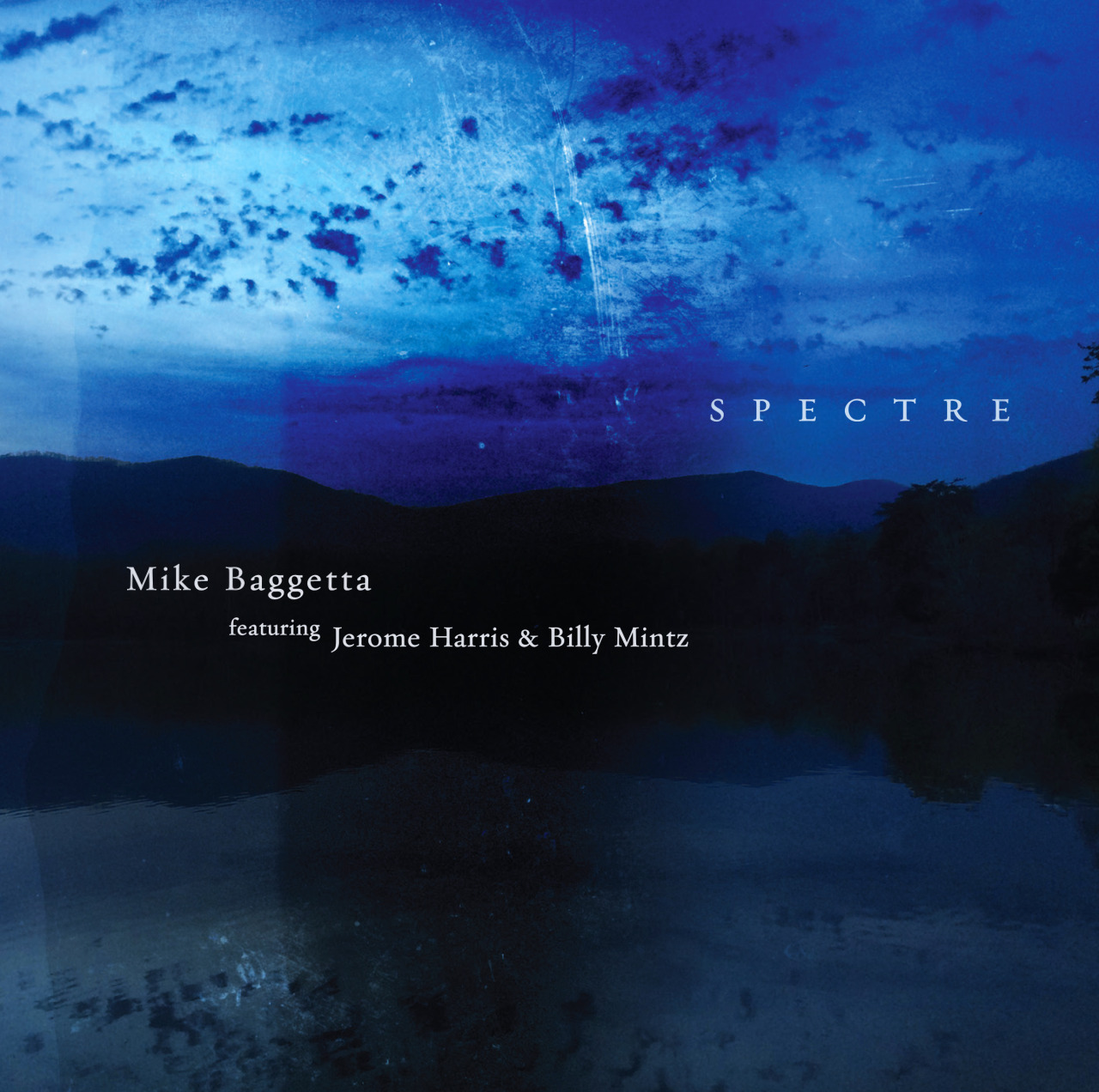
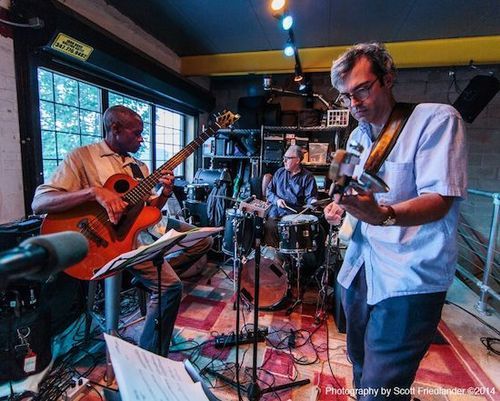
Having seen guitarist Mike Baggetta play in a solo setting, duo with trumpeter Kris Tiner in their TIN/BAG ensemble, and in his long-running quartet with saxophonist Jason Rigby, drummer George Schuller, and bassist Eivind Opsvik and Cameron Brown, I was excited to see "Spectre" (Fresh Sound New Talent) arrive as a trio date.  With the acoustic bass guitar sounds of Jerome Harris, the drum work of Billy Mintz, and the leader's guitars plus live processing, one would expect this music to go in many directions, and it certainly does. Five of the nine tracks are Baggetta originals, there is one track credited to all three ("Second Prelude", the opening cut), a heavy-metal inspired cut, "Nasty" composed by Mintz, Wayne Walker and Webb Pierce's country classic "Leavin' On Your Mind" (a big hit for Loretta Lynn in 1963), and Ornette Coleman's "War Orphans" (with versions recorded by Paul Motian, Bobo Stenson, and Charlie Haden's Liberation Music Orchestra.)

With the exception of the afore-mentioned "Nasty" and the guitar solo on Baggetta's "The Only Blues", this music is often quiet, filled with pauses and silences, the three musicians interacting in the studio having a conversation that draws the listener in. A piece such as "Passage", a Baggetta original that stretches out for over 10 minutes, the looping guitar lines, the wonderful melodic work of Harris and Mintz's splendid brushes, keeps one involved all the way through.  The first few times, you wonder where it's going; when you return again, listen closely to how this music moves, how each player is important to the direction and the sound, and how just how well the guitarist integrates the electronics.

downtownmusic.net
Don't confuse softer volume with lack of intensity when listening to this trio.  Baggetta's other-worldly sounds, with phrases that may remind some of the "bent" country sounds of Bill Frisell or the expressive Jeff Beck, blend well with the musicality of Harris and colorings of Mintz.  The three-part title suite sounds improvised, as does the majority of the album, but when you return to the music, a logic and sense of purpose appears.  The album closes with the Ornette Coleman work, the guitarist alone with looping, creating a stark yet emotionally rich atmosphere that makes "War Orphans" all the more poignant.

The dark blues of the album cover are a good signpost as to what to expect when one listens to "Spectre." There is a spaciousness to the music that one often feels as if he were standing on a mountain top surveying the universe.  Mike Baggetta turned to fellow guitarist David Torn for the mastering; his sense of sonic landscapes influences the project as each participant's sound is given equal weight as one falls under the spell of this music.  Dig in, dig deeply, and you will be moved, challenged, and ultimately satisfied.

For more information, go to mikebaggetta.com.

Here's a taste:

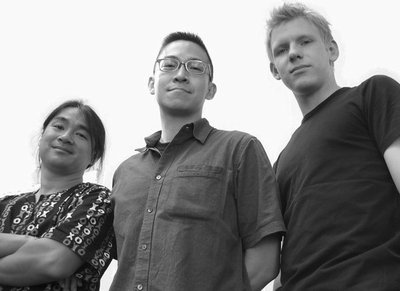
As a young person growing up in the Seattle, WA, area, trumpeter and composer Cuong Vu was greatly influenced by guitarist Pat Metheny. Vu spent several years in the early 2000s touring and recording with the guitarist's band. He has also worked with pianist Myra Melford, saxophonist Chris Speed, guitarist Joel Harrison and vocalist Laurie Anderson (among others). As a leader, Vu has recorded several albums for Knitting Factory and ArtistShare plus his Vu-Tet album on Origin Records. He's been working with the rhythm section of Stomu Takeishi (electric bass) and Ted Poor (drums) for over a decade (and three recordings), musicians who give as good as they get and more.

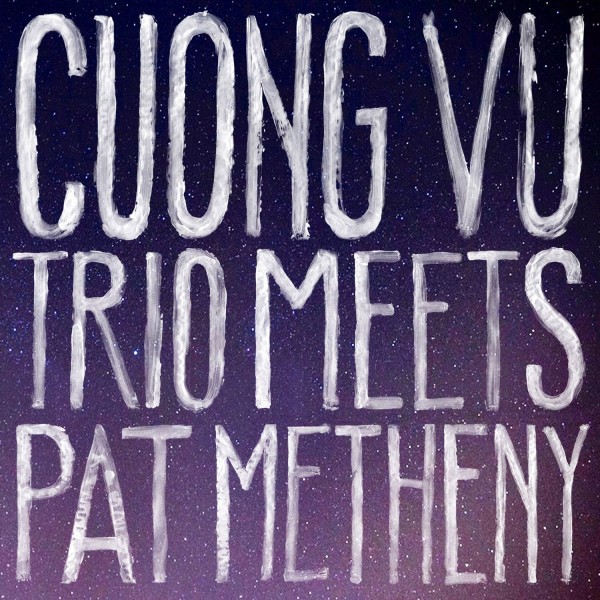
"Cuong Vu Trio Meets Pat Metheny" (Nonesuch Records) is a bit of a misnomer. This project does not feel like a "jam session"; instead, the seven tracks are a group effort.  Takeishi's fundamental bass lines, Poor's thrashing drums, Vu's forceful trumpet, and Methany's powerful guitar work seem like a natural fit. The program starts quietly, "Acid Kiss" arriving on a soft trumpet melody then slowly and steadily picks up in intensity, Vu's searing sound underpinned by squealing guitar, until the music seems to explode. Right near the end, the trumpet and guitar blend so closely the two musicians sound like one. There's plenty of fire on "Not Crazy (Just Giddy Upping)" with its post-modern electric/electronic bop.  Vu's trumpet solo moves up and down, in and out, reaching for sounds in the manner of the late Kenny Wheeler (especially reaching reaching for non-melodic sounds.)

If you have followed Pat Metheny's music and career over the past 40+ years, you know how much he likes to experiment with sounds and textures.  His brass-like sounds on songs such as "Let's Get Back" or his wailing solo on "Tiny Little Pieces", the latter over the rampaging rhythm section, prove he's not rating on his laurels.  On the latter track, his feedback and loops play right into Vu's coarse, raspy, trumpet sound, as if they were inside each other's minds.  Metheny gets bluesy and references John McLaughlin during "Telescope" (his composition), moving from supple melodic runs to roaring flurries of notes.  Both he and Vu take it down a few notches for the handsome "Seeds of Doubt" the guitar flowing atop Poor's active drums and cymbals and Takeishi's spot-on counterpoint.

There are moments on "Cuong Vu Trio Meets Pat Metheny" when the listener is reminded of electric Miles Davis and how that trumpeter, especially in the live setting, really pushed his band to go further with the music.  Then, there are cuts such as "Tune Blues" (composed by saxophonist Andrew D'Angelo), where the quartet swings hard but with a bluesy flair, electronics aside (save for Metheny).  The music is a bit off-center, Poor pounding away with Takeishi keeps the rhythm moving forward.  You should actually listen to this recording several times in a row start to finish, concentrating on different musicians each time.  When you can stand back and let the sound fill the house, your room, or the car, even your headphones, this music has the power to take you far beyond the ordinary.

For more information, go to www.cuongvu.com.