As a youth growing up in Lima, Peru, Jorge Roeder first studied guitar, moved on to cello, but became entranced by the bass in High School, and found his musical calling. He came to the United States in 2002 to study at the New England Conservatory of Music in Boston, MA, and soon came into contact with teachers such as Bob Moses, Dominique Eade, Danilo Perez, and bassists John Lockwood, Cecil McBee, and fellow Peruvian, Oscar Stagnaro. Roeder also began performing with his contemporaries such as drummer Richie Barshay, pianist Carmen Staaf, and pianist Dan Tepfer. Moving to Brooklyn, NY, in 2007, the bassist started a professional relationship with guitarist Julian Lage which is ongoing today as well as with pianist Shai Maestro, John Zorn, and has been a member of trombonist Ryan Keberle's Catharsis since 2012.
If you have listened to Roeder in any of those groups, you'll know he possesses a wonderful facility for playing melody, rhythm, and counterpoint, with rich tones emanating from both his acoustic and electric basses. For his debut album as a leader, "El Suelo Mio" (self-released), the bassist goes it alone, playing only his sonorous upright bass––the album title translates to "my ground" or "my soil". His classical training comes through on pieces such as Ornette Coleman's "Lonely Woman": Roeder plays the tune with his bow, sawing at his instrument to capture the beauty of the melody and the emotion the song contained within the composition. Other pieces that have great emotion are "El Piebeyo" by legendary Peruvian composer Felipe Pingol Alva (1899-1936) and the lovely original "Silencio De Um Minuto". The aptly-titled "Bounce" is a rollicking blues with a handsome melody while "Patrona" displays exquisite finger work not unlike a flamenco guitarist. "I'll Remember Paris", the oft-recorded Gene De Paul melody, shines as Roeder caresses the melody and then creates a powerful solo.
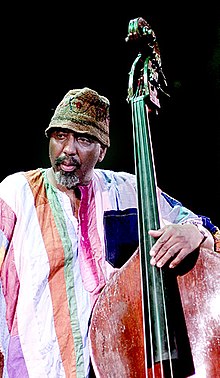
Photo: Isabel Roeder
"El Suelo Mio" closes with the slowly unfolding ballad "Les Lapins", the soulful melody highlighting Roeder's articulate playing, the harmonics he creates ring in your ears for just a second before he moves back into the melody.
Jorge Roeder has created an album that resonates in so many ways; with his love of melody, emotion, and communication shines throughout. Yes, the bassist has tremendous facility on his instrument yet that ability is harnessed in order to present songs that sing to your heart, mind, and soul.
Flutist, composer, and educator Nicole M. Mitchell is one of the most visible contemporary members of the AACM whose recordings cover many different subjects and styles of Black Music. Lisa E. Harris is a vocalist, composer, creator and manipulator of electronic sounds who is also a filmmaker. The two artists have come together, along with members of Ms. Mitchell's Black Earth Ensemble (including cellist Tomeka Reid), to create "EarthSeed" (FPE Records), the third chapter in Ms. Mitchell's projects inspired by the work and vision of author Octavia Butler (1947-2006).
When you listen to the music on "EarthSeed" (recorded live in concert in January of 2017 at the Art Institute of Chicago), be prepared to enter into a different sonic world. After the brief introduction titled "Evernascence/ Evanescence" for flute and voice (breathing and whistling), "Whispering Flame" begins the story in earnest. Instruments move in and around each other, cello and bass swirl, percussion rattles, while flute and trumpet rise above the combined voices of Ms. Harris and tenor Julian Otis singing a song of "creation". Both vocalists also stretch their instruments, creating alien languages, guttural noises, grunts and squeals as the cello creaks beneath. A quiet interlude for flute and cello as trumpeter Ben Lamar Gay roils above the singers. That's just one song.
Photo: Emily Berl (NYTimes)
There's the fun of "Yes and Know" with its bouncing rhythm courtesy of percussionist Avreeayl Ra, violinist Zara Zaharieva, and Ms. Reid and vocal play of Ms. Harris and Mr. Otis as the flute and trumpet dance above. The mewing, snorting, hissing, babbling, chattering, flirting voices cause the audience to laugh on "Phallus and Chalice"––when the instruments and percussion join, the interactions sound like a chase scene in a cartoon. The gentle interaction of flute, muted trumpet, cello, violin, and percussion frame Mr. Otis and Ms. Harris (who soars and wails behind the poetry) at the onset of "Fluids of Time" before the music erupts into a "Rite of Spring"-like section.
"EarthSeed" closes with "Purify Me with the Power to Self Transform", an impressionistic ballad that blends a gospel influenced lead vocal (Mr. Otis's falsetto) and Ms. Harris's wordless responses) with all the instruments plus synthesizer to create an otherworldly benediction. Even the 15 seconds of silence at the end holds great power while serving as a re-entrance into our everyday reality. This album that Nicole Mitchell and Lisa E. Harris have created with members of the Black Earth Ensemble is filled with sounds, voices, poetry, prose, and the joy of performance. Get lost in this "new" world.
Lisa E. Harris, vocals / theremin / electronics / composition Nicole M. Mitchell, flute / electronics / composition Julian Otis, vocals Zara Zaharieva, violin Ben LaMar Gay, trumpet / electronics Tomeka Reid, cello Avreeayl Ra, percussion
Photo: Joe Crocetta
Drummer Jeff Cosgrove lives in Maryland and, up until the pandemic, played a lot in the Washington, D.C. area. Over the last decade or so, he's been working with his group Motian Sickness as well as gigging with numerous local musicians. Plus, he's invited musicians such as pianists Matthew Shipp and Frank Kimbrough, bassists Ken Filiano and William Parker, saxophonists Scott Robinson, Noah Preminger, and Rob Brown plus guitarist Steve Cardenas to play in clubs in and around the Capitol area, releasing many of the collaborations on his own label and on Bandcamp.com. A majority of the recording sessions––in-studio and live––are improvisations and offer the attentive listener the opportunity to listen to musicians "conversing" and listening to each other for the sake of the music. Cosgrove never "overplays"or "overthinks" the music; that sensitivity is one of the major components of his music, making it all the more interesting.
His newest offering, "History Gets Ahead of the Story" (Grizzley Music/self-released)", finds the drummer in a new trio, alongside John Medeski (organ) and Jeff Lederer (tenor and soprano saxophones, flute). Seven of the program's 10 songs are from the pen of bassist William Parker with two from Lederer and one from Cosgrove. Parker is one of the more important people on the contemporary scene, not just for his music but also for the work that he and his wife, poet and choreographer Patricia Nicholson, have done for artists by creating organizations, most notably the Vision Festival. The blues-soaked sounds this trio produces serve to remind the listener of Mr. Parker's "roots", his connection to "soul" music and the blues as well as to fellow bassist and composer Charles Mingus.
Photo: Joe Crocetta
Opening with "O'Neal's Porch" (from the 2001 album of the same name), the trio sets the easy pace and one can feel the influence of Curtis Mayfield in the melody and groove. These musicians are not afraid to go "out" for a moment yet the song always returns to the walking organ bass lines and Cosgrove's steady cymbal and snare work. Lederer's solo ranges far afield, something he does with joy, playing with an exuberance that adds fire. Medeski gets rights into the groove with his soulful Hammond B-3 sound. Lederer moves to flute for the playful "Little Bird", opening with a cheerful duet with Medeski before dropping into a sweet groove. The clarinet comes out for "Wood Flute Song", an angular groove that the drummer drives with his innate sense of rhythm. The drummer contributed the other-worldly "Ghost"––again, the richly-hued tones of Lederer's clarinet reads the melody and dances off into a sweet solo while Medeski's gospel chords swell in the background.
Photo: Joe Crocetta
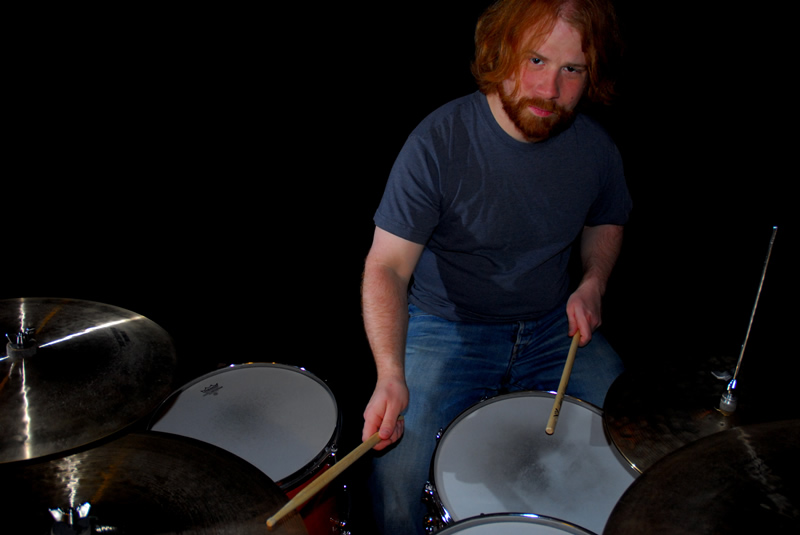
Lederer's two contributions, "Gospel Flowers" and "Purcell's Lament", both show the trio at its musical best. The former track has a steady groove with powerful solos from Medeski and the tenor saxophonist, all the while Cosgrove pushes them forward. The latter tune opens with a unaccompanied keening soprano sax before the organ enters. The piece moves into a lovely ballad, the cymbal and trap set coloring the lines as Medeski supports the voice in front. The swirling organ moves in and around the lovely soprano phrases while the drummer adds more color (the photo on the left gives you an idea of what Cosgrove is doing as he listens and plays).
"History Gets Ahead of the Story" closes with Mr. Parker's "Harlem" (off his Quartet's 2005 "Sound Unity" album). The power of the tenor sax, Lederer at his bluesiest, is balanced by the quiet organ and drum accompaniment. Pay attention to Medeski's solo and how Cosgrove gives him so much space but never abandons the groove. This is 2 a.m. music at its best.
The trio of Jeff Cosgrove, John Medeski, and Jeff Lederer celebrate the music of William Parker by taking his music and not copying it but by putting their own creative voices to the forefront. The clarity of the recording allows the listener to enter into the studio and really "feel" the conversations going on with the trio and this music. A delight from start to finish, take an hour to dive into these "Stories."
The Matthew Shipp Trio - Newman Taylor Baker (drums), Matt Shipp (piano, compositions), and Michael Bisio (bass) - has been a unit for the past five years and you can hear their familiarity with each other every time they hit the stage or create a recording. Because the leader takes chances, the bassist and drummer are encouraged to do so as well. In fact, the material Ship writes for the group calls for that. They do not make "wine bar music"; instead, this music asks the listener for total concentration.
"Signature" (ESP) is the third album by this particular version of the Trio. To my ears, it's the best. One reason is that it is the best-sounding recording that Shipp has ever made in my memory. Many of the earlier mixes were too "compressed" for my ears but here you can clearly hear each instrument. The piano is clear and ringing, the drums sharp and the cymbals crystalline, and the bass thick and deep. There is stunning lyricism in the opening solo piano passages of the title track and the majority of the piece like a piece by Herbie Nichols but with a more elastic rhythm. Listen to how the piano rumbles at the onset of "Flying Saucers" plus the brilliant, rapid-fire riffs from Bisio. Throughout the album, the playing of Newman Taylor Baker stands out, not just for his amazing rhythmic drive but for the sounds he chooses to play under the solos. Check out his active drumming and fascinating cymbal work on "The Way", how both the piano and bass move with him and without.
Photo: Susan O'Connor
Thanks to the excellent recording and mix that I referred to above, every track is a gem. Even the three short solo pieces: Bisio's droning bow work is featured on the 49-second "Deep to Deep" while Newman Baker's two-minute solo is appropriately titled "Snap." Later in the program, "New Z" is another solo percussion piece, with hand-held sounds plus impressive cymbal work covering nearly four minutes. That leads into "This Matrix" which, at 16:25, is the longest cut on the disk. There's a lot to enjoy here, from the rippling piano phrases to the dancing bass lines to the helter-skelter drumming that pushes the piece forward. Shipp is in charge for the first nine minutes before he and Newman Baker drop out for a fine bass solo, one filled with melody and thoughtful use of silence before building to a rapid-fire closing. What follows is a short ballad for bass and piano, joined shortly by Newman Taylor Baker on brushes. There's quite a blues feel in the last several minutes of the program and the ending is delightfully subtle. There's a slow yet determined push towards the close - on first listen, it seemed the music just stopped but really, it feels as if the conversation stopped in mid-sentence.
"Signature" is splendid music, well-played, creative, powerful, gentle at times, and certainly modern music at its best. The Matthew Shipp Trio was quite impressive for the decade+ when Whit Dickey was in the drum chair but Newman Taylor Baker brings a different dimension that has energized both pianist Matthew Shipp and bassist Michael Bisio. I wrote that, to my ears this is the finest recording these three musicians have made as a unit; this certainly is one of the top three recordings Matthew Shipp has made.
Drummer and composer Jeff Cosgrove, a native of the Washington, D.C. area, is fond of playing in and recording with trios. His most recent albums include dates with Scott Robinson and Ken Filiano plus Frank Kimbrough and Martin Wind. Over the past several years, he has recorded a trio featuring bassist William Parker and pianist Matthew Shipp (the pianist has recorded a total of seven times with the drummer), self-releasing two albums both of which feature three improvisations that cover a lot of musical territory. The communication between the three musicians seem telepathic; each player not only does his "own thing" but also works towards a common goal - creating memorable interactions that listeners can return to time and again, hearing new connections each time.
The trio now has a third release. "Near Disaster" continues the group's improvisatory adventures. Over the course of three lengthy tracks, the longest, "October Nights Sky", at 35+ minutes, the shortest, "Last Steps, First", at 9, the band gets loose. The music they create is extremely powerful with cascading riffs from Shipp, melodic underpinning from Parker, and all propelled by Cosgrove's drums. he's quite active, reminding this listener of both levin Jones and, especially, Andrew Cyrille. It's obvious throughout that the drummer responds to his bandmates and vice versa.
The music asks the listener to "go with the flow" - the flow is there, rarely collapsing into a "free-for-all". Notice the intensity and melodicism that inhabit the quiet moments of "...Nights Sky" and how that remains when Cosgrove and Shipp begin to power forward. The opening of "Spherical" serves as an homage to Thelonious Monk (perhaps where the title comes from?) before the trio digs in and takes the music on quite a journey. Listen to how Parker creates such a danceable feel underneath as Cosgrove interacts with the piano. This is what appeals to me about improvisatory music, how the musicians create new ideas from what one person plays and then go off in unexpected directions.
Photo: Jimmy Katz
Take your time to delve into "Near Disaster", don't ignore the noise because, throughout the album, the music coalesces into many fascinating turns-of-phrase and musician interactions. Most of us know what Matthew Shipp and Williams Parker have contributed to creative music over the past three decades. Jeff Cosgrove, who keeps quite a busy performance schedule in the D.C.-Maryland-Virginia area, is a force to be reckoned with, not only as a musician but also a catalyst for bringing artists together from different areas of creative music.
Matthew Shipp is one of the finest modern pianists in creative music (and a gleeful rabble-rouser) while William Parker has established himself as a voice/force for new music and new approaches to creative music. Throw into that mix drummer Jeff Cosgrove, who lives and works in the Mid-Atlantic region, and who has studied with Matt Wilson and Andrew Cyrille (among others), a musician who seems to have no fear of jumping into unknown situations, and the music comes alive.
I finally got around to listening to Jeff's June 2012 interview with Jason Crane on"The Jazz Session" as I was reviewing the CD (the link to the interview is here and to my review here). At that time, the drummer explained how he formed the ensemble to record his debut CD "Motian Sickness: the Music of Paul Motian" and it made me curious how this meeting with Mr. Shipp and Mr. Parker came about. His response is below:
"I've wanted to play with Matthew and William for years. They became instant musical heroes when discovering their music in college. I would tell my wife, then girlfriend, every time I listened to their records that I wanted to find a way to play with both of them. It really seemed like a stretch then because my playing was not near the level it's on now and I still feel like I've got so much to learn to be on the level of those two great masters. It was also interesting because I was not well regarded in the music program of the college I went to...I ended up with a psychology degree, if that tells you anything. Fast forward to 2009, I had won a West Virginia Arts study grant to continue my studying with Andrew Cyrille and Matt Wilson. I had mentioned to Andrew how much I was into both Matthew and William's music, hoping he would talk about his associations with them. We mentioned the gigs he had done with William in various ensembles and it was really inspirational. Matt and Andrew have never played together, even though they've been friends for years. I tried to casually mention how I wanted to play with them...but, it wasn't as eloquent as I had hoped. Andrew simply said, “it will happen when the time is right.”
In the spring of 2013, I saw Andrew in NY and mentioned to him again how I wanted to do a recording with Matt and William and without hesitation, he sent me their info. Just the fact that Andrew had the confidence in me put me on cloud nine.
I reached out to Matthew first who was in Europe at the time. He wanted to check out my "Motian Sickness" recording that featured Mat Maneri, a frequent collaborator of Matthew's. To my surprise he dug the record and felt that Maneri and I played really well together – performances that I’m really proud of. We talked on the phone one evening after he had listened to my record and we just talked about records, inspirations, and playing solo concerts. It was really great to get his perspective given his experiences and just get his down to earth vibe. After that call, Matt was in. He said he would take care of getting William on board as they have been close for many years. Now I was freaked out! I was going to be doing a recording with Matthew Shipp and William Parker in front of an audience…it was a lot to take in.
Photo by F Schindelbeck
I connected with William in New York when he was playing with Tony Malaby and Nasheet Waits at Greenwich House with my friends Jimmy Katz and drummer Deric Dickens. William was really looking forward to the date and couldn’t have been nicer. We talked a little about his upcoming schedule and some general pleasantries but nothing about the recording other than the date.
The night of the concert finally arrived and my wife and I were in New York. Klavierhaus has some of the beautiful pianos, as well as, an incredible recital hall but no drums. Deric Dickens had arranged for me to borrow a set of drums from Steve Maxwell’s Vintage Drums but the only trick was that we had to get them from their Times Square studio to the Klavierhaus near Lincoln Center at rush hour. I was more than a little stressed about the performance and if we would be able to even get to the gig in enough time to set up based on the traffic but somehow everything aligned perfectly and we got to the venue in no time.
When we walked into Klavierhaus, Jimmy was already setting everything up around the piano and I began to get the drums up. Then, suddenly, Matthew runs in out of breath because he had literally run several blocks because he went to the wrong address. We had a good laugh about it as he caught his breath and you could just see his excitement to play the Fazioli piano. While Matthew can sound amazing on any piano, to hear him on an instrument that really is up to the level of his ability is truly inspiring. When you couple that with the connection he has with one of the greatest bass players living, it put me in a place of pure joy.I knew anything could happen and that was what I wanted. This would be a night that I had prepared for but never thought would arrive. Two masters and musical heroes playing with me. To make it better, if possible, they are two of the kindest and most thoughtful people.
We didn’t talk about what we would play at all. The only thing we discussed was that "Victoria", the Paul Motian composition, would be the last piece of the evening. We just started to feel the music from the first notes. It was an on the spot decision to dedicate the last piece of our first set to Andrew. He is just such a special player that the three of us have known, that it only seemed right. "Alternating Current" just seemed like a fitting title for the piece because AC are Andrew’s initials, as well as, he has always been at the forefront of evolutions of jazz. Bridges of Tomorrow was really where we hit our stride. It was the opening of our second set and I just felt that opening pattern with the mallets and it was like Matt and William were reading my mind. They just played with exactly what the music needed and every time that I thought the music had peaked, they could push it further. Playing with Matt and William was like being hit by a musical freight train and I mean that in the best possible way.By the end of the first piece that we played, I had sweat through my shirt.It was strong but sensitive, as well as, free but it never seemed out of control.My wife commented that she had never seen or heard me play like that.Matthew and William brought out a side of my playing that I didn’t know was there.That was what it was like playing with these masters.They unlocked things in a service to the music that changed my playing forever.It was one of the greatest musical experiences of my life.I had so much adrenaline running through my body, whew, I could have run back to the hotel. Hopefully, we will be doing more playing together soon!" For more information and links to purchase Jeff's CDs, go to jeffcosgrovemusic.com.

 Posts
Posts