Peripheral Vision, the Toronto-based quartet, came together in 2008 to play original music built from melody, featuring intuitive interactions, and expanded through improvisation. The band –– Don Scott (electric and acoustic guitars), Michael Herring (acoustic bass), Trevor Hogg (tenor saxophone), and Nick Fraser (drums, percussion) –– are all busy players on the ever-expanding Canadian scene. Scott, who has played alongside David Binney and Dave Douglas (among others), leads his own trio and is also a member of Idioteque, a Radiohead-cover band. Herring also leads several bands including Vertigo (with David Binney, Scott, and Fraser) plus has worked with pianist David Braid, Bucky Pizzarelli, and Ken Vandermark (plus others). Fraser is also quite busy with his own groups plus working with a great cross-section of musicians from all genres, including saxophonists Quinsin Nachoff, Roscoe Mitchell, Anthony Braxton, and Tony Malaby plus bassist William Parker and trumpeter Lina Allemano. Hogg leads his own band, works with guitarist Harley Card, saxophonist Tara Davidson, and pianist Braid as well.
Since the band's inception, Scott and Herring have been the principal composers. They both know the strengths of each band member and their compositions play to that as well as pushing them to continue to grow. Album #5 is a two-disk set: "Irrational Revelation and Mutual Humiliation" (self-released), is the third consecutive Peripheral Vision album to be co-produced by the composers with Jean Martin (drummer and former member of pianist D.D Jackson's Trio) and the first to feature other musicians (see list below). While the extra "voices" fill out the sound, it does not take away from the group interactions. The first album's centerpiece is Herring's "Reconciliation Suite", a nearly 14-minute suite composed after the death of bassist's grandfather. The story behind the music not only deals with reconciliation in families (especially multi-faith families) but also the role of Canadian citizens and artists to deal with how that country deals with members The First Nation and immigrants. It's an extremely powerful work, deserving of multiple listens to grasp its complete message. The music rocks, roars, soars, whispers, sings, and cries
The 14-song, 88+-minute, album is loaded with excellent music. Pieces such as "For Kent Monkman" (Herring) swings with great intensity while "Man vs Zafu" is a fascinating take on a relationship the composer (Herring) has with his Yoga mat. The bassist's "Brooklyn Bearded" is a funky response to a gig composer Herring saw in that borough – Fraser's dancing drums will delight you and make you move. Scott's "Title Crisis" is a response to the untitled songs the guitarist/ composer would bring to sessions and have the band give them ridiculous names. The sound manipulation on Hogg's tenor sax during his solo gives him an eerie feel but Fraser's powerful drum accompaniment pushes the music forward. "N12" refers to an eviction notice Scott received as Toronto was gentrifying his neighborhood – the subsequent "dislocation" gave birth to this song in which the composer displays both anxiety and calmness. Scott's studies with drummer-composer John Hollenbeck laid the ground work for "Schleudern" (German for "spin" or "fling"), a piece that sonically refers to the teacher's Claudia Quintet (thanks to the work of guest Michael Davidson's vibraphone!)
"Irrational Revelation and Mutual Humiliation" refers to the title of each of the 2-CDs in this set and I'll leave up to you to decide what or if there is a difference between the two. What you do get when you truly listen is music that is intelligent, smartly orchestrated, witty, muscular, and emotionally powerful. On initial hearing, one may pick out connections to the music of John Abercrombie, Pat Metheny, and the afore-mentioned John Hollenbeck; yet Peripheral Vision is, after 12 years, its own entity with music that stands out for the quality of its compositions and splendid musicianship.
Trevor Hogg - tenor saxophone Don Scott - guitar Michael Herring - bass Nick Fraser - drums
GUEST MUSICIANS Michael Davidson - vibraphone (eight tracks) Craig Harley - organ, Fender Rhodes (five tracks) Chris Pruden - Prophet 6 (six tracks) Jean Martin - organ bass, synth programming (two tracks)
Songs of Tales is a truly trans-Canadian group in that each member of the quartet lives in a different location. Petr Cancura (tenor saxophone, keyboards) resides in Ottawa, Gordon Grdina (guitars, oud, bass) in Vancouver BC, Jesse Zubot (violin, synth, bass, congas) on Vancouver Island, and Jean Martin (drums, electronics, vibraphone) in Toronto. Zubot and Martin (who co-produces the quartet Peripheral Vision) are both members of throat singer Tanya Tagaq's Trio while Grdina leads several groups (he has released or been featured on, at least four albums that have come out in the first five months of 2020). Cancura is currently the Program Director of the Ottawa Jazz Festival and a member of the Canadian quartet Way North (with bassist Michael Herring, drummer Richie Barshay, and trumpeter Rebecca Henessey) – he also is an accomplished mandolin player and a graduate of the New England Conservatory of Music.
The band's debut album, "Life Is a Gong Show" (released on Cancura's labels Roots2Boots Records), displays the myriad influences on the musicians. With the exception of Charles Mingus's "Moanin'", all the songs were composed by band members (save for Martin) but each member had a hand in the arrangements and the sonic environments. The Mingus tune opens with video game machine sound effects before Cancura's overdubbed saxophones and Grdina's electric guitar play the melody. Martin's thumping drums sets the pace, the guitar takes on a raucous tone as the synth tones dance for one speaker to the next and back. The tenor solo is a bit frantic and shells to bump up the intensity even more.
What is evident throughout the program is how much fun the band is having creating this music and overturning one's expectations. The super-funky "Burning Bright" with simultaneous solos from violin, tenor sax, and guitar while Martin kicks so hard sounds like an inverted jig while "Cinema" (composed by Cancura) is a "down-home" blues tune. The sax and violin moan the melody while the electric guitar growls behind atop the drummer's solid beat. "Awake" is handsome ballad with a mournful melody, powerful work from Grdina and more fine tenor playing. A solemn oud opens Grdina's "Jojis" which explodes seconds later into a raucous tour-de-force (similar to the sounds Ken Vandermark created on his early quartet albums). The following track, "Cluster" (also composed by Grdina), opens very quietly, no discernible rhythm, rattling percussion, plucked oud and violin, until the violin, and saxophone play the melody.
The final two tracks on the album, "Sideways" and "Mary Go Round", are both Cancura (pictured left) compositions, both as different as day and night. The former sports a dancing melody line, repeated over and over through the first two minutes until the music breaks down and becomes a series of long tones out of which rhythmic conga beat bring the listener back to the repetitive melody. The latter piece opens as if a orchestra was tuning up, quietly and slowly moving forward out of rhythm. Disparate sounds filter in and out, long violin tones, hint of marimba, and a melody line trying to emerge. All of a sudden, acoustic guitar and violin introduces a plaintive time with quiet explosions and counterpoint from tenor saxophone. It's a lovely close to a fascinating program.
In these odd days, "Life Is a Gong Show" is an apt title for the daily machinations of beleaguered people. Even though Songs of Tales recorded the album months before the shutdown, this noisy, contemplative, crackling, rhythmical, and fun music feels just right. Call it jazz, call it fusion, world music but let these 11 tracks seep into your brain and enjoy!
After studying in Toronto, Ontario, pianist-composer Jeremy Ledbetter spent over a decade on the road working with artists such as Mighty Sparrow, Hermeto Pascoal, Jane Bunnett, and Andy Narrell (to name but 4). He's also the longtime musical director for the calypso star David Rudder. Ledbetter also leads the Canadian group CaneFire, one of the nation's best known Caribbean/ Latin jazz ensembles.
"Got a Light?" (ALMA Records) is his debut as a leader. With the splendid drumming of Larnell Lewis (Snarky Puppy) and the handsomely thick electric bass sound of Rich Brown, this music jumps right along. Ledbetter is a two-fisted pianist with a fine blend of percussive and melodic elements. The nine tracks - eight originals plus the Tragically Hip's "Gift Shop" (recorded one week after the passing of the group's front man Gord Downie) - have great power thanks to the talents and big ears of the participants.
There are many different musical dishes to digest on this album. The Latin Jazz side of Ledbetter shines brightly on several tracks including the dramatic "About Climbing Mountains". The booming piano chords and the powerful drums move the piece forward while Brown's bass dances around. If anything, "The Pepper Drinker" is even more startling with its quick jumps in intensity and rapid-fire rhythms. Brown's solo is jaw-dropping yet listen to how Ledbetter and Lewis help push him forward.
There is a softer side. Vocalist Eliana Cuevas joins the trio for "Her New Wings" (the leader switching to electric piano and leads the vocals in by playing the melody on melodica). The blend of her voice with the melodica is lovely plus there is a smart use of vocal overdubs to enhance the sound. The rhythm section sits out "Suspirito" with batá drummer Reimundo Sosa joining Ledbetter for the quiet performance.
The album closes with a solo piano piece, the gentle, gospel-infused, "The Tightrope Walker." In various places on the album, one can hear the influence of Bruce Hornsby on Ledbetter's melodic and rhythmic choices. Let this music wash over you. The Jeremy Ledbetter Trio will shake the rafters but also give you moments of peace in a crowded day. "Got a Light?" grabs the listener from the opening note, not only because this is not your traditional piano trio but really because the music is quite enjoyable.
To celebrate its 20th Anniversary as a unit , the Toronto Jazz Orchestra (TJO) has issued its fourth album, the 18-piece ensemble's first release in nine years. Led by its Artistic Director and chief composer Josh Grossman, the ensemble celebrates its existence and diversity with a eight piece program (including the four part "4 PN" dedicated to the 95-year old composer, bandleader, and clarinet player Phil Nimmons).
Grossman shows his versatility right from the start. A sweetly melodic introduction opens to a funky/Latin groove as "Georgie and Rose" dance across the speakers. Soprano saxophonist Chris Roberts and trombonist Christian Overton step out for delightful solos powered by the delightful rhythms of drummer Ben Ball and percussionist Luis Orbegoso. "Brad's Prudence" is a smart reworking of The Beatles' "Dear Prudence", the assemble trombones playing the melody as the trumpets and saxophones provide color commentary.
The afore-mentioned "4 PN" opens with "The Land of 2 and 4", a pleasing cut that swings along with the clarinets rising above the reeds and brass. There's a touch of Gil Evans in the smart arrangement behind the trumpet solo. Moving on to "Under a Restful Tree", the music takes on a modern feel, thanks to the adventurous drumming of Ball - note the melody played by the trumpet and clarinet in unison. "Birdsong" follows, the trilling clarinet opening unexpectedly leading to a lovely trombone melody and a ballad presentation. The suite ends in a funky groove with "Flat 10 Strikes Again", the ensemble riding atop the delightful electric bass work of Mark Godfrey.
The album closes with two very different tracks. "Reflections" is a passionate ballad that reflects the influence of Maria Schneider, especially in the section parts. "Blob", on the other hand, is a barn-burner with wailing guitar, pounding drums, and powerful solos. It only quiets down near the end for the bass solo which gives away to a booming reprise of the opening.
Two decades - 20 years - is a good long time in the life of a modern big band. While they may only have four albums, Josh Grossman has kept the TJO busy with several side projects. "20" is a celebration and, hopefully, a harbinger of more to come.
Josh Grossman (Artistic Director, conductor) Chris Roberts (soprano sax, alto sax, flute) Jake Koffman (alto sax, flute) Paul Metcalfe (tenor sax, clarinet) Chris Hunsburger (tenor sax, clarinet) Shirantha Beddage (baritone sax, bass clarinet) Steve Dyte (lead trumpet) James Rhodes (trumpet) Alexander Brown (trumpet) John Pittman (trumpet) Christian Overton (lead trombone) Pat Blanchard (trombone) Mark Grieve (trombone) Sylvain Bedard (bass trombone) Todd Elsliger (guitar) Carissa Neufeld (piano, Fender Rhodes, Wurlitzer) Mark Godfrey (acoustic & electric bass) Ben Ball (drums) Luis Orbegoso (percussion)
Listen to Josh Grossman talk about the band and the recording:
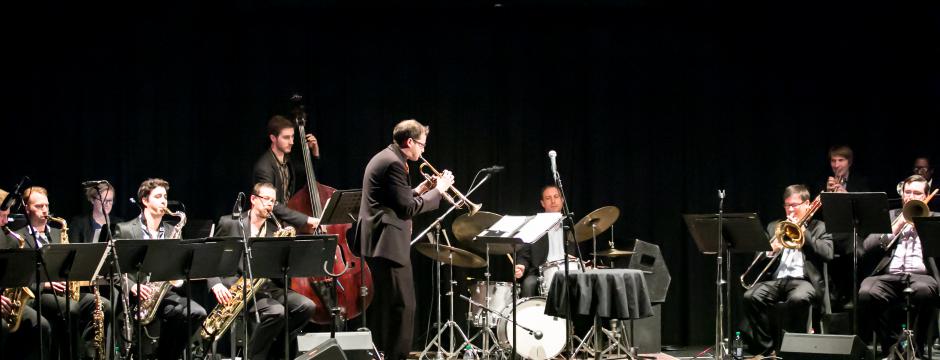
The University of Toronto 12Tet is an ensemble made of students, both undergraduate and grad students, enrolled in the university's music program. Led by trombonist, composer and arranger Terry Promane, the group plays music especially arranged and composed for the participants. With 11 musicians and vocalist Brooklyn Bohach, the 12Tet has a new album "When Day Slips Into Night" (U of T Jazz) - the disk comes 18 months after its previous album "Trillium Falls" (my review here). The program includes a totally new lineup from the previous disk but Promane again creates an album that features standards, an original work (by current tenor saxophone John Nicholson), and a surprise in the addition of "(Ocean) Bloom", a Radiohead piece from its "The King of Limbs" album rearranged by Hans Zimmer for the BBC series "Blue Planet."
The "standards" include Juan Tizol's "Perdido", Tom Harrell's lovely "Sail Away", and Cedar Walton's boppish "Bolivia." The musicians have a delightful time on the last tune listed, bouncing atop Evan Gratham's spongy bass lines. Alto saxophonist Brandon Tse delivers a lively solo over the rhythm section before the reeds and brass restate the theme. Tse returns to take the tune out. The Harrell composition has a light Brazilian feel with an arrangement that has the theme shared by the brass and guitar plus fine harmonies from the reeds. The ensemble's drummer Keegan Eskritt supplied the arrangement for "Perdido" and supplies the poly-rhythmic feel that pervades the piece. It's an intelligent updating of the original that honors the melody while giving the music a more modern feel.
Ms. Bohach is not on every track yet is a major component of the ensemble's sound. Her wordless vocals on Nicholson's "Eventide" adds depth to the melody on the opening (in the style of Norma Winstone, especially when blended with the trumpets). She's much more prominent on "Isaya", a piece composed by vocalist Ineke van Doorn and Marc van Vugt's for the latter's Big Bizarre Habit group. Ms. Bohach dances easily through the melody, scatting pleasingly after guitarist Julian Clegg's fine solo. She takes a quieter approach on "(Ocean) Bloom", giving the ballad a prayer-like feel. The arrangement, by trumpeter Michael Henley, keeps the mystery of the original but has a cleaner sound. The album closes with "Tanz Onhe Antwort (Dance Without Answers" - composed by German saxophonist Klaus Gesing - is also a ballad. Arranged by Promane, the melody is caressed by Ms. Bohach (both with lyrics and her wordless flight with the brass after pianist Noah Franche-Nolan's impressive piano solo.
"When Day Slips Into Night" not only highlights the young musicians who are part of the programs at the University of Toronto but also illuminates the vision of Terry Promane has for this odd-sized large ensemble. Everyone plays well, Brooklyn Bohach stands out without stealing the spotlight (the arrangements always posit her as one of the band), and the material covers a large swath of the jazz ouevre. Like their 2017 release, The U of T 12Tet keeps your attention throughout by making memorable music throughout.
The ensemble has no true website but you can buy the albums and listen to excerpts on both iTunes and Amazon.
Personnel:
Brooklyn Bohach: vocals Michael Henley, Kaelin Murphy: trumpets Karl Silveira: trombone Brandon Tse: alto saxophone John Nicholson, Kieran Murphy: tenor saxophones Russell Matthews: baritone saxophone Noah Franche-Nolan: piano Julius Clegg: guitar Evan Gratham: acoustic and electric bass Keagan Eskritt: drums
Perfect listening for a snowy March day in central Connecticut,
"Live at U of T" (UofT Jazz) is the second CD led by the saxophone duo of Dave Liebman (soprano, tenor, flute) and Mike Murley (tenor, soprano). The former has been on the faculty at the University of Toronto as a visiting artist/adjunct Professor since 2013 while the latter has been teaching there since 2011. Joining them is bassist Jim Vivian (who has worked with both leaders in the past, especially with Murley for over three decades)and the veteran drummer Terry Clarke (John Handy, the Fifth Dimension, Rob McConnell Boss Brass). The quartet sounds loose and limber, each musician playing with great fire and joy.
The program includes four compositions by Liebman, two by Murley, one by Vivian, Joe Lovano's "Blackwell's Message", and a smashing cover of Ziggy Elman's "And the Angels Sing" (which was first recorded by its composer as a Klezmer-style tune in the mid-1930s before he adapted it for the Benny Goodman Big Band and Johnny Mercer added lyrics). The quartet swings the heck of the Elman, with the two tenors trading leads and and then "trading 4's". The rhythm section really pushes the proceedings, something they do throughout the album.
Among the highlights is "Small One", a ballad/waltz composed by Liebman where both he and Murley play soprano sax. Both create excellent solos over the easy-going rhythm section. Listen to how they intertwine the melody and harmony of the theme section. The two sopranos play sans rhythm section on Liebman's "Missing Persons", a piece that has the feel of a modern classical composition (yet the timbre of the sopranos and direction of the music reminds this listener of the song "Fertility" from the "Buster Bee" album on Sackville by Julius Hemphill and Oliver Lake.) There's a sense of the mysterious in Murley's "Open Spaces", starting with the flute sounds of Liebman. When the tenor saxophones enter, one hears the influence of John Coltrane.
"Blackwell's Message", a piece that Joe Lovano wrote in tribute to drummer Ed Blackwell, opens with a delightful drum solo by Clarke. He then falls into a New Orleans "strut" over which the soprano and tenor saxes play the plaintive melody. Dig how Vivian creates a drone then plays in and round the pedal point. Both Liebman and Murley create powerful solos with the drummer pushing them forward with such glee.
"Live at U of T" is a treat for those listeners who like to listen "deeply" to music. The Liebman/Murley Quartet plays with fire, grace, intelligence, a sense of the past and present of music, and with great joy. You should listen.
Mike Murley and Terry Clarke show up again as members of the Dave Young/Terry Promane Octet, the ensemble that has just issued "Octet: Vol. 2" on Modica Music. Bassist Young is a veteran of the Toronto music scene, having worked in the early 1960s with guitarist Lenny Breau plus a 35 year association with pianist Oscar Peterson. Trombonist Promane has played and taught in the Toronto scene as well (not as long as his partner), playing in pit bands for touring Broadway shows as well as with artists such as the late Kenny Wheeler, Rob McConnell, Mike Murley's Septet, and so many others. He's been on the faculty of the University of Toronto where he leads the Jazz 12Tet. For this album, he's joined in the brass section with Kevin Turcotte (trumpet and flugelhorn) while tenor saxophonist Murley is surrounded by Vern Dorge (alto sax) and Perry White (baritone sax). Young and Clarke are the foundation of the Octet along with pianist Dave Restive.
Like "Vol. 1" (which was issued in late 2012), the new album features music from Charles Mingus ("Duke Ellington's Sound of Love") and Dizzy Gillespie ("Bebop") but there is only one original and that's Murley's "Can't You See" (the earlier album contained three tunes from Promane). This time around, the band plays music from Rodgers & Hammerstein II (the opening "O What a Beautiful Morning"), Cedar Walton (the closer "Hindsight"), Duke Pearson ("Jeannine"), Alec Wilder & Morty Palitz ("Moon and Sand"), Jimmy McHugh & Dorothy Fields ("I Can't Give You Anything But Love"), Michel Legrand ("You Must Believe In Spring"), and Jimmy Frigo, Herb Ellis, and Lou Carter ("Detour Ahead").
With the leaders contributing four arrangements apiece, the music shows vitality, wit, and intelligence throughout. Those listeners who like swing will enjoy the rollicking "Bebop" (with a super solo from Turcotte) and the driving "Can't You See" (with its melodic bass solo and mellow trombone spotlight). Turcotte also romps through "Jeannine" as does White.
For this listener, it's the ballads that shine. Young's arrangement of fellow bassist Mingus's "Duke Ellington's Sounds..." celebrates the song's handsome melody while featuring a heartfelt alto sax solo from Dorge. Murley's tenor leads the way into and throughout most of "Detour Ahead" with the only other solo courtesy of the bassist. Restivo dances through "You Must Believe In Spring" (a more uptempo take than usual) and "Hindsight", two medium tempo delights.
"Octet: Vol. 2" is good listening music. The Dave Young/ Terry Promane Octet moves easily through this music, never taking anything for granted. This could easily be background music but the fine arrangements and strong solos holds one's attention throughout.
Here's a modern take on the brass band concept. Trumpet, trombone, and tuba plus piano, electric guitar, and drums is the makeup of Rebecca Hennessy's FOG Brass Band. "Two Calls" (self-released) is the Canadian ensemble second release and first full-length album. Based in Toronto, Ms. Hennessy (trumpet, peck horn, baritone horn) is very busy musician leading several groups and playing in several others. FBB plays music that may remind you, at times, of Charles Ives, the Henry Threadgill Sextett, and Guillermo Klein's Los Gauchos but, really, has quickly developed a sound of its own. This is not a "marching band" but a group that utilized all of its parts to the utmost. Kudos to drummer Nico Dann and tuba player Jay Burr as they are the "engineers" that stoke the figures this music creates. Pianist Tania Gill also help keep the music flowing as does guitarist Don Scott. Rounding out the front line is trombonist Tom Richards.
There are touches of New Orleans brass band music that show up on pieces such as the bluesy "Lagoon" and "Snag", a peppy dance tune that sound inspired by The Meters. But there are also pieces such as the opener "Red Herring" that has such a drive and is the piece most like Mr. Threadgill's music. That's followed by the prayer-like "Horn Lake", an impressionistic work that might have been inspired by walking along the shore in the early morning looking out at the still waters. Listen to the pictures the band creates with just the trumpet, quiet guitar, tape loops and triangle. 3/4s of the way in, the music suddenly falls into a samba-like rhythm and the piece literally dances out.
photo by Michael Fisher
Highlights abound. Guitarist Scott gets to romp his way through the first half of "Kings County Sheriff", soloing over the dancing drums and tuba. There's a touch of Klezmer in the horn melody and at the beginning of Ms. Hennessy's far-ranging solo. Bird songs introduce the title track (and continue for a little bit under the musical introduction); it's a funky, jazzy, dance piece that features strong solos from Richards and Ms. Gill. There's a playful feel to "Birds For Free", a piece that starts in a Latin style before changing tempo. Listen to how Dann drives this piece, especially under the trumpet and trombone solos.
"Two Calls" closes with the lovely "Why Are You So Sad Booker Little". Not only is that a great title but the piece is a handsome ballad in which all the members of the sextet make fine contributions. The music is quiet, somber, not a celebration of the great trumpeter (1938-1961) as much as an elegy for him, for the promise as well as the maturity one could hear in his recordings.
The contemporary music scene, while not financially breaking new ground, certainly has produced a number for fine young bands and composers. Rebecca Hennessy's FOG Brass Band covers a wide swath of musical territory over the 48 minutes of "Two Calls" and the journey is very rewarding. This album is not only "fun" to listen to, as brass band music often, but also melodically rewarding and adventurous.
If you find yourself in Toronto on June 29, FOG is playing the Toronto Jazz Festival - to find out more, go to torontojazz.com. To find out more about Ms. Hennessy and her myriad projects (including the delightful Way North), go to rebeccahennessy.com.
Take a look and a listen to "Lagoon":
I've been reading about trumpeter and composer Jaimie Branch for the past few years and was excited to see her debut album hit the streets last month. "Fly or Die" (International Anthem) lives up to its name as Ms. Branch takes many chance on the 10-song program that features three other transplanted Chicagoans (cellist Tomeka Reid, drummer Chad Taylor, and bassist Jason Ajemian - like the trumpeter, all now live in the New York City area). Ms. Branch has worked in ensembles led by bassist William Parker and saxophonist Matana Roberts as well as with TV On The Radio. Her work exemplifies the AACM tradition, meaning nothing is sacred save for experimentation as well as cliches are forbidden.
photo by Mark Pallman
The program opens with the aptly titled "Jump Off", 16 second of squalling trumpet that leads into Taylor's countdown into "theme 001." One can hear traces of Wadada Leo Smith in Ms. Branch's clarion call and tone. The drummer lays down as irresistible rhythm as Ms. Reid and Ajemian play off each other, plucking, bowing, and creating a storm underneath. Matt Schneider's acoustic guitar shows up at the end, leading into the trancelike "...meanwhile." He plucks, the bassist and cellist play arco, the drummer offers light percussion, and the leader is nowhere to be heard. She returns on "theme 002", playing muted trumpet over the infectious, dancing drums of Taylor. The West Indian feel continues as the mute is removed and the trumpeter rises above the rhythmic excitement.
That's just the first four tracks. "Leaves of Glass" features fellow brass players Josh Berman (cornet) and Ben Lamar Gay (cornet) and they create a sonic blueprint that opens up to the arco cello and bass, a flurry of percussion, fiery trumpet, and scary overdubbed denoting "the storm."
Prepare to be surprised by the breadth and vitality of the music on "Fly or Die." Although the album is barely 36 minutes long, there is so much going on, so many possibilities. One can only imagine how this music roars and whispers in live settings. Jaimie Branch took her time to deliver her debut album and it is well worth the wait.
Trumpeter and composer Farnell Newton (born 1997, Miami, FL) s a graduate of Oberlin Conservatory of Music who moved to Portland, OR, and is now a full-time member of that community's music scene. He has worked with singer-songwriter Jill Sobule, funk bassist Bootsy Collins, Darrell Grant, Gladys Knight and many others. "Back To Earth" is his sixth album as a leader and his debut on Posi-Tone Records. While his 2015 recording "Ready To Roll" was more of a contemporary soul album, his new effort is straight-ahead displaying his formidable "chops". Joining him are Greg Goebel (piano), Dylan Sundstrom (bass), Christopher Brown (drums), and, on most of the tracks, trombonist Kyle Molitor, all members of the Portland scene.
Eight of the 11 tracks are Newton originals with one tune each by drummer Brown, Freddie Hubbard, and Wayne Shorter. Brown's piece, "Back To Earth" is a funky ballad introduced by a sweet piano melody plus Goebel gets the first solo, an expansive melodic adventure. The leader doesn't come in until halfway through the 6-minute piece but he rides the groove with an easy solo that even has a bit of fire to it. "Fire" is what hears on the Hubbard tune, "Arietas", a piece off the trumpeter's 1961 "Ready For Freddie" Lp (where the title was spelled "Arietis"). The "burning" piece features splendid work from the rhythm section and fine solos from Geobel and Newton. Shorter's "El Gaucho" (off his "Adam's Apple" recording) changes tempos, has an attractive feel, and, here, a pleasing Latin rhythm.
The original pieces have their charms as well. "Road To The South" swings atop an insistent rhythmic drive, giving the leader the impetus to rise above the fray. There's also a sweet solo from Molitor and a powerful turn from Goebel (who is quite impressive throughout.) The pianist works around the melody created by the brass on "Redefining The Norm", not so much a counterpoint but a creating a lovely frame around tune. And, again, his solo stands. His introduction to "Crossing The Tracks" leads the listeners to a soulful tune with several smart twists-and-turns.
Throughout "Back To Earth", Farnell Newton and his compatriots create an enjoyable sound that's not challenging as much as it is soothing, soulful, and melodic. This music sounds good as you sit on the back porch or in the park in the late afternoon as the sun paints the world golden.
Kenny Wheeler (1930-2014) played trumpet and flugelhorn and created an impressive body of compositions that covered a wide swath of contemporary music. Born in Toronto, Ontario, Canada, Wheeler moved to England in the early 1950s, slowly, steadily, building a career in bands led by Tubby Hayes and John Dankworth. In the 1970s, he worked with various different ensembles, ranging from the avant-garde sounds of the Spontaneous Music Ensemble and the Global Unity Orchestra as well as alongside Anthony Braxton and Dave Holland. He had a long association with pianist John Taylor and vocalist Norma Winstone performing together and recording as Azymuth. He recorded numerous Lps and CDs for ECM, starting in 1975 with "Gnu High" and his final recording, "Songs For Quintet", released in 2015 after his passing. Wheeler also recorded for Soul Note and CAM Jazz.
My favorite recordings of Mr. Wheeler's tend to be the Big Band albums. His arrangements for brass and reeds have a classical sensibility yet are flavored with the experimentation that was a large part of his life. The original compositions often blend airy melodies with thick section playing, opening up for solos that seem to ride atop the rhythm section like birds gliding on columns of thermals. Best of all, his melodies are well drawn and the music often has a swing the composer/arranger had absorbed the blues arrangements of Count Basie and Duke Ellington. And his ballad pieces often have a wistful feeling, filled with emotion and, occasionally sadness.
The University of Toronto Jazz Orchestra, Gordon Foote, director, has just issued "Sweet Ruby Suite"(self-released on UofT Jazz) an album dedicated to the music of Kenny Wheeler. Joining the 18-member ensemble for this project is Ms. Winstone and guest soloist, soprano saxophonist Dave Liebman. The 4-song program includes the 29-minute title track that Mr. Wheeler recorded in 2002 with the Maritime Jazz Orchestra plus three other shorter tracks. The arrangements, all but one by the composer, leave room for contributions by many of the band members as well as Liebman. The multi-sectioned "...Suite" does an excellent job of displaying the UTJO's strengths; those includes the excellent work of pianist Josh Smiley, bassist Victor Vrankujl, and drummer Andrew Miller plus the excellent section workHis interaction with Brad Eaton's flugelhorn on "W.W" really shines. His sweet tone meshes nicely with Ms. Winstone's scat vocals on "Canter No. 1", perhaps named for its loping rhythms - the piece, arranged by Terry Promane, makes great use of the sections in call-and-response, counterpoint, and harmonies. She also joins the brass for the melody line on the song which appeared on Mr. Wheeler's final ECM release. "Winter Sweet", also first recorded with the Maritime Jazz Orchestra, is a lovely ballad complete with strong playing from Marie Goudy (flugelhorn), Conrad Gluch (alto saxophone), and Mr. Liebman.
"Sweet Ruby Suite" shines not only on the strength of the Kenny Wheeler's compositions and arrangements but also the powerful work of the University of Toronto Jazz Orchestra. Perhaps the presence of Norma Winstone (who also wrote the lyrics) and Dave Liebman gave the musicians extra incentive; they never sound like a "backing band" for the two guests but really as equals. If you like "modern" big band, the music of Kenny Wheeler, and the work of Ms. Winstone and Mr. Liebman, this is music worth hearing.
Personnel: Saxophones: Naomi Higgins, Conrad Gluch, Patrick Smith, Connor Newton, Alec Trent Trumpets & Flugelhorns: Austin Jones, Marie Goudy, Brad Eaton, Max Forster, Josh Stuckey Trombones: Zachary Smith, Jared Kirsh, Modibo Keita, Collins Saunders Piano: Josh Smiley Guitar: Christopher Platt
Bass: Victor Vrankujl
Drums: Andrew Miller
The University of Toronto 12TET is 11 musicians and one vocalist directed by Terry Promane, a prominent Canadian trombonist, tubaist, composer, and arranger who has worked with Rob McConnell Tentet, the Hilario Duran Latin Jazz Orchestra, and Kirk MacDonald's Big Band (among many others). "Trillium Falls" (UofT Jazz) is the ensemble's second CD and features a combination of standards, originals, and smart covers of contemporary works.
The album opens with Jon Cowherd's "Crooked Creek" which the pianist composed from Brian Blade's Fellowship. Drummer Mike Rajna arranged the piece, capturing the airiness of the original as well as the energetic forward motion. Jacqueline Teh's wordless vocal blends nicely into the ensemble on the theme, her voice pairing with the reeds. Rajna's rhythm section mate, bassist Alex Lakusta, provides the arrangements for Billy Strayhorn's "Isfahan" (from Duke Ellington's "Far East Suite") and Ellington's "Star Crossed Lovers" (from "Such Sweet Thunder"). The former is fairly straight-ahead with solos from trombonist Modibo Keita, trumpeter Emily Denison, and guitarist Dan Pitt while the latter is much more atmospheric with fine solos from the arranger and from alto saxophonist Anthony Argatoff (who suggests the classic Johnny Hodges sound without reproducing the master's solo.)
The album does cover a wide swath of musical territory. Promane (pictured left) contributes two original pieces. "The Icemaker's Mistress" suggests the music of Christine Jensen and Maria Schneider in its long melodic lines and sweeping arrangement. Pianist Jacob Thompson creates a lovely solo over the splendid brush work and bass counterpoint while trumpeter Brad Eaton flies over lush sounds from the sections. After the solos, the piece opens up for a short interaction with the rhythm section and Ms. Teh plus a call-and-response from the sections. The director also contributed the title track, another "open" piece, that features a flowing melody and strong solos from Harrison Argatoff and flugelhornist Emily Denison. The ensemble swings mightily on Promane's arrangement of "Witchcraft", the drummer leading the way while tenor saxophonists Kieran Murphy and Harrison Argatoff share the main melody and the solos. UofT graduate Noam Lemish contributes "Song for Lia" (he also plays piano on the piece), a song that has a Brazilian feel in its rhythmic flow, a lovely melody that rises and falls with various voices moving in and out in the style of Maria Schneider, and smart solos from Anthony Argatoff and Pitt.
The album closes with "Hat Music", composed by Swedish saxophonist Nils Berg (for his quartet The Stoner) and arranged here by trumpeter Denison. She captures the playfulness of the original, especially the bounce in the bass line and the rapid-fire exclamations from the drums. The full ensemble plays at the beginning of the song, drops out for Harrison Argatoff's tenor solo and returns in the middle of pianist Thompson's excellent solo (which opens with just the accompaniment of bassist Lakusta).
What stands out when listening to "Trillium Falls" is that The University of Toronto 12TET, this small "big" band, is not only talented and full of promise but also willing to experiment and follow the vision of director Terry Promane. While jazz has moved out of clubs and mentorship has changed from learning on the bandstand to classrooms, there is often critical reaction that "institutionalizing" the music has made it stale. You certainly do not hear that on these recordings - there is life, joy, experimentation, and community, all necessary elements to move music forward.
Personnel: Jacqueline Teh – Vocals Emily Denison – Trumpet/Flugelhorn/arrangement Brad Eaton – Trumpet/Flugelhorn Anthony Argatoff – Alto Saxophone Harrison Argatoff – Tenor Saxophone Kieran Murphy – Tenor Saxophone Modibo Keita – Trombone Zach Smith – Trombone Dan Pitt – Guitar Jacob Thompson – Piano Alex Lakusta – Bass, arrangements Mike Rajna – Drums, arrangement Noam Lemish – Piano, arrangement ("Song for Lia") + Terry Promane– Director, compositions, arrangements
My interest in "The Twilight Fall", the first full album from saxophonist, composer, lyricist, and conductor Chelsea McBride's Socialist Night School (released on Browntasauras Records), was piqued when reading a review by Peter Hum of the Ottawa Citizen (read it here). Thanks to drummer. composer, and publicist Ernesto Cervini, the CD was waiting when we returned from a short vacation. The 19-member CMSNS is a big band composed of active members of the sprawling Toronto, CA, jazz scene, guided and intellectually fed by the 25-year tenor saxophonist from Vancouver, BC.
The 10 tracks have such disparate influences, from Carla Bley to Steely Dan to Bill Withers (the soulful "Spirits") to Darcy James Argue and more. The band has fine soloists including guitarist David Riddel, trombonist William Carn, trumpeter/flugelhorn player Brownman Ali (the album is released on his label), alto saxophonist Colleen Allen, tenor saxophonists Patrick Smith and Anthony Rinaldi plus pianist Chris Bruder but the emotional focal point is Alex Samaras (whose voice is heard on six cuts). His voice dramatically rises out of Ms. McBride's tenor sax melody on the opening ballad, "Ambleside" - the lyrics speak of longing for answers while the music (with echoes of Maria Schneider and Stephen Sondheim) slowly opens only to fade out (the piece returns and resolves later).
Evan Shay photo
The album then takes off on the nervous energy of "Intransitory", the melody, played by the reeds, is colored by the brass and pushed by the rhythm section (great work throughout by bassist Steven Falk and drummer Geoff Bruce) opens up to powerful solos from Ms. Allen, Riddel and the drummer. The dynamics range from quiet to roaring and the arrangement highlights excellent work of baritone saxophonist Conrad Gluch. The title track is episodic, opening with a melody that sounds, for the life of me, like the theme from the BBC mystery series "Foyle's War" but, with the addition of the brass, moves into a different dimension. There's a Latin feel for the guitar solo which closes on a clash of sounds as Ali's trumpet rises out of the dissonance. The piece stops short, coming back in a waltz tempo while the trumpet, now backed by a vocal choir, flies forward. More changes ensue, the tempo increases then slows down to reveal Ms. Allen's alto and Ali's trumpet improvising over the opening rhythm to the close. It's such a smart piece, intelligent without trickery.
As one moves through the program, there's the funky "Smooth" and "Spirits", both featuring Samaras's strong vocals and fine arrangements. The latter track leaves behind its Bill Wither's sound behind to move in several different directions, including an "Aja"-like arrangement of voice, brass, reeds and voice. Other highlights include the "Arrival of the Pegasus", a tribute to the TV series "Battlestar Galactica", replete with powerful drums and a splendid arrangement for the reeds and brass. A bluesy sway introduces "Foot In Mouth" but this is a piece with many pleasures tucked inside. The handsome melody, the brass counterpoint, the solid work of Falk and Bruce, the soulful piano triplets, and then there's Rinaldi's powerful tenor solo over a straight-ahead walking bass line and propulsive drums.
It would be easy, and somewhat unfair to the curious listener, to write about every track. Let's just say there is not a dull moment on "The Twilight Fall", that the blend of jazz, pop, soul, funk and what-have-you is extremely appealing. There's humor, sadness, introspection, and joy in this music and lyrics. Chelsea McBride's Socialist Night School might not be a politically correct name in these uncertain times; take heart, Ms. McBride's infectious spirit and music is antidote for the real-life blues.
The sisters Jensen - Ingrid (trumpet, electronics, kalimba, melodica) and Christine (alto and soprano saxophones) - are a formidable force in contemporary music. Ingrid may be best known for her work with the Maria Schneider Orchestra, Terri Lynn Carrington, and her own ensembles while Christine's small and large ensembles (many including her sister) have won numerous awards in their native Canada. They have recorded together as Nordic Connect and now have a new album, "Infinitude" (Whirlwind Recording) that includes guitarist Ben Monder, bassist Fraser Hollins, and drummer Jon Wikan. The music reflects their Canadian heritage as well as their willingness to go where the spirit takes them.
The spirit of trumpeter/composer Kenny Wheeler (also a Canadian native) permeates this music; one hears it in the atmospheric sounds, the openness of the melodies and harmonies, and in the ECM-like echo and sustain. The quintet also performs "Old Time", a Wheeler piece that the trumpeter recorded on his final ECM album (2015's "Song for Quintet") - it's a rollicking tribute powered by Wikan's thundering drums. One of the joys of the album is how the music goes in so many directions from the gentle joyousness of "Blue Yonder" (which builds off the delightful kalimba rhythm in the introduction) to the sound sculpture that Ingrid and Monder create on "Duo Space" (which opens quietly but heats up on the strength on the roaring guitar) to the soulful "Dots and Braids" in which the five voices move in and around each other until Wikan and Hollins lay down a slow tempo for the trumpet and saxophone to interact. "Hopes Trail" is a lovely ballad, it's handsome melody suggesting a walk on a Spring or early Summer day, the trumpet and soprano sax strolling on the path the rhythm section creates. The energy picks up under Christine's lovely solo as if the walker had gone into the city center from the country.
"Octofolk" also opens in a easy manner; it's simple melody lines lead into bassist Hollin's melodic solo, Monder's gentle rumination, and an energetic alto sax solo. The interactions of soprano, trumpet (with effects), and guitar (with loops) on "Trio: Garden Hour" have a gentle, classical, feel that also suggests the work of Wayne Shorter in the way the contrapuntal melodies played by the sisters sound like a call-and-response. Monder's "Echolalia" builds off his finger-picked folk-like rhythm, Wikan's active brush work, the foundation bass lines, the rising melody line that soon leads into a powerful trumpet solo. The drums really drive this piece, the active snare and cymbals creating an irresistible energy.
"Infinitude" works on so many levels and is easy to listen to all the way through. One hears the comfort the musicians have with each other, not afraid to be challenged by the material and to challenge each other. Beauty, power, melody, noise, all enter the sonic soundscape and keep our attention. Ingrid and Christine Jensen also gives us hope in these crazy times.
Tenor saxophonist, clarinetist, and composer Adam Schneit, while not from Vancouver, Canada like the Jensens and Ms. McBride, does hail from the great Northeast of the US, Portland, Maine, to be exact. He first came to critical notice as co-leader of Old Time Musketry, a quartet that combined Americana with a sense of humor as well as one of adventure. That group released two albums and broke up after the release of the second recording. Now he has own band, one that features all original compositions and the contributions of Sean Moran (guitar), Eivind Opsvik (bass), and Kenny Wollesen (drums).
The ensemble's debut album, "Light Shines In" (Fresh Sound New Talent), has music that remind some of Schneit's previous band but also ups the ante with songs that have the power of Ornette Coleman's work with Pat Metheny; you hear that influence on pieces such as the incendiary "Different Times" and the hard-edged "My Secret Hobby", the latter powered by Moran's wailing guitar and forcefulness of the rhythm section. There's also the lovely title track, the leader's handsome tenor moving easily over the active brush work of Wollesen and Opsvik's counterpoint. The bassist also takes a splendid melodic solo. Schneit pays tribute to his previous band with a song bearing their name. The piece captures the spirit of that ensemble but also has the "pop" leanings of the Daniel Bennett Group. The tenor solo covers a wide swath of melodic and sonic territory, dancing along atop the splashing cymbals, chunky guitar chords and bouncing bass lines.
Erika Kapin photo
The sweet ballad "Hope for Something More" has a Neil Young feel in its melody and execution. Schneit moves to clarinet; he's an accomplished player with an attractive woody tone. The rhythm section work is spare but just right for both the leader and Moran to create substantial solos. The final track, "Song for Silence", has a similar feel. It's slow, more languid than lugubrious, with the musical voice of each player standing out. Opsvik's bass is the foundation while Wollesen pushes the piece forward without forcing the pace.
Creative music is so often a fusion of styles or, better, a blurring of genres. "Light Shines In" has influences in the blues, country, jazz, and folk music, stirs in a generous helping of melody, conversational interaction and a sympathetic rhythm section, and asks that you just listen. If you spare the time, the music created by the Adam Schneit Band will give you much pleasure.

 Posts